

It’s been over a year since we launched Artinerary at EVN Report and it’s time to make some fixes. Starting this August, in an effort to become more consistent, we’ll be switching to monthly editions that will appear in the first week of each month. Of course, since news of cultural events in Armenia is released just days before openings, these editions will be regularly updated to include new entries.
That said, it’s pretty difficult to pitch anything “cultured” these days when you’re faced with the garish spectacle of our Real-Politik landscape. In a development that would make the Game of Thrones writers jealous, recent episodes of Armenian Power Games have pushed government officials, the clergy and the sundry mess that calls itself the opposition, toward unprecedented levels of ignominy in MMA-style skirmishes on and off the social media.
While the long-brewing “existential” confrontation between the Armenian Apostolic Church and the Government was only a matter of time, its timing, and more so, its form, has left everyone gasping in disbelief at the crude machoism of it all—from “priestly” terrorist plots and masked FBI-style raids on the Mother See to jaw-dropping penis semantics.
What’s most disturbing, I think, is not so much the open display of the profound rift between the Church and the State, but the face-to-face encounter with the nefarious essence of our society’s toxic machoism—the beloved linchpin of Armenian patriarchy. Well, this is what you get for not allowing people any means of collective cultural release – something that the Catholics, Protestants and the Buddhists have regulated so well with their carnivals and fetes that let people mock all forms of authority and morality for a day or two and then go back to more civil forms of obedience or disobedience.
Could someone please send these men in suits an annotated copy of Mikhail Bakhtin?
EXHIBITIONS
New
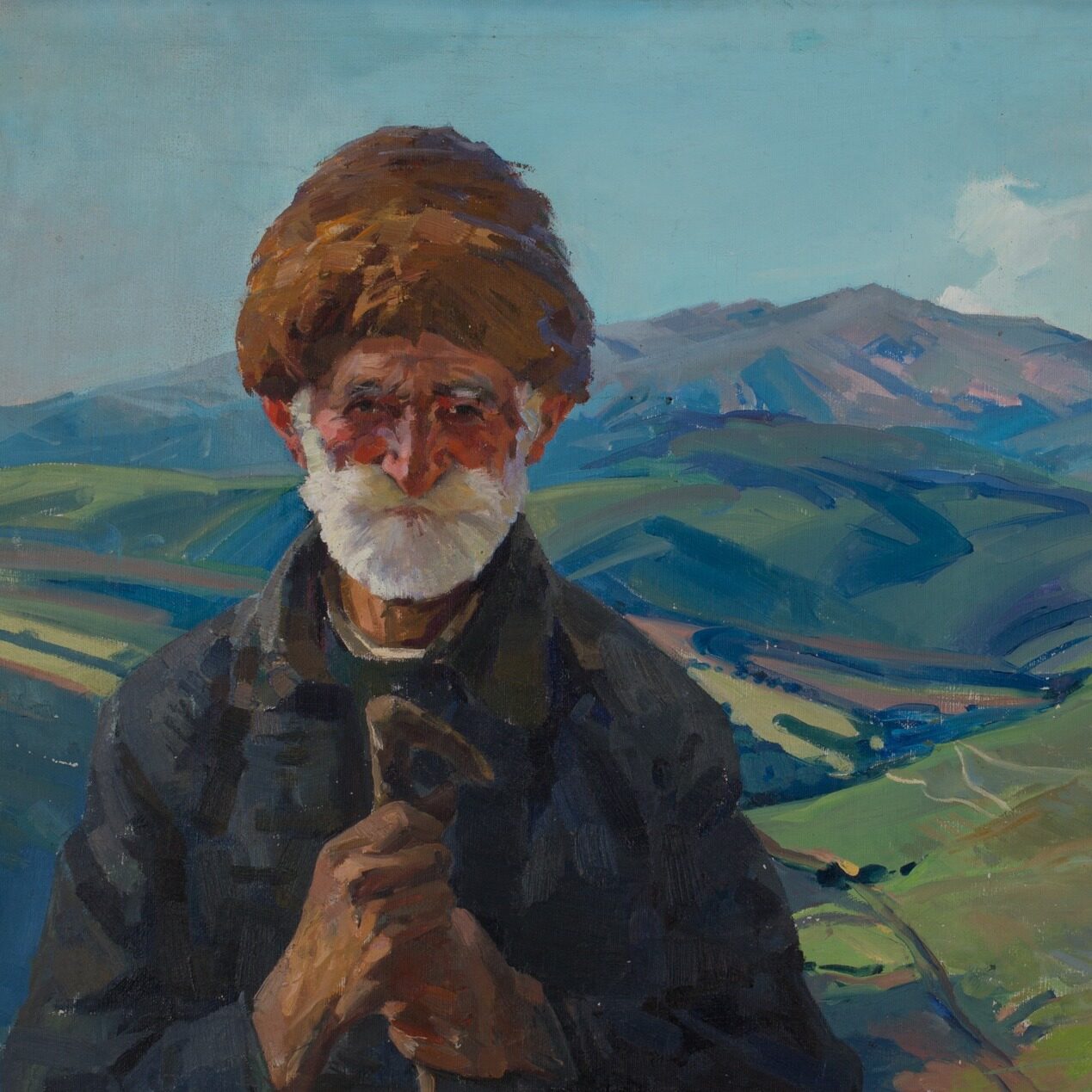
HOVHANNES SHARAMBERYAN: PORTRAITS
Dilijan is rightfully famous as one of Armenia’s most picturesque and “developed” resort towns that has become a major tourism and health destination. But there is another aspect to the city, which should also make it an equally significant cultural landmark: its Museum of Local Lore and Art Gallery. While most Armenian cities have some kind of a local ethnographic or archaeological museum, only a handful possess an actual art gallery. Dilijan’s is only one of the four, independent, municipal galleries outside of Yerevan. It is also the oldest and arguably the best in terms of the richness and diversity of its collections. Founded in 1950, the Museum and Gallery quickly turned into a fulcrum of cultural activity in Dilijan, thanks in large part to the efforts of Hovhannes Sharambeyan, who played an instrumental role in preserving the city’s historical architecture. Sharambeyan was also a painter of considerable merit, whose sensitive landscapes and still-lifes exude a feeling of melancholia about the irrevocable loss of the past. The Dilijan Gallery has a significant collection of Sharambeyan’s work and is holding a solo show dedicated to the artist’s psychologically insightful portraits. A good occasion to immerse oneself in the pleasures of this little treasure-house of a museum while breathing in Dilijan’s magical, invigorating air.
Exhibition: “Hovhannes Sharamberyan: Portraits”
Where: Dilijan Local Lore Museum and Art Gallery
28 Miasnikyan St., Dilijan
Dates: Open from August 17
•
New
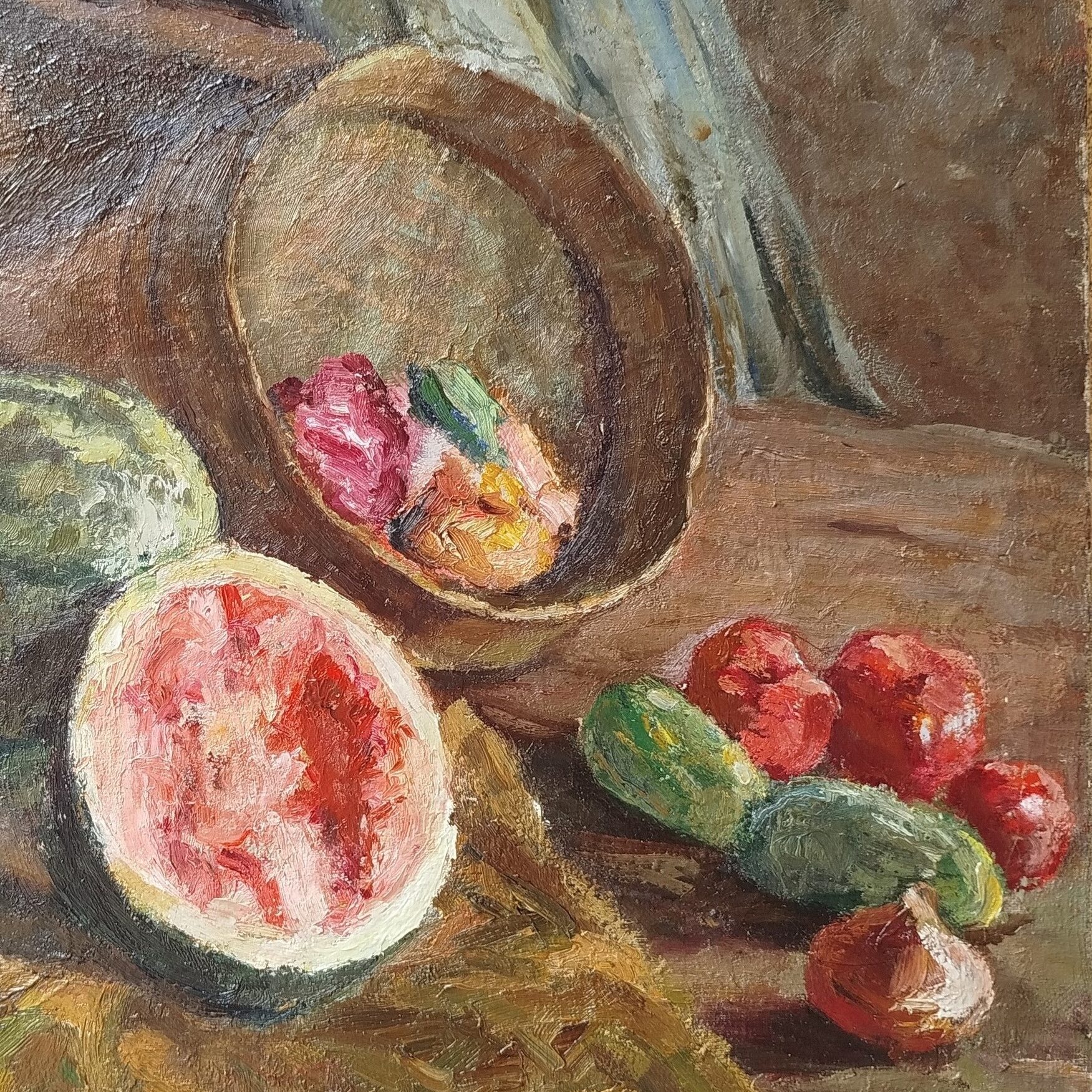
YERVAND PALANJYAN: LYRICAL RHYTHMS
Another fascinating offering from the Dilijan Art Gallery is the first Armenian solo exhibition of Yervand Palanjyan—a nearly forgotten painter of notable talent who spent his entire life in Tbilisi. Despite his dexterous painterly skills, Palanjyan remained on the margins of the city’s vibrant art scene. He quietly produced landscapes, still lifes, and portraits that were seldom exhibited and remained largely overlooked.
Not an innovator by temperament, Palanjyan was steadfastly committed to a lyrical realism enlivened by a sparkling, impressionistic technique. By the mid-1950s, however, his style appeared increasingly nostalgic and outdated alongside the bold modernist experiments that flourished in Tbilisi after Khrushchev’s cultural reforms. Yet his sincerity and profound attachment to place imbue his canvases with a quiet resonance, as if they were wistful witnesses to a rapidly changing world.
Misfortune continued even after his death, when a flash flood destroyed much of what remained in his studio. The 28 surviving works, rescued by a private collector and now on view at the Dilijan Art Gallery, offer a rare opportunity to rediscover this unjustly neglected artist.
Exhibition: “Yervand Palanjyan: Lyrical Rhythms”
Where: Dilijan Local Lore Museum and Art Gallery
28 Miasnikyan St., Dilijan
Dates: Open from August 2
•
New
GRIGOR KHACHATRYAN AND HIS CONTEMPORARIES
If you don’t know that a particular kind of laugh, heard in Yerevan’s bohemian cafés and exhibition spaces since the late 1970s, can itself be a significant work of art, then you don’t really know Grigor Khachatryan (“GKH” among friends), or, for that matter, much about Contemporary Art. Emerging from the rut of Brezhnev-era cultural stagnation with an anarchic mix of multidisciplinary tools, forms and strategies, Khachatryan quickly became one of the most distinct figures of the local “new avant-garde.” Though engaged with nearly all major artistic movements, from the Third Floor movement to neo-expressionist abstraction to the “NPAK” era of political conceptualism, he always stood slightly apart.
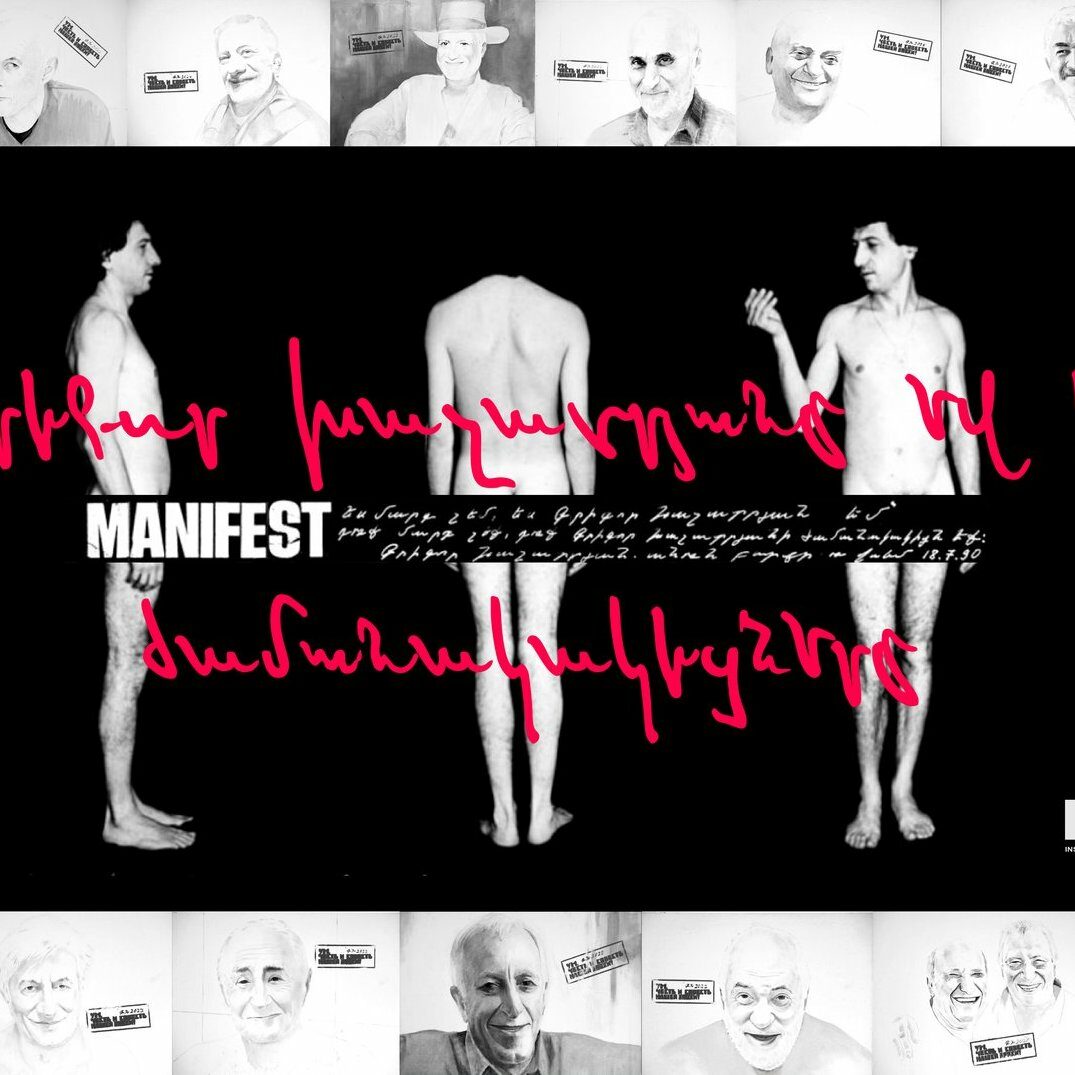
His radical irony crystallized in a 1991 manifesto declaring he was not a man, but “Grigor Khachatryan” (an artwork, or an idea), and that everyone else was merely a “contemporary of Grigor Khachatryan.” Since then, he has employed a wide range of conceptual and performative gestures, including offering himself as a “prize” to select cultural figures, to probe systems of power, meaning-making, and the political dimensions of identity.
His latest exhibition, curated by long-time collaborator Nazareth Karoyan, is another ironic, if also wistful, riff on cultural history and the “fine” arts. Presented at the Institute for Contemporary Art (ICA), the show marks Khachatryan’s return, of sorts, to painting, through a series of portraits of friends and colleagues. Rudimentary as portraiture, the series recalls Soviet postal envelopes that once bore cultural luminaries in their upper right corners. Each portrait carries a stenciled red slogan in Russian: “The Brain, Honor, Conscience of Our Era”—a parodic Leninist slogan once used to indoctrinate the Communist Party. In this way, Khachatryan subverts the forms of totalitarian ideology by placing intellectuals at the center of historical time, while also affirming the shared framework to which all these contemporaries, shaped in the late Soviet decades, belong.
At the same time, a more unsettling, even mournful note permeates the portraits. It is the palpable sense of their historicity, conveyed through the ghostly outlines of the figures—all middle-aged men. They may be presented as icons of their era, yet it is already an era consigned to the museum wall, much like painting itself.
Exhibition: “Grigor Khachatryan and His Contemporaries”
Where: Institute of Contemporary Art
47 Avet Avetisyan St., Yerevan
Dates: July 25-August 25
•
New
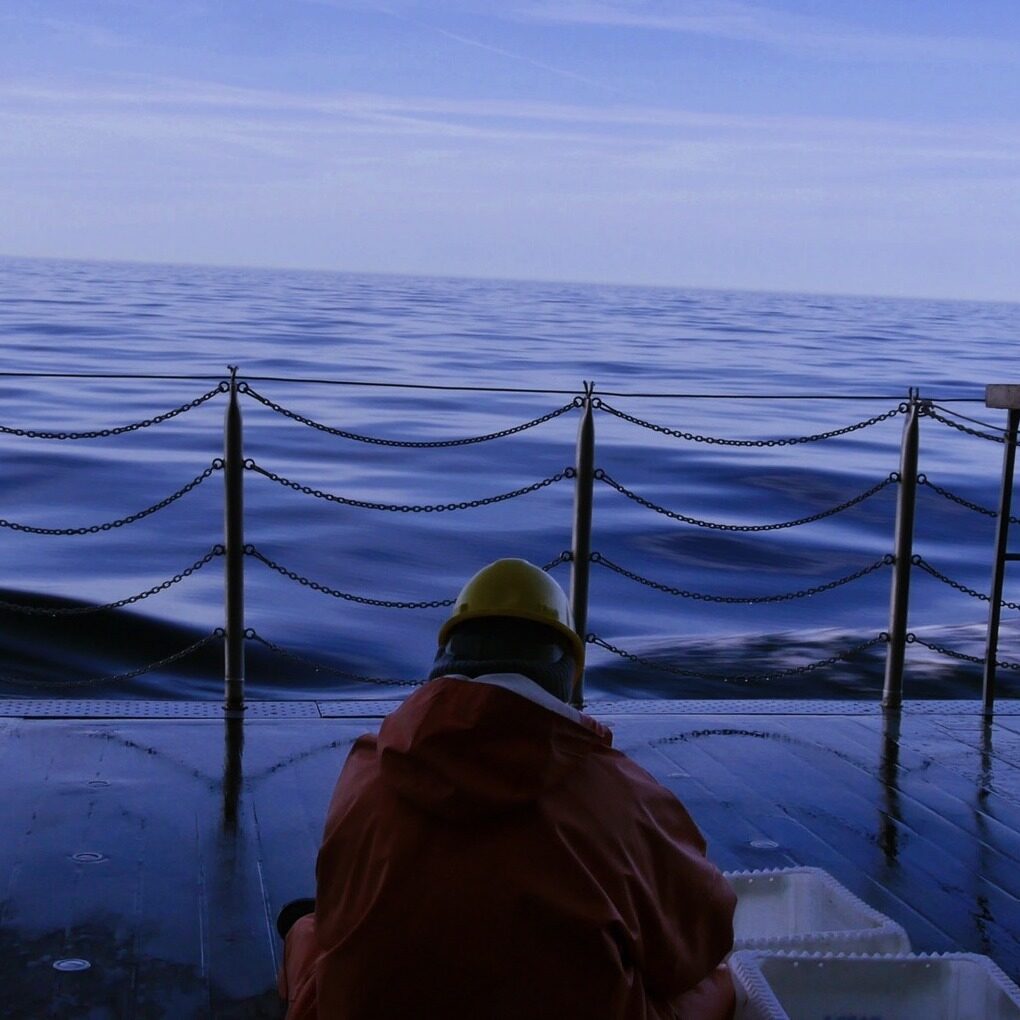
GOR MARGARYAN: HYDROGRAPHY
The independent art space Studio 20 has done a notable job in recent years of introducing young, emerging artists who generally work on the margins of the local art scene. Their latest project, an audio-visual installation and film essay by multimedia artist and director Gor Margaryan, is no exception. According to the exhibition’s media release, the film centers on a hydrographic expedition of the Baltic Sea conducted by the GEOMAR Helmholtz Center for Oceanography in Kiel. Margaryan, however, uses this occasion to craft a deeply emotional and meditative response to scientific study and fact. The result suggests Jacques Cousteau filtered through Werner Herzog and Agnès Varda—a tantalizing enough proposition to make the trip to Hrachya Kochar 13 in the hopes of discovering a compelling new local artist.
Exhibition: “Gor Margaryan: Hydrography”
Where: Studio 20
13 Hrachya Kochar St., Yerevan
Dates: August 20-September 2
•
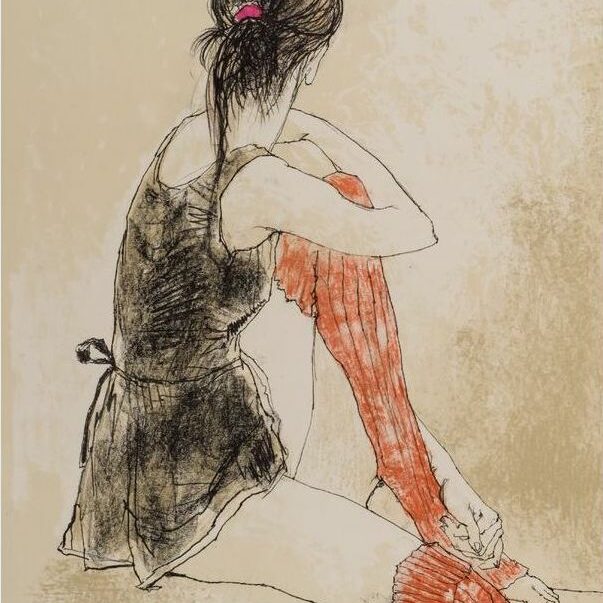
JANSEM: THE MASTER OF VIVID LINE
Art and entertainment can be an unholy mix, as evidenced by the work of so many post-modern masters like Damien Hurst and Yayoi Kusama, whose quite tacky, but often spectacular installations still confound us with the question as to whether it’s all some ingenious ruse or not. But up until the height of modernism in the 1910s, art has always meant to entertain or, at the least, titillate the public to some degree, without necessarily sacrificing its intellectual credentials. lsn’t it the thrill of complex visual storytelling that still attracts us to so much Renaissance and Baroque art?
The famous French-Armenian painter and graphic artist Jean Jansem (Hovhannes Semerdjian) chose to follow this more traditional trope of visual art when he entered the war-ridden Parisian art scene in the mid-1940s. Though not exactly diverting in their morose dissection of post-war nihilism and angst, Jansem’s figurative, social-realist paintings spoke to a public that was tired of all the elitist and obtuse abstract and conceptual art that was being promoted by the art establishment. Branded a “miserabilist”—a major movement in French and European art of the 1940s-1960s—this first generation descendant of the Armenian Genocide wanted nothing more than to speak directly and clearly about the core human values he deemed to be threatened by unmitigated progress and modernization. As his popularity rose from the mid-1960s onwards, Jansem’s work mellowed, becoming more allegorical and palatable for a broad international audience that lined up to buy his distinctively ethereal images of melancholic female models and dancers, still-lifes and urban landscapes. This commercial popularity—bolstered by the artist’s uptake of color lithography—has considerably dampened Jansem’s credentials, casting him as something of a peddler of misery chic for the bourgeoisie.
But this is a wholly undeserved perception, as the new retrospective of Jansem’s lithographic work at the National Gallery of Armenia shows. Composed of over 120 lithographic works from the 1960s up to 1990s the artist donated to the Gallery, this first, large-scale survey of his oeuvre in Armenia provides a revealing insight into the highly methodical way Jansem explored the social, aesthetic and philosophical aspects of the subjects he considered to be of urgent and timeless resonance. In a way, his profoundly humanist vision has gained relevance in our troubling reality, coming as a reminder of the elemental empathy and social bonds that we’re losing with every bomb in Gaza and every scroll on social media.
Exhibition: “Jansem: The Master of Vivid Line”
Where: National Gallery of Armenia
Republic Square, Yerevan
Dates: July 25-October 25
•
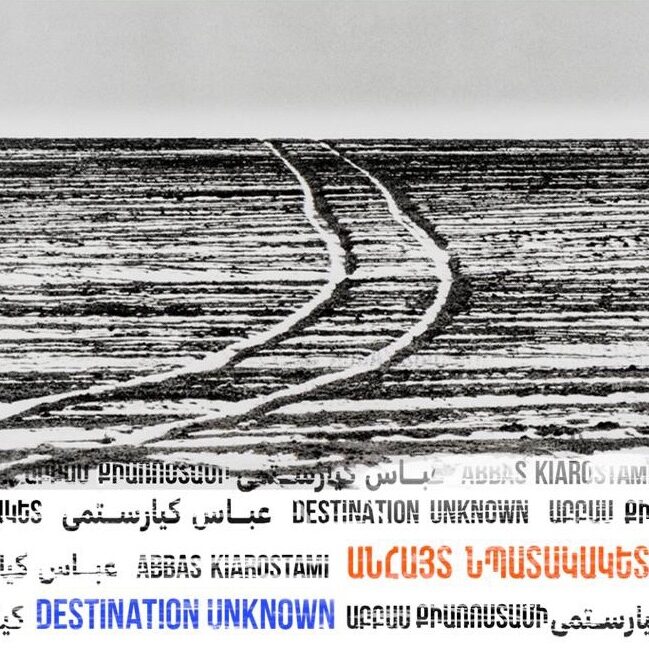
ABBAS KIAROSTAMI: DESTINATION UNKNOWN
When the first Armenian-operated photography studio opened in Constantinople in 1858, few could have predicted the degree to which the Armenians would come to populate this field throughout the next century, or the degree to which the medium would be disregarded by the Armenian cultural establishment thereafter. It was only last month that the National Gallery of Armenia (NGA) finally launched a permanent exhibition space dedicated to photography and new media—the first ever institutional platform of its kind in the country’s history. While modest in size, this room marks a momentous shift in the reassessment of the medium as both an art form and a key conduit of visual culture.
While the Gallery’s own photography collection is still being formed, the inaugural exhibition of the dedicated hall hints at a distinctive direction. Organized in collaboration with the Golden Apricot Film Festival, the show presents a single series of 28 black and white photographs by the legendary master of Iranian cinema, Abbas Kiarostami. Renowned for his hauntingly languid, brilliantly structured films, Kiarostami was also an obsessive photographer, whose long-gestating series on deceptively simple subjects like roads, trees and rain, parallel his cinematic investigations into the essence of nature, human connection and belonging. “Abbas Kiarostami: Destination Unknown” presents only the filmmaker’s photographs depicting various roads, which he shot while scouring film locations in Iran’s provinces. Strikingly beautiful in their graphical sharpness and asceticism, the photographs work best as a sequence of tonal and metaphorical shifts that gradually expands beyond its prosaic subject matter into a transcendental meditation on the sublime power of nature and the infinity of time.
The decision to begin the Gallery’s photo-exhibition program with a show dedicated to a non-Armenian master from Iran, who was best known for his work in a different art form, suggests a trans-disciplinary, regionally-focused and internationally-orientated strategy. This is essential if the NGA’s objective is to position Armenia as an important base for rethinking and reframing the global histories of photography.
Exhibition: “Abbas Kiarostami: Destination Unknown”
Where: National Gallery of Armenia
Republic Square, Yerevan
Dates: July 15-September 15
•
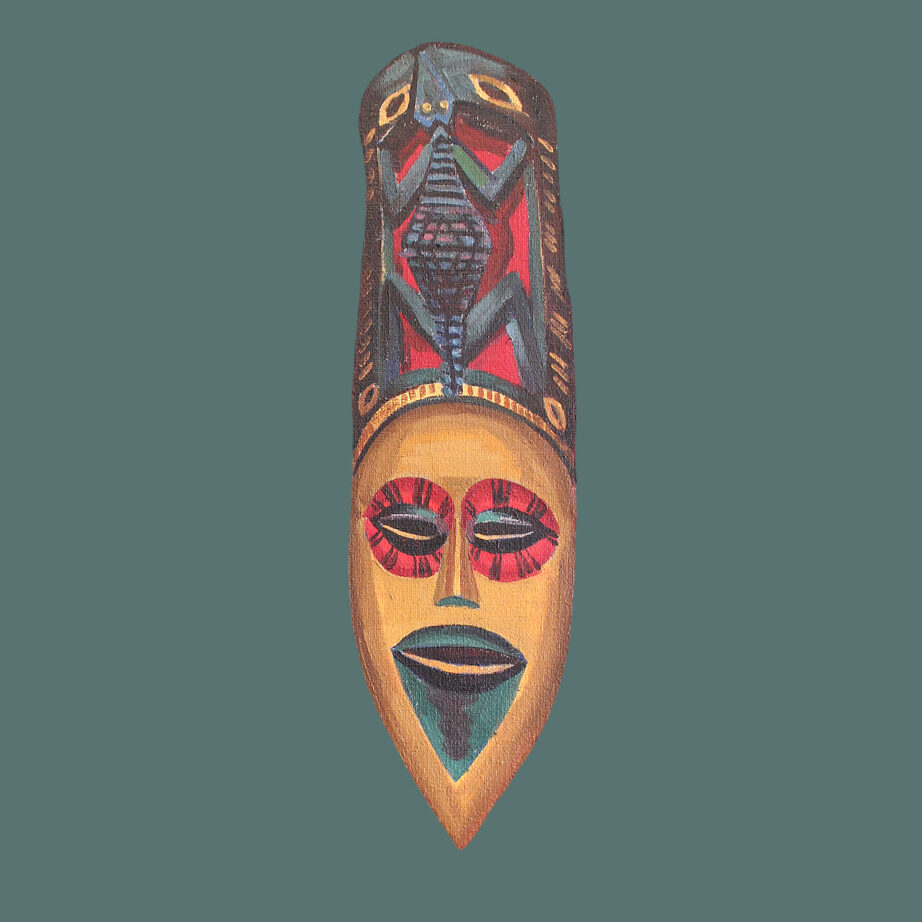
MASK: IMAGE AND CONCEPT
In a welcome development, transdisciplinary (and transcultural) approaches have also been flickering in the thematic shows organized by the Museum of Russian Art. Their latest show dedicated to the Mask brings the colorful ethnographic still-lifes by sister-painters Mariam and Yeranuhi Aslamazyan together with African ceremonial masks from the collection of the Ethnography Museum of Armenia.
The exhibition theme presents a fascinating opportunity to explore the way the “primitive” mask has been perceived in Armenian visual art—a symbolic device popularized way back in the 1910s by Martiros Saryan—and how it has come to embody our cultural ideas of otherness (especially since Armenians themselves do not have a significant tradition of making or wearing masks). Using the Aslamazyan sisters for this purpose is more than apt: the sisters travelled extensively in Africa and South-East Asia, eventually painting dozens of exuberantly colorful and unabashedly ethno-exotic still-lives that are aesthetically complex echoes of the Soviet imperial ambitions towards the Global South. Judging from the exhibition’s promo text, however, the curator and the organizers have no intention in taking a critical or, God forbid, decolonial stance at these issues, focusing instead on the mask as a “symbol of faith, memory, morality and family values…” This non-committal attitude aside, the show is a rare chance to see these stunning examples of African folk art in Armenia.
Exhibition: “Mask: Image and Concept”
Where: Museum of Russian Art
38 Isahakyan St., Yerevan
Dates: August 1-September 24
•
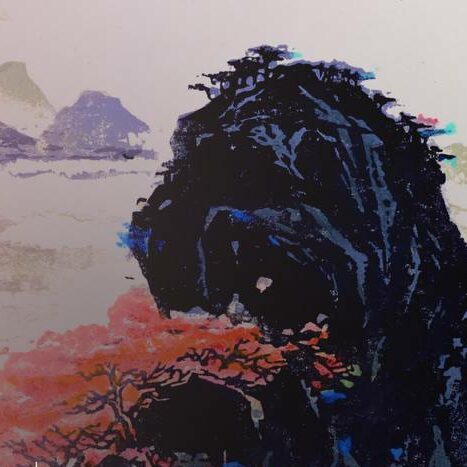
HAO KEPING: MOUNTAINS AND RIVERS OF CHINA
Exhibitions focused on distant cultures are a rarity in Armenia. So when not one, but three events simultaneously spotlight contexts far beyond our immediate region, it feels like a subtle shift in the cultural tide—even if some arrive neatly packaged as instruments of soft power from authoritarian states like China.
One such exhibition, hosted by the Yerevan History Museum, comes courtesy of the Ningbo Museum—one of the more recent behemoths born of China’s museum-building boom. Titled “Mountains and Rivers of China”, the show is dedicated to the celebrated printmaker Shao Keping and delivers precisely what its name suggests: graceful woodblock prints of China’s awe-inspiring natural landscapes, rendered by one of the foremost figures of Chinese socialist-realist art.
Born in Ningbo in 1916, Shao Keping rose to prominence soon after the founding of the People’s Republic, becoming a key figure in both color printmaking and propaganda poster design. While this exhibition steers clear of the usual imagery of jubilant tractor drivers and heroic coal miners, Keping’s idyllic vistas—merging traditional Chinese aesthetics with European realism and Soviet-style neo-classicism—are no less ideologically driven.
Rooted in nationalist sentiment and the utopian vision of early Communism, these bucolic landscapes construct a vision of China as a harmonious promised land—conspicuously scrubbed of poverty, labor exploitation, repression, or looming ecological disasters. That absence is precisely what makes the exhibition so compelling: it serves as telling evidence of the nefarious outcomes from the forced union between the arts and the state.
Exhibition: “Mountains and Rivers of China”
Where: Yerevan History Museum
1/1 Argishti St., Yerevan
Dates: July 31-September 24
•
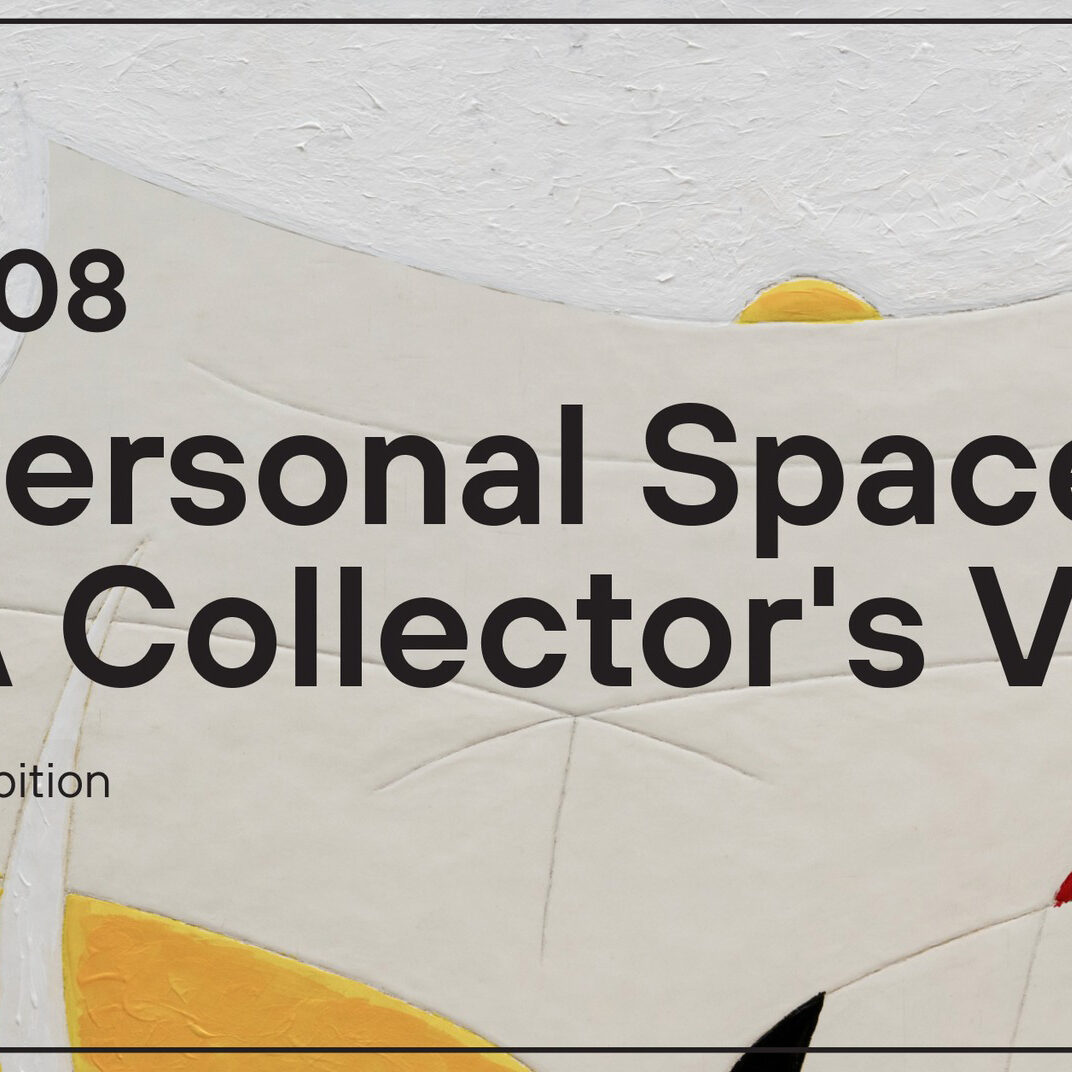
PERSONAL SPACE: A COLLECTOR’S VIEW
Closer to the home front, the Nikoghosyan Foundation is presenting an exhibition featuring works by the so-called “Bielutin” group of painters from Russia—a loose network of underground artists who challenged the official Soviet art establishment with a scandalous 1962 exhibition at Manezh in Moscow. The group’s figurehead, Ely Bielutin founded an independent school and a movement that he termed as “New Reality”– a conceptually and stylistically hybrid framework inspired by early Soviet avant-garde and the European expressionists. The more talented exponents of the group, like Irina Zakharova, Vladimir Tryamkin and Vera Preobrazhenskaya, were instrumental in cementing the non-conformist scene as the most intellectually and creatively dynamic part of Soviet art.
Drawn from the massive collection of late, Moscow-based collector Samvel Hovhannisyan and his wife Karina Kazanjian, the show provides a tantalizing glimpse into the exuberantly experimental milieu of these dissident artists. The exhibition has no scholarly ambitions as it also mixes-in an eclectic range of works by Armenian artists—from famous names like Yervand Kochar and Rudolf Khachatryan to a number of forgotten figures from the 1980s and 1990s. The result is a strange, but captivating potpourri that, first of all, reflects the obsessive drive and broadly-inclusive tastes behind one of the greatest Armenian private art collections ever assembled.
Exhibition: “Personal Space: A Collector’s View 2”
Where: Nikoghosyan Cultural Foundation
19-21 Saryan St., Yerevan
Dates: Open from August 1
•
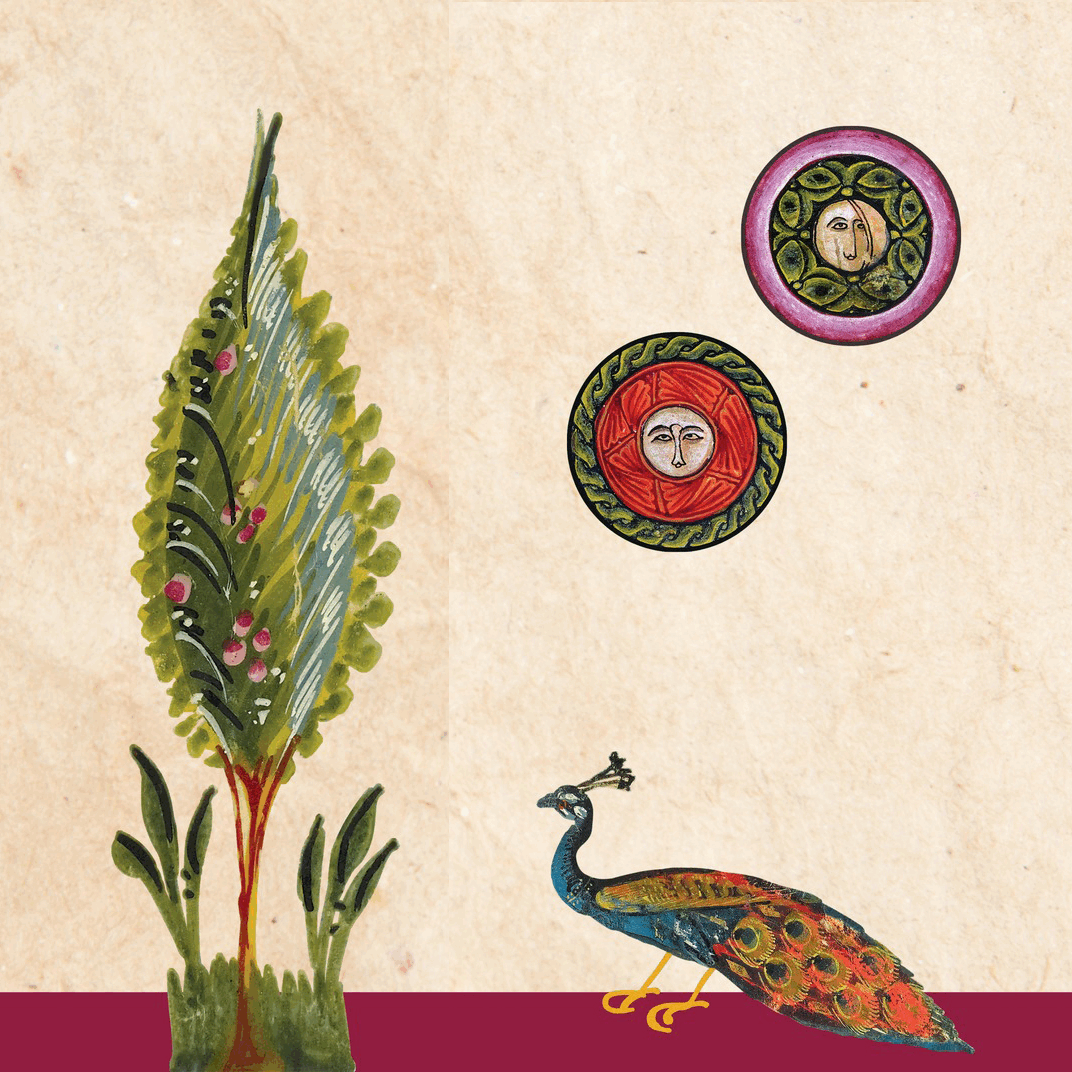
THE MANUSCRIPT MYSTERY OF NATURE CREATIVITY
Matenadaran’s current show presents yet another slice of medieval ecclesiastical visual culture, this time focusing on creationist representations of nature in Armenian manuscripts, complemented by examples of Arabic and Persian illuminated art. That’s all well and good, but beyond this broad thematic framework, the exhibition lacks a clear conceptual or critical anchor. It’s difficult to gauge, for instance, whether medieval Armenian artists developed distinctly local iconographic, symbolic, or aesthetic modes for depicting the six days of creation and natural phenomena, or whether they simply followed existing regional traditions of ornamentation and illustration.
Still, the inclusion of several rarely exhibited manuscripts, intricate silver bindings, and other book-related artifacts showcasing a variety of stylistic approaches offers plenty of visual delight—despite the Institute’s unfortunate persistence with musty, cabinet-of-curiosities-style displays.
Exhibition: “The Manuscript Mystery of Nature Creativity”
Where: Matenadaran
53 Mashtots Ave., Yerevan
Dates: Open from July 2
•
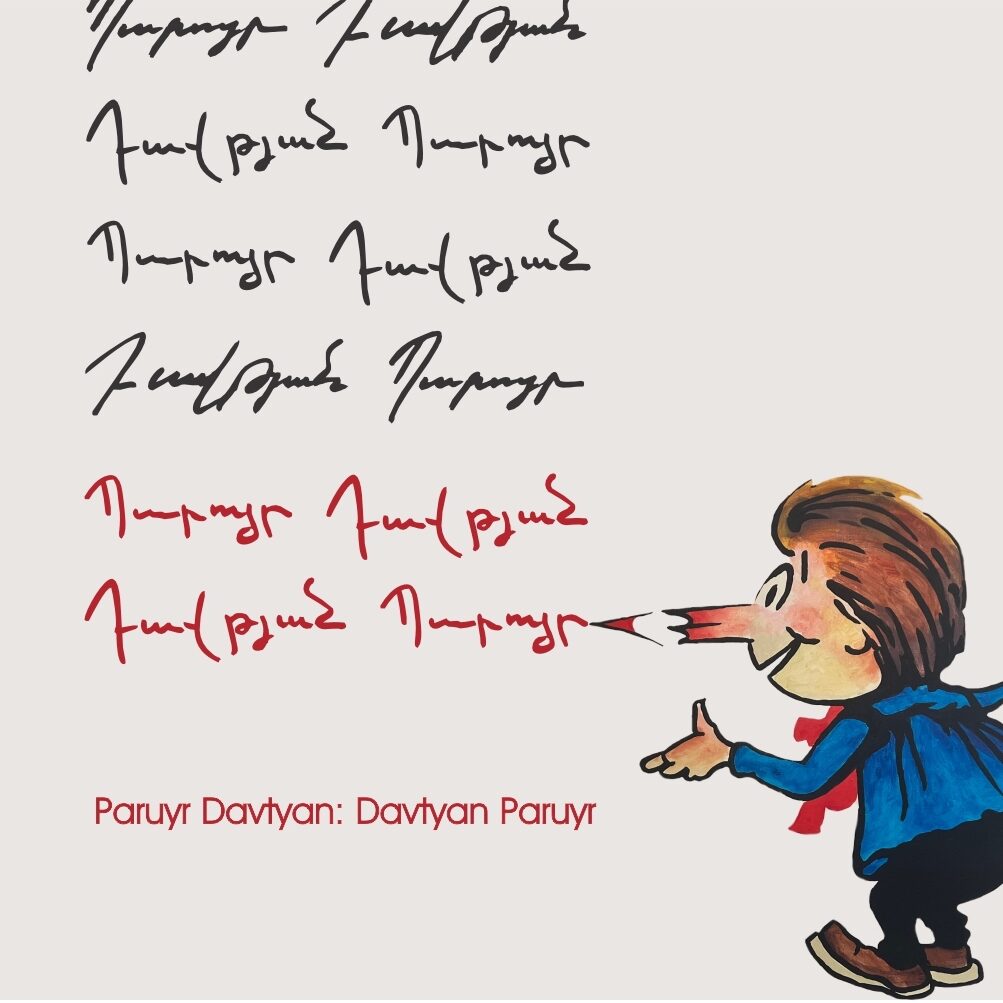
PARUYR DAVTYAN. DAVTYAN PARUYR
Chances are the name Paruyr Davtyan won’t ring a bell for most people in Armenia. But among those in the know, it’s linked to one of the most compelling mid-career contemporary artists to emerge from the post-Soviet space. Debuting on the Russian art scene in the early 2010s, the Gyumri-born, transdisciplinary artist quickly established himself as a leading figure within the tradition of Moscow Conceptualism—a politically charged, theory-driven avant-garde movement rooted in early 20th-century Dadaism.
Now a fixture on major contemporary art platforms and biennales in Moscow, Davtyan is making his belated debut in his homeland, courtesy of the Cafesjian Centre for the Arts and curator Armen Yesayants. His ironically self-titled solo exhibition offers a clear entry point into his conceptually dense yet surprisingly palatable practice. While the founding figures of Moscow Conceptualism focused on dismantling ideological structures in the late Soviet era, Davtyan is more concerned with interrogating the nature of art itself. Does art possess an innate, immutable identity, or is it a shifting illusion shaped—and reshaped—by socio-historical forces?
In exploring these questions, Davtyan’s work becomes entirely intertextual and self-reflexive, drawing from and mischievously remixing a vast reservoir of art history that he seems to both gently parody and passionately revere. Although the methods of deconstructive pastiche he employs have become so institutionalized that he appears at times like a classicists of sorts, there’s a genuine boldness and vitality in his witty, yet strangely poetic, subversions of canonical works like Monet’s Water Lilies or Duchamp’s Fountain.
Compact but beautifully curated, the exhibition offers a strong overview of Davtyan’s practice over the past decade—and is a must-see for anyone interested in the current intellectual trajectories of contemporary visual art.
Exhibition: “Paruyr Davtyan: Davtyan Paruyr”
Where: Cafesjian Center for the Arts
10 Tamanyan St., Yerevan
Dates: July 25-October 12
•
FILMS
New
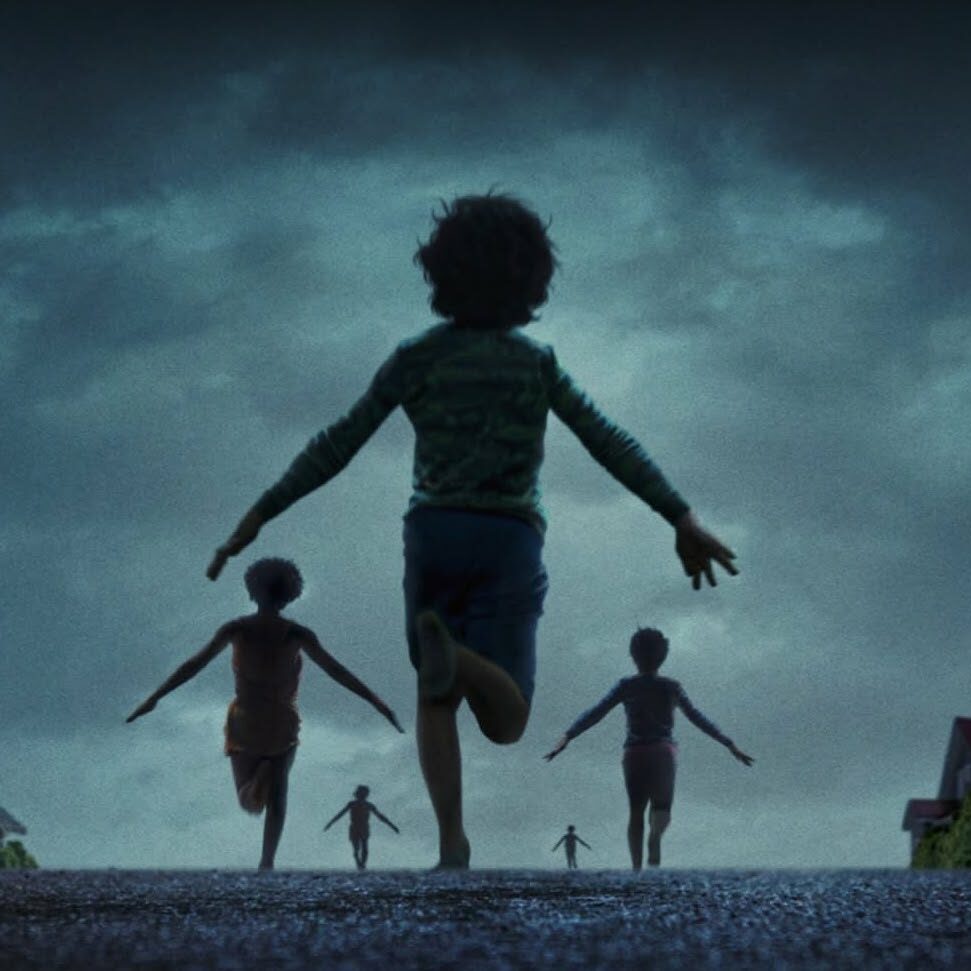
WEAPONS
The term “elevated horror” has become the go-to phrase for any genre outing that tries to wear a Halloween mask over socio-political commentary, no matter how skeletal the substance underneath. In recent years, this new brand of auteur cinema has tackled everything from toxic family relations, body image, racism, and fascism to commitment fears and religious supremacy—with varying degrees of success. The problem, of course, is that horror has always been an effective vehicle for allegory, exposing our darkest social fears and sublimated desires. In that sense, none of these stylishly twisty contemporary films are breaking new ground. A few, however, manage to provide fresh perspectives on age-old issues while delivering a good shock to the system.
Weapons, director Zach Cregger’s follow-up to his indie hit Barbarian, is unquestionably one of them. Drawing inspiration from unlikely sources like Paul Thomas Anderson’s Magnolia and Akira Kurosawa’s Rashomon, Weapons begins with a dreadful premise: seventeen children wake in the middle of the night in a small American town, run into the darkness, and are never seen again. Where Cregger takes the audience from there may be one of the most surprising, head-spinning, confounding, yet thrilling cinematic journeys in recent memory. The bravado of his non-linear storytelling, paired with a commitment to distinct characters and sharp commentary on our evolving collective traumas, results in a film whose tremors linger long after its brilliantly puzzling ending. It’s a buzzy, future classic that should be experienced on the big screen—so catch it while you can.
Screening: “Weapons”
Where: Kinopark
Yerevan Mall, 34/3 Arshakunyats Ave., Yerevan
Dates: Screening now
•
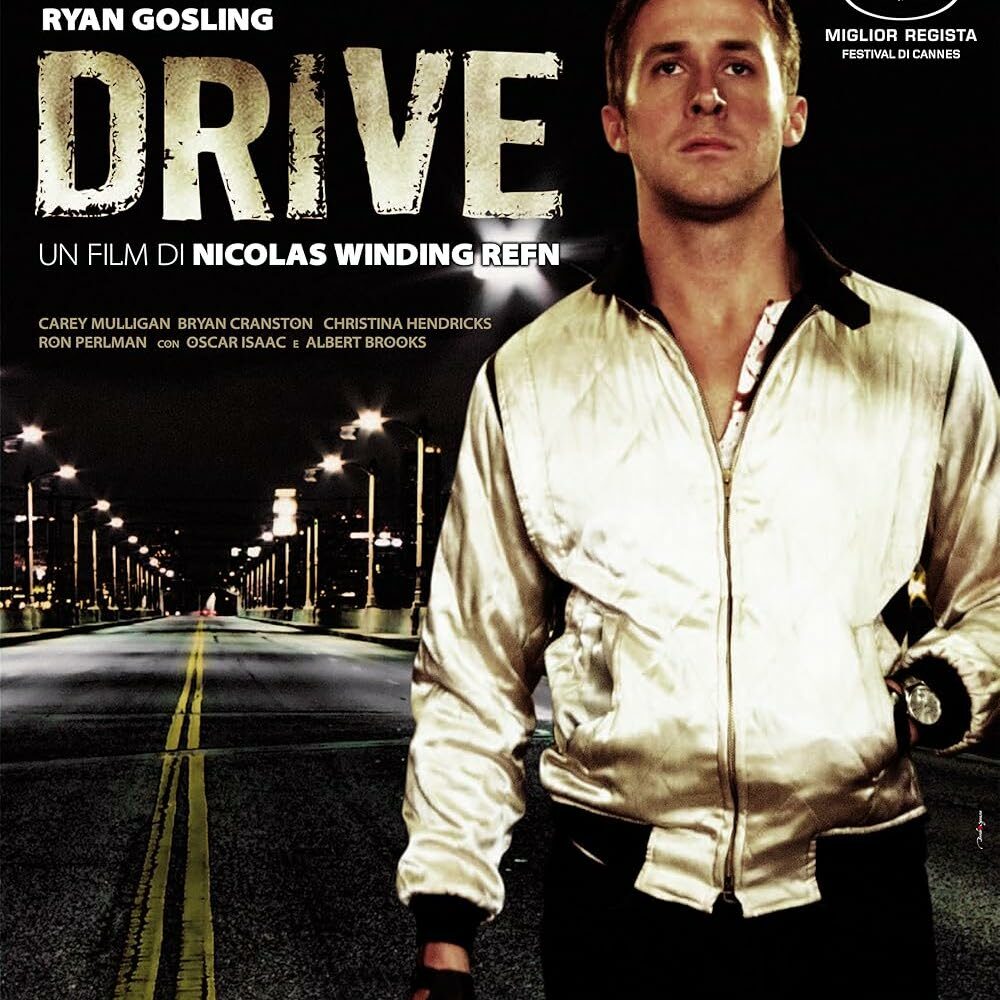
DRIVE
The summer blockbuster train is in full swing with the expected reboots and franchises like the latest “Superman”, “Fantastic Four”, “Freaky Friday” and so on. Somewhere in between there will also be a movie with either Tom Cruise or Brad Pitt riding something fast and furious. It’s a seemingly endless loop of tautological inanity that wears any semblance of meaning to naught with each, progressively more absurd cycle. So it’s a real reprieve to find in the cracks of this grotesque hall of simulacra an authentic piece of film art, even if it was made some 15 years ago.
Starring Ryan Gosling—one of the poster-boys of 21st century melancholia for all things analogue—Nicholas Winding Refn’s incandescent 2011 thriller “Drive” (winner of best director prize at Cannes Film Festival) stands as one of the cinematic high points of the past two decades. A story about an enigmatic stunt driver who gets into a crime job that takes a disastrous turn, “Drive” is a tense, almost mathematically designed narrative about an aloof loner who temporarily allows emotions to slip through his steely facade.
Winding Refn’s neon-soaked vision is steeped in nostalgia for the 1970s and 1980s, with multiple references to films like “Taxi Driver”, “The Conversation”, “Diva” and “Blue Velvet”. But the Dutch director’s cinephile obsessions do not prevent him from crafting a universe that is entirely his own—a neo-noir territory where every surface and glance is permeated by a haunting mixture of strangeness, ravishing beauty and lurid violence. It’s the kind of flawlessly engineered mechanism that only gets better with age—like the iconic Chevy Impala that Gosling stylishly wheels into cinematic eternity. So, do yourself a favor, buy a ticket and unbuckle your seatbelt for this transcendent experience.
Screening: “Drive”
Where: Moscow Cinema
18 Abovyan St., Yerevan
Dates: Screening now

“Well, this is what you get for not allowing people any means of collective cultural release – something that the Catholics, Protestants and the Buddhists have regulated so well with their carnivals and fetes that let people mock all forms of authority and morality for a day or two and then go back to more civil forms of obedience or disobedience. ” This sentence is misleading, and factually INCORRECT. Basic knowledge of Armenian religious holidays would have sufficed to not commit such an error. If you do not know, Barekendan is the Armenian equivalent of the European carnival. The fact that the holiday has died out and is no longer being celebrated publicly is not the fault of the Church, which still celebrates it, but because Soviet Union suppressed all religious holidays and unfortunately Barekendan suffered the most from this suppression. I guess this is what you get when you make remarks without conducting proper research.
Barekendan is still celebrated, yet not large-scale. In any case, what I have experienced in the current ways of celebration there was no allusion to mockery of “all forms of authority and morality”, rather a lavish feast and fun having preceding the upcoming days of fasting during the Great Lent.