From access to American weapons systems, to implementation of TRIPP, to cooperation on critical minerals, the agreements signed during U.S. Secretary of State Marco Rubio’s visit represents a new stage in U.S.-Armenia relations. Nerses Kopalyan examines their security significance and writes that it was a recognition by Washington that Armenia’s security and stability have become increasingly important components of its regional policy.
Armenia is seeking to redefine its global role through “smart power". By hosting the European Political Community Summit and a series of major international forums, Yerevan is leveraging diplomacy, connectivity and strategic partnerships to expand its international relevance, resilience and foreign policy autonomy.
The Iran War has produced two escalatory models: the U.S.-Israeli “escalate to de-escalate” approach and Iran’s “horizontal escalation” strategy. Armenia’s response is strategic ambiguity: avoiding entanglement while preserving ties with competing partners. To be successful in risk-mitigation, Yerevan must use “situational ambiguity” to navigate crises and de-risk the danger of entanglement.
While Azerbaijani President Ilham Aliyev portrays himself globally as a proponent of reconciliation and regional cooperation, the data clearly demonstrates his questionable commitment to the peace process. In this expansive study, Nerses Kopalyan and a team of researchers produce empirically-grounded analysis, utilizing an AI machine-learning toolkit, of Azerbaijan’s media ecosystem, revealing the disconnect between Aliyev’s domestic propaganda and his diplomatic rhetoric on peace.
Armenia’s foreign and security policy realignment is reshaping regional dynamics. Nerses Kopalyan introduces the doctrine of multi-alignment to Armenia’s policy discourse, arguing that diversification is rooted in this doctrine, one that favors strategic partnerships over alliances to de-risk security and enhance statecraft.
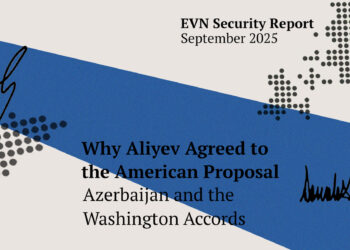
Why did Aliyev, whose aversion to peace, penchant for conflict-persistence and aggression, and an immense power capacity, agree to a normalization process that diminishes his position of maximalist power-posturing? Nerses Kopalyan explains how the answer lies in shifting U.S. negotiation strategies, altered incentive structures, and Baku’s strategic calculus.
Before details of the Washington Accords emerged, pro-Russian factions in Armenia and the Diaspora launched a coordinated disinformation campaign. Drawing on scholarship, Nerses Kopalyan examines the “misinformation virus” as a hybrid warfare weapon undermining Armenia’s resilience and stability.
Amid U.S.-brokered diplomacy, Armenia and Azerbaijan agree to the TRIPP transit route through Syunik, securing Armenian sovereignty while advancing normalization. The Washington Summit cements America’s growing role in reshaping interconnectivity and trade in the South Caucasus, while limiting Baku’s capacity for renewed aggression, writes Nerses Kopalyan.
Armenia faces a strategic dilemma after the 12-Day War, when Israel and the United States tried to dismantle Iran’s nuclear program through force. With key bilateral partnerships on both sides, Yerevan needs to utilize the policy of strategic ambiguity to navigate an increasingly complex and high-risk regional landscape.
What mutually beneficial foundations could bring France, India, Poland and Armenia together in a security alliance, and what might such a quartet mean for Armenia’s security architecture? To explore this, Nerses Kopalyan introduces the concept of securitized minilateralism.
EVN Report’s mission is to empower Armenia, inspire the diaspora and inform the world through sound, credible and fact-based reporting and commentary. Our goal is to increase public trust in the media. EVN Report is the media arm of EVN News Foundation registered in the Republic of Armenia in 2017.
SUPPORT INDEPENDANT JOURNALISM