
Armenia’s election campaign hasn’t officially started, but in practice, it already has. In this episode, Maria Titizian examines the legal gray zone before the formal campaign period, where political forces are already spending, organizing and shaping public perception, without clear limits or full transparency.
Since independence, every Armenian administration has amended the Constitution. Each reform has been presented as modernization, democratization, or necessity. But constitutional change in Armenia has often been just as much about political power as legal reform.
Almost half of Armenia’s prison population has not been convicted of a crime, they are awaiting trial. Despite legal reforms and repeated promises that detention would be a last resort, Armenia continues to rank among the highest in Europe for pre-trial detainees. Pre-trial detention is not punishment. It is meant to safeguard due process, to prevent flight, interference with evidence, or further crime. But when it becomes routine, the presumption of innocence begins to erode, and public trust in the justice system weakens.
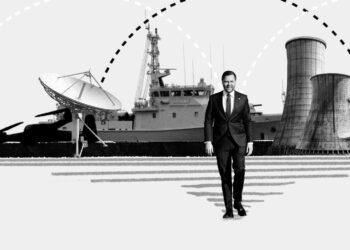
The regional order in the South Caucasus is shifting. U.S. Vice President J.D. Vance’s back-to-back visits to Yerevan and Baku, following the Washington Accords and the launch of TRIPP, signal a new phase of U.S. engagement in the region. Major defense, nuclear and technology agreements are reshaping strategic calculations. But peace cannot be built on imbalance. Nearly five years after Azerbaijani forces crossed into internationally recognized Armenian territory, key issues remain unresolved: occupation, detainees and the absence of an unequivocal recognition of Armenia’s territorial integrity.
Hybrid warfare isn’t fought with tanks, it’s fought with information. Ahead of Armenia’s parliamentary elections, disinformation, cyber operations and AI-generated fakes are already shaping perceptions and eroding trust. In this episode, Maria Titizian explains how foreign information manipulation targets elections, why emotional content spreads fastest, and how citizens can protect themselves from becoming the final battlefield.
Yerevan’s air pollution is no longer background noise, it’s a public health emergency. From nonstop construction and urban quarries to traffic emissions and landfill fires, the sources are well known and long documented. In this episode, Maria Titizian explains why geography isn’t the cause, why PM2.5 is the real threat, and why the failure isn’t about data, but political will.
Armenia’s Ararat Artesian Basin, the country’s second-most important freshwater reserve after Lake Sevan, is being drained faster than it can replenish. Years of mismanaged fish farming, weak enforcement and political resistance have pushed this vital aquifer toward collapse. In this episode, Maria Titizian explains why this isn’t just an environmental problem, it’s a national security crisis, threatening water, agriculture and livelihoods across the Ararat plain.
In this episode of “It Has to Be Said”, Maria Titizian examines one of Armenia’s most urgent and deeply personal challenges: access to dignified, affordable healthcare.
In this first episode of “It Has to Be Said”, Maria Titizian explores one of Armenia’s most pressing challenges: energy independence. What does it really mean for a small, landlocked country surrounded by closed borders and geopolitical uncertainty? Can Armenia reduce its dependence on Russia, strengthen its renewable energy sector, and secure its future in an increasingly unstable region?
EVN Report’s mission is to empower Armenia, inspire the diaspora and inform the world through sound, credible and fact-based reporting and commentary. Our goal is to increase public trust in the media. EVN Report is the media arm of EVN News Foundation registered in the Republic of Armenia in 2017.
SUPPORT INDEPENDANT JOURNALISM