
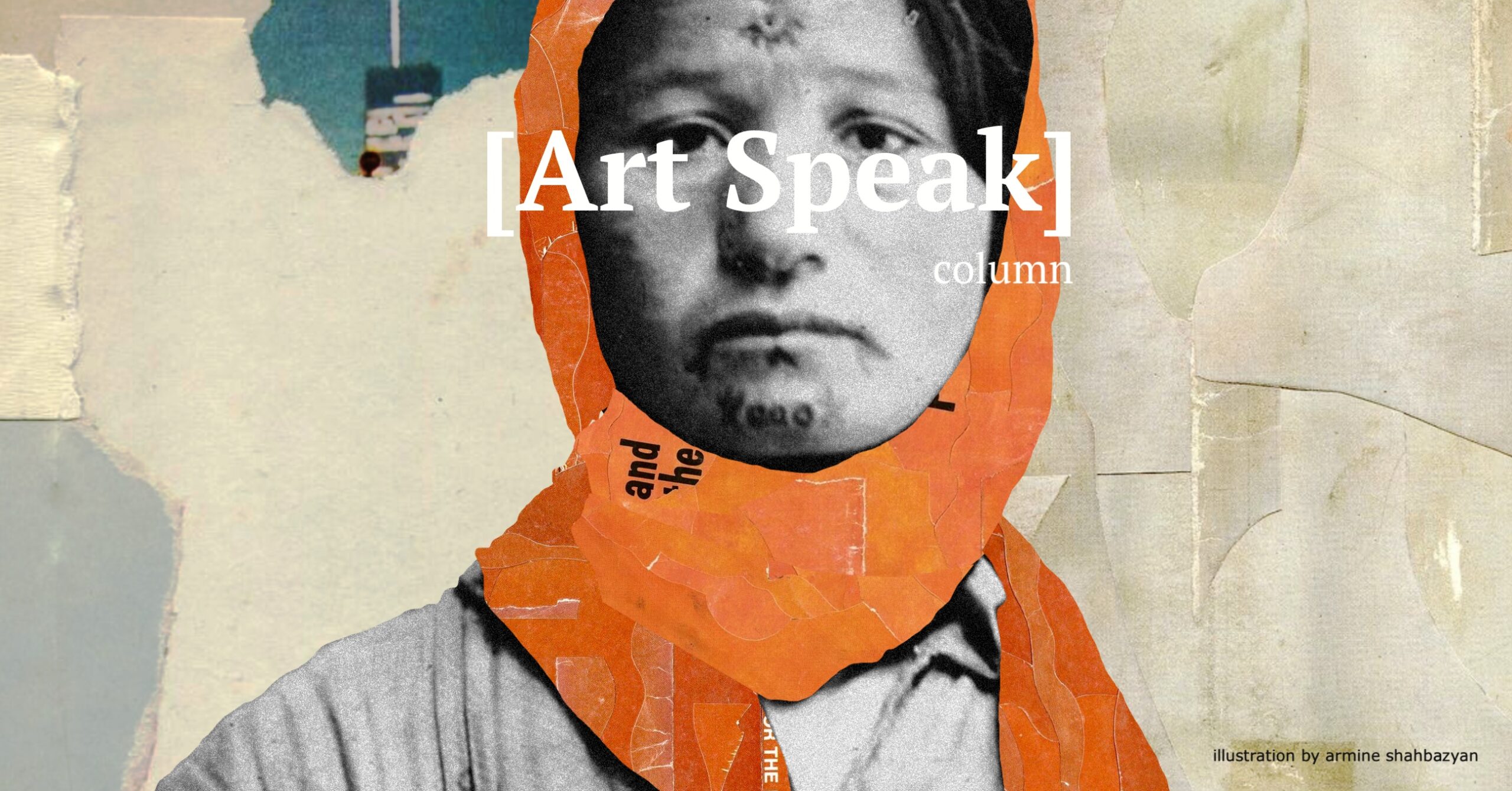
From emerging Armenian artists across the globe to Armenian-American talent in the United States, [Art Speak] will spotlight the dynamic and diverse Armenian art world and more.
Listen to the article.
An important violinist and experimental composer on the international stage, Thea Farhadian continues to expand the vocabulary and range of contemporary music. Trained first as a classical musician and a member of the Berkeley Symphony under Kent Nagano, Farhadian has most recently made her mark as an experimental musician by fusing previously disparate genres and styles. By mixing a wide range of sources such as solo violin, interactive electronics, found sound, acoustic improvisation, solo laptop, and radio art with the maqam-based tonal system of traditional Arabic music and her own Armenian ethno-musical traditions, Farhadian has created a fascinating idiom that speaks to both global contemporary trends as well as her own family history and identity.
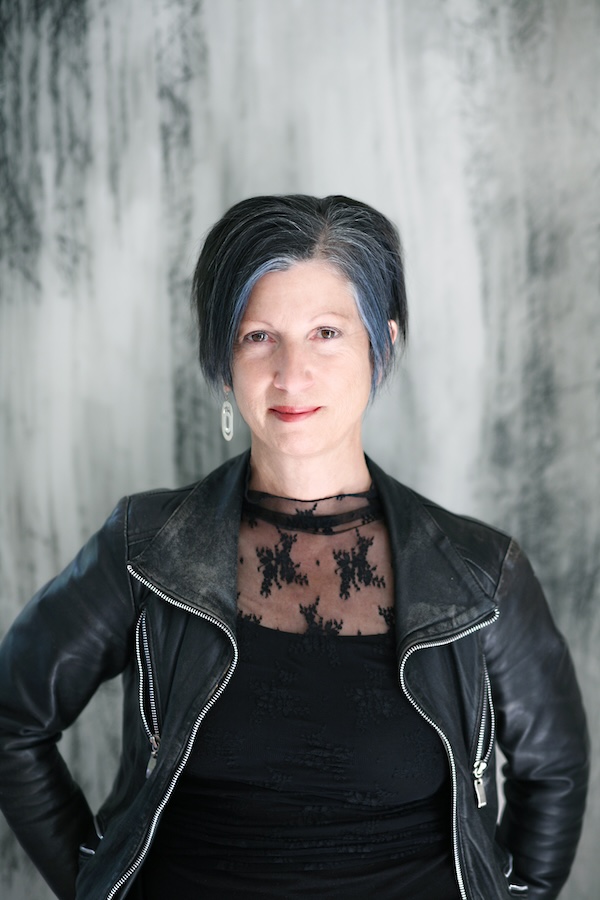
Thea Farhadian. Photo credit, Heike Liss.
The composer’s latest release “Tattoos and Other Markings”, on Other Minds’ music label is a watershed. Founded in 1993 by Charles Amirkhanian and Jim Newman, the Other Minds organization’s goal is to champion the most influential contemporary and experimental music being created. In Tattoos, the composer deftly limns the boundary between live sound, found sound and composed sound, to explore in a fascinatingly iconoclastic manner a haunting and tragic episode from the past. While working the piece, Farhadian learned that many Armenian women had been tattooed during the Armenian Genocide. As historian Elyse Semerdjian uncovers in her groundbreaking book “Remnants: Embodied Archives of the Armenian Genocide,” these tattoos were markers of beauty for some of the Bedouin tribes who kidnapped Armenian women on the death marches during the Armenian Genocide of 1915 to 1923, but also of shame for the survivors who often had difficulty reintegrating into Armenian society which did not have any traditions involving tattoos and body markings.
Farhadian’s evocation of a cultural past using a mechanical, abstracted soundscape, first distances the listener who finds the sound at hand alien, before they realize that they have actually been drawn into the past the same way that a patient might under guided hypnosis. Farhadian approaches trauma through sounds that appear to be similar to the scratching of needles on old-style vinyl records. The introduction of the voice of Komitas Vartabed send chills down one’s spine. The choice of Komitas, the father of Armenian liturgical and folk music who was released from captivity after being deported thanks to the intervention of the American ambassador to the Ottoman Empire Henry Morgenthau Sr., is doubly relevant today given the ongoing genocidal onslaught on the Palestinian people in Gaza.
Farhadian’s first solo album, “Tectonic Shifts” (Creative Sources CS 365), featured solo violin and real-time processing that introduced listeners to an echo chamber of experimental sound. Reviewer Massimo Ricci has written: “What separates her from the typical…tedium- transmitting specimens, is the ability to render the most absurd-sounding complications with sensible unambiguity.” Farhadian has performed in some of the world’s premiere music venues, including Issue Project Room, the Downtown Music Gallery, and Alternative Museum—all in New York City—as well as the Aram Khachaturian Museum in Yerevan, Armenia. An artistic polymath, she has also curated experimental video and co-founded the New York and San Francisco Armenian Film Festivals. The composer explains that she grew up listening to Armenian music at home—both folk and sacred—which eventually led her to study Arabic music with the renowned Palestinian oud and violin master Simon Shaheen: “I fell in love with the Arabic maqamat and began to feel more freedom using these modes to compose and play music.”
Until recently it was rare to find an American-born artist who had mastered both the European and Arabic classical traditions, as well as a third tradition that is quite different, as Armenian music is based on a modal system of tetrachords that can repeat indefinitely. In an Other Minds podcast hosted by composer Joseph Bohigian, Farhadian described the process of making this four-track album more like painting than creating music, as details of her past slowly revealed themselves to her like colors on a canvas. The 44-minute long album starts off with Mokats Mirza, a piece that integrates a broader mechanistic soundscape with the voice of Komitas, which weaves in and out of the background sounds. The repetition of the sounds and sequences mimic the repetition steps across the seemingly endless Syrian desert with scant food or water. Strange unidentifiable voices appear in the background. The 18 minute-long Eulogy possesses similar elements but is presented in a more dirge-like manner. At times it resembles a slow-motion recording which offers the listener the opportunity to grieve silently as the music engulfs their senses. The third track, Inscriptions is comprised of industrial sounds that have been processed and shaped out into a soundscape that resides between silence and emptiness. These include scratchings, and sounds that recall a recording machine whose tape is run backwards, an MRI Machine, and a printing press. Here multiple technologies—both advanced and primitive—share a common function of inscribing: letters, tattoos, the inside of one’s body.
Finally, Farhadian’s fourth and final track Gar oo Chgar, (There once was and there was not), bears the title of the traditional opening for Armenian fairytales and fables. Here, the repeated sounds perhaps stand in for needles tattooing the skin or conversely erasing them. The interstices may mirror the emptiness that the marked women experienced first during their long ordeals of captivity and later when liberated and reintegrated into Armenian communities. Farhadian also included the sound of sand falling on the floor of the Aram Khachaturian Hall; a child reciting a poem in Armenian; a recording of the double reed instrument, the duduk. To get a fuller picture of the traumatic experience of deportation, I would pair this remarkable CD. with Elyse Semerdjian’s previously mentioned book. I would also add the work of fine artist Linda Ganjian whose recent exhibition “Her Mind: a Metropolis” at Hudson, New York’s Front Row Gallery mixed traditional Armenian motifs and crafts with designs reminiscent of Art Deco to approach her maternal grandmother’s experience of survival.
As Farhadian reminds people when discussing the personal odyssey which led to her completing “Tattoos and Other Markings,” discovering this little-known information was chilling, and led her to questions about which cultural narratives are remembered and which are forgotten. In fact, Armenian immigrants to the United States at the turn of the 20th century were made to prove their whiteness, in order to be naturalized American, so the notion of tattooing and marking is doubly pregnant with meaning here. Farhadian’s music suggests new avenues for how we hear and represent the past, by leaving the listening experience open- ended rather didactic ways of listening and interpreting. As Liverpool University’s James and Constance Alsop Chair of Music Emerita Anahid Kassabian notes: “This piece invites listeners to make their own connections among the sounds, welcoming all engagements with it.
Aesthetically the layers and materials are intriguing, but making the links among them is the listener’s option.” The markings left on these women of 1915 by tattoos may be both psychic and mental. And much like the musical notations that mark a page, they offer new pathways to understanding and even perhaps healing the past.
You can buy/listen to the CD: www.otherminds.org/recording/tattoos-and-other-markings/