

Listen to the AI generated audio article.
I’ve always found the relationship between Armenians based in Armenia, including myself, and members of the Diaspora hard to explain. It’s full of love, pride, tension and a lot that goes unsaid.
Earlier this year, Armenian Prime Minister Nikol Pashinyan made remarks that widened this emotional divide. He challenged conventional understandings of the 1915 Armenian Genocide and suggested that true Armenian identity belongs primarily to those living within the borders of the Republic of Armenia.
These comments hurt many in the Diaspora (and beyond). For me, they represented another fracture in an already complicated relationship.
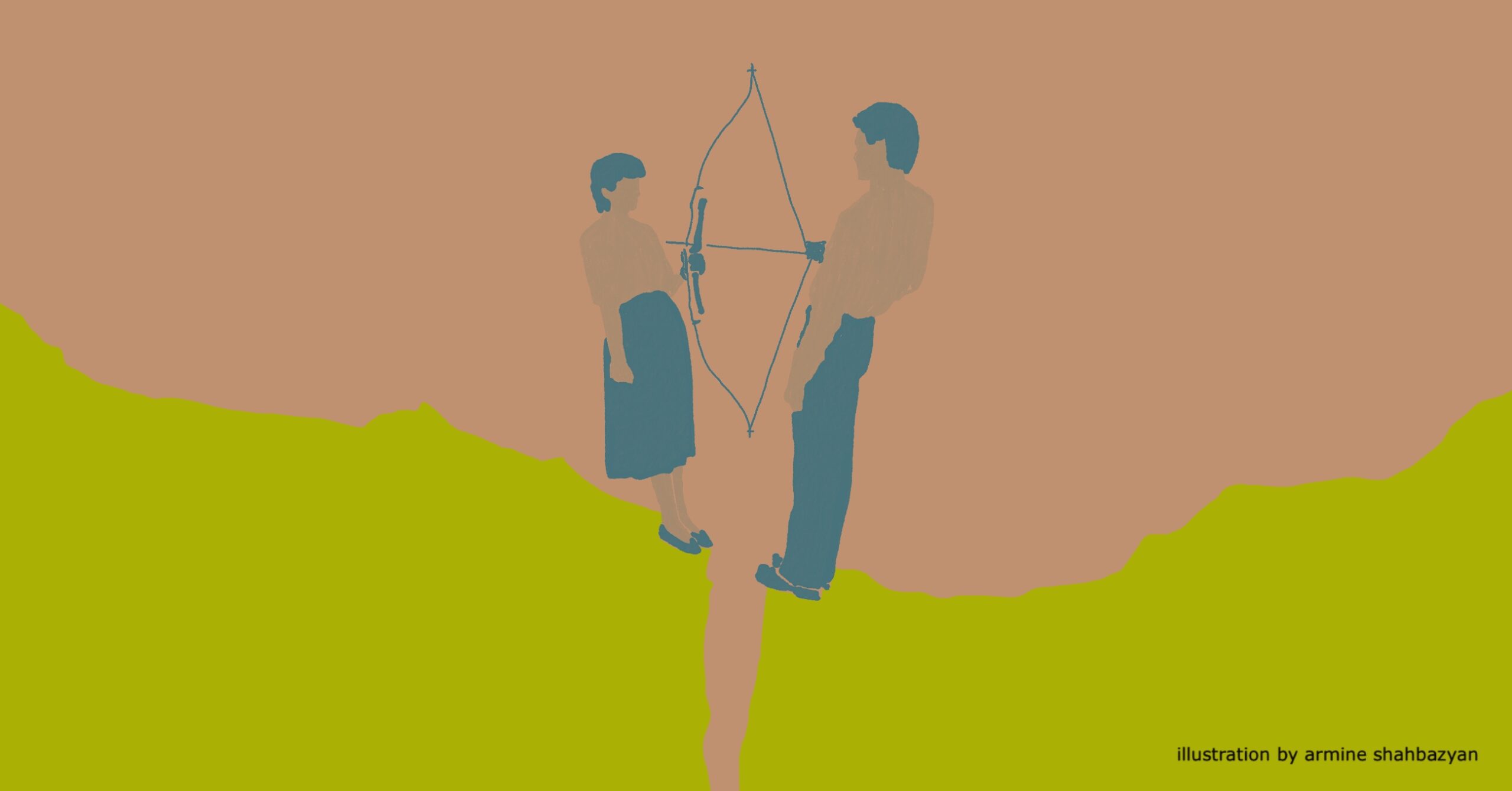
To process these emotions, I found myself turning to the language of modern dating, a surprisingly apt way to describe this undefined bond.
Situationship
*a relationship lacking clear definition and commitment
Who are we to each other? Who is more invested in keeping this going?
I’ve often observed that Armenians in the Diaspora are more patriotic—they tend to know Armenian history, traditional dances and songs better than many of us living in the Republic of Armenia. Watching my peers abroad preserve the culture we sometimes take for granted at home has made me feel both amazed and somewhat ashamed.
Perhaps it’s about longing; we tend to care more deeply for what is distant. But there’s also a deeper structural divide. Many in the Diaspora do not feel tied to the Republic of Armenia as a political entity. Their Armenian identity is rooted in memory, culture and survival, rather than in the nation-state. For them, Armenia represents a cherished homeland, but not always a state they trust.
To us in Armenia, that feels strange. To them, perhaps we seem careless or cynical. We look at each other, not quite sure what the other is thinking. We have never truly sat down and talked.
The divide deepens because we don’t even speak the exact same language. Armenian has split into two: Eastern Armenian, spoken in Armenia (and Iran), and Western Armenian, spoken in much of the Diaspora. Though familiar, they carry different histories and emotional worlds. We are connected, and still, not quite in sync.
Then there’s the matter of scale. Armenia has just around 3 million Armenians, while more than 10 million live in the Diaspora. The weight of history and loss has not only scattered us but also reshaped us. Most Armenians now live outside their homeland—a fact that makes this relationship unlike any other.
Love Bombing
*an intense display of affection to manipulate someone
Every few years, during war, disaster, or a national fundraising campaign, we reach out to the Diaspora with urgency and affection. “We need you. We love you. Come and save us.”
And many respond. In 2020, during the Second Nagorno-Karabakh War, Armenians across the world mobilized. They raised millions, organized protests and in some cases, even moved back to help. We called them “heroes”. We cried with them. We thanked them.
But once the crisis passed, the warmth cooled. Repatriates encountered bureaucracy and suspicion. Some were criticized for being “too emotional” or told they didn’t understand “the real Armenia.” Their idealism clashed with local cynicism, their enthusiasm—with institutional apathy.
Were they truly overreacting? Were they not “Armenian” enough? Or have we grown numb? Perhaps they aren’t overly emotional, perhaps we’ve simply become too good at pretending not to feel.
Ghosting
*abruptly ending communication without explanation
You fight for the homeland, only to be met with silence.
Let me be honest: inside Armenia, we have failed the Diaspora many times. We ask for help, and then forget to check in. We reach out in times of need—and disappear afterward. If I were in the Diaspora, I would be offended too.
But every coin has two sides. Sometimes we ghost not out of arrogance, but because we are barely keeping ourselves afloat. We wake up each day dreading bad news. We are squeezed between neighbours who want to destroy us—Azerbaijan and Turkey—and those with their own existential battles, like Iran and Georgia.
Our politics are fragile, our economy exhausting. Armenians in Armenia live under constant stress (which, of course, is no excuse). We sip overpriced Americanos in Yerevan cafes pretending life is easy, but this is just a coping mechanism for a country in survival mode.
When the Diaspora interprets this as “indifference” and calls for action, it cuts deep, because we’re simply trying to hold it together.
Breadcrumbing
*leading someone on with small gestures but no real effort
We offer speeches and symbolic gestures, but do we in Armenia offer real partnership? Do we include Diaspora voices in decisions or merely invite them to donate and applaud? It’s not enough. They know it. We know it.
We’ve asked them to preserve Armenianness in exile, and many have. Yet we haven’t always made room for them. Their “Armenianness” is sometimes treated as ornamental: valued in crisis, inconvenient during transition.
And that hyphen they carry—American-Armenian, French-Armenian, Lebanese-Armenian—isn’t just grammatical. It represents a daily balancing act between identity and assimilation. It’s a tug-of-war many are losing. They’re holding on, but they cannot do it alone.
Define the Relationship
*DTR
“So, what are we?”
Despite everything we’ve shared, love, pain, and the weight of generations, we’ve never really had the talk. What is this relationship and where is it going? Are we just here for the hard times, the wars, the crises, the commemoration of Genocide, or are we building something together?
Pashinyan’s controversial speech about the “real Armenia”—and the Diaspora’s strong reaction to it—has once again highlighted the divide between remembrance and realpolitik.
In the Diaspora, Armenians ask to be heard. In Armenia, Armenians ask to be trusted. Yet neither side knows how to meet in the middle.
Perhaps, to get there, we need to let go of often-used labels, “diasporan” and “hayastantsi” (Armenian from Armenia), and the assumptions they carry. To build something real, we must start seeing each other not as labels, but as Armenians.
In the end, maybe our relationship is not a situationship, a breakup, or even a marriage of convenience. Maybe it is something messier: a loud, co-dependent, wounded family, with too much history, too much collective trauma, and still, somehow too much love to walk away.
*In this article, “we” refers to Armenians in the Republic of Armenia, used for clarity—not to divide, but to better explore the relationship with the Diaspora.
**An elaborated version of this piece will appear in the Both Sides Face East series.
Rhythms
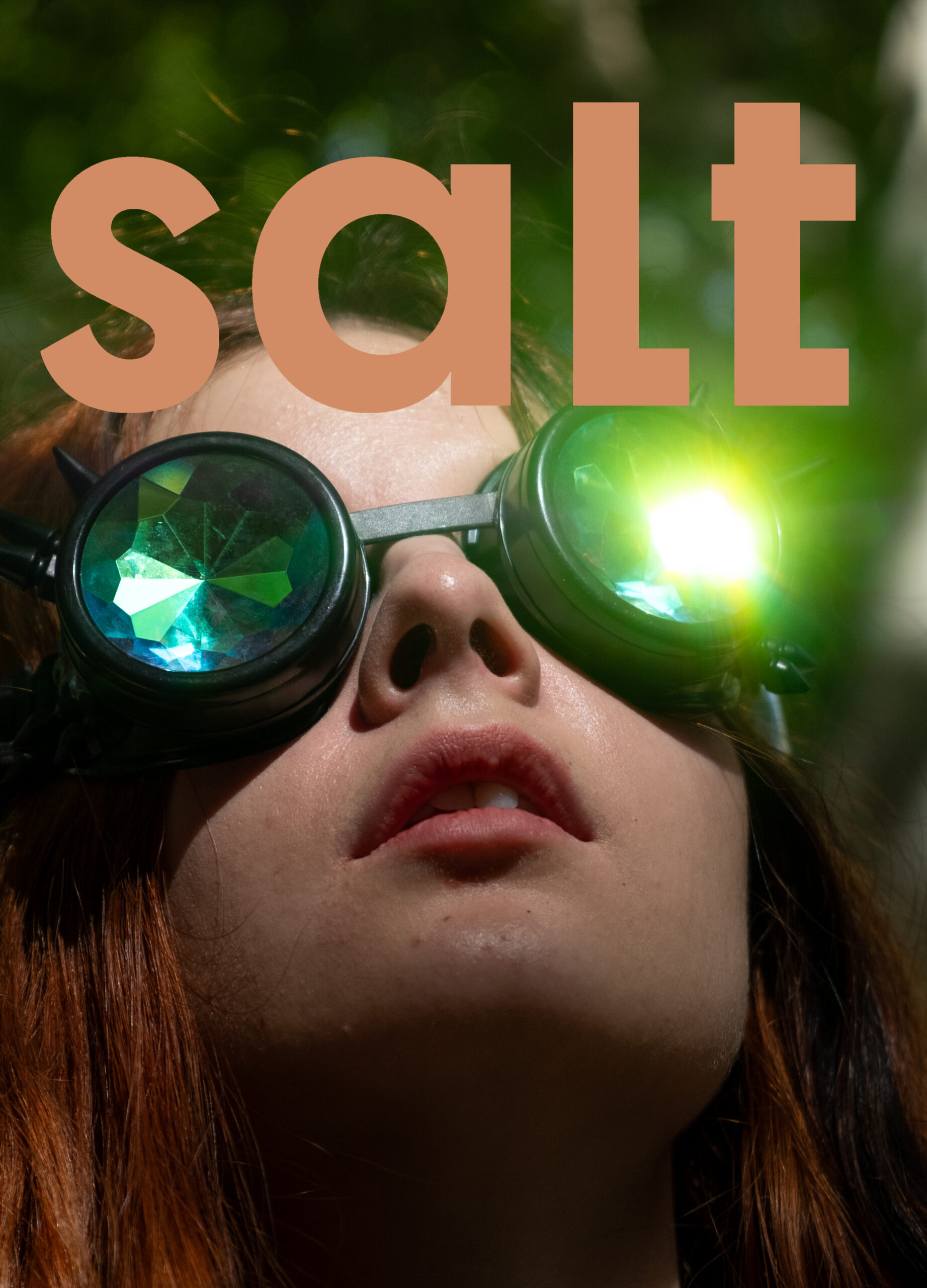
The August issue of SALT will immerse you in the rituals, rhythms and contradictions that shape contemporary Armenian life. From the evolving traditions of wedding rituals to the raw voices of Yerevan’s underground music scene, this month is about encounters, where heritage meets reinvention, where spectacle (hello, J.Lo) collides with satire, and where diaspora-Armenia relations unfold in all their messy, modern “situationships.” August is a month of intensity, and this issue embraces it with stories that are layered, unexpected, magnetic.
Cover photo by Lilith Margaryan, featuring Futurili.


Thanks Tatev for creatively sharing this important message on Armenia and its diaspora. We desperately need a dialogue or perhaps based on your format above, a dialogue with a coach or a therapist.