
Listen to the AI generated audio article.
“One day, quite some time ago, I happened upon a photograph of Napoleon’s youngest brother, Jerome, taken in 1852. And I realized then, with an amazement I have not been able to lessen since: ‘I am looking at eyes that looked at the Emperor.’ Sometimes I would mention this amazement, but since no one seemed to share it, nor even to understand it, I forgot about it.”[1]
Many visual historians would recognize that these are the lines with which French philosopher Roland Barthes opened his seminal Camera Lucida (1981). Written in the wake of his beloved mother Henriette’s death, Camera Lucida was an attempt to explore the unique significance of photographic meaning, which he divided into its obvious meaning (the studium) and that which is purely personal and depends on individual reading, that which “pierces the viewer.” He called this the punctum. What troubled Barthes was the collapse of these distinctions once a photograph was shared and reinterpreted by others.
With a similar feeling of “amazement I haven’t been able to lessen since,” one day, about a decade ago, I was handed two photographs over tea and gata during a familial gathering, somewhere in the boisterous geography of Southern California. Across the noise of gossip, jokes, and peals of laughter, I could make up an elusive story about some encounter, perhaps a meeting, a lesson maybe; somewhat feebly recalled, in some time securely bygone, in some other geographies that no longer belong to anywhere specific. Despite my absorption, the fragmented bursts of memories of family members made no sense in depicting the contents of the photographs, which I held tenderly in my palms, as if they were archaeological artifacts. Overcome with emotions caused by what I was seeing in those images, my art-historically trained eyes could not corroborate the fragments—what Barthes called “the photographic signifiers”—into a holistic, historical truth. My otherwise reliable eyes failed to confirm the coexistence of the two bodies in a single photograph, and thus, into a historical instance that occurred.
In the first photograph—visibly aged and discolored—the picture plane is aggressively interrupted by the surface of a tabletop on the right, against which a man in his late 70s is visible (fig. 1). Seated in a wheelchair as one hand rests at the edge of the table, he seems to be in the middle of a deep conversation, while five young individuals—four men in suits and ties and one woman in a floral shirt—listen to him attentively. A large ashtray occupies the tabletop instead of the expected papers and notes. No one is taking notes against the alertness and seriousness of the mood. The only piece of paper is apparent in the hand of the blond young man at the center-back of the photograph. The black linoleum flooring on the left accentuates the whiteness of the partition wall skirting the seated figures.
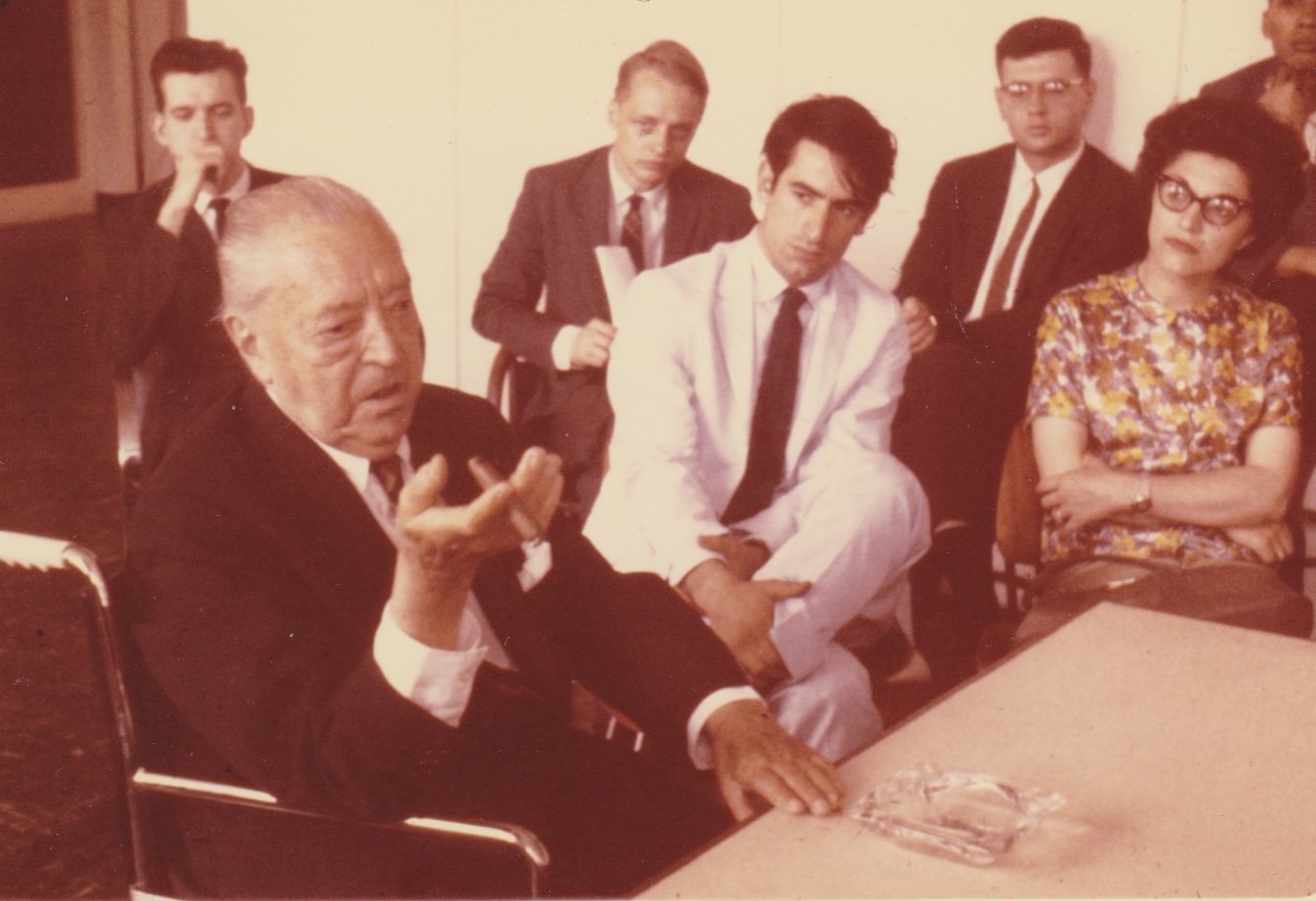
Figure 1. Veronica Vardanian Saginian in the Crown Hall, Illinois Institute of Technology, during a lecture by
Mies van der Rohe, Chicago, Illinois, ca. 1963.
Photo: Private Collection of Veronik Vartanian Saginian and courtesy of Anoosh Saginian.
In the second photograph, where the camera eye is positioned slightly lower and to the left of the first, the picture plane is dominated by the side profile of the older man (fig. 2). The studium indicates he is somebody. Here, the two central figures of the first image have disappeared, revealing two other figures, both men, in a row of individuals lining the partition wall to the right. With this second photograph, a strange spatial and human taxonomy is revealed: around the older man, the young white boys occupy the closest space to him, while the brown young boys, seated on high stools, are positioned in the photographic periphery, as if to buttress the event. What is beyond or behind the photographer is unknowable to us. However, what is, is that the sole woman, resting her brown purse on her lap while folding her arms, occupies the middle zone of not necessarily the photographic center, but the periphery of an awkward no-space—at once privileged but marginal, at once visible but utterly silent.
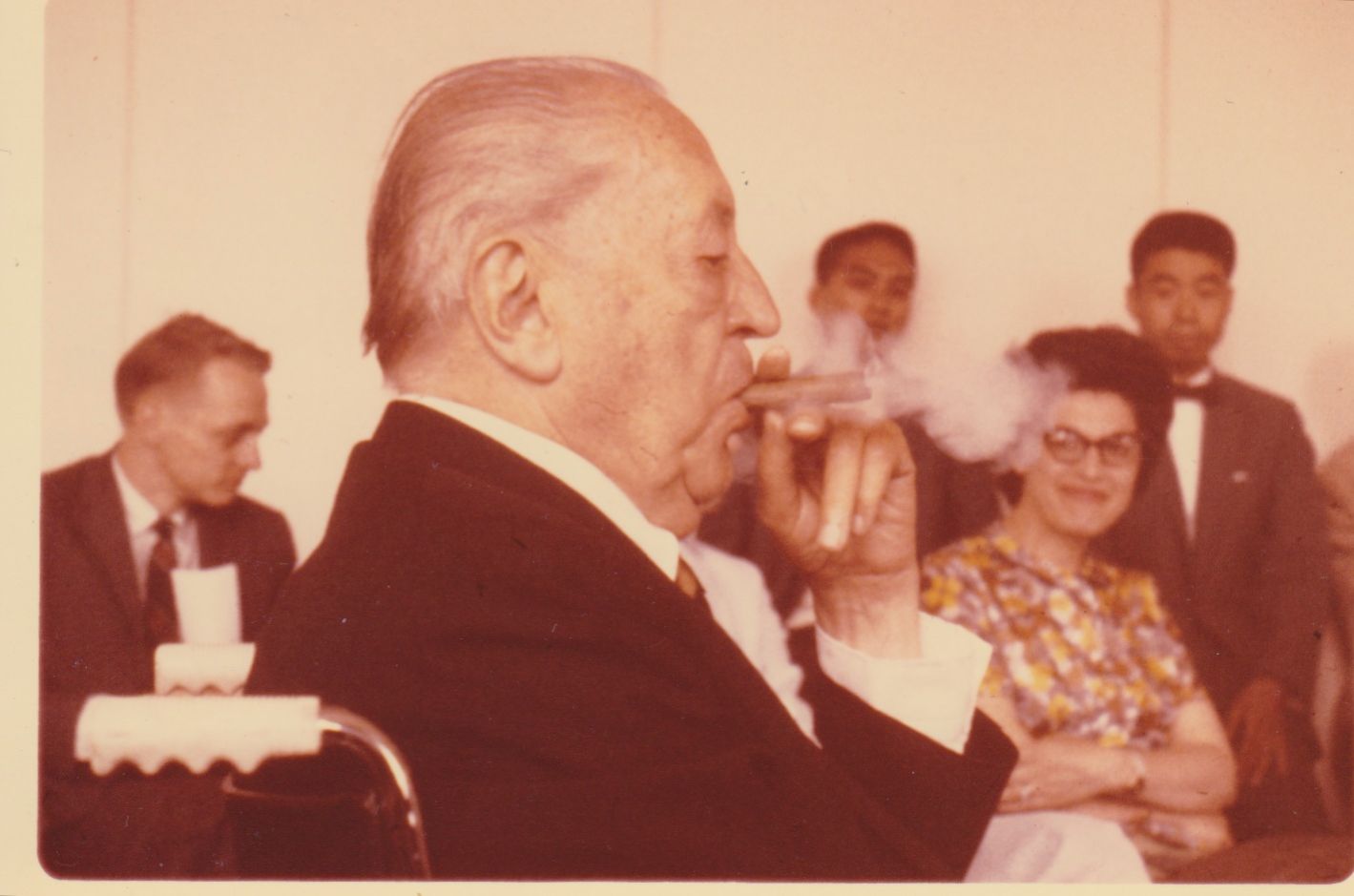
Figure 2. Veronica Vardanian Saginian, during a lecture by Mies van der Rohe, Chicago, Illinois, ca. 1963.
Photo: Private Collection of Veronik Vartanian Saginian and courtesy of Anoosh Saginian.
Barthes goes on to explain that “what the photograph reproduces to infinity…has occurred only once;” that it “mechanically repeats what could never be repeated existentially,” stating that “it is the absolute Particular”…the child’s pointing finger as she declares, “that, there it is,” “look,” “see” but says nothing else. Disappointed with his mother’s photograph, Barthes concludes that the photograph “provokes only her identity, not her truth.”
An examination of the collapse between studium and punctum enables the exploration of the agency of Armenian women within the art historical context of modern Iran. On that day, through the noise of gossip, jokes and laughter, I began to ponder that, perhaps, these photographs attested to what Barthes described as “she does not conceal, but she does not speak. Such is the Photograph: it cannot say what it lets us see.” At this realization, I lifted my head away from the photographs and looked toward the direction of a fragile elderly woman sitting in front of me, silently sipping her tea. Astonished, I muttered to myself: “I am looking at eyes that looked at the Emperor.”[5]
That elderly woman before me was Tehran-born Veronik Vardanian Saginian (1930-2015), one of the three highest-ranking students at Tehran University’s Faculty of Architecture in 1951—the first academic year this flagship institution admitted students through an entrance examination. In that moment, I realized I was looking into eyes that had looked into the eyes of “the Emperor”, that is, Ludwig Mies van der Rohe (commonly referred to as Mies), the famous German architect of the Modern Movement and former director of the Bauhaus. However, I had no idea the extent to which these photographs “cannot say what [they] let us see.” The historical truth that they concealed was a rich, largely overlooked art history of Armenian women architects in modern Iran.
In the years that followed, I gradually began to uncover, one silent photograph after another, the overlooked presence of Armenian women in architectural circles, despite the unyielding glass ceiling reserved for all women everywhere. Sifting through private collections, habitually fragmented and uncatalogued in unopened boxes, I encountered other striking photographs of Armenian women architects. In her niece’s home on the hills of Los Angeles, I was shown a photo of Nectar Papazian Andreeff (1924-2020), known as Iran’s first female architect, steeped in conversation with Mohammad Reza Shah Pahlavi (r. 1941-1979), encircled by a wall of powerful men (fig. 3).
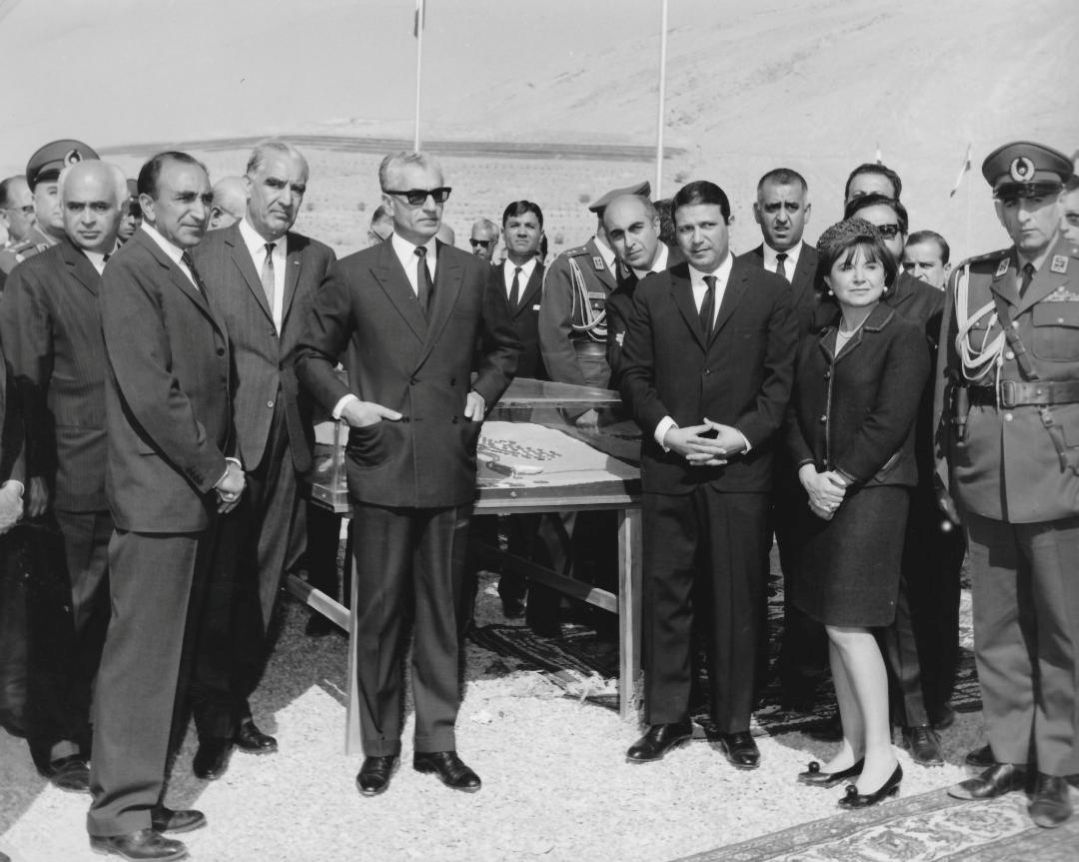
Figure 3. Nektar Papazian Andreeff in conversation with Mohammad Reza Shah Pahlavi during an inspection of
Pahlavi University campus, Shiraz, Iran, ca. 1970.
Photo: Private Collection of Nectar Papazian Andreeff and Emmanuel Ohanjanian, and courtesy of Aida Ohanjanian
Babajanian.
In the male-dominated faculty, she was succeeded by Victoria Ohanjanian-Fard (1929-2023). COVID-19 prevented me from meeting her in Miami, only to recover her through a photograph shared by her daughter after her passing. Set against the backdrop of the Armenian monastery of Saint Thaddeus in northwestern Iran, what the picture hid was her staunch feminism (fig. 4).
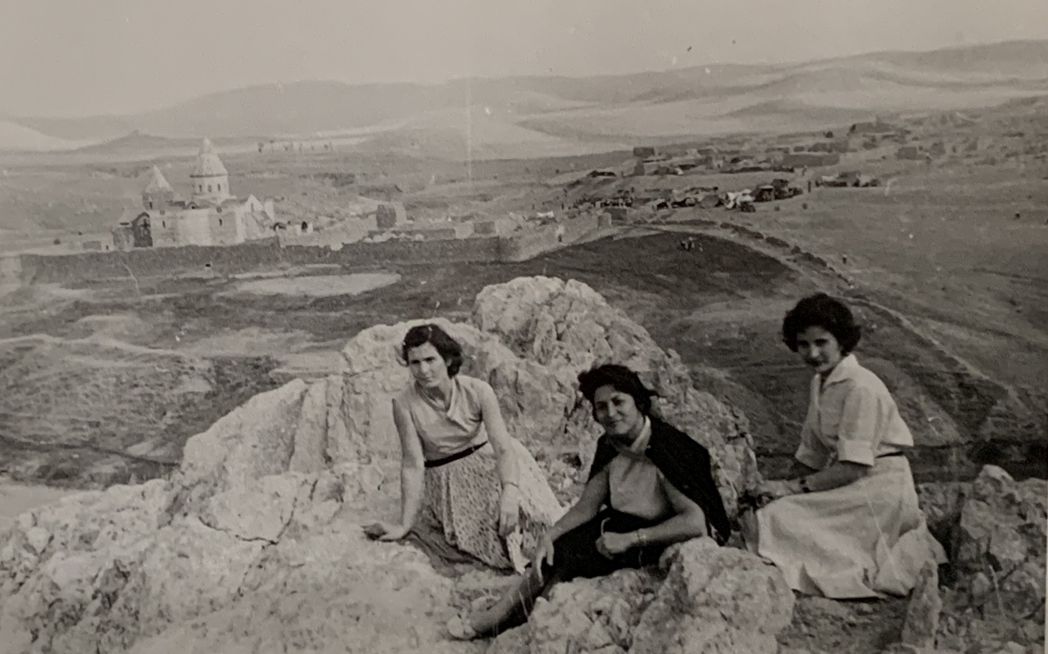
Figure 4. Victoria Ohanjanian-Fard (right) near St. Thaddeus monastery, Chaldoran, Iran, 1950s.
Photo: Private Collection of Victoria Ohanjanian-Fard and courtesy of Karine Megerdoomian.
Emma Toulu Hacopians Grigorian (b. 1930) and Rosa Mirzayan (1931-?) were the two other Armenian women who began their studies with Vardanian Saginian in 1951. After my interview with her, Hakopian Grigorian showed me a photograph of a group of architectural students on the streets of mid-1960s Tehran, which she described as “an ordinary day,” about which “I don’t remember much” (fig. 5). That she is the one who casually holds the photo camera in her hand, Barthes would have said, opens an entire line of inquiry and interpretation into power relations.
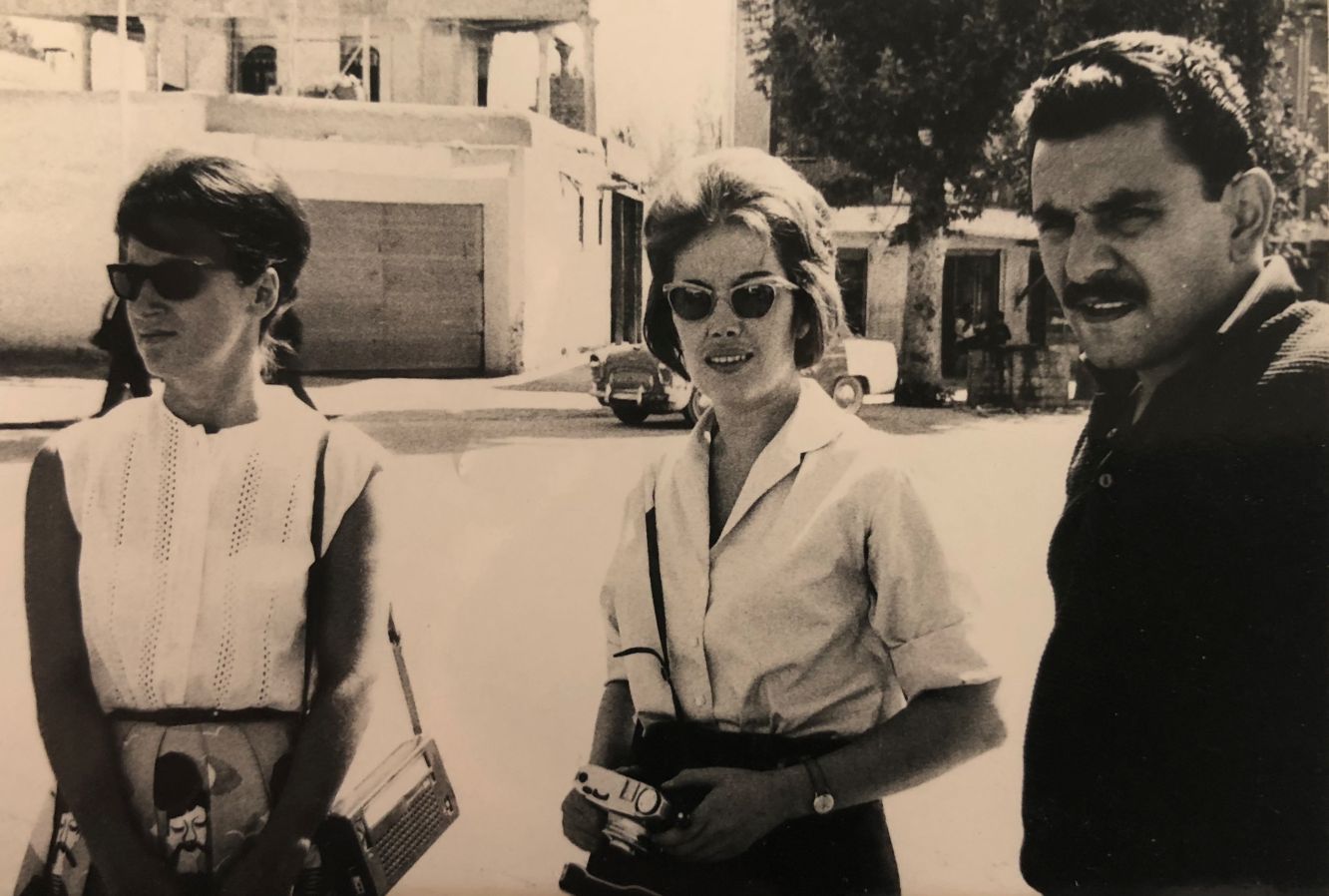
Figure 5. Emma Hakopian (center) and Andranik Grigorian (right) during a site visit or a field trip, Tehran, Iran, ca. 1960.
Photo: Private Collection and courtesy of Emma and Andranik Grigorian.
Finally, I learned of Lucy Mnatsakanian Nazarian (b. 1938) accidentally, mentioned in passing during an interview with one of the students of Tehran University’s leading architecture professor, Yougenia Aftandilians. It turned out that she was also Aftandilians’ student, whose only photograph, depicting her behind a drafting board, was taken in Massachusetts. It conceals a life(style) left behind, as though 1979 never happened (fig. 6).
* * *
Arts & Culture
The Armenian Refugee Who Photographed a Defining Era of European Migration
The archives of Studio Rex, a photo studio founded by Armenian Genocide survivor Assadour Keussayan in Marseille, document decades of European migration. These once-practical photographs have become powerful historical artifacts chronicling diverse immigrant experiences from the 20th century.
Read more
The Seven-Year Restoration of the Mother See
After a seven-year restoration, the Mother See of Holy Etchmiadzin, considered the world’s oldest cathedral, was reconsecrated in 2024, a historic effort that preserved sacred murals, reinforced the ancient structure and culminated in a chrism blessing.
Read more
The Power and Politics of Yerevan’s Statues
Yerevan’s statues reveal shifting political ideologies and national identity, from Soviet heroes to national figures, international allies and “symbolic” women. Hovhannes Nazaretyan explores how public monuments reflect power, memory and Armenia’s evolving historical and geopolitical narratives.
Read more
Dreams Against Empire: Parajanov’s Cinematic Defiance
In this poetic exploration of filmmaker Sergey Parajanov’s radical defiance against Soviet conformity, Ani Poghosyan traces how his visionary cinema, rooted in Armenian identity and artistic freedom, challenged empire, celebrated cultural memory, and outlived the system that sought to silence him.
Read more
Pınar Selek’s Intellectual Journey of Resistance
Taline Oundjian traces the intellectual and political journey of Pınar Selek, a Turkish feminist and anti-militarist persecuted by the state, whose work on structural violence, memory, and the Armenian genocide offers powerful insights into resistance, identity and forgotten histories.
Read more
Lory Bedikian’s “Jagadakeer: Apology to the Body”
Lory Bedikian’s book of poetry “Jagadakeer: Apology to the Body” is a poignant exploration of immigrant trauma, familial bonds, identity and mortality. It announces and denounces our fears and some of our most innermost pain with prescient beauty and rare honesty, writes Christopher Atamian in this review.
Read more
Return of the Ancient Goddess
Fragments of the statue of the Goddess Anahit, on loan from the British Museum, are on display at the History Museum of Armenia until March 2025. Lilit Avagyan traces the remarkable journey of these rare relics, which stand as exceptional testaments to Armenia's ancient cultural heritage.
Read more
Lucy Yeghiazaryan’s Musical Dialogue Between Armenia and Jazz
Lucy Yeghiazaryan, an Armenian jazz vocalist based in New York City, explores the connections between Armenian melodies and American jazz standards in her album, “Beside the Golden Door”, creating a powerful fusion bridging cultural divides while navigating her own identity.
Read more
All the Ways We Lied: Terror, Redemption and the Family Novel
Aida Zilelian’s "All the Ways We Lied" follows the complex lives of the Manoukian sisters in Queens, New York. Tackling themes of trauma, identity, and resilience, Zilelian presents a raw, authentic portrayal of a middle-class immigrant family grappling with their past and present. A review by Christopher Atamian.
Read more
The Women of “Bazaarastan”
A 36-hour bus ride from Yerevan to Istanbul, passing through Georgia due to the closed Turkey-Armenia border, explores the lives, struggles and surprising bonds among the women struggling to make a living known as “bazaarchis”. It also reveals hidden stories of women “beaten down by their destiny.”
Read more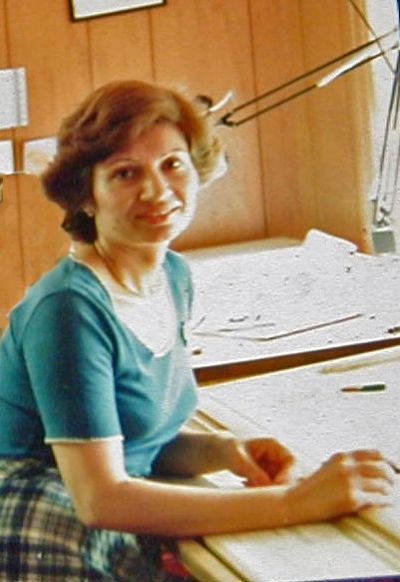
Figure 6. Lucy Mnatsakanian Nazarian at the drawing board in Stoneham, Massachusetts, USA, 1984.
Photo: Private Collection and courtesy of Grigor and Lucy Nazarian.
Unrelenting silence—in and out of photographs—permeates the history of Armenian women in general, and women architects in particular. Yet, their (art) histories are exceptional. In June 1958, Vardanian Saginian graduated at the top of her class, automatically qualifying for a generous state grant to study abroad. Thinking she was one of the boys, her diploma was signed by Director Mohsen Forughi. The diploma had to be reissued. On July 5, she received a gold medal at Sa’adabad Palace, where Iran’s top students had an audience with the king. Having postponed a marriage proposal untithe l her degree was completed, Ara Saginian finally married her on December 28. Soon after, she joined Hushang Seyhun’s firm, and oversaw the construction of a new structure on the grounds of the parliament. Upon Ali Amini’s appointment as Prime Minister, Vardanian Saginian received a letter from the Education Ministry, informing her that her state scholarship would expire if not used within a year. L’École des Beaux-Arts was not an option. She neither knew French nor did she want the school’s “exaggerated” and “impractical” design solutions.[2] Sifting through her options at the Iran-American Society in Tehran, she fell upon the Illinois Institute of Technology (IIT). After a two-month orientation in Washington, D.C., she began her Master of Science in Architecture in the fall of 1962.
Vava: Reimagining Armenian Impressionism Through a Feminist Vision
Many know Vava Sarkis as a muse and model for French Fauvists Henri Matisse and Raul Dufy. But few know that Vava was a successful artist in her own right, revered by many art connoisseurs around the world.
Read moreAt the end of her second year, as Vardanian Saginian was preparing her thesis project, her husband Ara joined her. “I would go to the Crown Center,” he recalls, “and help her build the trees on her model.” Some afternoons, Mies sat at the center of his masterpiece, the Crown Hall. They gathered around him as if he were a deity. She sat a few steps from him. The smoke from his cigar did not bother her, even though she did not smoke. During those afternoons, the faraway margins of an ancient oriental empire—an Apostolic Christian, an Armenian, an Iranian, a woman—would come face to face with the canonical center of the Modern Movement—a modernist, an atheist, a German, a European, a man—certainly, the man in modern architecture. Mies would have been pleased, for Vardanian Saginian appeared to be the exemplary model of the modernist architect: aloof to politics, sure of modernity’s certainty, foreign to her marginality, and innocent to the systemic and structural violence that rendered “form-follows-function,” “less-is-more,” and “art-for-art’s-sake” both aesthetically and ethically normative. In June 1964, she graduated and returned to Tehran, where aesthetic avant-gardism and political naiveté continued to define the rest of the Pahlavi era until its collapse in 1979.
In teasing out photography’s hidden history, instead of coloring these Armenian women in the “vocabulary of victimage” often ascribed to “minoritarian modernity,” we might want to give them the agency of cosmopolitanism as “ways of living at home abroad or abroad at home—ways of inhabiting multiple places at once, of being different beings simultaneously, of seeing the larger picture stereoscopically with the smaller.”[3] When Vardanian Saginian went around Chicago’s black neighborhood, knocking on doors of African American families, earnestly asking if they had a room to rent, only to be confronted with a skeptical response in the broader context of American racism and race politics, she was operating on an inclusive cosmofeminism, where “domesticity itself is a vital interlocutor and not just an interloper in language, politics, and public ethics.” Somewhat puzzled by how Vardanian Saginian’s eulogy had glossed over an active career at Tehran University and IIT, and with Mies and his Bauhaus-IIT associate, Ludwig Hilberseimer; disillusioned with stories of domesticity and docility, instead of recording the fact that she raised her children against the backdrop of Frank Lloyd Wright structures, I returned to where I had started: the photograph.
On a second look, particularly at the second photograph, I understood the source of my initial astonishment: the punctum—as Barthes put it, “a detail overwhelms the entirety of my reading.” Vardanian Saginian’s smile. Her smile embodies what Barthes in 1971 called the “third meaning,” later crystallized in Camera Lucida (1980) as the punctum theory. That smile carries the “subversive bearing” of the event. Could we read her gentle, utterly feminine smile that generously imparts a direct, confident gaze upon Mies—who holds the phallic tick cigar in his mouth and emits a pall of smoke—as the enactment of domesticity and sentimentality as a tactic of power? This “un-doctored and naïve” photograph, as Susan Sontag observed, “creates a duplicate world, of a reality in the second degree, that is more authoritative than the one perceived by natural vision.”[4] Look, see, is not her smile, in the second photograph, piercing through the pall, defying the aggression of the smoke, and thus confirming the centrality of Mies? Might we read her practice of cosmofeminism as an act of redrawing power relations, where “centers are everywhere and perimeters nowhere”?
***
Author’s note: I first presented this paper under the title “Iran’s Armenian Women and the Revolutionary Intentions of Avant-garde Architecture” at the 2nd Feminist Armenian Studies Workshop: Gendering Resistance and Revolution, at the University of California, Irvine, on May 4, 2019. It was uploaded on YouTube at 3:42 minutes. This is a small part of an ongoing book project on the role of Armenian architects in the globalization of modernism in the 19th and 20th centuries.