
By the time this digest reaches you, a lot may have changed. Or nothing at all. The perpetual uncertainty of West Asia—that region still labelled, as if under some nefarious colonialist spell, the “Middle East”—has become a daily condition, a karmic state one simply endures if one chooses to remain.
And why remain? It’s a question I’ve been asked repeatedly since moving back to Armenia a decade ago. I could pen something poetic about patria and duty. But that wouldn’t be entirely honest. Each of us has a driving need—some subconscious complex—that ties us to a particular place, and my reasons are surely different from the thousands of others who, like me, have the privilege of choosing where to belong.
What’s become increasingly important in my own relationship with this country is its strange, almost inadvertent condition as a place of resistance. Armenia exists against the odds. It sits on the geological and civilizational faultlines that bind it to a state of perpetual unrest and becoming. In a world where globalizing homogeneity and extreme polarization generate total alienation and indifference, any place that still produces the necessary tensions for defiance is one to be treasured. And nowhere are those tensions more evident than the contradictorily divergent, mysteriously flourishing and unexpectedly multipolar arena of the local arts.
EXHIBITIONS
Event of a Thread: Global Narratives in Textiles
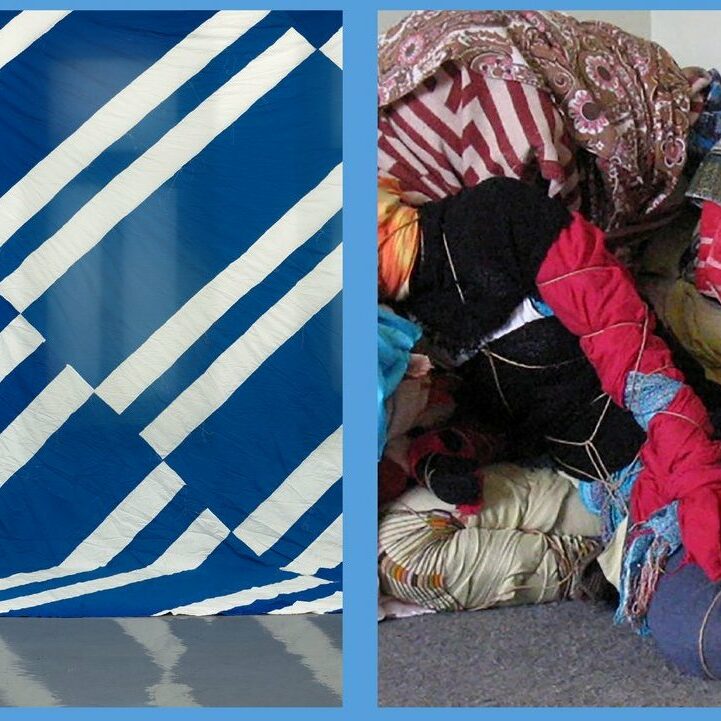
What is so special about textiles? The thing that every human being has around their body from the moment they are born to the day they die? It is not a question that particularly troubles us in daily life, except when we agonize over sartorial choices in the morning, or have vague pangs of ecological guilt about updating our wardrobes to fit yet another trend. But there is far more to the history, culture, politics and economy of textile production than we ever really bother to understand. That, essentially, is the key premise behind the travelling exhibition Event of a Thread: Global Narratives in Textiles, open since April 3 at the National Gallery of Armenia.
Initiated by Institut für Auslandsbeziehungen (IFA) and co-organized by the National Gallery, the Yerevan edition arrives after previous presentations in Limassol, Prishtinë, Istanbul and other cities. As in earlier iterations, a core group of works by 15 contemporary international artists from IFA’s collection is placed in dialogue with local artists. Unlike previous editions, however, the Yerevan show takes a broader historical sweep, ranging from 19th-century and Soviet-era commemorative carpets to works by Mariam Aslamazyan, Sergei Parajanov and Marcos Grigorian, alongside younger artists such as Valentina Maz, Lianna Mkrtchyan and Tsolak Topchyan. The result is less a survey of textiles in contemporary art than a multidisciplinary reflection on the evolving significance of the material as a visual, cultural and communal language. The works gathered here alternately enact a scathing critique of textiles’ usurpation by patriarchy — as in Astghik Melkonyan’s darkly funny performance video Bokhcha — or reveal their hidden emancipatory potential, as in Ulla von Brandenburg’s luminous quilts.
Of particular prominence is a thread running through the exhibition on the gendered taxonomies of textiles and the persistent misconception that fabric is an innocuously decorative product of female domesticity. As the archive-based installation on the Bauhaus school makes clear, alongside quilts, sculptures and video works by European and Armenian artists, textiles are as fundamental to humanity’s world-making as metal, stone or written language. As a system of communication, we still rely on them to the same degree that our prehistoric ancestors had. The difference is that the enormous labor, knowledge and political mechanisms behind textile production and consumption remain almost invisible to us today, which is why exhibitions such as this one have become increasingly prominent over the past two decades as instruments of critical awareness and renewed appreciation for the immense richness of the cultural narratives woven through this material.
For me, as one of four co-curators alongside Asya Yaghmurian, Susanne Weiß, and Inka Gressel, the most precious quality of textiles is their almost unparalleled democratic reach. No matter where they are made or used, there is no hierarchy of intellectual or artistic achievement in the stories they carry. That is undoubtedly why this is one of those rare instances where the dialogue between Armenian and international artists truly materializes — illuminating, provocative and often quite spectacular.
Exhibition: “The Event of a Thread. Global Narratives in Textiles: Yerevan”
Where: National Gallery of Armenia
Republic Square, Yerevan
Dates: Open until May 31
The Echo: Austrian and Armenian Artists Under One Roof

The National Gallery isn’t the only place where one can see an unfolding cultural dialogue between Armenian and European artists. HayArt Contemporary Art Centre is holding yet another exhibition of prints by 20 local and 20 Austrian contemporary artists. As is often the case with HayArt’s all too frequent shows of printmaking, there is little if any curatorial rhetoric behind the event—aside from the superficial gesture of “exchange” indicated by the title. But it’s not clear from the show itself who is exactly echoing whom and, more importantly, why. As good as it is to have more trans-nationally orientated exhibitions in Armenia, many of them still operate along those antiquated diplomatic tropes inherited from Soviet nomenclature. To put it plainly, Austria, with its rich and centuries-long tradition of printmaking has a remarkably elevated and attentive attitude to this art form, which is sadly very lacking in Armenia (despite its own, quite extensive histories of print–based media that go back to the 18th century). So in this instance, the conjoining of these two trajectories only serves to disadvantageously expose the uneven quality of the Armenian works. I guess this compare and contrast approach can at least have some positive outcome as an occasion for critical self-reflection.
Exhibition: “The Echo: Austrian and Armenian Artists Under One Roof”
Where: HayArt Center
7a Mashtots Ave., Yerevan
Dates: Open from March 20
Arshile Gorky: New York – Yerevan, A New Acquisition
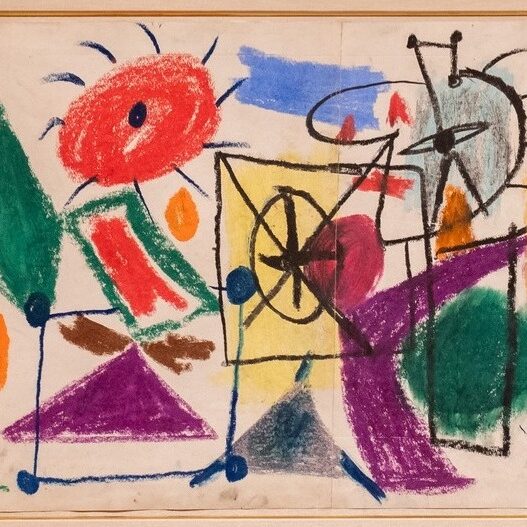
The Yerevan arrival of one of the more elusive pearls in the crown of Armenian ethno-cultural mythology — Arshile Gorky — has been teased with a series of cryptic, somewhat over-dramatized video reels on the National Gallery’s social media pages. The headliner of the coming show, however, is no secret. Earlier this year, Armenia’s government announced it had spent over half a million dollars on two acquisitions for the permanent collections of the History Museum and the National Gallery. We already have the chance to wonder at the exquisitely carved 12th-century wooden door attributed to an as yet unidentified Armenian church or monastery. The Gorky pastel was unveiled on April 15, in the presence of the prime minister.
Unlike the medieval door, the Gorky drawing isn’t a once-in-a-lifetime find; there are plenty of high-quality works by the artist still available on the market. But its symbolic significance can’t be overstated. Until now, Gorky was the only world-renowned 20th-century artist of Armenian origin unrepresented in Armenia’s museums (an early figurative pencil drawing in the Gallery’s collection is too minor to count). Being a work on paper, this circa 1944 pastel cannot go on permanent display, but it provides a vivid window into Gorky’s mature period, when he was nearly free of the heavy shackles of his spiritual fathers—Picasso, Miró, Ernst—and on the pathway toward becoming one of the inventors of Abstract Expressionism.
The intensely saturated, roughly drawn forms already speak of Gorky’s defiant non-conformism: a brazen disregard for compositional and color harmonies that should make this a random clutter of clashing forms. Yet, as in the unencumbered worldview of a child, it all miraculously coalesces into a holistic and entirely distinctive landscape of mental impressions and projections. Even as a relatively modest example of his style, the work clearly indicates why Gorky is, in many ways, the apogee of modernist subjectivity, and why he proved so seductive to Soviet-Armenian painters who began to discover his work from the late 1950s onwards.
His influence on the cautious development of Armenian abstraction is widely acknowledged but has never been the subject of a standalone study or exhibition. The show at the National Gallery sets out to redress this lacuna, presenting the newly acquired Gorky alongside works by Vigen Tadevosyan, Seyran Khatlamajyan, Ruben Adalyan, Henri Elibekyan, and others who found liberating inspiration in their compatriot’s anguished search for transcendental, inner dimensions. How successfully this enlists Gorky within the narrative of modern Armenian art remains to be seen, but that such an initiative can be undertaken in material rather than purely theoretical terms, in Armenia itself, is already cause for celebration.
Exhibition: “Arshile Gorky: A Historic Acquisition”
Where: National Gallery of Armenia
Republic Square, Yerevan
Dates: Open from April 15
Grigor Khanjyan: Genius Loci
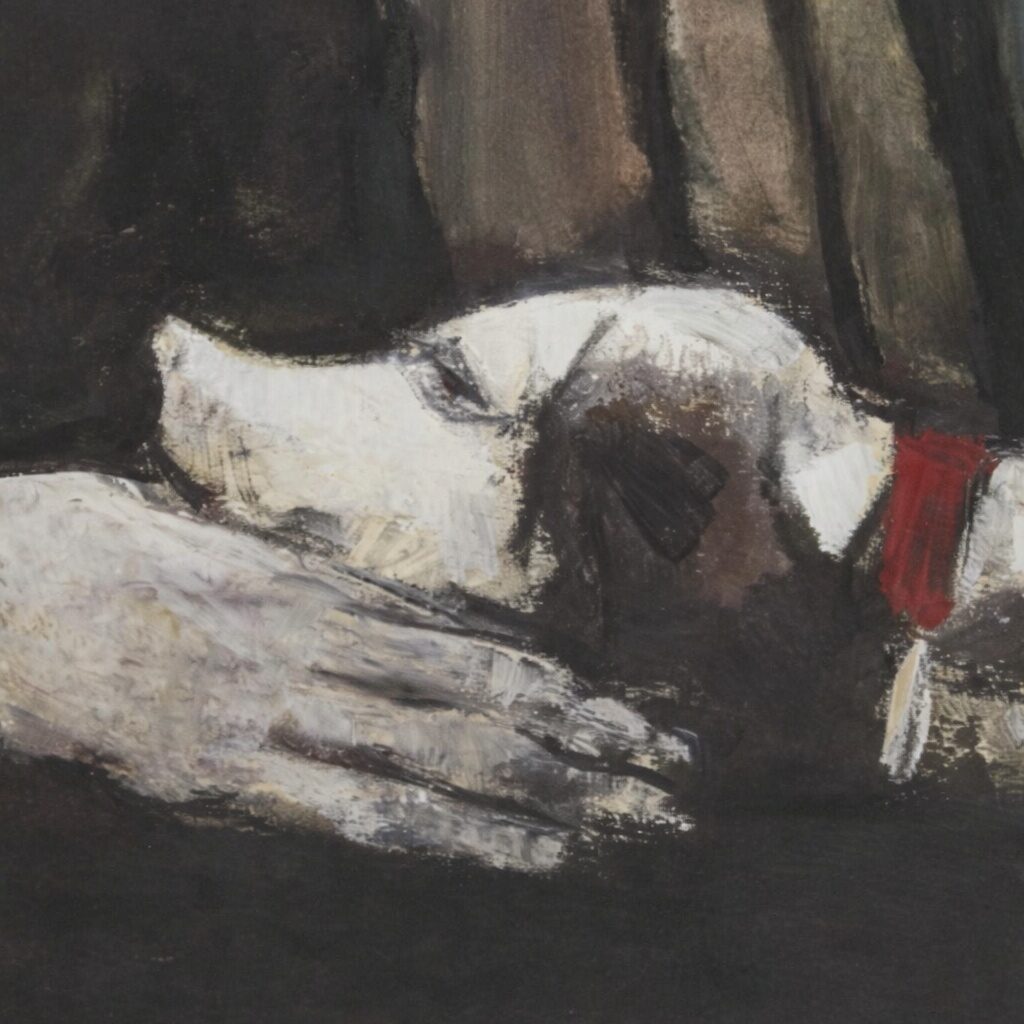
Armenia has surprisingly many artists who enjoy collective public adulation, but few come close to the reverence accorded to Grigor Khanjyan (1926-2000). One of the visual architects of Armenia’s neo-nationalist rebirth as an independent, post-Soviet country, Khanjyan rose to prominence almost immediately after graduating from the Yerevan Fine Art Academy in 1950. A prolific book illustrator, painter and designer, he managed to become a household name due to his remarkably vivid images for literary classics like The Undying Belltower, Gikor, Siamanto and Khjezare, as well as elaborate thematic paintings and Gobelins that made classical Armenian subjects look as if they painted by Renaissance masters. The cinematic dramaticism of his academically exacting style may have propelled him into the mass consciousness, but for this critic at least, Khanjyan’s true greatness is most evident in his vast travel series. Having journeyed extensively across Europe and Latin America (at a time when such opportunities were extremely limited), Khanjyan returned with hundreds of sketches some of which he later turned into large-scale pastel suites. On his 100th anniversary, the Nikoghosyan Foundation has organized an intimate show of these travel impressions from France, Italy, Spain, Mexico and elsewhere. Unshackled from the demands of ideological formality, these swiftly executed drawings reveal Khanjyan’s astonishing powers of observation and uncanny psychological insight into places and cultures far removed from his own. The artist’s classicist methodology blossoms here into an electrifyingly vivid vision that captures a sense of an environment with the kind of breathtaking effortlessness and conviction that completely absorbs the viewer into the mise-en-scene. But, what is perhaps most noteworthy here is the tangible gentleness of Khanjyan’s gaze and his deeply humanist interest about the lives and customs of foreign people, whose difference he is able to articulate with utmost respect and admiration, while finding enough simple threads of pure empathy to make them understood and familiar.
Exhibition: “Grigor Khanjyan: Genius Loci”
Where: Nikoghosyan Cultural Foundation
19-21 Saryan Str., Yerevan
Dates: Open until April 25
Ara Sargsyan: From Sculpture to the Stage
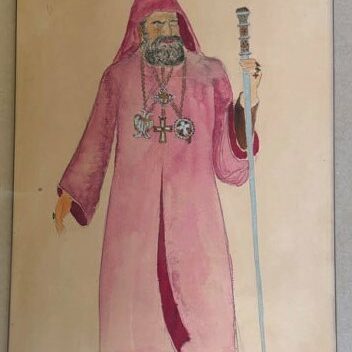
The city of Artashat in the vicinity of Yerevan isn’t exactly a cultural hub. It’s one of the few relatively major cities in Armenia without a single museum and I can’t remember the last time it hosted an exhibition of any type or significance. So it’s a pleasant-ish surprise that the city’s old (and once highly venerated) theater is hosting an exhibition dedicated to the 124th anniversary of the esteemed sculptor Ara Sargsyan (1902-1969). Sargsyan is today mostly remembered for his grand Mother Armenia monument in Gyumri, but during his heyday, he was one of the most formidable figures in Armenia’s art scene—a domineering patriarch who presided over the Artist’s Union and had close ties to the communist government’s top echelon. His artistic career was equally conflicted. Starting out with some remarkable avant-garde sculptures and monuments (one of which still stands in Gyumri), Sargsyan dramatically changed track in the mid-1930s to socialist-realism, becoming one of the key ideologues of this officially-sanctioned “style” in Armenia. It is during this period that he also became actively involved in theater design, an area that the exhibition in Artashat is largely focused on. Alas, the monumental power and a kind of demiurgical energy which instills even the overwrought classicism of his Stalinist sculptures, is completely absent in his stage design. It’s as if the artist was trying to mask the patent artificiality of the theater with the kind of illustrative, but redacted realism with which the official Soviet cultural apparatus was trying to mask the actual, dreadful realities of the communist empire. So, despite its hagiographic character, this is the kind of show that inadvertently will reveal a lot about the fissures of the past century to a discerning and critically-minded visitor.
Exhibition: “Ara Sargsyan: From Sculpture to the Stage”
Where: Ara Sargsyan and Hakob Kojoyan House Museum
70 Pushkin Str., Yerevan
Dates: Open until April 21
Guron. Drawing, Carpet, Poster
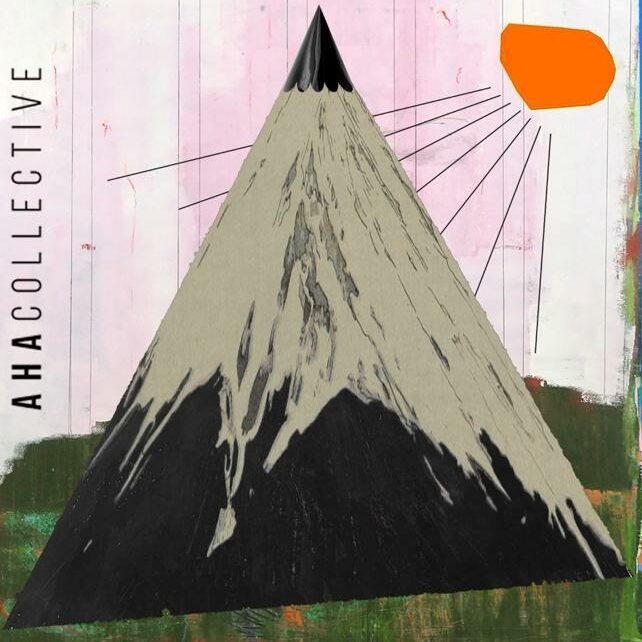
The way Russian émigré artists, designers, and other art-world figures have transformed Armenia’s cultural scene after fleeing the consequences of the Russia-Ukraine war in 2022 will surely become an object of serious study in later years. This presence is not straightforward in its effect, especially given the large imbalance in scale between the local and Russian art scenes. But the fact that the broader ecosystem of art-making and consumption here has become infinitely more cosmopolitan, diverse, and, well, interesting as a result of this migratory wave is undeniable. Making the case is the new show at AHA Collective, presenting textile and poster designs by one of the most exciting Russian graphic artists working today, Igor Gurovich (b. 1967). His impressive career trajectory is too long and broad to rehearse here. Suffice to say he has worked across everything from theater and book design to advertising, and is widely known as the founder of the celebrated Ostengruppe design bureau.
Around the time he moved to Yerevan, Gurovich also branched out into textiles, creating over fifty machine-woven Gobelins that bring his wildly imaginative tableaux into the domestic interior. Clearly a proponent of the excessivist strand of post-modernist aesthetics, Gurovich conjures a world of “impossible fragments” where Matisse and Mughal miniatures might meet Bauhaus minimalism and Art Deco. This methodology of post-industrial pastiche has a distinctly 1980s vibe, and one might assume it would look positively antiquated today. Yet Gurovich makes it work because his strangely captivating compositions are underpinned by a structure of storytelling and unbounded visual fantasy that often recalls Bruegel and Bosch. That an artist of this calibre has made a base in Yerevan, and will soon design the posters and the red carpet of the Golden Apricot Film Festival, is a real boon that will surely leave its lasting mark.
Exhibition: “Guron. Drawing, Carpet, Poster”
Where: AHA collective
31 Moskovyan Str., Yerevan
Dates: Open until May 3
Criterion: Achot Achot, M. Karo, Narek Avetisyan

“What happens when what we seek to measure cannot be measured?” This is the compelling question at the heart of an exhibition-dialogue between three major representatives of Armenian conceptual abstraction—Achot Achot, M. Karo and Narek Avetisyan—held at the Cafesjian Center for the Arts. All three stand at the roots of the post-Soviet contemporary art boom and the emergence of conceptual approaches in Armenian painting, and all have carved distinctive marks in this genre since the 1990s, though only M. Karo (Karo Mkrtchyan) works exclusively in abstraction.
What the three artists tackle here is the intangible—phenomena that surpasses and eludes measurement, exposing the limits of rationalism and the infinite capacity of life, nature and universe to foil our attempts at understanding. Differing in approach, ephemeral installation, video, geometric abstraction and performative painting, they converge around the themes of the transcendental and the sublime. If the idea of the “spiritual” in art was long washed away by the disenchanted ironies of postmodernism, it returns here as a ghostly apparition, persisting like some enigmatic Object Manqué, illegible in concrete terms, yet irrefutably present.
The oblique layers of these invocations may prove too philosophically arcane for anyone unfamiliar with 1970s conceptualism, Kantian aesthetics, Vedic traditions or French phenomenology. But the exhibition itself, put together (somewhat ironically) with an exacting sense of rhythm and structure by curator Armen Yesayants, is a sensory experience that feels like a temple to the meditative delights of abstraction. One needs little more than patience and an open mind to find genuine fulfillment in such a space.
Exhibition: “Criterion”, Achot Achot, M. Karo, Narek Avetisyan
Where: Cafesjian Center for the Arts
Cascade Complex, Yerevan
Dates: Open until June 6
Karen Ohanyan: Charlie’s Dream
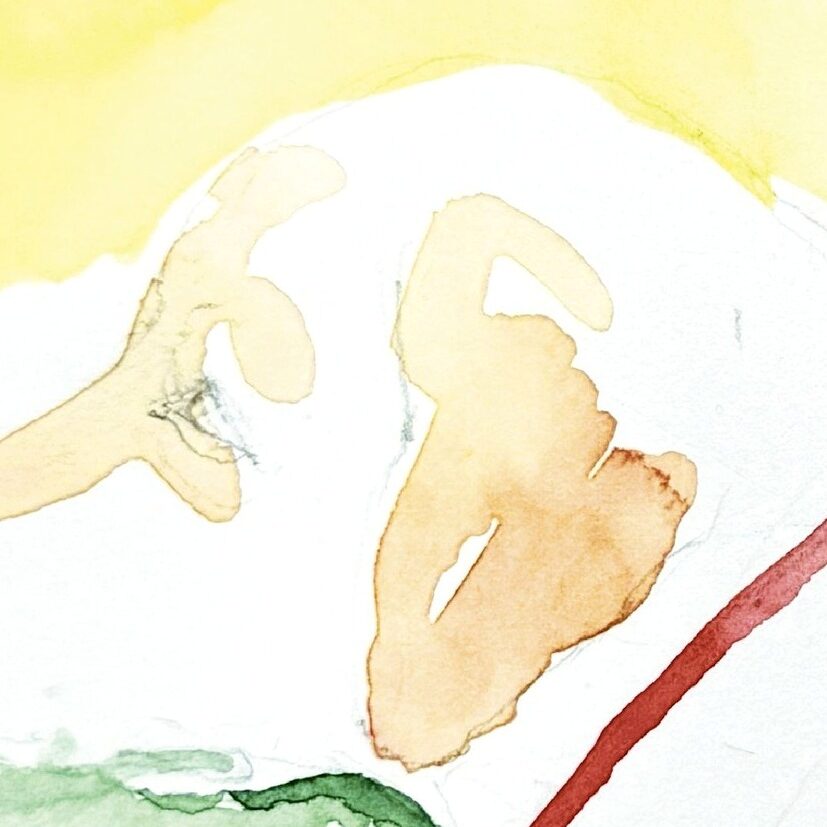
I never owned a dog, so it’s a mute question to me what canines may actually dream about. The constant affections of their owners? A secret hoard of crunchy bones? World peace? Karen Ohanyan, one of the most accomplished and internationally-established contemporary Armenian artists of the last two decades, has a lot more insight into the subject. And that’s not only because Ohanyan has been a long-time dog owner who has built a kind of extra-sensory connection with his pets (as so often appears to non-dog owners). Rather, as an artist, Ohanyan stands out as someone who has been consistently in search of new, often non-human perspectives and subjectivities that can reveal a different view and experience of the world. His latest show at Arahet Cafe presents a series of watercolor sketches where the artist tries to imagine (or relay) the inner world of his pet Charlie with whom Ohanyan detoxed from urban life in the village of Kaghsi. Though I haven’t yet seen these sketches, it would not be far-fetched to presume that Charlie stands as a metaphoric embodiment of moral innocence. A being whose entire essence is built around loyalty, love and games, Charlie’s vision of the world is undoubtedly much rosier than ours. Perhaps it’s just the kind of outlook that we all need right now in our dystopic times, even if it comes from a dog.
Exhibition: “Charlie’s Dream”, Karen Ohanyan
Where: Arahet Coffee Bar
13 Hr. Kochar Str., Yerevan
Dates: Open until May 24
I Look at the Word

The seven young artists who have been included in this exhibition curated by Armen Yesayants are all graduates of the “How to survive as a young artist” program organized by the Institute of Contemporary Art in Yerevan. It’s one of a series of four such exhibitions held with various members of the program (the other one is at SAFA Boyajian Gallery). Most of the artists in I Look at the World are still finishing their degrees at different art institutes and are only at the precipices of their career. The curator has chosen an ensemble of widely differing voices, which act as a micro cross-section of Armenia’s Gen Z art scene. It’s a straightforward and unfussed approach that offers us a chance to understand what ideas and interests the future wave of art makers holds. As is expected, this is still a group of artists who are full of ambivalence, carefully searching for a stable position in a volatile environment. While lacking the raw, combative energy of the youngsters who came to the fore in the 2000s, they exhibit a new, fragile romanticism and gentleness of vision that feels just right for a post-war, post-pandemic generation which has grown more cautious about any kind of ideological positioning, and focuses instead on our collective need for attentiveness and empathy. Perhaps a politics of care is the most that we can and should expect from artists whose young lives have been shaped by all this chaos, violence and escalating uncertainty.
Exhibition: “I Look at the World”, multiple artists
Where: Studio-museum of Giotto
45a Mashtots Ave., Yerevan
Dates: Open from March 13
A Historical Return: A Medieval Masterpiece from London
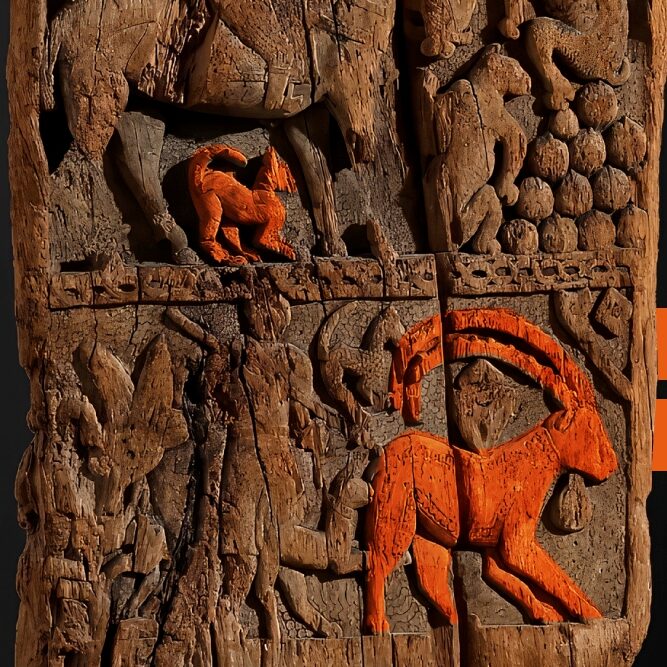
The Armenian government’s purchase of two artworks for the collections of The History Museum and the National Gallery is surely unprecedented due to the allocated sums. One half of the carved wooden door, purportedly dating from 1188 and supposedly originating from a monastery in Armenia’s north, was purchased from London’s Sam Fogg gallery for nearly half a million US dollars. On April 2, the door was unveiled in a closed ceremony at the History Museum in the presence of Prime Minister Nikol Pashinyan, before being presented to the wider public.
The purchase of such an expensive artefact might raise more than one question about the government’s cavalier management of the state’s budgetary resources in a time of global economic and political instability. But the strategy of bolstering the national collections with important “repatriated” artworks and historical objects has an irrefutably vital symbolic weight in its diplomatic resonance. What such purchases signal to the citizens (and, presumably to Armenia’s neighbors and international partners) is not only an image of growing economic strength, but also an ideological rhetoric based on state-centered national agency. The instrumentalization of cultural capital in this way has, of course, been a common practice all across Asia since the 2000s. But it is a relatively new feature of Armenian government policy and we’ll have to wait to see whether it has a significant continuity or outcomes in the coming years.
And what about the door itself? It’s an indisputably beautiful object with stunning ornate reliefs and a remarkable figurative scene depicting the visions of Daniel. The only problem is that unlike most preserved Armenian church doors, it bears no inscription and aside from the central cross, has quite unusual iconographic elements that has made some scholars question its Armenian ancestry. Hopefully further research and analysis will clarify the matter fully. But regardless of its exact cultural origin, this door is now unquestionably one of the most significant objects of medieval art in Armenia and will hopefully attract more local and international visitors to the rich collections of the History Museum.
Exhibition: “Historical Return: A Medieval Masterpiece From London”
Where: History Museum of Armenia
Republic Square, Yerevan
Dates: Open from April 3
Metsamor: Gold, Art and Mystery

Notwithstanding the somewhat strange fact that an archaeological exhibition dedicated to a legendary Bronze-Age settlement has been organized at the Museum of Literature and Art, the presentation of some of the most stunning treasures from the Metsamor museum in Yerevan will, hopefully, raise much-needed awareness about this exceptional historical site. Situated about 30 kilometers from Yerevan, Metsamor has been continuously excavated since 1965 and continues to be to this day. From the very beginning, the site yielded astonishing archaeological riches ranging from a vast number of extraordinary gold and metal objects to magnificent ceramics and traces of highly developed architectural methods. All of which suggests that Metsamor used to be one of the most important early urban and trade centers in the region with networks that extended to Central Asia and Babylon. Though the exhibition presents only a fraction of these finds (kept in the museum next to the excavations), it’s still an impressive display of the so-called Kur-Araks culture, which flourished in this region for about two thousand years before it disappeared around 2000 BC. The intricate craftsmanship of the gold jewelry pieces and exquisitely elegant polished pottery testify to a remarkably high socio-economic and cultural level of Metsamor’s citizens. Since the settlement was continuously inhabited until the Middle Ages, it’s essentially a unique cross-section of the long evolutionary narrative that ties the emergence of modern Armenians to their pre-historic ancestors—a kind of a national “passport” in archaeological form that should be much better-known than it currently is.
Exhibition: “Metsamor: The Gold. Mystery & Art”
Where: Museum of Literature and Art
1 Aram Str., Yerevan
Dates: Open until April 25
FESTIVALS
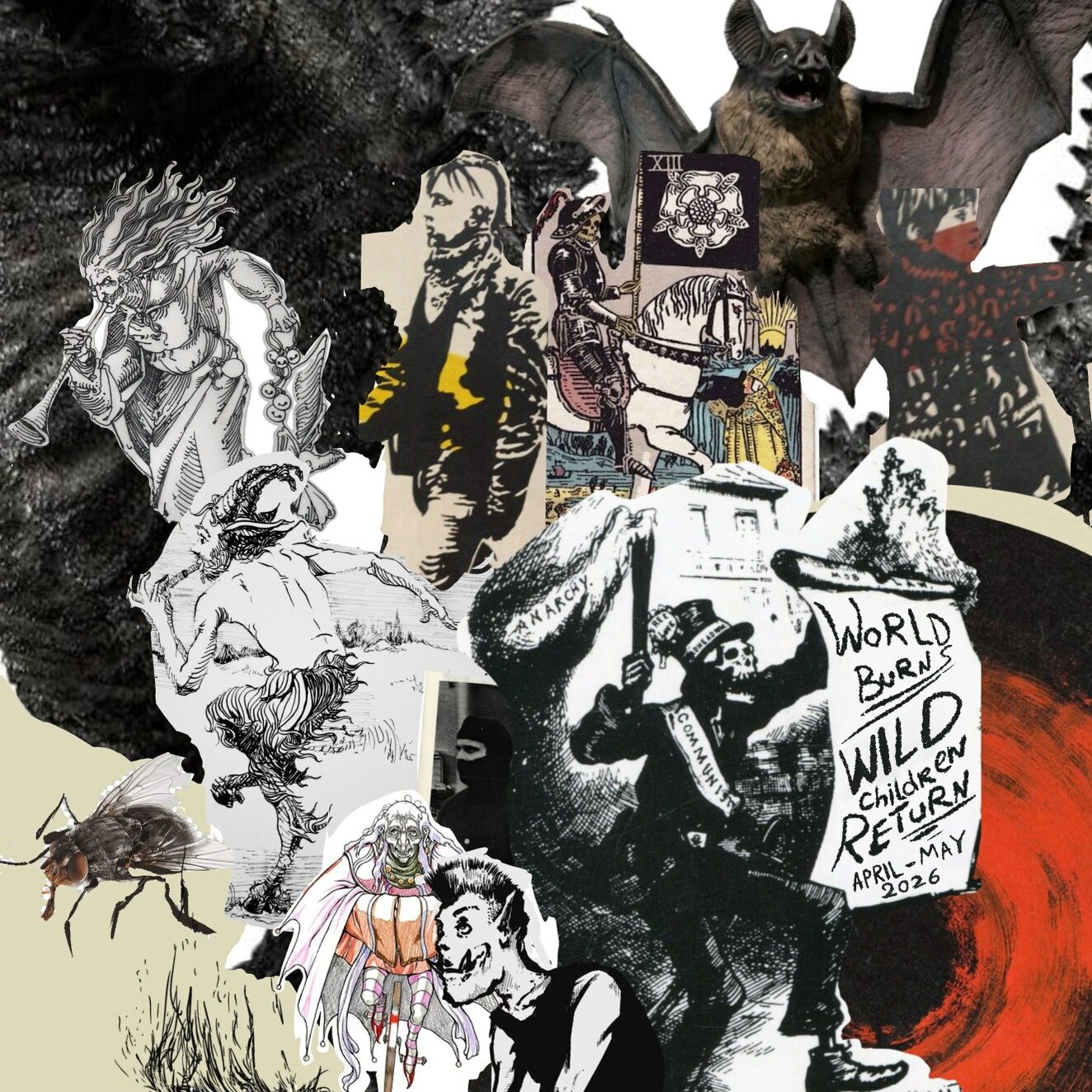
For three decades Armenian Center for Contemporary and Experimental Art (NPAK) has held an annual festival of alternative contemporary art practices. At its best, the event has hit the pulse of contemporary life with striking precision—works that articulated the socio-political, ecological and cultural urgencies of the moment with foresight and clarity (the 14th edition, Spying on Armenia, comes to mind). At other times it has felt like an irrelevant relic, stuck in a rut of institutional insularity.
The present iteration, curated by Grigor Simonyan and Tigran Khachatryan, has an irreverently chaotic edge that feels at times on the verge of exploding from its own tempestuousness. There is a real, open nerve here, one that likely results from the exhibition’s inter-generational scope, combining works by senior figures of the avant-garde (Diana Hakobyan, Harutyun Simonyan, Vardan Aghasyan and others) with artists just breaking through. In this sense it becomes a dialogue about past failures, ruptures and the desire to establish some legacy-building continuity for what is already a weighty tradition of politically motivated art.
Despite the curators’ long, manifesto-like exhibition text on the need to resuscitate leftist politics and return activist art to its anarchic origins, the show doesn’t resolve into a neatly cohesive “art-front.” In a festival entitled Wild Children, that’s probably exactly the right outcome. Some works are derivative, others a touch too heavy-handed in their dry polemics, but mostly there is an anxious immediacy, an impatience for action and a sense of relevancy that has been rather missing from the local contemporary art scene for some time.
Festivals: “Wild Children”
Where: NPAK
1/3 Buzand Str., Yerevan
Dates: Open from April 10
FILMS
Umbrella
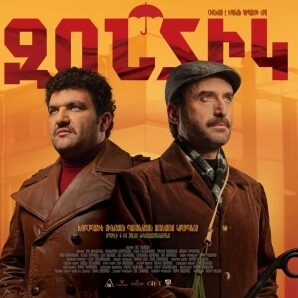
It has to be said, Armenian commercial cinema is making real strides, even if it’s still stomping around in very swampy waters. The new crime drama from director Gosh Hakobyan might be considered a noteworthy improvement over the glut of production-line fare that has streaked its way across our screens during the past decade or so. For one, it’s a period piece based on the real-life, brazen robbery of Soviet Armenia’s Central Bank in 1977. Films on our Soviet past are few and far between, presumably largely because it is now so hard to recreate any of the decades of the 20th century with even a modicum of convincing authenticity. But judging from the trailer, the team behind this film has done a surprisingly good job at creating a distinctly 1970s aura. In other departments, alas, everything seems to follow an already hard-set formula with exposition-filled dialogues, hockey dramatism and telegraphed messages about “underdog” characters going against the evil empire. With many hours of trashy sitcom television under his belt, Hakobyan has developed that characteristic show-and-tell approach, which he tries hard to shake off with a lot of accessorizing and better than usual cinematography, but without much success. Despite the efforts of talented leads (Sos Janibekyan, who gets better with age, but just can’t get better roles) there is little nuance, or even suspense in Hakobyan’s treatment of this pre-determined narrative as evidenced by the fact that the film’s entire storyline is neatly vacuum-pressed into a two minute trailer. Which is a pity, because this really could’ve been a razor-sharp allegory about the rotten core of the Soviet regime in the hands of a director focused on the story’s political resonances and moral ambiguities.
Screening: “Umbrella”
Where: All cinemas