
From emerging Armenian artists across the globe to Armenian-American talent in the United States, [Art Speak] spotlights the dynamic and diverse Armenian art world and more.
Listen to the AI generated audio article.
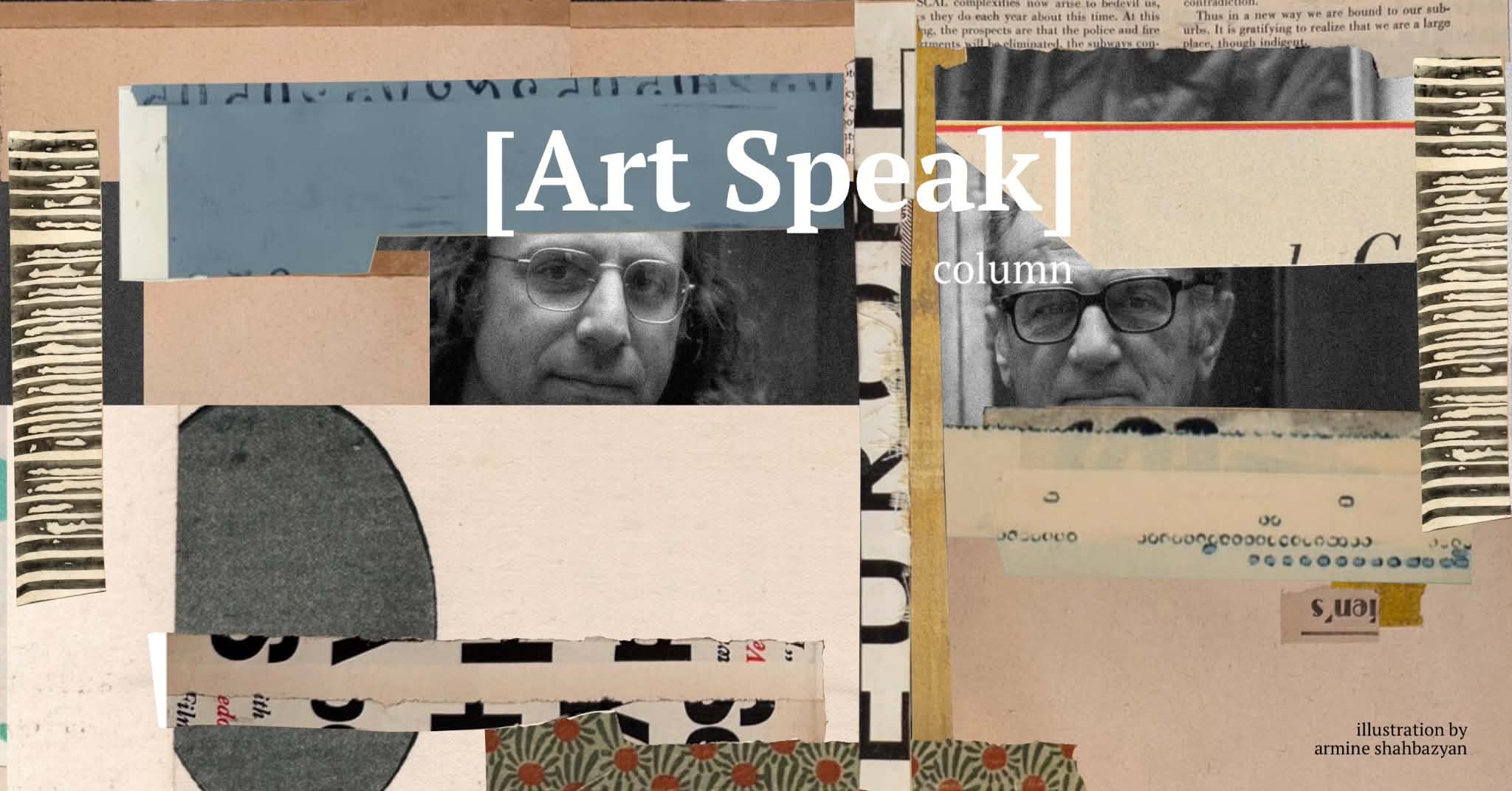
Hrayr Eulmessekian has delivered two small gems that highlight important themes in Armenian cultural history, particularly the post-Genocide diasporan experience of the 20th century. The documentaries, “Vahé Oshagan: Between the Acts” and “Marc Nichanian: Declassified,” bring us literally and figuratively into the living rooms of two of the most important Armenian thinkers of the past century. These are films to be savored, shared and discussed, then put aside and watched again.
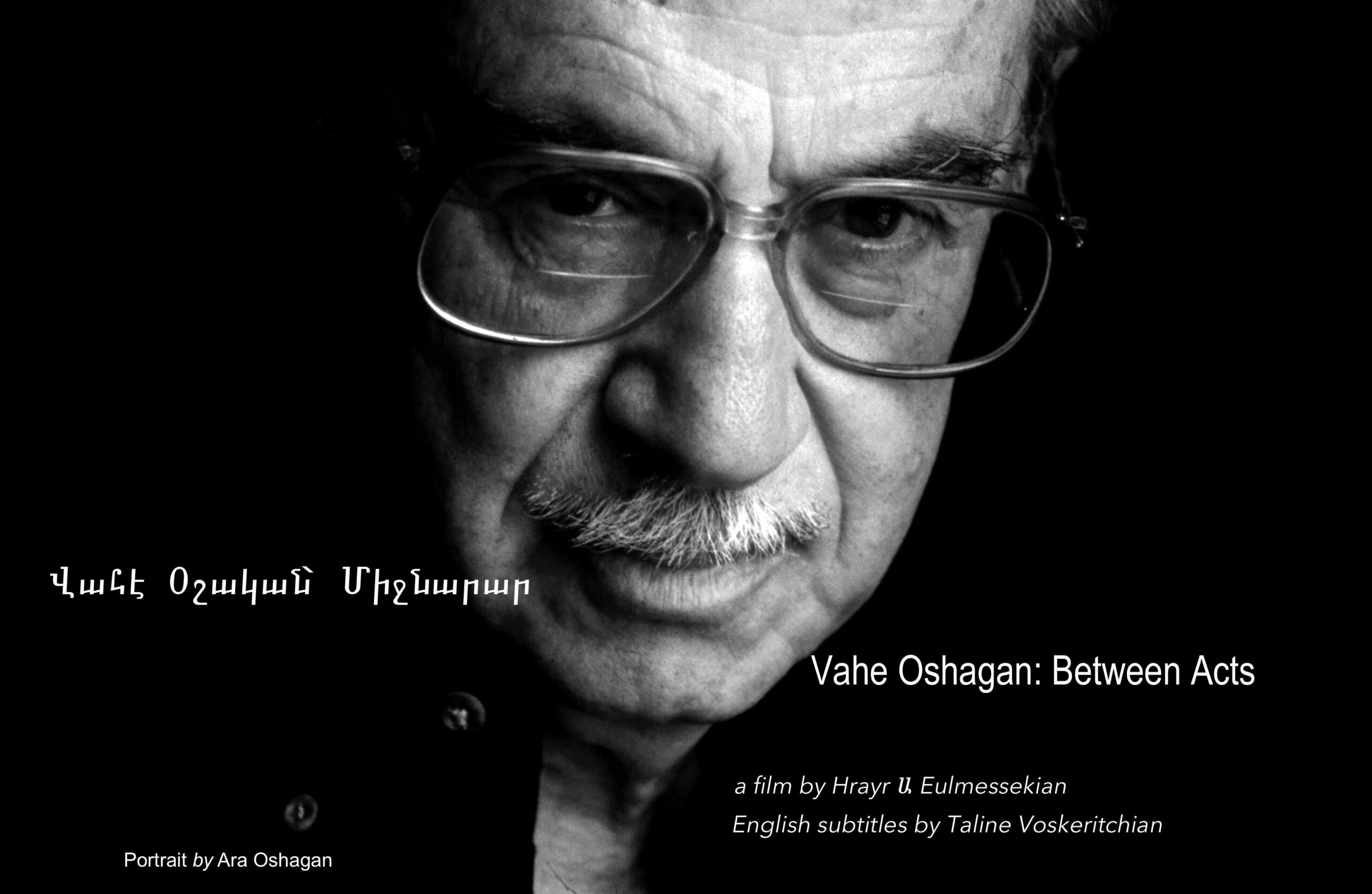
“Vahé Oshagan: Between the Acts” follows the poet’s life, more or less chronologically, from his birth in Plovdiv, Bulgaria, through his peregrinations around the globe: Cyprus, Palestine, Lebanon, Philadelphia, San Francisco, Armenia and Australia, among others. Part art film, part documentary, we are treated to Oshagan himself speaking about his work and reading from his poetry but also discussing important issues in Armenian language and culture, including the art of translation. He echoes Nichanian’s observation that “We lost our language in foreignness,” opening up the broader question of belonging versus outside-ness. He also invokes Nichanian’s entreaty: “Enough about talking to the foreigner, let’s become our own reader,” i.e the notion that Armenians should stop searching for historical vindication in the approval of others, particularly Turks, regarding the Aghet or Armenian Genocide.
“Every minute that passes is the first and the last,” Oshagan tells us. The son of renowned literary critic Hagop Oshagan led an active, if somewhat turbulent, life. He attended the now sadly defunct Melkonian Institute, where his father was also his teacher, before completing his studies at St. George’s School in Palestine in 1939. He joined the ARF in 1943 and, of all places, worked for the Palestine Electric Corporation. As we learn in the documentary, his father once said of him: “My son is going to become an artist. I see the stench of death in his breath… and like Mher, there’s a drop of blood in his palm, and he will rise up against his father.”
After earning his PhD, Oshagan went on to write important works, including the landmark “Alarm” (Ահազանգ). The film also, thankfully, includes a brief discussion of his novella “The Consecration” (Օծումը), which recounts an act of Armenian terrorism directed against its own community. In the story, three young Tashnags hijack a church during Sunday services and strip a priest of his vestments, leaving him naked, in an attempt to inject some life into their otherwise staid existence. As Marc Nichanian notes in a short clip in the film, the fact that the priest survives and endures this maltreatment is a sign that the diaspora itself will survive, along with its traditions.
Oshagan also founded the literary journal Raft and taught Armenian Studies at the University of Pennsylvania. His verse ranks among the most powerful in 20th-century Armenian poetry, and his ideas remain pertinent today, a quarter-century after his death in 2000. As Krikor Beledian notes in the documentary, some of Oshagan’s books have neither page numbers nor titles: “It is as if he is saying that you can start reading anywhere you want.”
In one particularly intimate scene, Eulmessekian films Oshagan sipping Armenian coffee on his balcony, overlooking a verdant garden, as he offers what may be his ultimate credo: “Everything we do is to cover the absurdity of life… I write to bring sense to the chaos of life, to its absurdity.”
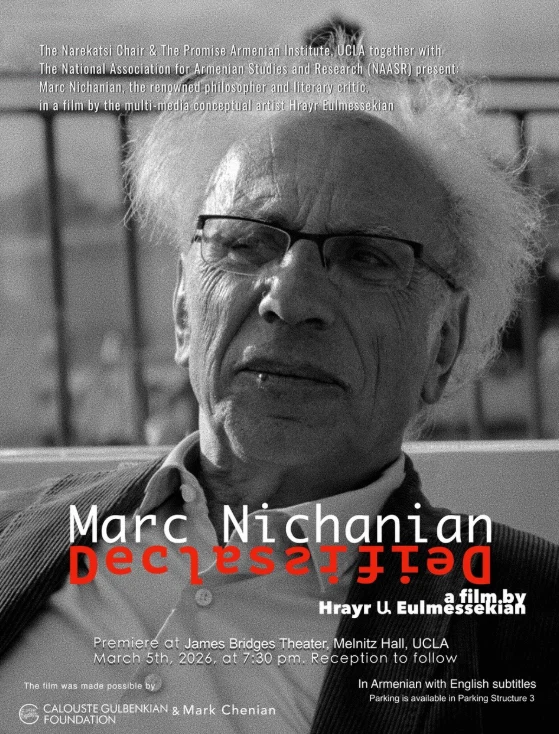
“Marc Nichanian: Declassified” is more straightforward in approach. We visit the thinker in Portugal, where he now lives with his wife Ani Garmirian of the Gulbenkian Foundation. In his new home, he discusses the first house where he grew up in Paris, as well as Armenian culture, literature, and the (for him) nearly impossible task known as existing in the Armenian diaspora.
Nichanian informs the viewer that his father had built their house in Paris almost as a cultural bulwark against the outside world: “Our apartment… was really a house built by my father… with high ceilings… he had wanted it to be a cinema, but the authorities would not allow it.” Fascinatingly, this house is also the locus for an emotion that seems to have guided Nichanian throughout his youth and perhaps even his life: shame. “We [were ashamed], we didn’t speak to the outside world.”
Toward the end of the documentary, speaking with Raffi Ajemian in the latter’s Montreal home, Oshagan recounts how his grandmother’s sister saved much of his family by submitting to repeated rapes at the hand of a Turkish kaymakam, even giving birth to his child. Interestingly, shame is an emotion that I remember feeling when I was very young in the presence of family when non-Armenians visited me—a visceral sense of wanting to explain to friends who the Armenian half of my family was but never finding the words to show the suffering they had endured. So I stayed quiet, or simply said they were from Lebanon. Shame, indeed. And then, the constant incantation: “ձուլվե՛ք!, ձուլվե՛ք!, ձուլվե՛ք!” (“Assimilate! Assimilate! Assimilate!”).
Nichanian also pinpoints one of the main issues in the Armenian diaspora: “Il n’y a pas d’institutionalisation de la pensée,” which roughly translates to “There is no institutionalization of thought.” I take this to mean that there exists no institutional framework in the Armenian diaspora for the development and preservation of thought. Nichanian also discusses the “Menk generation,” writers such as Sarafian and Vorpouni who regrouped after the Genocide, first in Istanbul under the tutelage of master teachers such as Hagop Oshagan, before moving to Paris where they formed one last incandescent generation of Armenophone writers and intellectuals, until Sarafian’s death in 1972. Part of the issue that these writers faced, apart from a declining number of people who could read, write, and speak Western Armenian, was the dilemma of what language they were writing in when they seemed already alienated from themselves, i.e. when writing Armenian became an exercise in mental translation itself.
And thankfully, although woefully perhaps, Nichanian broaches the topic of his fascinating 2006 book “La Perversion Historiographique” (“The Historigraphic Perversion”) and its presumably purposefully malicious reception on the part of certain Armenian-American intellectuals. The latter eventually accused Nichanian of “négationisme” or denying the reality of the Armenian Genocide, an absurdity which needs little comment here. Faced with a nuanced, brilliant mind that thought and wrote in Western Armenian, the American response was to isolate and denounce Nichanian, an all-too-common reaction in Armenian circles globally to anything new or challenging. Nichanian’s not too difficult analysis of witnessing, which mirrored that of Shoshana Felman and other Holocaust scholars, and his distinction between the terms Aghet and Genocide, seemed too subtle for the sometimes intellectually famished minds in American academia. The episode leads Nichanian to make the following brutally honest statement: “Before coming to America, I didn’t know what hate meant.” Here he echoes the common Armenian saying: “Գնա մեռիր, ետ արի, քեզ պիտի սիրեմ” (“Go die, come back, [then] I’ll love you.”)
Nichanian also acknowledges a debt to those who came before him: “Without Hagop Oshagan, I don’t exist.” In passing, we should note a rare treasure in “Marc Nichanian: Declassified,” namely a reading by the Lebanese-Armenian writer Haroutyun Kurkjian about the 1968 chaotic Paris student revolt, from his late-sixties work Երկրորդ Հաւասարում Բազմաթիւ Անյայտներով (“Second Equation with Multiple Unknowns”). Kurkjian taught Eulmessekian Armenian and French in seventh grade during the early seventies in Beirut. Says Eulmessekian:
“His influence on us, then and now, is immeasurable, and we see it on Marc in the film as well. I wanted him to read his text, but COVID lockdowns blocked a professional studio session, and further scheduling delays persisted until the summer of ’24. On the eve of his departure for a conference in Lisbon, I persuaded him to record a few paragraphs over WhatsApp, just to gauge his timing and tone—a placeholder…He fell ill and succumbed to COVID.”
This clip, as well as the two documentaries, reminds us of the importance of Armenian intellectuals to the survival of our nation. More than the benefactors who build churches in their own names or renovate villages that are subsequently lost to the enemy through a lack of diplomatic skill and other failures, it is our thinkers and writers who will ultimately be able to find a solution to our long-term survival.
Still, there are problems with both documentaries, which ultimately come across as hagiographies. Countervailing points of view are not presented, and the “camera front, subject seated” format works for viewers fascinated by the people being interviewed but may wear thin on others. At over 100 minutes, the Nichanian film can seem overlong. These things matter less in the case of the Oshagan film, where Eulmessekian has included archival footage and done some interesting things with the sound and visuals that divide up the film. In an email exchange, Eulmessekian is quick to point out the understandable limitations he faced, notwithstanding the funding constraints. To be fair, he explains: “I did not record any interviews, which accounts for the variation in camerawork; I assembled the dialogue by alternating between sources. Only Vahé’s material appeared in full, reordered from the original tape, while I filmed only the ‘music video’ portions. There were no NLEs or CGI, so no digital effects were used; all effects relied on in-camera video feedback loops or optical manipulations.” The Nichanian film, in contrast, was entirely Eulmessekian’s camerawork.
As works of intellectual history, these two films hit their mark. In an age of cell phones, social media swiping, and hookup culture, it is refreshing to be able to sit down for a few hours and listen to two intelligent people discuss literature and other important matters, without the fast cuts and salacious intrusions that now characterize so much of the drivel that populates our screens. Both documentaries should become part and parcel of every course in contemporary Armenian studies, in the diaspora and in the Republic of Armenia alike. The modern-day director faces an often-difficult choice between making a commercially viable, overly facile film and bringing something into the world that challenges our thoughts and ideas. These two films belong firmly in the latter category. We should thank Eulmessekian—and hope he has more such documentaries in store.