
Syria’s January 2026 offensive against Rojava threatens a decade of decentralized, pluralistic governance in northeast Syria. Among those at risk are Islamized Armenians, whose hard-won political and cultural gains illustrate the fragility of local autonomy under centralization.
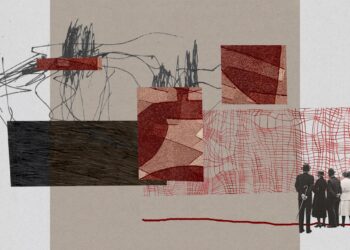
Focusing on legitimacy, refugees, national memory and whether trauma becomes paralysis or a catalyst for reinvention, Tigran Yegavian presents a comparative analysis of how catastrophic defeat reshapes states, examining Greece after the 1922 Asia Minor Catastrophe and Armenia after the loss of Artsakh.
A new national day of remembrance raises difficult questions about memory, truth and accountability, especially after the 2020 Artsakh War. Honoring the dead requires more than ritual, or a date on a calendar, it demands names, transparency and a truthful reckoning with how and why the war was lost.
In this sharp critique of political revisionism in Armenia, Nerses Kopalyan examines how distorted narratives seek to undermine the Velvet Revolution, erase popular sovereignty, and normalize cynicism, victimhood and authoritarian nostalgia as tools to weaken democracy and collective agency.
The arrest of two Armenian podcasters has reignited debate over where free expression ends and criminal liability begins. Beyond one case, the episode exposes Armenia’s unresolved legal blind spot in addressing sexualized, gendered abuse without undermining democratic speech.
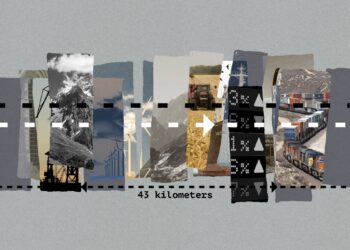
As Russia’s war in Ukraine drags on, there are allegations—some founded, some unfounded—that troops and resources have quietly been redeployed from Armenia’s Gyumri base and the former peacekeeping mission in Nagorno-Karabakh. Justin Tomczyk examines online activity that reveals this movement of forces and what a planned surge of troops to Gyumri means for the region.
Moldova’s quiet resilience tells a story of survival. Political analyst Mikayel Zolyan traces how this small nation confronted Russian hybrid warfare, reclaimed its democratic voice, and reflects on what its hard-won lessons might mean for Armenia’s struggle against disinformation and dependence.
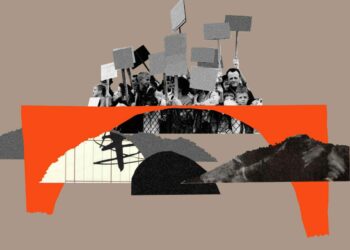
At a time when multilateralism is faltering and power politics dominate international relations, micro-states and small powers can still exist, assert themselves on the world stage, and turn vulnerability into strength—becoming indispensable to others.
In this raw exploration of excessive masculinity and violence within the Hayastantsi subculture of 1990s Los Angeles, Nerses Kopalyan examines the ontological roots of aggression that shaped a generation, and how that mentality has mutated into an incoherent, hybridized identity in the decades since.
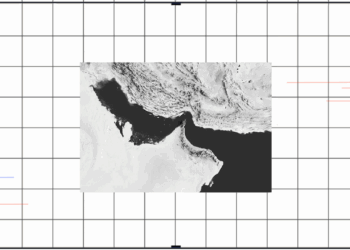
More than two months after the Washington declaration, Tatev Hayrapetyan examines the widening gap between Baku’s diplomatic vows with on-the-ground reality: inflammatory rhetoric, sham trials, expansionist “Western Azerbaijan” narratives and divergent TRIPP talk signaling a performative peace narrative.
EVN Report’s mission is to empower Armenia, inspire the diaspora and inform the world through sound, credible and fact-based reporting and commentary. Our goal is to increase public trust in the media. EVN Report is the media arm of EVN News Foundation registered in the Republic of Armenia in 2017.
SUPPORT INDEPENDANT JOURNALISM