

Listen to the AI generated audio article.
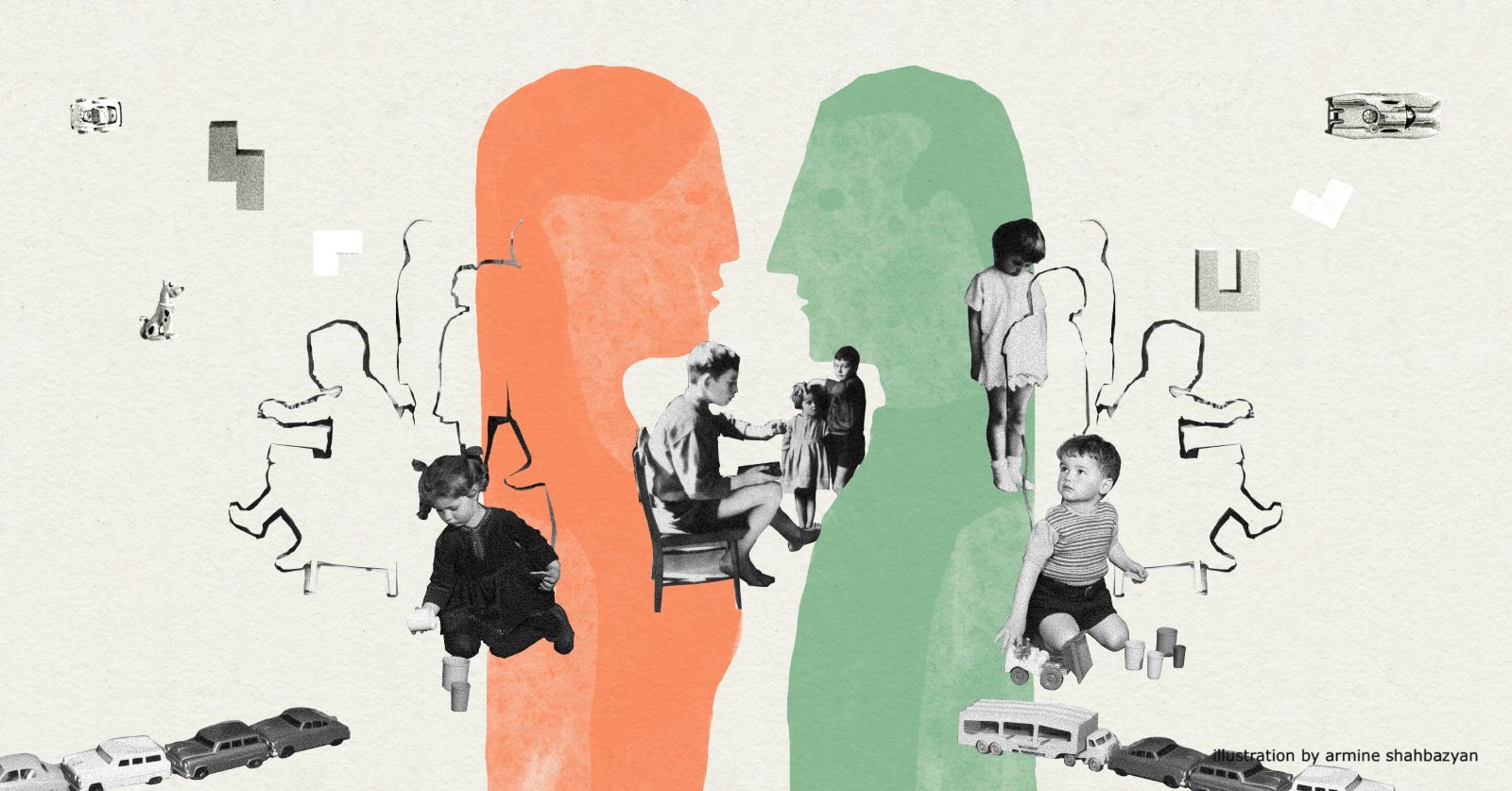
Nothing truly prepares you for parenthood. While this usually refers to the emotional rollercoaster new parents experience, for many in Armenia it also applies literally. Unlike in many Western societies, where parenting books, programs and coaches have long been available, Armenian parents often navigate child-rearing with little more than advice from relatives or friends. Yet, as Hasmik Nahapetyan discovered when she had her first child six years ago, traditional guidance doesn’t always meet the needs of children today, who are growing up in a world shaped by technology, shifting family dynamics, and new approaches to early development
Nahapetyan recalls how inexperienced and isolated she felt. Few of her friends had children, and while her parents and in-laws offered well-meaning advice, it wasn’t always relevant. She valued their input but realized it didn’t suit her child’s unique needs. “Every child is different, every generation is different,” she explains. “The methods that shaped my childhood no longer apply to my kids.”
When Nahapetyan’s first child was born, she quickly realized that he wasn’t just “a little different” but had a personality entirely his own. He was different from other children and she struggled with his upbringing so seeking professional guidance became essential. She discovered that individualized support worked far better than traditional, one size fits all parenting advice or foreign parenting books. A sleep consultant, for instance, helped her develop strategies tailored to her son, dramatically improving his routine.
Nahapetyan’s struggle with her son’s sleep is far from unique. Although more parents are seeking help with their child’s sleep problems, Armenian society broadly views these as normal—just part of the difficulties parents “have to face” when raising children. Yet modern research shows how crucial regulated sleep is for a child’s development and social life.
Sleep expert Lilit Pipoyan explains that sleep affects every aspect of physical, mental and cognitive health. Poor sleep can cause short-term issues such as behavioral problems, trouble with attention and memory, weakened immunity, and coordination difficulties. It also leads to long-term consequences, including developmental delays, chronic behavioral challenges, obesity, and mental health disorders like anxiety and depression.
As the number of working mothers in Armenia grows, irregular sleep schedules pose additional challenges for parents. The “sleep when the child sleeps” method is no longer applicable. For working parents, sleepless nights take a heavy toll on careers, social life and mental health.
When I returned to work, my daughter was only seven months old. I experienced this firsthand. Like many toddlers, she had unpredictable sleep patterns; sleeping well during the day but waking multiple times at night. I tried adjusting routines, reading articles, and experimenting with methods I found online. I even consulted ChatGPT, but the conflicting advice only added to my anxiety. Some nights, I stayed awake for hours trying to soothe her, wondering if I was doing something wrong.
After over a month of sleepless nights with no break, I finally turned to a sleep expert for help.
According to Pipoyan, parents often seek help only after exhaustion sets in. By then, sleep disturbances have created tension at home, leaving mothers especially drained, as they remain the main caregivers, no matter how involved fathers are. The same program may work in days for one family, yet require weeks for another, depending on energy and persistence. But the reward, she notes, is transformative: when children sleep well, the whole family benefits.
Pipoyan’s own journey mirrors that of the parents she now helps. When her daughter struggled to sleep, she found herself overwhelmed by contradictory information online. “I understood that I needed structured and in-depth training,” she recalls. Determined to find clarity, she trained in the UK and is now a certified sleep consultant. “I believe that when you have personally gone through this challenging journey, with its phases of no sleep, frustration and helplessness, you understand the parents seeking help much better,” she explains. This personal experience guides her empathetic approach to sleep coaching.
Nahapetyan remembers that both of her children constantly wanted to be held, making sleep routines difficult. She didn’t know about sleep specialists when she had her first baby. By the time her second arrived, she consulted an expert, whose guidance helped regulate sleep, reduce night wakings, and manage bottle-weaning in a gentle, stress-free way.
For my daughter, we used some of the same strategies Pipoyan recommends: small, consistent routines, gentle boundaries, and gradual steps toward independent sleep. It wasn’t always easy. Some nights ended in tears, others in frustration. But seeing her finally settle into a predictable sleep schedule brought a sense of relief I hadn’t realized I was craving. That relief didn’t just benefit her—it changed my energy levels, mood, and ability to focus on work and daily life.
Despite these positive outcomes, many Armenian families remain skeptical of modern approaches. In part, this is due to pressure from the older generation who feel like they should have a decisive say in the upbringing of their grandchildren. Many young parents repeatedly hear remarks like “We didn’t have that in our time” or “You grew up without that and turned out fine.”
For those who grew up in the 1990s, the so-called “dark years” in Armenia, marked by war, blackouts, and severe shortages, this argument carries weight. Parents then were preoccupied with survival, not sleep schedules or balanced diets.
Times have changed. Research on child development, nutrition, sleep and behavioral guidance is now abundant and accessible. Language is no longer a barrier thanks to digital tools and AI. Armenia has its own specialists, many trained abroad, and more parents are embracing research-based approaches. Still, generational pressures persist. Older relatives continue to insist that crying babies, sleepless toddlers, and picky eaters are simply part of life.
Pipoyan notes that these comparisons are misleading. Past environments were vastly different. Children had less screen time, less light pollution, and fewer overstimulating inputs. Mothers enjoyed stronger community support, as children were raised in multigenerational households Many women also got married at roughly the same age, so friends and siblings had children of the same age. They could share knowledge and approaches that worked best. This is not the case anymore as many young families live separately. As a result, many mothers are not only disconnected from other parents but also from their instincts, juggling careers and households, which affects children’s sleep.
She emphasizes that traditions remain important but must evolve. Some older individuals are flexible and supportive, grandmothers often thank her for improving their grandchildren’s sleep, while others remain rigid. Education plays a key role in shaping openness to new approaches.
The issue is not only about adjusting sleep routines but also creating a safe environment for sleep. For example, it is quite common in many families to put padding inside a baby’s crib, but if the baby has not mastered rolling over yet, this poses serious suffocation risks. Pipoyan adds that ignoring professional guidance while overlooking safety standards, such as proper sleep arrangements, is negligent. The goal of sleep specialists is not to assign blame but to help parents create healthy rhythms and safe environments for the entire family.
The rise of sleep experts reflects a broader trend. What was once dismissed as “normal” is now recognized as a solvable problem. Pipoyan has witnessed growing awareness among parents, who now understand that sleep is vital for child development, behavior, emotions and family harmony.
This growing openness to professional support led to the creation of Armenia’s first Parenting School. A group of mother-psychologists founded the school after facing their own parenting challenges. When they discovered strategies that worked with their children, they felt compelled to share what they’d learned.
The school now offers individual consultations, short and long-term courses, and both in-person and online sessions. Through partnerships with organizations across Armenia, they reach parents in all regions, working with over a thousand parents annually.
Parents most often seek guidance on learning difficulties, fears, aggression, conflicts, gadget addiction, and similar concerns. Many also want support developing their own parenting skills, particularly in managing anger and emotions.
The Parenting School’s experts note that parents respond to modern approaches in different ways. Some reject them outright. Others, facing real challenges, actively explore, analyze, and apply new methods. Caution at first is natural, but tangible results often win parents over.
Generational clashes, however, are inevitable. Grandparents may view new methods skeptically, while younger parents want to raise children according to their own values. Experts say mutual respect, clear boundaries, and calm dialogue are key to resolving these conflicts.
Yet some families continue with traditional habits—late bedtimes, sugary diets, and inconsistent boundaries—highlighting the ongoing need for education and awareness.
Unlike previous generations in Armenia, parents now have access to science-backed guidance, child development research, and professional support that didn’t exist before. For mothers like Nahapetyan, and others navigating sleepless nights, this knowledge has been transformative. Growing awareness about harmful habits, combined with more parents seeking professional advice, signals hope for a cultural shift. Families can now make informed choices that give their children opportunities previous generations never had.
Also see

Why Armenian Children Eat So Much Sugar
Candy, cake and “kompot” are staples of childhood in Armenia, not only because they taste good, but because they’re inseparable from cultural ways of showing love. The love of sweets, however, will soon force a rethinking of tradition.
Read more
Childcare: The Working Mother’s Dilemma in Armenia
Facing limited childcare options and short parental leave, many Armenian mothers are forced to choose between career and caregiving. Hranoush Dermoyan explores the systemic failures behind Armenia’s childcare crisis, and what it means for women, families and economic growth.
Read more
Motherhood Behind Bars
Exploring the lives of incarcerated mothers at Armenia's Abovyan Penitentiary, Astghik Karapetyan delves into the challenges of raising children in confinement, the impact on maternal bonds, and the institutional efforts to balance rehabilitation with the children’s best interests.
Read more
Born Too Soon: Challenges of Premature Births in Armenia
When she unexpectedly had to deliver her first baby at 29 weeks, Hranoush Dermoyan had no idea what the journey ahead entailed. Weighing only 700 grams, her daughter spent the first 75 days of her life in NICU. The experience revealed emotional and medical challenges, and healthcare disparities in Armenia.
Read more
Enforcement Deficit: Car Seat Laws in Armenia
Although the use of car seats is mandatory in Armenia, it is not being implemented and road police are not addressing the issue. Margarita Ghazaryan addresses the Armenian experience of ensuring the safety of children.
Read more