
Listen to the AI generated audio article.
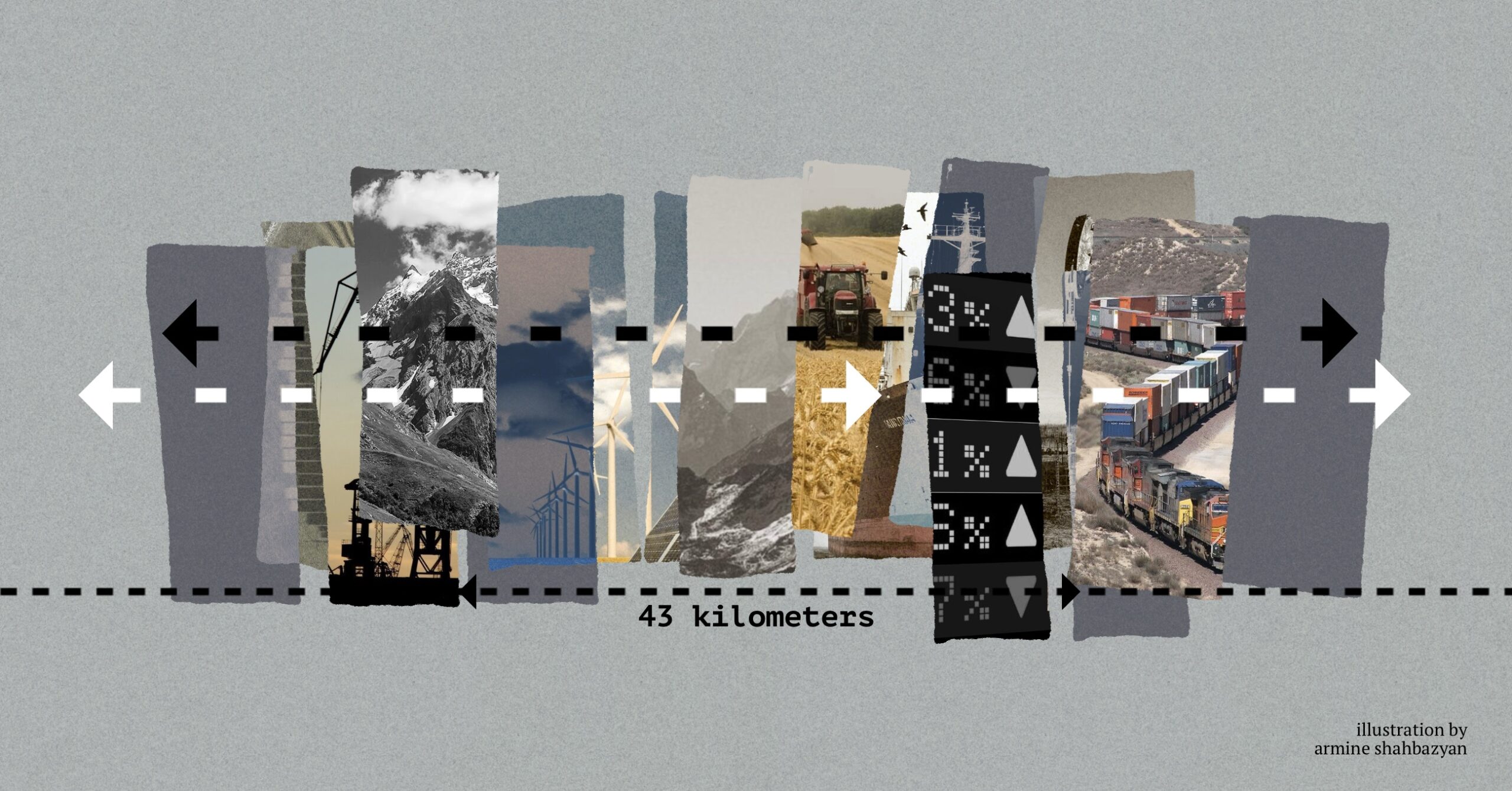
Public debate in Armenia over the proposed TRIPP transit project has been both limited and misdirected. Too much attention has been given to a 43-kilometer section of sovereign territory, and too little to the wider geopolitical and economic shifts that give the project its real significance.
This is a mistake.
TRIPP is not simply a local infrastructure arrangement. For Armenia it’s a window of opportunity in a much broader sense. It sits within a wider reconfiguration of Eurasian trade routes, as geopolitical tensions and supply chain disruptions force governments and businesses to rethink how goods move between Asia and Europe.
At the center of this shift is the so-called Middle Corridor, a Trans-Caspian route connecting China to Europe via Central Asia, the South Caucasus and Turkey. For now, it remains underdeveloped and relatively expensive. But its appeal lies elsewhere: diversification. In a world where the Northern route through Russia is constrained by sanctions and traditional maritime routes via the Suez Canal face persistent security risks, redundancy is fast becoming a strategic asset.
In this context, TRIPP offers Armenia a potential point of entry into emerging East–West trade networks. Properly leveraged, it could reduce the country’s long-standing economic isolation and increase its relevance in a region where connectivity is once again a source of power.
Yet opportunity does not guarantee inclusion.
Infrastructure developments in Azerbaijan and Turkey suggest that alternative routes may take shape that bypass Armenia altogether. The risk, therefore, is not simply that Armenia mishandles TRIPP, but that it becomes peripheral to a system being built around it.
Avoiding this outcome will require a broader strategic approach. Transit alone rarely generates sustained economic value. It must be accompanied by investment in complementary infrastructure—rail, road and logistics—as well as integration into regional supply chains. Projects such as Armenia’s North–South road corridor and renewed road and rail links to Turkey are not supplementary; they are central to whether Armenia participates meaningfully in the region’s evolving transport architecture.
There are also longer-term opportunities. TRIPP is evidently not tied up to just one administration in Washington. Growing demand in Europe and the United States for critical minerals, including uranium and lithium, is drawing attention to Central Asia’s resource base. Efficient trans-regional routes could connect these supplies to global markets. With its existing capabilities in nuclear energy and technology, Armenia is well placed to benefit—if it is connected.
More significant is the cascading effect of connectivity to Armenia’s economic and industrial development. The diversification of outreach to regional and global markets and the opportunities it opens to augment global private investments and link Armenia to global value chains are a case in point.
A potential opening for the promotion and diversification of intra-regional trade in the South Caucasus, besides pure economics, is a promising and solid foundation for a gradual emergence of regional integration and long term sustainable regional security.
The geopolitical constraints are no less important. New trade corridors inevitably redistribute influence. Russia and Iran, both of which derive economic and strategic weight from existing transit routes, are unlikely to view these developments neutrally. Their responses, whether economic, political or otherwise, will shape the environment in which TRIPP operates. For Armenia, the question is therefore not whether transit creates risk, but whether it can be turned into leverage.
That will depend on policy. A narrow focus on sovereignty, while necessary, is insufficient on its own. What is required is a more integrated strategy, one that aligns infrastructure development with economic policy and foreign policy engagement, and that recognizes the interplay between connectivity and power.
Security guarantees, understood in narrow military and political terms and grounded in great power protection have proven their futility more than once. Security guarantees and protection are interest based. Great power interests are fluid and shift over time. Such guarantees deliver questionable protection. At best, they secure dependency and ensuing security vulnerability for the protected.
Connectivity and diversification, solid integration in regional and global supply and value chains are meant to elevate Armenia’s relevance, both regionally and globally. Relevance is a source of consolidated interest of global actors in sustaining sovereignty, regional peace, stability and predictability; significant foundations for sustainable national security. Strategic equidistance from the three regional powers is a justified policy framework for advancing these objectives.
TRIPP, in other words, is not just about movement across territory. It is about positioning within a shifting global system.
For a country long defined by its constraints, that makes it a rare strategic moment.
State of Play
J.D. Vance, Armenia and Regional Stability
The Iran War: Strategic Implications for Armenia