

Listen to the AI generated audio article.
Reasons to Dislike Mr. Orbán
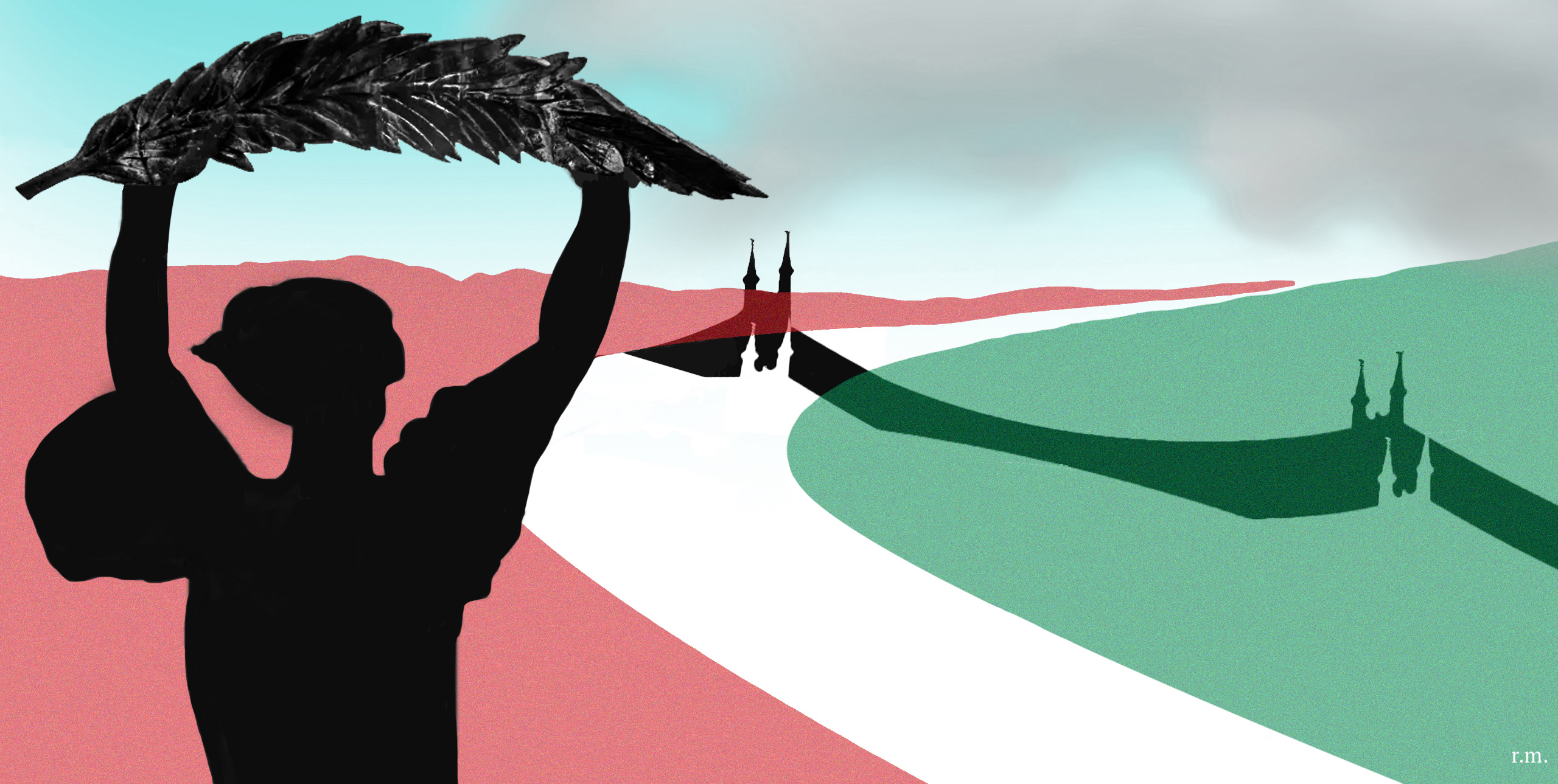
In today’s world, even elections in relatively small countries can receive global significance. Last year, everyone was talking about Moldova. In a few months, attention across the post-Soviet space and Eastern Europe will likely turn to the election in Armenia. For now, however, the biggest topic is Hungary. The breathtaking victory of Peter Magyar, or rather the unraveling of Hungary’s strongman Viktor Orbán, became a major international story, even briefly eclipsing the crisis in the Middle East.
Orbán’s regime rested on two pillars. The first was the gradual erosion of state institutions, producing an autocracy with a democratic facade, something often described as an “illiberal democracy” or “hybrid regime”. The second was his ability to play the nationalist card against Brussels, while sucking up to leaders like Putin and Trump. Together, this model became a template for far-right populists across Europe, from Britain to the Balkans. This brew of politics seemed to be almost unbeatable. Orbán’s fiasco, however, may signal that this formula is beginning to lose its grip.
It seemed that everyone had a horse in the race. Both Trump and Putin counted on Orbán’s victory. Trump promised Hungarians millions of dollars and sent JD Vance to Budapest to support him. Vance called Trump on the phone live from an Orbán rally, even though it was an awkward moment when the call initially went unanswered. Luckily for Orbán, Trump picked up the second time, but, ultimately, it did not help. In fact, it might have even backfired, as the Trump administration is increasingly unpopular across Europe. Right-wing leaders from Argentina’s Milei to Israel’s Netanyahu praised Orbán as a model to emulate, reinforcing his global stature. For this precise reason, many in Europe and around the world rooted for his challenger, Peter Magyar. Orbán was probably the most disliked European leader in Brussels and in Kyiv, as he sabotaged EU support for Ukraine, advancing positions seen as aligned with Moscow within the EU.
Armenians have their own reasons to dislike Orbán, most notably for his role in the Safarov affair. In 2004, Azerbaijani officer Ramil Safarov murdered Armenian officer Gurgen Margaryan during a NATO training in Budapest and was sentenced to life imprisonment by a Hungarian court. But Orbán allowed Safarov’s “extradition” to Azerbaijan in 2012, where he was immediately pardoned and welcomed as a hero. Armenia cut diplomatic ties with Hungary in response. Ten years later, relations were restored. Recently, as the Armenia-Azerbaijani peace process has advanced, relations between Yerevan and Budapest have cautiously improved. But, Orbán, a friend of Aliyev and Putin, has periodically created difficulties for Armenia, including by blocking European military aid to Armenia in 2024.
In addition to all these reasons to dislike him, I have my own personal grudge. I studied at the Central European University (CEU) in Budapest, an experience that transformed me as a person and made Budapest one of my favorite cities. When I returned last year after a long absence, it felt like homecoming. But one thing was missing. CEU had been forced out of the country by Orbán, due to its connection with George Soros’ Open Society Foundation.
Obviously, the first thing I did was to go to 9 Nador Street, a beautiful old building where the university had been located. The building still bears the inscription “Közép-európai Egyetem”, but inside, a café occupies the ground floor, with some offices inside. Fragments remain nearby—the archives, part of the library, a conference center, even the university canteen still carrying the faint smells of goulash, the famous Hungarian dish. But the university itself is gone.
Mafia State: How to Use Xenophobia and Historical Trauma to Stay in Power
Of course, what really matters is that many Hungarians do not like Orbán anymore. But that was not always the case. In fact, Orbán was one of the most successful politicians in the history of his country, and its longest-serving prime minister. He won five elections and was prime minister for 20 years. First elected in 1998, he ruled until 2002 and had already emerged as a prominent figure during Hungary’s transition from communism in 1989. His return to power was shaped by the political crisis of 2006, triggered by a leaked tape of Prime Minister Ferenc Gyurcsány, who admitted to having lied to the public. Gyurcsány represented social-democratic forces, which in Hungary are often considered to be heirs to the Communists. Gyurcsány claimed that his words had been taken out of context, but the damage was done. In 2010, Orbán won the election again and secured four consecutive re-elections, governing for 16 years. Until now.
Orbán started out as a liberal dissident opposing Hungary’s Communist regime in the 1980s. At the time, it was possible to have liberal ideals with a strong sense of nationalism, something that was shaped by the country’s lingering trauma of Soviet dominance. His party, Fidesz, is an acronym for “Hungarian Civic Alliance”, though it also sounds like the Latin word “faith”, an important detail for a largely Catholic country. Even in those early years, Orban accused his opponents of being pro-Russian, revealing a political instinct he would refine over time: the ability to weaponize historical memory and national trauma for strategic gain.
And when it comes to historical trauma, Hungarian politics is full of it. To understand it, a small lesson in Hungarian history is needed. In 1848-1849, Hungary revolted against the Austrian Empire, of which it was part of. Austrian Habsburgs were unable to put down the revolution, so they asked help from the Russian Empire, which drowned the revolution in blood. About two decades later, in 1867 Hungarian aristocracy was able to reach a deal with the Habsburgs: the so-called dual monarchy, Austria-Hungary was created. But the trauma of the Russian invasion remained. The leaders of the Hungarian revolution, executed by the Russians, remain the most beloved Hungarian national heroes till this day. Hungarians vowed not to clink their beer glasses in respect for fallen heroes for 150 years: the vow expired in 1999. This is how seriously Hungarians take their past.
History repeated itself in the 20th century. After World War II, the Soviet army installed a pro-Soviet Communist government in Hungary. Hungarian Stalinists proved to be great students of their beloved leader. After Stalin’s death Hungarians expected liberalization, but local Stalinists were stuck in their old ways. That led to a popular uprising in 1956. A new government was formed, headed by Imre Nagy, which consisted of reform-minded communists, like the famous neo-Marxist philosopher György Lukács, who became minister of culture. The new government tried to leave the Warsaw Pact in order to become a neutral country. Of course, Moscow did not tolerate it, and Soviet tanks rolled into Hungary. Nagy and other leaders of the revolution were executed, thousands were jailed, and even more left the country. Some were spared, like Lukács, who was too famous to be punished, but had to renounce his role and go through “self-criticism”.
Yet the Communists understood that something had to be changed. The new government of János Kádár kept the ideological controls in place while introducing limited economic liberalization. This model, known as goulash Communism (gulyáskommunizmus, after the famous dish), was known as one of the most successful in the socialist bloc. Of course, the trauma of 1956 remained, but at the same time, Hungarians took pride in being one of the most successful countries in that camp. Against that backdrop, being one of the newcomers in the EU was not particularly rewarding. So, some Hungarians were disappointed when the country joined the EU, and Orbán skillfully used this disillusionment, turning it into political capital.
And then there is the dream of “Greater Hungary”. In 1918, after Austria-Hungary was broken up, Hungary was forced to sign the Treaty of Trianon, which redrew its borders in their current form. Huge chunks of land with significant Hungarian populations were incorporated into neighboring countries—Romania, Czechoslovakia, Serbia and Ukraine. The “Trianon complex” remains a grievance among Hungarians. Hardly anybody takes the return of “historic lands” seriously, but the trauma influences how many Hungarians look at the past, making them easy prey for skilled manipulators like Orbán. Hungarians residing in neighboring countries were until recently among the staunchest supporters of the Orbán regime.
Illiberal Democracy in Action
Hungary’s combination of historical trauma and present-day disappointment, created an ideal playing field for far-right populists. It’s no wonder then that Orbán abandoned liberalism and adopted right-wing populism, aligning himself with leaders like Putin, Erdogan and Netanyahu. Such politicians use the fears and stereotypes of ordinary people and turn them into winning political strategies. They are masters of creating an image of the enemy and scaring the electorate with it. In this election, the enemies were Brussels bureaucrats and Ukraine. All over Hungary, one could see billboards with pictures of Ursula Von Der Leyen and Volodymyr Zelensky with messages claiming that Hungarian money was being sent to Ukraine. In the previous elections, the enemies were migrants. And George Soros.
Orbán can be considered the author of the demonization of NGOs and “Sorosites” as a political technology. Of course, autocrats and right-wingers never liked Soros and his foundation, but it was Orbán who turned it into a winning political strategy. The irony here is that Soros is of Hungarian-Jewish descent, and has kept a certain loyalty to Hungary (that was one of the reasons why the Central European University and Open Society Foundation headquarters were based there). What is even more ironic, Orbán himself received a Soros fellowship to study in Oxford. Yet that did not stop him from making Soros a target of his propaganda. Unfortunately, Hungary not only has a long tradition of vibrant Jewish life (and the largest synagogue in Europe) but also a legacy of anti-Semitism. So, blaming a Jewish billionaire proved to be a working electoral strategy. And later it was copied by anti-democratic forces in many countries, including Armenia.
Finally, Orbán slowly undermined independent state and social institutions. Through incremental changes, Hungary arrived at a situation in which the separation of powers disappeared, most media were controlled by him, and the economy was under the influence of his cronies. Hungary became infamous for corruption (obviously, by European standards, not post-Soviet ones). Hungarian sociologist Bálint Magyar (no relation to Peter Magyar) described Orbán’s regime as a “mafia state” in a book that became an instant classic in contemporary social science. Thus, not only was Orbán skillful in playing on the fears of the voters, but he altered state institutions, creating a situation, in which it was almost impossible for him to lose. So why did he actually lose?
Unlikely Savior or the Lesser Evil: Who is Peter Magyar?
Part of the answer can be summed up by the famous expression that comes from American politics: “It’s the economy, stupid.” Orbán started out as someone who brought economic success to Hungary. He was helped by the fact that in 2004, Hungary became an EU member and began receiving large funds from Brussels. Paradoxically, the EU remains popular in Hungary, even though Orbán has successfully demonized “Brussels bureaucrats”. But, as Orbán’s grip on power was growing, so was the corruption. And as we know from our own experience, “mafia states” are not the most efficient way to run the economy. Today, Hungary is one of the poorest countries in the EU. The contrast is particularly painful in comparison with Poland, which entered the EU at the same time, but is now one of the most economically successful EU countries.
Yet these grievances alone would not be enough to topple Orbán had he not met his match in opposition leader, Peter Magyar, an unlikely hero. In terms of political ideology, he is not very far from Orbán, though he definitely is a more moderate and pragmatic center-right politician. The story of Magyar’s entry into politics reads like a screenplay. Until recently, he was a member of Orbán’s Fidesz party. He fell out with Orbán after a scandal involving his ex-wife Judit Varga, then justice minister, who resigned over a controversial pardon linked to a pedophilia cover-up case. Magyar claimed that his ex-wife had been made a scapegoat for decisions taken at higher levels. He vowed he would enter politics to make Orbán pay. And he did.
After leaving Fidesz, Magyar joined the center-right party Tisza, which at the time was quite weak. He managed to unite very different parts of the Hungarian population. He is conservative enough to steal many voters from Orbán, yet moderate enough to appeal to liberal and left-leaning voters, who dreamed of ousting Orbán. Thus, Magyar was successful both in anti-Orbán strongholds like Budapest, and in Orbán’s traditional support base—small towns and rural areas. But Magyar kept distance from the older generation of politicians defeated by Orbán in the past. Most importantly, he was careful to keep his agenda focused on domestic concerns—authoritarianism, economic decline and corruption.
As a result, Orbán’s attempts to make the election all about Brussels and Ukraine did not work. To be sure, Magyar defended a conciliatory approach to Brussels and his supporters revived the 1956 slogan, “Russians, go home!” But he was careful enough not to shift the focus from domestic issues. When Zelensky publicly attacked Orbán, Magyar pushed back against Zelensky, thus avoiding the trap of being seen as unpatriotic. Meanwhile, Orbán’s carefully cultivated image of a proud patriot was tarnished when leaked recordings emerged of his talk with Putin, in which he promised to aid him, comparing himself to a mouse and Putin to a lion. Another leaked recording, this time involving Russian Foreign Minister Sergei Lavrov and Hungarian Foreign Minister Péter Szijjártó, only made things worse: it turned out Szijjártó promised to help remove EU sanctions against Russian oligarch Alisher Usmanov.
And the final blow to Orbán was dealt by the complicated electoral system that he had created himself in order to prevent small parties from ousting him. Today, Hungary has a mixed electoral system, which combines proportional and majoritarian seats and a system of “vote compensation”, which awards extra votes to the party that managed to get the majority. Of course, Orbán assumed that his party was going to have an advantage. But this time the system favored Magyar’s Tisza: not only did they win the election but received a constitutional majority.
Most Hungarians hope that Magyar will use this super-majority to dismantle Orbán’s autocratic system, restore the separation of power, freedom of media, public control over bureaucracy, and so on. But there is also a suspicion that Magyar can use the system inherited from Orbán in order to entrench his own positions. A similar question lingers regarding Magyar’s foreign policy. Magyar, whose name means “Hungarian”, can be described as a moderate nationalist. At the moment, it seems that compared to Orbán, he will be more friendly to Brussels, less friendly to Moscow, and more or less neutral to Kyiv. The Kremlin has already refused to congratulate him. But, Orbán was also pro-European when he started. What if Magyar follows the same path as Orbán? At the moment this seems unlikely, but nobody knows for sure.
Conclusion: What it Means for Us and Why Mr. Orbán Deserves Some Respect
Whatever happens next, Orbán’s defeat is the end of an era. It is the biggest upset for European far-right populists in years. But will it become the beginning of a new trend? One possible scenario is that far-right populists will increasingly be losing their appeal to European voters, as Europe is consolidating itself against foreign influence. Another possible scenario is that the far-right populists will adjust their rhetoric when it comes to Trump and Putin, while focusing on typical far-right issues like immigration and “culture wars”. One thing populists are good at is understanding what is fashionable and what is not, and it seems that being friends with Putin and Trump is no longer fashionable. In that case, the far-right populists will still endanger Europe’s political and social system, but at least will be less of a geopolitical threat.
In terms of specific results, decision-making in EU institutions will most likely become easier. Orbán was the most unapologetic EU leader when it came to vetoing EU decisions, mostly on Ukraine, but sometimes other post-Soviet states as well, including Armenia. True, Orbán’s ally, Slovakia’s prime-minister Robert Fico is still around, but it is not clear how he will behave now that he is essentially left alone. Hungary’s election results are also bad news for governments in Serbia and Georgia, which have been critical of Brussels, maintained links with Russia, and used conservative rhetoric against opposition at home. And of course, Washington’s and Moscow’s abilities to influence the developments in the EU will be significantly curtailed.
What does Orbán’s loss mean for Armenia specifically? Obviously, there is not much direct influence, apart from the fact that many people are happy about the demise of a personal friend of Aliyev and Erdogan. Normalization of bilateral relations will continue, but it has already been underway since 2022. However, indirect effects can be beneficial. First of all, a pro-EU turn in Budapest would result in easier access to EU aid, as it is less likely that pro-Armenian decisions would be vetoed in general, when it comes to other issues as well. Losing an ally in the heart of Europe will also affect the Kremlin’s influence in its neighborhood, including the South Caucasus. However, having lost the battle for influence in Hungary, Moscow may be more determined to stand its ground in Armenia. Finally, as Azerbaijan and Turkey are losing an influential friend in the EU, that may make them more flexible when it comes to the peace process with Armenia. But, still, we need to remember that it may be too early to forecast what exactly post-Orbán Hungary’s foreign policy will be like.
Being from a post-Soviet country, another question comes to mind. Why did Orbán not try to steal the election, using crude methods from post-Soviet autocrats’ playbooks? Was it the impact of the Soros scholarship he had received? On a more serious note, it might have helped that the opposition support was overwhelming: if the difference came to a couple of percentage points, the temptation would be much higher. Besides, there probably was a split within his own ranks, many of his supporters must have grown tired of his tyranny. That is one part of the answer. The other part has to do with the fact that Hungary is a member of the EU. One can level many criticisms at the EU, but it is hard to deny that the EU strengthens democratic institutions and democratic values. And that is another reason why it is important for Armenia to become as close to Europe as we can.
And finally, we need to acknowledge the role of Hungary’s political culture. After all, it is the country that reveres most of the leaders who stood up for freedom in 1848 and 1956. Even though Orbán and his supporters crossed many red lines, apparently there are lines that even they were not prepared to cross. And for that Mr. Orbán deserves some respect.
Also see

Notes From Armenian Street: Lessons on How Moldova Defeated Russia’s Hybrid War
Moldova’s quiet resilience tells a story of survival. Political analyst Mikayel Zolyan traces how this small nation confronted Russian hybrid warfare, reclaimed its democratic voice, and reflects on what its hard-won lessons might mean for Armenia’s struggle against disinformation and dependence.
Read moreElections
Incumbent Party Swings New Poll Numbers: Armenia’s Parliamentary Elections Take Shape
EVN Report’s second wave of polling reveals growing public confidence in the country’s direction and a strengthening position for the incumbent Civil Contract. While the opposition remains fragmented, undecided voters continue to hold the key to the outcome of Armenia’s upcoming parliamentary elections.
Read more
Election Primer: Understanding Armenia’s Parliamentary Vote
Armenia heads to the polls on June 7, 2026 for its first regular parliamentary elections in nearly a decade. This primer breaks down the rules of the race, the key political players, and what’s at stake as the country prepares for a pivotal vote.
Read moreState of Play
Decoding Armenia’s New Poll Results, Russian Aspirations and TRIPP
Opinion

When Iran Falters: Shockwaves Across the South Caucasus
The outbreak of a U.S.-Israeli war against Iran carries consequences far beyond the Middle East. Given Iran’s pivotal role in regional balances, any weakening reverberates from the Caspian to the Persian Gulf. The South Caucasus, especially Armenia, already fragile after 2020, faces immediate and longer-term fallout.
Read more
Transforming Outrage Into Policy Reform
The dismissal of Armenia’s Genocide Museum-Institute director sparked widespread outrage, but fragmented media responses failed to translate public anger into meaningful reform, underscoring the need to channel attention into informed debate, coordinated advocacy, and concrete policy-driven change.
Read more
“No Armenian Casualties”
In this provocative critique of Armenian “neutrality” in the Middle East, Garren Jansezian argues that the refrain “no Armenian casualties” obscures moral responsibility, reinforces selective empathy, and risks aligning Armenian identity with dangerous geopolitical narratives at the expense of broader human solidarity.
Read more
Armenia’s Transit Moment Is Bigger Than 43 Kilometers
TRIPP is more than a transit route, it’s a strategic opportunity within shifting Eurasian trade networks. As global supply chains realign, Armenia’s ability to integrate, diversify and position itself will determine whether it gains relevance or remains sidelined, writes Zohrab Mnatsakanyan.
Read more
Democracy as Strategic Capital: Armenia’s Path in a Transactional World
As global powers shift toward transactional, interest-driven alliances, Armenia faces a more fluid and uncertain strategic landscape. Anoush Begoyan argues that despite changing Western priorities, democratic governance remains Armenia’s most durable asset that will only strengthen its resilience, credibility, and long-term positioning in a fragmented international order.
Read more