

Listen to the AI generated audio article.
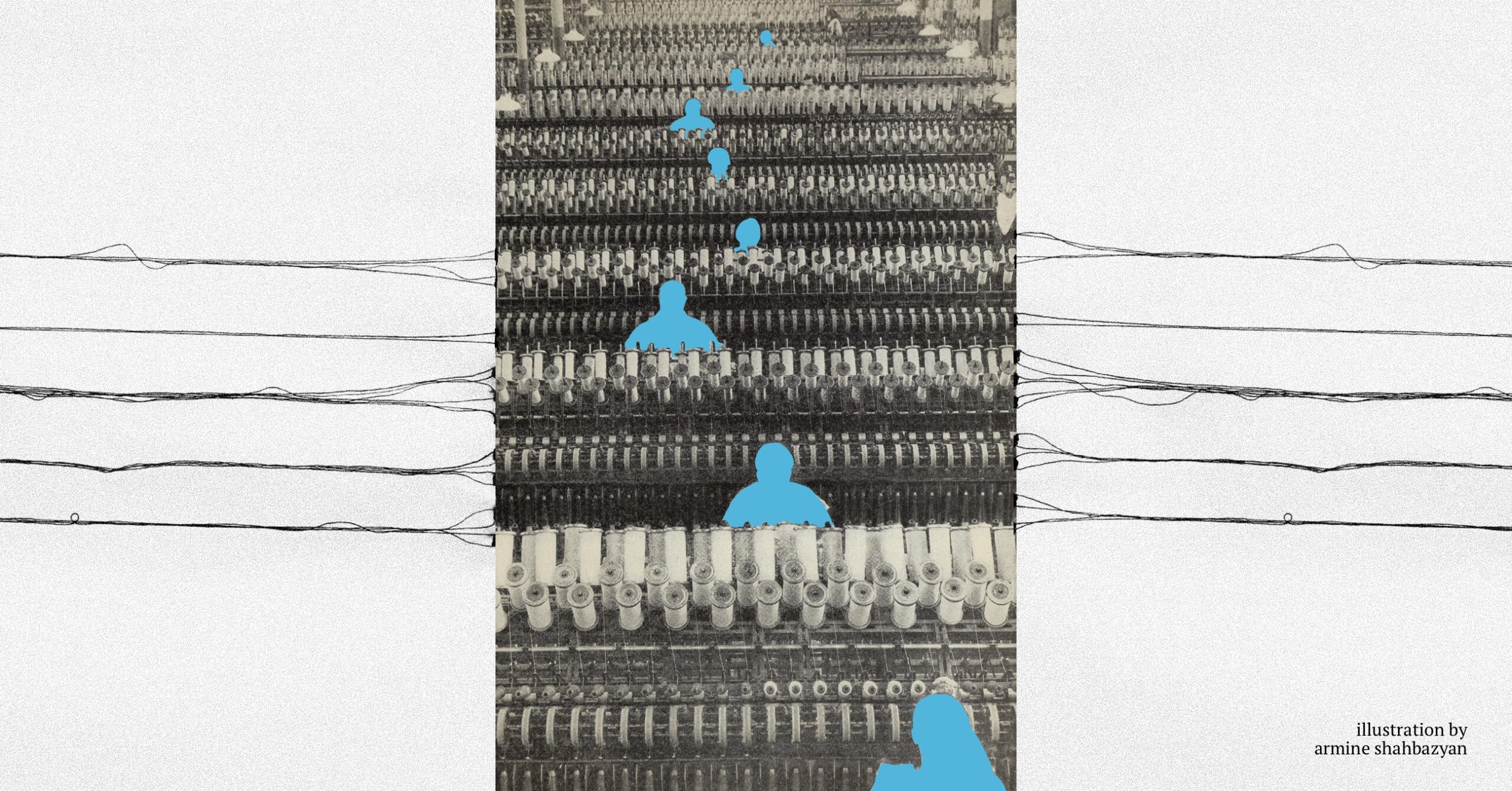
In the town of Ijevan, migrant workers at the Grand Textile factory went on strike for the second time in less than a year. The previous work stoppage occurred in August 2025 after the workers, migrants from India, reportedly had their passports seized by company security and were forced at gunpoint to continue working. The strike prompted an investigation by the Health and Labor Inspectorate, which resulted in a 8 million AMD fine levied against the company for unpaid wages. The factory was managed by Armenian nationals but recently a Russian national was appointed to oversee operations, while ownership of the enterprise is registered to a Russian citizen named Timur Osipov.
In the past week, workers undertook another work stoppage after reportedly rejecting an unreasonable increase in production quotas demanded by management. A second strike suggests a continued pattern of neglect by ownership and management and highlights the precarious situation labor migrants face in the Republic of Armenia. While Armenia’s emerging status as a destination for labor migrants might be worthy of braggadocio for government officials, such boastfulness rings hollow when the working conditions migrants find themselves in are conveniently swept under the rug.
In a video published on May 13, local police are seen assaulting a group of the workers during a tense standoff on factory grounds. Nine individuals were arrested and held overnight. According to Azatuyun, one remained in custody and was charged with failure to comply with a lawful request of a police officer. The day after the confrontation, company security refused me access to the factory grounds, but I was able to speak with some of the workers at the entrance.
According to the workers’ contract, each individual is expected to produce 110 garments a shift. The protest broke out when management suddenly doubled the expected quota and refused to accept a compromise of 140 garments from the workers. The group, numbering 200 men, work 11 hours a day, six days a week, earn $500 a month, and are housed on the grounds of the factory. Videos published by epress.am revealed bug-infested dining areas and damp living quarters with barracks-like conditions. Workers also complained of strict surveillance on the company premises, including fines for using a cellphone at their workstation. In the words of one worker, “We felt as if we’re living like animals.”
The migrant workers have demanded that the company purchase plane tickets for their return to India. Over this past weekend, at least one group managed to reach Zvartnots Airport for the journey home. At the time of this writing, around 123 men remain on the factory grounds, with no guarantee the company will buy their plane tickets or even supply food. The return of the current group of migrant workers to their home country might temporarily resolve the dispute in Ijevan; what remains unsolved is the question of the reserve army of labor migrants who will almost certainly be subject to the same predatory recruiting practices experienced by their predecessors. An assessment titled “Labor Migration and Trafficking in the Republic of Armenia” released in February of this year by the UN’s International Organization for Migration painted a grim portrait of the challenges labor migrants face in Armenia.
Migrants are employed primarily in the service industry, construction, and domestic work; around 40% work informally. Employers often refuse to file the requisite paperwork for work permits to avoid delays in acquiring laborers and paying administrative fees or taxes. Without formal documentation, migrant workers are subject to nakedly exploitative conditions described by garment workers in Ijevan: wage theft, dangerous workplaces, and cramped, unsanitary living quarters. The fines levied against “employers who hire unregistered foreign workers” are roughly equivalent to the 105,000 AMD fee for an official work permit; and although the report states “employers are primarily motivated… to cut total labor expenses,” the sinister maintenance of employer dominance in social relations, through the threat of deportation, entrapment, or even physical violence, must also be considered. The author of the report, a sociology professor at the University of Coimbra and migration expert, Pedro Gois, commented on the significance of the strike and the wider patterns of labor migration in Armenia. “These structural conditions create an environment in which labor conflict becomes increasingly likely,” Gois said. “I think we can reasonably expect further episodes of labor unrest and resistance. In many ways, such strikes are symptoms of deeper institutional gaps within labor migration governance.”
Labor and Neoliberal Democracy
These labor disputes are not confined to Indian migrant laborers in Prime Minister Nikol Pashinyan’s hometown. Over the last two years, work stoppages and strikes have occurred across vital sectors of the economy—from Syunik to Yerevan to Tavush—namely mining, transportation, and manufacturing. Whether it is the unceremonious sacking of 31 bus drivers in Yerevan or the 12 fired miners in Kajaran sued for $12 million in damages by the ownership of the Zangezur Copper-Molybdenum Combine, each instance reveals how frail Armenia’s labor regulatory environment is in protecting foreign and citizen workers alike. Foreign workers, however, are particularly vulnerable because of the language barrier and sketchy fixers who promise migrants gainful employment. In a perverse way, the same institutional cracks that mark the landscape for migrants and citizens alike bode well for investors and private equity in search of a disciplined labor force. But as Gois points out, “collective action by migrant workers indicates a transformation in the social position of migrants within Armenia… no longer merely temporary and invisible labor inputs; [migrants] are increasingly becoming social and political actors capable of articulating grievances and demanding rights.” For all the talk of democracy and development in Armenia, one might ask why industrial democracy is consistently excluded from the discussion?
Neoliberal capitalism tends to marginalize or even erase broad swaths of the global working class from public consciousness. That tendency is disrupted when people resist their exploitation. Labor is ultimately the basis of any society’s progress and development, but labor’s degraded status in a country calls into question any purported commitment to democracy. On Armenia’s attempt to position itself as a democracy, and the contradiction of inequities embedded in economic relations, Gois said, “Democracy cannot be evaluated solely through elections or geopolitical alignment.” While the ballot box is an important site of democratic participation, social relations at the point of production provide an extraordinary view into the real status of democracy in any country: “Labor rights, equal protection under the law, and the ability of vulnerable workers to organize and defend their interests are also central democratic indicators.” By way of the wildcat strike, migrant workers in Ijevan have thrust themselves into the forefront of the discussion.
Law & Society
Anatomy of a Process: Yerevan’s Metro
A decades-long effort to expand Yerevan’s metro reveals a familiar cycle of ambitious promises, shifting timelines, and stalled execution. The long-delayed Ajapnyak station underscores deeper structural challenges in governance, planning and accountability behind Armenia’s unfinished infrastructure.
Read more
Building a Family-Based Child Welfare System in Armenia
An in-depth look at Armenia’s shift from institutional child care to family-based welfare explores the roles of poverty, disability, stigma and law. Tigran Melikian examines recent positive reforms, remaining gaps and what it will take to ensure every child grows up in a family.
Read more
Armenia’s Long Road to Health Equity
Armenia has launched universal health coverage, replacing out-of-pocket payments with a national insurance system. After years of delay, the reform expands access and reframes healthcare as a social right rather than a privilege. The challenge is effective implementation, writes Hranoush Dermoyan.
Read more
 nelly
nelly 

Thank you for the article. This kind of labor abuse is unacceptable. As more Armenians emigrate, Armenia needs the migrant workers to make up for the labor shortage. Laborers are a key component to a strong economy, without which Armenia’s sovereignty would be in jeopardy. Those Russian nationals violating labor laws and practices in Armenia must be sent back to Russia. Laborers’ rights are human rights.