


My very first mentor when I started my UN career was Charles Michael Dennis Byron, then President of the International Criminal Tribunal for Rwanda. Knighted by Queen Elizabeth II and later appointed to Her Majesty’s Privy Council, he was widely known as “Sir Dennis”, and sometimes even addressed as “Lord Byron”. But to me, he was always simply “Judge.”
I’ll never forget when he once sat me down after a long day in court to offer one of his priceless nuggets of wisdom. I had been insisting, a little too naïvely, about impartiality as a fair trial right to mean that judges must be entirely free of bias, as if justice required a mind scrubbed clean like a blank slate. He smiled with the patience of a guru and said: “It’s not that judges don’t have biases. It’s that they must know what their biases are, so as not to let them make their decisions for them.”
That reflection became a life-long working method for me. It taught me to hold a mirror to my own predispositions before pointing a finger at anyone else. It became the compass I used when I investigated or examined evidence of war crimes. In those moments, the only way to get closest to the truth was to discipline my assumptions so that I could truly hear the voices of victims who’d been silenced or doubted, while also learning to recognize when a witness might not be telling the truth.
It was hard enough to practice this in the context of foreign conflicts, but at least there I could keep some professional distance. Now, working on Armenia/Azerbaijan and Nagorno-Karabakh, it’s even more difficult, because I more closely identify with the victim group. That closeness sharpens my sense of responsibility, while at the same time testing the very impartiality I previously thought of in more abstract terms.
As an Armenian, I am perceived as inherently biased on these issues. And as annoying as it might be to admit it, there is inevitably some truth to that. In the early days of trying to raise awareness for Artsakh during and after the 2020 war, editors often (though luckily not always) rejected my pieces, dubbing me someone with “skin in the game.” I resented the implication that, as an Armenian, my voice couldn’t be trusted because of my identity. Meanwhile, the supposedly more “balanced” pieces that sailed through publication often missed the mark, flattening asymmetries of fact and power until they distorted the reality on the ground.
This cult of “balance” and “both sides” presents a seductive fallacy: if there are two narratives, the truth must sit politely somewhere in the middle. But because so much of my work has been in spaces where violence and law collide, I recognize how dangerous this fallacy can be. Isn’t justice meant to lean toward the side that has been harmed? And isn’t it, in fact, more interesting and honest for a more directly affected member of the conversation to take a good, hard look at the other side’s perspective and attempt to wrestle something meaningful from it?
Of course, there are cases where complexity forbids easy conclusions and where humility demands we pause. But the refusal to take a side can embolden perpetrators and the refusal to name harm can be its own harm. At the same time, to err is human, and our partialities can blind us from nuances. So, when we find ourselves in the eye of any dispute or disagreement, the task is to test our own story, examine the opposite with objective rigor, and let the evidence—not the performance of neutrality—do the deciding.
Over the years, I’ve come to think of our biases as architecture, or “archbiases”, spanning the spaces in which our thoughts move and directing the flow of our judgments. Some arches are load-bearing and obvious: loyalties to our families, communities, national stories, moral axioms we acquired early and never really questioned. Others are decorative but no less influential: the cultural tastes we use to police the boundaries of belonging, the professional habits we defend because they reassure us that we are competent. We install these structures over time, brick by brick, and then we walk under their ceilings without realizing how they might impact, or obstruct, our movement.
Gender is a field where these obstructions are especially stubborn. The fact that men often carry ingrained stereotypes against women needs no repeating. But I have seen how patriarchal expectations infiltrate even the minds of women who would never consciously uphold them. We internalize the script that confidence in a man is leadership but in a woman is arrogance; that a man’s decisiveness is clarity and a woman’s is coldness; that assertive women are somehow off-key. We adopt these standards against each other, and worse, against ourselves, policing tone and ambition, apologizing for taking up space, offering caveats where none are demanded, masking expertise with a smile.
How do we maintain or renovate a house built on such illusions without tearing it down? We begin with taking inventory. What conclusions do we reach too quickly? Who do we reflexively trust or dismiss? Which sources feel “credible” because they comfort us? Which arguments make us angry before they even finish a sentence? If I can say, “I tend to credit X because they sound like me,” I’ve moved from being ruled by a bias to being in conversation with it. The same is true professionally. Before taking an interview or drafting an opinion, I try to ask myself, “What do I want to be true here?” That want is a bias. It’s also a clue as to where I have to be extra cautious.
We need the same kind of introspection as we navigate the long and painful road towards peace between Armenia and Azerbaijan. When emotions run high and wounds are still raw, our “archbiases” tilt and harden. For Armenians, the impulse is to dig in, to defend, to claim, to protect, mourn, rage, vindicate. For Azerbaijanis, the instincts are much the same. None of this is unnatural. The danger is not in having these biases, it’s in pretending that we don’t. Because it pulls us away from what peace actually requires: reconciliation and mutual recognition of each other’s humanity, and of each other’s pain, rights, and place in the future of this region.
We have to ask ourselves: what are we refusing to see? Which narratives are we clinging to, and which truths are we rejecting because they demand too much of us? Whereas conscious bias can sometimes be managed, unconscious bias will always control us. What Judge Byron taught me that day was that our ability to grow is directly related to how much truth we can handle about ourselves without trying to escape it. It taught me that self-awareness is not self-flagellation; it is self-respect. And in the end, it is also freedom—the freedom to think more clearly, to choose more wisely, to act with more integrity, and to learn to stand in the truth with eyes wide open.
See all [Unleashed] articles here
Listen to Sheila’s personal reading of “Archbiases”.
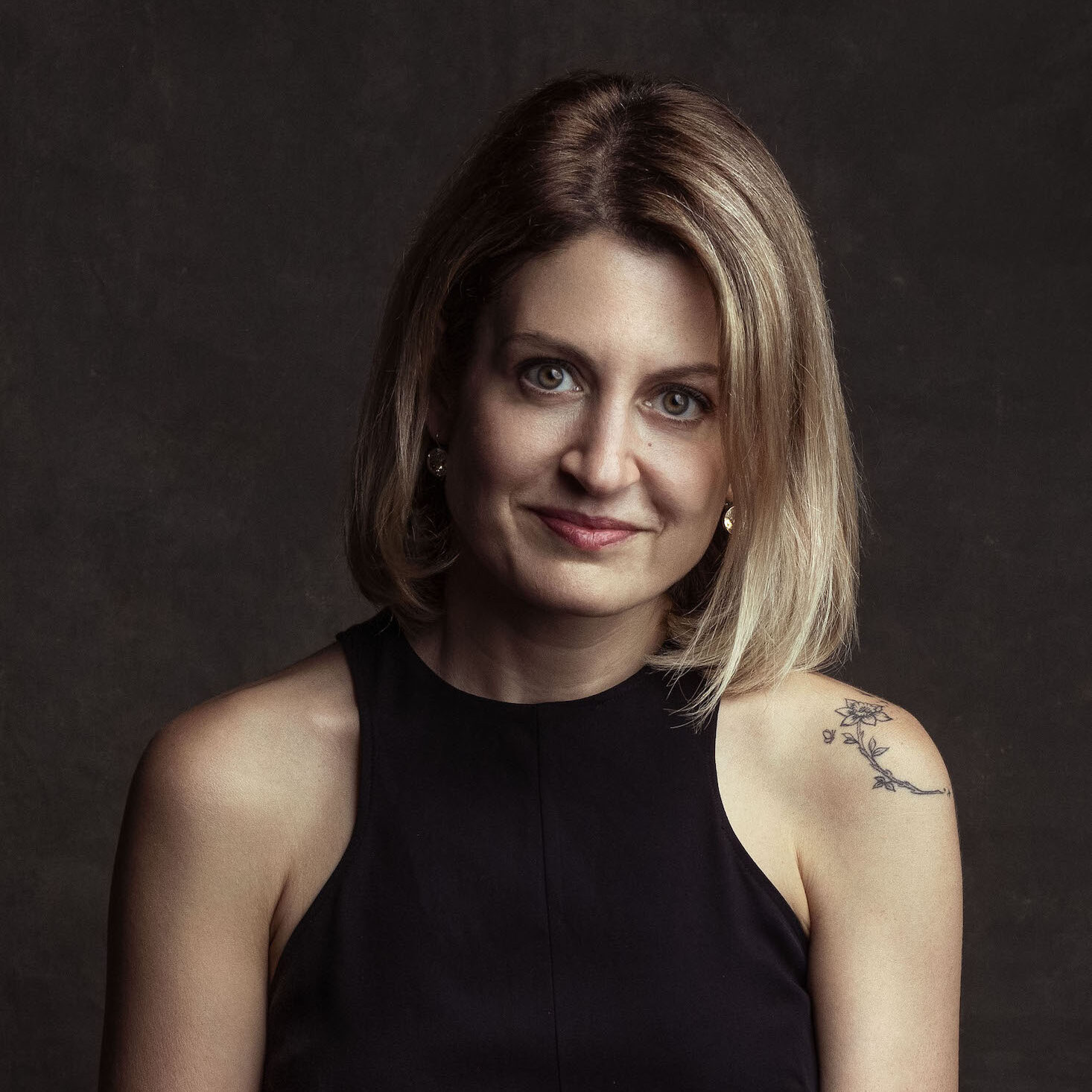
Sheila Paylan is an international human rights lawyer and former legal advisor to the United Nations. Now based in Yerevan, she regularly consults for a variety of international organizations, NGOs, think tanks, and governments.

Very interesting topic and well written piece. Our biases have a direct symbiotic relationship with our ego. many of our decisions need to TRY to compartmentalize, a huge task, in order to get a result that is better than complete rejection. Success is not a one shot deal: its a work in process. Thanks for your work)
Thanks you so much for reading and for your thoughtful reflection, Baron. And I couldn’t agree with you more that recognizing and working with our biases really is a lifelong process.
*… compartmentalize them (separate compartments)…