

The steely smog-lined December sky has increasingly become a perennial feature of the capital, slowly throttling denizens’ spirits like a Faustian cloak. Deprived of its sun, Yerevan can feel much like the horrifying Upside Down from Netflix’s Stranger Things, and the people often appear to be possessed by some dark force that draws them toward oblivion. It’s something of a lifeline then that the city’s cultural institutions continue to organize as many events as they do, despite the customary perception of December as the “dead-end” month. These occasions are like portals into a different, better dimension, filled with light, spirit and meaning that allow one to find flashes of hope and beauty within the mundane bleakness of the surrounding reality. All the more reason, then, to turn December into one of the cultural flagpoles of the year. Without many other avenues for “escape”, this should really be a time when the essential social functions of the arts, as a catalyst for togetherness, intellectual enlightenment and spiritual reinforcement, come to the fore. All of the cultural platforms in the city (as well as across the country) should really rethink December’s depressing climate as an opportunity to draw the public inside, toward spaces filled with engaging and inspiring content, providing a reprieve from the exhausting “holiday” rush and a means to reflect upon times past and times to come. Of course, once they’ve worked on that engaging and inspiring part a bit more.
EXHIBITIONS
FROM VAN TO PARIS: HOVHANNES ALHAZIAN
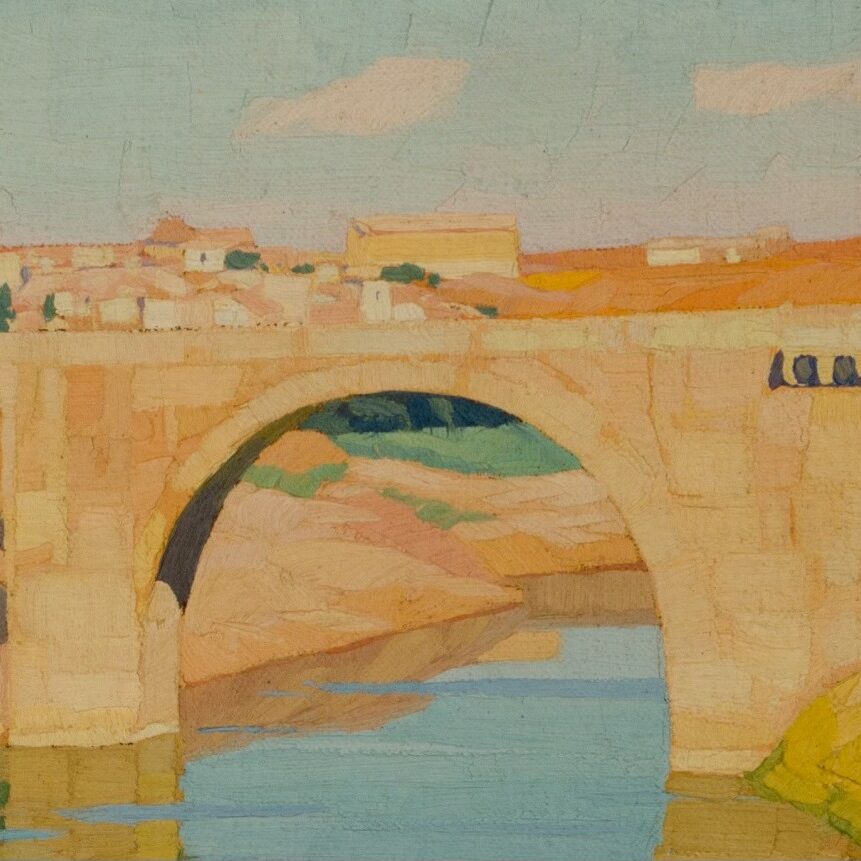
If you are yearning for light and warmth as the gloomy December days inch forward to yet another year of 21st century uncertainty, then the National Gallery’s retrospective of the great, yet under-recognized French-Armenian painter Ohannes Alhazian is the ticket for you. Born in Van in 1881, Alhazian moved to Tbilisi as a teenager where he received his initial art training, prior to relocating to Paris in the early 1900s. Entering the world’s art capital on the cusp of the great avant-garde boom, the young Armenian painter followed in the footsteps of most of his compatriots: he went after the safety net of restrained modernism, avoiding any radical, experimental gestures. Cleverly mixing stylistic techniques borrowed from impressionist and post-impressionist trends, Alhazian soon arrived at a very palatable and distinctive style that made him one of the more successful Armenian artists in Europe at the time.
Consisting primarily of landscapes, interiors and still-lifes, Alhazian’s oeuvre represents a romantic and patently nostalgic worldview. Nature in its different states is seen as an idealized harmony of elements, while the cultural imprint of humanity is shown exclusively through the prism of a quaint, traditional lifestyle. Modernity presents itself largely via Alhazian’s use of sparkling primary colors and the controlled expressiveness of his squarish brushstrokes, which he implemented with such technical brilliance that his paintings often seem to radiate light. The artist would stick to this modality for the rest of his long career, finding it unnecessary to adjust his commercially solid approach. A few years after his death in 1958, Alhazian’s heirs generously donated the entire contents of the artist’s studio to the State Gallery of Armenia. This vast collection of over 200 works has never been properly shown until now, and the classically structured exhibition curated by Margarita Khachatryan finally gives us an opportunity to rediscover the full creative path of the master in all its luminous glory.
Exhibition: “From Van to Paris”, Hovhannes Alhazian
Where: National Gallery of Armenia
1 Aram Str., Yerevan
Dates: Open from October 28
STREAMS OF MODERNISM: DIASPORAN-ARMENIAN ART BEYOND THE IRON CURTAIN
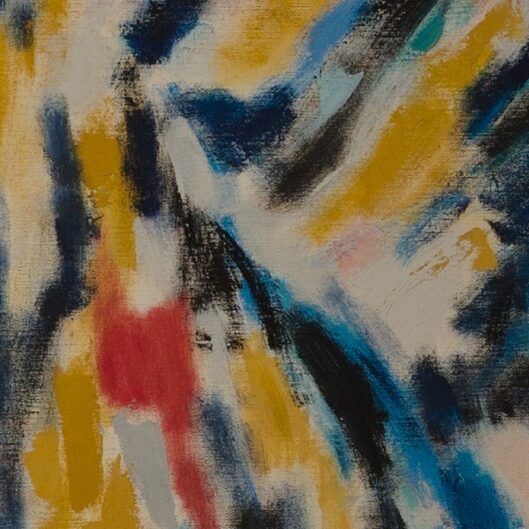
The sustained attention on the legacies of diasporan art is one of the more welcome recent developments at the National Gallery of Armenia. Following the first retrospective shows of Jean Jansem and Ohannes Alhazian this year, the Gallery presents one of its more thematically complex and rich exhibitions, which explores the fascinating links between the diasporan art scene and Soviet Armenia during the height of the Cold War in 1940s-1960s. Including some 100 works by close to 40 artists, Streams of Modernism posits a critically under-explored question about the degree to which diasporan art was present in Soviet Armenia and its impact on the formation of the local art scene in the mid-20th century.
Divided into three historical sections, the exhibition presents compelling evidence about the influx of artworks and ideas that were considered an anathema to the precepts of Soviet socialist art. From the first waves of repatriate artists in 1946-1947 to the “flood” of exhibitions of diasporan art in the 1960s, the links between Soviet Armenia and its amorphous cultural “double” provide a much broader and intricate matrix for rethinking the definitions of Armenian modernism. The exposure to various strands of formalist art via the works of Yervand Kotchar, Hakob Gurjian, Petros Konturadjian, Melkon Kebabjian, Gerardo Orakian, Ashod Zorian, Hagop Hagopian, Paul Guiragossian, Carzou, Elvir Jean and many others, undoubtedly served as a vital window (however narrow) into the horizons of free artistic expression under the stifling demands of ideological dictatorship. Aside from triggering these revisionist questions, the exhibition also serves as an invaluable opportunity to rediscover the astonishing diversity and visual splendour of diasporan modernist art, much of which remains little known to local viewers.
Exhibition: “Streams of Modernism: Diasporan-Armenian Art Beyond The Iron Curtain”
Where: National Gallery of Armenia
1 Aram Str., Yerevan
Dates: Open from November 26
SOUNDING IMAGES: GRIGOR AGHASYAN
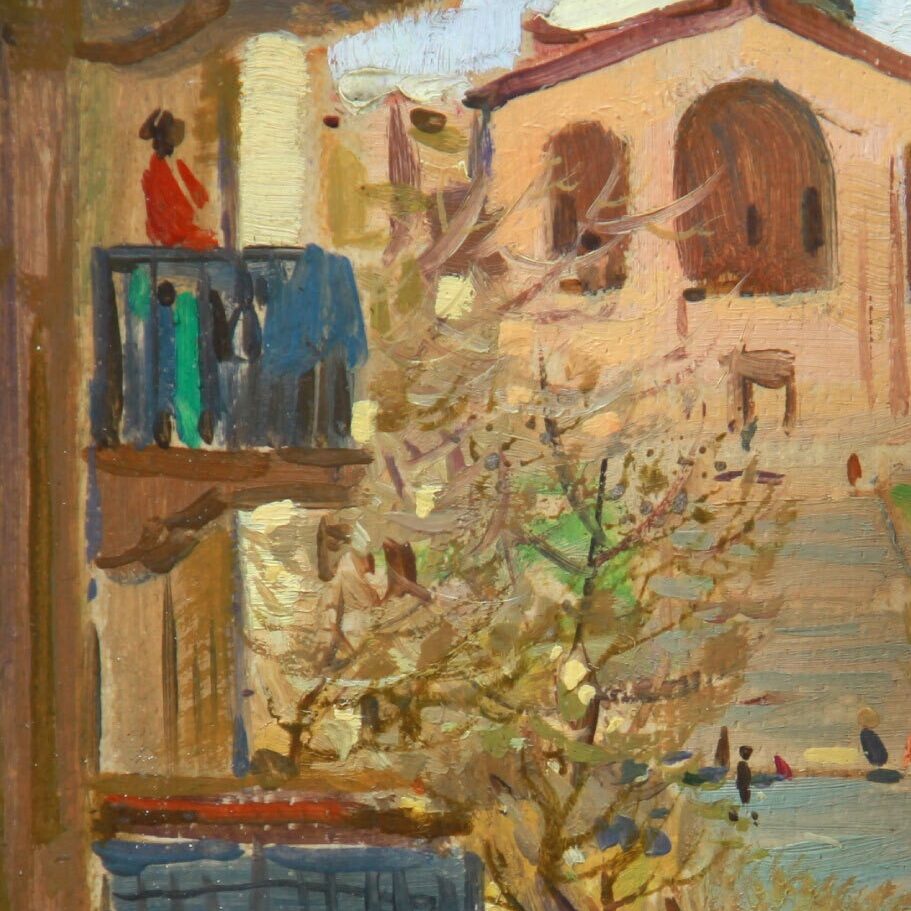
The National Gallery is hosting another show that represents the more familiar side of 20th century post-war Armenian art. The retrospective of one of the most respected academic painters of this period, Grigor Aghasyan (1926-2009) shows a broad and multifaceted trajectory of an artist usually associated with socialist-realism and historicist narrativism. Throughout his career, Aghasyan successfully interpreted the pulse of officially-sanctioned culture, going from the early, large-scale propagandistic compositions depicting the proletariat and urbanization to the equally monumental canvases celebrating the national reawakening of the 1960s, and the intimate, memory-pictures of disappearing old Yerevan. What is particularly fascinating about this show – curated by the artist’s grand-daughter and the Gallery’s director, Marina Hakobyan – is the way it reveals the eclectic and unstable nature of socialist art. Aghasyan was a master at adapting a plethora of stylistic trends, from loose impressionist techniques and dramatic neo-realism to symbolism and baroque expressionism, into a vision that always strives for classicism, yet is in an anxious search for renewal. What remains constant here is Aghasyan’s earnest interest in people, communities, family, place and storytelling. His brilliance at conveying mood and narrative often achieves an almost cinematic effect that has a visceral impact even today. It’s the type of wholesome, humanist sensibility that was already archaic in mid-century Western art and could be dismissed merely as tastefully naïve populism. Yet, much like Norman Rockwell’s work, the uncanny magnetism of such art has become even more powerful in our apathetic and alienated times, pushing us to rethink the legacies of these academic masters in a new light.
Exhibition: “Sounding Pictures”, Grigor Aghasyan
Where: National Gallery of Armenia
1 Aram Str., Yerevan
Dates: Open from December 12
KNARIK VARDANYAN: TIME, SPACE, MOTION
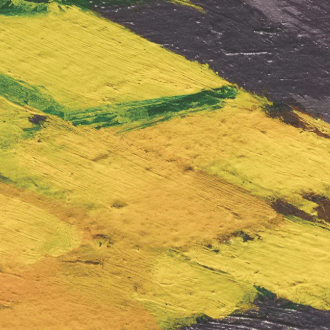
When it comes to defining who, or what, qualifies as a “classic,” social, political and cultural forces tend to outweigh any intrinsic measure of artistic merit or historical significance. The case of painter Knarik Vardanyan (1914–1996) is telling. Little known beyond a small circle of specialists and collectors, her obscurity feels perplexing when confronted with the astonishingly bold and fearlessly experimental vision revealed in her long-overdue retrospective, curated by Armen Yesayants at the Cafesjian Center for the Arts.
Surveying Vardanyan’s trajectory from early Fauvist-inflected works to the quasi-abstract paintings of the 1970s and 1980s, this strident exhibition leaves little doubt that she ranks among the true originals of late-modernist Soviet Armenian art. Few of her contemporaries approached the formal or thematic freedom she achieved through her unrestrained use of color and line—at times so intense it borders on the hallucinatory. Drawing on the Soviet avant-garde and Italian Futurism of the 1920s, her work is nonetheless infused with a distinctly “space-age” emotiveness and fantasy that is entirely her own.
This futurist, cosmopolitan orientation goes a long way in explaining her marginalization. While many of her peers turned toward idealized narratives of national past and identity, Vardanyan remained committed to contemporary and forward-looking subjects. Her techno-futurist world of sublime, unsettling forces stood in stark contrast to the “timeless”, ethno-nationalist idioms that dominated the 1960s. It was also profoundly at odds with expectations placed on women artists: her painting was bluntly “unfeminine” in its aggression and lack of decorum.
Ignored by both institutional and unofficial factions of a patriarchal art world, Vardanyan never received the recognition she deserved. This exhibition should act as a catalyst for the overdue reassessment of her mercurial legacy—and of many other compelling figures who have slipped through the cracks of Armenian art history.
Exhibition: “Time, Space, Motion”, Knarik Vardanyan
Where: Cafesjian Center for the Arts (Cascade Complex)
10 Tamanyan Str., Yerevan
Dates: December 12-March 7
IN UNISON THROUGH ART: YERVAND AND MÉLINÉ KOCHAR
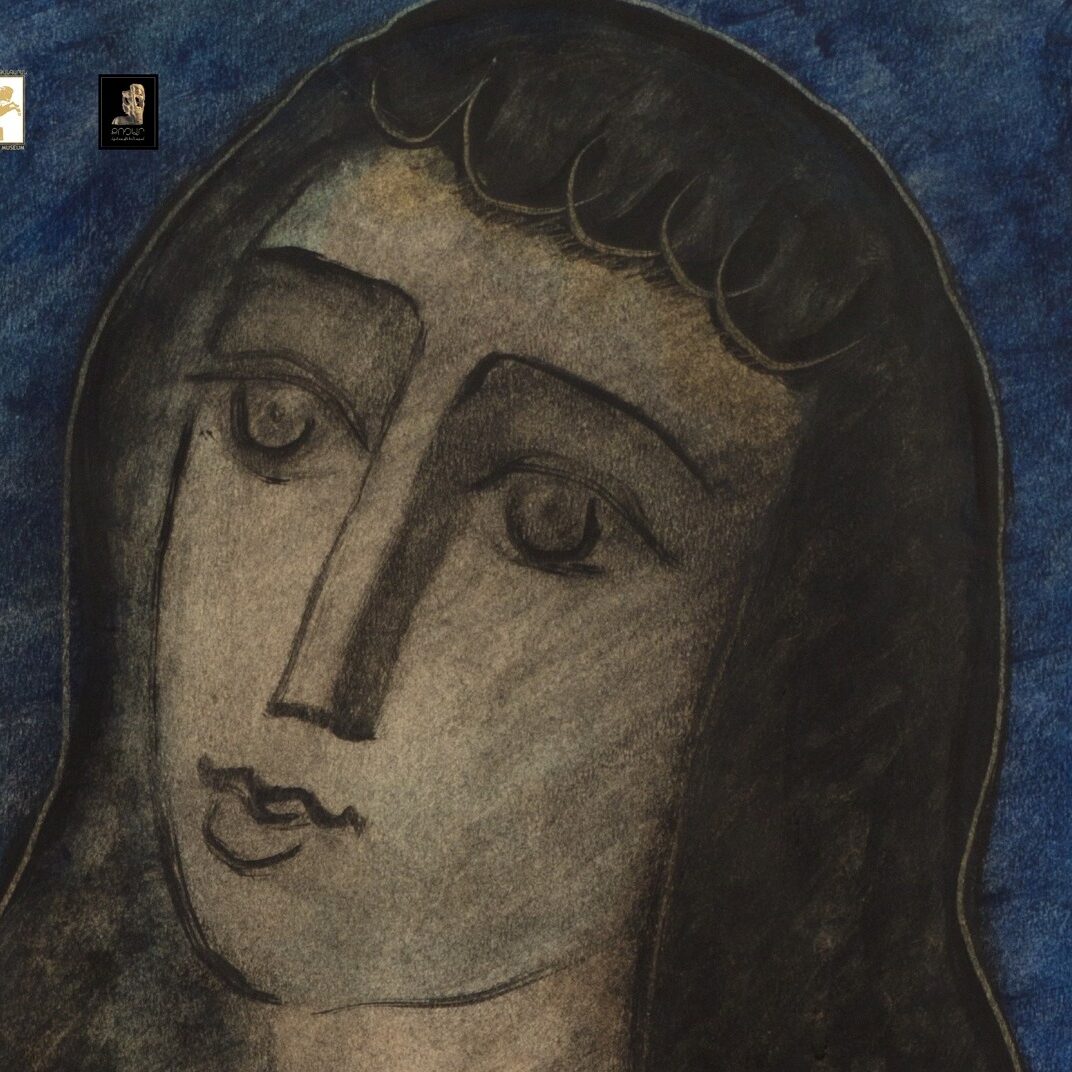
The Giotto Studio-Museum presents another long-overlooked woman artist finally receiving a spotlight, more than 60 years after her death. Méliné Kochar (Ohanian) has long existed as a marginal footnote to the towering reputation of her husband, the avant-garde painter and sculptor Yervand Kochar. When the two met in the late-1920s Paris, Kochar was already a rising star of the European art scene, known for his radical surrealist compositions and pioneering three-dimensional paintings. Méliné, then a young student of Fernand Léger, entered his orbit at a moment when Kochar’s grief (due to loss of his first wife and child), charisma, and intellectual intensity made him irresistible. They married in 1930, becoming a celebrated couple within Paris’s diasporic circles.
Their partnership ended abruptly in 1936 when Kochar relocated to Soviet Armenia. Méliné was meant to follow, but they never reunited. She remained in Paris for the rest of her life, emotionally tethered to an absent husband while attempting to forge her own artistic path. Her work reflects the post-war shift toward figurative, humanist themes, drawing on the legacies of Picasso, Léger, and Kochar himself. Yet Méliné softened their formal radicalism, producing serene, almost primitivist compositions—still lifes and recurring images of young women holding flowers or doves, gazing dreamily into space. These schematized female faces feel deeply autobiographical, suspended in time and expectation. Notably, her paintings are devoid of overt bitterness, a restraint that feels almost miraculous given her personal history. In some way, her art remained the sole channel of communication with Kotchar, a dialogue that only ended when Méliné gave up waiting and took her own life in 1967.
Elegantly curated by Haykush Sahakyan and Arpine Saribekyan, the exhibition frames Méliné and Kochar as a creative couple—a slightly unfair positioning, given their brief six-year union. As a result, Méliné’s work risks appearing as an appendage to Kochar’s legacy. Constrained by the limited availability of works and archival materials, the exhibition does not resolve whether her art was merely an echo of his genius or her own, however discreet, engagement with the issues of post-war modernism. Still, the project marks a crucial step in bringing Méliné out of the shadows, while revisiting one of the most poignant artistic unions in Armenian art history.
Exhibition: “In Unison Through Art: Yervand and Méliné Kochar”
Where: Studio-Museum of Giotto
45a Mashtots Ave., Yerevan
Dates: Open from November 19
DAVIT KOCHUNTS: HISTORY PICTURES
At the beginning of 2026, the National Gallery of Armenia made a provocative turn with the launch of Prospectations, a program devoted to significant new works by emerging contemporary Armenian artists. Opening with Lousineh Navasartian’s monumental, war-themed drawing Silence, the program’s second edition introduces another early-career painter—Davit Kochunts (b. 1988)—who has risen swiftly in recent years through his witty and visually punchy paintings that confront both local and global conundrums of our time.
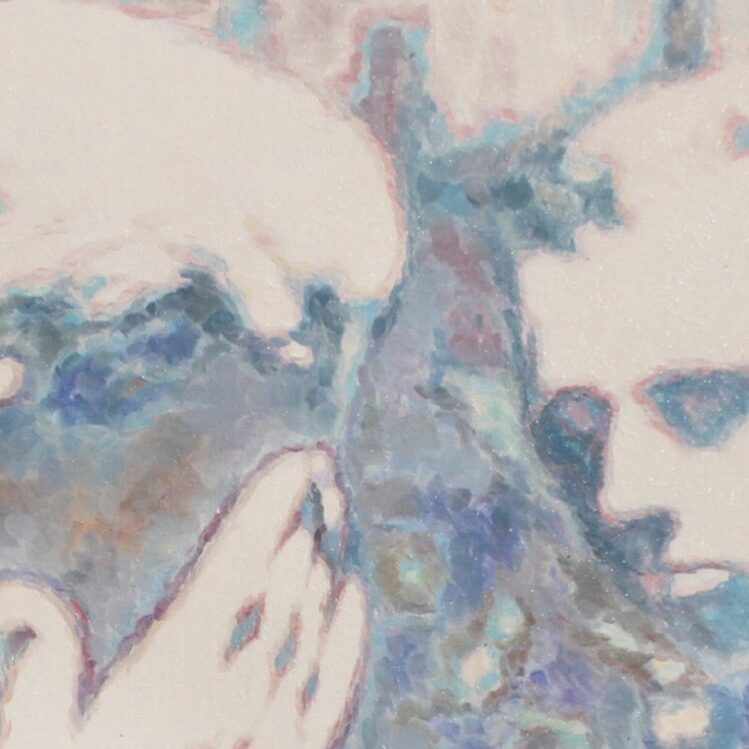
Kochunts’ latest series, History Pictures, is his most ambitious undertaking to date. At first glance, the works form an eclectic and seemingly disconnected mosaic of topics, images, and events drawn from present-day reality and the annals of the twentieth century. Yet with sustained attention, the delicate—and often unsettling—associations between these mass-media sourced fragments begin to surface, resonating with unexpected clarity.
Themes of war and power are deftly interwoven with the evolution of spectacle culture. Kochunts stages this entanglement through a set of broadly transcultural references: the 2020 Artsakh War, Michel Foucault, Andrei Sakharov, Marylin Monroe, Kim Kardashian, futuristic robots, and other vaguely familiar representations that ultimately culminate in a confrontationally ambiguous painting of TikTok influencer Charli d’Amelio. At the heart of these thematic and conceptual explorations lies a fundamental question: art’s relationship to history, and the ambivalent claim of images to distill, or distort, historical realities.
Kochunts approaches these vast concerns with a finely calibrated balance of irony, melancholia, and unexpected emotiveness, rendered through his innovative interpolation of impressionist techniques and digital aesthetics. Biased as I may be, as the curator of the exhibition, I believe this body of work marks Kochunts as one of the most distinctive and searching painters of his generation.
Exhibition: “History Pictures”, Davit Kochunts
Where: National Gallery of Armenia
1 Aram Str., Yerevan
Dates: November 11-January 31
ALEXANDER AVAGYAN: EMBODIED LANDSCAPES
The AHA Collective continues its commendable effort to introduce both established and emerging talents from the diaspora into the local arts scene. Its latest project presents the first Yerevan solo exhibition of Paris-based painter and sculptor Alexander Avagyan. Born in Armenia, Avagyan’s artistic formation has unfolded in France and is strongly informed by the resurgence of neo-modernist tendencies in contemporary European art.
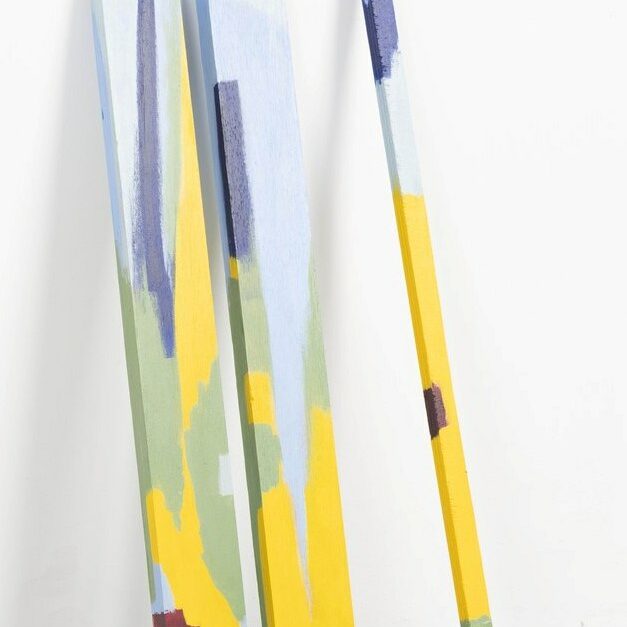
A palpable 1960s sensibility runs through the artist’s technically refined and stylish explorations of color fields and spatial permutations. Here, the classificatory framework of “landscape” functions less as a reference to a specific genre than as a philosophical and aesthetic inquiry into the nature of borders, frames and territories. Bestowed with painterly surfaces, the artist’s geometric sculptural forms can be “activated” by the viewer, not unlike children’s shape-block games.
While this interactive strategy proves more compelling in theory than in practice, it does facilitate a sensual understanding of “landscape” as a shifting construct rather than a fixed phenomenon. Nevertheless, despite their vaguely political resonances to “borders” or “territories” in an Armenian context, Avagyan’s works are best approached as meditations on the transformative power of color as surface—capable of fundamentally altering the perception of even the most rudimentary shapes and objects. In this sense, these elegant, and quite decorative pieces hover somewhere between contemporary art and design, an increasingly amorphous territory that has become a central preoccupation for the AHA Collective’s projects.
Exhibition: “Embodied Landscapes”, Aleksandr Avagyan
Where: AHA collective
31 Moskovyan Str., Yerevan
Dates: December 6-March 6
LIVING ROOM
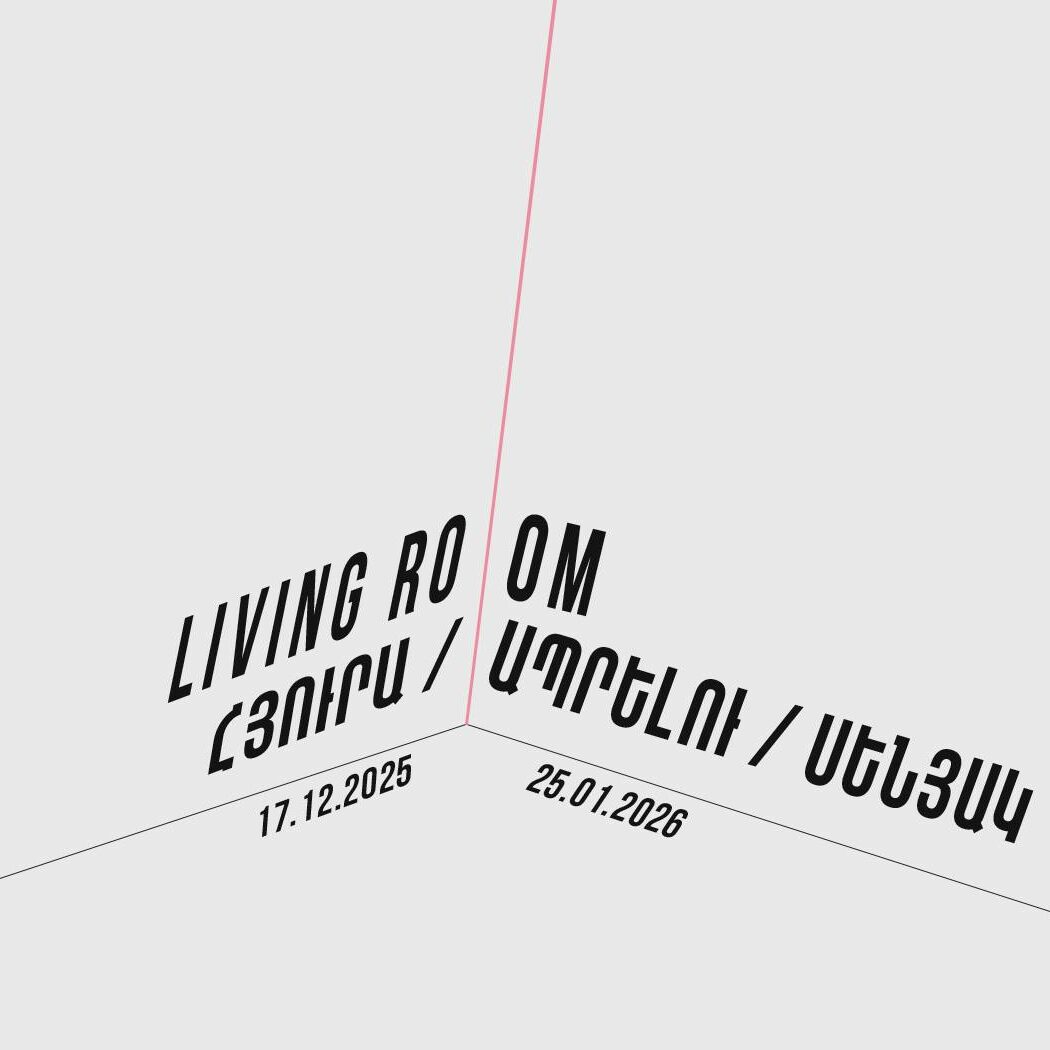
It’s a sure bet that we’ll see some fair-like art event at the end of the year in Yerevan, in lieu of actual markets for contemporary art. This time the task has been taken up by Studio 20, which has somehow crammed works by over 80 local artists into its modest space in the iconic Artist’s building on Hrachya Kochar Street. Yet, as Momik Vardanyan’s curatorial text informs us, Living Room doesn’t aim to be an elitist or even an “affordable” art fair. Instead “it is an invitation to belong, to participate, to exchange knowledge, friendship and solidarity.” It’s an admirable sentiment in the current climate of communal fragmentation and discord within Yerevan’s artistic milieu and the event’s packed opening did manage to bring together many old faces with new blood that’s just entering the scene in an amicable atmosphere. The genially temperate mood, more reminiscent of some Parisian soiree rather than the often fiery Yerevanian gatherings of the past evidently signals a dramatic shift within the post-war dynamics of the local art scene – a reserved congeniality and politesse that underlies an unspoken need to re-establish and redefine creative networks along more professional and mutually-empowering lines. It’s a positive sign of maturity that inspires confidence in the nascent (and belated) flourishing of the Armenian contemporary art scene. The selection of artist-chosen works here is very casual and informal – ranging from notebook sketches and photographs to medium-sized canvases and video art. But that’s beside the point, because the wildly eclectic (and non-hierarchical!) mix of talents, generations, mediums and approaches in one place is a heartening spectacle of a more egalitarian, tolerant, inclusive, polyphonic, and frankly, healthier cultural moment. And what better thought than that to take with us into the next year?
Exhibition: “Living Room”
Where: Studio 20
13 Hr. Kochar Str., Yerevan
Dates: December 17-January 25
WOVEN MEMORIES: A FAMILY LEGACY
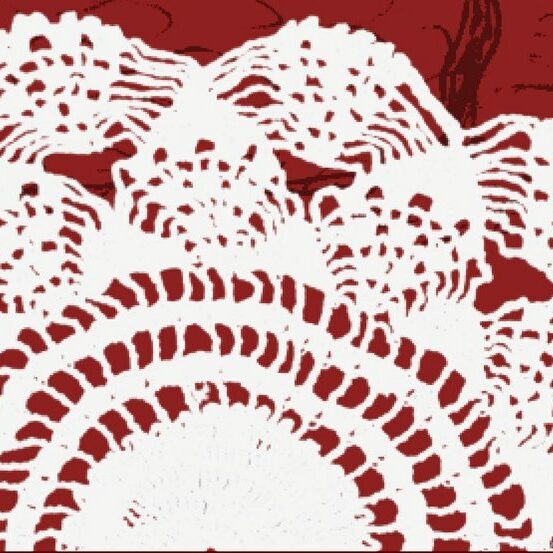
In recent years, family histories and archives have become something of a vogue in the museum world. As critiques of institutional and hegemonic narratives have intensified—to the point where any form of “Big” history is automatically viewed with suspicion—the personal archive has emerged as a crucial counterweight, capable of interrogating and recalibrating the mechanisms of institutional meaning-making. The History Museum of Armenia has turned to this format on several occasions, though less as a tool for questioning meta-narratives than as a vehicle for the sentimental reiteration of survival tropes.
Its new exhibition follows a similar tactic, presenting a previously unseen collection of familial relics, documents, and objects drawn from the private archives of the Ter-Ghevondyan–Tchorbajyan and Khachaturyan–Devejyan families. Extending back to the late nineteenth century, these artefacts offer an intimate glimpse into the ways extended family networks preserved and mediated intergenerational memory through genocide, political upheaval and displacement. Over time, the material traces of this family history crystallized into a mobile “territory,” a space in which identity and belonging were continuously negotiated and reaffirmed beyond the pressures of geopolitical circumstance.
At a moment when individual connections to the collective past are increasingly fragile, or actively erased, such exhibitions serve as poignant reminders of the power of rootedness, while also prompting vital questions about what, and how, people today will choose to transmit to future generations.
Exhibition: “Woven Memories: A Family Legacy”
Where: History Museum of Armenia
Republic Square, Yerevan
Dates: Open from December 24
LUMINOUS IMAGES: THE MINIATURE REVELATION OF ANGELS
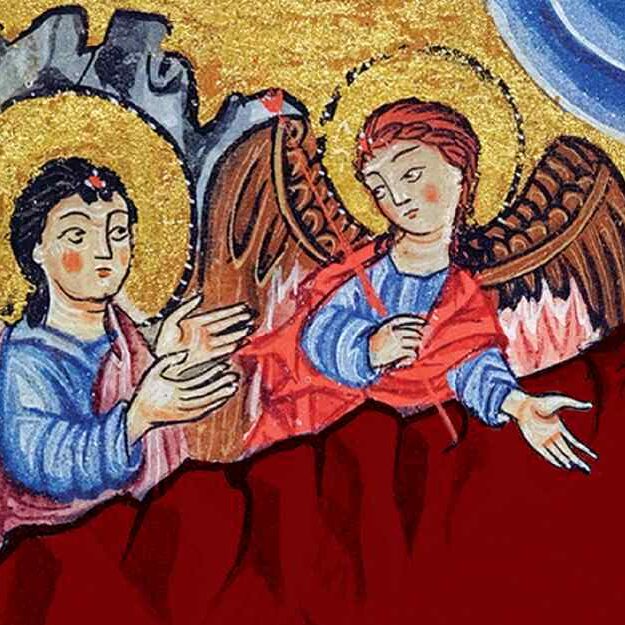
With the Christmas season upon us, it would be strange not to encounter angels in at least one of the city’s museums. Matenadaran’s new exhibition obliges, offering a whole bunch of them through a choice selection of illuminated manuscripts and silver covers drawn from its exceptional collection. Ostensibly a survey of the iconography of angelic representation in medieval Christian Armenian art, the exhibition appears less an academic examination into the evolution of pictorial and religious codes than another thematic presentation of Matenadaran as a treasure house of singular artefacts. This, however, is a minor quibble, since any opportunity to encounter the museum’s magnificent manuscripts—most of which are often kept out of view in storage—is a visual pleasure well worth savouring.
Exhibition: “Luminous Images: The Miniature Revelation of Angels”
Where: Matenadaran
53 Mashtots Ave., Yerevan
Dates: Open from December 20
FILMS

A WINTER’S SONG
I must confess that there is a temptation to review most films these days merely on the basis of the trailer – a temptation that becomes even harder to resist in the case of commercial Armenian cinema. Take, for example, a curious little diversion called “A Winter’s Song” that is currently screening in select cinemas. According to the trailer and the synopsis, this is yet another endlessly recycled tale of a struggling artist/writer/musician returning/travelling to an exotic ancestral homeland/destination to find inspiration/love and a motherload of neo-orientalist/colonial clichés packaged as a romantic journey of “self-discovery”.
In this instance, it is the young singer Liana (Krista Marina) who escapes from the rat race in the United States to come to Armenia where she encounters churches with great acoustics, tasty khorovats, Ararat on a rare clear day, and a hunky guitarist (Edgar Damatian). All of which, predictably, helps the protagonist liberate her vocal cords on the steps of the Cascade. It’s the kind of formulaic, feel-good, holiday-season scenario that Hollywood has been regurgitating ad infinitum for over a century. If in the past they had screenwriters like Joseph Mankiewicz and directors like George Cukor or David Lean to reinvigorate these thread-bare – and often shockingly offensive – plots, today we are simply given the formula itself with repackaged elements (actors and locations) that are increasingly difficult to tell apart.
So, it’s no wonder that the trailer for “A Winter’s Song” resembles a tourism promo with such odiously generic visual and narrative cues that I had to watch it a few times to ensure it wasn’t generated by AI. Clearly made to fill a vacant spot on some streamer’s back catalogue, this type of fare exemplifies the whole socio-cultural horror of cinema’s transformation into binge-watched content. The only thing of note here is the fact that this independent, English language, U.S.–Armenian co-production directed by the LA-based Angela Asatrian reinforces the growing trend of American and European projects shot in Armenia.
Using an Armenian setting to rehash some of the atrophied genres of commercial cinema may be a valid (if trite) gamble as demonstrated by the success of Michael Goorjian’s 2022 “Amerikatsi”. Yet it still requires even the most prosaic engagement with the local context and stories beyond the postcard-deep images of Mount Ararat to keep anyone interested after that glossy 30 second promo. The rising tide of Hollywood’s Armenian players will have to invest at least that much effort if they expect their Armenian gamble to pay off.
Screening: “A Winter’s Song”
Where: Moscow Cinema
18 Abovyan Str., Yerevan
FESTIVALS

CHRISTMAS ART FAIR
Well, my bad. There is an actual Christmas art-fair, called the Christmas Art Fair, which will take place at the Artists’ Union of Armenia between December 22-29. Organized by the Liver Art Company this event is apparently “a platform that has united artists, collectors, galleries, and art lovers for four years.” Now, I’m anxiously wondering why this has skipped my attention… Do I no longer have my finger on the pulse? Should I be on social media more? Perhaps I need to replenish my circle of friends and colleagues none of whom have ever mentioned this? Maybe I’m too old to keep up with new trends? Is this actually worth doing anymore? Should I just leave it all behind and move to the mountains to write that book? Who reads books anyway? Am I no longer in love with art? Does art have meaning…? Ok, wait… there’s a sneak-peak promo reel for the fair that should give me some insight. Oh, right, ok, I see… It’s the “Christmas” art fair, people. Phew… Never really liked Christmas much, I’m more of a New Year “let’s get pissed and forget the shit that happened last year” type of guy. But yes, for all your Christmas art needs, December 22-29, at the Artists’ Union of Armenia.
Festival: Christmas Art Fair
Where: Artists’ Union of Armenia
16 Abovyan Str., Yerevan
Dates: December 22-29

Thanks! I love this segment and check it every month. Hope it continues!