
The late September getaway didn’t turn out quite as I had imagined. Sitting in my overpriced pseudo-minimalist cabin, I watched with a sinking heart as a fierce storm trashed my modest plans for a short getaway on the shores of Lake Sevan. This didn’t seem to bother the young Ukrainian-American couple next door, who used the occasion for a lengthy and remarkably loud afternoon sex session that pierced through the walls like an acoustic mockery of my miserable attempts at rest. The austere, decidedly non-Cote-d’Azur environment wasn’t an obstacle for the significant number of holidaying Russian families either who, I assumed, were happy to be anywhere but Russia. A large contingent of Chinese tourists armed with protective gear and cameras elatedly roamed the desolate surroundings of our guesthouse with evident delight, while I tried to decode the source of their excitement. At lunchtime, murmurs of measured, and tonally restrained conversation drifted over to our table, confirming the more retiring presence of German and French visitors.
I tried to fathom what all these people were doing here… Most of them could have enjoyed a more conventionally “idyllic” holiday at some coastal resort in Egypt, Turkey or even Georgia for a much lower cost. In contrast, Sevan can be considered something of an extreme choice with its piercing sun, torrid winds, bare mountains, stony beaches and excruciatingly beautiful, but drowning-prone waters. Was this the outcome of some collective existentialist crisis in the vein of Camus, or a sign that Armenia was finally carving its own specialty niche in the global tourism economy as a piquant alternative to the postcard tropes?
Perhaps, the truth of the matter is more complex. In an age when the spectacle of hyperreality has reached such levels of toxicity that even a mere glimpse of a botoxed-up influencer on a sandy beach can cause physical nausea, the severe, unwelcoming landscapes of places like Sevan are like a jolt of undulated reality and a welcome reprieve from the relentless horror of sameness that Jean Baudrillard has termed as “gentle deterritorialization.” There is a confrontation with something primal here, like witnessing the cyclical battle between forces of oblivion and human survival that throws one out of the numbing comforts of consumer culture toward the stark realization of the precariousness of life.
On the way back to Yerevan, as we passed through the increasingly strange panorama of Armenia’s chaotic regional “development,” it dawned on me that what I appreciate most about this place is its stubborn refusal to “deterritorialize”. However hard some actors might try to enforce the late-capitalist scaffolding, the country simply refuses to conform, to play by the rule book of rationalist political and economic systems. For better or worse, somebody, somewhere inevitably transgresses, breaking the illusion of control and order. Oftentimes, this contrarian streak is exasperating – just like the weather in Sevan – especially when it comes to the institution of logical reforms. But if we think of it all as a form of unconscious, and culturally innate resistance to the flattening, homogenizing effects of the global capital then, perhaps, it’s a small price to pay for the luxury of remaining non-conformist. The question is whether we can embrace and hone this streak of disobedience as an ideological position that is directed outwards and challenges the stifling paradigms of “progress” enforced by global powers.
EXHIBITIONS
The Face of Humanity: Vardges Surenyants’ “The Abandoned” and Humanist Art
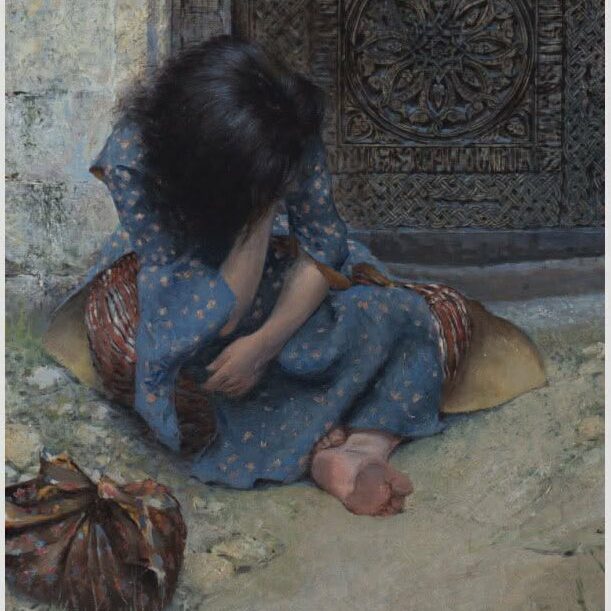
The Fall season is confronting us with such an avalanche of large- and small-scale shows, that it is hard to make recommendations without sounding biased. And as the curator of this particular exhibition, I certainly am. But what the hell… How could I not urge everyone to come see an event that features one of the seminal, even revolutionary pieces of modern Armenian art that is being exhibited in this country for the very first time, 130 years after its creation? Painted in 1894, Vardges Surenyants’ “The Abandoned” is the artist’s urgent and impassioned response to the onset of the Hamidian massacres in the Ottoman Empire. It also signaled a shift from the stereotypically Western, Orientalist typologies in the critical, self-reflective way this artist and Armenian art in general began to think and represent their own and “Eastern” cultural identity.
At the core of it is Surenyants’ profoundly universalist plea for a humanism that transcends cultural, racial and class divisions. His tragic adolescent heroine is a powerful, collective symbol of a new kind of state violence that was oppressing the weak and the voiceless all across the world at the dawn of 20th century modernity. Despite the austere simplicity of its composition, “The Abandoned” is, in fact, such a conceptually and aesthetically complex work that it could easily justify an entire volume dedicated to its meaning, history and impact. The painting’s two companion pieces – the 1895 “Desecrated Sanctity” and the 1898 “After the Massacre” – form an emotionally jolting narrative that underlines the significance of these works as paradigmatic and political statements.
Hence, it is not incidental that the painting’s loan from the A. Kasteev State Museum of Fine Arts in Almaty forms the basis of a much wider inquiry about the humanist thread in Armenian modern art. It’s a trajectory that has been somewhat overshadowed and even dismissed in our times due to its entanglement with the ideological frameworks of the Soviet regime, as well as diasporan meta-narratives. The exhibition attempts to shift that focus on the socially-engaged, and politically progressive approaches of Armenian artists whose humanist outlook centered on the issues faced by the oppressed – the dispossessed, workers, women, children, minorities – regardless of the geopolitical context. While revealing the injustice suffered by the weak and the voiceless, the showcased artists primarily foregrounded not the violence and the suffering, but the life-affirming and generative aspects of human existence based on empathy and respect. This ideology of care is the underlying message of the exhibition, which is strikingly prescient at a time when humanist values are eroding like sandcastles in the winds of late-capitalist apathy and technological autocracy.
Exhibition: “The Face of Humanity: Surenyants’ ‘Abandoned’ and Humanist Art”
Where: National Gallery of Armenia
Republic Square, Yerevan
Dates: Open from September 17
Vagharshak Aramyan …and Metaphysics
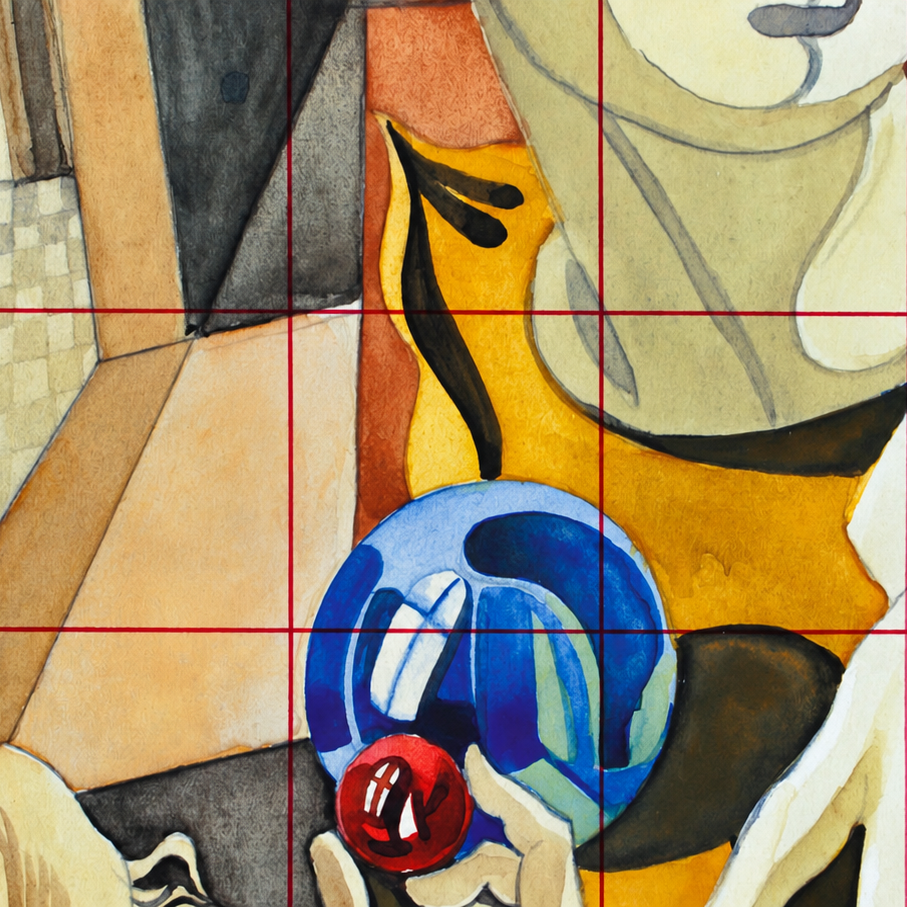
The buoyant 1960s was a smashing time to be alive. Even in Armenia, a country notoriously reluctant to chase after the new, or rather, let go of the old, it was a period of cataclysmic cultural upheaval and remarkable openness to the outside world. It’s this spirit of newfound liberty and breathless experimentation that hits the viewer like a powerful scent when looking at the works of painter Vagharshak Aramyan, whose retrospective exhibition is currently on view at the Cafesjian Center for the Arts. Though not limited to the 1960s, the exhibition’s prominent focus on a large group of surrealist drawings and paintings from that decade provides a rare window into the mindset of a young artist fresh out of the art academy, who had been given the keys to a whole century of modernist inventions to play with. This spirit of creative cavorting is palpable in the artist’s earlier works. There are humanoid figures wandering like titans through primordial landscapes, surrounded by mysterious symbols of transcendental forces, and a whole gallery of faces reduced to archaic typologies of human essence via the prism of cubism and expressionism. Imbued with philosophical speculation evidently drawn from popular thinkers of the period such as Herbert Marcuse, Friedrich Nietzsche and Sigmund Freud these metaphysical mystifications convey a profound desire to escape the physical reality; a condition that typified so many Armenian artists of the post-Stalinist generation who were sensing the rot in the Soviet civilization and tried to run from it.
Aramyan was an artist that ran further than most, not only through his highly formalist synthesis of various strands of symbolism, surrealism and Greco-Roman art, but also through his adamant rejection of the popular idioms of Soviet visual culture. Following the Marcusian dictum of “emancipatory imagination”, the artist tackled the phenomena of life as an endless mystery of unknowable forces, rather than the protean system of communist rationalism propagated by the art establishment. And it’s a way of thinking that he brought to bear to even the most conventional subjects, such as still lifes. The fact that Aramyan went on to have quite a successful career as an exhibiting artist and an art professor, says much about the remarkably tolerant conditions for the more avant-garde factions of the Armenian art scene during the latter decades of the Soviet regime. Yet, the decidedly idiosyncratic vision of artists like Aramyan is still barely acknowledged in historiographies of modern Armenian art and remains in need of proper study and critical reappraisal, which makes this exhibition all the more revelatory.
Exhibition: “Vagharshak Aramyan … and Metaphysics”
Where: Cafesjian Center for the Arts (Cascade complex)
10 Tumanyan St., Yerevan
Dates: Open from July 24
Hovhannes Sharambeyan 100
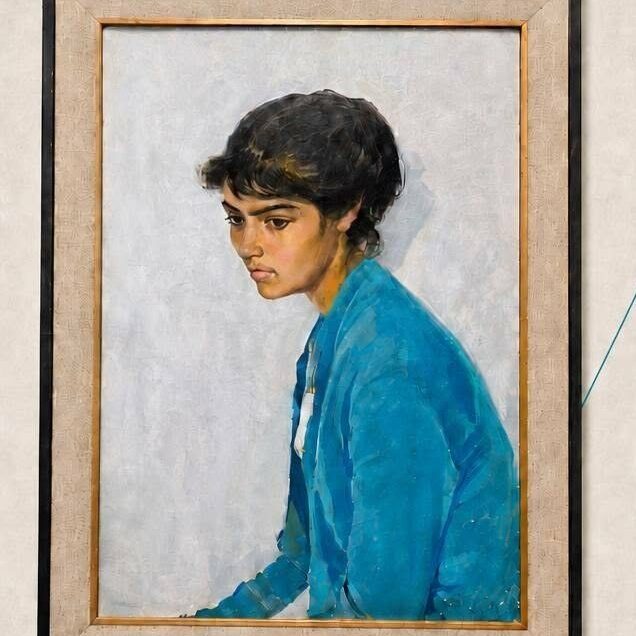
The Armenian art establishment has a long and resilient tradition of briefly resurrecting artists on their anniversaries. Even today, the exhibition scene in Yerevan can feel like a rotating parade of centenaries, quasquicentennials, sesquicentennials and other jubilees in-between. Alas, most of these events do not make much of an effort for scholarly, critical reappraisals of the artists’ oeuvres, but are largely hagiographic assertions of importance.
The National Gallery of Armenia will host two such centenary exhibitions this year, the first of which is dedicated to Hovhannes Sharambeyan, an artist of the 1960s generation best known for a brand of nostalgic realism that became a cautious riposte to the optimism and neo-decorative extravagance of Armenian late-modernist art. The exhibition’s straightforward focus on Sharambeyan as a poet of wistful still-lifes and rural landscapes, which invoke a melancholia for the passage of time, reaffirm his rather modest place in the annals of Armenian painting from the second half of the 20th century.
One can’t help but sense a different story hiding here somewhere, had there been an attempt to dig deeper into the political and cultural roots behind this melancholic longing. Fortunately, the exhibition does provide new insights, particularly in regard to Sharambeyan’s wonderful work as a graphic and advertising designer. It is clear, however, that the artist’s greatest achievement is his legacy as a collector and museologist who became the founding director of Armenia’s Folk Arts Museum in 1978, in Yerevan and Dilijan. His practice in this area contributed to a mass-scale revival of traditional crafts, while his tireless efforts in changing public (and government) attitudes toward vernacular heritage ensured that the historical sections of the picturesque town of Dilijan were preserved from destruction. That alone, makes Sharambeyan one of the more admirable Armenian cultural figures of his time whose memory should be an inspiration to us regardless of any jubilees.
Exhibition: “Hovhannes Sharambeyan 100”
Where: Dilijan Local Lore Museum and Art Gallery
Miasnikyan 28 St., Dilijan
Dates: Open from August 16
Grigor Khanjyan – 100: The Artist And The Book
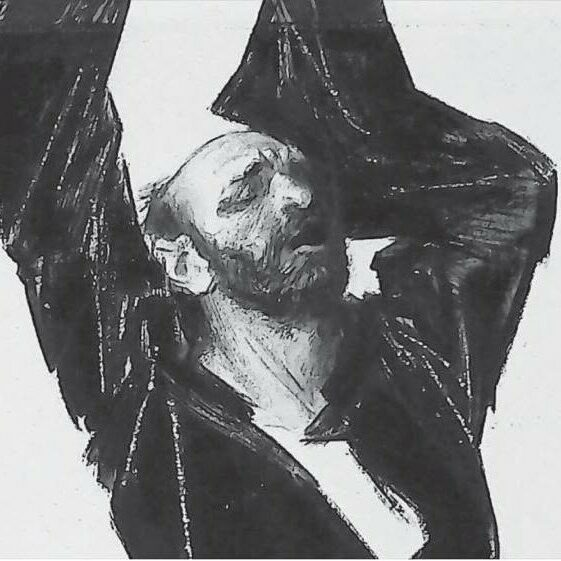
There are few artworks in the annals of modern Armenian art that have been ingrained into the public imagination to the degree of Grigor Khanjyan’s illustrations of Paruyr Sevak’s “The Incessant Belfry”. This epic poem detailing the life and tragic fate of composer Komitas became one of the first literary texts to openly address the Armenian Genocide and was instantly sold out when it was first published in 1959. It was reissued in 1966 in a new edition complemented with close to 40 illustrations by Khanjyan, which were so visceral in their visual impact that they’ve continued to embody Komitas’ image for all generations since. The entire suite of the illustrations, as well as a wealth of working materials is currently on display at the Komitas Museum, illuminating Khanjyan’s artistic process in the creation of this seminal work.
What makes the Belfry’s illustrations so radically different and memorable from the earlier traditions of Armenian book art is Khanjyan’s approach to illustration not as visual or decorative appendage to text, but as a parallel form of storytelling that can work entirely autonomously. Indeed, seen together without Sevak’s emotionally stirring lines, the illustrations immediately recall black and white cinematic stills. The artist’s exactingly realistic style, quite redolent of mid-19th century Victorian academic painting in its romanticist bent, immerses the viewer into a historically tangible era, recreating Komitas’ life with an almost documentary propensity. As a result, the images have an uncanny after-affect when reading the poem. They come alive and continue developing in the imagination like scenes from a recollected movie. Unsurprisingly, “The Incessant Belfry” spawned a whole new, “novelistic” tendency in Armenian graphic arts, with many other artists attempting to replicate its stunning effect, but rarely reaching the same psychological and narrative intensity achieved by Khanjyan in this masterpiece.
Exhibition: “Grigor Khanjyan – 100: The Artist And The Book”
Where: Komitas Museum-Institute
Arshakunyats 28 St., Yerevan
Dates: August 4-November 4
Myths, Cults and Cosmology
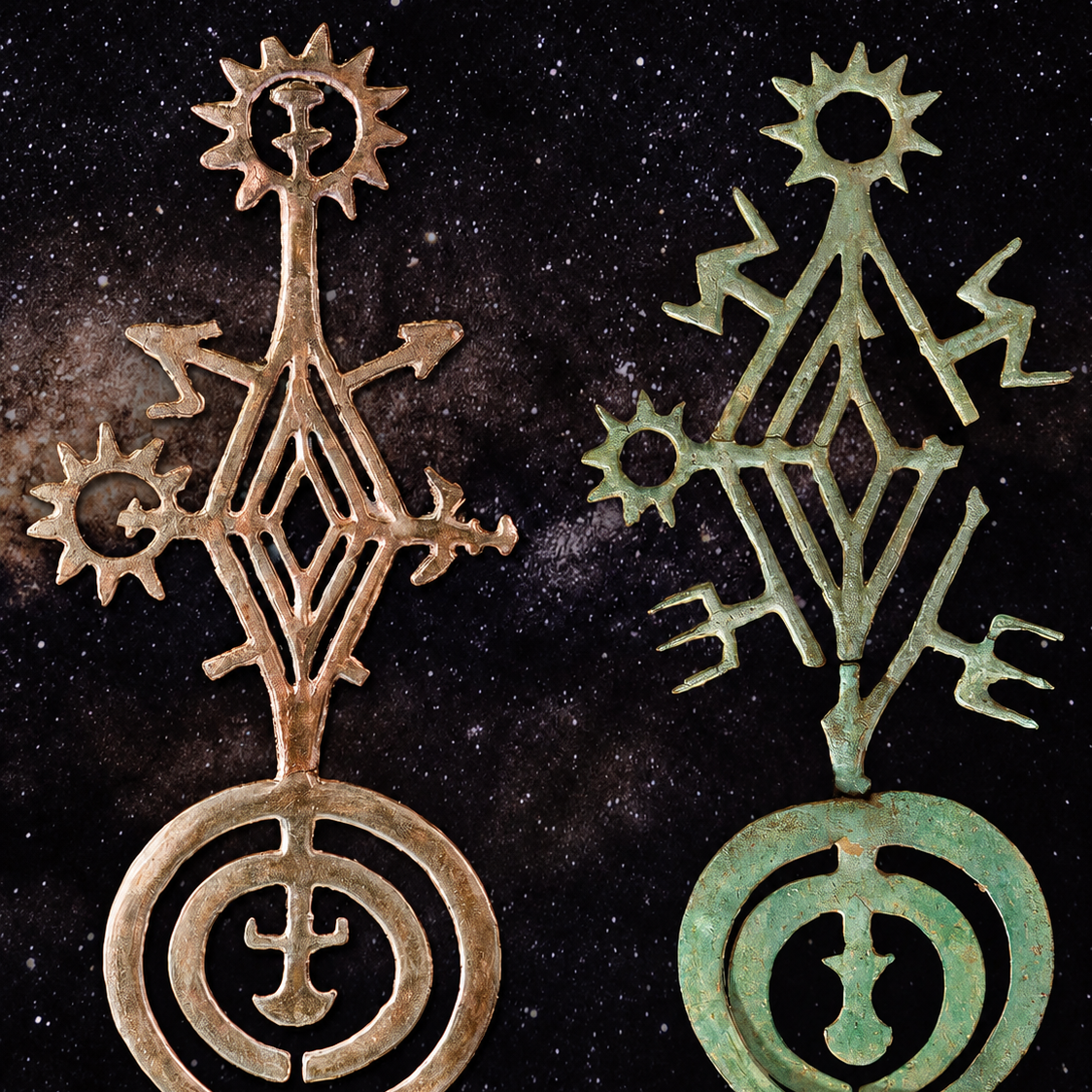
The History Museum of Armenia continues its campaign of blockbuster-ish exhibitions featuring the collections of some of Europe’s great museums. Following the British Museum and the Louvre, the denizens of Yerevan will be presented with a selection from the Berlin Museum Island. Its six museums collectively hold some of Europe’s richest and most important collections of historical artefacts and ancient and medieval art from around the world, while also standing as formidable testaments to the imperial and colonial legacies of the various German states since the 18th century and their aspirations to “collect” and “represent” the outside world. Focusing on pre-modern human perceptions of cosmic and divine realms, the exhibition “Myths, Cults and Cosmology” utilizes the same broadly transhistorical approach of the Louvre exhibition by correlating artefacts from different eras and geographies with objects from the History Museum of Armenia.
This transcultural, comparative structure has long become de rigueur across the international museum scene, as institutions scurry to overcome the nefariously Eurocentric modalities of traditional museum displays. The problem with such projects is that in order to really bring out the often puzzling and surprising links, dialogues and transmissions between divergent cultural contexts, one needs a large number of carefully selected works in order to make convincing scholarly arguments or construct visually stimulating narratives on big topics like the one tackled here. Such an (extremely expensive) opportunity has evaded the History Museum thus far, and by all accounts, the Berlin showcase won’t be an exception either. Still, even if the ambitions of these international exhibitions are currently limited to star-struck “guest appearances” of the top museums, their continuity indicates an unprecedented turn in Armenia’s cultural sphere, where local institutions are finally striving for and slowly entering into a dialogue with their globally-powerful peers.
Exhibition: “Myths, Cults and Cosmology: Museum Island Berlin at the History Museum of Armenia”
Where: History Museum of Armenia
Republic Square, Yerevan
Dates: September 21-March 21
Toros Aladjajian: The Light of Black and White
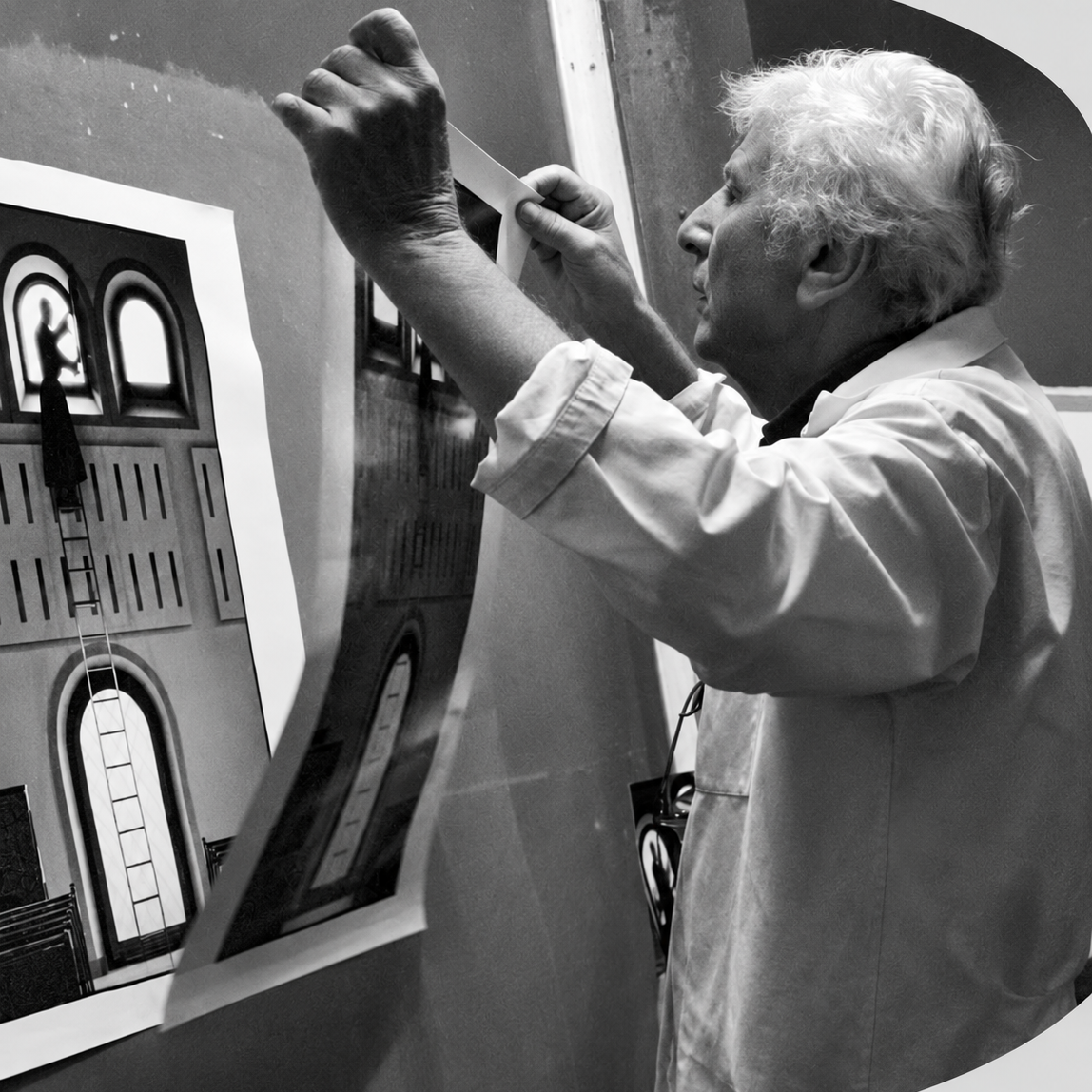
September saw another noteworthy showcase of powerhouse figures in international art, organized by the HayArt Center of Contemporary Art. Alas, it may not receive the kind of attention it truly deserves, because the subject of the exhibition is photography, which has often proved a harder “sell” to Armenian audiences. Nevertheless, if the names Josef Koudelka, David Lynch, Marc Riboud, Robert Doisneau, Henri Cartier-Bresson and Sebastian Salgado mean anything to you, this is a show you simply cannot afford to miss. The exhibition brings together works from the collection alongside the work of legendary French-Armenian photographic printer Toros Alajajyan.
As digital cameras, Photoshop and now AI are actively changing (or rather have changed) the traditional essence of photographic practice, namely, the physical imprint of light and time as image on a two-dimensional surface, analogue printing is now widely seen as an anachronistic and rapidly disappearing art. But that’s also precisely why it keeps attracting younger generations of image makers who are drawn to the medium’s material and sensory qualities. Made for some of the greatest photographers of the 20th century, Alajajyan’s prints are a vivid testament not only to the beauty and the exquisite craft of black and white gelatin silver printing, but also to their inimitable value as indexical traces that bring the past into the present. The exhibition at HayArt offers a very rare opportunity to see these seminal photographic images, many of which have become part of humanity’s collective cultural memory, in their truest iterations.
Exhibition: “Toros Aladjajian: The Light of Black and White”
Where: HayArt Centre
7a Mashtots Ave., Yerevan
Dates: September 11-December 11
Gagik Harutyunyan: Retrospective
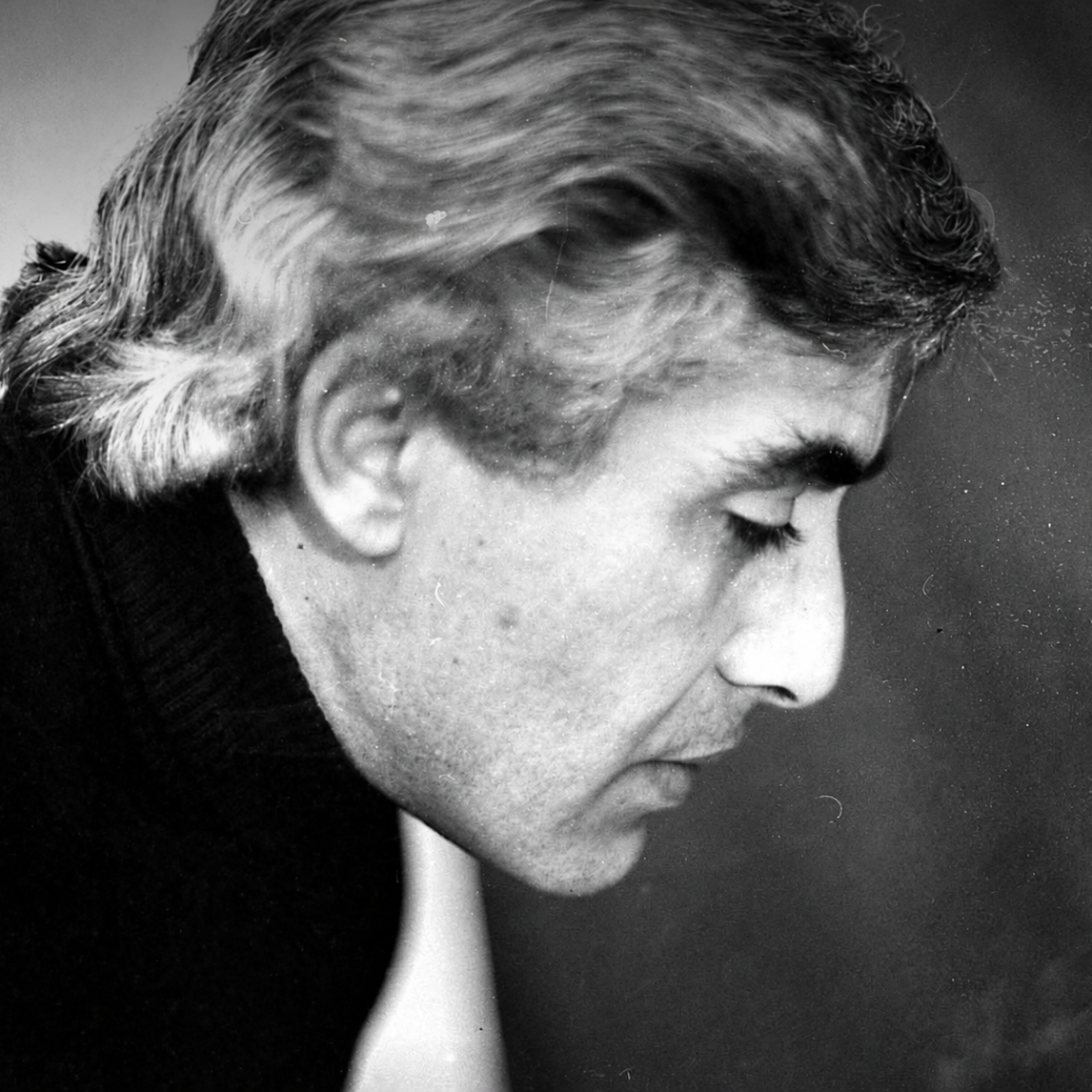
It is somewhat strange to return to an exhibition almost a decade after its original presentation, particularly when that exhibition is now being restaged as a new retrospective. “Shadows of Time: The Photographic Art of Gagik Harutyunyan,” first shown in August 2017, returns to HayArt Center on the occasion of the artist’s 80th anniversary. The original exhibition did more than bring renewed attention to a remarkable, though unjustly forgotten photographer. It was also a pivot for the reappreciation of Soviet-Armenian photographic heritage, within which Harutyunyan has a prominent place as a proponent of the medium’s artistic credentials. Though he started in photo-reportage, working for newspapers such as Kommunist, Harutyunyan was drawn to photography’s intellectual and formal aspects as a means of communicating notions beyond the visible. His propensity for the metaphorical and even spiritual representation of the physical realm gradually broached the limits of surrealism and abstraction, which is powerfully manifested in Harutyunyan’s late-career thematic series “The Lake”, “Curtains” and “The Bird Factory”.
The impact of these images, widely circulated via influential periodicals like Garun and Soviet Armenia, on both the public and the younger generation of photographers is undeniable. Harutyunyan was among those few Armenian practitioners whose images helped people see the photograph not simply as a decisive moment frozen in time, or an illustration to a caption, but as a product of intellectual mediation that could speak of intangible realities outside the capacities of language. It is incredibly fortunate for all of us that after giving up the camera in the mid-1990s, the photographer was given the opportunity to work with his archive and directly supervise the creation of new prints from nearly 200 of his most important negatives, which were featured in the 2017 retrospective. The exhibition at HayArt will include all of these photographs with an addition of rare vintage prints made in the 1980s.
Exhibition: “Gagik Harutyunyan: Retrospective”
Where: HayArt Centre
7a Mashtots Ave., Yerevan
Dates: September 22-April 22
Hrant Nakashian: A Photographer in Gaza
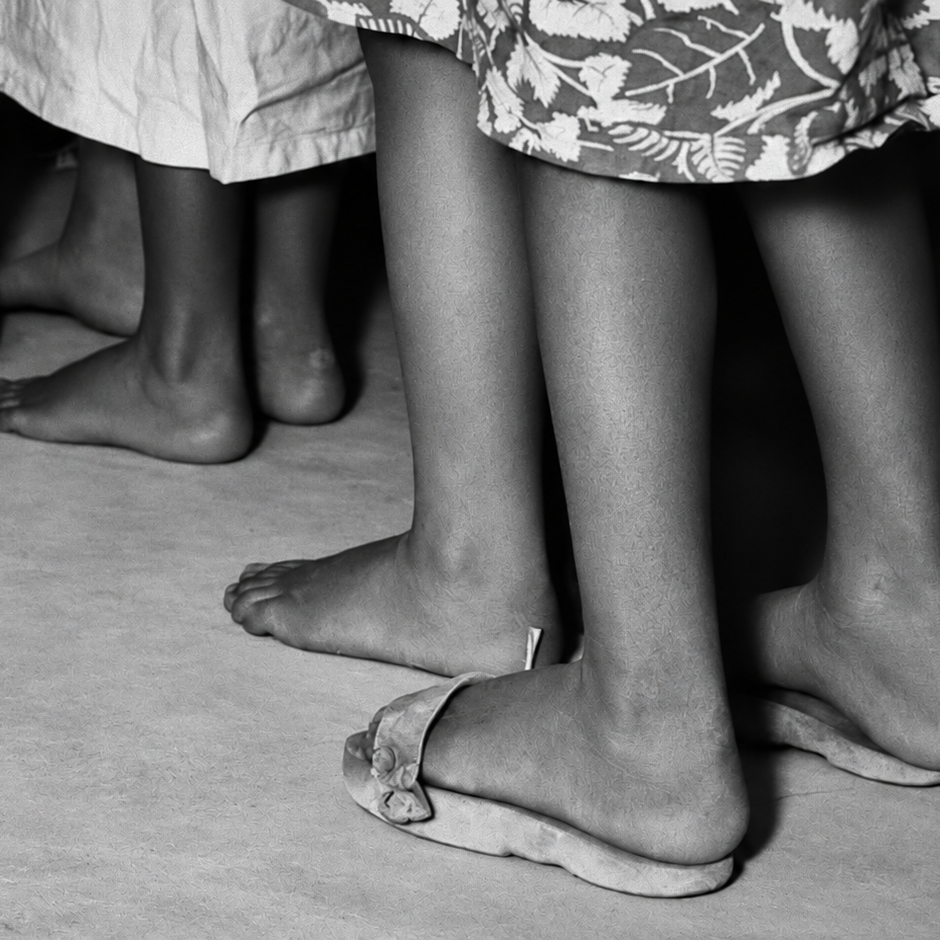
There are few subjects today that are more indicative of the current human condition than the unfolding tragedy of Gaza. But the horrific evisceration of the city and the ensuing pro/anti polemics have occluded the perception of this city and its people on a basic human level. Indeed, it’s difficult to picture Gazans outside the relentless stream of images of death and violence circulated daily by the mass media.
In this scenario, historical photographs provide a vital window into an alternative reality and none is more vibrant and telling than the utterly unique series of photographs made by one of three Armenian photographers based in Gaza between the 1950s and 1960s, Hrant Nakashian (1921-1991). The National Gallery of Armenia is holding the first-ever retrospective of Nakashian’s work with close to 40 vintage prints loaned by the photographer’s heirs.
A Genocide survivor, Nakashian moved across different cities in the Middle East, before settling in Jaffa in 1942 and opening his first photography studio. Like the entire Palestinian population of the city, he was also displaced by the Arab-Israeli war of 1948 and moved to Gaza, which grew into the largest refugee camp in the region under the Egyptian and UN administration. After establishing his studio, Nakashian went on to document the conditions and lives of the refugees as they tried to regain their sense of normalcy and rebuild communal ties.
What is remarkable about these images is the photographer’s unapologetically stark, probing and yet entirely compassionate gaze. Looking at camp residents as an insider who shared and understood their plight, he provides them not simply with documentary testimony, but something even more precious – an emphasis on their stoicism and the collective spirit that transcends the tropes of victimhood. It’s a quality that elevates this body of work from other reportage-based material of the period, securing Nakashian a distinctive place in the history of 20th century documentary Arab and Armenian photography.
Exhibition: “Hrant Nakashian: A Photographer in Gaza”
Where: National Gallery of Armenia
Republic Square, Yerevan
Dates: October 17-December 20
Hrach Avanesyan: Rebirth
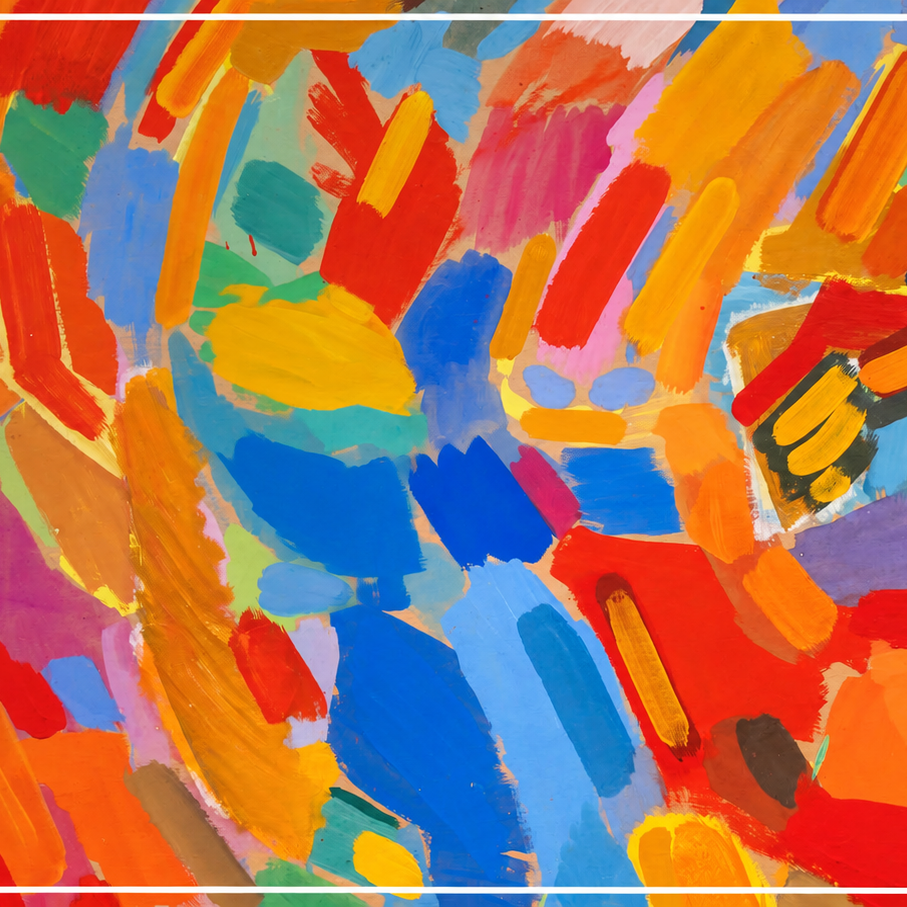
Modern Armenian art is like a bottomless well of exceptional talents, only a small portion of which is ever visible underneath the surface. An overwhelming majority of names somehow always sink to the bottom of the “pile” due to lack of collections, institutions, critical media and informed audiences. So the work done by smaller platforms like the Nikoghosyan Cultural Foundation helps to fill a really major gap by featuring the work of artists who for a variety of reasons rarely peek through the shadows. While the programming here tends to be patchy and even chaotic, their new exhibition dedicated to painter Hrach Avanesyan (1945-2021) is a real gem. And that’s largely because of the incredibly poetic and entirely distinctive visual world of this little-known master.
First appearing on the art scene in the 1970s, Avanesyan stuck to the margins, stubbornly refusing to conform his creativity to trends or dictums of the establishment. That’s largely because painting for him was not simply an occupation, but a form of living that cut through the miasma of society’s falsehoods. Instead, Avanesyan created a private world of crystalline colors, archaic forms and almost naive narratives which is entirely devoid of pain, darkness and chaos. It’s a world infused with Christian spiritualism and iconography. One can’t help but think that the subtitle of the show should have been “Reincarnation” instead of “Rebirth”, because Avanesyan often appears like a medieval Armenian miniature painter who has somehow been transported into the 20th century. And it’s a rare instance, much like that of Stanley Spencer, where the explicitly religious feeling doesn’t occlude the genuineness of artistic insight and inspiration. Because like most true artists, Avanessian gives us access to an alternative realm of sensory experience, where the everyday is metamorphosed into a Utopia of aesthetic and cerebral delights.
Exhibition: “Hrach Avanesyan: Rebirth”
Where: Nikoghosyan Cultural Foundation
19-21 Saryan St., Yerevan
Dates: September 17-November 17
Gagik Ghazanchyan: unFamiliar City
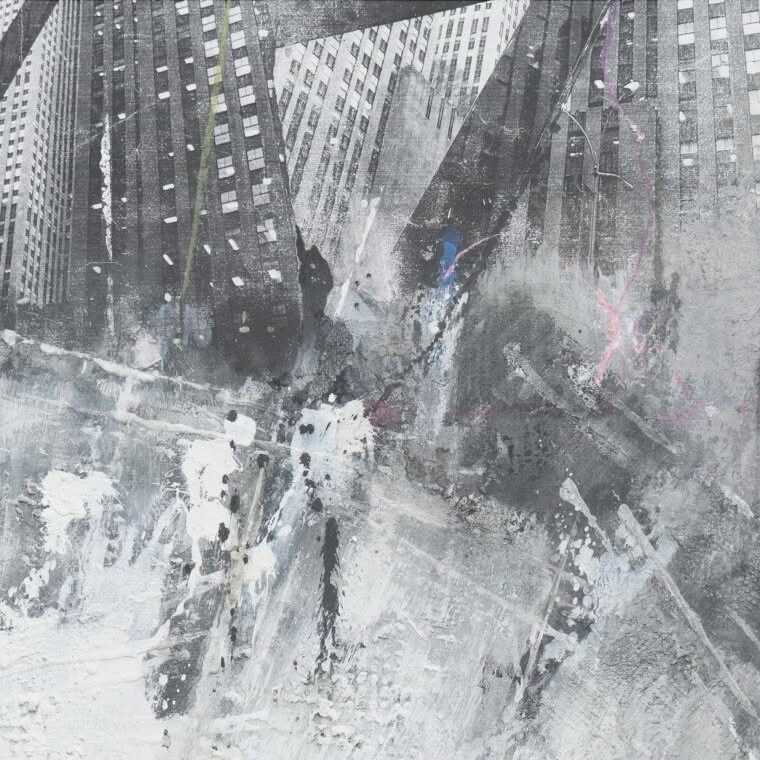
The city as a subject has been a constant thread in modern art since the Renaissance and a means through which artists have reflected on the evolution of human civilization and modernity. Gagik Ghazanchyan’s large-scale paintings have also been part of that survey since the early 2000s. His current solo exhibition at the Cafesjian Centre for the Arts incorporates various groups of recent mixed-media works that consolidate his thinking on this urban progress. The artist’s verdict here isn’t particularly reassuring. Ghazanchyan’s distinct manner of mixing expressionism, gestural abstraction and collage seems to be the perfect formula for encapsulating the essence of the late-capitalist urban jungle. The chaotic “tango” of movement and skyscrapers swirls into the view like a prelude to an apocalypse. Ghazanchyan even resorts to running a car tire across the wet paint as if to indicate that nothing remains spared in this relentless urbanistic assault.
Yet these paintings are not merely resigned acknowledgements of the unsustainable and self-destructive drive of our post-industrial reality. They clearly aim to alienate us from these globalized environments, which have spread around the world like an epidemic of soul-crushing homogeneity, rendering our living space into a dreadful chain of what anthropologist Marc Augé has described as “non-places”. This estranging effect helps us to step back and look critically at the increasingly oppressive habitat that we’ve come to accept as normative. There are no surprises in this familiar strategy of contemporary art, just like in Ghazanchyan’s own, stylistically and thematically cyclical practice. But it does provide a momentary critical exposure to the increasingly destructive impact of the built environment.
Exhibition: “Gagik Ghazanchyan: unFamiliar City”
Where: Cafesjian Center for the Arts (Cascade complex)
10 Tumanyan St., Yerevan
Dates: Open from October 1
Plexel: Contemporary Art Exhibition
I must admit that I have no idea what Plexel is supposed to mean or what kind of conceptual framework is behind the rather free-wheeling selection of the artists in this group show. The nebulous curatorial brief of the exhibition as an invitation “to consider life as a continuous process of exchange and interaction, in which the boundaries between body and environment, individual and world, remain open” reads more like an effusive small-talk about the daily weather, rather than an intellectual topic that show wants to explore. But perhaps that’s all business as usual when it comes to launching a new commercial showroom. Plexel is the inaugural show of the art space founded by the New-York based Atamian-Hovsepian Curatorial Practice.
Located in the slick Aigy Business Center in Yerevan’s Noragyugh district, the Atamian-Hovsepian Gallery is positioning itself as a bold new player in the local art scene. The general objective of this internationally-connected outfit is to support the practices of contemporary Armenian artists, market them on the global arena and develop a more stable collector base for Armenian art. It’s a tall task hindered by too many legislative, economic, infrastructural and cultural obstacles. One of these has always been the lack of committed enterprises, meaning galleries and dealers, that could spearhead change and establish some viability and circulation for contemporary Armenian art. So the mere fact of a new commercial art space, and one that is strategically aimed at the investment-orientated consumer, is already a hopeful prospect.
The roster of the artists included in Plexel and, presumably, indicative of the kind of art that Atamian-Hovsepian will be representing in the future is, overall, a very good mixture of figurative and abstract painters, and sculptors neatly presented in a spacious white cube environment. Though cautiously palatable, rather than boundary-pushing, this selection provides a good entry point for encountering and (hopefully) collecting Armenian art by established, mid-career talents.
Exhibition: “Plexel: Contemporary Art Exhibition”
Where: Aigy Business Center
9 Tairov St., Yerevan
Dates: October 15-November 29
Penthouse by Sardi Gallery
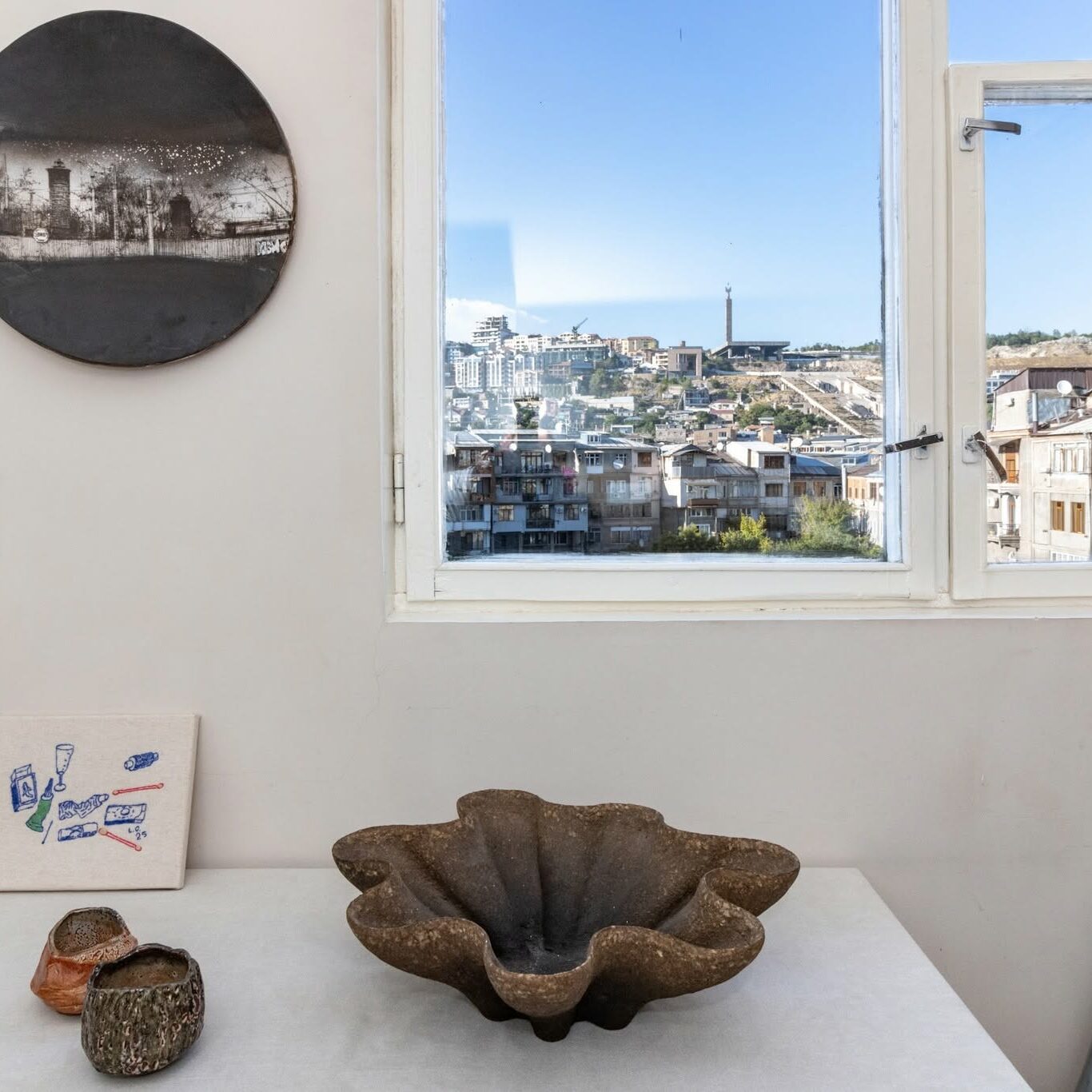
Something is clearly in the air, because October sees the opening of not one, but three new commercial art spaces in Yerevan. Aside from the Atamian-Hovsepian gallery, and another space called Art Embassy, there is now also the Penthouse, established by curator and art manager Sona Minasyan. Located on Moskvoyan Street this initiative adopts the more niche, “exclusive” format of the apartment-gallery, accessible only by appointment. The space is intimate and inviting with a tastefully curated show that follows in the familiar vein of consumer-friendly “wall-art” intended to please the eye and rouse the senses without burdening the grey matter too much. Again, the target is to pitch the kind of art that would make a striking visual statement above the couch, but not spoil the appetite for the caviar.
So even some of the more daring artists included in this opening exhibition – Samvel Saghatelyan, Khachatur Martirosyan, Aram Parunakyan, Anush Ghukasyan and half a dozen others – tend to acquire, dare I say, decorative qualities even when the work aims for something other. It’s a completely legitimate tactic for an emerging business. After all, contemporary Armenian art isn’t exactly a gold-standard commodity, so if the right packaging can help push the product, then it’s a justified strategy. However, one can’t help but feel somewhat frustrated by the prevailingly “salonistic” approach of the local art market.
Yes, contemporary art that challenges and provokes can be notoriously difficult to sell: witness the return of overtly sensual, neo-romanticist figurative painting on the global market. But surely it is also the task of the gallerists to promote the type of art that is first of all about critical reflection, rather than aesthetic impact and investment value. One hopes that these newly established businesses will eventually pave the way for marketing art that is not afraid to spoil the appetite for caviar.
Exhibition: “Penthouse” by Sardi Gallery
Where: Sardi Gallery
Moskovyan St., Yerevan
FILMS
A Spoon of Love

Hrach Keshishyan is perhaps one of the most divisive directors in the history of Armenian cinema. While I can’t remember a single one of his projects that hasn’t led to critical scorn and derision, Keshishyan is clearly someone who knows his audience and exactly what they want to be served. And that’s precisely what he does in his return to the big screen format after a prolonged sojourn into soapy TV land.
“A Spoon of Love” is a romcom cushioned by the comforting familiarity of a fairy-tale. In fact, the plotline is so recognizable that one could almost forgive it for being so meta-archaic. A talented young Armenian chef with his own five star restaurant in Boston hits burnout point and decides to take a break and find some inspiration in Armenia, where Fortuna puts him on a collision course with, you guessed it, a hot young restaurateur with a struggling B&B business up in (where else?) Dilijan’s picturesque mountains. The ensuing “drama” between the two leads (Will he stay, or will he go? Will she choose him, or her business?), enacted with uncommon charisma by Nerses Avetisyan and Ani Khachikyan, is like an attempt at local fusion cuisine that still ends up tasting like corner-shop chicken shawarma.
Yes, it’s all a derivative potpourri of reheated left-overs from more dignified American and European recipes on the interpolation between food and love, such as “Mostly Martha”, “No Reservation”, “Woman on Top”, “Soul Kitchen”, “The Bear”, “Chocolat” and countless others. As with almost all commercial Armenian films of recent years, the most surprising thing about “Spoon of Love” is just how preposterously unrealistic and sugar-coated the film’s glamorized vision of Armenia is. Which leads one to think that the sole objective of local movies is to become a fantasy wish-fulfillment. The fantasy in this instance being the desire to be a glossy Hollywood film. Well, if Armenians could materialize this on a physical level by transforming Glendale into Little Armenia, why can’t they do it with movies?
To be fair, Keshishyan almost makes it work. The film has excellent production values, palpable erotic chemistry and a breezy rhythm that smoothly carries the viewer across its 100 minutes. For the viewer requiring their regular dose of escapism, this will surely justify the bill. Others might be left pondering about the reasons why Armenian cinema is so averse to telling stories from its own backyard. I’d love to see our filmmakers follow the lead of this film’s protagonist and actually try to seek some inspiration and love in their own country, instead of constantly running off to LaLa Land.
Screening: “A Spoon of Love”
Where: Across all cinemas