

Listen to the AI generated audio article.
If there is one thing Armenian soil provides year after year, it is a fresh, colorful and diverse supply of fruits and vegetables. Despite being relatively small, around one-fifth of Armenia’s territory is used for crop cultivation. Beyond the grapes, peaches, apricots, apples and plums that grow in the orchards of the Ararat Valley and Armavir, and the vineyards of the Vayots Dzor region, some Armenian farmers have spent the last two decades branching out, experimenting with exotic crops and bringing varieties native to the Mediterranean and even mainland China to Armenian soil.
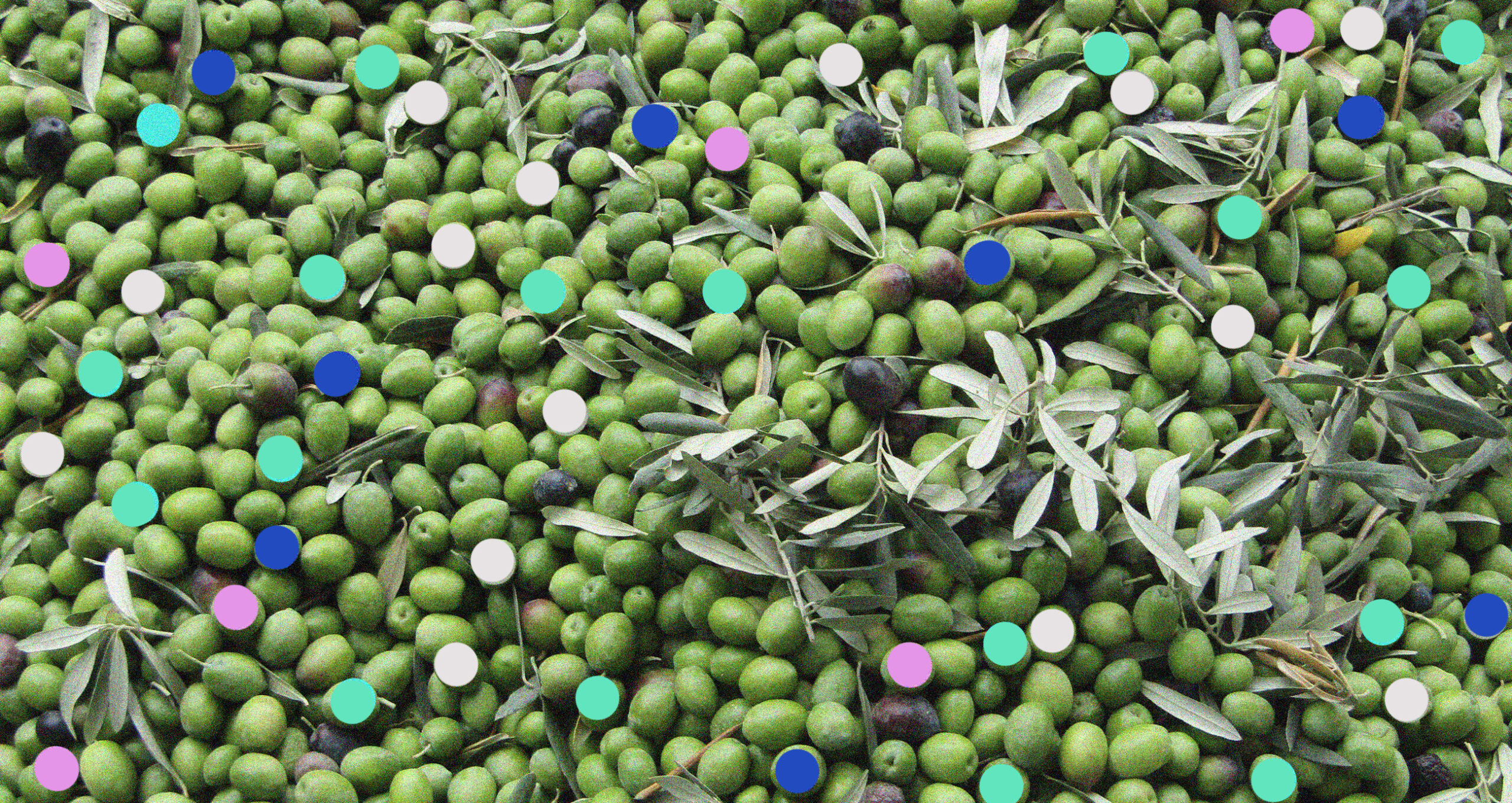
Most of the olives on Armenian supermarket shelves come from Spain, Italy and Greece. But in Arkashen, a village near the town of Meghri and the Iranian border, fed by the waters of the Arax River, a new window seems to have opened in Armenian agriculture. Karo Karapetyan, 65, and his brother Karen, 60, own the country’s first and largest commercial olive plantation.
“Karo just saw it in a dream and decided to pursue it,” Karen explains. Olive cultivation is not entirely new to Armenia: commercial olive orchards were established in the Bagratashen region in 1949, and by the 1950s the area had around 200 hectares of olive groves. In Meghri, where olive trees were much less common, the Karapetyans took a different gamble. Today, their plantation of more than 2,000 trees is among the largest in southern Armenia.
Meghri’s microclimate has made this possible: the southernmost town in Armenia is also the warmest. While the rest of Syunik and Armenia’s other regions have a cold, alpine climate and are noticeably cooler, the Meghri valley enjoys a subtropical one. Its milder winters and warmer summers mimic the Mediterranean temperatures, creating ideal conditions for olive cultivation, one of the signature crops from that region.
But the climate advantages and Mediterranean similarities haven’t spared Karo from challenges. After his “dream,” he left behind his businesses: a supermarket in Abovyan, and a small vodka factory in Goris. In 2003, he brought dozens of Spanish olive saplings to Meghri, but a bad frost and hail cost him two consecutive harvests. But, as the saying goes, “third time’s the charm.” In 2006, after another attempt, this time with Greek saplings, the grove began to grow. Yet olive growing is a journey of patience. “It took us over seven years to get the first olives,” Karo explains. The brothers didn’t harvest them until 2013.
The Karapetyans’ plantation covers around six hectares and grows two varieties: the Ascolano, originally from Tuscany, Italy, known for its rich pulp, and the Sevillano, a large Spanish table olive, ideal for pickling and curing. “In the first harvest, we collected 400 kilograms of olives,” Karo says. “Now, this is what we can collect in a couple of days.” His olives now travel to domestic wholesale markets, where middlemen distribute them unprocessed. According to Karo, they are mainly bought by Syrian Armenians. “They are experts at pickling and processing them,” he adds.
But Karo’s ambitions go further. In addition to growing olives, he has started producing olive oil from his Ascolano olives, which are fleshy and ideal for pressing this “liquid gold” that until then had reached Armenia only through imports. In 2024, he produced around 10 tons. The business looked promising, and he planned to expand production. “My kids loved it. They preferred it when I cooked with olive oil instead of the usual butter,” he recalls.
A few harvests later, however, his oil mill broke down, and production stopped with it. Still, Karo is certain that olive oil is the way to go. “I’m looking for a better olive mill so we can carry on producing Armenian olive oil,” he says. The move would boost his business: he sells a kilogram of raw Ascolano olives for 2,000 AMD, while a liter of olive oil could be sold for double or triple that. With this goal in mind, he is searching for a new mill to carry on with the project he started.
The cultivation of exotic produce has given farmers new business opportunities, while bringing to rural communities new flavors from around the world. Once-unfamiliar products have effectively become “Km 0”, a term for food grown close to where it’s eaten, giving people in Syunik and neighboring regions access to fruits that would otherwise travel hundreds, or even thousands, of kilometers to reach them.
The same is true of kiwis. Most of the kiwis in Armenian supermarkets come from Iran. But in the heart of Meghri, small-scale production has brought this distinctive fruit to Syunik as well. Tereza Mkrtchyan and her son Vladimir, who run the guest house Poqr Tagh, own the oldest kiwi vine in Meghri. Tereza’s husband planted it more than 20 years ago. “The vines came from the Netherlands and were a gift from my husband’s brother, who was an agricultural specialist,” Tereza explains.
It all started with three plants: two male vines and one female. The females bear the fruit, but they need pollen from a male vine to be fertilized. Tereza recalls a mistake she once made. “I was looking after the garden, and, unaware of what it was, I threw away a cigarette box I found beside the kiwi plants,” she says. “My husband then told me the cigarette had been strategically placed there to mark which of the three vines was the female. We needed all of them to survive.”
Twenty years later, losing the female plant would no longer be a problem. Neighbors have visited Tereza and Vladimir and taken cuttings to try and grow their own, and there are now between 15 and 20 kiwi plants in the town. Meghri now has enough male and female vines to make pollination easier
On the other side of the village, near the medieval fortress that overlooks the town, Mariam has a little orchard with persimmon, figs and pomegranates, and a couple of kiwi plants. “After seven years of waiting, the plant produced only three kiwifruits,” she says. “Now we get dozens, although we keep them for ourselves and eat them at home.”
Meghri takes its name from the Armenian word for honey, meghr, and the town has long had a reputation for sweetness and abundance. Now, that reputation has a new dimension: Meghri is becoming an oasis for crops that, not long ago, would have seemed inconceivable on Armenian soil.

Cover photo by Lola Medina Cirera
LIFESTYLE
The Shape of Things
From fashion and interior design to exotic crops growing in unlikely places and the iconic Armenian nose, this issue of SALT explores innovation, change and new possibilities, the old mixed with the new, the past meeting the future, and ideas taking root, taking shape and taking off.

The Armenian Nose
What happens when one of the most recognizable features of Armenian identity becomes something to fix? From the “Most Armenian Nose” contest to TikTok’s “Barbie nose,” Iren Bakunts looks at how beauty standards, social pressure and rhinoplasty are changing the way Armenians see their own faces.
Read more
Evroremont/Евроремонт
Evroremont became a material expression of the post-Soviet transition, reshaping inherited Soviet landscapes through renovation, adaptation and improvisation. Vrej Haroutounian traces its evolution from an imagined European future into a reality of its own, and asks what comes next when imitation gives way to recognition.
Read more
Armenia’s Fashion Scene Looks Forward, Without Forgetting the Past
Yerevan Fashion Week’s fourth edition brought Armenian fashion into dialogue with the city, with designers staging collections in historic landmarks and reimagining heritage through contemporary silhouettes. As established names and emerging voices look outward, Armenia’s fashion scene is finding new ways to carry its past into the future. Lola Medina reports.
Read more