

Listen to the AI generated audio article.
September marks the beginning of the school year. Outside the entrance of the National Library of Armenia, a lively crowd of young people chat, clutching phones. For a moment, one might be startled—has Yerevan’s Gen Z discovered the joy of borrowing books? Perhaps there’s been a collective return to the analog world? Alas, a closer look reveals the truth: they’re simply waiting to order coffee at the “Library” anticafé.
I walk past this congregation of caffeine lovers and push open the library’s heavy wooden doors. I scan my laminated green library card with its regrettably unflattering photograph, rivaling only my undead face featured on my passport. The bored guard, half-asleep in his chair, pays no attention.
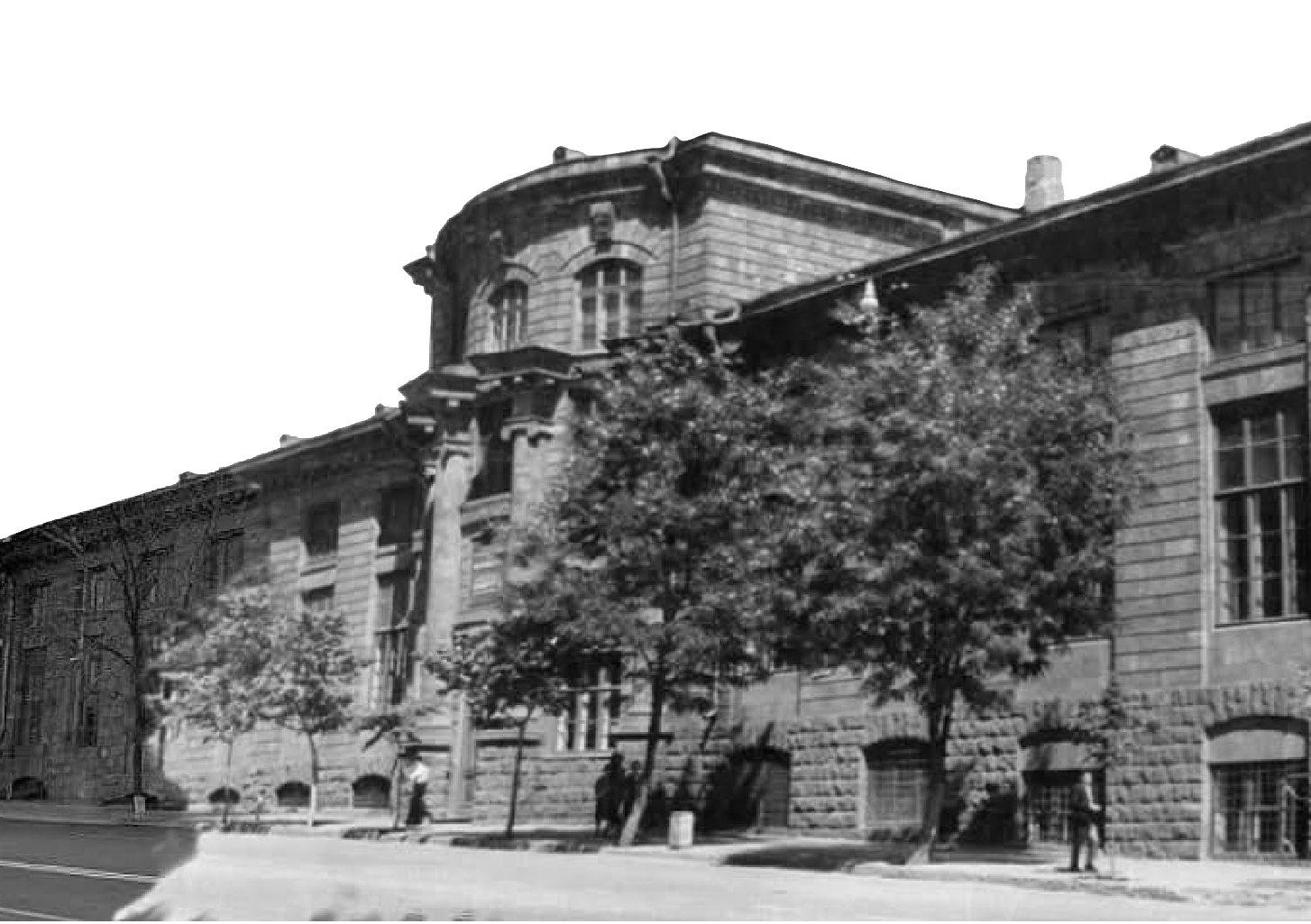
Walking up the stone staircase, I find myself alone, my footsteps echoing through halls so empty they feel like a luxury nobody wanted. This isn’t the soft acoustics of contemporary libraries with their carefully calibrated sound dampening. This is like walking into a cathedral during off-hours. Under Karl Marx’s watchful gaze from the end of the corridor, I proceed to the main reading hall named after Alexander Tamanian. After a year of hunching over a cramped desk in the shabby academic reading room—with its ancient dust smell, loose sockets, and chairs placed by someone who clearly hated scholars—it feels like ascending to intellectual paradise. Here, Tamanian’s 1939 vision unfolds in all its Stalin-era grandeur: soaring ceilings, cast iron chandeliers, tall windows and elaborate gypsum stucco.
With my laptop tucked into a fancy Shinola Detroit backpack, I join the sparse community settled in this architectural monument. Tamanian designed the library to house seven million books and inspire intellectual awe. It succeeds spectacularly at both, though I doubt the great Armenian architect envisioned his spacious halls echoing with MacBook keyboards as freelance graphic designers craft Instagram campaigns beneath paintings of timeless Armenian landscapes.
The National Library is undoubtedly a temple to knowledge, but it feels more like a mausoleum than a living workspace. Yet here we are, a motley crew of laptop-wielding knowledge workers, IT specialists, and creatives who discovered what WeWork’s designers completely missed—the productivity power of imposing architecture designed to establish hierarchy, command respect, and remind visitors of their place within existing power structures. Like any seemingly inhospitable environment, however, the library was eventually claimed and inhabited by the “readers.”
Early mornings belong to the old guard—elderly scholars with worn leather briefcases who arrive like clockwork, settling into spots claimed through decades of routine. With reading glasses adjusted with precision, they turn book pages with fingertips and take handwritten notes unhurriedly. They are the keepers of institutional memory, those who remember when accessing information required pilgrimage rather than AI-assisted searches. By early afternoon, university students arrive with the casual confidence of digital natives. They claim territories with textbook fortresses and laptops, but their relationship to knowledge is fundamentally different—transactional and goal-oriented. They quickly scan through paper pages or PDF texts, treating learning and research as a race. For them, there is no time to pose questions, only a quest for answers. Then increasingly, you spot the freelancers, recognizable by their café-appropriate outfits, posh coffee cups, minimalist backpacks, and their habit of looking for power outlets before choosing seats.
Books have become the backdrop to digital transformation. Shelves stretch floor to ceiling, their dusty spines and foxed pages telling stories of abandoned dissertations and obsolete ideologies. Wooden tables bear scratches and stains mapping countless research projects and late-evening sessions. Old card catalog cabinets stand like relics, their tiny drawers harboring handwritten or typed index cards. The ventilation system operates according to mysterious Soviet logic, creating microclimates that force constant wardrobe adjustments. Weathered faces of great men (yes, only men) look down, posing an implicit question: what exactly are you contributing to human knowledge? This weighty inquiry that follows you to your desk, where you settle in to write Instagram captions or craft email campaigns, the intellectual equivalent of wearing flip-flops to a symphony. WiFi, a relatively recent addition that probably required parliamentary approval, functions with typical Soviet-era reliability. It operates, but on its own terms.
Female librarians in cardigans oversee the hall, sitting quietly at the help desk that barely anyone approaches. We, the “readers,” have developed an unspoken etiquette: conversations in whispers, phone calls taken on the grand entrance staircase, and lunch breaks becoming quick expeditions to nearby cafés—laptops secured, seats mentally reserved. A shared understanding exists that this space demands respect, not for any ideology, but for focus.
From Soviet construction to post-independence reconstruction, today’s National Library hosts an unlikely mix of traditional scholars (who seem to have worked here since Noah’s Flood), students, and freelance content creators—all sharing space if not always understanding. Walking past analog knowledge while carrying digital workspaces creates a tangible connection to the continuity of intellectual labor. Previous generations also sought quiet spaces to wrestle with ideas, though they wielded fountain pens rather than trackpads.
The controlled discomfort of the library produces an unexpected effect. Unlike contemporary coworking spaces that sell comfort as productivity enhancement, the library’s intimidating grandeur and mild hostility forces a focused urgency. You work intensely precisely because you want to leave; it’s productivity through architectural coercion. There are no networking or synergy sessions. The Soviet-era gravitas ensures uninterrupted concentration.
As evening light slants through tall windows, the daily exodus begins. Freelancers pack their laptops with the satisfaction of deadlines met under adverse conditions, while elderly scholars and students bookmark their progress in physical texts. The building prepares for evening quiet, when only security guards move through grand spaces, stepping softly over dusty red carpets.
LIFESTYLE
On Heels

Cover photo by Areg Balayan.
This month’s SALT takes you from the hushed halls of the National Library turned unlikely coworking hub to the sculptor’s studio of Levon Tokmajyan. We celebrate curls in all their glory, trace Armenian culture through memes, and hear the story of a young woman navigating Yerevan’s streets in a wheelchair. To top it off, a new play brings to life the story of Armenian jazz legend Elvina Makaryan. SALT is where everyday struggles meet joy, creativity and reinvention.