
Photos by Roubina Margossian.
Listen to the AI generated audio article.
European leaders gathered in Yerevan on Monday for the 8th European Political Community (EPC) summit, turning Armenia into a temporary hub of diplomacy at a moment of shifting security alliances and fragile regional peace.
The summit, the largest international political gathering held in Armenia since independence, has renewed attention on Armenia’s sovereignty and regional role, while also exposing tensions within Europe over issues ranging from security policy to relations with Azerbaijan.
Representatives from 34 countries attended, including 27 European leaders, and partner organizations such as the heads of the European Commission, European Council, European Parliament, Council of Europe, NATO and the OSCE. The Prime Minister of Canada is the only non-European leader at the summit.
A total of 13 member countries of the EPC (10 EU and three non-EU), were absent from the summit. The EU countries not represented are Austria, Denmark, Germany, Hungary, Latvia, Malta, Netherlands, Portugal, Slovenia, Sweden. The non-EU members absent include Azerbaijan, Iceland, San Marino.
Several leaders are making their first-ever visits to Armenia, including prime ministers of Britain, Spain, Italy. Volodymyr Zelensky became the first Ukrainian president to visit Armenia since 2002. Meanwhile, Turkish Vice President Cevdet Yılmaz represents the highest-level visit from Turkey since President Abdullah Gül traveled to Armenia in 2008 during an earlier phase of normalization efforts.
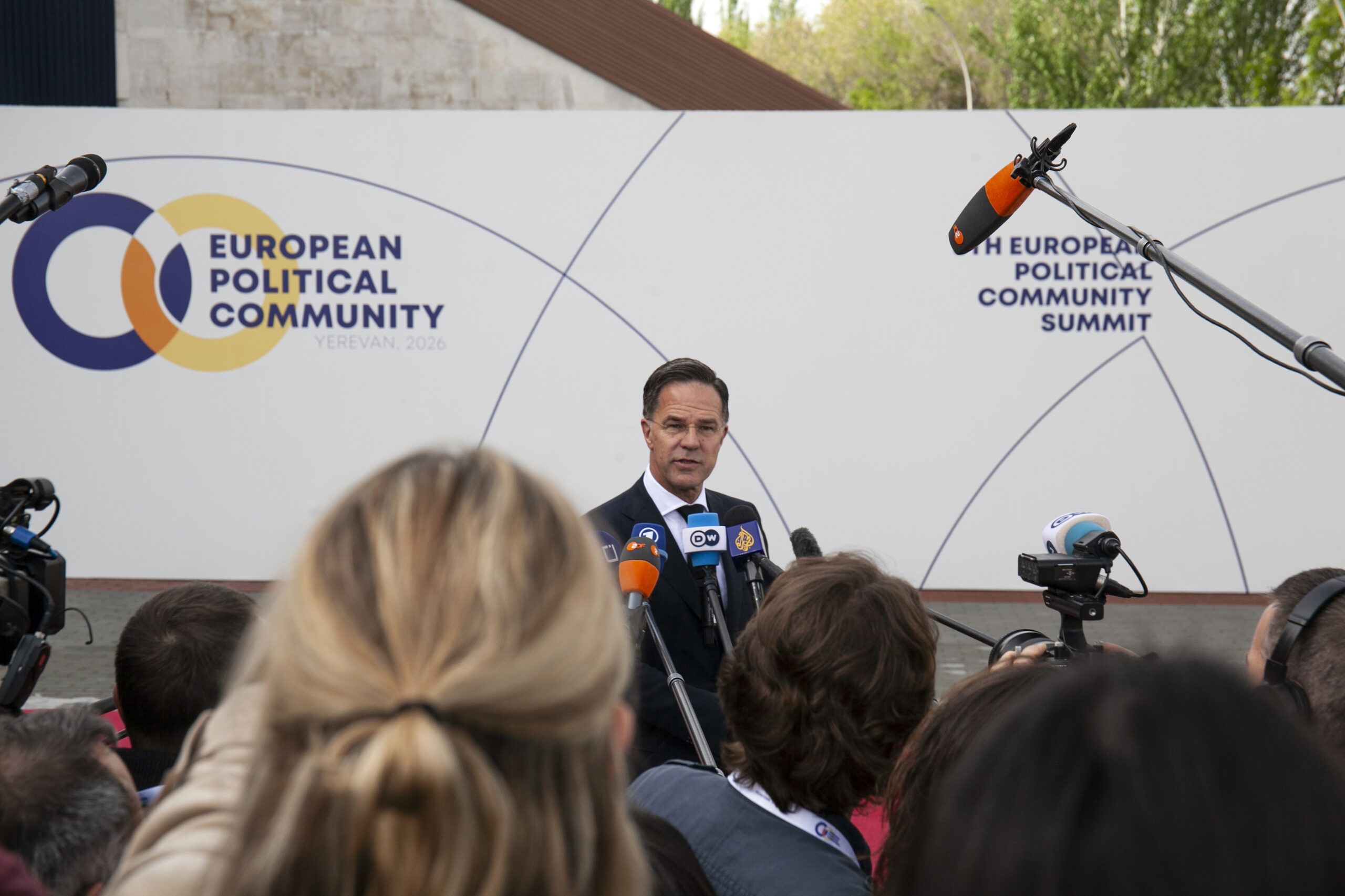
Mark Rutte, Secretary General of NATO
Doorstep Statements
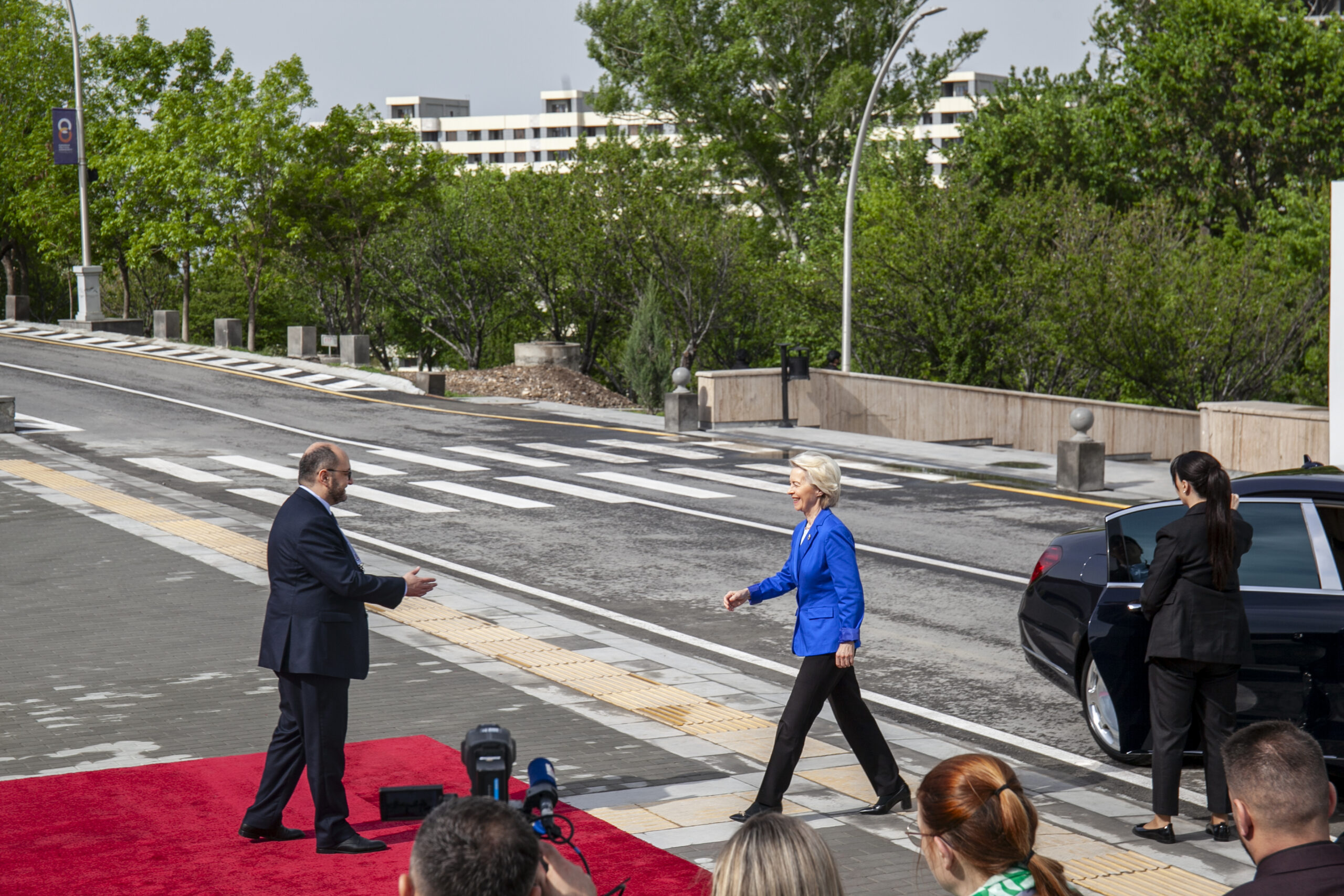
Early in the morning, Arayik Harutyunyan, the prime minister’s chief of staff, welcomed the leaders as they arrived at the Karen Demirchyan Complex. They were met by dozens of reporters from Armenia, Europe and beyond, fielding questions as they made their way into the venue.
French President Emmanuel Macron told reporters that the leaders will “hold a meeting in support of Ukraine” and will have the opportunity to have “meetings in support specifically of Armenian independence and sovereignty, and of Moldova.” He said it is the correct approach because European security challenges are beyond the borders of the European Union. Macron stated the EPC summit is “a message first of all for ourselves,” not President Trump. “We, Europeans, are building our security solutions,” he said.
Asked about Armenia’s potential EU accession, EU’s High Representative for Foreign Affairs Kaja Kallas said that, “There are elections here in a month, and of course the European perspective is on the table. Armenia itself will decide.”
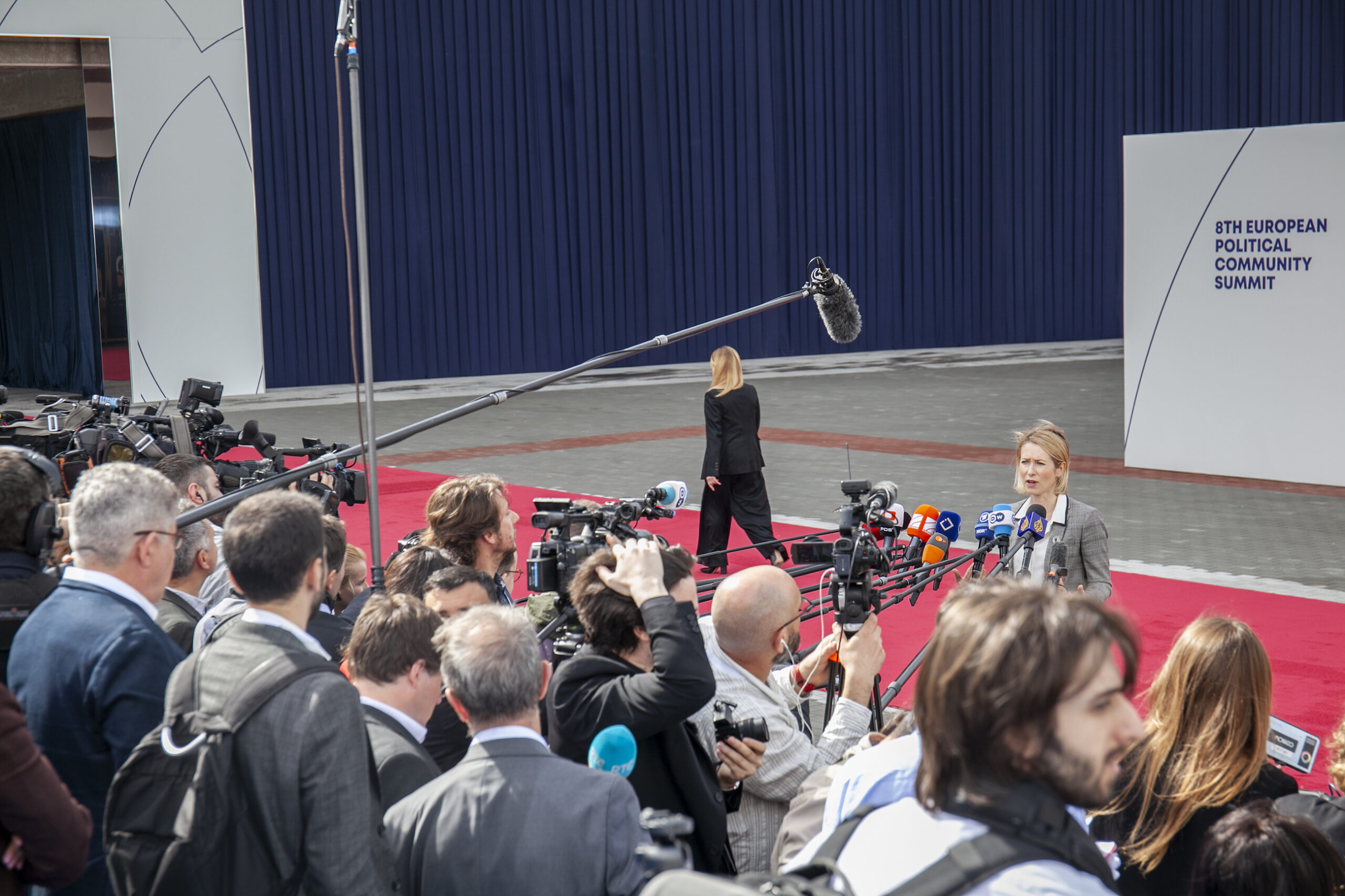
Kaja Kallas, High Representative for Foreign Affairs and Security Policy
Ursula von der Leyen, President of the European Commission said Armenia’s connectivity is increasingly significant for Europe’s supply chains, positioning the country as a key link between regions.
She noted that Europe remains heavily dependent on imported fossil fuels and stressed the need to reduce this reliance by expanding energy production capacity within Europe. This, she said, includes scaling up both renewable and nuclear energy to ensure a more affordable and reliable energy supply.
Von der Leyen also underscored the importance of defense and security, stating that Europe must strengthen its military capabilities to be able to defend itself. While funding mechanisms are already in place, she said the focus must now shift to accelerating production of military capabilities.
She further highlighted efforts to build more resilient and diversified supply chains, noting that efforts are underway to deepen engagement with partners that have free trade agreements, including countries in Latin America, India and Australia. In this context, she again emphasized Armenia’s strategic role.
According to von der Leyen, Armenia is particularly important in enhancing connectivity between the South Caucasus and Central Asia, reinforcing its place in Europe’s broader economic and geopolitical framework.
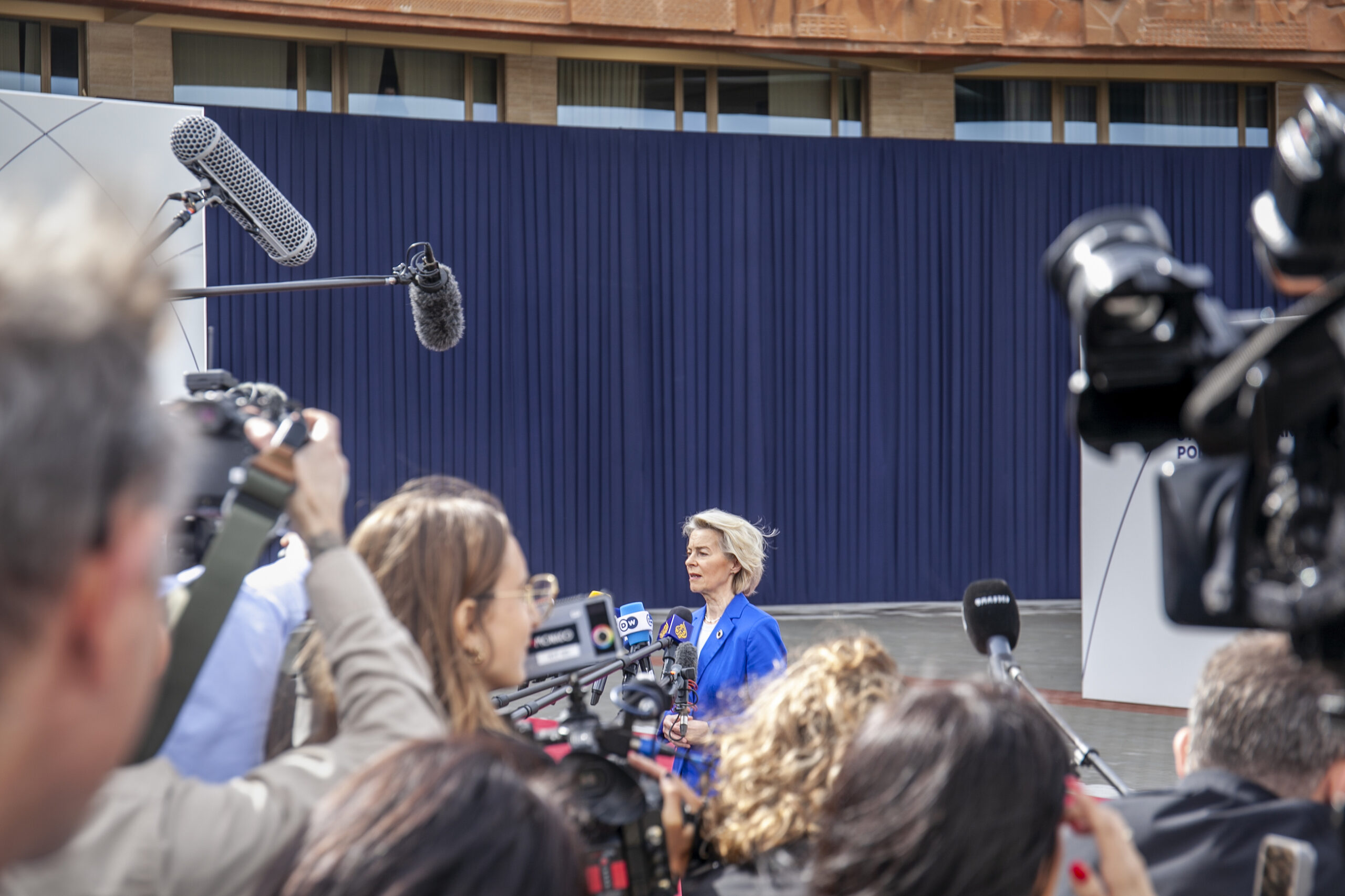
Ursula von der Leyen, President of the European Commission
Plenary Session Statements
Prime Minister Pashinyan opened the plenary session with welcoming remarks, noting that the summit is historic as it is the “first European event of this scale hosted by Armenia ever.” He went on to say that his government is working closely with Azerbaijan “to strengthen and institutionalize the peace of our two countries.” Although Azerbaijani President Ilham Aliyev did not come to the summit, he later joined by video.
Pashinyan expressed hope that he would have the opportunity to visit Azerbaijan in 2028, when the 12th European Political Community summit would be held there. He noted that Armenia and Azerbaijan had mutually supported each other’s candidacies to host these summits.
He added that it was during the first European Political Community summit held in Prague in 2022, that a quadrilateral meeting took place with Emmanuel Macron and European Council President Charles Michel. There, he said, Ilham Aliyev and he made a decision that changed the situation: Armenia and Azerbaijan recognized each other’s territorial integrity and sovereignty based on the 1991 Alma-Ata Declaration. Based on that understanding, a realistic opportunity emerged to reach a peace agreement between Armenia and Azerbaijan, the architecture of future peace was outlined, and this process led to the Washington peace summit held last August in Washington D.C.
António Costa, President of the European Council also said the summit is historic “because for the first time the EPC meets here in the South Caucasus, and because it places Armenia in the heart of Europe, which is exactly where it belongs in light of its long and rich history.” Costa noted that the summit was possible because of an agreement between Armenia and Azerbaijan.
“That agreement is a story of peace in Europe that must be celebrated. In a world where escalation and war seem to dominate, thanks to this agreement and improved relations between Turkey and Armenia, the region has embarked on a transformative path,” he said, adding that strengthening Armenia’s democracy is paramount and must be protected from “external interference and misinformation.” Costa also stressed that the ”future of Armenian democracy lies in the hands of Armenian citizens only.”
In closing his remarks, Costa said that the EPC is more than about building a common European vision, it’s about turning that vision into a reality for energy, connectivity and democratic resilience and it must be a catalyst for action in support of Ukraine, Moldova and Armenia.
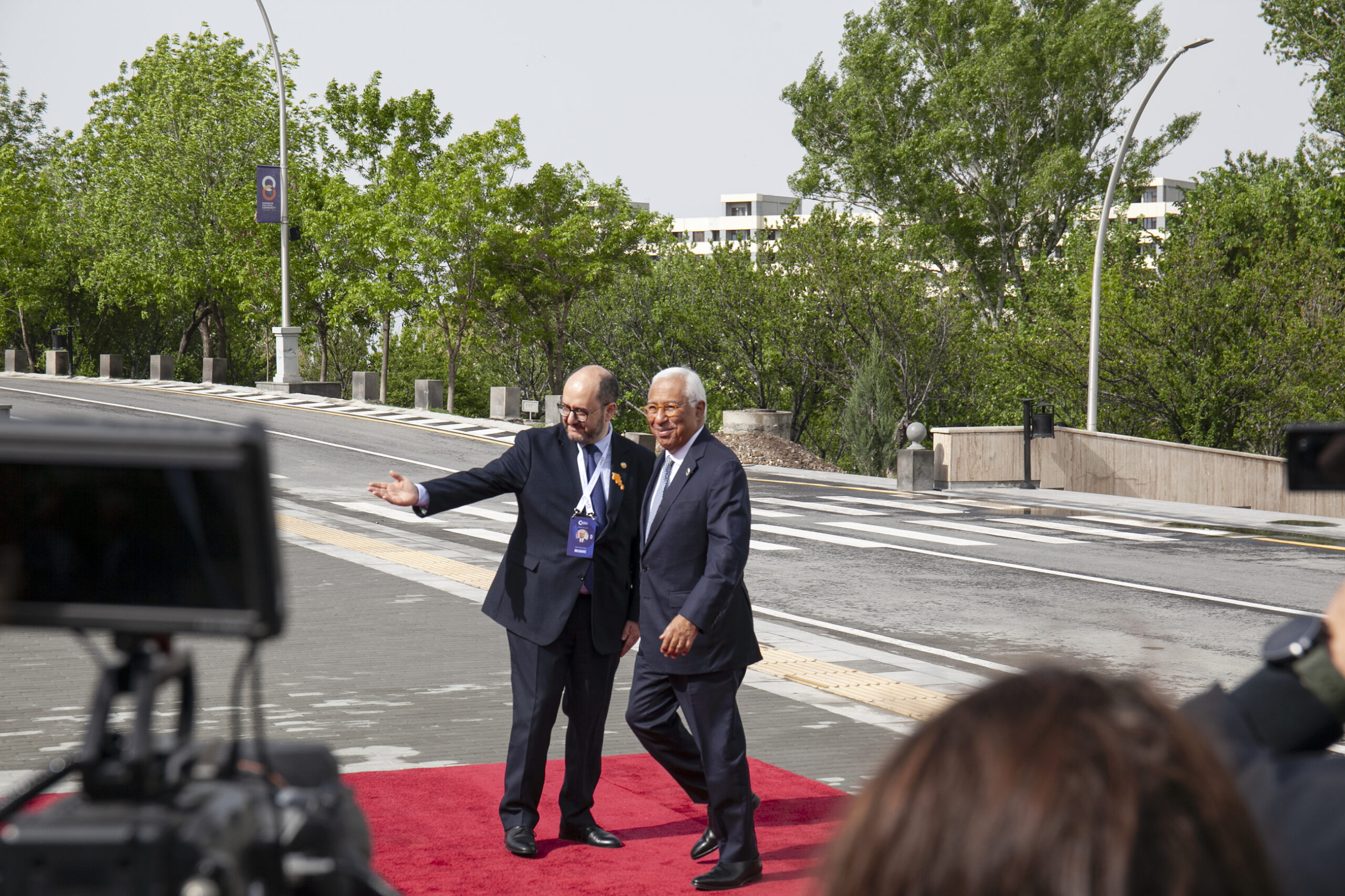
António Costa, President of the European Council
During his opening remarks, Ukraine’s President Volodymyr Zelenskyy said that he wishes for both Armenia and Azerbaijan only peace – “of course, sustainable, comprehensive, long-lasting peace.” He went on to say that it is important and significant that Armenia stands with all Europeans and that his visit to the country, the first in 24 years, “means a lot and shows the scale of our unity, all those who value life.” Zelenskyy also addressed the broader security landscape, pointing to escalation tensions in Iran, the urgent need for genuine energy and security cooperation and the ongoing impact of Russia’s war in Ukraine.
He stressed that pressure on Vladimir Putin must continue through sanctions with the aim of forcing a shift toward democracy.
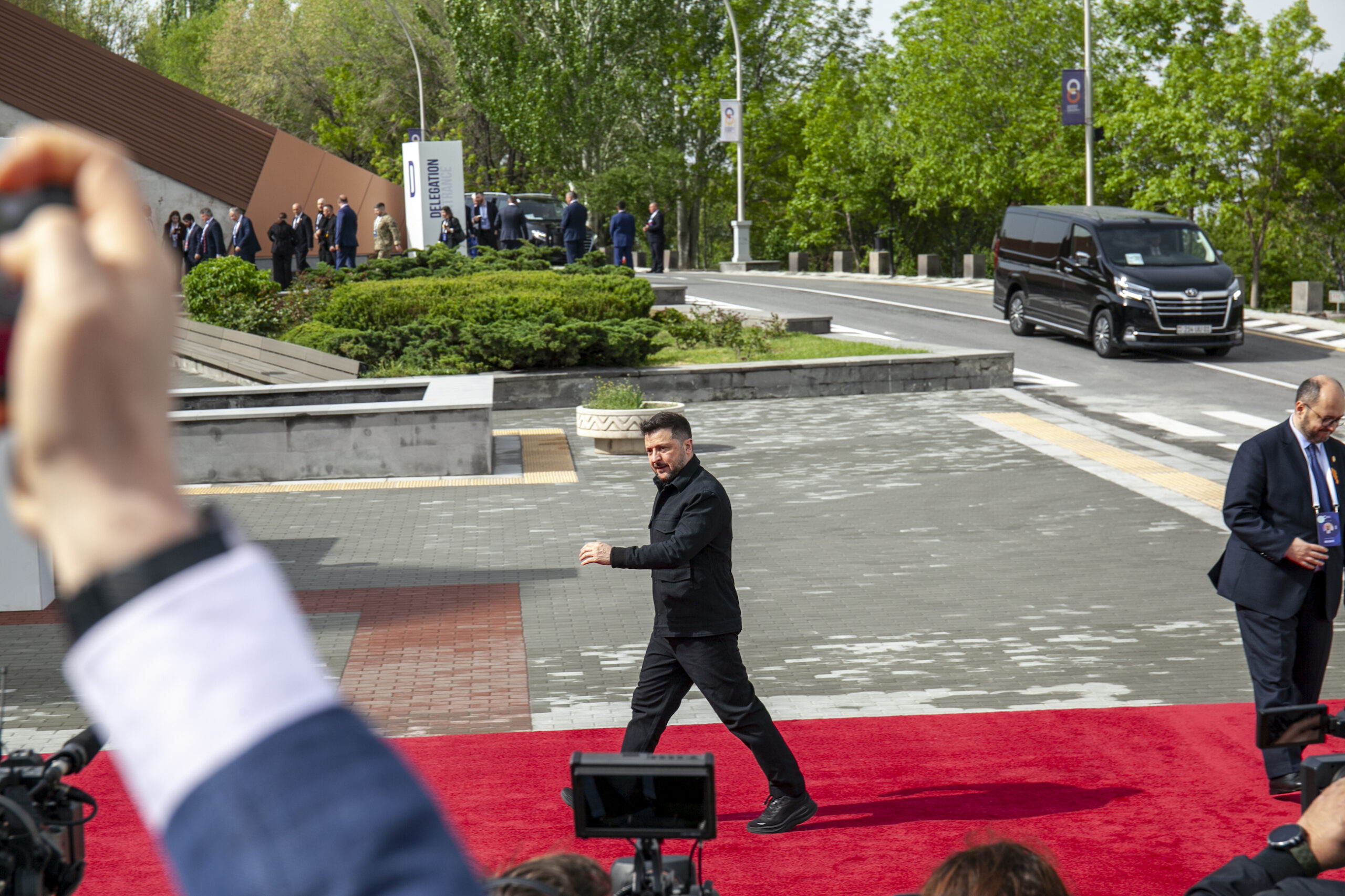
Volodymyr Zelensky, President of Ukraine
In his remarks to the plenary session via video, Azerbaijani President Ilham Aliyev spoke about the peace established between Armenia and Azerbaijan, noting that it was established just nine months ago and that the two countries were still learning to live in peace.
He stated that after de facto peace was established, Azerbaijan had unilaterally lifted all transit restrictions to Armenia that had been imposed in the early 1990s. He noted that, up to that point, 28,000 tons of cargo had been delivered to Armenia through Azerbaijani territory. He noted that Azerbaijan had gone even further by beginning, for the first time, to supply oil products, gasoline and diesel to Armenia, thereby initiating trade relations, and that so far 12,000 tons of these oil products had been exported.
Aliyev then proceeded to criticize EU institutions. He noted that while the European Commission had voiced support regarding the Armenia-Azerbaijan peace process, the European Parliament and the Parliamentary Assembly of the Council of Europe (PACE) did not demonstrate the same approach.
He continued that in September 2023, Azerbaijan had put an end to separatism in Karabakh and that they themselves had implemented four UN Security Council resolutions adopted in 1993 that had remained on paper for 30 years. He said that four months after that, PACE had imposed sanctions on their delegation and that, unfortunately, double standards were today a kind of modus operandi for PACE. He stated that territorial integrity had the same value as that of any other country and that, in this issue, double standards were unacceptable.
He then turned to the European Parliament, saying that this body, instead of supporting the peace process, preferred to sabotage it. He stated that since May 2021—six months after the end of the Second Nagorno-Karabakh War—until April 30, 2026, the European Parliament had adopted 14 resolutions full of insults and lies about Azerbaijan. He called the adoption of 14 resolutions against Azerbaijan in five years “a kind of obsession.”
Aliyev added that the last one had come only four days earlier, deliberately right prior to the summit, and that instead of addressing fundamental problems in some member states such as xenophobia, Islamophobia, anti-Semitism, migration, competitiveness, and homelessness, the European Parliament targeted Azerbaijan, spreading slander and lies. He said that the reason was that Azerbaijan had restored its territorial integrity and sovereignty, put an end to separatism, and brought war criminals to justice.
He concluded that in response, the Parliament of Azerbaijan on May 1 had officially decided to suspend cooperation with the European Parliament in all areas, cease participation in the activities of the EU-Azerbaijan Parliamentary Cooperation Committee, and initiate procedures for termination of membership in the Euronest Parliamentary Assembly. He added that, given that EPC summits serve as a platform for openly exchanging views and concerns, he had wanted to inform colleagues about what was happening in this respect so that there would be no misinformation or manipulation regarding the decision.
While not directly naming Aliyev, European Parliament President Roberta Metsola noted that meetings with a degree of disagreement were always healthy, but that she would like to underline that the European Parliament is a directly elected democratic body whose resolutions were adopted by majority, acknowledging that the outcome might be uncomfortable for some. She added that they would never change the way they worked and would continue to defend the positions they took.
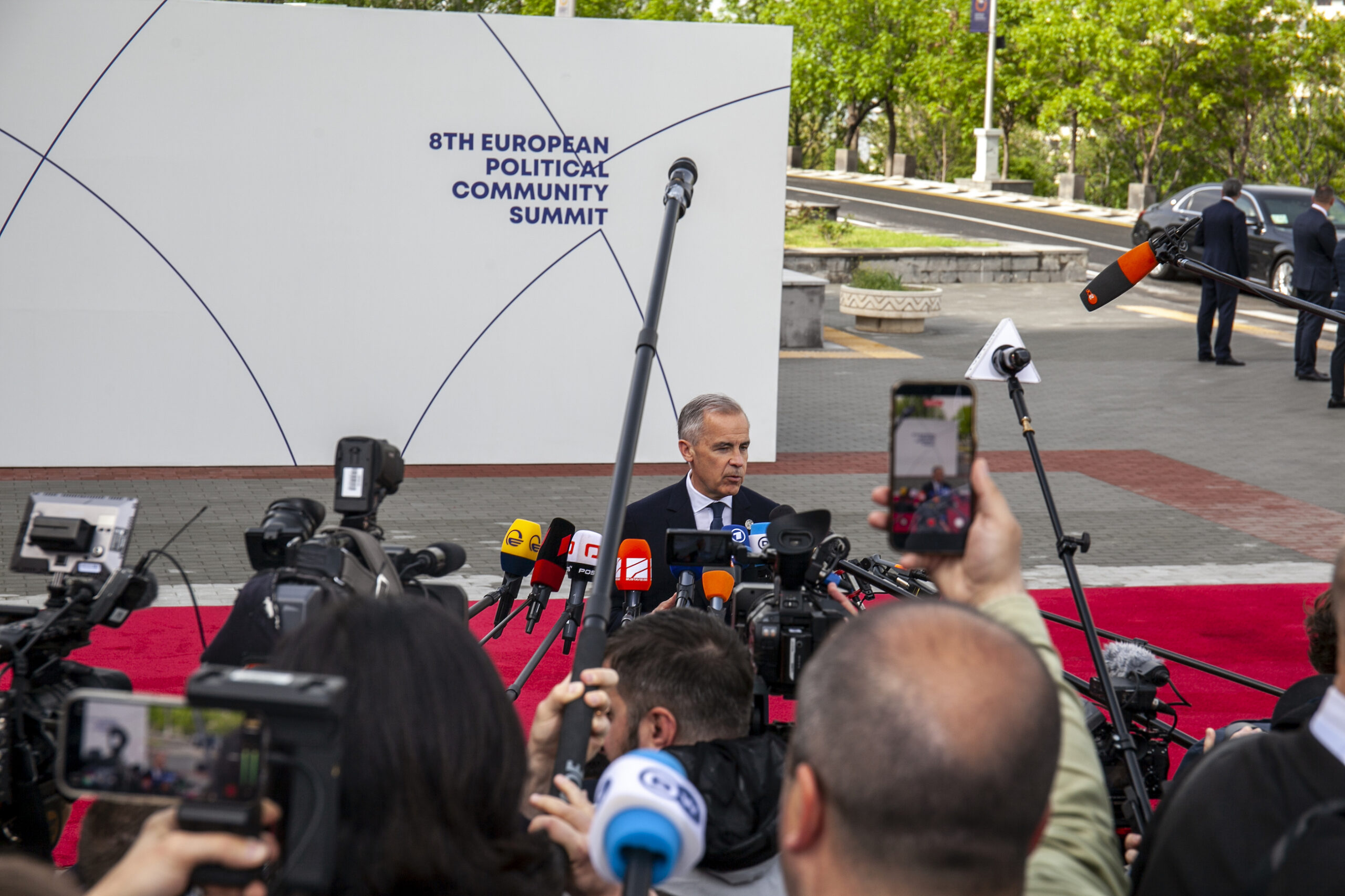
Mark Carney, Canadian Prime Minister
Canadian Prime Minister Mark Carney, the first non-European leader to participate in the EPC, noted that he was there because of the moral and security imperatives of cooperation in the Caucasus, the Baltics, Ukraine, and across Europe, as well as because of the immense potential of their partnerships to build a better, more prosperous, sustainable, and just world for their citizens.
During a panel discussion following the plenary, French President Emmanuel Macron praised Prime Minister Pashinyan. He said Pashinyan’s work in recent years is “very impressive”. Eight years ago, he said, nobody would come to Armenia as it was “seen by a lot of countries around the table as a sort of de facto satellite of Russia.” Leading the Velvet Revolution, Pashinyan decided to “derisk his country from Russia” for which he comes under attack and chose “both peace and Europe”. He added that the Ukraine war, the strategies of Armenia and Moldova has been a “a collective wake-up call not to be dependent on any big power,” which he described as “one of the preconditions of strategic autonomy.”
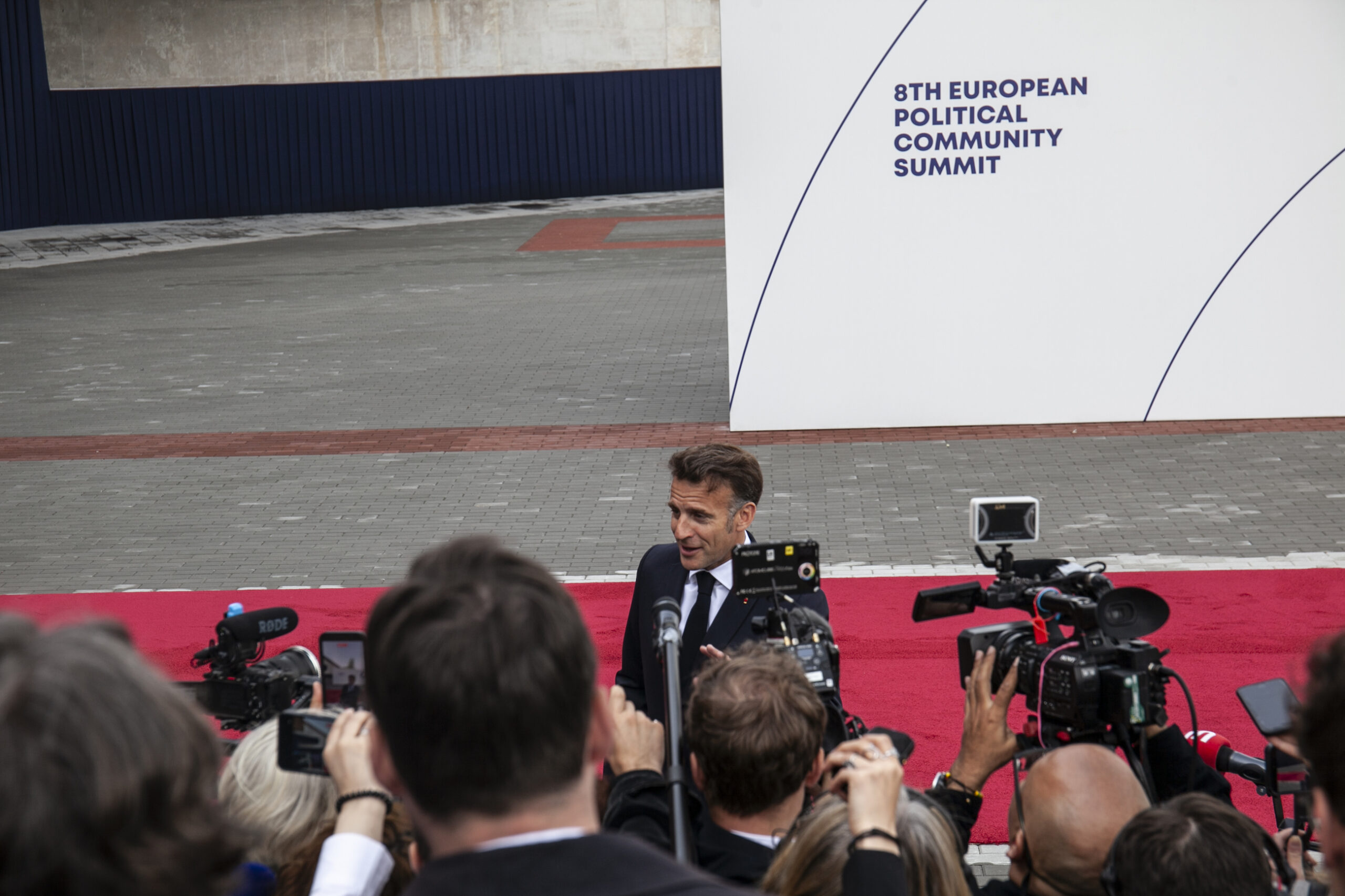
Emmanuel Macron, French President
Concluding Press Statements
During a joint press conference concluding the summit, Prime Minister Pashinyan said the discussions confirmed that, amid growing global challenges, there is a need for sincere dialogue and practical solutions to advance peace and stability. He highlighted security, stability, connectivity, regional cooperation, economic resilience, energy and the green transition as key priorities, stressing that connectivity is central to economic stability, resilience and long-term sustainability.
Pashinyan added that the talks underscored the importance of regional cooperation and integrated, interconnected regions in fostering intercontinental links. In this context, participants also addressed expanding peace and stability in the South Caucasus, noting that lasting peace, normalization of relations and the opening of borders would strengthen cooperation both regionally and across the wider European space.
He also noted that discussions touched on how democracies should address hybrid threats.
Pashinyan’s remarks were followed by a statement from EU Council President Costa, who spoke highly of the event, stating that Armenia hosting it is “a powerful illustration of the country’s courageous geopolitical path” which Yerevan and Brussels are walking together.
Noting Aliyev’s remote participation, Costa suggested that the summit will “forever be remembered as the summit of peace in the Caucasus.” He also placed Armenia and the South Caucasus in the context of European security.
Protests
While the summit was underway, several protests took place in Yerevan. A group of Artsakh Armenians called on European leaders to exert pressure on Baku to release Armenian detainness. They were joined by opposition parties Wings of Unity led by Arman Tatoyan and Aprelu Yerkir led by Mane Tandilyan and linked to one of high-profile detainees, Ruben Vardanyan, held in an Azerbaijani prison for nearly three years. Around 300 people attended.
Other opposition groups also protested. The Armenia Alliance led by former President Robert Kocharyan, rallied to bring attention to “democratic backsliding” in Armenia, the issue of political prisoners, and the rights of Armenians from Nagorno-Karabakh. Senior members of the Republican Party also rallied against European “hypocrisy”, calling on Brussels to “stand for democracy” in Armenia.
Meanwhile, civil society representatives from Armenia and Artsakh staged a protest outside the EU Delegation headquarters in Yerevan, delivering a letter addressed to European Commission President Ursula von der Leyen and EU commissioners, signed by 23 organizations.
The letter condemns the ethnic cleansing in Artsakh and the international community’s indifference.
Protesters called on the European Union to demonstrate political will, uphold universal human rights, and take steps to enforce International Court of Justice rulings and restore justice. They stressed that without restoring the rights of Artsakh Armenians, talk of regional peace merely obscures the crime committed.
On the Sidelines
Ahead of the summit, Prime Minister Nikol Pashinyan held a series of bilateral meetings with the leaders of Kosovo, Canada, Lithuania, and Bulgaria.
On the sidelines of the summit, Armenia signed declarations on strategic partnership or dialogue with Bulgaria, Croatia, and the United Kingdom. Before the summit, Pashinyan and Belgian Prime Minister Bart De Wever presided over the ceremonial opening of Belgium’s embassy in Yerevan.
Following the summit, Pashinyan held separate meetings with the leaders of Ukraine, Spain, and NATO. Ukrainian President Zelensky and Pashinyan discussed “restoring active dialogue” and development of economic partnership.
An important regional development took place on the sidelines: Armenia and Turkey signed a protocol on the joint reconstruction of the historic Ani bridge.
The protocol was signed by special envoys for normalization Ruben Rubinyan and Serdar Kılıç. Prime Minister Pashinyan and Turkish Vice President Cevdet Yılmaz attended the ceremony.
Pashinyan said in a social media post that he had a productive exchange with Yılmaz, discussing bilateral and regional cooperation opportunities between the two countries.
Meanwhile, Yilmaz stated in a social media post that steps aimed at strengthening transport, customs, energy and digital infrastructure were also discussed during the meeting. He also expressed satisfaction that the constructive steps taken in the normalization process had recorded concrete progress.
Yılmaz emphasized that they believe such symbolic and concrete forms of cooperation, like the joint reconstruction of the bridge, would contribute to a lasting environment of peace and trust.
About the EPC Summit in Yerevan
Held under the motto “Building the Future: Unity and Stability in Europe,” the summit comes at a pivotal moment for shaping and strengthening the continent’s collective path. It serves as a platform for dialogue, coordination and reflection on shared priorities, with a focus on practical cooperation and forward-looking initiatives.
Discussions centered on strengthening democratic resilience, improving connectivity, and reinforcing economic and energy security, as well as addressing evolving security dynamics and regional challenges.
The European Union was represented by António Costa, President of the European Council; Ursula von der Leyen, President of the European Commission; Roberta Metsola, President of the European Parliament; and Kaja Kallas, High Representative for Foreign Affairs and Security Policy.
Among heads of state, participants included Albert II, Prince of Monaco; Nikos Christodoulides, President of Cyprus; Nicușor Dan, President of Romania; Iliyana Yotova, President of Bulgaria; Emmanuel Macron, President of France; Jakov Milatović, President of Montenegro; Maya Sandu, President of Moldova; Gordana Siljanovska-Davkova, President of North Macedonia; Konstantinos Tasoulas, President of Greece; Volodymyr Zelensky, President of Ukraine; Denis Bećirović, Chair of the Presidency of Bosnia and Herzegovina; and Guy Parmelin, President of Switzerland.
Heads of government in attendance included Andrej Babiš, Prime Minister of the Czech Republic; Bart De Wever, Prime Minister of Belgium; Xavier Espot Zamora, Prime Minister of Andorra; Robert Fico, Prime Minister of Slovakia; Luc Frieden, Prime Minister of Luxembourg; Jonas Gahr Støre, Prime Minister of Norway; Brigitte Haas, Prime Minister of Liechtenstein; Irakli Kobakhidze, Prime Minister of Georgia; Albin Kurti, Prime Minister of Kosovo; Đuro Macut, Prime Minister of Serbia; Micheál Martin, Taoiseach of Ireland; Giorgia Meloni, Prime Minister of Italy; Kristen Michal, Prime Minister of Estonia; Petteri Orpo, Prime Minister of Finland; Andrej Plenković, Prime Minister of Croatia; Edi Rama, Prime Minister of Albania; Ingrida Šimonytė, Prime Minister of Lithuania; Pedro Sánchez, Prime Minister of Spain; Keir Starmer, Prime Minister of the United Kingdom; and Donald Tusk, Prime Minister of Poland.
Turkey was represented by Vice President Cevdet Yılmaz.
Canadian Prime Minister Mark Carney attended as a guest, becoming the first non-European leader to participate in the EPC.
International organizations were represented by Mark Rutte, Secretary General of NATO; Feridun Sinirlioğlu, Secretary General of the OSCE; and Alain Berset, Secretary General of the Council of Europe.
About the EPC
The European Political Community brings together leaders from around 50 European countries on an equal footing, with the aim of fostering dialogue and cooperation on issues of common interest.
It provides a platform to foster political dialogue and cooperation on shared challenges and strengthen the security, stability and prosperity of the European continent
The EPC does not replace existing organizations or frameworks, but complements them by offering a flexible space for engagement.
Since its launch in 2022, the EPC has met seven times and is convening for the eighth time in Yerevan.