

Listen to the AI generated audio article.
Extractive industries have historically been male-dominated and the gendered nature of mining means its impact on women is largely overlooked. In Armenia, where development policy has repeatedly framed large-scale mining as a driver of economic growth justified through promises of new jobs, foreign investment, and higher GDP, criticism of the sector has largely focused on environmental damage: deforestation, water pollution, and toxic tailings dams.
While these environmental issues are urgent, this framing overlooks the gendered and class-based dimensions of extractive industries in the country. Large-scale mining exploits not only natural resources but also people’s labor, bodies, health and time, generating profits for shareholders, while local communities bear the consequences. Working women in mining communities like Kajaran in Syunik, bear a double burden: participating in hazardous waged labor while remaining responsible for the unpaid domestic work on which the local economy relies.
Mining As a Feminist Issue
Around the world, women face heightened risks in (formerly) colonized[1] countries where transnational mining corporations operate. For example, women are often excluded from negotiations over mining operations or the expansion of tailings dams, leading to decisions that overlook their needs and rights. At the same time, compensation and benefits generated by mining are frequently allocated to men as the “heads” of households, limiting women’s access to financial resources and increasing their economic dependence.
In recent decades, gender has become a more visible focus in research on the mining industry. Today, a growing number of reports and initiatives aim to expand women’s participation in the sector and to protect their interests. One example is the Women in Mining movement, which began to take shape in the mid-1980s and has played a key role in advocating for equal opportunities for women and workplaces free from harassment within the industry.
Yet movements such as Women in Mining have largely focused on women’s inclusion in the mining labor market and have framed participation itself as gender equality. This approach overlooks how the impacts of mining, and the opportunities it creates, are experienced unevenly, depending on women’s social position. Women in managerial roles, for example, often have very different experiences from those working in hazardous environments. Likewise, women employed in mines with access to wages or benefits such as healthcare do not face the same realities as those living near tailings dams, where access to food, land and water is shaped by environmental degradation. Although all face patriarchal discrimination, class and social position shape their lives differently.
Women’s Work at ZCMC
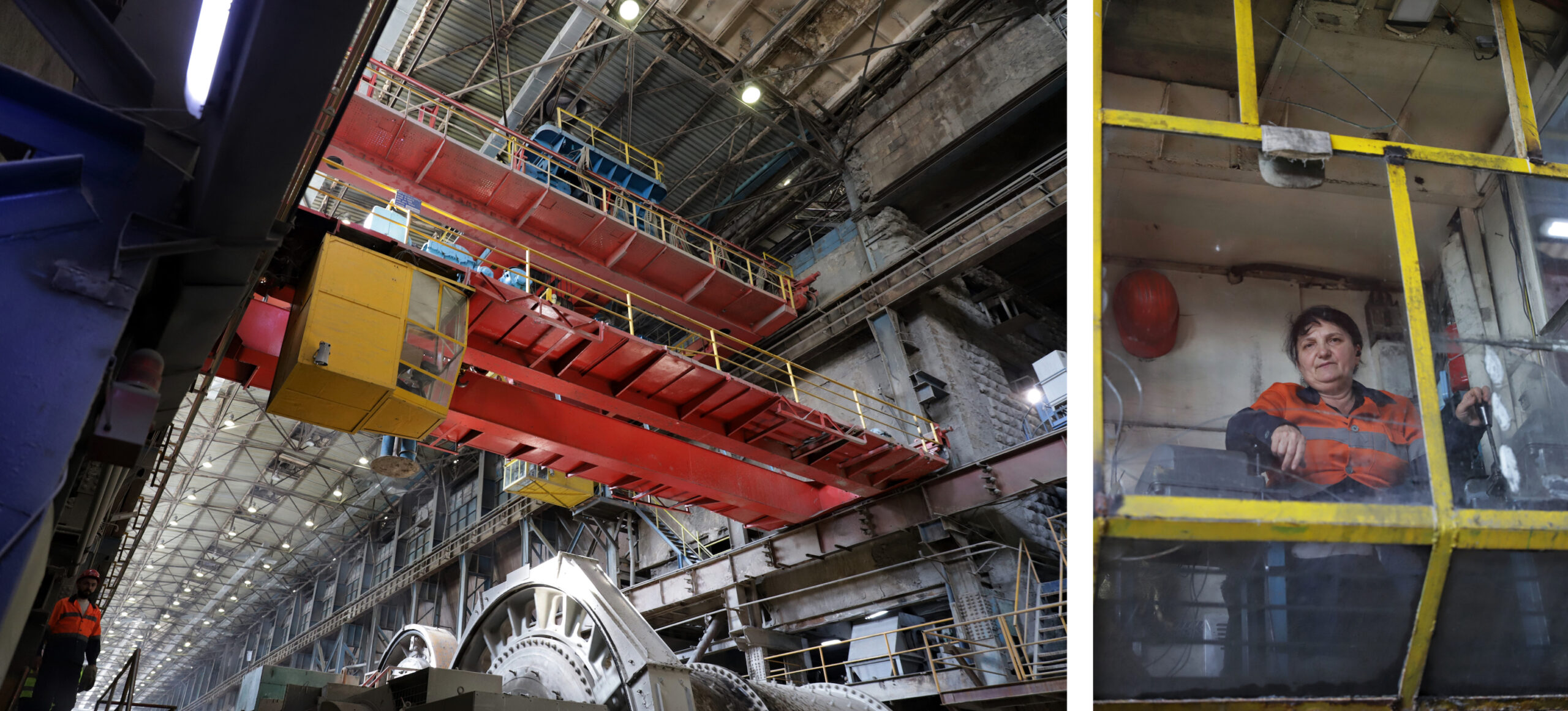
Reflecting neoliberal efforts to integrate women into the mining sector, the Zangezur Copper Molybdenum Combine (ZCMC), Armenia’s largest mining company, frequently highlights the role of its female employees, noting that women’s representation at the company exceeds international averages.[2] According to ZCMC’s 2025 data, women make up 22% of its workforce (approximately 1025 employees), and in 2024, 48 of them held managerial positions. While these figures are presented as progress toward women’s economic empowerment and gender equality, the reality is more complex.
For many women, employment at ZCMC is less a career choice than a necessity. As the state has failed to create or sustain alternative economic opportunities in the region, many women in Kajaran depend on the mine for employment. There’s a recurring notion in their narratives: “If the combine didn’t exist, we don’t know what we would have done.”
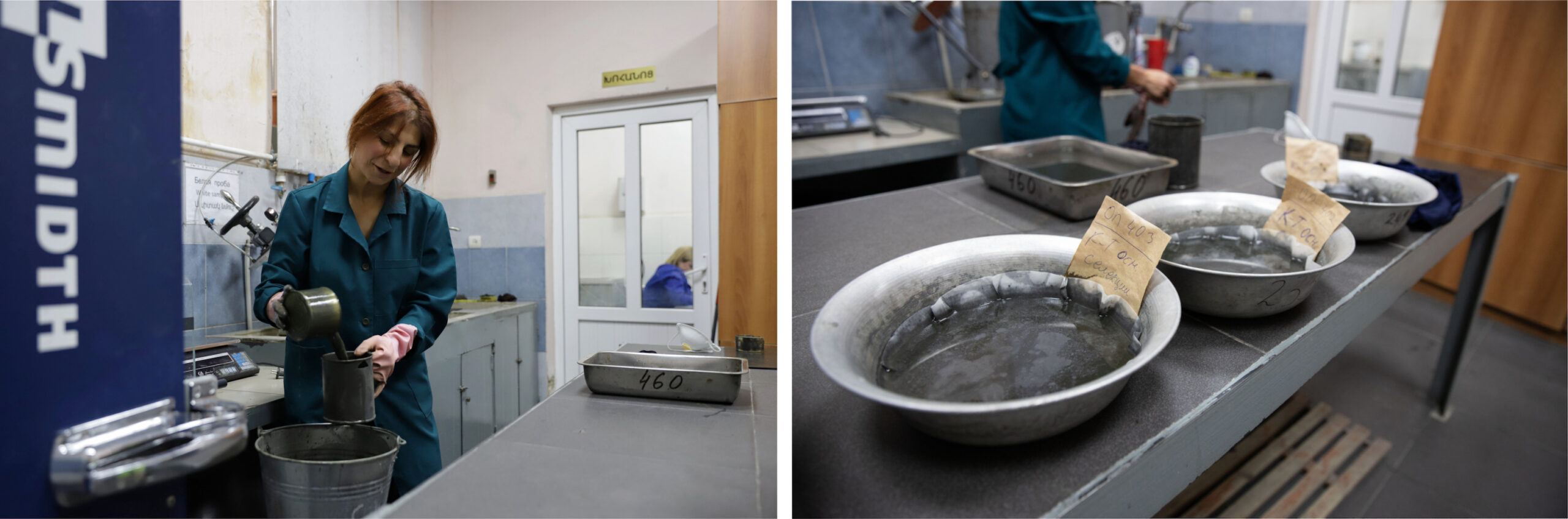
Lilit, 42, has been working at the combine for over 20 years. After switching several positions, she is now a lead specialist in the ore crushing lab.
Lilit has two degrees, one from the former Astrovsky University with a degree in tourism and she later studied pedagogy at Goris State University. “Back then, tourism wasn’t well developed,” she says. “Interest in southern Syunik is relatively new. Rather than stay at home doing nothing, we decided it would be better for me to start working here. I thought things might change later, but they didn’t. Still, I can’t complain. Thank God.”
Lilit describes the work as demanding and physically risky. “Almost everyone here does similar work; some work for the crushing unit, others in the flotation department,” she explains. “If you don’t protect yourself, the work can’t go on as it should. At any moment, ore can break loose and hit your eyes or cause injury. You have to follow all the safety rules in advance; wear a mask, gloves and special boots with steel toes for protection.”
Despite their diverse educational backgrounds and professional aspirations, young women in Kajaran face the same problem today. Unable to find work in their chosen fields, many either take low-paid jobs at local shops, move to Yerevan after completing their education, or wait for an opening at ZCMC.
“My daughter just completed her master’s degree,” says one of the combine’s employees, who wished to remain anonymous. “She studied tourism and has worked with several international organizations. She holds several diplomas and certificates, has worked in Yerevan, and spent a year in Poland teaching at a school, yet she can’t find a job here. She wants to stay in Kajaran to be close to me, but there’s no work for her here. I also have a 23-year-old daughter who wouldn’t even consider moving back here under any circumstances.”
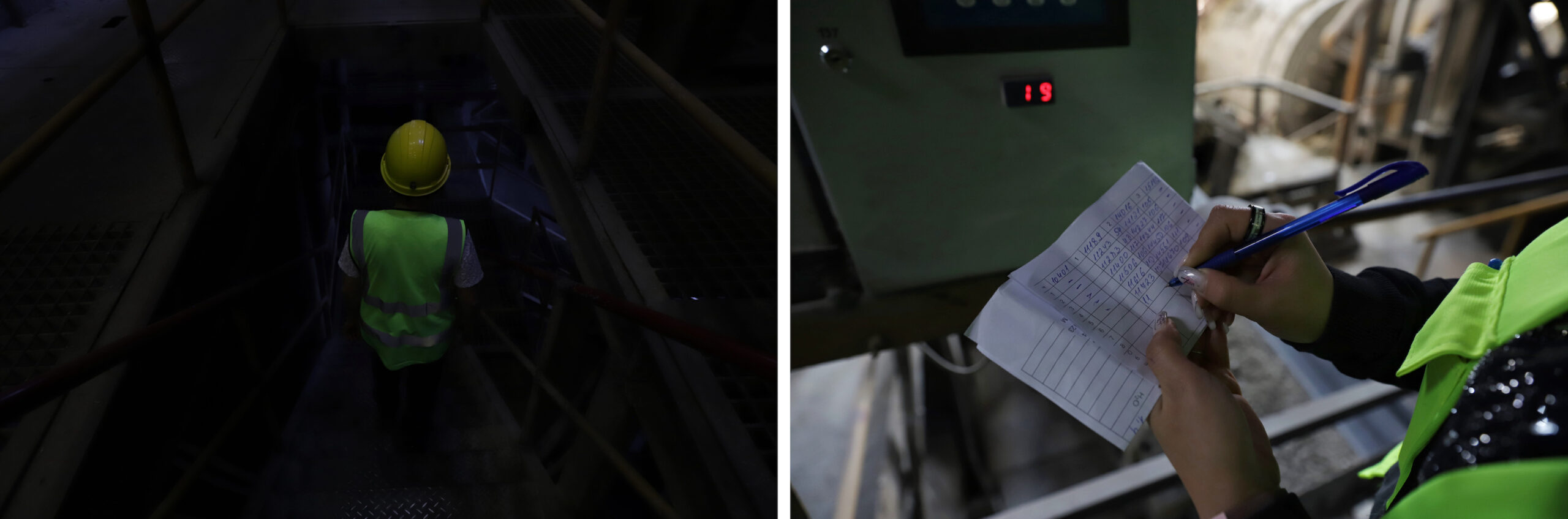
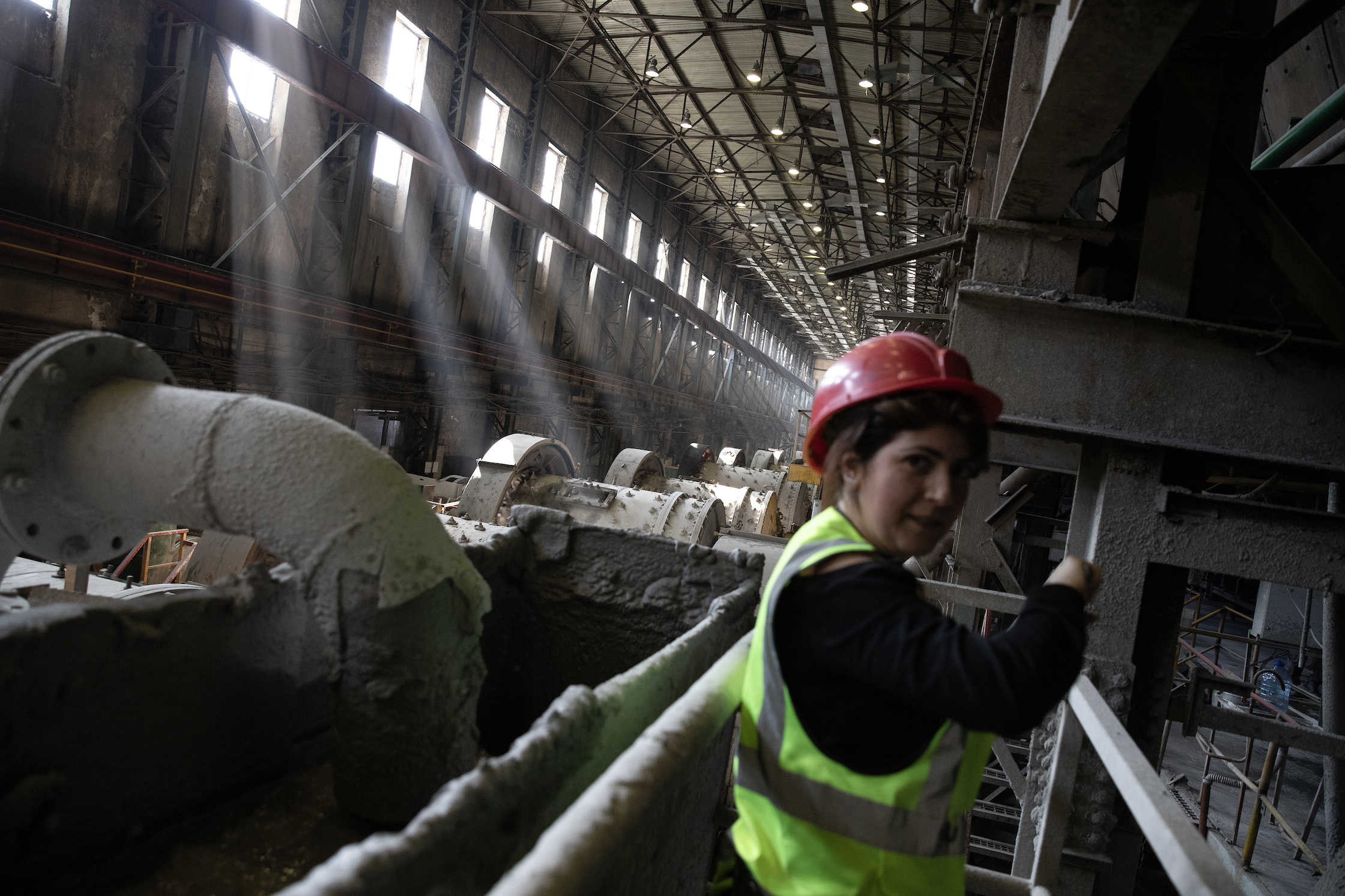
Securing a job at ZCMC isn’t easy, even for those hoping to build a career in the mining sector. According to women employed at the combine, the process can take anywhere from several months to several years, and applicants often have little say in where they are ultimately placed. “They send you to this or that department. Whether you want it or not, that’s how it works. It’s not your choice,” says Ani Danielyan, 34, who began working at the technical inspection station (TIS) after the death of her husband, who had also worked at ZCMC.
Ani says she had not expected to work directly inside the factory, largely surrounded by men, but gradually adapted to the environment. While she does not consider the work particularly physically demanding, carrying buckets of large samples at the end of the day can be strenuous. Much of her job requires constant attention: recording figures, making calculations, taking quick decisions and reporting accurately to the operator.
“You just have to be attentive and ensure your own safety,” Ani says. “There’s a lot of responsibility.”
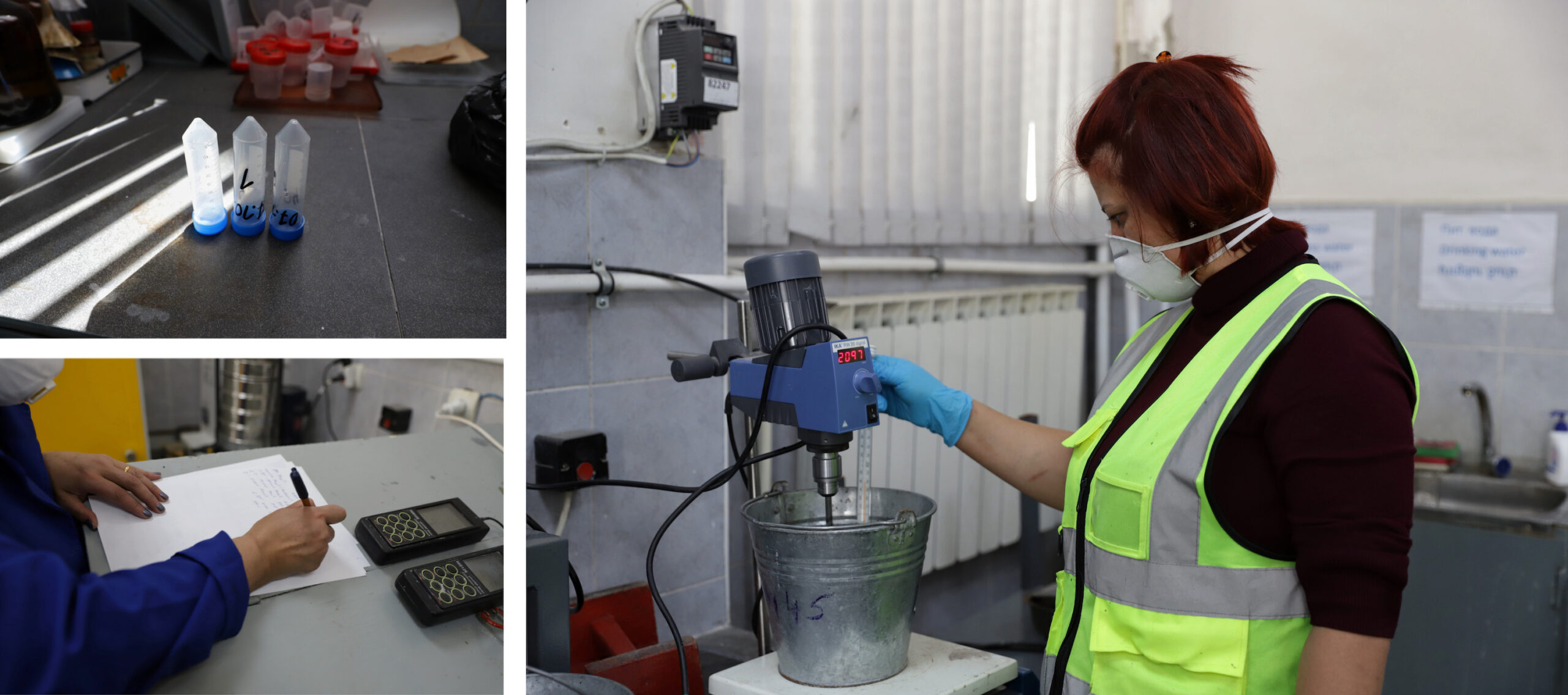
Women who spend much of their workday inside the factory, moving between different areas to collect samples, describe varying levels of exposure to dust, noise and chemicals depending on where they are stationed. “The lower section, the copper and molybdenum area, isn’t very large in terms of walking distance, but it’s a bit toxic. There’s vapor in the air; you can smell it, and it clings to you. On our level, it’s the dust. And we also have a lot of noise,” explains Ani, now the sole caregiver for her three children and her pensioner aunt.
According to women employed at ZCMC, the primary motivation for working at the combine is the higher wages it offers, especially given the limited employment options outside the mining sector. “I used to work in a shop all month just to earn 80,000 drams,” recalls T., whose starting salary at ZCMC was 160,000 AMD as a uniform clerk.
At the same time, while a small number of women, often not from the local community, occupy higher-paid positions, local working-class women largely remain in lower-paid roles that pose greater risks to their health. The stark wage gap between production workers and administrative staff was one of the main drivers of an 11-day wildcat strike in February 2025.
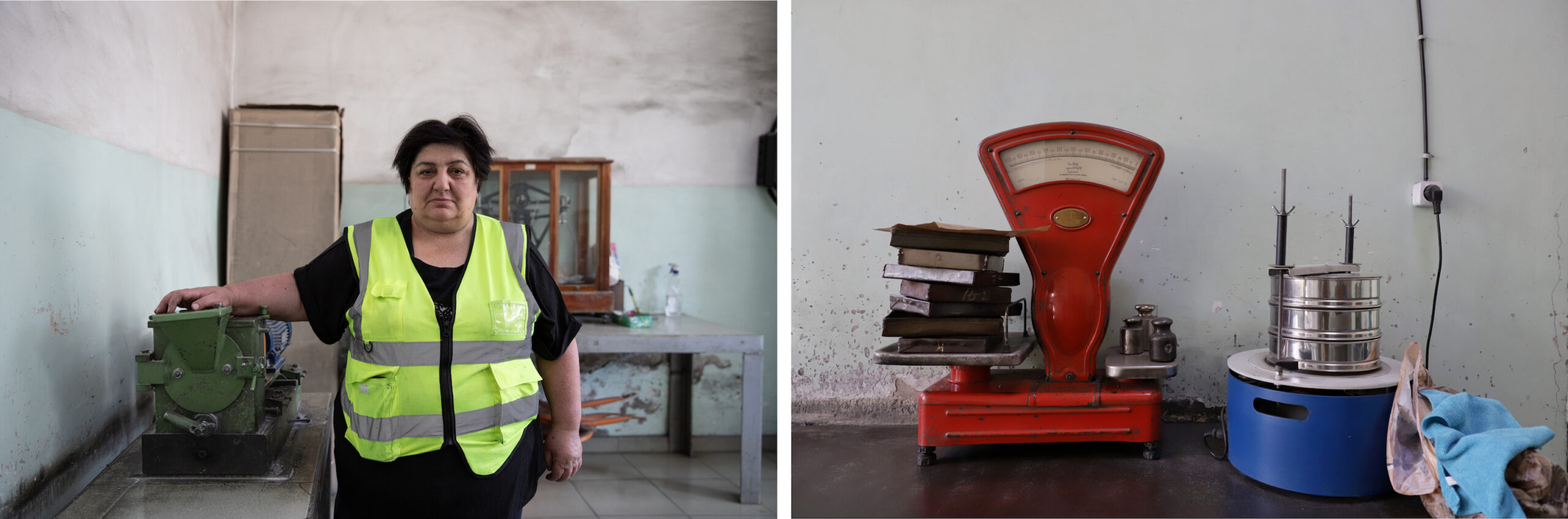
A woman employed at the combine describes this inequality bluntly:
“There’s social injustice. You won’t find an upper manager’s wife, sister or daughter working in production. Production is where people like us work; people with heavy burdens, who need this job. This is where the socially vulnerable end up. The managers place their wives and sisters in clean, comfortable offices. There are positions that no one even knows what the job is for, especially in administration. You just see well-groomed young women going in and out. What they do exactly—no one knows for sure.”
The strike, which ended with the illegal dismissal of eight workers, eventually led to some improvements. Wages were subsequently reviewed and increased, including for employees in adjacent departments such as the TIS, where most workers are women and had initially been excluded from the raises.
The Second Shift
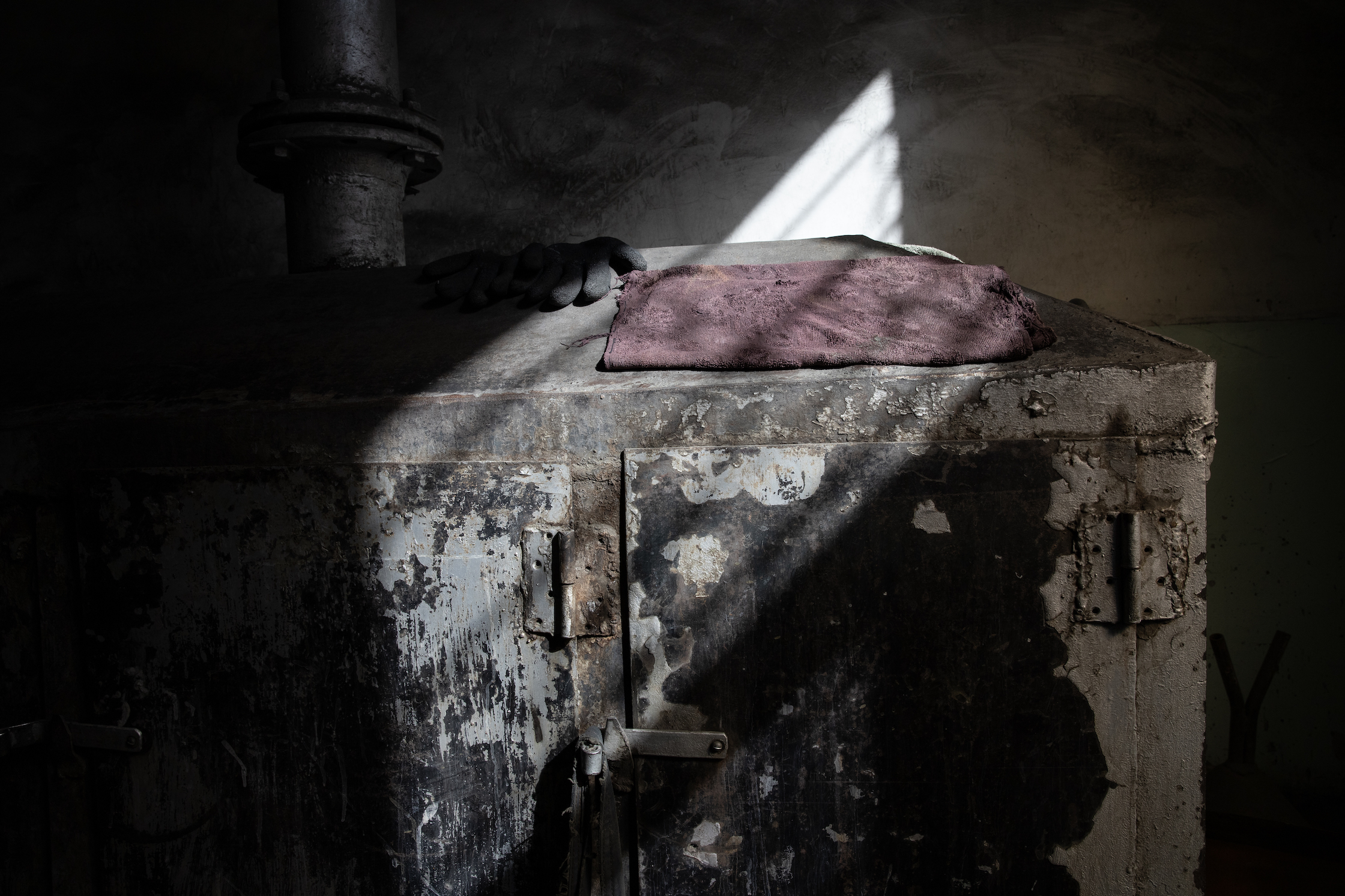
According to Oxfam, women worldwide perform 2.5 times more unpaid care work than men. In Kajaran, where mining dominates the local economy and working conditions can be hazardous, women carry a double burden. Alongside their paid employment at the combine, they remain primarily responsible for the unpaid domestic and care work that sustains their households.
Depending on their position, shifts may begin at 8 a.m., 4 p.m. or midnight. But for many women, the working day neither begins nor ends at the combine. Before or after long hours at the processing plant, chemical laboratory or other facilities, they return home to what sociologist Arlie Hochschild has described as the “second shift”: caring for family members, cooking and cleaning.
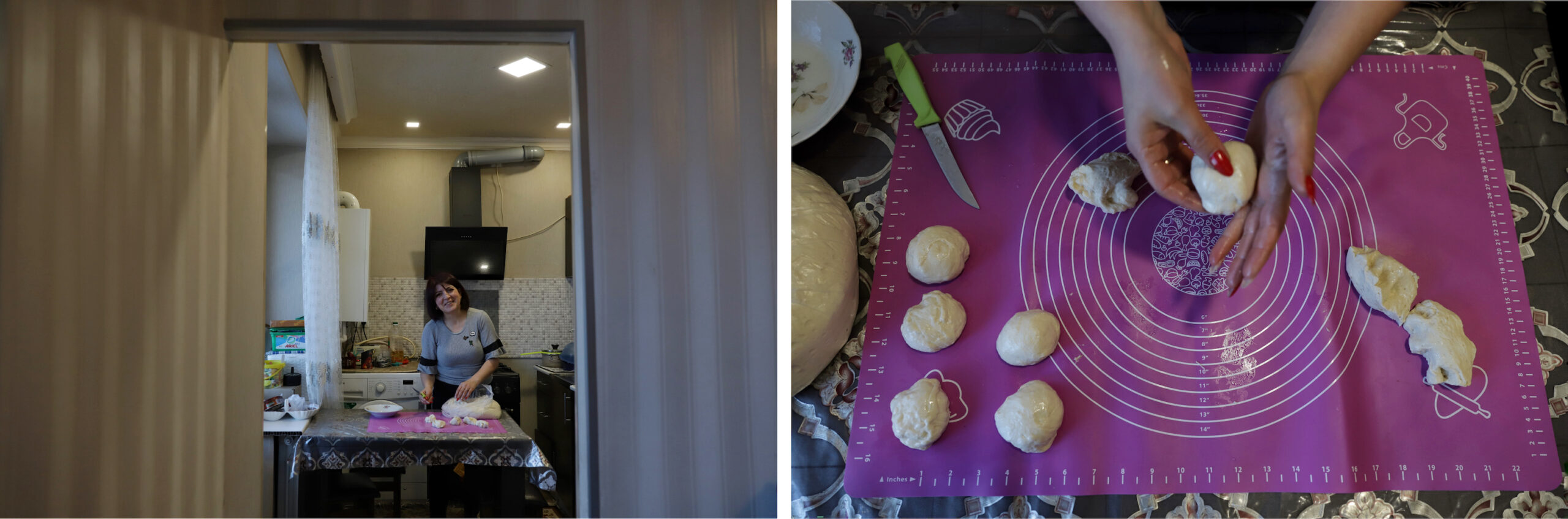
In families where both spouses are employed at ZCMC, women are still expected to cook, do the laundry, and iron shirts for the rest of the family. This expectation reveals how capitalism and patriarchy intertwine: economic structures rely on women’s invisible labor to sustain the reproduction of the workforce, while refusing to compensate for it.
“My shift is almost over and I already know what awaits me next,” says 55-year-old Anahit, who lives with her sons. “I’ll stop by one shop, then another. I’ll rush home and won’t leave the kitchen until midnight: cooking, laundry, ironing. Sometimes I say, ‘Nevermind, I’m not doing any ironing today.’”
Anahit often prepares the meals in advance for her adult sons’ convenience: “My younger son works the 4 o’clock shift. The food is already prepared. He’s not a child anymore. He’ll go, heat it up, eat, clean up and head to work. Thank God, I’ve taught my children to help me.”
Beyond the demands of paid and domestic labor, women also describe having few spaces for rest or leisure. Some younger women travel to nearby Kapan to spend time with family or friends, particularly on payday, colloquially known as “money day”. For older women, however, opportunities to socialize outside the home are more limited, while men are generally freer to spend their leisure time with friends or travel to Kapan.
“There is no social life. The men find something to do with their friends or go to Kapan, but we’re already past that age, you know. I would really like there to be a nice cafe, for example,” Anahit says. “Who said I have to work 24 hours a day, eight hours at work and the other sixteen at home?”
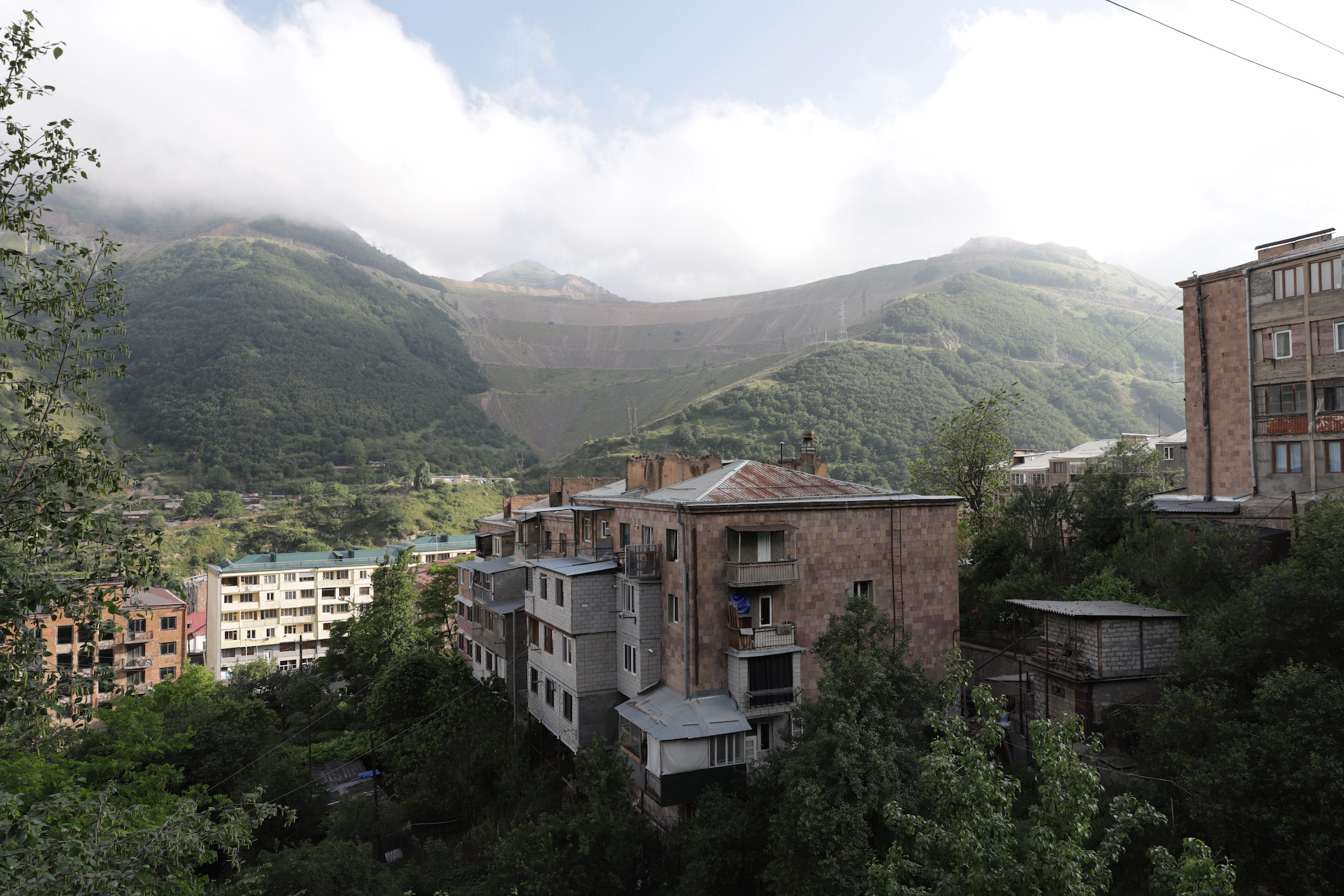
Photos by Gayane Ghazaryan.
Some of the workers requested to remain anonymous. To protect their privacy, their names have been omitted or replaced with initials.