
Listen to the AI generated audio article.
Ruzan Saryan was in her forties when the order came down after the First Nagorno-Karabakh War: burn and destroy all recordings from Azerbaijan. Sitting in the archive of Public Radio of Armenia at the time, pen in hand, she marked each tape as it was being fed into the fire.
Zeynab Khanlarova, 1977, recorded on tape, Azerbaijan SSR, Baku. Burned. Destroyed.
“But this is history,” she remembers thinking.
Written but not done.
Out of a thousand tapes, she secretly slipped about a hundred to the back of the shelves, out of sight. It wasn’t the first time history depended on her, and not the last time.
For more than fifty years, Ruzan Saryan has been responsible for remembering what others forgot or want to forget. And there, in the archive, sound doesn’t end at the walls or with the tapes.
“Listen carefully,” she tells me, looking at the ceiling, as if tuning herself to something invisible. “You can hear the recording from the studio upstairs from here.”
I focus. Faintly, voices leak through. A cough. A line repeated. A fragment of music. Around us, shelves of magnetic tapes stretch in tight rows, with old labels and notes. Somewhere between them, a small black cat darts in and out, brushing against boxes and disappearing again. Nobody knows how the cat got there, and although she doesn’t like it, she says it makes the place livelier.
“What interests you, darling, the history of the archive?” she asks me at the very beginning. “No,” I say. “Your story.” She looks at me surprised, as if there is nothing to tell. “Mine?”
When she talks about the tapes, her hands start moving before she even notices. Ruzan’s fingers perform like a conductor’s, leading something that isn’t there, marking where a tape begins, where it ends, and what needs to be corrected. An imaginary pair of scissors slicing through an invisible strip of tape. As a conductor, she doesn’t touch a single note while explaining it, the orchestra is gone, and the music exists somewhere only in her memory. “There are 16,125 recordings only in this room,” she says, almost to herself. “One of the tapes is damaged.” She knows which one.
Long before she became the editor of the sound archive at Public Radio of Armenia, she was the child of the radio, “the son of the regiment,” she says, using a Russian expression to describe how the whole staff raised her. Her mother was the chief accountant of the radio. Ruzan’s kindergarten was next door, and at the end of the day, her mom would bring her to the radio. A long corridor, doors on both sides. As she walked people called her in from one room, then another, handing her candies along the way. Now, she is the one who gives away sweets.
Her life math is simple: two children, four grandchildren, a great-grandchild, eight hours of work, six hours of sleep, for 53 years. “Now tell me, what is my life?” she asks and answers at the same time. “This sound library, my dear.”
Ruzan doesn’t like hearing her own voice. After decades of smoking, it has become deep and rough, shaped into a perfect fit for the radio more than it pleases her. When she realizes she is being recorded, she becomes nervous. “Now I will start hesitating,” she says.
But she wasn’t back then. For ten summers, she came to the radio during school holidays, found something to do, someone to admire. She was just about to graduate, and hadn’t chosen a university yet. She would tell her mother, “Anything, even as a laborer, please take me to work at the radio.” She moved between the library and the archive, reading books others had marked, lingering over notes in the margins. “I would look at those and think, what were they thinking while reading this?” The lover of books turned lover of sounds, for her the archive was like a lively library, recordings in the form of books.
She was hired in 1973. She never left, or only once, for a couple of months, to beat cancer.
These years have made her intimate with every magnetic strip. She returned to work not long ago after surviving cancer, yet even at home, she called daily. “We haven’t put this tape in its place… we don’t have this person’s voice,” she instructed her colleagues and was afraid for the future of the archive.
Gohar Gyodakyan, one of the radio programmers, described her absence in simpler terms. “When you enter that room, you expect she’s there, always smiling and full of life,” she says. “And if she isn’t, your eyes are looking for her.”
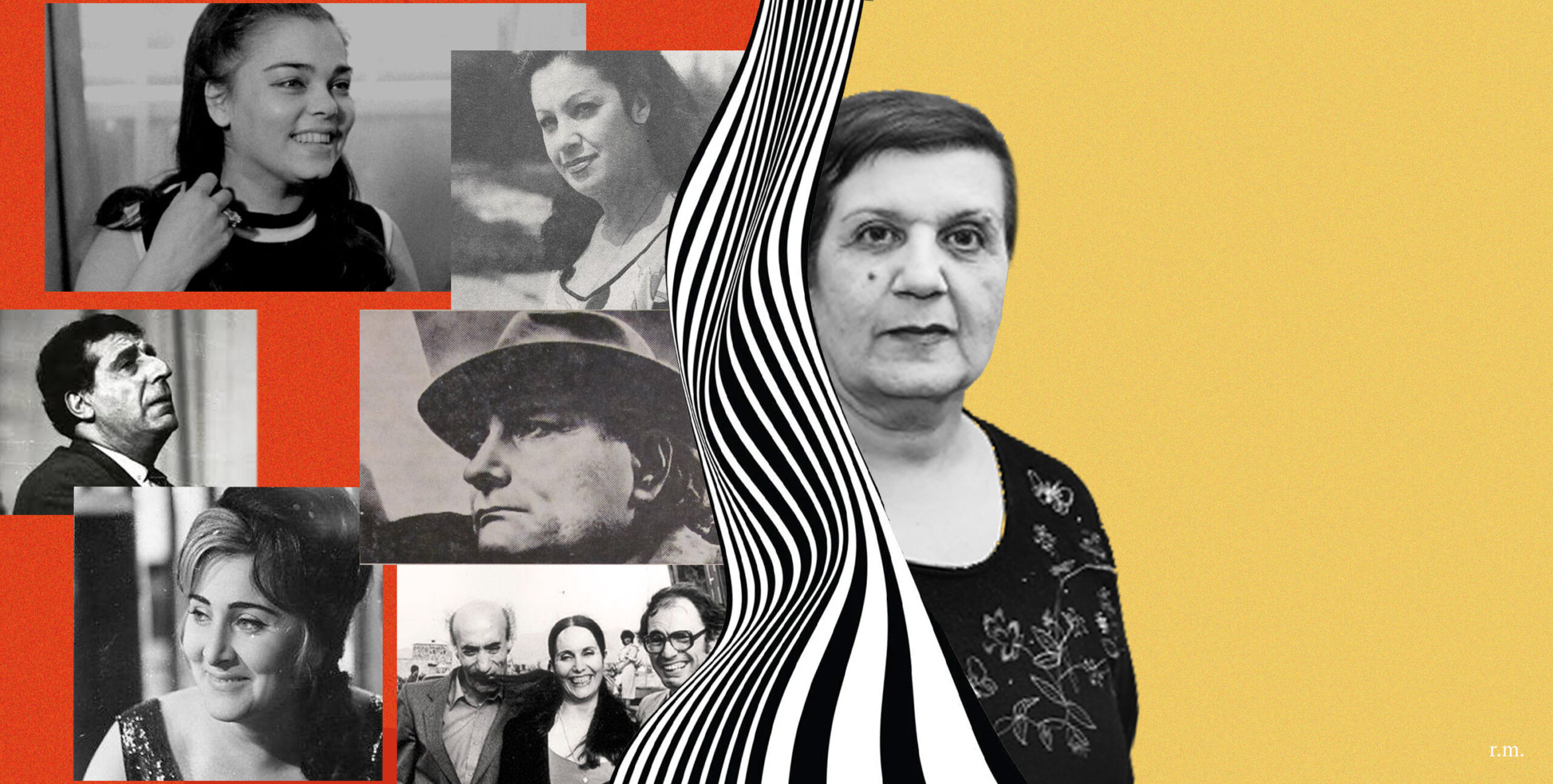
And Ruzan was looking at artists who would later become widely known: Lusine Zakaryan, Bella Darbinyan, Raisa Mkrtchyan. Back then, they were simply people moving through the building, telling stories, and joking. Ruzan remembers standing by the windows, listening, admiring, catching the single chance to talk to them. Now, most of those voices live on tape only, hundreds of thousands of them. She still talks to them. She knows exactly where the voice of William Saroyan lives in nearly 500,000 recordings. “I came when there were only 20,000 tapes,” she says.
The archive has outlived technologies, governments and even political systems. Departments have closed, editorial offices have dissolved but the recordings keep arriving. You can find Lenin’s voice, announcements about the beginnings and endings of wars, everything. There is no more room, some remain in boxes, unsorted, but she keeps them. “Maybe one day they will be needed again,” she says. As it happened with the Azerbaijani tapes.
But the archive is no longer only made of tapes. It is being digitized. Voices moved from magnetic strips to servers, from shelves to something that can fit inside a single computer, even a hard drive. The work shifts with them. Hands that once rewound tape now rest in front of a screen.
As we move through the building, enter different rooms, almost everyone we pass greets her with visible warmth. One of them is Tatev Mkhitaryan, her younger colleague, who walks in pretending to be jealous. “Why are you sitting with my Ruzan without inviting me?” she says, before hugging her. Their gestures came easily, repeatedly, like something practiced over years. When Tatev first arrived, she was quiet, still trying to find her place in this crowded building, but with Ruzan it was different. She was welcoming even before she knew you. Their friendship began in the quiet early mornings, in empty corridors where, as they say, they were queens. “As soon as I enter, I go to her first to hug her,” Tatev says. “I don’t hug anyone, only my Ruzan.”
Before she became anyone’s “Ruzan”, she was just a schoolgirl writing to poet Hovhannes Shiraz. She sent him poems she had composed, and as it was common at the time, Shiraz visited her school to meet her. She remembers crying with joy as he placed his hand on her shoulder. Many years later, she became the face Shiraz was looking for at the radio.
In the 1990s, during the difficult early years of independence, there were other people looking for her too. A young couple, her son and another Ruzan, who would later become her daughter-in-law, had a surprise for her.
“One day they called me over,” she says, pointing toward the corridor as if it has just happened. “They said, ‘We want to talk to you… we want to get married.’”
The timing was uncertain, the country still unstable, everyday life unpredictable. Weddings were not simple decisions then. She told them all of this, but the decision had already been made. In many ways, the radio has been the place where her life unfolded, where big decisions were made, where generations of her family grew up. Her son once worked here, met his future wife, Ruzan, and chose to build a family within these same walls. And nearly 30 years later, the two Ruzans still work in the same building, go home together and remember that moment as a part of their history, not on tape, but in memory.
She never tried to leave. Others came and went, but she stayed, moving from one decade to another inside the same walls, the same shelves, the same voices. “When I entered here, it was like a swamp that you didn’t want to get out of.” In a world where most people move on from a job within a few years, she remains inseparable from the radio by choice.
If Ruzan Saryan had her own life’s sound library, it would contain many sounds, but mainly others, the ones she has listened to for half a century. Upstairs, someone speaks again. The low echo drifts down into the archive. She hears it before anyone else.
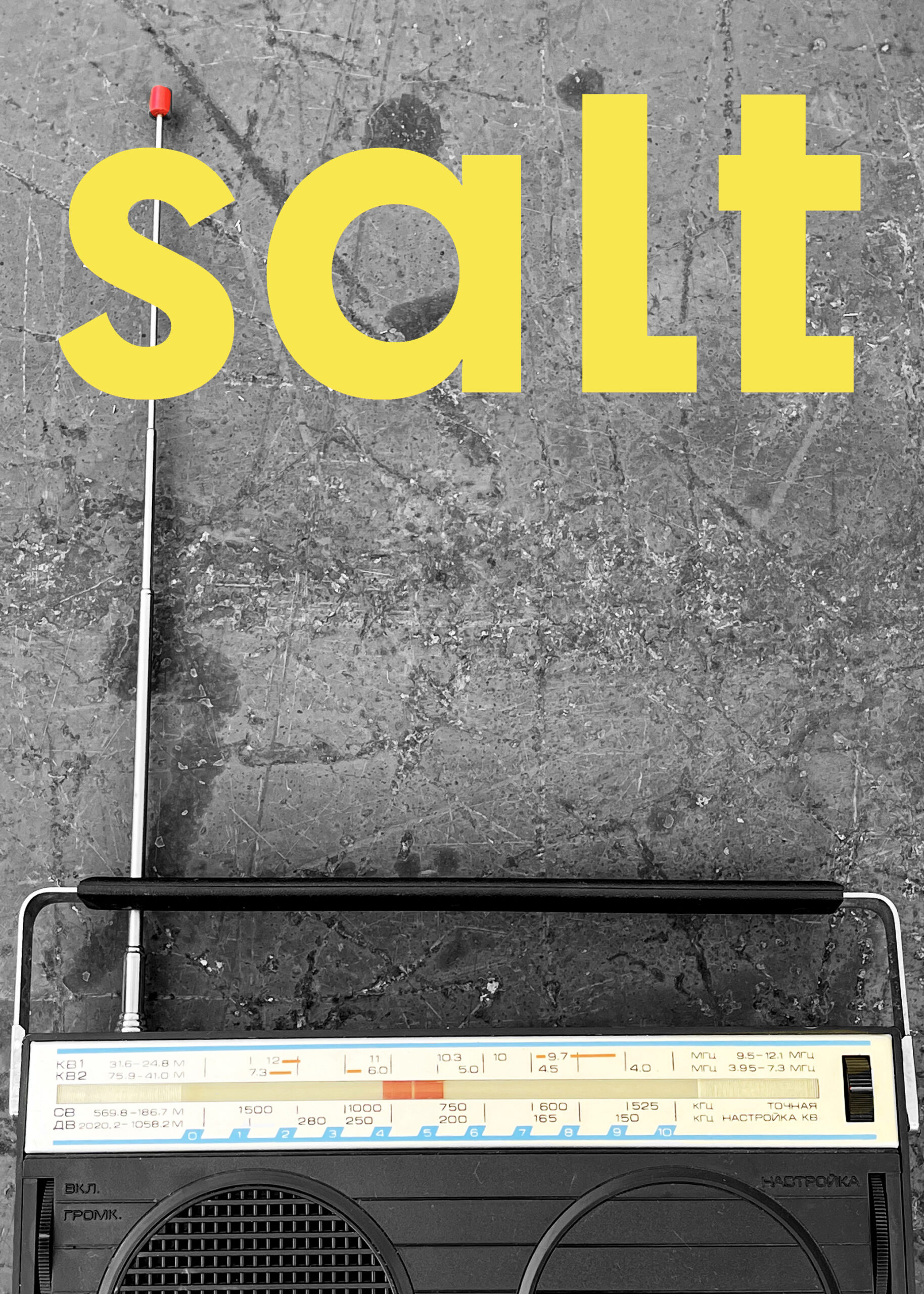
Cover photo by Roubina Margossian.
LIFESTYLE
Of Sound & Mind
From discovering love in inherited trauma to the quiet art of navigating Yerevan’s sidewalks, from a sound keeper at public radio to a boba tea shop opened by a newcomer from China, and reflections on how Armenians listen to radio today, this month’s SALT traces an evolving society in the spaces between image and reality, past and present.
The View From the Curb
A sharp, darkly funny walk through Yerevan from curb level, where crossing the street can feel like a survival sport. Through near-misses, chaos and observation, Lori Youmshajekian explores road culture, impatience and the daily vulnerability of pedestrians.
Read more
Could We Ever Grieve It Away?
Every April 24, we focus so much on the inherited trauma and pain related to it, that we overlook the love woven through our stories. Can grief alone sustain us or do we need new rituals of gratitude, connection and renewal? What about the ethical responsibility of recognizing the suffering of others? Blending reflection with conversations with psychologists, artists and thinkers, Ella Kanagerian-Berberian searches for her own answers.
Read more