
Listen to the AI generated audio article.
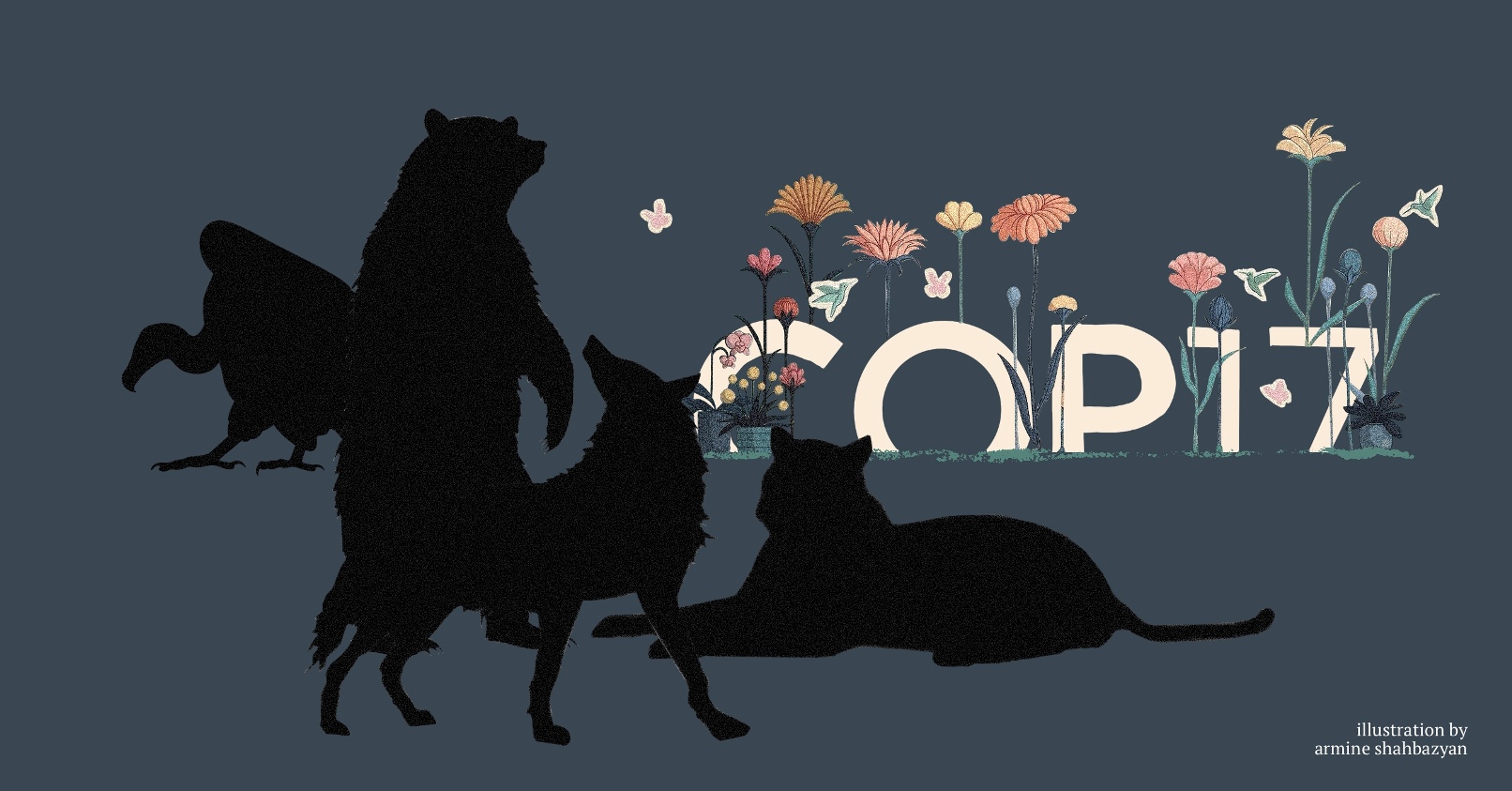
In a few months, in the fall of 2026, Armenia will host COP17—the Conference of the Parties to the Convention on Biological Diversity. It is the most influential platform in the environmental world: a UN-backed global summit bringing delegations from around 190 countries, heads of state, and international experts to Yerevan to decide the planet’s future. And yet, the customs data flickering on my screen pulls me back into a familiar parallel reality.
Years of investigations have repeatedly exposed Armenia’s role in suspicious wildlife-trafficking schemes. Stricter oversight was expected to reduce these flows, but statistics from 2023–2025 suggest otherwise.
Buried within numbers and codes is a steady stream of wild animals arriving in Armenia from Congo, Lebanon, and Iran, only to vanish from official radar. This is the story of how Armenia remains a grey hub for the wildlife trade: where exotic and endangered species imported through international schemes are rerouted to private collections, while most transactions remain hidden behind the wall of commercial confidentiality.
How a Lion is Equated to a Refrigerator
Under the Civil Code of the Republic of Armenia, an animal is simply property. At the customs border, there is no legal distinction between a lion and a refrigerator: both are commodities, and their trade is protected by commercial confidentiality. This is the point where public oversight is restricted and traceability disappears. When an animal is treated as an object, its welfare and the conservation of its species are pushed into the background, while property rights become the primary focus. This is why, once the border is crossed, the state simply does not interfere in the owner’s affairs.
This is the legacy of an outdated legal framework that the developed world has been gradually moving away from. As early as 1997, the European Union officially recognized animals as “sentient beings”—as, indeed, they are—through the Treaty of Amsterdam. Germany went further still in1990, enshrining in its civil code that animals are not objects but are protected by special laws. In 2015, France amended its Civil Code, reclassifying animals from “movable property” to “living beings endowed with sentience.”
At the international level, the movement of wildlife is meant to be regulated by the Convention on International Trade in Endangered Species of Wild Fauna and Flora (CITES)—an agreement designed to ensure that trade in wild animals and plants does not threaten their survival. Its logic is simple: since the trade cannot be stopped, it must be brought under strict control. Yet, CITES is often criticized for becoming little more than a paperwork convention. In practice, the Convention provides the toolkit, but its application is left to the conscience and professionalism of each member state.
This trade chain could not exist without specific actors, or, in legal terms, subjects. In Armenia, a narrow circle of such subjects handles the import and export of exotic animals, and for years they have skillfully exploited legislative loopholes and the protections afforded by “customs secrecy.” These are companies whose activity is often limited to the role of an intermediary, bringing animals into Armenia merely as a transit point en route toward third countries or private collections.
The axis of Armenia’s exotic animal trade sits at 148 G. Mahari Street in Yerevan: a monopoly hub of interconnected companies. It is, in effect, a family network, with companies registered under the names of a father, mother and son. Here, a clear mechanism of continuous rebirth operates: companies dissolve through bankruptcy only to evade accountability and resurface under new names. The bankrupt Zoo Fauna Art has been replaced by Fauna Zoo, joined by new links in the same chain: Zoo Venera and Paradise Animals Shelter and Rehabilitation Center. The true founder of the network, once wanted by Interpol on suspicion of smuggling, effectively controls the dominant share of the market.
Smaller actors exist too, among them the Yerznkyan Zoo Center, which deals in the bird trade, along with several individual traders.
The Customs Labyrinth
Ahead of COP17, the Ministry of Environment and the Environmental Protection and Mining Inspection Body (EPMIB) claim that the issue of wild animals kept in captivity is a priority on their agenda and must be resolved.
While animal welfare is being discussed in offices, the reality at the customs border is quite different. Hundreds of wild animals continue to be imported into Armenia from all corners of the world. Statistics for 2023–2025, compiled from data I obtained from the State Revenue Committee (SRC), show that Armenia remains open to exotic and endangered species, some of them taken directly from the wild. In 2023–2025 alone, more than 420 wild and exotic animals were imported into our country.
The geography of these transactions points to an international trade corridor in which Armenia serves not as a destination, but as a transit point. Here, animals receive the paperwork needed to continue onward.
The most troubling aspect is that after crossing the border, the trail of these animals often disappears from official records. With no unified registry and under the legal shield of commercial secrecy, rare species slip into private collections or are re-exported in unknown directions.
Regular World Wildlife Crime Reports published by the United Nations Office on Drugs and Crime (UNODC) show that one of the most common methods of wildlife trafficking today is not covert smuggling, but the exploitation of legal trade channels and the appearance of regulatory compliance. Rather than evading the law, traffickers increasingly operate through legitimate documentation, using permits and customs procedures to conceal illicit transactions.
This exposes one of the structural limitations of the CITES Convention. CITES regulates the international movement of protected species across borders, but once an animal has legally entered a country, oversight shifts entirely to national legislation. If domestic law treats the animal simply as property and shields ownership information under commercial confidentiality, traceability effectively ends. In many countries, the absence of public registries or robust monitoring systems allows animals that have crossed the border to disappear into private collections, breeding facilities or onward trade with little or no public accountability.
Some of these imports, officially classified as ordinary commodities, quickly turn out to be the very animals the state is later forced to rescue from inhumane conditions. This creates a vicious cycle: the state permits suspicious entries, loses track of the animals, and then spends resources rescuing the same animals it allowed in to begin with.
One of the clearest examples of this informal supply chain involves the Alexandrine and Rose-ringed (Kramer’s) parakeets that the EPMIB removed in February 2026 from a restaurant called Miracle Garden, species native neither to Armenia nor the region, but simply imported as goods.
The customs data from recent years contains a few particularly striking entries, such as the 2024 import of 12 palm-nut vultures (Gypohierax angolensis). This bird species is so foreign to our region that it doesn’t even have an established Armenian name. Its natural habitat is the humid forests and savannas of Africa, yet here it is, appearing in Armenian customs records.
CITES permit data indicates that the birds were taken directly from the wild, with the transaction purpose listed as breeding (purpose code: B). In theory, this should have supported species conservation in a specialized breeding center. However, the transaction was carried out by the Armenian Yerznkyan Zoo Center LLC, and the final recipient is a Russian citizen, Oleg Svetlitskiy, whose “breeding center” is simply an apartment in Yekaterinburg, at his place of residence.
According to official data from 2026, Oleg Svetlitskiy’s name appears again in the CITES documentation workflow. This time, he was granted a re-export permit for another rare African species: two Bateleur eagles (Terathopius ecaudatus). Document analysis indicates that the same entity simultaneously acts as both the exporter (from the Republic of Armenia) and the importer (into the Russian Federation).
From a legal standpoint, this formulation allows strict regulations for commercial transactions to be circumvented by presenting the process as the movement of personal property (purpose code: P).
Nevertheless, cross-referencing customs data shows that the eagles in question had already been imported into Armenia in 2024 by a commercial entity, which in itself indicates the transaction’s initial commercial nature. The gravity of the issue is underscored by the fact that the Bateleur eagle is classified as endangered on the International Union for Conservation of Nature (IUCN) Red List. Driven by habitat loss and poisoning, the global population of this species across the African continent has plummeted by 50–79% over the past three generations of the species.
The “B” (Breeding) and “P” (Personal) purpose codes are global traffickers’ favorite trump cards. In international practice, scientific or breeding purposes are often declared to secure CITES permits, because the commercial transit of endangered species is either strictly prohibited or heavily restricted. However, domestically, no one verifies whether these “breeding facilities” are mere residential apartments or actual scientific centers.
Removing animals from the wild deals a double blow: each animal taken from its natural habitat disrupts the biological balance of that area. Furthermore, transporting wild-caught animals thousands of kilometers away involves extreme stress and high mortality rates. Very often, behind every single creature that crosses the border, dozens of others perish during capture or transportation.
The import of Black Crowned Cranes (Balearica pavonina) is perhaps one of the most remarkable and painful examples. In 2024, the Armenian Fauna Zoo LLC received a CITES re-export permit to move two cranes from the Republic of Niger (via transit through Benin) to Kazakhstan, specifically to the Karaganda State Zoological Park. According to the IUCN Red List, this species is listed as Vulnerable (VU): only 44,000–74,000 mature cranes remain worldwide, and their numbers are declining. Despite the urgent need for conservation, the cranes were taken from the wild (“W”) and became just another asset in an international trade chain, one in which Armenia again served as an intermediary, giving legitimacy to a suspicious transaction.
Although the Karaganda Zoo holds official state status, it has repeatedly faced criticism over the deplorable conditions in which its animals are kept, cramped cages, concealed animal deaths, and inadequate care. In effect, cranes removed from the wild and in need of special conservation are being handed over to a facility where animal welfare and scientific oversight fall far short of international standards.
In 2025, a total of 18 zebras were imported from South Africa to Armenia. Ten were Hartmann’s mountain zebras (Equus zebra hartmannae), which are listed as ”vulnerable”; their population in South Africa is extremely small, with only 592–724 mature animals. Removing 10 animals from such a sparse population and transferring them to Armenia, a country that lacks scientific expertise in the conservation of this species, again calls into question the justification for the permits and the transaction’s true purpose. The remaining eight were plains zebras (Equus quagga burchellii), whose populations have declined in 10 of the 17 countries they inhabit over recent decades (Status: NT—Near Threatened).
An example of this opaque and unregulated scheme is the 2025 import of 20 Armenian mouflon (Ovis orientalis gmelini) from Iran to Armenia. The species is listed in Appendix I of the international CITES convention and is on the brink of extinction; international trade is permitted only under exceptional circumstances. Even more surprising is the decision to import this species specifically to Armenia, given that the mouflon is native to its territory. Importing it under unknown conditions and for unknown purposes raises serious questions about Armenia’s internal environmental policy and oversight.
In the spring of 2025, within just one month, 26 Alaskan (or Yukon) wolves were imported into Armenia. Compared with common wolves, these predators are true giants, with long, powerful legs, a broad chest, and a massive head. Males often exceed 65–70 kilograms, giving them an imposing appearance.
Although this subspecies can also be gray or whitish, an unusually high percentage of these animals are entirely black. The combination of immense size and a solid black coat gives them an exotic, almost mythic aesthetic—making them highly sought after among the wealthy.
Global UNODC reports include dedicated chapters on the abuse of CITES permits and “code laundering.” TRAFFIC, the global wildlife trade monitoring network, has published dozens of investigations showing how this scheme operates. Animals are captured from the wild in Africa or Asia and then transported to intermediate transit hubs such as the UAE, Singapore, Malta, certain Eastern European countries—and Armenia. At these transit points, lax oversight or corruption enables the source code in animals’ CITES documentation to be changed from “W” (Wild) to “C” (Captive-bred) or “F” (Born in captivity). From that moment on, the illicit transaction is effectively legitimized.
As the fraudulent alteration of source codes from “W” to “C” became a global crisis, CITES was compelled to adopt Resolution 17.7. This resolution established a dedicated international mechanism to investigate countries experiencing a suspiciously sharp increase in the export of specimens under code “C,” particularly when the nation lacks the natural or scientific infrastructure needed to support such breeding operations.
Official statistics from the State Revenue Committee (SRC) for 2023–2025 show that, beyond the primary cases under review, dozens of other shipments of exotic species have crossed the border. In 2024, customs records documented the import of two African civets and two spotted hyenas from Benin. In 2025, these inflows expanded to include 30 Caucasian red deer and 20 black swans from Iran; three striped hyenas and six Kori bustards from Benin; eight monitor lizards and 20 African tortoises from Lebanon; consignments of 47 exotic birds (parrots, pigeons, pheasants) from the Netherlands; and 24 hyraxes from South Africa.
In this trade, animals are reduced to commodity codes, while Armenia continues to absorb and redirect rare and endangered species—many taken directly from the wild.
Epilogue: The COP17 Parade
When you examine the customs tables for 2023–2025, you see that individual stories are only small pieces of a much larger mosaic.
Armenia has firmly established itself as a key hub for transnational wildlife circulation. Armenia has long and firmly consolidated its position as a key hub for transnational circulation, through which, in 2023–2025 alone, passed nine tigers from Kazakhstan, 26 wolves from Russia and Kazakhstan, dozens of hyenas from Benin, 18 zebras from South Africa, and hundreds of exotic birds from regions ranging from the Congo to Iran. More than 420 wild animals have entered our borders, and a significant portion has simply vanished beyond official traceability. This is not conservation; it is a laundering operation for the animal world, where animals snatched from the wild are issued the necessary paperwork and turned into legal commodities.
Soon, Yerevan will host COP17. Delegates from 190 countries will arrive to discuss saving biodiversity and sustainable development, while just a few kilometers away—behind the walls of 148 Mahari Street or deep within customs warehouses—the next consignment will be waiting to be redirected. This is a glaring contradiction, one that cannot be masked by diplomatic polish. While Armenia aspires to become the “center” of the environmental world, it continues to operate as a shadow hub for the wildlife trade. As long as a lion is equated with a refrigerator and an animal’s life is subordinated to a property certificate, any international conference is merely a facade over a rotting system.
We are accustomed to picture wildlife trafficking as something that happens in dark basements, with smugglers slipping across forested borders. The reality is far more cynical: in today’s world, paperwork has become the most powerful weapon for transforming an illicit transaction into legitimate-seeming trade. Satisfied by the mere formal presence of documents, the state apparatus looks away, ignoring the vast chasm between an official stamp on paper and the actual origin of the animal.
Modern trafficking is not about hiding from the law; it is about hiding behind the law to cloak what is, at its core, unacceptable.
Environment
The Unloved Others: Invertebrate Conservation in Armenia
Examining how Armenia’s conservation priorities overlook invertebrates, despite their vital ecological roles, Anahit Ghazakhetsyan explores barriers of stigma, weak research and habitat loss, urging narratives that value the “unloved” species sustaining ecosystems.
Read more
Yerevan’s Air Crisis: Inside the Pollution Emergency
Yerevan’s worsening air pollution has moved from background concern to a public health emergency. Hovhannes Nazaretyan examines the main drivers including construction, quarries, transport and waste and why government responses have so far fallen short.
Read more
System Failure: Draining Strategic Aquifers for Short-Term Profit
Armenia’s most vital aquifer is collapsing under decades of unchecked fish farming, illegal drilling and political neglect. The Ararat plain’s groundwater, critical for drinking water and agriculture, is being drained faster than it can recover, forcing the government into a race against ecological collapse. Hovhannes Nazaretyan explains.
Read more
The Queen, Armenia’s Forests and Bureaucratic Hurdles
A royal visit spotlighted Armenia’s forests, but also exposed how bureaucracy, competing land interests, and weak governance continue to undermine reforestation. As Armenia prepares for COP17, ambitious pledges collide with stalled permits, mining pressures and a system struggling to turn promises into forests. Hranoush Dermoyan reports.
Read more
Unconventional Grief: Armenia’s Landscapes Lost to Mining
In Teghut, Armenia, as mining transforms forests into pits and rivers into waste, villagers like Yegishe mourn landscapes lost to industry, naming their sorrow solastalgia—the homesickness felt while still at home.
Read more
Solar Takes Off: Can It Fuel Armenia’s Energy Independence?
Armenia is rapidly embracing solar power, with rooftop and utility-scale projects driving energy independence and sustainability. Hovhannes Nazaretyan examines the country’s growing capacity, landmark farms like Masrik-1, future wind ambitions, and the challenges of integrating renewables into the national grid.
Read more
The Climate Is Changing, How Are Armenian Winemakers Adapting?
Armenia’s winemaking renaissance faces a new challenge: climate change. From shifting harvests to genetic research on native grapes, winemakers and scientists are adapting—experimenting with higher-altitude vineyards, irrigation methods, and biodiversity to preserve a six-millennia-old tradition.
Read more
From Urtsadzor to COP17: Biodiversity at Armenia’s Crossroads
As peace negotiations with Azerbaijan and regional integration projects advance, biodiversity corridors could become vital connectors across fractured landscapes and divided societies. With Armenia preparing to host COP17, the urgency of protecting its extraordinary biodiversity amid mounting ecological and political threats takes center stage.
Read more
Subsoil Security: The State of Mining and Armenia’s Mineral Wealth
Could Armenia’s mineral wealth, long dominated by Russian companies, emerge as a strategic asset in the global race for critical minerals? Gibran Caroline Boyce explores how mining now intersects with economic independence, national security and Armenia’s geopolitical diversification.
Read more