

Listen to the AI generated audio article.
I enter a cafe in downtown Yerevan and witness a familiar scene: curtains pulled open, beige walls, uncomfortable-but-trendy stools. The menu runs from orange juice-espresso “bumble” coffee to poke bowls and salmon avocado toast. Some places offer experimental versions of traditional dishes we all love—deconstructed dolma with apricot, or sujuk where it doesn’t usually belong. These cafes have colonized Yerevan over the past decade, and in my local opinion, they are soulless, and built to attract tourists rather than food-loving locals.
Whether it’s a hole-in-the-wall cafe or a hole-in-the ground bakery, a city like Yerevan is littered with summer eats.
The city has changed noticeably. Some modern cafes close as fast as they open, since the definition of “trendy” changes so quickly. With ambition skewing toward ambiance over appetite, this type of restaurant chases the emotion of a first impression—leaning on minimalist interiors or inventing novel dishes by mixing the traditional with the contemporary.
Locals experience food differently. What do they care about? Dishes that have been tested for years carry the same layers of taste that made them memorable the first time; rich in flavor and generous in portion.
Don’t get me wrong, experimenting with the menu isn’t a bad thing. But it’s worth asking whether people return for culinary novelty or for the dishes that become part of their routines. Food that holds memory has a way of becoming tradition. Simple, well-made meals don’t just satisfy, they draw us back, again and again.
Locals don’t come back only for a cozy interior, but for food they enjoy, can afford, and love to share with friends and loved ones.
Looking for the lightest tuna salad and the best lemonade in the city made for hot days? Let me lead you to a place where every item on the menu is considered a must-try. Twelve Tables, hidden on Alexander Spendiaryan Street, is a direct portal home. The restaurant has charmed customers for more than 15 years. The menu is handwritten, and the space is quiet and comforting. Without realizing it, I put my headphones away and found myself eating slowly, paying attention to the subtle flavors of my tagliatelle with tomatoes and mushrooms.
Granted, an underground, cave-like diner isn’t what you’d picture for a summer meal. Still, each visit feels like a meditation, and the interior creates the feeling of home. Fortunately, the restaurant has never embraced “minimalism.” Instead, it feels as though your grandmother had a second house she kept secret. Its orange and turquoise walls are lined with ceramic kettles and teacups, handwritten menus boards and handmade crafts.
Twelve Tables charms customers with its simplicity. At a time when many places chase Instagram approval, quality can get left behind. I’m glad to know that a chicken baguette with pickles can feed my body and soul.
Short on time and rushing back to the office? Yerevan has no shortage of hole-in-the-wall eateries that have earned the loyalty of customers in a hurry. JnJ, located on Teryan Street, is one of them. A longtime favorite among the city’s IT community, it continues to draw regulars for its borscht and chicken paillard, even after the old office location changed.
When I studied at music school, my mom and I used to have lunch together before my violin lessons. She always took me to JnJ, or “G and G”, as everyone seems to pronounce it. At first glance, the place feels old-fashioned and unassuming, but that impression changes as soon as the food arrives. I still remember the crispy chebureki and the chicken cutlet served with mashed potatoes, dishes that have stayed with me long after the lessons ended.
Yerevan’s local dining scene would be incomplete without Jazzve. Since the early 2000s, Jazzve has been a favorite meeting place, where conversations stretch over crepes filled with mushrooms and melted cheese. While its crispy chicken rösti has its loyal following, many locals come just as much for dessert, especially the waffles served with chocolate and a scoop of vanilla ice cream. And, as the name implies, every visit ends with traditional black Armenian coffee, brewed in a jazzve and served in a small cup.
One of Jazzve’s branches has since been transformed into J Space, reflecting a more contemporary approach to coffee culture. Still, Jazzve remains a classic; a place people return to not only for the crepes, but for the conversations that have accompanied them for years.
With the rise of modern supermarkets, the routine of buying bread and pastries has changed. Still, each district in Yerevan has its own small bakeries, warmed by ovens and tonirs and filled with the smell of freshly baked bread. A typical Armenian household experience is sending kids to buy fresh matnakash from the local stores in the morning. The joy of the journey was its reward: warm bread in our hands and small khachapuris bought with the money that was left. Over the years, bakers have memorized the names of their customers, expecting them to return each day for their usual order. That’s what makes these bakeries phenomenal: the rich taste of the pastries and the welcoming atmosphere from the bakers.
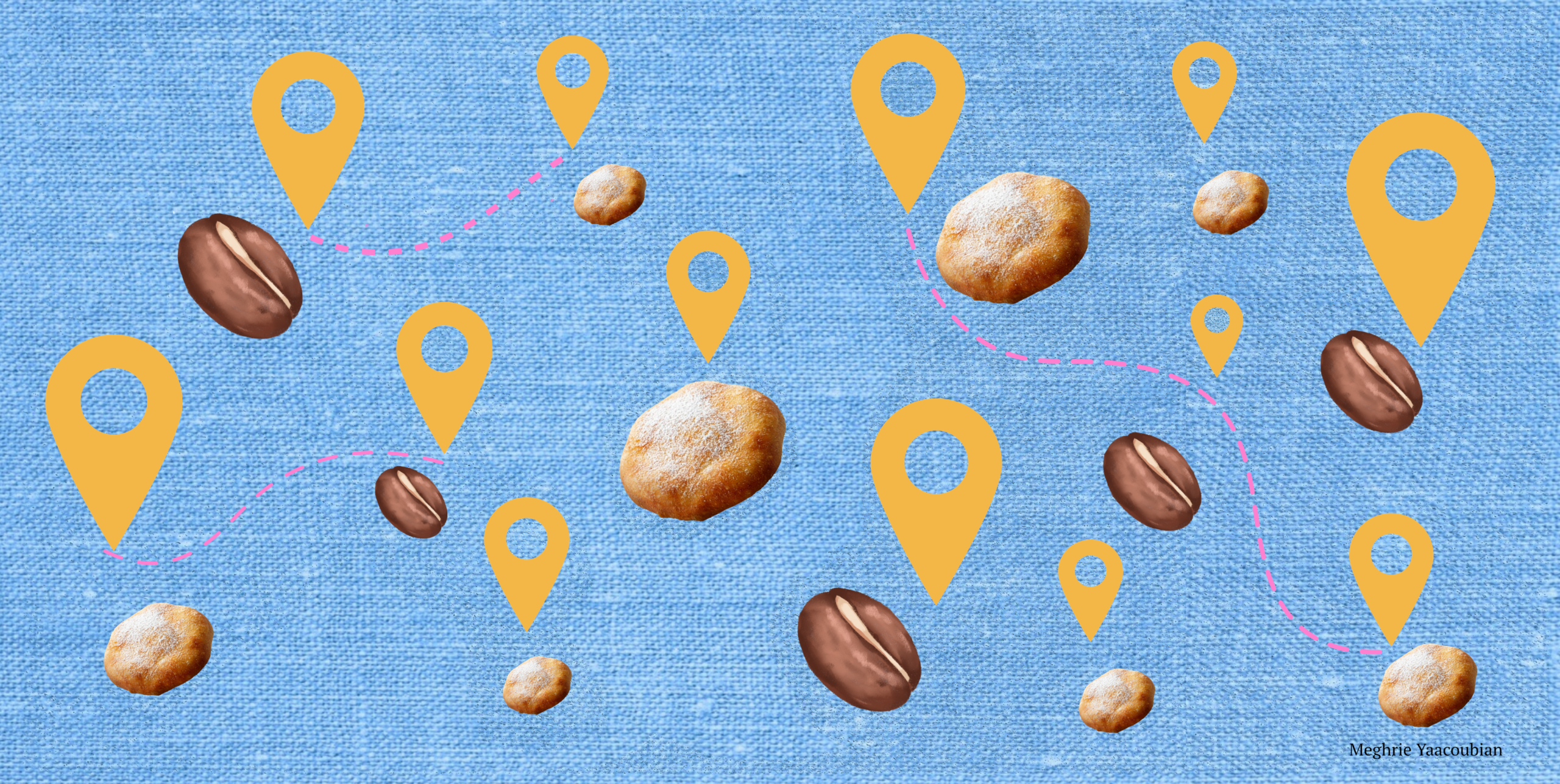
Craving dessert, or the taste of childhood? Grand Candy remains the place to go. Its visitors range from children to university students and adults, all of whom look up with the same smile as toy trains and airplanes circle overhead. The signature treat is the original vanilla-custard ponchik, generously dusted with powdered sugar. And yes, the hot cocoa is still served in Styrofoam cups. Somehow, it has never tasted better any other way.
The dessert may look simple, but that’s part of its appeal. For generations, its sweet taste has delighted customers, becoming an indelible part of childhood memories. Yerevan has no shortage of bakeries selling fresh vanilla ponchiks, but Grand Candy’s remain hands down the best, with their delicate dough and rich vanilla custard filling.
One of Yerevan’s newer arrivals, Ponchik Monchik, brings a different tradition from Gyumri. Its ponchiks are lighter and airier and you have to press them down before taking a bite. They have quickly found a loyal following in the capital, proving there is more than one way to make the beloved pastry.
For me though, Ponchik Monchik never quite captured my heart the way Grand Candy did—not only because of the taste, but also because of the wave of warmth I experience with each visit with friends and family.
When people ask me where locals eat in Yerevan, they often expect a list of restaurants. Sometimes none come to mind, because locals eat where their memories live. They return to the places where they celebrated passing an exam or getting a promotion, shared favorite meals with friends, or escaped the office for lunch with colleagues. They eat where the waiter remembers their usual order, and where the food tastes exactly as it did five years ago.
The city will continue to change. New cafes with fashionable interiors and inventive menus will open. Yet somewhere, parents will still be eating ponchiks with their children at Grand Candy and ordering a few extra to take home. You’ll find me eating the same tagliatelle at Twelve Tables. Actually, I think it’s time to meet my mother at JnJ again.

Cover photo by Meghrie Yacoubian.
LIFESTYLE
Summertime
Armenia is surprisingly good at summer, especially with kids in tow. From splash pads and dinosaur parks to circus training and Armenian-language camps, this is a dense guide for the parent who wants options without having to work hard to find them.
Runnin Bakery: Keep Up or Come Back on Thursday
Tucked away in a former garage in central Yerevan, Runnin Bakery has become a word-of-mouth favorite. Maria Gunko explores how two women are redefining craftsmanship, entrepreneurship, and community, one sourdough loaf, post-run pastry, and loyal customer at a time.
Read more
A Parent’s Survival Guide to Summer in Armenia
Armenia is surprisingly good at summer, especially with kids in tow. From splash pads and dinosaur parks to circus training and Armenian-language camps, this is a dense guide for the parent who wants options without having to work hard to find them.
Read more