
Listen to the AI generated audio article.
Flat terrain. Straight streets. Small plots distributed by the state. These are the districts adjacent to the Sasuntsi Davit metro station, constructed to house thousands of Armenian repatriates who came to Soviet Armenia in the mid-20th century. Original single-story houses stand next to new two- and three-story constructions behind high walls. Wrought-iron gates next to makeshift barriers cobbled from scavenged materials. Streets that were once communal space have been claimed by parking and garages, the public realm gradually sacrificed to mechanization and privatization.
On Muratsan Street stands a house that doesn’t differ much from its surroundings when viewed from the outside. But step inside, and you enter the world of a remarkable Armenian woman—the house-museum of Lusik Aguletsi (Lusik Zhorzhiki Harutyunyan), who spent years safeguarding heritage, one carpet, one piece of jewelry, one ritual doll at a time. The warmth of fresh pastry from the café’s kitchen on the second-floor drifts through space, filling it with a sweet aroma that makes the museum feel less like a monument and more like a living home.
That Lusik, originally from Nakhichevan, chose to make her life’s work here was either a well-thought choice or serendipity. The history of so many inhabitants of the district mirrors her own––a voluntary or semi-voluntary migration, rebuilding a home from memories and aspirations. Lusik was born in 1946 in Agulis, among the last Armenians living there after the 1919 massacre committed by Azeris. Her family moved to Yerevan in 1953, carrying with them the memory of a life already disappearing. What remained of Agulis after the massacre—its churches, its khachkars, its material culture—would be systematically erased by Azerbaijan in the decades to come. The place she once knew would be inhabited by the hostile others. The objects her family carried became traces of a lost world, material witnesses to a community that could no longer return, to homes that would be appropriated, to a landscape deliberately ruined and remade to erase all evidence of Armenian presence. Agulis was obliterated. Only Əylis remains.
The Woman in Traditional Dress
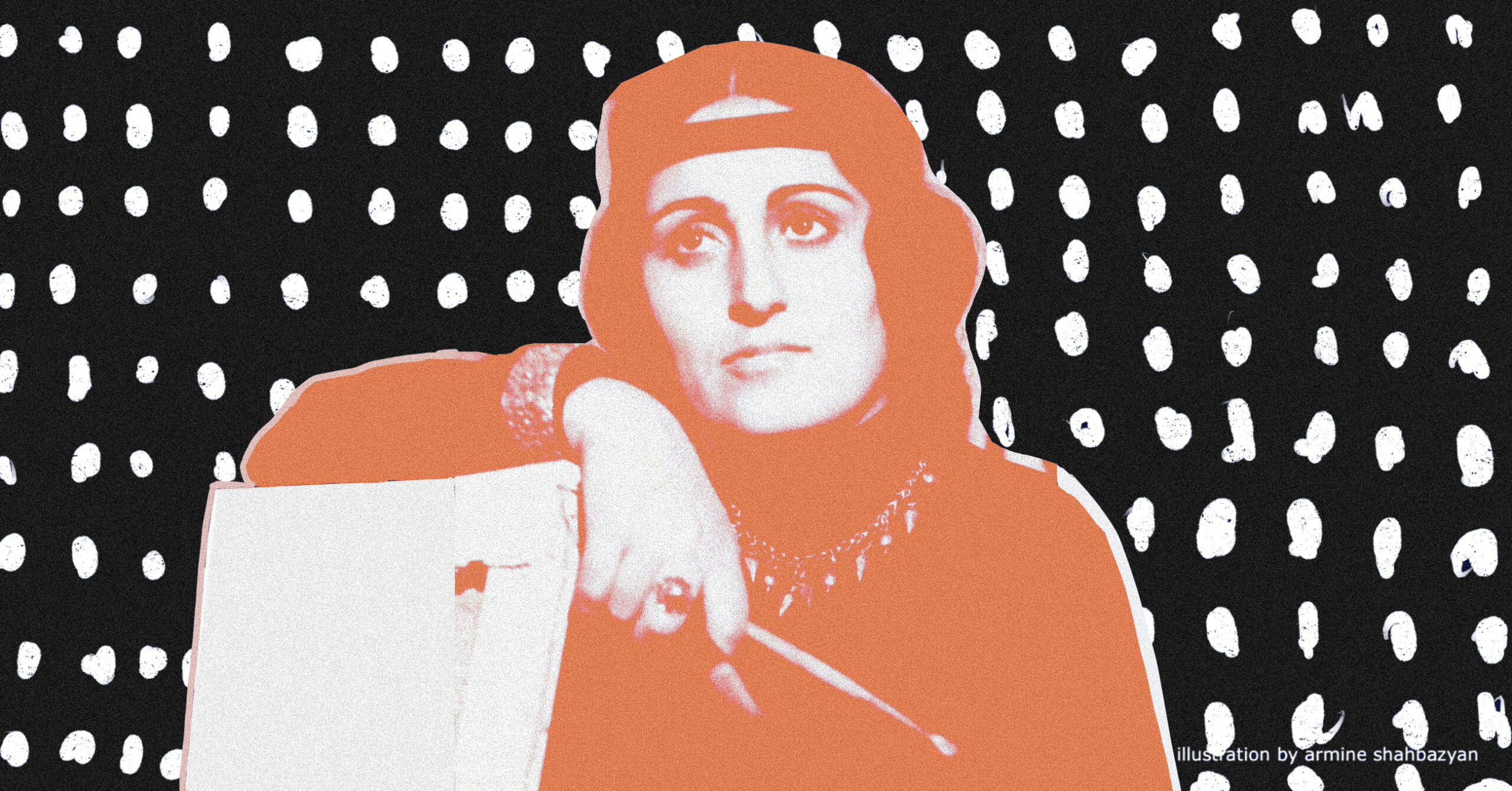
Lusik Aguletsi studied at the Panos Terlemezyan Art College from 1963 to 1967 and became a member of the Artists’ Union in 1974. Her paintings are held in museums and private collections internationally. She participated in exhibitions across Europe, the United States, and Japan. Alongside a distinguished artistic career, she made another equally powerful statement: Lusik wore traditional Armenian clothing every day. Not for performances, not for special occasions, not as costume—as her daily attire. She was one of the last Armenians in Yerevan to do this regularly, literally embodying heritage.
This commitment to traditions pervades every corner of the house-museum. Under glass hangs her collection of ornamental belts, heavy pieces designed to anchor the flowing layers of a traditional taraz. Beside them rest pieces of jewelry she wore: pendants, brooches, necklaces strung with old coins. But it’s the old wooden wardrobe in her former bedroom that catches you off guard. Garments hang there as if she might return at any moment to dress for the day. Richly embroidered velvets in deep burgundies and purples. Silks with intricate needlework. Layers of skirts in graduated colors, the way traditional Armenian dress built complexity through layers rather than single elaborate pieces. Wide-sleeved jackets that would have made a delicate negotiation between tradition and practice. This casual arrangement is more powerful than any museum case.
The pieces she designed and crafted herself show wear at the cuffs, the velvet shaped to a body through years of use. She understood traditional dress not as a relic but as a living aspect of identity worth carrying forward. Lusik spoke the language of adornment—one that reflected status, belonging, and regional variations of Armenian communities across Armenia and the diaspora. Her each acquired piece was an act of rescue, of gathering fragments of dispersed culture back into a coherent whole.
Lusik’s skill as both an artist and a self-taught ethnographer finds its fullest expression in her ritual dolls—spiritual objects, teaching tools, and miniature repositories of cultural knowledge meticulously crafted to reflect specific regional styles, time periods, and social contexts. The detail is extraordinary, with attention to every element: the cut and drape of garments, patterns of embroidery, tiny accessories. Together with Lusik’s garments and jewelry, these dolls form a three-dimensional encyclopedia of Armenian dress, a resource preserving knowledge that might otherwise exist only in fading photographs and aging memories.
Through her work, Lusik Aguletsi takes a renowned place among female carriers of material cultural traditions. Throughout generations, women have been the keepers of textile arts, the guardians of culinary heritage, the transmitters of customs and rituals that mark life’s passages. This knowledge passes hand to hand often unrecorded and unrecognized, yet forming the essential fabric of cultural continuity. Numerous awards presented to Lusik cement her legacy and recognize her efforts to make visible what had always been essential but rarely honored.
Living Memory
The preservation work extends throughout the house-museum in unexpected ways. Climbing the stairwell, visitors encounter a tree growing within the structure itself, carefully maintained, its presence being a deliberate act of care. In a space dedicated to preserving the past, this living element is another gesture of tending to what matters.
The philosophy of living preservation reaches its fullest expression in the adjacent Aguletsi Art Café, where the museum’s sensory experience continues through traditional cuisine as a lived, tasted, and shared ritual. Here, food becomes another form of heritage, particularly dishes from Agulis. Each dish the café prepares is a tangible connection to a place that can no longer be visited, an act of preservation as deliberate as the artifacts displayed upstairs.
Today the museum serves multiple functions. It offers an intimate glimpse into Armenian culture through authentic artifacts while hosting folk concerts, painting, dance, educational programs, and master classes that draw schoolchildren, students, and international visitors into active engagement with heritage.
Visiting is an emotional experience, particularly for those who understand the loss from which it emerged. There is something deeply moving about encountering objects so clearly loved by their collector, objects rescued from the destruction in Nakhichevan, gathered from families across the diaspora, preserved against the forces of forgetting. Lusik Aguletsi’s passion is palpable in every display. She didn’t create a monument to a dead culture. She created a vibrant space where Armenian tradition continues to thrive, inspire, and evolve.
***
Lusik Aguletsi passed away on July 13, 2018, at 72, but her legacy lives on through her family’s dedication. As visitors leave, they carry not just memories of beautiful objects but deeper appreciation for the commitment required to preserve cultural heritage in the face of genocide, displacement, erasure. In a world that prioritizes the new over the old, in a neighborhood where houses hide behind high walls and modern cladding obscures old facades, her museum stands as reminder that honoring tradition is a radical act, one that ensures we have a foundation from which to move forward and helps us avoid repeating the mistakes of the past.
The home-museum of Lusik Aguletsi is more than a collection of paintings, sculptures, jewelry, attire, dishes, and ritual dolls. It is a love letter to Armenian culture, written by a woman who refused to let traditions fade. A visit to this museum is not just recommended. It is essential.
Author’s note: I dedicate this text to women, the guardians of continuity. Those who preserve recipes in kitchen notebooks, maintain family rituals, pass down embroidery techniques, and keep languages alive in daily conversation. Their work of cultural preservation often goes unacknowledged, yet it forms the very foundation upon which communities survive displacement, loss, and time itself. It was in the spirit of honoring this guardianship and female solidarity that I visited the museum in the company of my dear friend, anthropologist Kseniia Gavrilova, a big fan of material culture and a sweet tooth who is always ready to explore places and share a dessert with me.


Cover photo by Aram Kirakosyan.
LIFESTYLE
The Runway
The October issue of SALT takes you through spaces where memory and imagination intertwine—from the house-museum of Lusik Aguletsi, who transformed remembrance into a radical act of cultural resilience, to an abandoned clock factory reborn through the vision of contemporary artists, onto the runways of Yerevan Fashion Week, and finally to a story of how one person’s initiative is transforming the face of the country.

Greener, Better, Brighter: The Quiet Revolution
A small act—picking up a piece of litter—becomes the spark for a quiet revolution. Lilith Margaryan explores how everyday gestures of care can transform indifference into responsibility and help build a greener, cleaner and more mindful Armenia.
Read more