
Listen to the AI generated audio article.
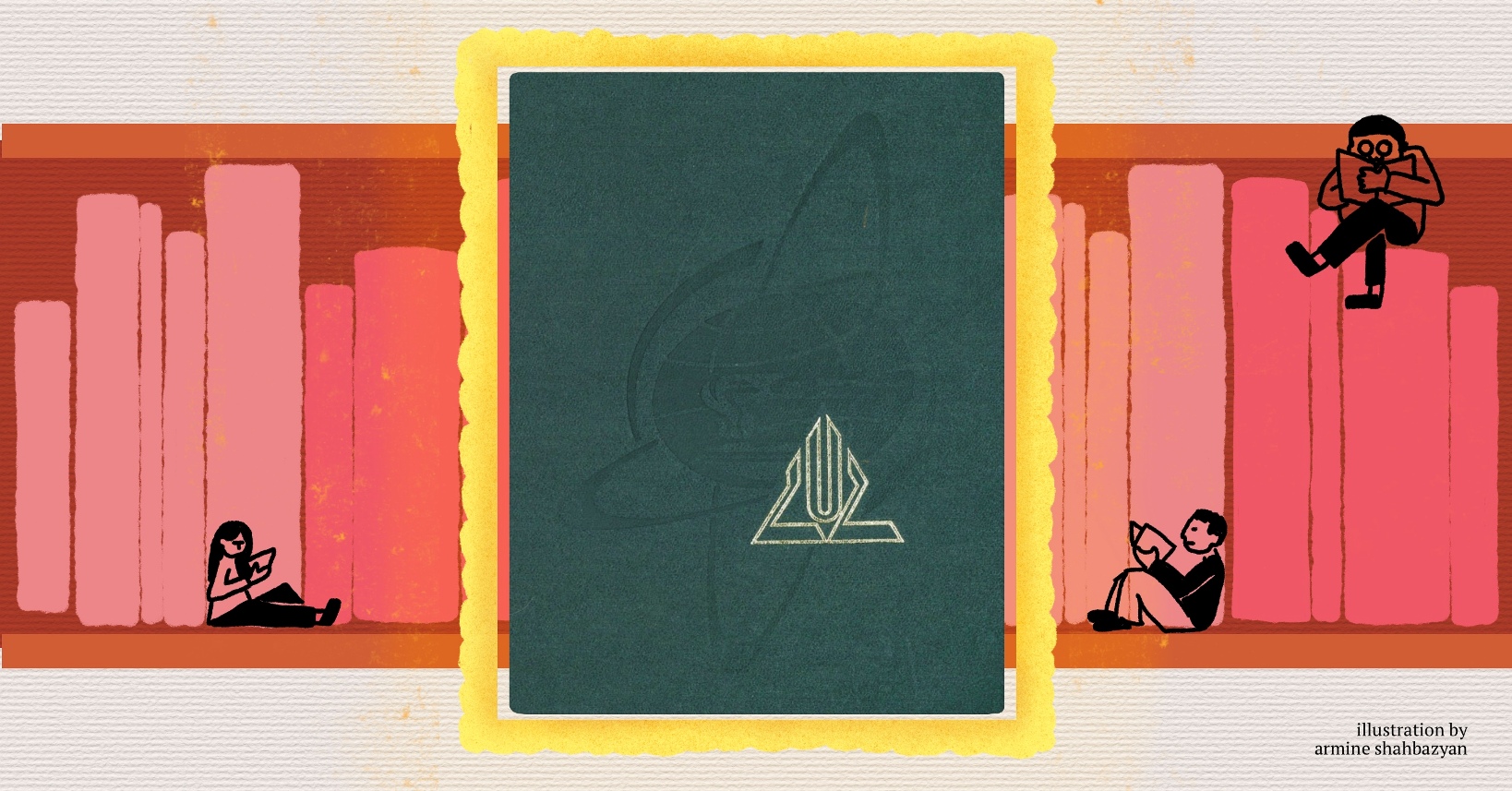
More than two centuries after the completion of Denis Diderot’s Encyclopédie, a hallmark of the Enlightenment, the first Armenian-language encyclopedia appeared in Yerevan in 1974. The Soviet Armenian Encyclopedia, whose first volume was published 50 years ago, remains the most comprehensive reference work in Armenian, even in the age of Wikipedia. While its primary focus was on Armenia, the Soviet Union, and Marxist ideology, it was nevertheless expansive in scope, covering a wide range of topics, including the natural and technical sciences.
Its preface states that Marxism-Leninism, the country’s official doctrine, was its “ideological foundation”. It also declares, rightfully, though somewhat presumptuously, that the publication is “an unprecedented event” in the cultural and intellectual life of the Armenian people. Despite its ideological shortcomings, the encyclopedia remains a monumental achievement of late Soviet Armenian scholarship.
Its 13 green volumes can still be found in many households, a testament to both its iconic status and its significance as a much-needed endeavor. Today, however, most likely sit untouched, collecting dust rather than providing general knowledge to their owners. The full set is readily available online for as little as $17, though it typically sells for between $25 and $30.[1] In past decades, many emigrants even took entire sets with them to the diaspora. I was pleasantly surprised to find the full collection at a friend’s house in the U.S. East Coast.
Initial efforts to produce an Armenian encyclopedia took place between 1932 and 1936. The first volume was nearly ready for publication around 1935 but was reportedly branded as “anti-Marxist”, leading to the project’s cancellation.[2] The successful attempt resumed in 1964, with publication starting a decade later.
Similar encyclopedias were compiled and published in the national languages of all 15 Soviet republics. The Russian version, proudly entitled the Great Soviet Encyclopedia, underwent three editions and served as the foundation for the other versions. The Georgian and Azerbaijani editions began publication in 1975 and 1976, respectively.
Although originally intended to be completed in six to seven years, its publication ultimately took 14 years. The final supplementary (13th) volume, dedicated entirely to Soviet Armenia, was published in 1987, coinciding with the last stable year of Soviet rule in Armenia.
The encyclopedia contains 38,767 entries and features extensive black-and-white and color images and illustrations—approximately 1,500 per volume. It also includes many high-quality maps of Soviet Armenia and of Armenian historical geography. At the beginning of each letter section, the encyclopedia shows the evolution of Armenian letter forms used since the fifth-century invention of the alphabet, including yerkatagir and boloragir, which were widely used in manuscripts and church inscriptions.
As a child, I often consulted it for schoolwork, particularly to look up the biographies of Armenian poets and writers, as well as to satisfy my personal curiosity about Armenian and modern history. On one occasion, I even brought the first volume to school to show my teachers and classmates a picture of my grandmother, Ira Shahoyan. She worked at the Institute of Geology of the Academy of Sciences on Baghramyan Avenue, and during the encyclopedia’s preparation in the early 1970s, she was photographed in the Institute’s mineralogy lab.
At the helm of the decades-long effort was Viktor Hambardzumyan (Ambartsumian), the respected astrophysicist who led the Academy for nearly half a century. Each volume was printed in 100,000 copies, an exceptionally large number for tiny Armenia.
The encyclopedia offers extensive geographic coverage, documenting not only all of Armenia’s villages and towns but also settlements in Western Armenia, a term widely used for the formerly Armenian-populated eastern provinces of the Ottoman Empire (Turkey). It also includes entries on Armenian-inhabited villages, past and present, in neighboring Georgia (particularly in Javakhk/Javakheti) and Azerbaijan (notably in the Nagorno-Karabakh Autonomous Oblast and Nakhichevan).[3] Diaspora communities are addressed separately within country entries, often in substantial detail. The Armenian-American community, for example, is covered across five pages. In some cases, cities, such as Tbilisi feature dedicated sections focusing specifically on their Armenian populations.
As ideological constraints loosened, an abridged edition focusing exclusively on Armenian-related subjects was published in four volumes between 1990 and 2003. The Soviet Armenian Encyclopedia was fully digitized in 2013 and made available on Wikisource, operated by the organization that runs Wikipedia.
* * * * * *
The encyclopedia offers valuable insights into the ideological constraints on scholarship during the late Soviet period, as well as the official viewpoints and positions that shaped it.
One striking passage is the entry on church and religion in Soviet Armenia. While it acknowledges that the Armenian Church preserved the nation, it “also defended the interests of the ruling classes, preached obedience, and opposed dissent.” Under Soviet rule, the church (in reality, only the See of Etchmiadzin) “pursued a loyal policy toward the state” and adopted “a principle of active cooperation with socialism.” It asserted that the overwhelming majority of Soviet Armenians have been “freed from religious prejudices,” making the Armenian SSR a “land of mass atheism,” but a portion of the population “continues to participate in religious rituals and adheres to religious superstitions.”
The Armenian Genocide, under the name Mets Yeghern, is given detailed coverage spanning nine pages. It stresses the complicity of Imperial Germany and the “acquiescence” of the Western powers in the genocide.
Following Marxist terminology, the First Republic of 1918–1920 is called Armenia’s “Bourgeois Republic”. The nationalist leaders of that period, such as Aram Manukyan and some others, like Hovhannes Kajaznuni, are not portrayed in a negative light, but their entries are usually very brief. Others such as prime ministers Aleksandr Khatisyan, Simon Vratsyan, and military commander Garegin Nzhdeh are given negative treatment. In contrast, General Andranik is given almost full-page coverage with his entry noting that he viewed Soviet Armenia “with sympathy, welcoming its economic and cultural achievements.”
Similarly, the three traditional diaspora Armenian political parties are all described as bourgeois, but with important nuance. The ARF (Dashnaks) are “bourgeois nationalist”, the Hunchaks “national petit bourgeois socialist”, and the Ramgavars “liberal bourgeois”. The ARF, as one would expect, is heavily criticized. It is described as “a tool of international imperialism” against the Soviet Union, which “divides Armenian communities and churches, opposes repatriation, and seeks to sever the Armenian diaspora from the motherland, Soviet Armenia” and whose “treacherous activities face resistance from the progressive forces of the diaspora.” On the contrary, the Hunchak Party is commended for opposing “the aggressive policies of imperialist states” and “criticizing the treacherous policies of the Dashnaktsutyun party” and cooperating with “the progressive forces of the Armenian diaspora in the struggle for peace.”
The Ramgavars are likewise portrayed as a progressive force, which along with the Hunchaks and Armenian communists “wages an uncompromising struggle against the Dashnaktsutyun.” The entry notes that the Ramgavars initiated “numerous cultural centers” in the diaspora, and notes that the Armenian General Benevolent Union (AGBU), the largest non-partisan diaspora group, “operates within the scope” of its activities. The party is further commended for playing “a significant role both in promoting the achievements of Soviet Armenia and in organizing repatriation.”
Its coverage of diaspora individuals and groups that were not anti-Soviet, such as the AGBU, is likewise positive. Its founder, Boghos Noubar, is commended for supporting repatriation of diaspora Armenians to Soviet Armenia. The entry on Sovetashen, a small district within Yerevan founded with funding from Noubar, does not mention his support, but does mention its original and current name, Nubarashen. Calouste (Galust) Gulbenkian’s foundation, based in Portugal, is praised for allocating funds to the educational and scientific institutions of Soviet Armenia for “acquiring foreign scientific literature and modern equipment.”
Stalin’s purges are entirely ignored. In the entries of the famed poet Yeghishe Charents, Catholicos Khoren Muradbekian, and many other victims of 1937 and beyond—including Armenia’s Communist leader Aghasi Khanjyan, former Dashnak leader and Prime Minister Hovhannes Kajaznuni, writers Zabel Yesayan, Aksel Bakunts, Vahan Totovents—the circumstances surrounding their deaths are simply not addressed. This is particularly notable given that many were subsequently rehabilitated. The imprisonment of the linguist Hrachia Acharian and the painter and sculptor Yervand Kochar are likewise omitted. Anastas Mikoyan, a senior official under Stalin and Khrushchev, whose entry appeared just three years after his death, receives a neutral biography.
The entry on the celebrated filmmaker Sergey Parajanov, long persecuted by the Soviet authorities, showers him with praise, noting that his work is “characterized by a love for folk art […] vivid imagery, exceptional artistic taste, documentary authenticity, and the philosophical depth of thought.” It contains no mention of his jail sentences.
The encyclopedia states that the University of Yerevan (now called Yerevan State University) was founded in December 1920, that is after Sovietization. But its currently accepted official establishment date is May 16, 1919, i.e. before Sovietization. The university, which opened its doors in January 1920 in Gyumri (then Alexandropol), was rather reorganized than established from scratch under Soviet rule.
It often applies ideological framing even to topics like pop music. The entry on the Beatles interprets their songs as reflecting “the consciousness crisis among Western youth in the second half of the 20th century” and “a critical, albeit inconsistent, attitude towards bourgeois culture and lifestyle.” In other cases, it avoids contentious issues. For instance, it does not mention the invention of the Georgian script by Mesrop Mashtots as attested by his biographer Koriun, a view adopted by many Armenian and Western scholars, but universally rejected by Georgian ones.
Among its many contributors was Levon Ter-Petrosyan, Armenia’s first president, who was a Matenadaran scholar at the time. He authored at least two entries—on Gregory of Nyssa, a major early saint, and the catena entitled Knik’ Hawatoy (Seal of Faith) by the seventh century Catholicos Komitas. Another prominent scholar, Rafayel Ishkhanyan, was entrusted with the entry on Mesrop Mashtots. He later rose to become a leading ideologist during the Karabakh Movement and in 1989 authored the influential essay “The Law of Excluding the Third Force”, which guided Ter-Petrosyan’s foreign policy, especially in seeking diplomatic relations with Turkey.[4]
The Soviet Armenian Encyclopedia is both a product of its time and a significant achievement. Hundreds of scholars, researchers, and specialists poured significant effort into a work of lasting value. Despite its ideological biases, distortions, and omissions, its breadth of coverage have made it an indispensable reference for anyone engaged with Armenian history and culture.
Footnotes:
[1] For comparison, the first volume (1974) was originally sold for 6.35 rubles, equivalent to $8.40 ($57 adjusted for inflation), while the last supplementary volume on Soviet Armenia (1987) was priced at 11 rubles, equivalent to $16.40 at the time ($46.60 in today’s money).
[2] Matossian, Mary Kilbourne (1962). The Impact of Soviet Policies In Armenia. E. J. Brill. p. 143
[3] A more detailed, five-volume Toponymic Dictionary of Armenia and Adjacent Regions was published between 1986 and 2001.
[4] Ishkanian, Armine (2008). Democracy Building and Civil Society in Post-Soviet Armenia. Routledge. pp. 117-118
Arts & Culture

Lost Twice: How 1920s Western Armenian Literature Predicted the Diaspora’s Extinction
In this compelling exploration of how early Western Armenian writers foresaw the cultural erosion of diaspora life, Andronik Papyan draws a stark parallel to today’s Armenian community in Russia, arguing that without language, institutions and literary production, identity risks fading into symbolism.
Read more
110 Years Later, the Perpetrator Becomes the Host
Berlin marked the 110th anniversary of the Armenian Genocide last year with an unprecedented cultural program. Yet the commemorations also exposed a deeper paradox: Germany, once complicit in the genocide, now hosts the memory work, as artists and curators confront history, responsibility and contemporary politics.
Read more
The Geometry of Power: From the Louvre to Yerevan
Tracing how power reshapes cities, Heghine Pilosyan’s essay moves from Paris to Yerevan to show how architecture, land and urban form have served as instruments of authority, across monarchy, socialism and post-Soviet capitalism, revealing striking continuities beneath shifting ideologies.
Read more
Who Am I to Tell Your Story?
Filmmaker Eric Nazarian challenges the cultural gatekeeping that dictates who is “allowed” to tell certain stories. Drawing on a life shaped by multiethnic Los Angeles, he makes a powerful case for cross-cultural storytelling as resistance, empathy and a reminder that art transcends borders.
Read more
Of Roland Barthes, Ludwig Mies van der Rohe and Photographs of Women Architects
Through forgotten photographs and Barthes’ language of studium and punctum, Talinn Grigor uncovers the overlooked histories of Armenian women architects in modern Iran, tracing their encounters with Mies van der Rohe and revealing silent, resilient cosmopolitanism in a male-dominated world.
Read more
The Armenian Refugee Who Photographed a Defining Era of European Migration
The archives of Studio Rex, a photo studio founded by Armenian Genocide survivor Assadour Keussayan in Marseille, document decades of European migration. These once-practical photographs have become powerful historical artifacts chronicling diverse immigrant experiences from the 20th century.
Read more