

Listen to the article.
When Andre Mai, a computational biology student at UCLA, flipped open his laptop and enthusiastically showed his ChatGPT transcript to the camera live-streaming the graduation ceremony, the audience erupted in cheers. The video went viral, sparking controversy. Was this cheatGPT? Or was it the best use of a thinking partner that optimized time and resources?
The student later said in an interview for OpenAI, the company behind ChatGPT, that his professors had encouraged AI use for the final test of his undergraduate career. Mai refined his final submission with it—he didn’t use it to generate the text from scratch.
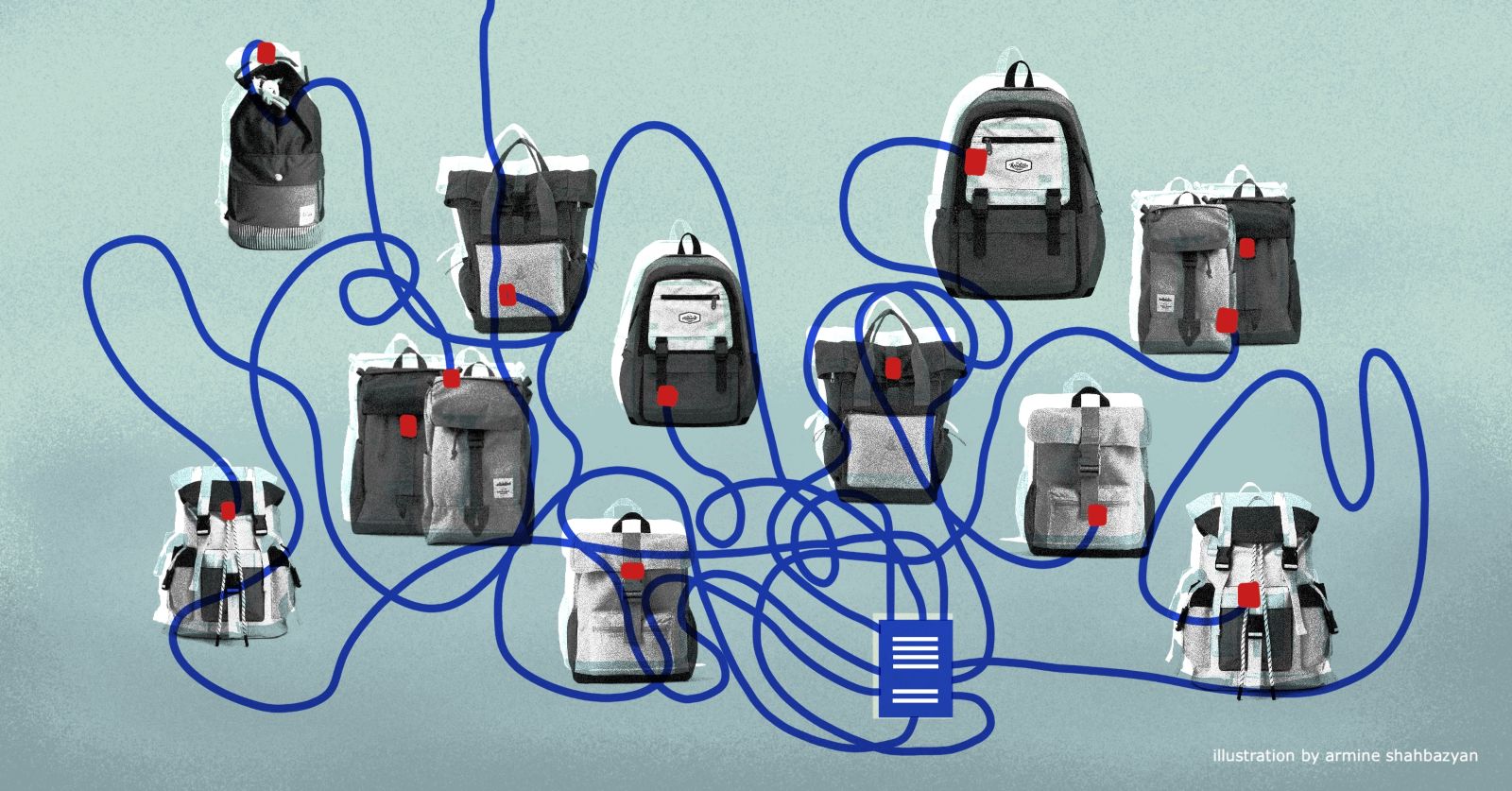
His professor’s concession highlights the power that universities, companies, and foundations have in shaping the future of education. This creates a dilemma: curricula solely focused on task completion with digital assistants would develop practical skills but limited knowledge, while a more traditional approach would confer broad knowledge but low practical skills.
After decades of teaching across various disciplines, Dr. Gayané Markosyan, PR director at Synopsys Armenia and Associate Professor at Polytechnic University of Armenia, emphasizes the contrast between two educational approaches and their impact on modern workers. “Sometimes we confuse what we mean by education,” she explains. “For us, in the Soviet tradition, education meant reading books, remembering what you read, and repeating it. In our resumes there was a section called ‘knowledge’. In American CVs you don’t have knowledge. They have ‘skills’—and you list what you can actually do, not what you know.”
Skilled recent graduates are particularly valuable in technology-focused job markets like Armenia’s. That’s what Areg Gevorgyan, CEO of Innovative Solutions and Technologies Center (ISTC) in Yerevan, advocates for. As a young entrepreneur involved in two AI-related startups and two master’s programs with Yerevan’s Polytechnic University, Gevorgyan navigates the space between education and industry.
He offers a fresh perspective on the direction both should go. “In this fast-moving environment, what education is should be somehow re-imagined,” Gevorgyan says, adding that graduate programs have become outdated and should evolve to meet job market needs. He promotes personalizing learning paths and an extensive integration of AI: “If we look at our friends, we have different paces of understanding and learning. But with a big group you can’t personalize. It shouldn’t be one teacher to 30 students, but 30 teachers to one student, so you have a specialist for everything in your pocket.”
Armenia’s heavy investment in technology has earned it the moniker “Silicon Valley of the Caucasus”. However, this rapid growth comes with bottlenecks. Graduate programs struggle to keep pace with the fast-changing tech job market. “It feels like everything is happening,” Gevorgyan says. “There’s this new application, let’s try it, let’s integrate that… And then okay, it’s gone. This application has gone bankrupt. Maybe in five years we’ll come to some equilibrium. Now it’s hectic.”
This situation highlights the pressing need for education reform. According to the latest World Bank report, one of the key priorities is reducing the mismatch between labor market needs and graduate skills: “Reforming higher education—through consolidation of higher education institutions, reformed financing, and management—has the potential of significantly improving access, quality, and relevance of higher education and innovation.” Yet, employers continue to face a gap between what graduates know and what jobs require. Bridging this divide will not be easy, especially when traditional lecture-based teaching methods lag behind the rapidly evolving skill sets demanded by today’s technology-driven economy.
Armenian industries, universities, and foundations bear a significant responsibility to adapt quickly and educate tomorrow’s workers and people. Here’s what key players—Picsart, Synopsys, ISTC, CSIE—are doing.
Picsart
Walking into the headquarters of Picsart, the first Armenian unicorn freshly re-branded as an “AI-driven platform for expression, storytelling, commerce and growth” after its last Innovation Summit, feels like entering the bustling streets of a small village. Workers are energized. Bright light filters through the large glass windows overlooking the steep, rocky banks of the Hrazdan River.
Maybe this energy fuels Picsart’s dynamic approach to education. Picsart Academy, the company’s learning division, updates its educational programs every three months. “When we launch new courses, we make sure that the syllabus is aligned and reviewed by Picsart’s leading specialists,” says Edith Jerejyan, Picsart Academy Senior Specialist. As innovation moves too quickly to update programs annually, Picsart specialists brief the Academy management on the skills expected from the next batch of interns. These requirements are then incorporated into new programs to match market demands.
Picsart began with lessons in 2016 tailored to their needs. As the curriculum expanded, Picsart Academy evolved into a separate physical and legal entity. Today, it serves more than 2,000 students through five one-year programs in AI, web development, DevHack, C++, and graphic design. The idea is to develop new interns who can contribute to Picsart’s latest projects. More than 20 interns are recruited annually, and 85% of them are hired at leading IT companies in Armenia within one year.
What makes the Academy appealing to students is the absence of challenging entrance exams, unlike the tests required by engineering faculties. Candidates only need to complete an attitudinal interview. However, students must pass quarterly exams to continue with the program. “These assessments are very difficult,” Jerejyan explains. “Students need to score at least 85%-90% to advance to the second level.”
Most students come from the American University of Armenia (AUA), Yerevan State University (YSU), or Polytechnic University of Armenia, though Picsart has no official partnerships with these institutions. Students balance their academic studies with Picsart Academy coursework. “For us, it’s really a win-win. We are raising the next generation of High-Tech employees. With the investments in the sector, we hope that they will stay and be a part of Armenia’s ecosystem,” says Dr. Madelene Minassian, Head of Learning and Development at Picsart and adjunct instructor at AUA.
Minassian explains that Picsart does not collaborate extensively with universities because Picsart’s “offering is more agile, more project-based and a more tactical education.” The Academy provides an attractive alternative for a career in tech, especially for those facing financial barriers and workers who need to support themselves. The one-year program allows students to bypass the traditional four-year commitment when they can’t afford the time. This approach helps address the labor market skills mismatch highlighted by the World Bank.
When asked about future generations, Minassian radiates optimism: “I am 100% optimistic. I teach 18-year-old freshmen. Sometimes I wonder if I’m worthy to teach these kids—I wonder what am I doing there?” After 13 years in the classroom, she praises their digital fluency and excellent English skills: “They have surpassed me in technical ability, information, and retention.” Still, she acknowledges that teaching practical, entry-level IT courses might skew her perception—evaluating students in more structured programs like engineering or physics could present different challenges.
Picsart Academy is working toward obtaining state accreditation for all of its courses, having already secured it for its web development program. This accreditation serves as a government endorsement, reassuring students, parents, employers, and the public that the Academy meets established standards of quality. This validation will strengthen public confidence in the education offered by them.
“A great model to look at is Google Career Certificates,” Minassian says. These professional trainings offer courses in topics such as data analytics, cybersecurity, digital marketing and others, designed to enhance a worker’s skill set within six months. More than 150 U.S. companies consider these certificates for entry-level jobs, with Google treating them as equivalent to a four-year degree in their hiring process.
Although Picsart Academy is still far from reaching the status of Google Certificates, Minassian says: “I completely value education, but these alternative learning opportunities are agile and more relevant to the market.” While traditional education is still the go-to choice, valid alternatives are emerging. Google Career Certificates and Picsart Academy, among others, meet different personal and professional needs.
Synopsys
As a global leader with more than 20 years of established presence in Armenia and strong cooperation with local universities, Synopsys Armenia has consistently prioritized traditional education. The company formed in 2004 when Synopsys acquired two local microelectronics companies, Monterey Arset and Leda Design. This merger created Synopsys Armenia, which now specializes in electronic design automation, integrated circuit design for manufacturing, and semiconductor intellectual property.
“The most amazing thing was that Leda Design had an education program,” recalls Gayané Markosyan. Confronted with a shortage of chip design specialists, Leda Design’s CEO launched a partnership with the Polytechnic University in 2001. The initiative gave engineering undergraduates the chance to gain hands-on experience, often leading directly to employment. According to Markosyan, this program was the decisive factor behind Synopsys’s acquisition of Leda Design: “It was the most attractive feature we saw.”
Following the acquisition, Synopsys Armenia expanded its educational initiatives. An early project provided students with an “Education Design Kit.” This was crucial because companies in integrated circuit design typically keep data confidential to maintain competitive advantage, making it difficult for students to access real-world information. The Education Design Kit—similar to a digital Lego set—contains technological data and libraries that students can use to design integrated circuits. Currently, students from five major institutions have access to this kit: Polytechnic University, YSU, Russian-Armenian University, European University and French University in Armenia. Through these collaborations, Synopsys Armenia has established bachelor’s, master’s, and PhD programs, producing approximately 100 graduates annually across all participating universities.
This strong cooperation between academia and business gives students access to Synopsys’ teaching materials and software tools that universities could not afford on their own. By visiting industry facilities, students experience the actual working environment and collaborate with Synopsys engineers who teach cutting-edge technology—such as next-generation iPhone chips—while also connecting with potential employers.
“77% of our graduates are hired by Synopsys Armenia. The remaining 23% are hired by other IT companies,” Markosyan explains. According to her, more than 60% of Siemens Armenia employees and over 20% of Picsart staff are Synopsys graduates or former employees. Dr. Vazgen Melikyan, director of Synopsys Armenia Education Department, has supervised more than 80 PhD dissertations since Synopsys Education was founded in 2004. “This is the impact our education program brought to Armenia,” Markosyan says. These statistics establish Synopsys Armenia as the primary tech-industry pillar in Armenia’s education, though challenges remain.
“I’ve been teaching for 44 years and I see a decrease in students’ knowledge. They are coming from high schools less prepared than 20 years ago,” she says and acknowledges there’s still a small pool of excellent students, but to address the lower average skill level, Synopsys Armenia has initiated both corporate and personal programs.
“Vazgen Melikyan approached the university leadership and said, ‘I want to select students half a semester early and provide them with free classes,’” Markosyan recalls. Through Melikyan’s initiative, these online classes aim to fill knowledge gaps in STEM subjects.
However, the main challenge is the talent drain caused by companies that offer jobs requiring only basic skills, such as trade or betting software development. “I teach Information Applied Theory to fourth-year bachelor’s students. About half of the course has already been hired,” Markosyan says. She pointedly asks her students: “Why waste your talent on betting software? They reply, ‘I need money.’”
To counter this talent drain, Synopsys Armenia provides additional stipends to its students. This financial support keeps them enrolled in universities and effectively covers their university fees. “This ensures we don’t lose talented individuals due to financial concerns, allowing them to concentrate on their studies,” Markosyan says.
Markosyan sees Synopsys Armenia’s educational programs as a model of excellence. With operations spanning 17 countries and 30 offices worldwide, Synopsys Armenia serves as a global provider of talent and expertise. Its Education Department conducts online training for universities in countries where the company seeks to expand, including Jordan, UAE, Lebanon, Saudi Arabia, India and Portugal. A key indicator of their success is student performance in the Microelectronics International Olympiad, held in Armenia since 2006. Students from Synopsys Armenia Education Department won the first five editions of this competition and placed third in the three most recent ones.
Innovative Solutions and Technologies Center (ISTC)
In 2015, Areg Gevorgyan founded the Innovative Solutions and Technologies Center (ISTC) in partnership with IBM, Enterprise Incubator Foundation and USAID. Located on the YSU campus, it serves as an incubator for cutting-edge innovation in tech, nurturing the growth of startups, students and innovators.
After completing his business studies in Switzerland, Gevorgyan returned to Armenia in 2015 as a young entrepreneur with a mathematics background. “When I came back I just opened Twitter, did some internet research and found two people who were interesting to me,” he recounts. He connected with Bagrat Yengibarian, director of the Enterprise Incubator Foundation, and Karen Vardanyan, director of the Union of Advanced Technology Enterprises, finding fertile ground among Armenian High-Tech entrepreneurs to develop his ideas.
“I would say the people in the High-Tech ecosystem are very collaborative. We try to help each other as much as we can and bring a new culture,” Gevorgyan says. However, government support has been inconsistent: “In the last 10 years I can’t count how many IT ministers I have worked with. One or two years and then they change, then you have the revolution, then you have the war…”
Today, Gevorgyan serves as CEO of two AI startups in ISTC. Although AI is now a hot trend, it wasn’t part of educational curricula in 2015: “So, we understood that we should start from education. We brought in IBM specialists who were doing master classes and then short-term training programs in AI,” Gevorgyan explains. Building on this foundation, in 2018 Gevorgyan and his team developed the “Data Science for Business” master’s program at YSU.
“This was probably the first AI master’s program. It was very hard but at the same time impactful,” he recalls. The program later expanded and formed a connection with San Jose State University in California.. “We had a diaspora connection there, Mary Papazian, the former president of the university,” Gevorgyan says. Curricula were synchronized between San Jose State University, and students received double degrees.
After this initial expansion, ISTC also bolstered its “applied statistics and data science” curriculum through the faculty of mathematics, which aligns with Gevorgyan’s background.
These academic initiatives operate within the old bureaucratic system inherited by Soviet universities, which hinders the development of new ideas. “For example, in Swiss bureaucracy, the pathway is structured. In Armenia, we have three different concepts. At one point the EU was funding the new strategy of education, then USAID, then some Russian ideas came,” Gevorgyan says. Today, this bureaucratic challenge continues with a mix of different approaches that need to be unified.
Over the past decade, more than 2,000 students have passed through the ISTC. “What’s important is creating something institutional that continues to work,” Gevorgyan says.
He advocates for streamlining bold institutional initiatives that Armenia can rely on long-term. The most promising example is the AI Factory being built by Firebird.ai. “This shows there’s willpower to do something courageous. But the most important aspect is connecting the state’s needs with the work being done in research centers.”
The crux of the matter is how Armenia views itself as a science hub. Branding the nation as Silicon Valley of the Caucasus builds on a well-established Soviet tradition in microelectronics. However, according to Gevorgyan, what stands out under that brand needs a clear vision. Competing with Georgia and Azerbaijan is not his focus: “We have unicorns, multinationals, workers—we are incomparable [with them]. The vision under this statement should be bigger, perhaps among the top three Asian countries.”
Gevorgyan is confident about the future. After seeing the migration of skilled workers from Russia and other countries in the last three years, he says: “We shouldn’t limit ourselves to ‘only Armenians can work here.’ If we’re a Silicon Valley, the whole world should come and work here. You have to make the current ecosystem a fertile ground.”
Yet to make Armenia’s tech ecosystem as successful as Silicon Valley, Gevorgyan says that everything has to start with education: “They have the universities and the workforce, people can launch startups and scale them up. There’s now a dynamic intermingling between industry, startups, and universities.”
Center for Scientific Innovation and Education (CSIE)
The Center for Scientific Innovation and Education (CSIE) was established at the Physics Institute in 2021 as an initiative to bridge the gap between industry and academia. The Physics Institute, a remnant of Soviet infrastructure, consists of approximately 25 buildings, with only five currently fully operational. CSIE repurposed the former guest house, surrounded by greenery, into a research laboratory focused on developing robotic and autonomous systems.
Three young assistant professors drive academic research at CSIE: Haykanush Darbinyan (35), Tigran Bakaryan (32), and Astghik Hakobyan (28). Specializing in mathematics, control systems theory, and practical applications, their work focuses primarily on aerial drones. After completing her PhD and working as a researcher at Polytechnic University of Armenia, Darbinyan faced challenges as CSIE’s first hire: “I was simultaneously working for Polytechnic and CSIE, which came with limitations.” To fully focus on CSIE’s mission, she committed herself entirely to the institute after a year navigating these dual responsibilities.
A key pillar of CSIE’s strategy is international collaboration. One of its strongest partnerships links Armenia with the University of Illinois at Urbana-Champaign, where CSIE co-founder Naira Hovakimyan leads in the field of control theory. “CSIE is trying to bring back our scientists so we can create something new in Armenia based on their foreign experience,” Darbinyan explains. Through this initiative, Hakobyan and Bakaryan joined CSIE in November 2023 and January 2024, respectively.
Building on their expertise, the team developed a new master’s program in control systems at the Polytechnic University last year. However, institutional bureaucracy presented significant hurdles. “That’s why the program only reached about 50 to 60% of what we had envisioned,” Darbinyan says, highlighting the ongoing challenge of implementing innovative curricula within rigid academic structures.
Though the three young academics know that the Polytechnic University coursework will need refinement over the coming years, they primarily focus on bringing scholars directly to CSIE. Here, they move freely between academia and industry. “We tell students, ‘This is a task that industry workers are not able to solve. Let’s try to solve it,’” Hakobyan explains. She cites delivery drones as an example. While human intervention remains the standard approach during challenging conditions like bad weather or potential collisions, they’re developing innovative algorithms and drone-to-drone communication systems to eliminate the need for manual control.
Students learn this approach independently and test their developments with guidance from lead researchers. Now in its fourth cohort, the program balances theory and practice while offering students complete access to facilities—an opportunity unavailable at traditional universities: “If you walk by this place at 2 a.m., you will see the lights on,” Hakobyan notes.
Academic freedom is at the core of CSIE’s research. Introducing this traditional academic approach to Armenian universities takes time, the professors say, as institutions often remain conservative and resistant to ideas that, while presented as new, are in fact well established elsewhere.
This case illustrates how an institute striving for global excellence in cutting-edge technology needs exceptional flexibility in its teaching approach. Unfettered by traditional university curricula, CSIE tailors its courses to align with its scientists’ research, who aim to make Armenia a world leader in autonomous systems. Freed from constraints, Darbinyan, Bakaryan and Hakobyan take students from different backgrounds. They start from advanced math and basic control systems and get to robust adaptive control theory.
Transforming academic work culture is central to CSIE’s efforts to address labor market skill gaps. While the three professors acknowledge the gap, their innovative approach at CSIE works to gradually bridge it. CSIE not only provides scholars with well-paid research positions (offering a monthly salary of 200,000 AMD), but also shows students they can pursue research before entering industry: “I think we don’t have any student who has graduated from CSIE and doesn’t have a good job or aims to continue this type of career. We’re not just filling this gap between university and industry, but also between academia, industry and education,” Bakaryan explains.
To enhance student development, CSIE encourages international exposure through overseas opportunities. For example, a team of CSIE students ranked second place in an unmanned aerial vehicle competition in Charlotte, North Carolina in May: “We show students how their work is valued internationally, that what they are doing is at the front line [worldwide],” Bakaryan says.
With CSIE’s upcoming expansion into a new lab space, researchers envision transitioning from primarily training competitive students to producing cutting-edge, internationally recognized research. “Though students have been part of my projects, we still don’t have the contributions that I would like to see,” Bakaryan says. “Hopefully in the coming years we’ll have more papers published in international journals, conferences, and elevate the profile of CSIE and Polytechnic affiliations.” There’s also optimism that establishing Armenia’s presence in international research will attract scientists from abroad and strengthen CSIE as a recognized institution.
The primary challenge, however, remains building a viable research ecosystem. “Usually, the government provides infrastructure and then says ‘now find the people’–– an approach that fails because Armenia lacks the necessary specialists,” Bakaryan says. He believes CSIE has a different philosophy, one that centers on people: “When we hire a new professor, it may lead to some restructuring. CSIE is a kind of umbrella where researchers feel free to do whatever they want, something they cannot do at universities due to bureaucracy and rigid structures.”
***
Armenia clearly needs to address its labor market skills mismatch. A major challenge is the outdated higher education curricula, which don’t satisfy the demand of skilled workers in High-Tech. According to a skill assessment by the Enterprise Incubator Foundation, 73% of firms find that IT and Engineering graduates lack adequate practical knowledge.
To bridge this gap between labor skills and academic programs, institutions like Picsart, Synopsys Armenia, ISTC, and CSIE have launched their initiatives. However, these efforts face an inherent tension: balancing curricular breadth (incorporating innovations) with curricular depth (ensuring strong foundational understanding).
The 2024 World Bank Report on Armenia shows how pilot reforms in primary education could serve as a blueprint for higher education reform. These reforms demonstrate how curricula can evolve with innovation without losing depth. Success factors include student-centered, competency-based, outcome-oriented teaching, an approach that combines the strengths of Picsart, Synopsis, ISTC and CSIE programs. The reforms are data-driven, based on teachers’ feedback, allowing quick adjustments such as removing content students find overwhelming (similar to Picsart’s syllabus agility). The process involves parents, students, academic experts, and universities in curriculum design, reflecting the Synopsys-academia collaboration. By aligning curriculum goals with teaching materials, assessments, and professional development, the reforms ensure coherence with students’ future paths—mirroring ISTC’s innovative approach. The reforms also emphasize teamwork and real-world applications, similar to CSIE’s approach to drone excellence.
For higher education, applying similar principles could help young Armenians become “productive citizens who can adapt to the changing nature of work,” as the 2024 World Bank Report says. While meaningful curriculum reform may be a once-in-a-generation undertaking, a country investing so much in High-Tech should make comparable investments in its educational foundations.
Creative Tech

Tech Diplomacy: Reshaping Global Power Dynamics?
As tech giants reshape global power dynamics, countries are adopting “tech diplomacy” to stay relevant. From Denmark’s Silicon Valley ambassador to Armenia’s quiet innovation strategy, Anahit Budaghyan explores how tech diplomacy is becoming a transformative trend.
Read more
Bringing AI Home: What a $500M Data Center Could Mean for Armenia
A landmark $500M AI data center backed by NVIDIA, Firebird and the Armenian government is set to launch in Armenia. This in-depth look by Ani Toroyan unpacks what it could mean for the country’s tech ecosystem, energy infrastructure, and future as a regional hub for AI innovation.
Read more
Armenia and Innovation: Time to Challenge the Stereotypes
Outdated assumptions, from equating innovation with cutting-edge scientific breakthroughs to glorifying Armenia’s Soviet-era academic legacy, continue to shape misguided strategies. Ani Toroyan unpacks five such narratives, urging a more pragmatic, ecosystem-aware approach that reflects Armenia’s current realities and development potential.
Read more
Armenia’s Innovation Paradox
Leigha Schjelderup’s thesis explores Armenia’s innovation paradox: extraordinary tech talent and diaspora support coexisting with weak institutions and performative policies. Focusing on the AI sector, she reveals how overcoming fragmentation is key to transforming isolated successes into systemic progress.
Read more
Prompt, Create, Publish: Renderforest’s Text-to-Video AI Simplifies Video Production
Renderforest’s new text-to-video AI editor simplifies video production, allowing users to create high-quality content with just a prompt. Armine Papikyan explores its features, applications, and how Armenia’s AI sector is helping to shape global innovation despite challenges in scaling and infrastructure.
Read more[Tech Matters]
Column
Riding the AI Juggernaut
Artificial Intelligence is evolving at breakneck speed, reshaping industries and accelerating innovation. Raffi Kassarjian explores the exponential growth in data, algorithms and processing power, highlighting how Armenia is carving out a meaningful place in the global AI value chain.
Read more
Investing in the “Software” of Innovation
Silicon Valley’s success is driven by a combination of talent, capital and culture. Raffi Kassarjian explains how Armenia can apply these principles to boost its own tech ecosystem, highlighting local strengths, growing investment and the importance of global connections.
Read more
The Coming Age of Artificial Intelligence: Challenge or Opportunity for Armenian Tech?
As AI reshapes industries worldwide, Raffi Kassarjian explores its implications for Armenia’s tech sector. From algorithmic bias to AI-assisted development, he examines how local firms can adapt, innovate and compete in a rapidly evolving global landscape.
Read more
Armenian Tech 2024 Wrap-up: Positioning for the Next Wave of Growth
Armenia’s tech sector closed 2024 with notable achievements, from ServiceTitan’s $10 billion IPO to SuperAnnotate’s $36 million Series B funding. Government initiatives like the Starlink rollout and tech-sector incentives, coupled with diaspora collaboration, signal a transformative year positioning Armenian tech for global growth in 2025 and beyond.
Read more
Following the Irish Model
Looking to Ireland’s success, Raffi Kassarjian explores how Armenia can harness its diaspora, invest in education and innovation, and align efforts across sectors to craft a unified strategy for a transformative and impactful national agenda.
Read more
The Hidden Weapon
Armenia's tech sector growth has been driven by a powerful synergy between local talent and diasporan Armenians. Through collaboration and investment, this relationship has propelled Armenia’s industry forward, though challenges remain in maintaining its competitive edge.
Read moreSee all [Tech Matters] articles here.
EVN Disrupt
Podcast



See all EVN Disrupt episodes here.