
Listen to the AI generated audio article.
Yuri Movsesyan was a freshman at Yerevan State University when the Velvet Revolution started in April 2018. A budding political activist, he participated in mass walkouts and blocked streets with his fellow students.
“It was a formative experience for our generation,” he recalls. “Before then we didn’t believe that we could achieve anything like it.”
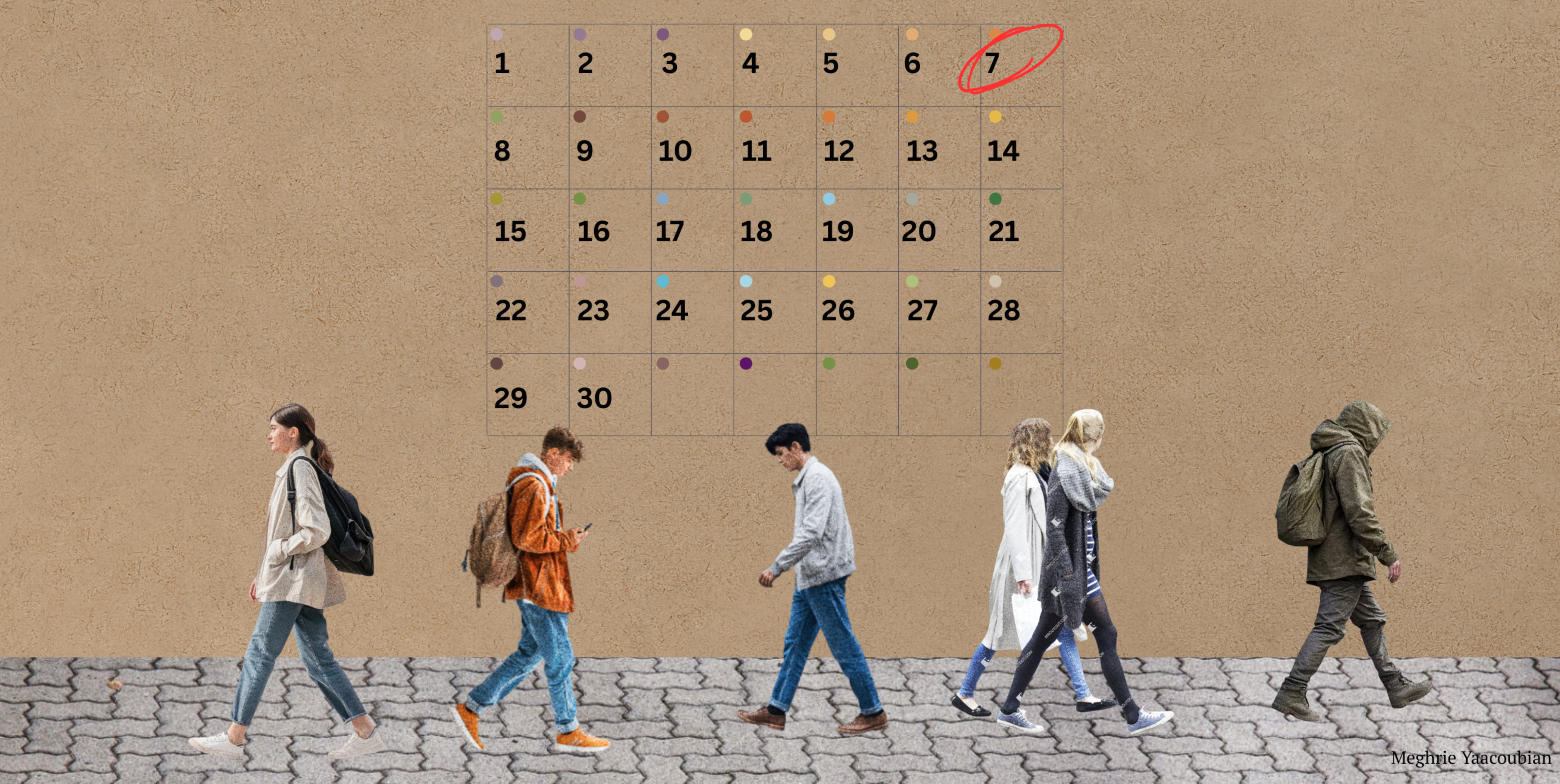
The Velvet Revolution, which mobilized tens of thousands of young people, represents the apex of youth political engagement in Armenia. In the eight years since then, young voters seem to have gradually lost their appetite for mobilized political action.
According to the latest IRI poll, 49% of voters between the ages of 18 and 35 described themselves as “uninterested in politics”. As election day approaches it seems that none of the mainstream political parties have managed to garner the support of Armenia’s youth.
Though Prime Minister Nikol Pashinyan currently leads the overall race, polling indicates that only 20% of his supporters are in the 18 to 25 category. The opposition parties have also struggled, with as many 42% of voters between the ages of 18 and 25 undecided ahead of Sunday’s election.
Voters under the age of 35 represent nearly 30% of Armenia’s electorate – a sizable voting bloc that could help determine the outcome of the election if they choose to go to the polls in numbers.
After the excitement of the Velvet Revolution, the outbreak of the 2020 Artsakh War quickly relinquished any sense of political optimism among Armenia’s youth. The sense of collective uncertainty that followed derailed many young people’s ambitions.
“After the war people started to question if they could plan a life in Armenia,” says Movsesyan, who himself volunteered to fight. “There was so much disappointment and uncertainty.”
Some of the participants of the Velvet Revolution faced blame for having indirectly contributed to Armenia’s military defeat. “Young people were villainized for their involvement in the revolution,” says Yevgenya Paturyan, a political scientist at the American University of Armenia. “They have internalized this and are now worried that they will make the wrong choice.”
In an election that has been framed as a choice on Armenia’s geopolitical future, some younger voters feel paralyzed by the weight of that decision. Both the government and the opposition have presented doomsday scenarios in the event of victory for their opponents.
Prime Minister Nikol Pashinyan recently threatened the possibility of another war if the opposition wins. On the other hand, Samvel Karapetyan of Strong Armenia has warned that 300,000 Azerbaijanis will move to Armenia should Pashinyan be reelected.“Young people feel an incredible burden and a high level of uncertainty in this environment,” says Paturyan.
Paturyan hopes that a more secure Armenia will eventually pave the way for a calmer and more constructive political discourse. “We need at least five to 10 years of stability,” she says. “Unless that is secured, I don’t see a healthy political culture developing in Armenia.”
To counter these narratives, Yuri Avagyan leads the Restart Foundation – a nonpartisan civil society group that seeks to expand youth political participation. Though initially established to contest government control of student unions prior to the Velvet Revolution, Restart’s mission has evolved over time.
“Our goal is to foster generational change in the leadership of Armenia,” says Avagyan. “We want to encourage young people to become more active in politics and public life.”
The absence of a traditional left-right political cleavage demonstrates the primacy of security issues in Armenia’s politics. The emphasis on foreign policy has also overshadowed domestic political issues.
“Political life in Armenia is not completely formulated because of the focus on foreign political choices” says Avagyan. “No one wants to know if you’re on the left or the right, it’s more about whether you’re pro-Russian or pro-Western.”
Restart recently hosted political workshops in which young people had the opportunity to directly interview election candidates. From a pool of 2,500 applicants, 600 young people were selected to participate – an indicator of the initiative’s growing appeal.
“The workshops offer young people a chance to directly engage in serious discussions,” says Avagyan. “This gives them a platform to directly enter politics.”
After the election, Avagyan plans to step down from his role as executive director and launch his own political party. He hopes to contest Yerevan’s municipal elections in 2028. “We hope to fill a gap in the market,” he says. “Youth is definitely our target audience.”
Overall, young voters tend to support Armenia’s strategic westernization. According to the IRI poll, 58% of respondents between the ages of 18 and 35 said that Armenia should follow a pro-Western foreign policy.
Though young people generally support closer ties with the European Union, many doubt that accession will ever materialize. “Young people want to be in the EU,” says Avagyan. “But they think it’s impossible.”
Nonetheless, young people have become increasingly vulnerable to external influence. According to Avagyan, they often fall prey to pro-Russian proxy organizations which offer them a platform to enter public life. “The less familiar they are with democratic processes, the more likely they are to be manipulated,” he says. “Restart works to counter this by equipping them with valid information.”
Amid a general sense of political disillusionment with mainstream politics, the “I Am Against All Party” has emerged as an outspoken anti-establishment alternative. With viral social media stunts involving a mock spiderman, they seek to appeal to younger voters who have lost hope.
“We have been able to activate young people who are nowhere near politics right now,” says one of the party’s founders, Aram Kocharyan. “They see spiderman and they ask questions.”
Meanwhile Prime Minister Nikol Pashinyan has sought to win over younger voters with his active TikTok presence. His most popular videos, which invariably feature his signature hand-heart gesture, boast millions of views. Nonetheless, Kocharyan argues that it will take more than internet trends to appeal to young people. “One day he is giving hearts on TikTok, and the next he’s yelling at people on the street,” he says. “He is completely out of touch.”
Having only been formed in February, “I Am Against All” has not outlined a policy program. Instead, they hope to overhaul the current electoral system by abolishing the stable majority clause which effectively rules out coalition building during government formation. “We are offering a way out of this stalemate,” says Kocharyan. “This system is stunting our political development.”
However, it remains to be seen whether the party’s superhero street antics will amount to more than a short-lived publicity stunt or evolve into a lasting political movement. Their success hinges on whether they can scrape past the 4% threshold, which would guarantee them a voice in parliament.
“If we don’t reach the threshold, it’s going to be really hard,” admits Kocharyan. “If we somehow pass it would be a huge win and a great foundation for the next five years.” Though momentum may be building online, the latest IRI poll indicates that only 1 percent of respondents will vote for “I Am Against All”.
Within Armenia’s relatively nascent democracy, civil society groups do more to directly encourage youth political participation than political parties do. Much like the Restart Foundation, Armenian Progressive Youth (APY) promotes youth engagement in politics. They host civic education workshops across the country to heighten awareness of Armenia’s democratic process.
“Lots of people don’t actually know how the system works,” says Hayk Khachatryan, a project manager at APY. “There is a huge gap that NGOs have to fill.”
Khachatryan stresses that youth political engagement can help encourage better governance. “If young people vote they can demand a lot more of their politicians,” he says. “Your issues are more likely to be addressed.”
Beyond NGOs, political activists have turned to social media to try to mobilize young voters. Julietta Hovhannisyan, a 22-year-old journalist, recently produced Qveatertik 67 – a two-part short film encouraging young people to use their vote. Her tongue and cheek Instagram videos, which incorporate popular memes, have gained traction online. “The tone is jokey,” she says. “But the message is serious.”
Having witnessed young people withdrawing from politics after the trauma of the war, Hovhannisyan felt compelled to mobilize her peers. “People didn’t want to know what was going on in our country,” she recalls. “It was hard for us; we lost our friends.”
She hopes to inspire a new generation of political activists to grasp a hold of their future. “Our country is for us,” says Hovhannisyan. “If we want a better life we need to take responsibility.”
Elections
Election Primer: Who’s Who
Armenia’s June 7 parliamentary election features 19 competing political forces, ranging from ruling and opposition parties to newly formed movements and fringe contenders. Hovhannes Nazaretyan presents a concise guide to the country’s crowded political landscape, key alliances, ideologies and leading personalities shaping the campaign.
Read more
Party Positions: Domestic Issues
Ahead of Armenia’s parliamentary elections, political forces are placing domestic concerns at the center of their campaigns. In this primer, Hranoush Dermoyan examines competing visions on the economy, education, healthcare, governance, agriculture and social policy, revealing how different forces seek to address Armenia’s socioeconomic challenges.
Read more
Party Positions: Foreign Policy and Security
Foreign policy and security have emerged as defining issues in Armenia’s upcoming parliamentary election, with parties sharply divided over relations with Russia, deeper integration with the West, regional normalization, TRIPP and the country’s broader geopolitical direction amid growing uncertainty in the South Caucasus.
Read more
Election Primer: Understanding Armenia’s Parliamentary Vote
Armenia heads to the polls on June 7, 2026 for its first regular parliamentary elections in nearly a decade. This primer breaks down the rules of the race, the key political players, and what’s at stake as the country prepares for a pivotal vote.
Read more