

Listen to the AI generated audio article.
Once upon a time, people who became sick after eating bread, wheat-based pastries, or drinking beer rarely understood why. Many ignored the symptoms. Others never connected their discomfort to gluten at all. Some continued eating as usual, convinced that wheat could never be harmful. Even today, many assume those affected by celiac disease are exaggerating—choosing to stay home and eating only what they can safely prepare themselves. But for people living with the disease in Armenia, this is a daily reality: low public awareness, limited options and every meal feeling like a gamble in a culture where so much of life revolves around food.
The condition itself has been recognized for centuries. In the second century AD, the Greek physician Aretaeus of Cappadocia described a condition called koiliakós (from the Greek word koelia meaning abdomen), the origin of what we now call celiac disease. He wrote about patients who were pale, weak, and unable to properly digest food: “If the stomach be irretentive of the food and if it pass through undigested and crude, and nothing ascends into the body, we call such persons coeliacs.” It wasn’t until the 19th century, after his texts were translated, that Western physicians formally identified and named it the coeliac affection.
Celiac disease is an autoimmune condition where the immune system attacks the small intestine after gluten consumption. Gluten is a protein found primarily in wheat, barley and rye. It acts as a glue, holding food together and giving it shape. Armenia’s Health Ministry doesn’t categorize celiac disease as a separate condition; it is simply included under “Other diseases of the digestive system”—reflecting how little the disease is understood and known in the country.
Anita Lalayan was diagnosed in 2023 but says she’s had symptoms since 2019, symptoms that neither she nor her doctors could recognize. Her blood tests and ultrasounds came back normal, even as she suffered from stomach pain and brain fog. “I was happy to finally have an answer,” she says. “But it was sad to acknowledge that I have this condition.”
For most people, eating at a restaurant is effortless—you sit down, look through the menu and order your food without a second thought. That’s why it can sound absurd that a single stray bread crumb might cause harm. But for people with celiac disease, that crumb can trigger severe, debilitating symptoms. Avoiding gluten and cross-contamination becomes a daily struggle, turning even the simplest meal into a source of anxiety. “When gluten-free bread is cut on the same board as regular bread, cross-contamination happens,” says Victoria Grigoryan, founder of the Gluten-Free Bakery in Yerevan.
Anita says her doctors never warned her about cross-contamination. “I kept a gluten-free diet, but still got symptoms,” she says. Only after doing her own research did she learn about cross-contamination and how to manage it.
Celiac disease is often confused with gluten intolerance, which causes bloating and pain but not the intestinal damage that comes with celiac disease. Explaining the condition to others can be frustrating. Anita says that every time she goes to a restaurant, she has to tell the waitstaff that she has a specific allergy before painstakingly explaining what she needs “otherwise they give me a strange look.”
Elina Israyelyan was diagnosed with celiac disease a year ago, and living with it in Armenia has been challenging. Before her diagnosis, she thought feeling sick after eating was normal. When she got her diagnosis, she went into a spiral and recalls “every meal felt like the last one.” At one point, gluten-free bread couldn’t be found anywhere in Yerevan. “On New Year’s, I learned that the traditional blinchik (meat-filled crepe) can be made gluten-free. That gave me hope,” she said.
Some Armenian supermarkets have separate aisles for gluten-free products, but they’re often unreliable and always expensive. Sugar-free and gluten-free products are put together on the same shelves, making shopping harder. The products are also limited and unfortunately not affordable for everyone. “It doesn’t make sense to buy ice cream for 4,000 drams,” Anita says.
Living with a chronic illness can feel like a full-time job with no vacation days. Wandering through supermarket aisles often ends up in disappointment. “I used to go grocery shopping with my brother,” Anita says. “Now I go alone because it takes ages.”
Avoiding gluten goes far beyond cutting out bread from your diet. Gluten can hide in sausages, processed foods, and sauces, limiting what’s available in supermarkets. Even some toothpaste brands contain gluten. People with celiac disease often need to recheck nutrition labels multiple times to ensure they don’t say: “May contain traces of gluten.” To stay safe, shopping means hunting for the symbol of wheat crossed with a wavy line. Elina avoids Armenian and Russian products since they lack a certified gluten-free label. It’s exhausting to travel across the city to that one store that might have your favorite rice and sauce.
“The problem with Armenian places is they put a gluten free label but don’t provide celiac friendly food,” Elina says. Cross-contamination isn’t taken into consideration, which is crucial for people with celiac disease. The safe level of accidental exposure is under 20 ppm (parts per million) of gluten per day and even that amount can trigger symptoms in some individuals.

Angela Vardapetyan, who now works at the Gluten-Free Bakery, says her diagnosis initially left her feeling completely isolated. “When I was diagnosed, it felt like the world stopped spinning and I was left alone in it. I didn’t even know what to eat or what to cook,” she recalls. Because gluten-free food is so expensive, often prohibitively so, Angela struggled to maintain the diet she needed, relying mostly on fruits, vegetables, meat, and only the occasional piece of bread. That changed when she discovered the bakery, a place where she could finally eat safely: pastries, bread, khachapuri, and everything else they make fresh daily. For her own well-being, Angela no longer eats out at all.
People with celiac disease in Armenia often feel uneasy explaining cross-contamination because misunderstandings about gluten are so widespread. Many assume “gluten-free” means “sugar-free,” while others confuse it with the keto diet. Elina notes that even restaurant staff are frequently unfamiliar with the basics: “They sometimes mistake gluten for lactose, and when I explain cross-contamination, I have to give concrete examples,” she says. And although some cafés advertise gluten-free options, the food is rarely safe for someone with celiac disease, as the risk of cross-contamination remains high.
“I ordered a gluten-free pizza, but I felt brain fog, cramps, and my face went numb,” Anita recalls. She still eats out occasionally but sticks to safer options like salads or vegetables without dressing or sauces. One place she trusts is American Hot Wings where she orders gluten-free lemon pepper wings since they have a dedicated fryer and take cross-contamination seriously.
Most people with celiac disease are also lactose-intolerant, but lactose is more manageable. “There is medication for diabetes, for lactose, but nothing for gluten. In terms of lactose, it’s manageable and affordable at least,” says Angela. She was surprised to learn that some dairy products might also contain gluten, which makes it harder to keep dairy as a safe option.
Victoria, the owner of Gluten-Free Bakery says that everything in their establishment is strictly controlled, entirely safe. “We never use ingredients from questionable sources, and the safety of the products is essential,” she says.
The idea for the bakery emerged after Victoria’s daughter and sister were diagnosed with celiac disease. When she began searching for dedicated gluten-free stores and safe alternatives, she quickly realized how few reliable options existed in Armenia. Her early attempts to bake at home were time-consuming and often unsuccessful, which ultimately pushed her to open a fully dedicated gluten-free bakery.
Victoria’s mother led the first round of experimentation in their kitchen, baking for her granddaughter and helping define the bakery’s direction. After countless failed trials with gluten-free substitutes, they finally found recipes that worked, and today, the bakery offers a wide variety of savory and sweet baked goods.
“When someone is newly diagnosed, they come to us, and we introduce them to our products, inform them what options exist in Yerevan,” Victoria explains. “We give our newly diagnosed customers the basic knowledge on how to safely cook at home as well.” The bakery’s mission extends beyond selling bread and pastries; it’s about inspiring a cultural shift in Armenia by promoting safer, stricter standards for preparing gluten-free food in restaurants and cafes.
Because imported gluten-free flour is so expensive in Armenia, Victoria sources certified gluten-free flour and other ingredients from abroad. “Sometimes, we run out of a specific flour brand, but we try to replace it with a different kind,” she says. There are many types of gluten-free flour—rice, buckwheat, chickpea, almond, coconut—but, she notes, none are produced as certified gluten-free in Armenia. “If we had access to local gluten-free flour, it would be much easier. Imported flour is expensive.”
Victoria’s bakery is open to everyone. “This journey is difficult because many people think gluten-free products are only for those with celiac disease, but we’re convinced that everyone can benefit from our bakery,” she says. Many of their regular customers don’t have celiac disease, they simply love their pastries, especially the honey cake. The bakery also caters to people with other dietary needs, including lactose-free, vegan, and sugar-free options. And for those living outside Yerevan, fresh gluten-free bread arrives within a day through HayPost delivery, making their products accessible across the regions.
Beyond the physical challenges, celiac creates social isolation. Many people avoid birthdays or trips because they have to bring their own food. “In Armenian culture, gatherings revolve around food and drinks,” Elina says. “I cannot be a part of it with my friends anymore, which is depressing.” When Anita visits her family in Goris, she sometimes gets sick. “It’s hard to avoid cross-contamination when you don’t cook your own food,” she explains.
Raising awareness could begin to shift the landscape. Elina believes mandatory training for waitstaff would make restaurants safer, while Victoria notes that Facebook and WhatsApp groups have become spaces where people with celiac disease exchange reliable information about safe products and places to avoid. Armenia, however, remains far from being celiac-friendly. Clear standards, official certification, and broader public understanding would go a long way toward ensuring that people with celiac disease can navigate daily life feeling both safe and seen.
LIFESTYLE
Change
The November issue of SALT explores the parts of life in Yerevan that often go unnoticed but quietly shape our days: from the city’s increasingly chaotic rental market and the struggles of those living with celiac disease, to caring for our bodies in the age of Google, wandering a neighborhood layered with memories that refuse to fade, and stepping into the world of an Armenian viola maker, where tradition and craftsmanship create their own kind of magic.
Kond in Autumn Rain
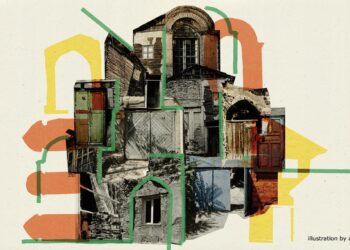
A walk through Kond during an autumn drizzle becomes a sensory meditation on one of Yerevan’s oldest neighborhoods with its layered histories, lived realities and fragile beauty. In this evocative essay, Maria Gunko explores how rain transforms the district’s mood, revealing both its charm and its unresolved uncertainties.
Read more
Welcome to the Rental Hunger Games
A darkly funny dive into Yerevan’s rental market, where outrageous prices, crumbling “designer” homes, and Soviet-era domiks collide with the everyday despair of tenants just trying to find a livable space. Ella Kanegarian-Berberian’s sharp, witty look at a city caught between illusion and reality.
Read more