

Listen to the AI generated audio article.
For Armenia, a small landlocked country with two closed borders, tourism plays a crucial role. Beyond boosting the economy, GDP, and rural livelihoods, it fosters people-to-people connections and enhances the country’s international image.
Over the past 10–15 years, Armenia’s tourism industry has seen remarkable growth. The number of international visitors has risen sharply, the country has gained global recognition, and efforts to diversify tourism offerings are underway. Yet despite these advances, Armenia remains largely undiscovered by the wider international tourism community.
Why Tourism?
Tourism is a key driver of the global economy. In 2024, the sector accounted for 10% of global GDP, contributing $10.9 trillion US, and supported 357 million jobs worldwide—roughly one in ten. International visitor spending also surged, reaching $1.9 trillion, underscoring tourism’s central role in the global labor market.
According to the World Bank, tourism has a long value chain. When managed well, it creates jobs, generates value, and delivers positive social impacts across every link. It can expand markets for products, benefiting poor and isolated communities. If developed sustainably, it can also drive biodiversity conservation, heritage protection, and climate-friendly livelihoods, making it a cornerstone of the blue and green economy.
The sector offers developing countries opportunities to generate productive and inclusive employment, nurture innovative businesses, finance the preservation of natural and cultural assets, and empower communities—particularly women, who made up 54% of the tourism workforce in 2020.
Tourism is often called a “feeding” sector because it attracts investment, especially foreign direct investment, and generates revenue for state and private budgets. Its potential to transform a country’s development is enormous.
Globally, tourism stimulates economic growth by creating jobs along the entire value chain and in related sectors such as construction, agriculture, food production, and retail. It also reduces rural depopulation and emigration by providing employment opportunities outside urban centers.
Beyond economics, tourism shapes national and regional identity, instilling values of cultural and environmental preservation. When managed well, it can promote sustainability and position a country as a global leader.
Armenia’s 2020–2030 Tourism Development Strategy underscores that tourism remains a vital sector with significant growth potential. The World Bank’s latest framework encourages diversification––highlighting tourism, IT, and agriculture as the most promising sectors.
Numbers Are Not Enough
Armenia’s tourism sector has experienced dramatic fluctuations in recent years, primarily due to the COVID-19 pandemic and the 2020 Nagorno-Karabakh War. In 2019, just before the pandemic, the country reached a record 1.9 million visitors. The following year, global travel restrictions brought the sector to a near halt, reducing arrivals to just 375,000—a fraction of pre-pandemic levels.
Recovery began gradually in 2021, when visitor numbers climbed back to 870,000, and accelerated in 2022, reaching 1.67 million.
The rebound peaked in 2023, a record year with 2.33 million tourists, more than 600,000 of whom were diaspora Armenians. In 2024, arrivals dipped slightly to 2.2 million, though still well above pre-pandemic figures. The post-COVID surge was largely driven by Russian tourists, who faced limited travel options following Russia’s invasion of Ukraine. The subsequent decline reflected fewer Russian visitors.
Preliminary figures for 2025 show a 4% decline in arrivals during the first three months. However, according to Lusine Gevorgyan, Head of Armenia’s Tourism Committee, summer months saw an increase of over 10% compared to the previous year.
Zara Zeytuntsyan, former Head of Armenia’s Tourism Committee, notes that while governments often focus on headline numbers, the true measure of tourism is not quantity—it’s spending. How much a tourist spends better indicates their impact on the country’s economy and society.
A 2023 Tourism Committee study shows that visitor spending in Armenia remains relatively low. In 2023, international visitors spent an estimated $776.9 per person. With an average stay of 15.3 nights, this translates to $50.80 per day.
While average per capita spending has increased in absolute terms since 2013, adjusting for inflation suggests that visitors’ spending power has largely remained flat.
Visitors on package tours spend significantly more per day than independent travelers—$193 compared to $48. This discrepancy exists largely because independent travelers, who typically spend the least, made up around 94% of all visitors in 2023.
Spending patterns by accommodation type reveal that longer stays drive the highest total expenditures. Visitors staying in apartments spent an average of $1,416 while those in resorts or wellness centers spent $781.
Hotel guests spend the most per day at $131—more than 2.5 times the overall daily average. Guesthouse and hostel guests follow at $86.40 per day. The pricier accommodation attracts visitors who generally spend more.
Despite these higher-spending segments, the overall average daily expenditure remains low at $51.90—and drops to just $49 for non-package travelers. According to experts, raising daily spending is crucial for boosting tourism revenue.
The growing share of high-spending visitors is encouraging. To build on this trend, efforts should focus on extending stays and promoting regional tourism.
Expanding attractions and infrastructure beyond Yerevan would increase total visitor spending and encourage tourists to stay longer. Creating diverse, thematic, and purpose-driven routes across the country would give travelers motivating reasons to extend their trips.
Currently, only 5.4% of visitors use package tours. These tourists spend significantly more—$198.20 per day compared to $49 for independent travelers.
Lack of Funding and Visibility
Diana Karapetyan, Head of the Tourism Committee’s Marketing and Promotion Department, noted that strengthening Armenia’s visibility on the global tourism map and enhancing its competitiveness as a destination remain key priorities. To that end, the Tourism Committee implements a number of initiatives, including participation in international tourism exhibitions in different countries and the presentation of Armenia’s tourism potential alongside travel companies in joint national pavilions.
Karapetyan also highlighted the Committee’s efforts to organize familiarization and exchange visits, hosting journalists from prominent international publications, as well as influencers and social media figures. In cooperation with partners and international PR agencies, Armenia has been featured in leading global outlets, aiming to boost the country’s visibility and international recognition.
While the Committee highlights its growing international outreach efforts, Armenia’s tourism industry continues to face a number of persistent challenges—limited international visibility, a small number of direct flights, a highly seasonal tourism flow, and underdeveloped infrastructure, to name a few.
According to Zeytuntsyan, one of the major obstacles is inadequate funding. This shortfall directly impacts Armenia’s ability to position itself as an attractive tourism destination, as there are virtually no large-scale marketing campaigns targeting international travelers.
The 2023 study supports this observation, noting that Armenia’s primary form of promotion remains word of mouth. Among visitors, 42.8% cited personal recommendations as their main source of information about Armenia, followed by social media (12.1%) and online research (10.6%), both of which have grown in importance.
“Of course, we still have a lot of work to do to increase Armenia’s visibility. But the first challenge for visibility is something else entirely,” Zeytuntsyan says, pointing out that Georgia allocated nearly $30 million to tourism last year, while Armenia spent only a fraction of that amount. She notes that Armenia invests roughly $1.70 per tourist, a fraction of what its neighbors spend: Georgia allocates $5–6 per tourist, and Azerbaijan around $13.
“If you want a country’s visibility to increase, you need to allocate funds. Our government has always treated tourism very unseriously; I’d even say they thought, ‘It’ll come anyway,’” she stressed.
Until that issue is addressed, Zeytuntsyan adds, any discussion about efforts to boost visibility remains superficial. “Visibility doesn’t come from nothing; serious funding is required.”
She emphasizes that digital marketing should be the first priority. To increase accessibility, Armenia needs high-quality content, invitations to bloggers and journalists, and substantial investments in advertising across digital platforms, publications, magazines, and online media—at least $1 million per target country.
Another critical issue, according to Zeytuntsyan, is promoting sustainable and decentralized tourism. Currently, most visitors’ stays and spending remain concentrated in Yerevan.
Aiming High
Armenia’s Tourism Committee recently announced an ambitious goal: three million visitors in the short-term, with a long-term vision of eight million international travelers. One of their main strategies is promoting large-scale concerts and festivals. In August, for instance, global pop star Jennifer Lopez performed in Yerevan, an event that reportedly drew around 15,000 additional visitors.
While exact numbers are not available, Karapetyan emphasized that event tourism has a consistently positive impact, both in terms of boosting the country’s visibility and supporting the national economy. She added that tourism in Armenia—particularly event tourism—is clearly developing, even though the committee itself does not track exactly how many days visitors stay in the country. Feedback from foreign visitors suggests that many, after experiencing Armenia’s warmth, hospitality, and tourism opportunities, return home planning their next trip—often at a different time of year to discover new seasonal experiences.
While such high-profile events can generate attention and excitement, Zeytuntsyan cautions that entertainment-driven tourism must be part of a broader, well-planned strategy. These events often result in only short-term stays for tourists and the Tourism Committee is not directly involved in organizing these concerts, meaning they do not align with the country’s broader tourism development strategy.
Zeytuntsyan points to Tbilisi’s Check in Georgia initiative, implemented in 2015-2019, as an example of a more systematic approach—a $13 million government-backed program designed to integrate concerts into a national tourism strategy. “Here, it’s all improvised—whatever comes up, comes up,” she says. “Let’s say someone happens to know Jennifer Lopez—great, they bring her, and next time, someone else. But I don’t see any strategy behind it.”
Beyond organization, Zeytuntsyan emphasizes the need to ensure events contribute to sustainable tourism rather than fleeting economic boosts. “Even when we organize events, how do we make sure tourists don’t just come for the concert and leave the next day?” she asks. “We should create opportunities—through advertising and promotion—to encourage them to stay a couple of extra days, explore beyond the concert, travel outside Yerevan, and get to know Armenia better.”
Currently, most concerts benefit Yerevan’s hotels and restaurants for only a few days, with little spillover to the regions. “I’m all for these events, they’re great, but they need to be carefully planned so we can get the maximum possible outcome,” Zeytuntsyan stresses. “Right now, I don’t think we’re achieving that.”
The issue goes beyond event management. It reflects a deeper, systemic challenge: weak coordination between agencies and a lack of strategic vision. “This problem isn’t unique to Armenia,” Zeytuntsyan says, noting that successive Armenian governments have consistently treated tourism as a secondary concern rather than a strategic priority.
Armenian tourism also continues to face major challenges like inadequate infrastructure, especially transport and accommodation, especially outside of Yerevan. These are broader issues that must be addressed at the government level rather than by the tourism committee.
***
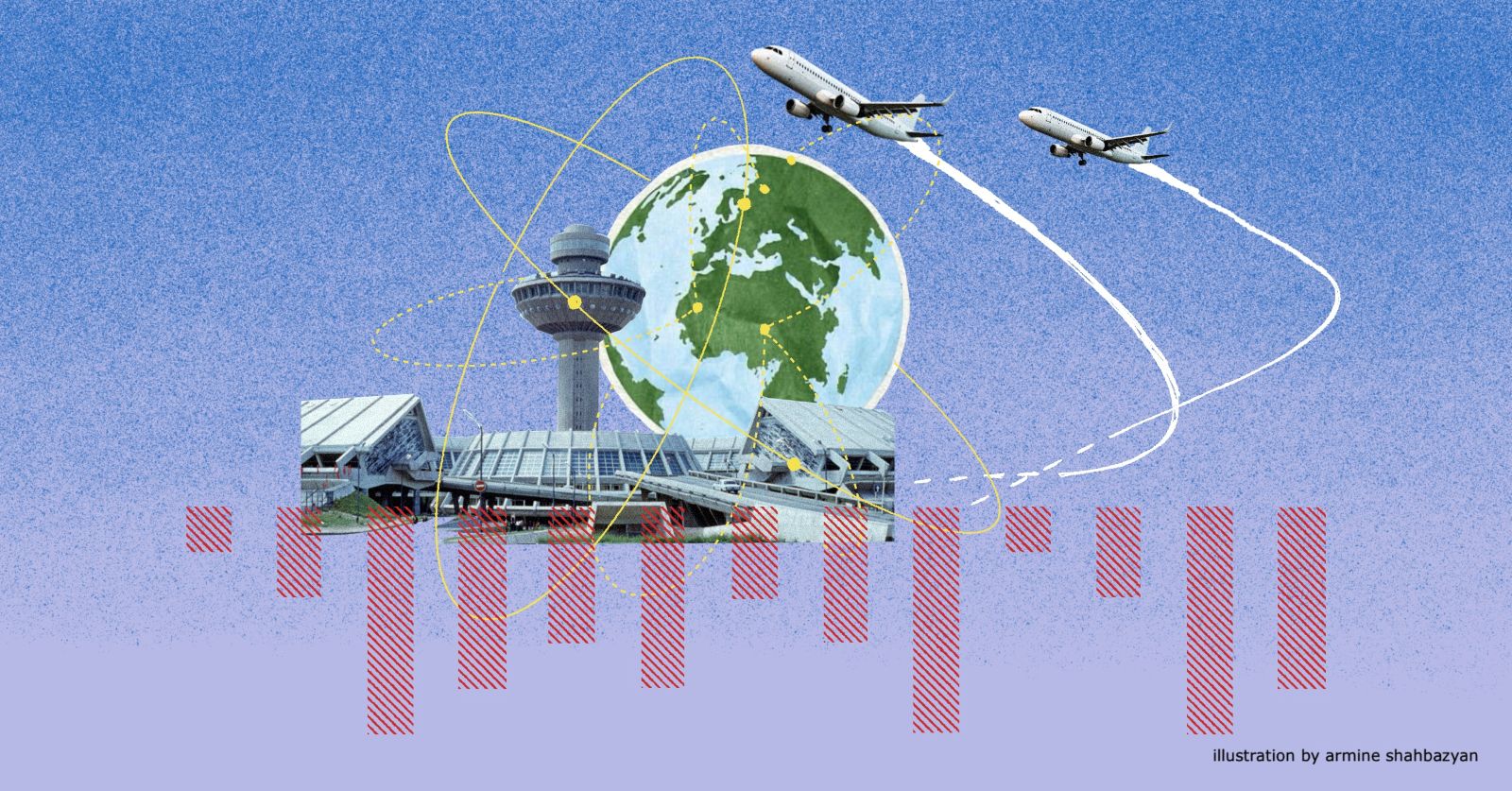
Despite challenges facing Armenia’s tourism industry, there are encouraging signs of progress. In October, Hungarian budget airline WizzAir opened its first-ever base at Yerevan’s Zvartnots Airport and launched flights from Armenia’s second-largest city, Gyumri, to Cyprus. Another new destination from Gyumri is expected soon, signaling growing interest in expanding regional connectivity.
Major infrastructure investments add to the optimism. Armenia International Airports, which operates Zvartnots, has unveiled a $500 million expansion plan to meet rising passenger demand. Over the past two years, annual traffic has surpassed 5.5 million passengers—well above the airport’s original capacity of 3–4 million.
The decade-long project will double the airport’s total area and add a new terminal. Boarding gates will increase from six to 16. Arrival, immigration and customs zones will more than double in size. The plan also includes expanded lounges, parking and improved public transport.
These developments suggest that while Armenia’s tourism sector still faces significant hurdles, the country is laying the groundwork for sustainable growth and greater international visibility.
Raw & Unfiltered

Finding the Ones Who Stayed
In Istanbul, the remnants of an ancient Armenian presence continue to endure. Through encounters with community members and reflections on belonging, Maral Tavitian explores how those who remained in Turkey preserve identity, culture and memory amid loss and resilience.
Read more
Portrait of a Nation: Armenia
From bustling streets to remote border villages, Armenia reveals itself not only through history and hardship, but through the resilience and quiet courage of its people. Sandra Sadek’s portrait captures a nation that remembers, rebuilds and carries its past while daring to hope for the future.
Read more
Frontline Observers: On Patrol with the EU Mission in Armenia
Following Azerbaijan’s large-scale attack on Armenia in September 2022, the EU deployed a monitoring mission to prevent further hostilities. The mission operates from a small town, patrolling borders and interacting with civilians. Michele Crestani reports.
Read more
Why Armenian Children Eat So Much Sugar
Candy, cake and “kompot” are staples of childhood in Armenia, not only because they taste good, but because they’re inseparable from cultural ways of showing love. The love of sweets, however, will soon force a rethinking of tradition.
Read more
“Ges-ges”, Half-Hidden, Half-Lost: Talking About Hamshen Armenians Without Labels
Centuries of forced migration, conversion and marginalization have shaped the unique identity of Hamshen Armenians. Öndercan Muti explores their complex history and evolving identity and invites reflection on preservation, memory and belonging.
Read more
The Silence That Followed the Sirens: Iranian-Armenians and the 12-Day War
When Israeli and U.S. airstrikes hit Iran, Armenians in both Tehran and Yerevan were thrust into fear and uncertainty. Gibran Caroline Boyce follows one family’s experience, revealing how war reverberates across borders, communities and generations.
Read more
Growing Up On the Border: Youth Narratives of War, Peace and Home
Drawing on voices from Armenia’s border communities, Gayane Ghazaryan explores how war and displacement shape young people’s sense of home, belonging, and identity, revealing emotional landscapes often overlooked in mainstream narratives of conflict and peace.
Read more
All the Lost Istanbuls
In Istanbul's Kurtuluş neighborhood, Meyhane-i Ara stands as perhaps the last Armenian tavern, where owner Ara Haceroğlu preserves centuries-old culinary traditions amid layers of nostalgia for multiple vanished Istanbuls—a living testament to the city's fading multicultural past.
Read more


In the same story:
Visitors on package tours spend significantly more per day than independent travelers—$193 compared to $48.
Currently, only 5.4% of visitors use package tours. These tourists spend significantly more—$198.20 per day compared to $49 for independent travelers.
What gives?
Thank you for pointing this out. In the first instance we cited the figure “$193 compared to $48,”
and later noted “$198.20 compared to $49.” Both sets of numbers were taken from the same
2023 Tourism Committee study, but reflect slightly different rounding and category definitions
within that study.
The $193/$48 figures appear in a summary section of the study and are rounded to the nearest dollar based on a broader category of “package tours” versus “independent travellers.”
The $198.20/$49 figures come from a more detailed breakdown of the same data set (specifically listing the 5.4% share of visitors on package tours) and retain a decimal point, indicating more precise calculation.
The slight mismatch thus arises from two different sections within the study; one presenting rounded averages for simplicity, the other showing more exact figures for context.