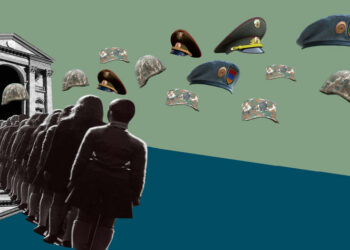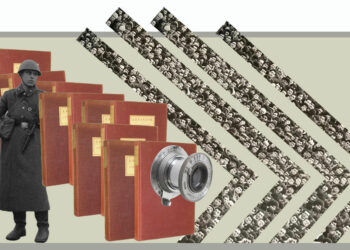
President Serzh Sargsyan’s second and final term in office ends on April 9. It is almost certain that he will be elected as the country’s new prime minister thereby prolonging his power. EVN Report looks back at the Constitutional amendments that led to this situation and a new military-patriotic educational doctrine that is set to pass in parliament.
A perceived absence of agency has led to growing public indifference in Armenia. When those who do take a stand, regardless of their tactics, are left to stand alone, more questions than answers surface. From the recent sentencing of radical opposition activists, to sit-ins and hunger strikes Opera Square to continuing impunity, everyone seems to be forgetting to ask, why?
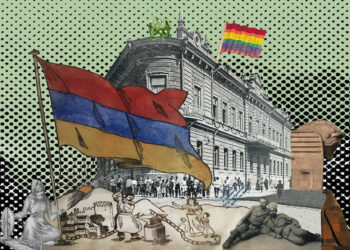
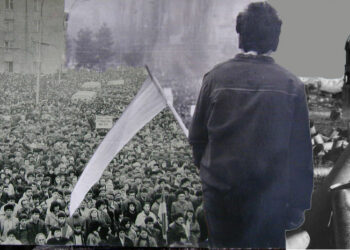
Lusine Hovhannisyan was a witness and participant in the Karabakh Movement. Thirty years later, she had the chance to meet with someone who was on the opposite side of the barricades - a Soviet official who had tried to infiltrate the ranks of the demonstrators.
Gender discrimination is a deeply cultural problem, Rafik Santrosyan writes. The incident last month in Yerevan City Hall where a group of men beat a woman councilor highlight how patriarchal relations, toxic masculinity and internalized misogyny have influenced the public discourse.
“There are no invalids in the USSR!” This much heard expression exemplifies how people with disabilities were stigmatized in the Soviet Union. How pervasive is the exclusion of people with disabilities in post-Soviet Armenia? Anais Bayrakdarian talks to experts working in the field and writes that the true measure of any society can be found in how it treats its most vulnerable.
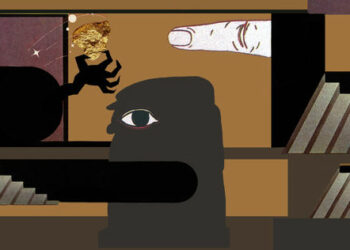
Is corruption inherent to the post-Soviet Armenian political culture, and if so, does this make the political culture of Armenia incompatible with democratic values? Dr. Nerses Kopalyan examines how conflictual matters that should be resolved in the public sphere are almost always resolved within the cultural rules of the private sphere.
A native of Bourj Hammoud bids farewell to her hometown following an attack on writer Raffi Doudaklian in what appears to have been an attempt to silence his words. In this deeply personal essay, Roubina Margossian reflects on her complicated relationship with the town.
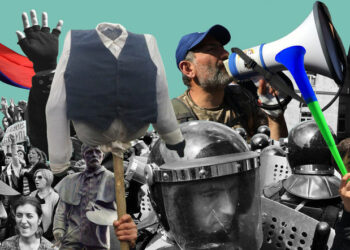
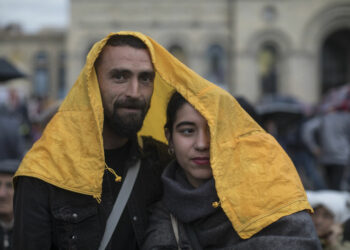
On March 1, 2008, police units move in to put an end to ongoing protests disputing the results of the February 19, Presidential Elections in Armenia. In the aftermath ten people are dead, hundreds were injured. The reality before and after March 1st as seen through the lenses of the members of the 4Plus photo collective.
Deciding never to use the word Genocide and then coming face-to-face with it again in a new context; between reading biographies of the victims of the Sumgait Pogrom over and over again and the urge to see who now occupies the homes of the Armenians of Baku and Sumgait, writer Lusine Hovhannesyan unexpectedly discovers a common yet obvious thread.
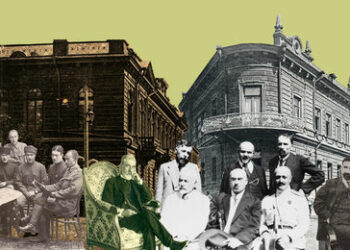
Journalist Lusine Hovhannesyan recounts her personal memories as a university student during the first days of the Karabakh Movement. She writes, “We became beautiful and fell in love easily like young men and women living out their last days at the barricades and we sang songs of resilience in the streets of Yerevan.”
EVN Report’s mission is to empower Armenia, inspire the diaspora and inform the world through sound, credible and fact-based reporting and commentary. Our goal is to increase public trust in the media. EVN Report is the media arm of EVN News Foundation registered in the Republic of Armenia in 2017.
SUPPORT INDEPENDANT JOURNALISM