Tag: EVN Report

March 31, 2019

The Armenian Footprint of Isfahan

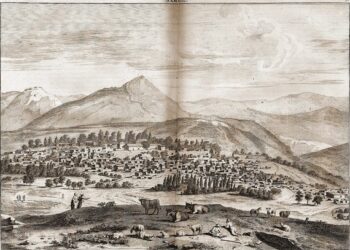
Isfahan is more than just a place with an abundance of blue, hospitality and diplomacy, Isfahan is also Julfa, the old Armenian neighborhood where the domes of churches are not pointed but rather round like a Mosque’s, where an Armenian community, since 1605, continues to exist and has become an inseparable part of the fabric of this city once built to be the center of the world.
February 19, 2019
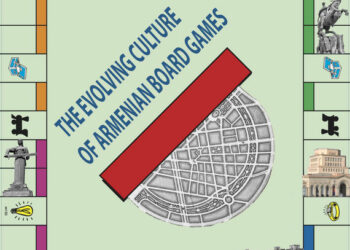
The Evolving Culture of Armenian Board Games

The Evolving Culture of Armenian Board Games

You most likely played Monopoly as a child, and if your first language was Armenian, then you most probably struggled to translate the content of the cards from English or Russian. Anahit Sukiasyan writes about how Armenian board games are being developed and gaining popularity.

February 11, 2019
Post-Truth Armenia and the Media

Post-Truth Armenia and the Media

The fake news phenomenon is not uniquely Armenian. It’s a global challenge, but when the stakes are so high following the Velvet Revolution, journalists need to rediscover their mission and have an honest discourse about their role in the state of the media landscape.

February 9, 2019
Shamakhi: A Lost Dialect, a Lost Identity

Shamakhi: A Lost Dialect, a Lost Identity

Shamakhi is an Armenian dialect that is on the verge of extinction. While many Armenians from Shamakhi feel a sense of pride in their history and dialect, for the new generation who, along with the rest of the Shamakhetsis were forced to flee their village during the Karabakh War, the dialect is simply a matter of history.

January 31, 2019
The Seven-Year Battle

The Seven-Year Battle

A family dispute left Emma Sahakyan homeless. After failing to find justice, she has staged a protest in front of the President’s office on Baghramyan Avenue for the past seven years.

January 29, 2019

The Halls are Half Empty, the Restaurants Full

In Soviet Armenia, beyond the struggles of daily life, people were free to choose to be a part of the arts. But freedom in art was still limited. The situation changed after independence, there was freedom to be found in art but to choose art unreservedly, seemed ill-founded. Day-to-day struggles brought forth a dimension where the audience and the dancer were not connected.