
Listen to the AI generated audio article.
In Yeghegnadzor, a small town of 7,000 residents, it’s not unusual to overhear conversations in English, French and other European languages during dinners at Café Aygi. Off-road SUVs bearing the European Union flag have become a familiar sight, even along the town’s secondary streets.
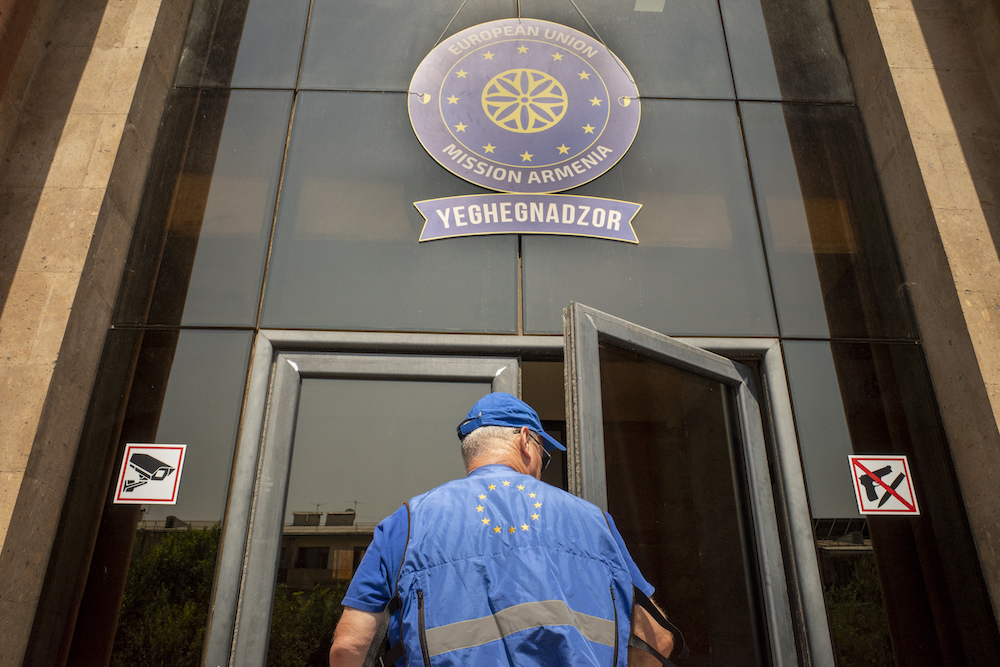
These are visible signs of the EU Mission in Armenia (EUMA), which has established its headquarters in Yeghegnadzor. The mission’s main hub—a pink, four-story building equipped with security, offices, and a conference room lined with member state flags—sits at an equal distance from the borders with Azerbaijan and Nakhichevan. From this central location, it coordinates activities across five Forward Operating Bases in the Ijevan, Martuni, Jermuk, Goris and Kapan.
The EUMA’s Inception
“The most challenging moments were at the beginning of the mission,” says Markus Ritter, Head of Mission of the EUMA. “We had to build up the new mission here for around 180 people, so finding accommodation and office space was quite a challenge.”
Ritter, a seasoned German police commander, brings nearly three decades of international experience. He has overseen Federal Border Police at Frankfurt International Airport and coordinated police work in conflict zones including Kosovo, Georgia, Afghanistan, South Sudan and Iraq. With a PhD in Administrative Sciences and a Master’s in Law, he has spent his career navigating complex security challenges in volatile environments.
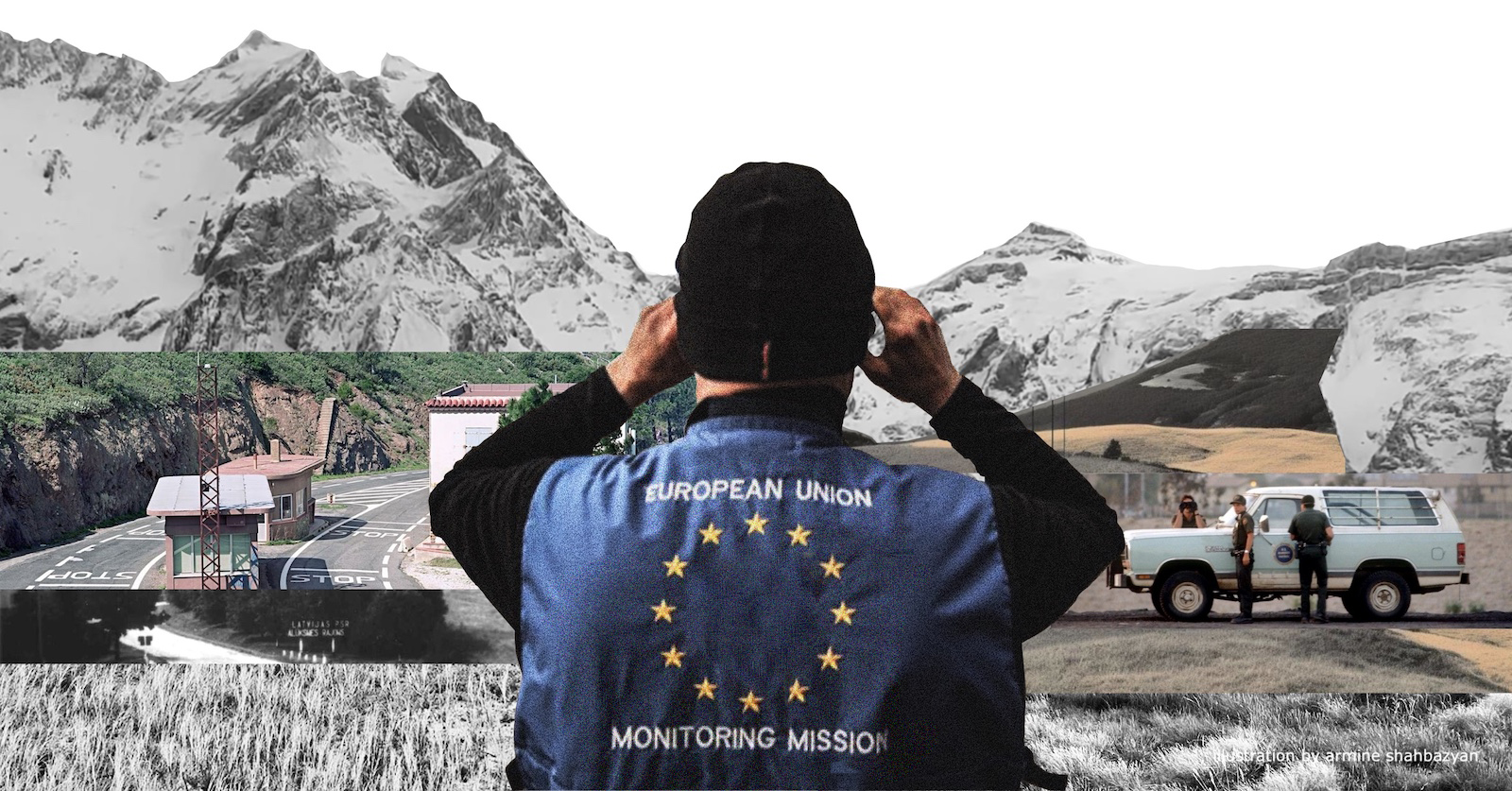
The EU first deployed a monitoring capacity (EUMCAP) to Armenia in October 2022, just weeks after Azerbaijan’s September 13-14 incursion—the largest attack on Armenia’s sovereign territory since independence. The decision, announced at the European Political Community summit in Prague, followed a quadrilateral meeting between Prime Minister Pashinyan, President Aliyev, French President Emmanuel Macron and European Council President Charles Michel. The mission was mandated for two months, with the stated goal of fostering confidence between the sides.
At the time, Azerbaijan agreed to cooperate with the mission “as far as it is concerned” but refused to allow any EU personnel on its territory. The 40 civilian monitors were drawn from the EU Monitoring Mission in Georgia (EUMM Georgia) that had been deployed in 2008 following the Russo-Georgian War. Once they began patrolling Armenia’s border with Azerbaijan “the situation calmed down,” according to Ritter. “By the end of November, the idea of a permanent mission was proposed inside the Armenian government.”
After Brussels approved the plan, the EUMA began operations on February 20, 2023, when Ritter joined the mission. “But Azerbaijan said: ‘Okay, that was never agreed in Prague, only a temporary mission was spoken about, but never permanent. So we don’t agree and we will not cooperate,’” explains Ritter.
From the outset, EUMA faced skepticism from regional powers. Despite having an EU delegation in Baku, Azerbaijan remains uncooperative. Ritter notes that “the Russians, from the very beginning, were hostile—and they’re still hostile.” Moscow views the EUMA as a disguised NATO operation and a Western attempt to push Russia out of its traditional sphere of influence. Iran, initially suspicious, has since adopted a neutral stance, while Turkey and Georgia have offered no official response.
EUMA Activities
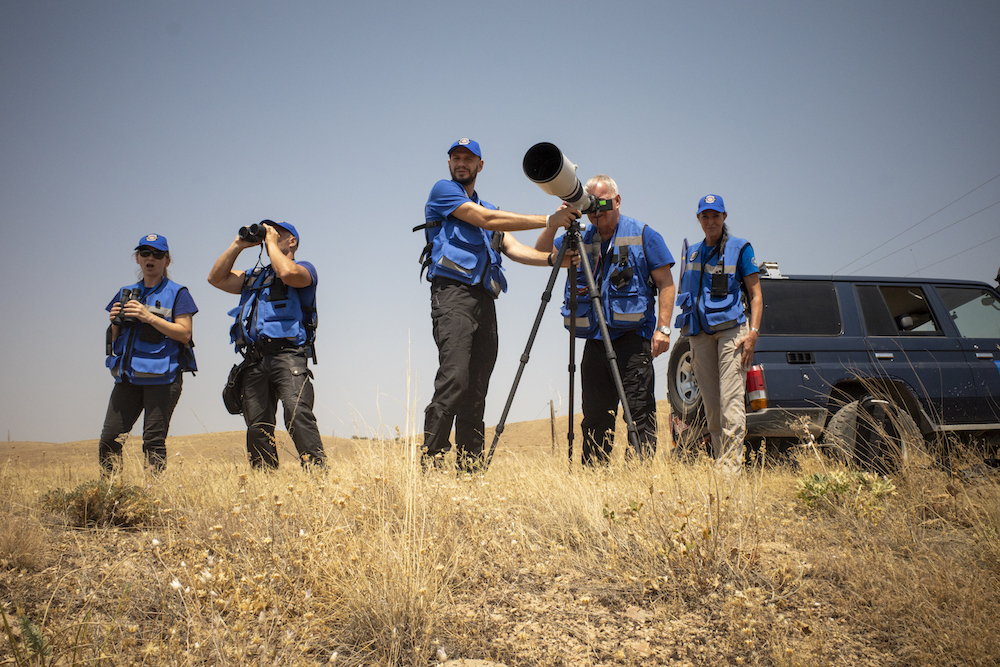
The EUMA mandate, renewed this February for two more years until 2027, operates along three main lines. Its primary role is patrolling, monitoring, and documenting Armenian and Azerbaijani positions along the roughly 1,000-kilometer border, with two to three patrols dispatched daily from each Forward Operating Base. The second function focuses on human security patrols that engage with residents in small towns, villages and farms. This presence helps EUMA create a sense of safety. “We see that people are not abandoning these areas, because with us they have the feeling that the international community is present,” Ritter explains. Finally, the mission supports confidence-building measures aimed at deterring border skirmishes.
Ritter states that these daily field activities have reduced border incidents, though how the EUMA measures these statistics remains unclear. The last casualties were in February 2024, when four Armenians were killed and one wounded. “Since then, we haven’t had any injured or killed—and what we never had are victims among the civilian population,” Ritter notes.
Fewer border skirmishes have become a decisive factor in stabilizing the political environment: “When I met with Pashinyan and Armen Grigoryan, Secretary of the Security Council of Armenia [in July], they told me, and they say it publicly, that our presence makes a difference,” Ritter notes.
Not everyone at the EUMA is involved solely in patrols, though. The headquarters has supporting departments that have built a network for public relationships—globally with foreign embassies, the EU delegation in Armenia, and the Special Representative for the South Caucasus (responsible for EU policymaking in Armenia); and locally with civil society organizations and NGOs.
“For example, civil society organizations and NGOs give us some insights. They might tell us, ‘You should go to this village, they have refugees there,’” Ritter explains, adding that these partnerships are also valuable for introducing the EUMA in schools and NGO training programs.
Much of this, he says, is “grassroots work.” The high politics belongs mostly to the EU delegation that launches projects in education, water reservoirs, and border stabilization before sending out the EUMA personnel: “Then we go out to meet people and explain what’s going on,” Ritter adds.
Much of this, he says, is “grassroots work.” The high politics belongs mostly to the EU delegation that launches projects in education, water reservoirs, and border stabilization before sending out the EUMA personnel: “Then we go out to meet people and explain what’s going on,” Ritter adds.
A Patrol Day
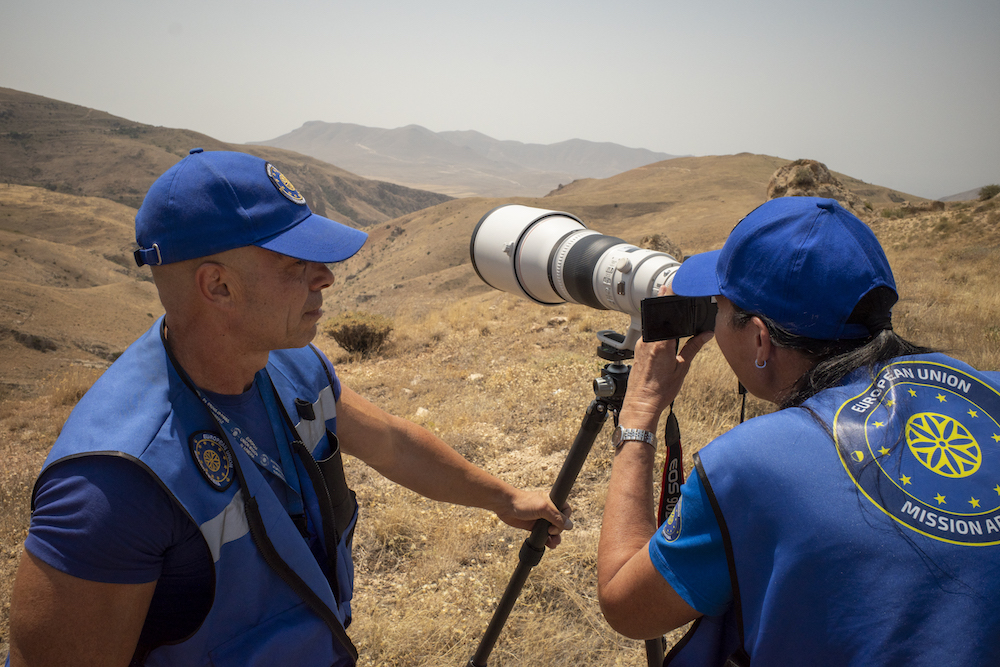
One of the hotspots closest to Yeghegnadzor is the village of Khachik. After a 45-minute drive, a crew of seven, including Ritter, who waves at locals from the car, arrives at this settlement of 1,000 residents. Two EUMA off-road SUVs, accompanied by an ambulance ready for emergency intervention, stand on a plateau facing Nakhichevan.
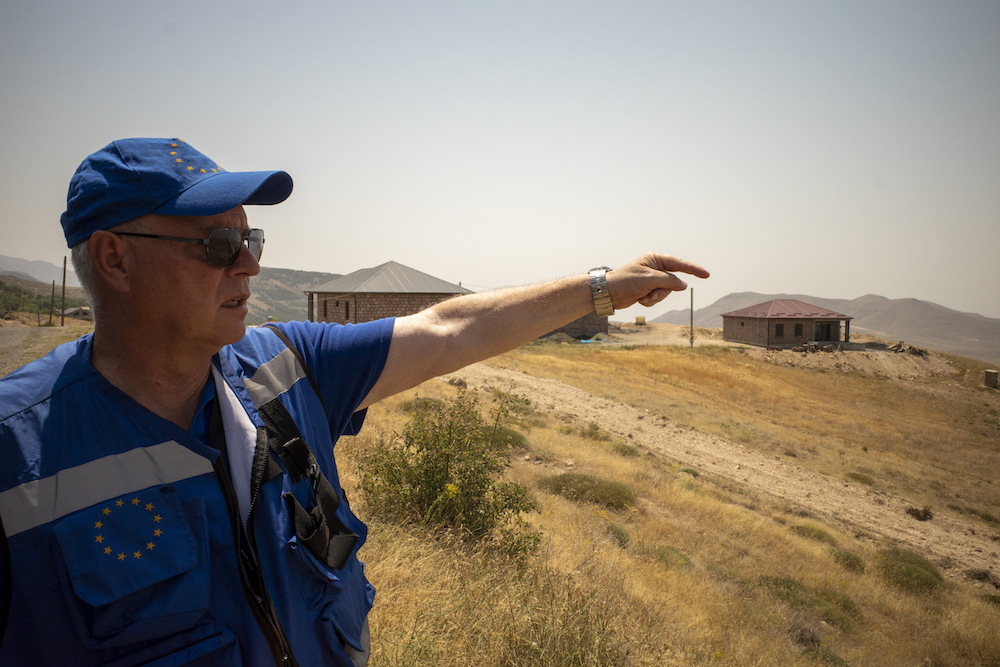
“The situation on the Nakhichevan border has been stable for decades,” Ritter explains. Yet it is not dormant. From the mountaintop overlooking Khachik, Ritter reveals that the Armenian Army constructed new positions last September.
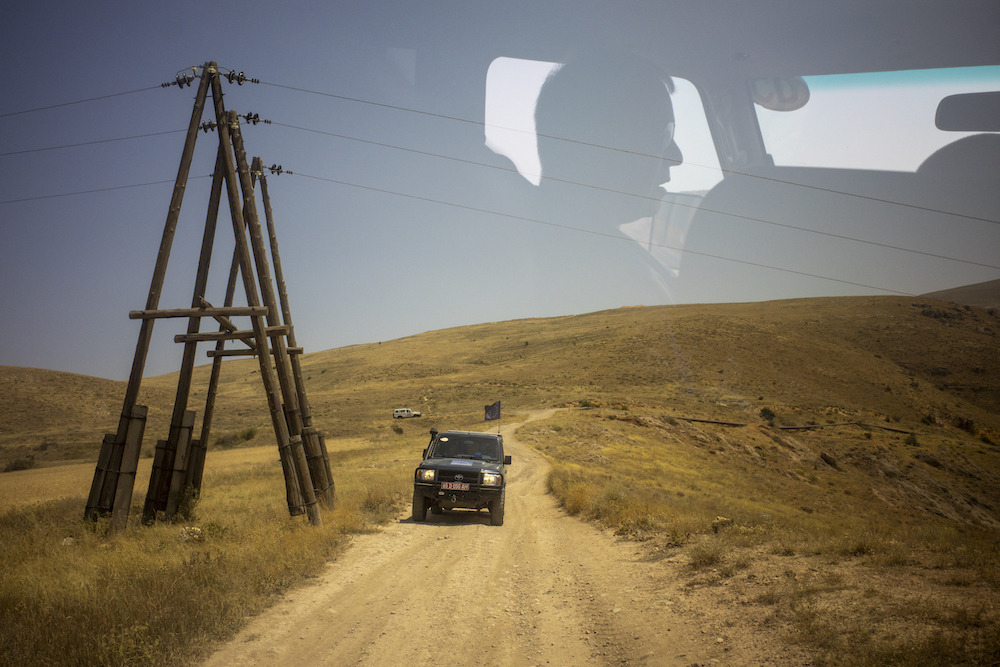
Routine patrols like this one are planned a week in advance and may occur at nighttime. The most sensitive patrols, like those entering Armenian positions, receive escorts from Armenian border guards or military vehicles. “At the beginning, we had more escorts because we didn’t know the landscape. But now, after 6,000 patrols, we know everything. We increasingly operate on our own because it is better to show our impartiality,” Ritter says.
This approach guided EUMA’s conduct during the Azerbaijani offensive in Nagorno-Karabakh in 2023 that led to the ethnic cleansing of the Armenian population. Ritter explains that the EUMA maintained a strictly observational role, neutrally monitoring the Lachin Corridor entrance via the Hakari Bridge. During the exodus, monitors documented arrivals at Armenian checkpoints and reception procedures. “We did not provide proactive support because it’s not part of our mandate,” Ritter emphasized. The EUMA shared its findings with Brussels and the EU delegation in Armenia, helping coordinate humanitarian assistance on the ground.
To maintain neutrality, both Baku and the office of the EU Special Representative for the South Caucasus receive notifications about escorted patrols. Despite Azerbaijan’s lack of cooperation, EUMA has never faced direct threats. “So even with these escorted patrols, there are no problems at all,” Ritter says. Most patrols, however, are unescorted. “That means the Armenian side does not know where we’ll show up. We have freedom of movement along the whole border,” he explains.
An exception came on August 15, 2023, when Armenia’s Defense Ministry reported that the Azerbaijani military had opened fire in the direction of EU observers and their vehicle while they were on patrol in the Verin Shorzha area in Gegharkunik. In a social media post, the EU initially refuted the Armenian defense ministry’s claim, suggesting that “No EUMA patrol has been the target of shooting.” Then a short video was posted online by a Telegram channel linked to the Ministry of Defense that showed an EUMA observer saying “they’re shooting us, to our cars probably.” In response the EUMA released a correction, confirming that EUMA patrol had been present at the shooting incident. Ritter clarified in a March 2024 podcast that the video was filmed by an Armenian escort privately for an EUMA observer for his family back home, but was then sent by the Armenian escort to the Armenia defense ministry. He said the EUMA simply witnessed an exchange of fire between Armenian and Azerbaijani forces and was not targeted in the incident.
Strategic locations along the border are visited approximately once per month. However, in cases of shooting or new fortifications, patrols increase to weekly. “But very often nothing happens,” Ritter says.
According to Ritter, the mission is nearly risk-free: “I think the biggest risk is the landscape. Sometimes we go up to 3,500 meters. In autumn when there’s bad weather, or in spring, in heavy snow, driving is more risky.”
At the end of each day, every patrol submits a report, which is compiled into a daily summary. All information is forwarded to Brussels. “We don’t share our findings with the Armenian or the Azerbaijani side,” Ritter explains. “We simply report what is happening. We are the eyes and the ears of Brussels— they use our information to shape policy, though I have no insights into that process.”
***
Beyond serving as Brussels’ sentinel, Ritter finds the greatest satisfaction in seeing EUMA’s impact on people.
“One early morning, I was ordering coffee at a café in Yerevan. I saw that the waiters were standing together and talking before one approached me and asked if he could ask me a question. When I said ‘yes’ he asked, ‘Are you the chief of the European Observers?’ I confirmed that I was. They brought me breakfast. It seems people know our mission and I like it. That was really a good moment.”
EVN Security Report

The Hybrid Threat Within and the Washington Accords: The Disinformation Virus
Before details of the Washington Accords emerged, pro-Russian factions in Armenia and the Diaspora launched a coordinated disinformation campaign. Drawing on scholarship, Nerses Kopalyan examines the “misinformation virus” as a hybrid warfare weapon undermining Armenia’s resilience and stability.
Read morePolitics

The Unfinished Peace Deal: Armenia–Azerbaijan Agreement Initialed Yet Unsigned
Armenia and Azerbaijan have initialed, but not signed, a peace agreement. While the deal advances hopes for normalization, the ambiguities and omissions leave a potential settlement fragile, contested and vulnerable to instability. Sossi Tatikyan explains.
Read more
Europe’s New Black Sea Strategy: What’s in it for Armenia?
The EU’s new Black Sea Strategy promises deeper security and connectivity in the region. But what does it mean for landlocked Armenia, caught between Russia and the West, seeking stability, resilience and a stronger place in Europe’s shifting geopolitical order?
Read more
Armenia, Azerbaijan and Constitutional Amendments: Lessons from the Prespa Agreement
Baku’s push for changes in Armenia’s Constitution has been likened to the Prespa Agreement, but the comparison falters: Prespa resolved symbolic disagreements, while Armenia confronts existential threats. Forced amendments risk undermining both legal norms and political stability.
Read moreOpinion

Resetting the Clock: August 8 and Armenia’s Path to Lasting Peace
Armenia did not achieve a sustainable, guaranteed peace on August 8. Rather, Armenia secured the opportunity to earn that peace by doubling down on efforts to become the primary guarantor of its security and prosperity, writes Raffi Kassarjian.
Read more
Advocating for Justice After the Peace Agreement
The Armenia-Azerbaijan peace process highlights the enduring tension between peace and justice. While legal rulings create certainty, they often fail victims. True reconciliation, experts argue, requires context-specific approaches where peace and justice coexist, even if one must yield to the other.
Read more
What Does Armenia Stand to Gain? Musings on the Washington Signing
The Washington documents mark a new stage in Armenia-Azerbaijan talks, lowering the risk of renewed war for at least three years, writes Davit Petrosyan. Armenia’s challenge is to use this window of opportunity to strengthen its security and spur economic development, as the real outcome hinges on what follows, not what’s signed.
Read more
Subsoil Security: The State of Mining and Armenia’s Mineral Wealth
Could Armenia’s mineral wealth, long dominated by Russian companies, emerge as a strategic asset in the global race for critical minerals? Gibran Caroline Boyce explores how mining now intersects with economic independence, national security and Armenia’s geopolitical diversification.
Read more
Maps Show a Forest, But Where Are the Trees?
Armenia’s forests are vanishing under the pressure of illegal logging and rural dependence on firewood. Lori Youmshajekian follows volunteer rangers in Dilijan who risk their safety to defend fragile ecosystems, exposing corruption, weak enforcement, and the urgent fight to save Armenia’s trees.
Read more