

Listen to the AI generated audio article.
Paul Gauguin once called color the language of dreams; Kandinsky believed it could move the soul. For decades, designers and artists have debated what color is and what it does. In context, it’s never just pigment on a wall; it’s information, strategy and experience encoded in hue. From the bright bursts of Post-Impressionism to the strict lines of Bauhaus, color shapes how we move through the world, whether we notice it or not.
Studio SHOO approaches color playfully, in a way that feels more instinctive than theoretical. Founded in 2017 by Shushana Khachatrian, the Yerevan-Milan collective includes 15 designers from Italy, France, Georgia, Armenia and Montenegro. What gives this team the SHOO-nch (Armenian for “breath”) of fresh air is their signature approach: Vivid Minimalism. It trades beige for bold hues and sculptural warmth, bringing character back to spaces with a thoughtful dash of color. “I can’t imagine working without color, it’s essential to how I see and shape a space,” Shushana says. “I’m always looking for ways to bring more light, warmth, and energy into a project while ensuring the palette reflects the cultural and contextual story behind it.”
Shushana likes to say the Studio’s story begins “at a dead end”—the point where traditional studio work had run its course and the only rational move was to build something of her own. Armed with an architecture degree from Moscow’s University of Land Use Planning and sharpening her skills in product and furniture design at Istituto Marangoni, Shushana now works from Milan. From there, she steers her team across borders and takes on new commissions, many rooted in her homeland. Her first commission, a modest burger bar in Moscow, offered the essentials every new entrepreneur needs: managing budgets, coordinating artists, and making sure the team’s philosophy came through in every detail. But it wasn’t that project that put the studio on the international map.
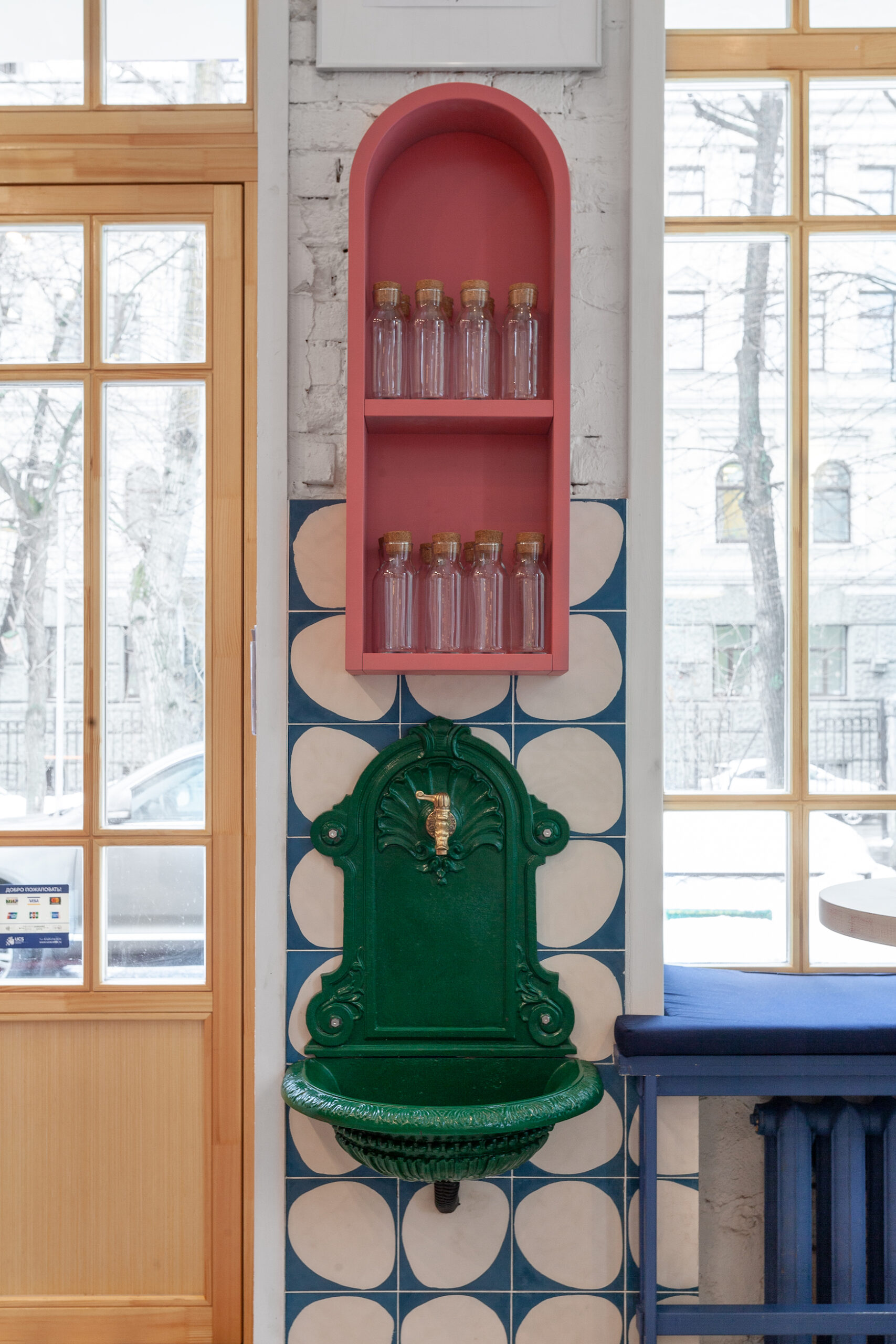
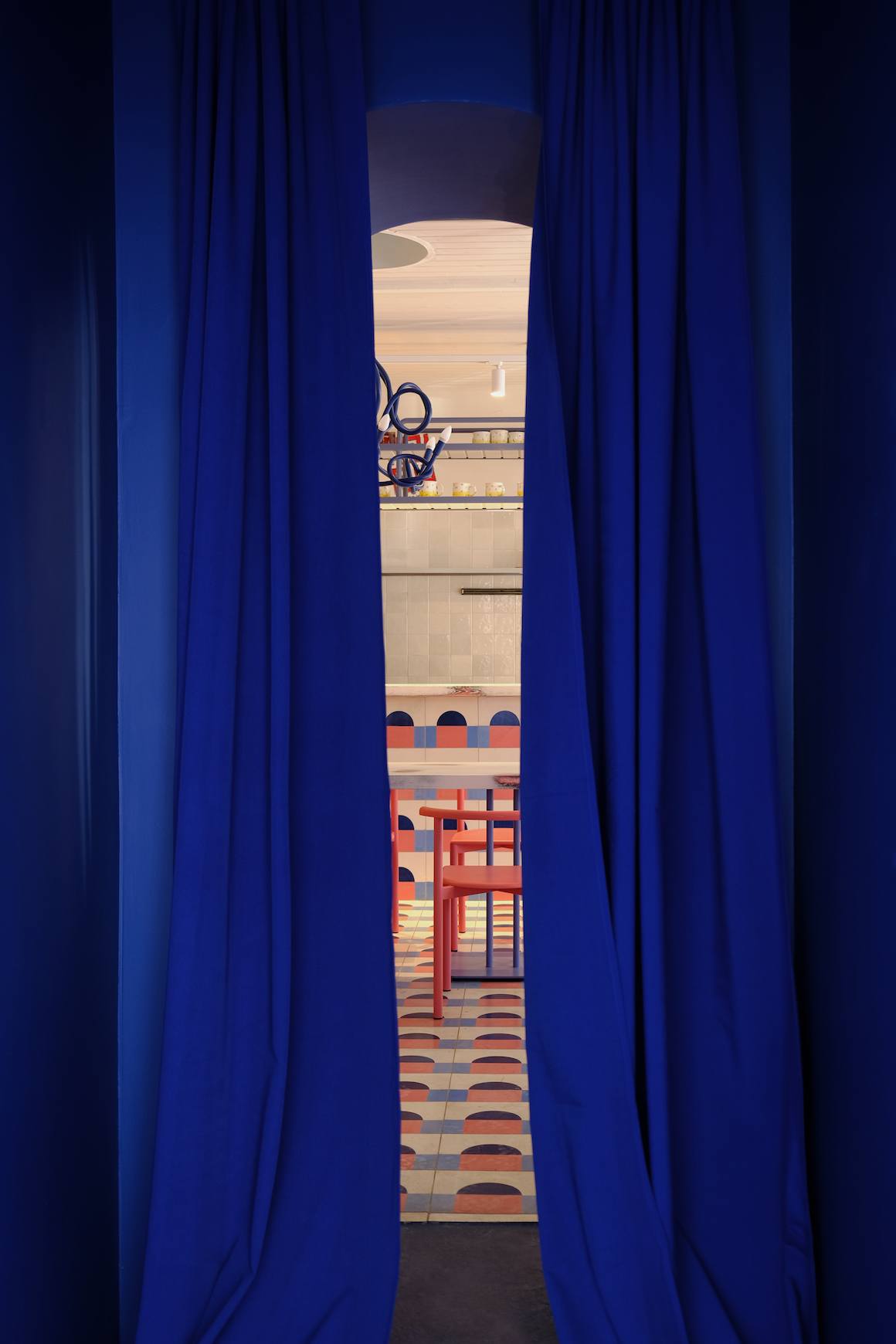
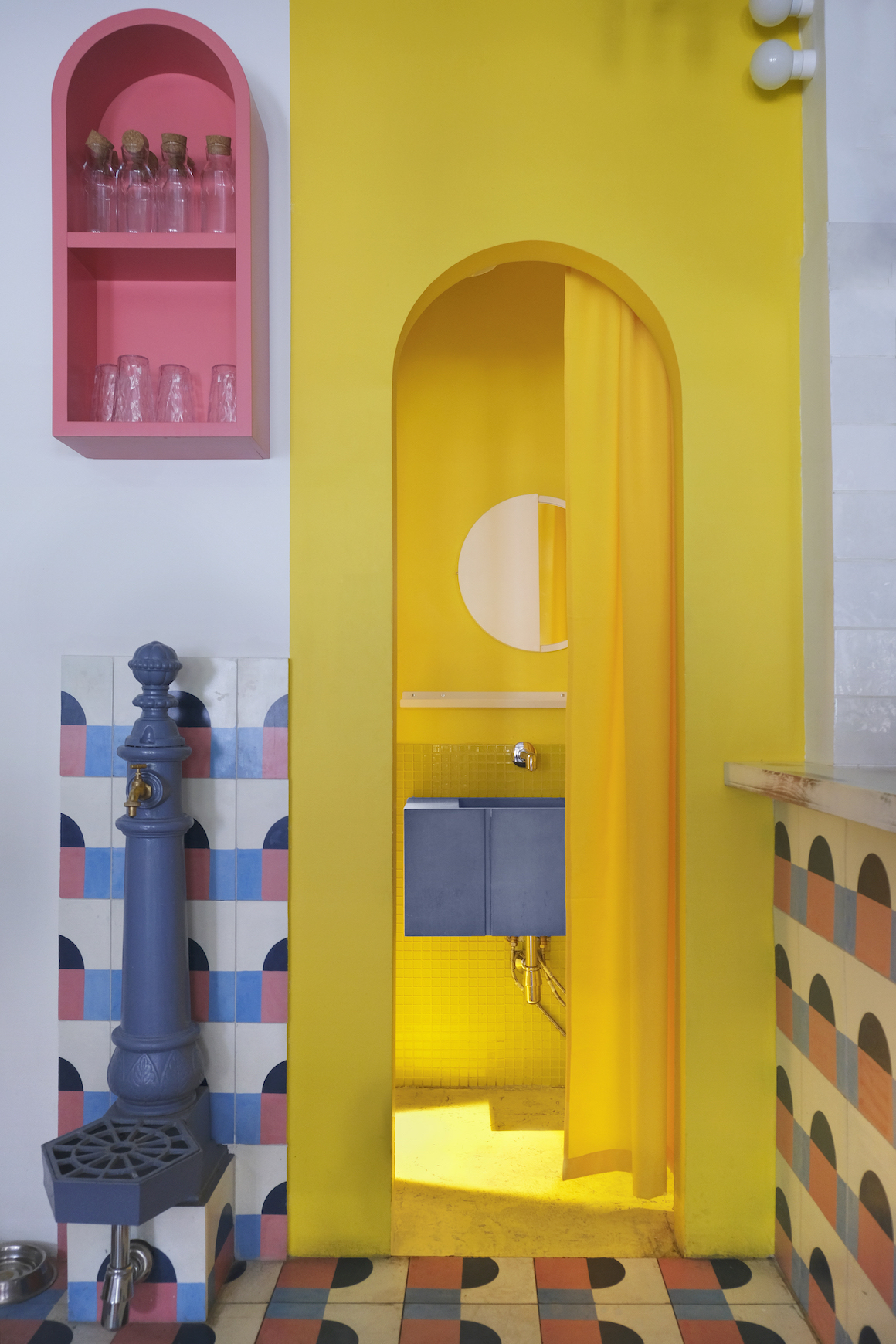
Abu Gosh, Moscow.
For SHOO, Abu Gosh was the door opener project: a small Middle Eastern street-food café tucked inside a restored 1911 garden pavilion in Moscow. During the 2019 renovation, the team stumbled upon an old chimney cavity. Rather than covering it up, they turned it into a feature, suspending a double-height chandelier—designed in-house, one of SHOO’s first product designs—that elegantly bridges the two floors. Vintage lamps, oak tables, an upstairs amphitheater, flea-market finds, and hand-painted plates complete the space. “We wanted it to feel like it had always been there,” Shushana explains, “but also like nothing else around it.”
Another highlight, this time with a more restrained palette, sits in Yerevan: the studio’s first retail venture, Estil.io. Once a clothing store, the 1,550-square-foot flagship just off Northern Avenue on Hin Yerevantsi now features home decor, and carries the fingerprint of every craftsperson involved. A custom strip of stainless steel, crafted by Armenia-based company Moon Metal twists from ceiling to floor above the reception desk like a sculptural thread stitching the whole space together.
For Yerevan’s creative scene, Estil.io is more than a commission; it’s proof that local craft can be daring, refined, and entirely its own. Almost everything in the store was made in Armenia: shelving, sofas, tables, display systems, many crafted by local furniture maker Canate. “There were so many objects, all different shapes and colors,” Shushana remembers. “We realized the background had to step back. It was about design that uplifts, not competes.”
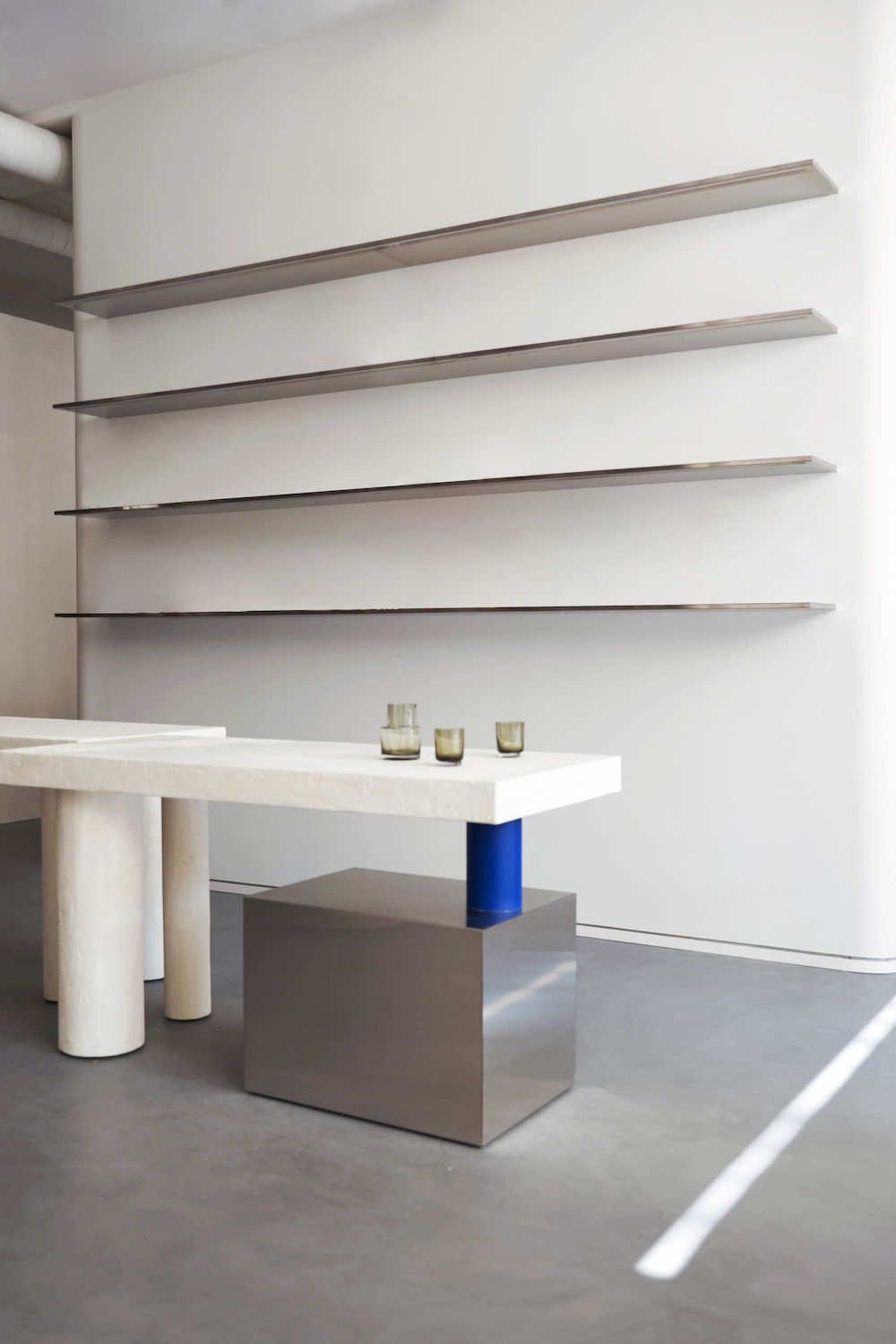
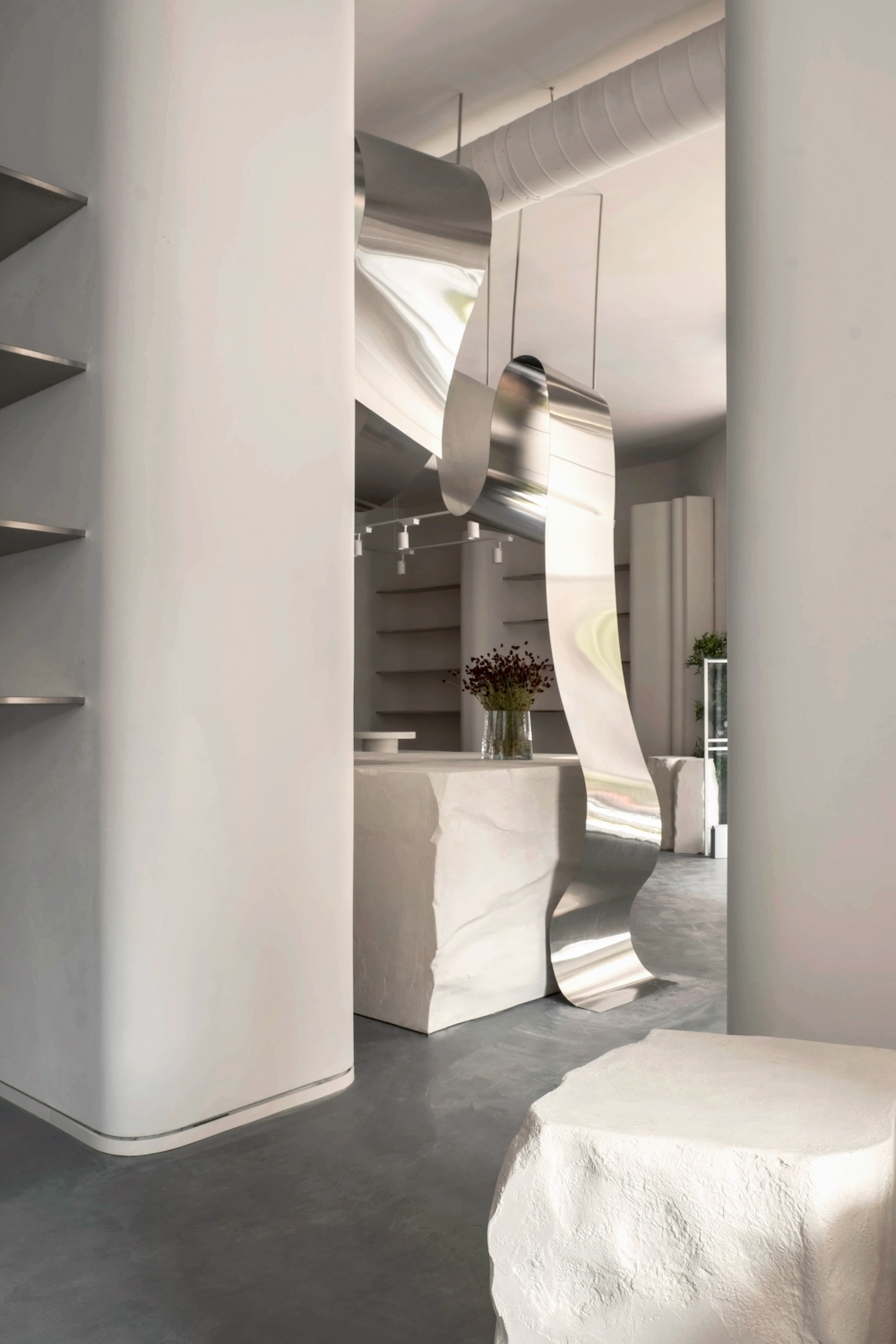
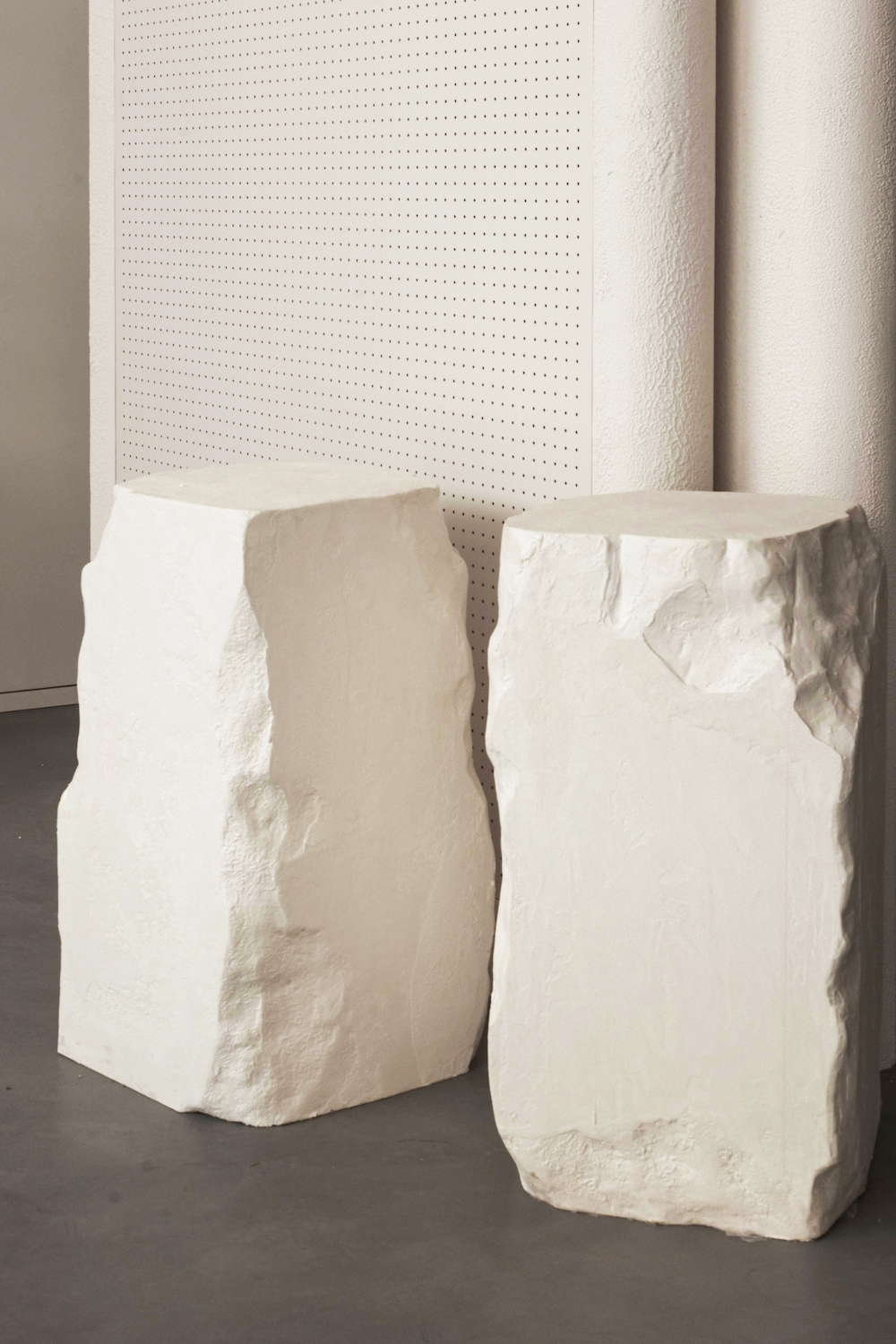
Estil.io, Yerevan.
This commitment to authenticity and material honesty mirrors a larger balancing act Shushana navigates as a founder: creativity shaped by her Armenian roots and the artistic practices of her current home, Italy. One might assume Milan is the modern, edgy counterpart; but the reality is more nuanced.
Her Armenian heritage remains central to her design philosophy. She draws on the country’s rich architectural tradition: expressive yet balanced lines, robust forms softened by warm materials, and a groundedness that gives spaces authenticity and emotional resonance. Milan adds another layer, offering a culture of design steeped in craftsmanship, a seamless marriage of aesthetics and daily life, and a vibrant creative energy that continues to shape her work.
Yet, every rose has its thorn. “In Milan, design often leans traditional: marble, ornate finishes, the classic touch,” she says. “I’m not a huge fan of marble, so you won’t see much of it in SHOO’s work.” She laughs. Meanwhile, in Armenia, the challenge is less about materials than mindset: “Clients sometimes say, ‘Armenians won’t understand it.’ But we push back. A long-stay hotel, for example, should feel like home. Why not make it inspiring? Beige will always be there. We’re just offering a more vibrant detour.” The city, she notes, is catching up.
Shushana watched Yerevan shift from gilded excess and eye-bleeding grandeur to something more grounded and creatively charged. Cafés carved out of old garages, flea-market treasures reborn as design statements—what she jokingly calls an “Embassy of Aesthetic Pleasures,” like the eponymous bar off of Baghramyan. A new generation wants charm over status, and STUDIO SHOO is firmly in that current.
Armenian architecture and Martiros Saryan’s way with color have been key influences. “He never used black, only deep blue for shadows,” Shushana explains. “That stayed with me. It changes how you see contrast. There’s optimism in that choice, a quiet refusal to give in to gloom.” As a child, she once drew a pear entirely in green. “My teacher said, ‘Look again! There’s more than just green.’ I never saw color the same way after that.”
From this patchwork of foundational influences, Shushana brings Armenian architecture into her portfolio, with her recent Cheese Farm restaurant project in Yerevan as a highlight. There, she drew on the monumental yet harmonious forms of Armenian architects: clean lines, expressive volumes, and local materials: “This architectural language balances strength with a sense of warmth. It continues to guide my creative decisions and helps me shape environments that feel both contemporary and deeply rooted in place.”
These early inspirations still inform STUDIO SHOO’s work. Even their most pared-down spaces treat color and line not as ornament, but as dialogue. Now, across public and private projects, SHOO pushes further: how can this philosophy of hue and form translate into a broader discourse, a different design grammar? The answer may lie in objects.
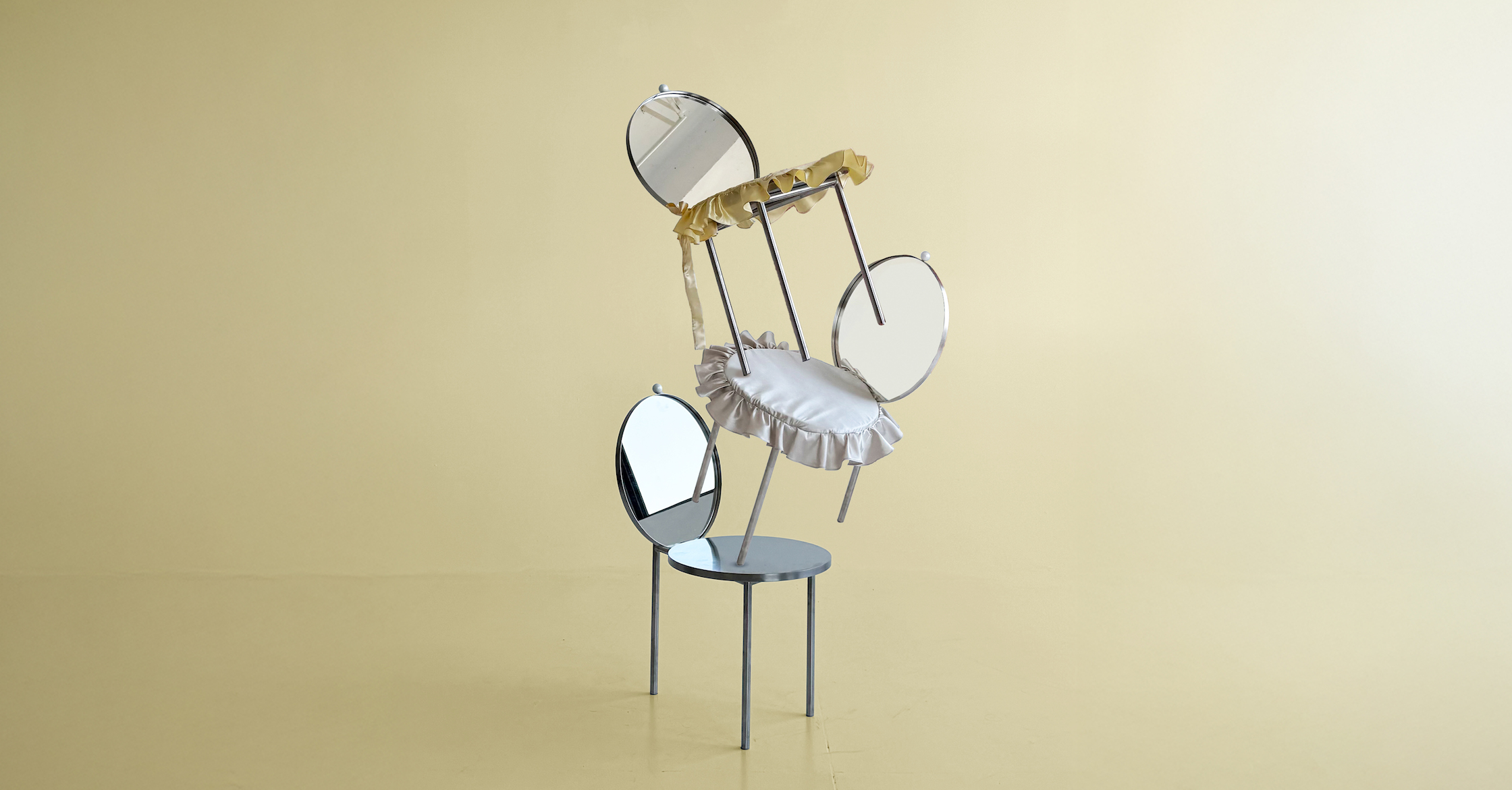
At the London Design Festival 2025, SHOO unveiled the “Women’s Chair”—a sculptural object examining how women move through modern society. It began with frustration: Cappellini’s “Thinking Man” chair, complete with a cigarette ashtray. “Why is there a chair for men but not for women?” Shushana wondered.
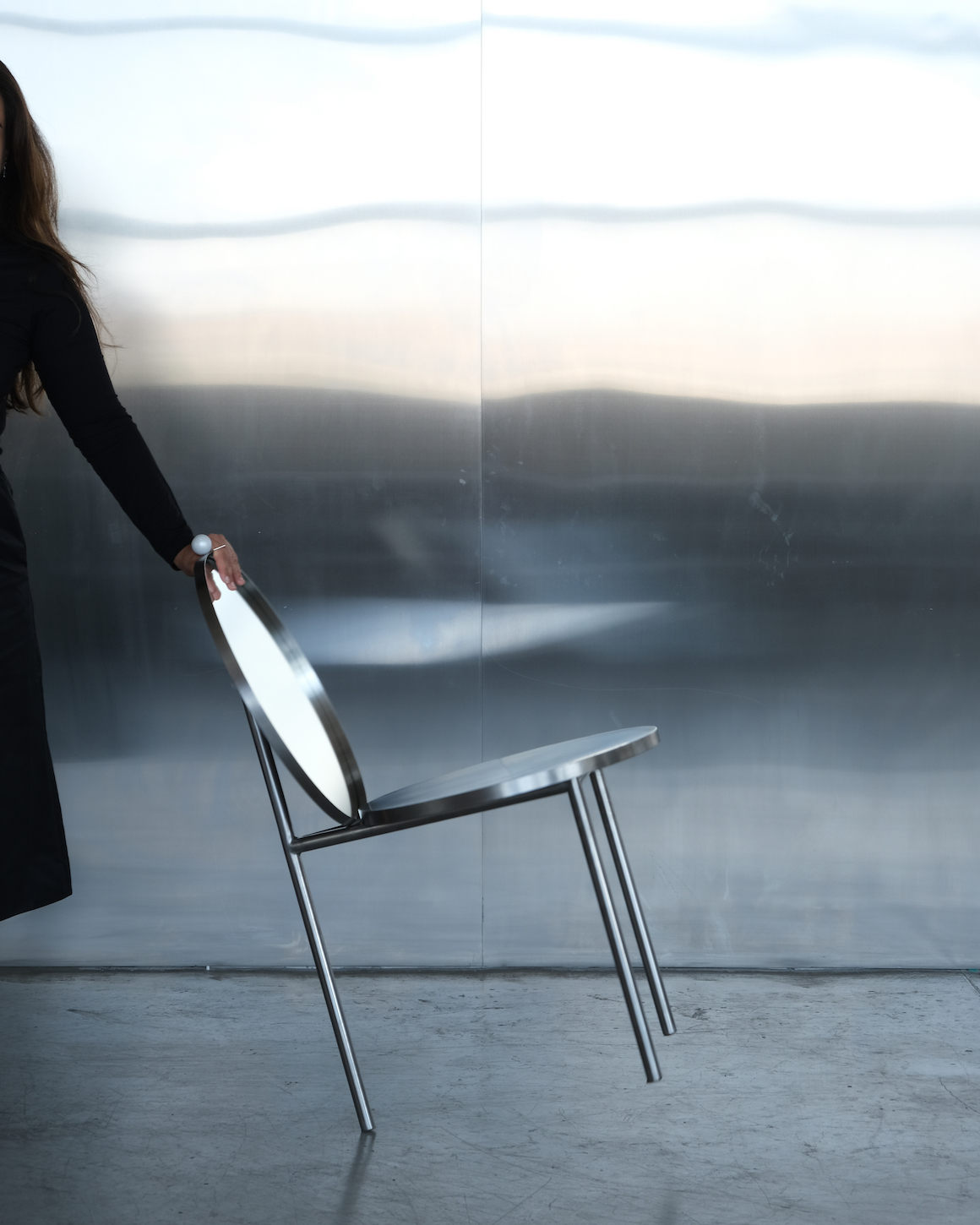
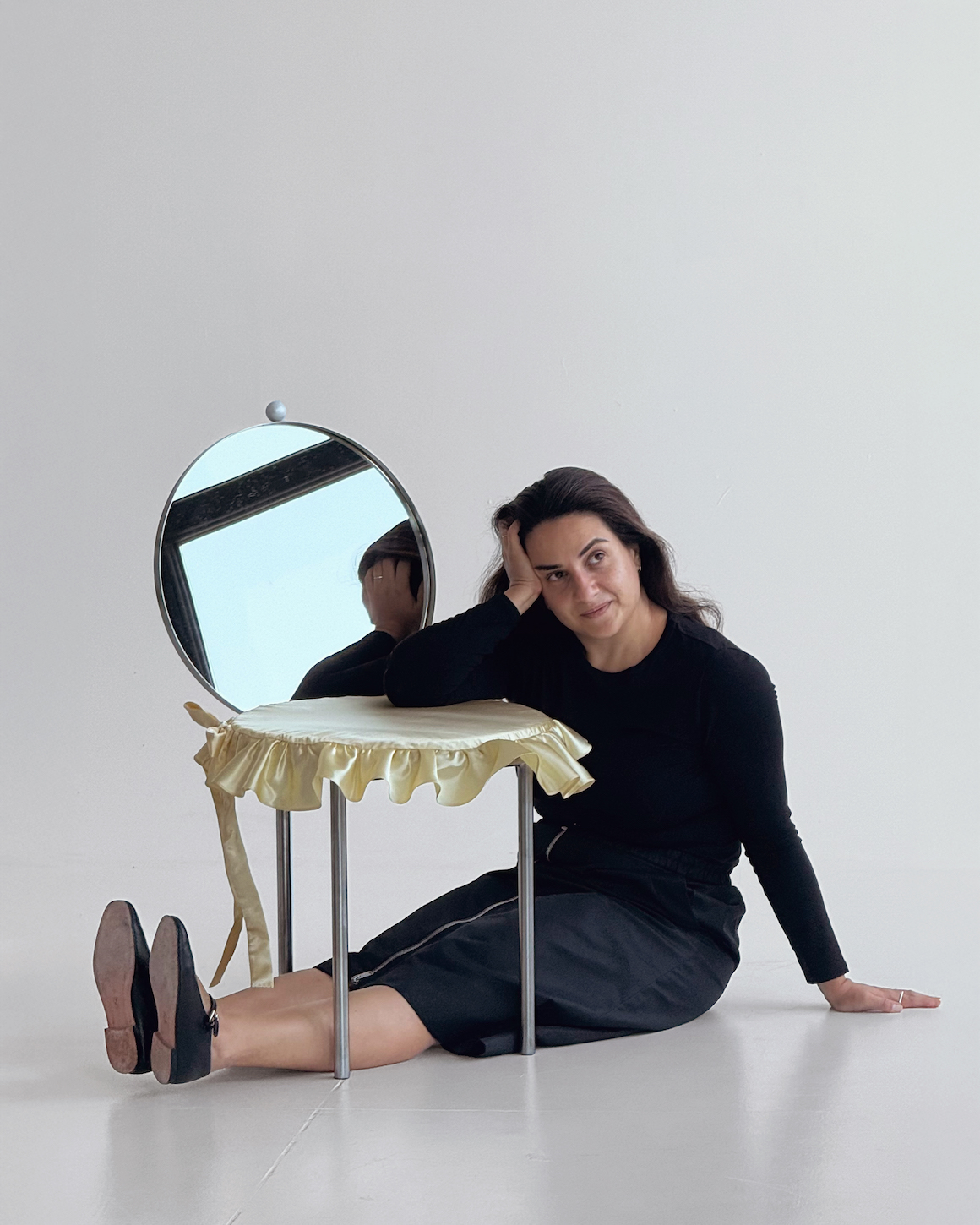
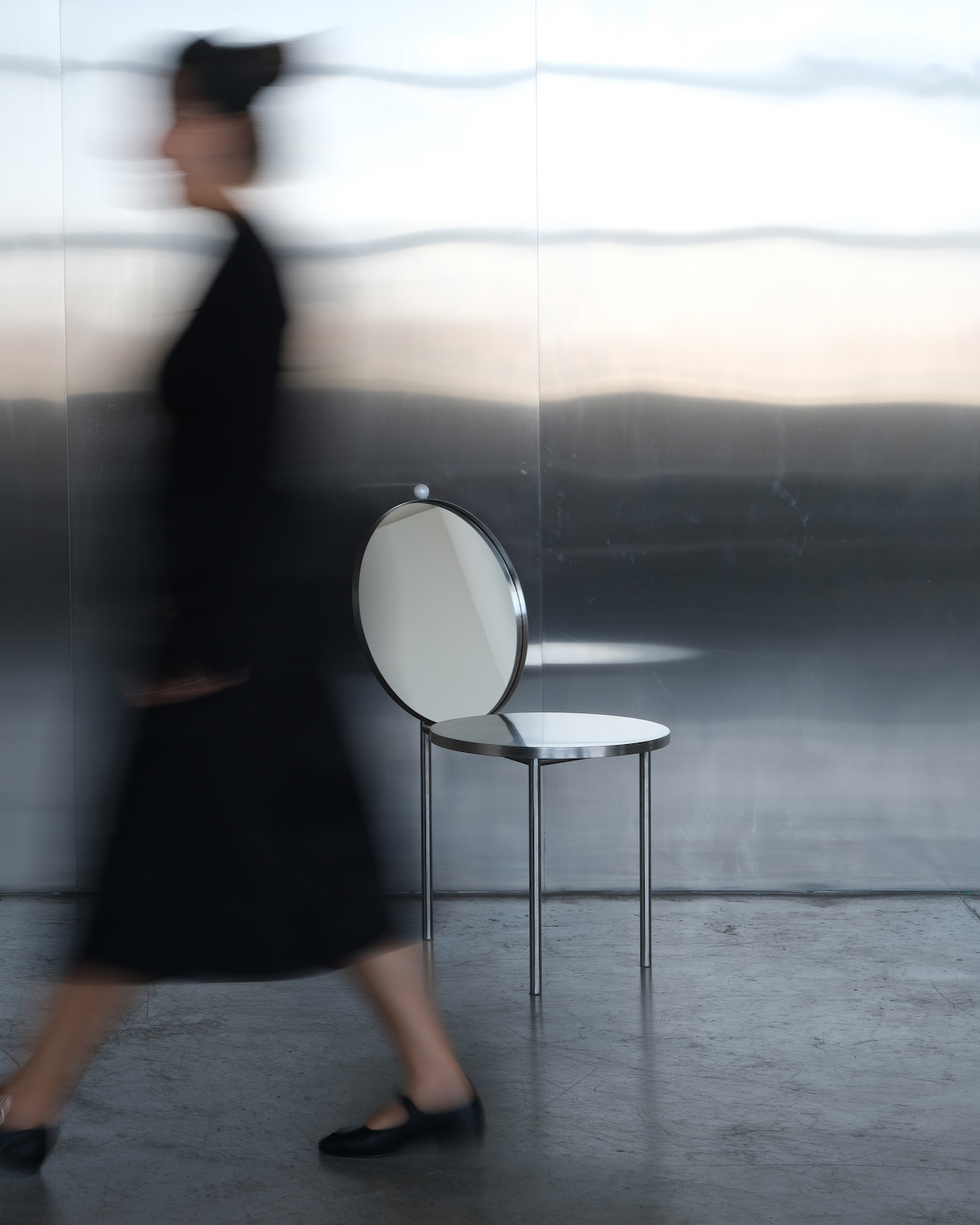
“Women’s Chair”, Studio SHOO.
Photos courtesy of Studio SHOO.
That moment sparked the first drafts. Part object, part statement, the chair started as three-legged, with a built-in mirror, elegant yet deliberately uncomfortable. “The discomfort is the point,” she says. “It reflects how women are expected to sit, behave, and fit.” Created by Canate, the cold precision of metal finds unexpected softness in a ruffle of yellow satin cushion, handmade by Yerevan-based fashion designer Hrachuhi Martirosyan. Its unstable legs, angled backrest, and built-in mirror enforce posture, disrupt ease, and offer fleeting reflections, evoking the conditional visibility, shifting identity, and imposed expectations women often navigate.
Whether a retail concept in Yerevan or a sculptural chair in London, STUDIO SHOO’s work returns to one belief: design should stir, it should surprise, soothe and challenge. Across continents, Shushana carries one constant: respect for what exists. “If a client wants to destroy everything, I decline,” she says. “Even a single old brick deserves a place in the new.”
Shushana is now considering further study, perhaps in business for the creative industries, though whether Italy will remain home is uncertain. “Now that the risk has been taken, the pendulum is in full swing,” she says. Her advice reflects the same vividly minimalistic outlook: speak less, do more.
LIFESTYLE
Change
The November issue of SALT explores the parts of life in Yerevan that often go unnoticed but quietly shape our days: from the city’s increasingly chaotic rental market and the struggles of those living with celiac disease, to caring for our bodies in the age of Google, wandering a neighborhood layered with memories that refuse to fade.

Health in the Age of “Dr. Google”
In a world overflowing with online health advice, Dr. Mariam Manoukian helps readers separate noise from knowledge. Blending medical insight with personal experience, she highlights how small, consistent lifestyle choices, not trends or fear, can prevent disease and support long, healthy living.
Read more
When Eating Is a Gamble: The Story of Celiacs in Armenia
In Armenia, low awareness and limited gluten-free options make life with celiac disease a daily struggle. Through personal stories, Eliza Barkhudaryan reveals how every meal can feel like a gamble, and how a small community is fighting for understanding, their wellbeing and change.
Read more
Kond in Autumn Rain
A walk through Kond during an autumn drizzle becomes a sensory meditation on one of Yerevan’s oldest neighborhoods with its layered histories, lived realities and fragile beauty. In this evocative essay, Maria Gunko explores how rain transforms the district’s mood, revealing both its charm and its unresolved uncertainties.
Read more
Welcome to the Rental Hunger Games
A darkly funny dive into Yerevan’s rental market, where outrageous prices, crumbling “designer” homes, and Soviet-era domiks collide with the everyday despair of tenants just trying to find a livable space. Ella Kanegarian-Berberian’s sharp, witty look at a city caught between illusion and reality.
Read more