
Listen to the AI generated audio article.
Plug and Play, the California-headquartered global startup accelerator and innovation platform, has recently begun operating in Yerevan, marking its physical entry into Armenia’s startup ecosystem. Given the familiar format of many acceleration programs in the city, you might expect to walk into a room with startups sitting through group sessions and listening to visiting lecturers or program speakers.
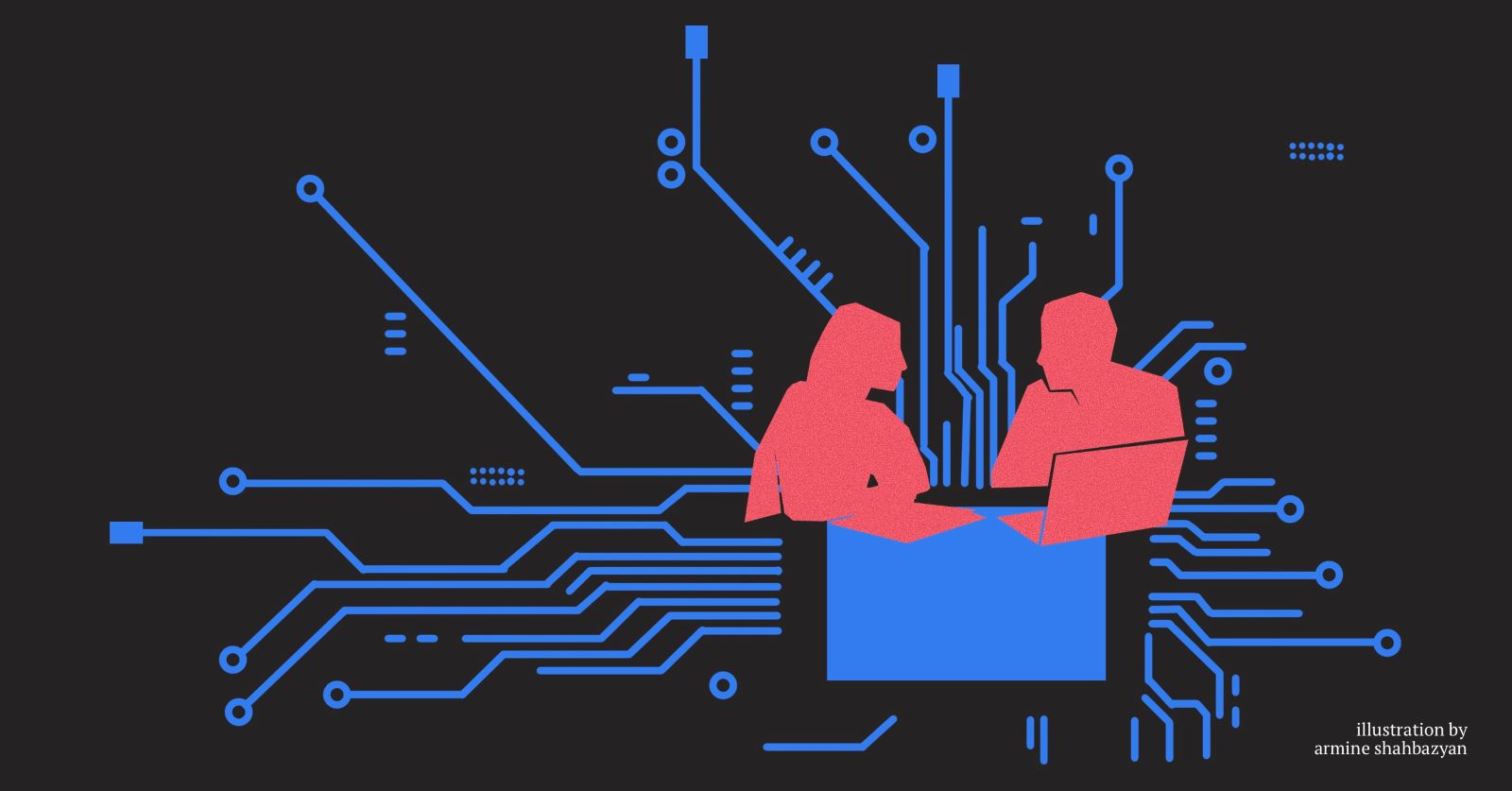
But the scene inside Plug and Play Yerevan was different. In different corners of the office, mentors sat side by side with startup teams, working through questions in pairs and discussing products, markets, strategy and next steps in real time.
As the Plug and Play Armenia team explains, this is the core of the program they have launched: each week, three international mentors visit the Yerevan office, experts and industry leaders from Plug and Play’s global network, or members of its internal team, to meet startups physically and work with them directly.
The program is already in its third cohort, the local team is in place, and Plug and Play’s presence in Yerevan is becoming increasingly visible. So what exactly has entered the ecosystem, and what can Armenian startups realistically expect from it?
How Plug and Play Entered Armenia’s Startup Scene
Before looking at what Plug and Play is bringing to Armenia, it helps to start with the basics: what is an accelerator and why do startups join one?
At its simplest, an accelerator is a structure built for speed. Startups join it because they want to move faster than they could on their own: to test whether their product has a real market, sharpen their business model, meet people who can open doors, and prepare for the next stage of growth. The promise is usually a mix of mentorship, investor exposure, market access, practical feedback, and, perhaps most importantly, a certain discipline.
For a few intense weeks or months, a startup is pulled out of its usual rhythm and pushed to ask tougher questions: who exactly is the customer, what problem is being solved, how will the company grow, and what needs to change before it can raise money or enter a new market?
Plug and Play’s appeal as an accelerator lies in the fact that it is not simply a program built around workshops and classroom-style learning. It describes itself as a “global innovation platform”, built on connections between startups, investors, corporations, universities and governments. Its network now spans more than 60 locations and over 550 partner organisations.
Plug and Play’s arrival in Armenia began with a question raised by the Ministry of High-Tech Industry: What kind of acceleration does our local startup ecosystem need at this stage?
For Heghine Muradyan, a Ministry representative who has been involved in the initiative from the start, the logic was simple: if most Armenian startups are building for global, or at least large foreign markets such as the U.S., then the ecosystem needs stronger outward connections to international mentors, investors, markets and acceleration practices.
Traditionally, much of this outward connection, especially with the U.S. market, has been built through diaspora networks. Armenians living in these target markets have often helped local startups better understand market expectations, find the right channels, make introductions and navigate unfamiliar business environments.
But as the ecosystem grows, relying mainly on personal and diaspora networks may no longer be enough. International accelerators can offer a more structured and sustainable way to connect startups with mentors, investors, and markets abroad, explains Sona Grigoryan, Director of Plug and Play Armenia.
The first Plug and Play program took place in 2024 and served as a pilot for the Ministry. It brought together 20 startups for a three-month acceleration cycle and ended with an Expo Day. Muradyan says that, based on positive feedback from participants and the wider ecosystem, the pilot was expanded into a longer-term presence: six cohorts planned until 2028, with up to 20 startups in each cohort.
Plug and Play now has a physical office in Yerevan. This matters because it turns the accelerator from an occasional intervention into something startups can actually enter, return to, and build relationships around. As Grigoryan says: “Many global programs reach Armenian startups through online workshops, visiting experts or one-off events. Plug and Play is different because it is physically here: with a team, recurring cohorts, community events, international mentors coming into Armenia and follow-ups after the program ends.”
The physical presence and offline interaction with mentors is important, because it creates not only a knowledge-sharing experience, but also a connection between founders and mentors. The value of that relationship is not always easy to measure at first, but it can open doors over time. For example, as Grigoryan notes, in some cases mentors have even gone on to become angel investors in programme startups.
How Plug and Play Works for Startups in Practice
Grigoryan frames Plug and Play’s global work around three connected pillars: startup programs, a VC fund, and open innovation services.
The first pillar is the program side. In Armenia, this is the core of Plug and Play’s current work: incubation and acceleration programs that help startups move from early validation toward stronger market and investment readiness. So far, more than 40 startups have taken part in the program.
The second pillar is venture exposure. Globally, Plug and Play operates not only as an accelerator but also as a venture capital fund. Its portfolio includes more than 2,000 startups, including more than 35 unicorns.
The third pillar is open innovation, the part of Plug and Play’s work that connects startups with large corporations and governments looking for solutions to specific business or technology challenges. As Grigoryan describes, this is still a newer area for Armenian businesses and local demand is not yet fully formed. But this is where Plug and Play’s global network becomes important.
Globally, the platform works with more than 500 corporate and government partners interested in startup solutions. Armenian startups that go through the program therefore become part of a much wider pool of companies that can be seen, tested and potentially approached by international clients.
For that kind of matching to work, Plug and Play’s Playbook is essential. The Playbook is the internal platform where startup profiles, needs, sectors, stages, and potential opportunities are recorded and tracked across Plug and Play’s network. As Ani Oganesyan, Senior Ventures Associate, explains, the end of a program does not remove startups from Plug and Play’s radar: they remain in the Playbook, where their profiles can later be matched with relevant corporate, investor, or international program opportunities.
Much of Plug and Play’s value comes from the program’s constant movement: the conversations, events, follow-ups, and networks that keep startups exposed to feedback. As the team of Plug and Play Armenia describes, pitch sessions, expo days, and mentor meetings create settings where startups are repeatedly brought into the room, to explain, test, adjust and ask again. The program is designed not as a sequence of sessions, but as a rhythm.
That rhythm matters because startups don’t all have the same needs.
Some are still trying to learn whether the problem they want to solve is real. Others already have a product, but need to figure out how to sell it, explain it, or enter a market. More mature teams may need to prepare for investors, access corporate partners, strengthen enterprise-sales, or clarify a route to international expansion.
For Gera Avagyan, founder of TAOS, the program’s value was the push to rethink the company behind the technology. TAOS began as a monitoring system, but conversations during the program about users, buyers, and market need shifted the idea toward a broader healthcare platform connecting patients and doctors with tracking and real-time support. As Avagyan puts it, “at some point we understood that we are not just creating technology but building a business.”
For Manan Gohel and Nona Telunts, founders of StepX, the value showed up differently. Their team already had strong hardware and software engineering capacity, but conversations with Plug and Play pushed them to think more carefully about customer needs, product-market fit, and the practical realities of scaling a hardware product. Their global thinking also became more specific: they had to look strategically at where their product could be developed, tested, manufactured, and scaled. This eventually brought China into focus as a key market for hardware development, production, iteration, and cost-efficient scaling.
For Anna Shahinyan, co-founder of FiveBrane, the program also helped the team think more clearly about product-market fit. FiveBrane helps medical imaging AI teams organize their data, work with clinical experts, and build more reliable, compliant AI products. As Shahinyan explains, the product itself remained largely the same. What changed was how the team positioned it. As a technical team and people with neuroscience background selling to larger institutions, FiveBrane needed help translating a complex product into enterprise language—how should it be worded? Anna pointed to mentor feedback and the branding session, being the most impressive parts of the program. She also emphasized how prepared the mentor was, knowing the brand behind every startup, and how valuable that connection was to the process.
Together, these stories show why the program layer matters. It does not produce the same outcome for every startup. Plug and Play’s promise to Armenian startups is not simply, “we will teach you.” It is closer to: we will place you inside a network that moves quickly, expects clarity, and gives access, but you have to know how to use it.
The Startup Mindset That Makes the Difference
But Plug and Play can only open doors; startups also need to be ready to walk through them.
A startup does not simply enter the program and get accelerated. It gets tested. Assumptions are questioned. Pitches are interrupted. Products are refined closer to the market.
In conversations with the Plug and Play Armenia team, one message comes through clearly: the founders who benefit most are the ones who stay active. They ask questions and follow up. They show up to events and are not shy about sharing their story, product, and path and they are eager to put themselves in the customer’s shoes.
Muradyan from the Ministry of High-Tech Industry puts the challenge quite directly. Armenian startups often have the technical capacity, but communication, pitching, and sales remain weaker areas. Sometimes it’s the hesitation to speak, sell, ask, or initiate. She recalled one founder who came with a ready-made list of people, venture profiles, and markets they wanted to connect with, exactly the kind of founder who knows how to use a network rather than admire it from a distance.
That example captures almost the whole lesson.
The Plug and Play team sees this often: founders start with the solution, not the problem. They build something because they believe in it, and only later ask whether the customer has a real pain point, whether that pain point is urgent, and whether someone is actually willing to pay for the solution.
This is one of the hardest mental shifts in any acceleration process. A founder may enter the program looking for help to “sell the product,” only to discover that the product itself needs to be rethought. The customer may not be who they assumed. The business model may not work. The market may be less interested than expected. The pitch may sound confident, but the underlying business may still be unclear.
And that is not necessarily a bad outcome.
This is why startups entering Plug and Play should be ready to be challenged. Not in a discouraging way, but in a clarifying one.
The startups that benefit most are not necessarily the ones that arrive with the most perfect product. They are the ones willing to adapt, as TAOS, StepX, and Fivebrane did.
They show up to community events before they are selected. They attend Expo Days. They pitch even when it isn’t perfect. They ask mentors direct questions. They follow up after meetings. They act quickly on introductions. They stay visible enough that the ecosystem remembers them. That also changes how startups should think about “going global”.
For many Armenian founders, internationalization still sounds like a dramatic leap: going to the United States, entering Europe, raising foreign investment, or tapping into a diaspora network. But Plug and Play’s experience suggests that global thinking is more practical. It means asking which market actually makes sense. Where is the customer? Where is the problem most painful? Where is the regulation manageable? Where can the product be tested, manufactured, sold, or scaled?
Sometimes the right next market isn’t the one founders imagine. It may be Uzbekistan. It may be China. It may be another regional market. The point isn’t to “look global.” The point is to make the next move intelligently.
So what should startups know before entering Plug and Play?
They should know the program won’t protect them from hard questions, it will bring those questions closer.
They should know that being quiet is expensive. If they need something, they should ask. If they want to meet someone, they should say so. If they’re unsure, they should test. If they receive feedback, they should act.
They should know that a good idea is only the beginning. A strong startup needs a problem, a customer, a business model, a team, and the ability to move faster than comfort allows.
Creative Tech

What Does Technological Sovereignty Mean for a Small State Like Armenia?
As artificial intelligence reshapes global power, Armenia is beginning to grapple with a new question: what does technological sovereignty mean for a small state? Elen Tovmasyan explores an emerging doctrine that rejects AI grandeur in favor of strategic dependence, local adaptation and institutional resilience.
Read more
Armenia’s Tech Labor Market Faces a Triple Shock
Armenia’s tech labor market is being reshaped by three converging shocks: a global venture capital slowdown, geopolitical fallout from the Russia-Ukraine war, and the rapid rise of AI. Together, they are transforming hiring, redefining skills, and exposing vulnerabilities in the country’s tech growth model.
Read more
From Noise to Meaning: Krisp’s Next Step in Voice AI
Krisp, known for eliminating background noise, is moving into a new phase of voice AI. Its Accent Understanding feature aims to make speech easier to follow across accents, raising both practical benefits for global work and deeper questions about identity and communication.
Read more
Armenia’s AI Story Is Coming Into Focus
A series of recent announcements, from a major AI factory expansion to plans for a small modular nuclear reactor, suggest Armenia’s technology ambitions are moving beyond rhetoric. Together, they hint at an emerging strategy linking AI infrastructure, energy capacity and the country’s growing innovation ecosystem.
Read more
A Cold Room, a Hot Field: YSU’s Supercomputer and Armenia’s AI Ambitions
At Yerevan State University, a new supercomputing center powered by 64 NVIDIA H100 GPUs is transforming Armenia’s AI research landscape. Backed by major public investment, the facility lifts long-standing computational limits, enabling advanced machine learning, cross-disciplinary collaboration and stronger global scientific partnerships.
Read more
Armenian Women in Tech Lead on Their Own Terms
In Armenia’s tech sector, women founders are redefining leadership while navigating motherhood, bias and limited representation. Through resilience, education and visibility, they are building successful companies, and in the process reshaping what the “ideal founder” looks like.
Read more
When AI Speaks Armenian։ Podcastle’s New Voice for a Nation
Armenian finally sounds natural in AI. Elen Tovmasyan explores how Podcastle’s new Armenian text-to-speech technology could transform media, education, accessibility and diaspora engagement, while raising important questions about ethics, voice ownership and what it means for a “small” language to enter global AI systems.
Read more
Why 2025 Mattered for Armenia’s Tech Sector
2025 may be remembered as a turning point for Armenia’s tech ecosystem, a year of long-term foundations taking shape. Ani Toroyan writes that while these developments open new opportunities they also raise expectations and if the past year was about setting direction, then 2026 will be about delivery.
Read more