

Listen to the AI generated audio article.
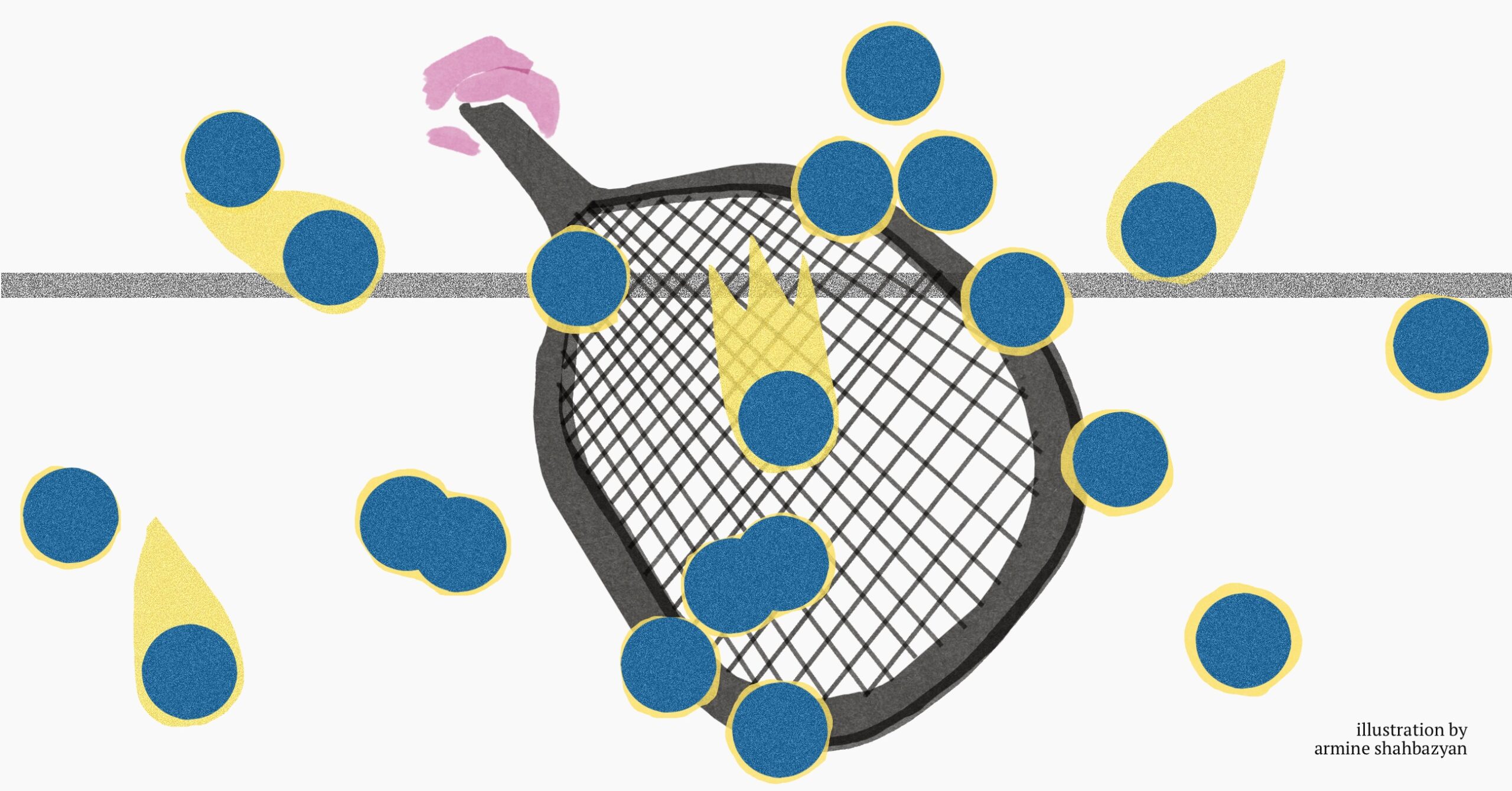
To the uninitiated, squash can look like controlled chaos: two players taking turns hitting a small rubber ball that can ricochet off all four walls at dizzying speed. A fast-paced racket sport, the goal is simple: hit the ball so your opponent can’t reach it before it bounces twice. Games are played to 11 points, and you must win by at least two.
Once a niche pastime in Armenia, squash has been steadily attracting new players and building a close-knit community. That growth was on full display at the Ararat Squash Cup 2026, held on April 18–19, which brought together players of varying levels, from seasoned competitors to newcomers and highlighted the sport’s growing ambitions in Armenia.
The numbers alone reflected the sport’s growth: 43 players competed across 72 matches, representing six countries, including Armenia, Ukraine, Estonia, Canada, Belarus and Russia.
For tournament director Yevgen Denysenko, the growth of squash in Armenia is closely tied to his own journey which began in 2018 when he first stepped on the squash court.
“I love the game. It’s physically demanding, and you have to be really fit,” Denysenko says. “Now it’s even more important because squash has become an Olympic sport. Armenia has a chance to put itself on the map.”
Hovhannes Ispirian, the tournament’s head coordinator, has been playing squash for 10 years and has helped develop the sport locally since moving to Armenia from Russia. He recalled being surprised to find a squash scene already emerging in the country. Since then, he has helped organize competitions and build connections within the community.
The Ararat Squash Cup, he noted, marked a significant step forward as an international event.
“We want to help the Squash Federation here in Armenia develop further with our Ararat Squash community,” he said.
That sense of community was evident among players as well. Valeriya Filonova, who placed second in the women’s category, traveled to Yerevan from France specifically to compete. “I started about three and a half years ago. I was dating a guy who showed me how to play. We broke up, but I didn’t give up squash. Since then, I’ve been playing about five times a week.”
For Filonova, the community has been central to staying in the sport. Now based in Toulouse, she continues to compete internationally. “I came to Yerevan just to play squash. Tomorrow I’m flying back home, but it was worth it.”
What keeps her committed is the balance the sport demands. “Squash is not just about running and hitting the ball, it’s also about strategy. It trains your brain as much as your body,” she says.
“It’s very physical, with a lot of cardio, but it also has an amazing community of inspiring people. That’s what I love most.”
She emphasized the importance of events like the Ararat Squash Cup. “Thanks to the organizers, this tournament is a great way to bring people together, not just Armenians but players from all over the world. I hope I’ll come back in October for the next one.”
For women’s category winner Shushan Harutiunian, who has been playing for nearly a decade, the sport’s uniqueness is part of its appeal. “People think it’s tennis in a room, but it’s so much more than that,” she says and credits squash with shaping her both personally and socially. “The sport has made me more resilient, given me a great community of friends, and an opportunity to be fully involved in developing it.”
Having tried multiple racket sports, her preference is clear: “I’ve played so many other types of racket sports, but my favorite is squash because of its speed and style, no other sport has it.”
With squash set to debut at the 2028 Los Angeles Olympic Games, players see an opportunity for growth and recognition. For them, events like the Ararat Squash Cup are not just competitions, but building blocks for a broader sporting culture. Ispirian says their focus now is on long-term growth through training and international collaboration. “We want to help bring good trainers here so that the sport develops.”
Squash in Armenia may still be niche, but it is far from static. With dedicated players, emerging tournaments, and increasing global attention, the game is steadily carving out its place, one rally at a time. “I suggest everyone try it. Once you step on the court, like I did, you might just fall in love with the game,” Denysenko says.

Cover photo by Roubina Margossian.
LIFESTYLE
Afterglow
May’s issue of SALT is a mix of nostalgia and gumption. From the evolution of Armenia’s post-Soviet music scene to the history of Armenian bridal fashion, from a photo story capturing the outdoor games children still play to reflections on the life of Armenian radio, and the story of one man helping revive forgotten vines, these pieces explore memory, identity, creativity and resilience in all their different forms.

Bridal Fashion in Armenia Through History
Tracing Armenian bridal fashion from traditional taraz to contemporary couture, Nora Grigoryan explores how the wedding dress reflects identity, femininity, family expectations and cultural change. Through designers, photographers and historians, it examines the tension between heritage, modernity and self-expression.
Read more
The Sound of Post-Soviet Armenia and the Grunge Era of Rabiz
In the aftermath of the Soviet collapse, Armenia’s music scene underwent a dramatic transformation. From the rise of rabiz and estrada to experimental fusion and underground influences, Tamara Khachatryan explores how hardship, freedom and cultural upheaval reshaped the country’s post-Soviet musical identity.
Read more