

Listen to the article.
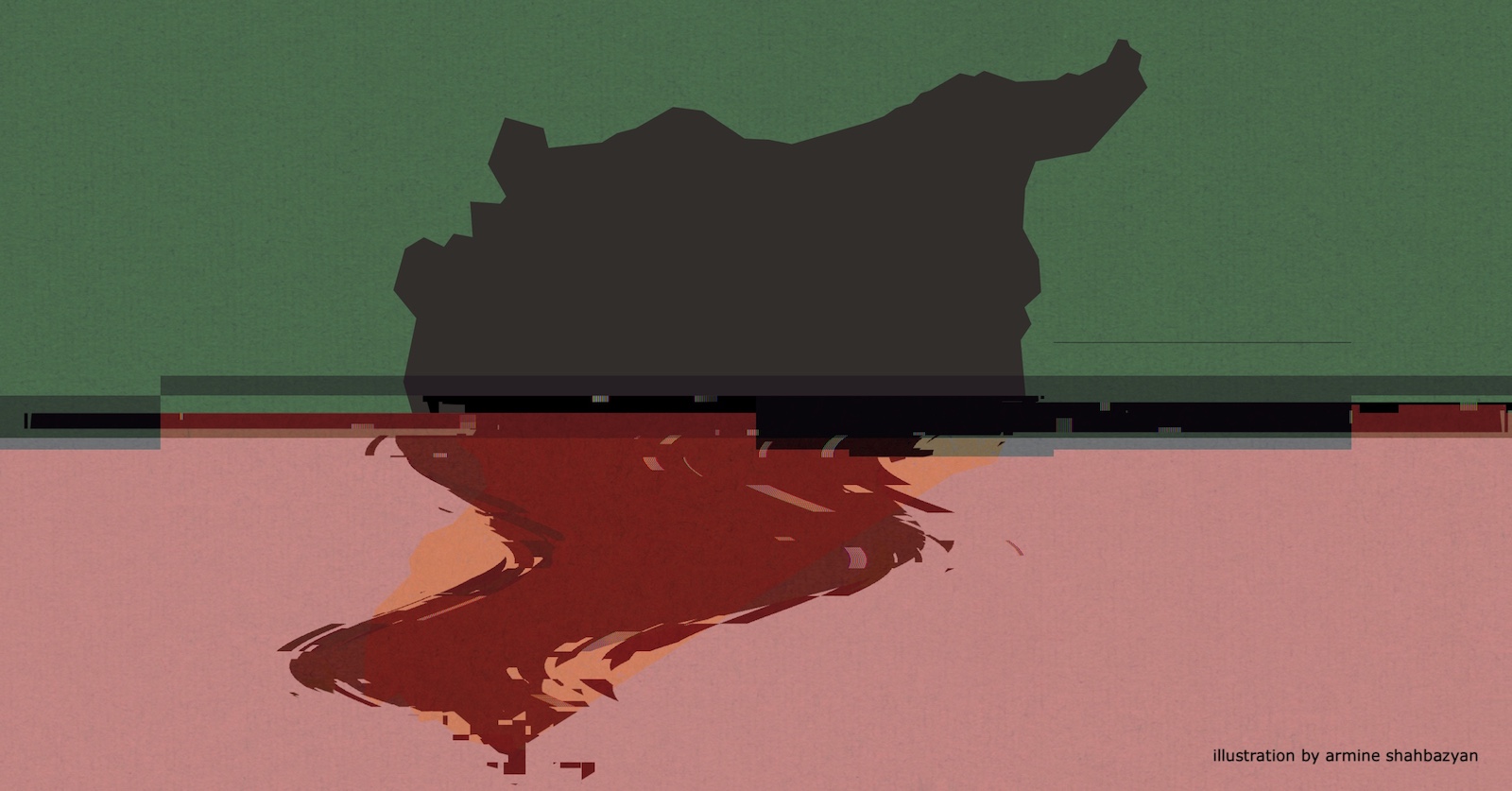
The massacre of hundreds of Druze civilians in Syria since July 13, 2025, carried out by Sunni jihadist groups affiliated with or supported by the country’s new authorities and local Bedouin tribes, is another warning of Syria’s deepening sectarian fragmentation.
The Druze are Arabs practicing an esoteric Abrahamic religion closely related to Ismaili Shiism. To Sunni Islamist extremists, the Druze are viewed as heretics. This millennia-old Middle Eastern minority includes approximately 600,000 in Syria, 350,000 in Lebanon, and 130,000 in Israel. For survival, the Druze have historically maintained loyalty to the state in which they reside. In Israel, for example, they have served in the military since 1957, with many now holding senior positions in the army and police. They maintain strong transnational ties, particularly through endogamous marriage practices.
The Mountain of the Druze (Jabal al-Druze) lies near the Israeli-occupied Golan Heights, territory seized from Syria after the 1967 war. Many Druze civilians have fled across the border seeking protection from the Israeli army. Due to both domestic political considerations and geographic proximity, Israel will not allow Sunni Islamists to commit genocide against the Druze. As a warning, the Israeli Defense Forces bombed the Syrian Ministry of Defense in Damascus on July 16. Current Israeli authorities are likely considering the establishment of a new security buffer zone in the Druze Mountain, though they have not publicly acknowledged this.
By contrast, when the Alawite community (a secretive sect of Shiism) faced mass killings by Sunni jihadists in Syria’s northwestern Latakia region in March 2025, neither Turkey nor Israel—the two closest regional powers—intervened.
Syria’s Christian community, which predates the arrival of Islam by five centuries, has also been targeted by Sunni extremists. The bombing of the Greek Orthodox Mar Elias Church in Damascus on June 23, 2025, killed 25 people. Amid these massacres targeting Syria’s religious minorities, what position has the new president taken? Ahmed al-Sharaa seized control of Damascus on December 9, 2024, backed by Turkish President Erdogan’s government, which shares ideological affinities with the Muslim Brotherhood. Is al-Sharaa complicit in these sectarian atrocities, willfully indifferent, or simply overwhelmed by forces beyond his control? One hopes it’s the latter, as this former al-Qaeda militant—who now wears suits and delivers unifying nationalist speeches—has been endorsed by Presidents Trump and Macron.
Cycle of Vengeance
Since 2010, Syria’s Christians have left the country in significant numbers, exhausted by a decade of war, eight years of sanctions, economic collapse, and mafia rule. Of the 1.2 million Christians who lived in Syria at the start of the civil war, an estimated 70-80% have since fled. Those who remain include the elderly, those without the means to flee, and those with nowhere else to go. Armenian Christians, like their fellow believers, were traumatized by the massacres along the Alawite coast. In the south, the roughly 250 Christian families of Suwayda were evacuated to Damascus, but their convoy was ambushed by Bedouin tribes seeking revenge against minorities they associated with the deposed Assad regime.
This exodus represents more than just a demographic crisis—it’s a cultural and economic blow. Syria’s Christians have long been disproportionately represented in the country’s professional class including medicine, law, education and business.
Among the few thousand Armenians who remain in Syria—roughly 5,000 to 7,000 in Aleppo, about 1,000 in Damascus, some 500 in Kessab, a scattering of families in coastal cities like Tartus and Latakia, and others in Al-Qamishli (which is part of the Kurdish-led Autonomous Administration of North and East Syria), the foremost concern is insecurity. Many fear that they may be next. They have received this message repeatedly. Skeptical of any genuine reconciliation efforts, they recognize that Al-Sharaa’s regime has relied on empty reassurances, particularly during the national dialogue conference held in February. This event gathered over a thousand delegates from across Syria for just one day, yet it offered nothing meaningful to address the decades of violence, brutality and injustice.
Amid mounting unease, many Christians have adopted an attitude of anxious vigilance as the current regime pushes for the Islamization of Syrian society. This trend has manifested in growing restrictions: young girls being kidnapped and banning alcohol in many stores. Christian schools face particular pressure, as the new Ministry of Education attempts to impose mandatory curricula rooted in Islamic law. In working-class neighborhoods across Syria, Islamist preachers have grown increasingly aggressive, openly calling for Christians to convert to Islam. Meanwhile gender segregation is gradually being enforced in public spaces, including schools, transportation, and government offices.
The Omnipresence of Turkey
The second major concern for Armenians is Turkey’s de facto control of much of Syria. Turkey has entered an undeclared conflict with Israel over the division of a zone of influence abandoned by Iran and Russia.
In summer 2024, Syrian opposition militias shared plans for an Aleppo offensive with Turkey. Islamist rebels couldn’t act without informing Ankara, which has been the Syrian opposition’s primary backer since the war’s early days. Both Hayat Tahrir al-Sham (HTS) and the Syrian National Army (SNA, controlled by Turkish intelligence service, MIT) believed they had received at least tacit approval from Ankara before launching operations.
President Erdogan had long opposed a major offensive, fearing it would trigger a new wave of refugees into Turkey. However, by early 2024, Islamist rebels sensed a hardening in Ankara’s stance toward Assad after Damascus repeatedly rejected Erdogan’s attempts to negotiate a political solution to the military stalemate.
After Ankara’s efforts to persuade Assad failed, HTS commanders presented operation details to Turkish generals. HTS founder Ahmed al-Sharaa (whose nom de guerre is Abu Mohammed al-Joulani), sent a clear message to Ankara: “This path hasn’t worked for years—so try ours. You don’t need to do anything, just stay out of the way.” In the initial offensive, the Turkish-backed SNA seized large areas, including Tel Rifaat, from U.S.-backed Kurdish forces.
After the fall of the Assad regime, MIT director Ibrahim Kalin became the first intelligence chief to visit the Syrian capital. He arrived in Damascus on December 12, 2024—just four days after Bashar al-Assad’s fall––and prayed at the Umayyad Mosque. When Syrian leader Ahmed al-Sharaa personally drove the car that Kalin entered upon leaving the mosque, it sent a strong message about the close relationship between HTS and Turkish intelligence.
Turkey’s involvement in Syria runs deep. The Suleiman Shah Brigade was a central component of the anti-Assad armed opposition and part of the Syrian National Army, formerly Turkey’s proxy militia. Until 2024, it operated in the Afrin region of northern Syria, exercising significant control over the local population. The brigade became notorious for kidnappings and extortion, particularly targeting Afrin’s Kurdish residents, who were harassed, forced from their homes, or coerced into paying large ransoms to recover property or loved ones.
Mohammad Hussein al-Jasim (nom de guerre Abu Amsha), an ethnic Turkmen and the head of the Suleiman Shah Brigade, holds Turkish citizenship. Under his leadership, brigade members forcibly displaced Kurdish residents and seized their homes, giving the properties to Syrians from outside the region. Al-Jasim is responsible for dozens of assassinations and abuses, including crimes committed in 2018 in Afrin, this according to a UN report. His younger brother, Walid Hussein al-Jasim, also held a leadership role in the Suleiman Shah Brigade, where he coordinated kidnappings, robberies, ransom operations, and money laundering from ransom payments through business run in several locations in Southern Turkey.
The Hamza Division, led by Sayf Boulad (also known as “Abu Bakr”), is another armed group within the Turkish-backed SNA. This militia has conducted torture in detention centers where kidnapped individuals were held for extended periods. Many of these detainees suffered sexual abuse. This brigade sent mercenaries to Azerbaijan to fight against the Armenians in 2020.
In July 2024, Abu Bakr, Abu Amsha, and Turkish politician Devlet Bahçeli—leader of the ultranationalist Nationalist Movement Party (MHP) and Erdogan’s coalition partner—met at the Grey Wolves’ headquarters in Ankara to discuss the evolving situation in Syria. By December 2024, following the Assad regime’s collapse, Abu Bakr and Abu Amsha met Bahçeli again, this time as victors.
Both Turkmen leaders maintain connections to Alaattin Çakıcı, a former Grey Wolves member known as the head of the Turkish mafia. In July 2024, Çakıcı posted a photo on X (formerly Twitter) showing himself dining on his yacht with Abu Bakr and Abu Amsha. The accompanying caption urged Turks worldwide to support the Turkmen struggle.[1]
On January 27, 2025, the city of Manbij witnessed some of the fiercest fighting involving pro-Turkish armed groups. The Hamza Division, refusing to disarm, clashed with the local branch of Ahrar al-Sham, an Arab group affiliated with HTS. On March 8, 2025, SNA Turkmen leaders Abu Amsha and Abu Bakr participated in massacres of Alawites along the Syrian coast. These MIT-linked operatives faced no consequences for their involvement.
In December 2024, Turkey began negotiations to take control of the Tiyas airbase (T4), located near Palmyra in central Syria. Ankara and Damascus are discussing a defense pact that would provide air cover and military protection to the new Syrian government, which currently lacks a functioning army.
Turkey has already begun moving assets to secure T4. Their plan involves rebuilding and expanding the base once air defense systems are in place. Ankara intends to deploy surveillance and strike-capable drones, which would grant Turkey regional air dominance. The ultimate goal is to establish a layered air defense system at and around T4, with short-, medium-, and long-range capabilities.
Regarding Syria’s reconstruction, the leader of HTS told the pro-government Turkish daily “Yeni Şafak” that Turkey—which sheltered millions of Syrians during the civil war—would be given priority over other nations. “We trust Turkey to share its expertise in economic development with Syria. We will preserve our social bond. This victory is not just for the Syrian people but also for the Turkish people, as it is a triumph of the oppressed over the oppressor,” declared Ahmed al-Sharaa.
Onur Genç, a Turkish national and CEO of BBVA (Spain’s second-largest bank and the second-largest private bank in Turkey), added: “For Turkey, this will be positive, as there is a lot of rebuilding to be done in Syria. Who will take charge? Turkish companies. The lifting of sanctions allows Turkish firms to go in more easily and Turkish banks to finance them—so this will help.”
Since U.S. President Donald Trump returned to office, Erdogan has urged him to lift sanctions on Syria. Trump announced the decision on May 13, and Secretary of State Marco Rubio later confirmed a six-month suspension of the “Caesar” sanctions on May 23. The two presidents maintained a strong relationship during Trump’s first term, with Trump describing himself as a “big fan” of Erdogan.
Turkey’s behind-the-scenes diplomacy forms part of its broader strategy to fill the vacuum left by Assad’s downfall. This approach not only strengthens Erdogan’s status as a regional power broker but also advances his domestic agenda.
Ankara, which still controls vast swathes of northern Syria, has accepted Syria’s plan to integrate the YPG—the armed wing of the Syrian Democratic Forces (SDF)—into the new Syrian army. The repatriation of approximately 3.2 million Syrian refugees in Turkey, depends on rapid and stable infrastructure and housing development in Syria.
With the lifting of U.S. sanctions and the partial removal of EU economic restrictions on May 28 (excluding those based on security grounds), Turkey stands to reap the rewards of its long-term policy of regional influence through Syria’s reconstruction.
What Should Be Done?
For Syria, one thing is now certain: the authority of a central and inclusive state must be quickly restored across the entire territory. Otherwise, this magnificent country, home to extraordinarily hospitable people, risks plunging into a spiral of disintegration and all-out civil war.
When Syrian Christian Michel Aflaq founded the Baath Party in 1940, he understood that Levantine societies needed unifying nationalism to escape fragmentation.
Ethnic and religious minorities in any country need the protection of a strong state with a functioning system that, in practice, protects their rights. The late dictatorial Syrian Baathist regime had many flaws, but it did have one merit: it protected Christian minorities and guaranteed freedom of worship. If you are a minority and your children are threatened by bands of fanatical militants, you are left with only two options: exile or the creation of a stronghold.
The question of minority rights is the dilemma that now keeps Syria’s Kurdish, Alawite, Druze and Christian populations awake at night. Kurdish and Druze strongholds could likely endure for some time—Kurds drawing on limited support from Iraqi Kurdistan, while Druze areas are informally shielded by Israel. However, the Kurdish regions in Syria no longer benefit from support across the Turkish border, which is now tightly sealed, with Ankara closely monitoring and disrupting cross-border connections. The Alawite stronghold around Latakia, meanwhile, would likely not withstand sustained Sunni militancy for long, especially after Russia’s withdrawal from its military bases in Tartus and Hmeimim. Syria’s Christians, too few and too scattered, cannot even contemplate establishing a defensible bastion, unlike the Maronites in Lebanon’s mountains.
Since 2011, many Western analyses of the Syrian tragedy have been marked by a mixture of historical ignorance, political Manichaeism, and diplomatic wishful thinking. Armenians, as other remaining Christians, are paying the price.
Footnotes:
[1] In 1981, Çakıcı was arrested on suspicion of murdering 41 people as a member of the Grey Wolves. He briefly worked with Turkish intelligence while simultaneously engaging in drug trafficking, political assassinations—including the murder of his ex-wife—and targeted killings of Kurdish businessmen and journalists. Although imprisoned, he was pardoned in 2020 by Erdoğan, allegedly due to pressure from Bahçeli. Since his release, Çakıcı has issued threats against several opposition politicians.
Opinion
New Coalitions for a Dying World
Reflecting on the fall of Artsakh and the genocide in Gaza, Karena Avedissian calls on Armenians to reject isolationism and build principled solidarity with Palestinians and other oppressed peoples facing state violence, colonialism and global impunity.
Read more
Aliyev’s Endgame: Holding Peace Hostage
Despite agreeing to the text of a peace treaty in March, Azerbaijani President Ilham Aliyev refuses to sign, escalating demands while promoting expansionist ideology and intensifying militarization in a calculated strategy to avoid reconciliation and prolong regional instability for political gain.
Read more
How U.S. Involvement in the Iran-Israel War Can Impact Armenia
If the Iran-Israel conflict intensifies with further U.S. involvement, Armenia faces mounting security, economic and diplomatic risks. This analysis explores how regional instability, energy disruptions, and great-power pressures are reshaping Armenia’s strategic landscape and testing its delicate foreign policy balance.
Read more
Civic Defense Is Statecraft: Lessons From the Iran-Israel Conflict for Armenia
In light of the Iran–Israel conflict, Raffy Ardhaldjian argues that civil defense is a core function of sovereignty and a tool of statecraft—less about technical fixes, more about political will. Armenian political thought, he stresses, begins with readiness, not rhetoric.
Read morePolitics

Russia’s Election Interference Playbook
As Armenia prepares for parliamentary elections in 2026, early signs show intensified Russian interest and possible interference. What can Yerevan learn from the experiences of Moldova and Romania? Sandra Sadek explains.
Read more
Conditioning Peace on Constitutional Change: Impact on Armenia’s Sovereignty and Identity
Azerbaijan’s demand that Armenia amend its Constitution as a condition for peace raises serious concerns over sovereignty, governance, and national identity. Sossi Tatikyan explores the strategic, legal, and symbolic implications of constitutional change under external pressure and asymmetric diplomacy.
Read more
Armenia’s Perpetual Search for a Fitting Constitution
In this in-depth piece, Hovhannes Nazaretyan chronicles Armenia’s constitutional history since independence, outlining the country’s three constitutional referendums to date and detailing the current process of drafting a new Constitution.
Read more
India-Pakistan Escalation, Nuclear Deterrence and Armenia’s Defense Outlook
The India–Pakistan escalation underscores the power and limits of nuclear deterrence, reveals shifting regional alliances involving Turkey, Azerbaijan, and Pakistan, and highlights implications for Armenia’s security posture, including the role of Indian weapons systems in its evolving defense strategy.
Read more