Spotlight Artsakh

Hung_On_a_Line, Siranush Sargsyan

Hung On a Line

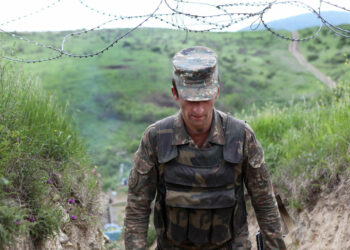
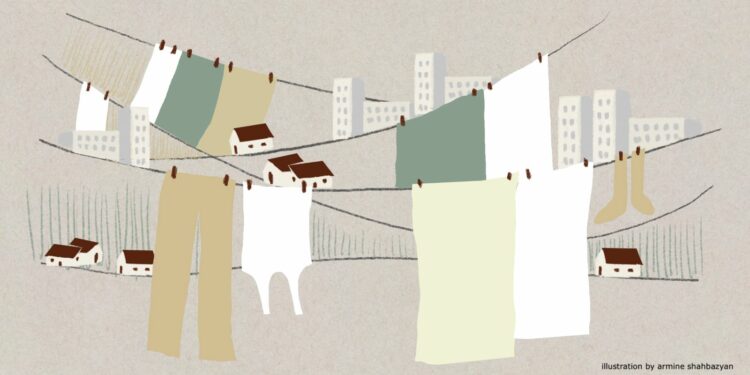
Laundry, suspended on lines, throughout Artsakh once told stories of home, pride and domestic ritual. Amid war, blockade and exile, it became a fragile thread of memory and survival, a line of cloth carrying the weight of loss, resilience and love for a vanished home.

Propaganda and the Casualties of War

Propaganda and the Casualties of War

How nations in conflict deal with loss is a reflection of how they also confront issues of war and peace. In the recent escalation near the Contact Line in Karabakh (Artsakh), an Azerbaijani child was killed. Using the bloodied image of the child by Azerbaijani authorities as a tool for propaganda speaks volumes.

A Deepening Sense of Insecurity

A Deepening Sense of Insecurity

Vahram Ter-Matevosyan writes that it is difficult to measure just how much the average Armenian was satisfied with the explanations the government provided about the scope of casualties and destruction during the April escalation. While the government was quick to praise the heroes of the war, it failed to punish those whose task it was to ensure the army was free of corruption allegations.

War Crimes in Spring

War Crimes in Spring

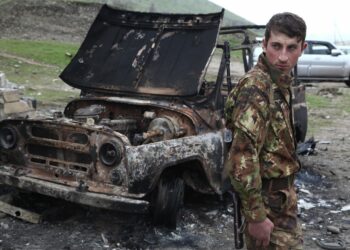
There has been a pattern of Azerbaijani war crimes committed since the end of the Karabakh War in 1994. The Four Day War last April was no exception. EVN Report presents a detailed account of Azerbaijani war crimes in Artsakh (Nagorno Karabakh).

Nagorno Karabakh: The Four Day War

Nagorno Karabakh: The Four Day War

Writer and photojournalist Simone Zoppellaro writes that the moral and political responsibility of a conflict doesn’t rest solely on the actors, or those who arm them. It rests also on the nations that would have the power to intervene and stop the hostilities but prefer to keep themselves detached or indifferent.

Page 18 of 18 1 16 17 18