
Listen to the AI generated audio article.
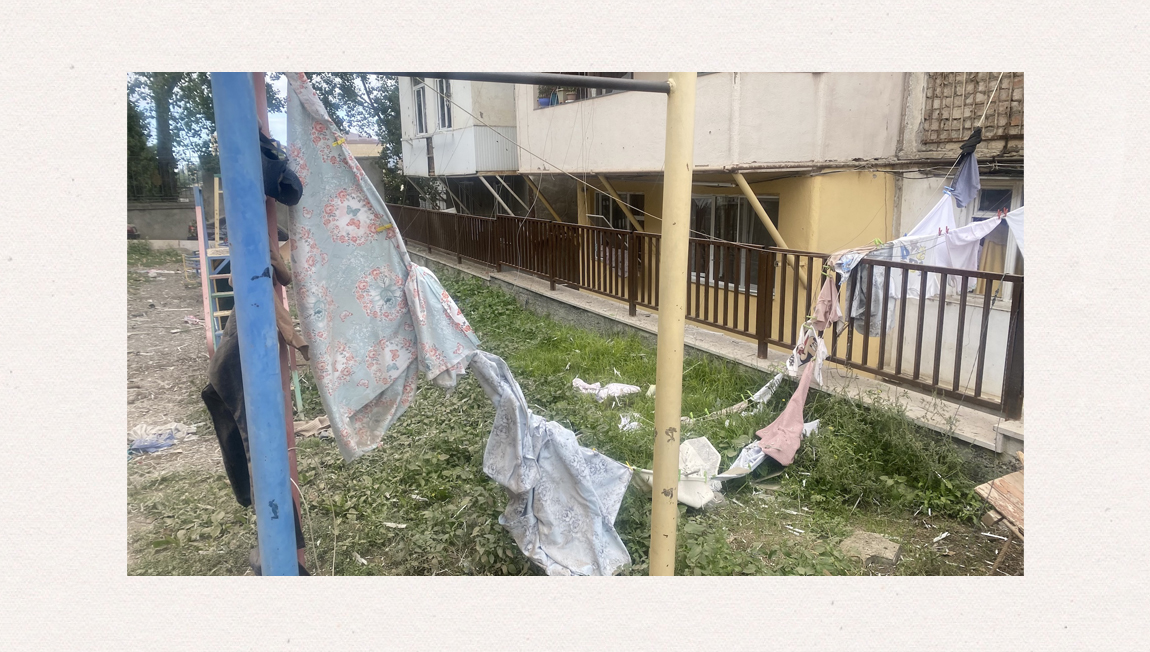
Scattered laundry lay strewn across the ground, torn apart yet stubbornly clinging to the line. Running without thought into my neighborhood during Azerbaijan’s large-scale September 19 attack, the first thing I saw was that ruined laundry amid the residential building, half-covered in dust. That courtyard had always displayed one of the most beautiful laundry arrangements in the city—I had photographed it just two days before.
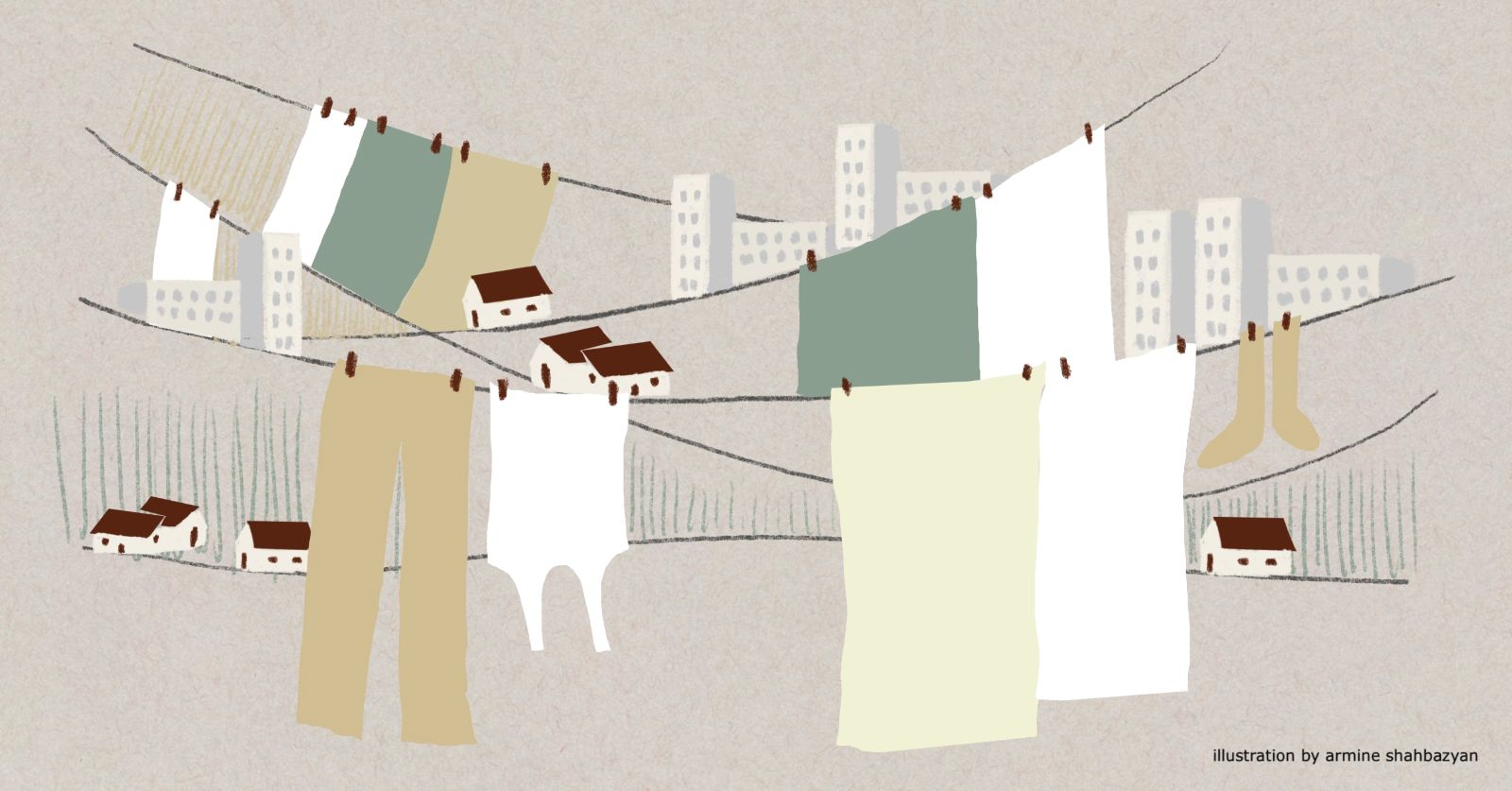
In every yard of Artsakh’s towns or villages, festive laundry lines greeted you, triumphantly rocking in the wind. The taller the buildings, the more glorious the multi-story display—a harlequin made of snow-white linen, rosy swaddling clothes, flowered and checkered gowns, striped pajamas and military uniforms, pleated elegant skirts, office suits, silk duvet covers and wool blankets.
The laundry seemed to reveal, piece by piece, the unspoken narrative of a family’s life.
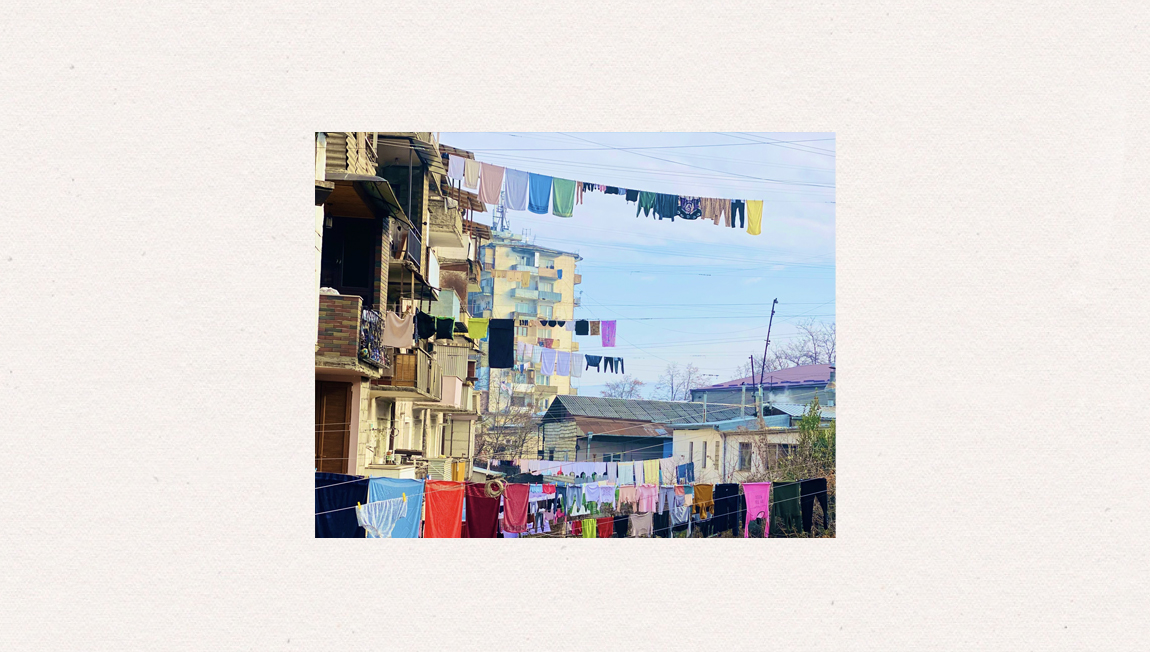
The pulleys of the clothesline would creak as housewives proudly showcased their day’s work. In Artsakh, up until the late 1990s, homemakers had a designated “laundry day” each week, due to the scarcity of washing machines, limited detergent, and an uneven water supply. Water didn’t reach every corner of town, so people carried it home using cars, donkeys, or horses, and stored it in large containers. During winter, when water froze, people had to break the ice and warm it just to do the laundry.
The laundry process was laborious and time-consuming. It involved soaking clothes in hot water, scrubbing them thoroughly, lighting a fire under the bright sun, and boiling the garments in a large forty‑liter pot, with homemade soap before rinsing them several times.
As a child, putting out the laundry was one of my favorite things, since there weren’t many activities to choose from. I could spend hours arranging the clothes, shifting them around according to their colors and sizes.
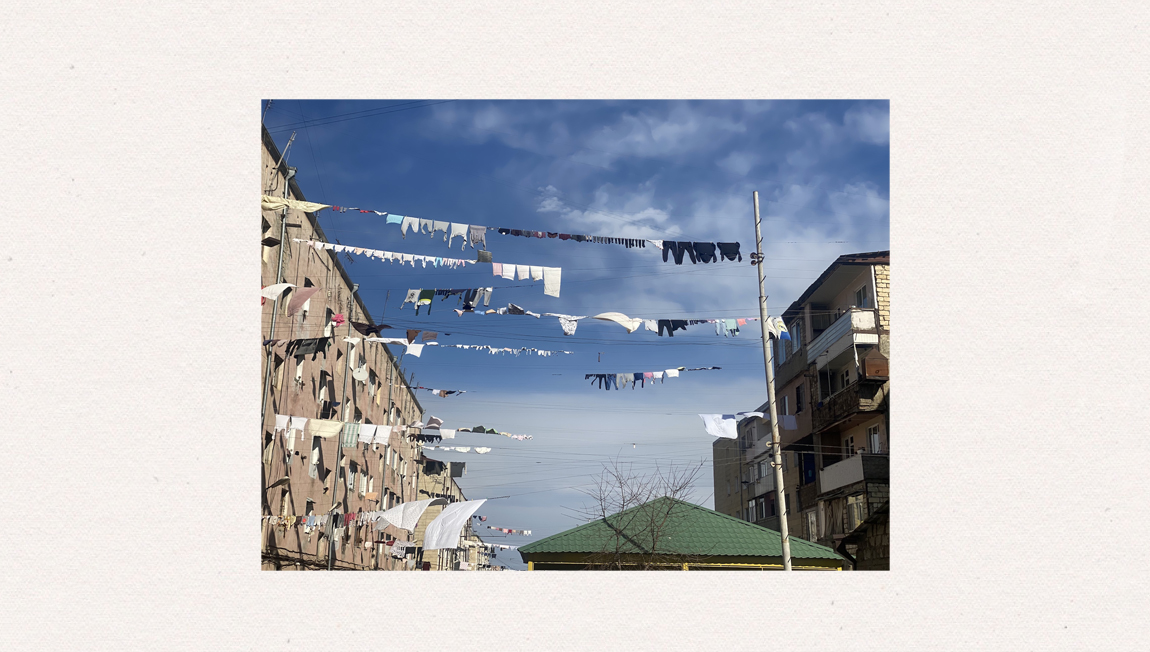
While hanging linen, women peeked into the neighbors’ windows, secretly longing for admiration. Their hung laundry showcased the trendy clothes they could afford or demonstrated their homemaking abilities through immaculately clean linen, hung in perfect accordance with strict unwritten rules.
These rules dictated that laundry be hung not only by color and size, from large sheets to the tiniest socks, but also by the choice of pegs, the way garments were fastened, and their precise placement on the line revealing the provincial housewives’ quiet longing for artistic expression.
Laundry was a kind of calling card; every woman in the neighborhood wanted her laundry to be the cleanest, most perfect, and best-exhibited on a line. Once, my friend Anahit was coming home with a colleague and saw her laundry hanging from the balcony—even though she hadn’t had time to put it out before work. She rushed home, panicked, and started gathering it up quickly. Her husband, trying to surprise her, had hung the laundry out himself, but he broke every rule in the book. Anahit, of course, rehung it the right way, hoping not too many neighbors had seen it. For her husband, it was a lesson—never to touch the laundry again.
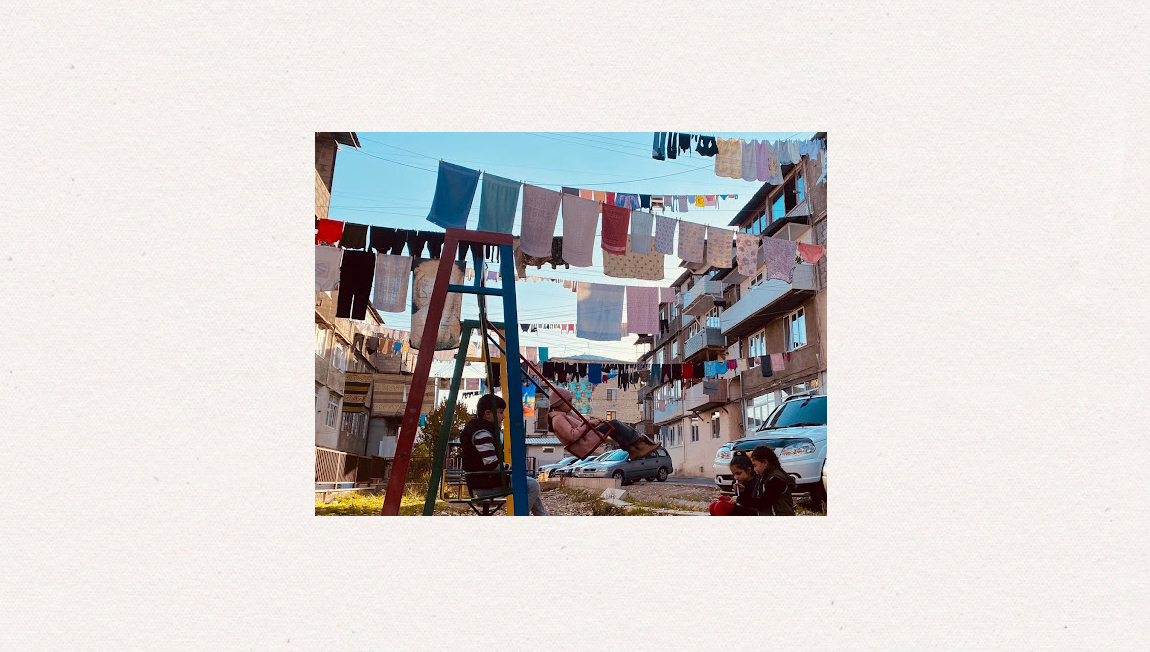
Laundry wasn’t just laundry. When Sonya got engaged, her future mother-in-law’s very first mission was to replace the old laundry roller with a shiny new one. After all, you couldn’t just let someone hang laundry “professionally” on a worn-out roller. The neighbors had been keeping score, apparently, declaring that Sonya’s laundry skills deserved nothing less than brand-new equipment.
Laundry was a sign of life—a fragile thread repeatedly pulled by war and disruption, always striving to return to normal. Even during the bombardments of the 1990s war, nothing except rain could stop a woman in Stepanakert from hanging her laundry. And nothing could stop her collecting it when the rain started.
After the second Nagorno-Karabakh war, when I wanted to know whether people had returned from Armenia after displacement, I would walk through the courtyards at night, searching for lights in the windows, and during the day, for laundry on the lines. I went to Saroyan Street, where courtyards had once displayed some of the most beautiful laundry arrangements. Seeing even a single line of clothes—or perhaps two in an entire building—was enough to kindle hope.
Laundry was woven into life as closely as the fabric of war and blockade. The blockade in 2022 made laundry detergent scarce once again, creating a real ordeal for women. Initially sold at astronomical prices, people eventually began making their own. Women shared recipes on social media, some remembered how to make soap from pig fat or other scraps, and convert that into detergent from the first war. But I lacked these skills, and my manicurist Ida knew it. She set aside some detergent for me from her own supply. She was fortunate because her father-in-law’s close friend owned one of the city’s largest household goods stores. During the blockade, those with connections to shopkeepers were truly blessed.
The fastidiousness of Nagorno-Karabakh housewives regarding laundry was remarkable; they would never tolerate dirty clothes, even during forced displacement. A journalist friend of mine had traveled to Nagorno-Karabakh before the Lachin corridor blockade and was trapped there when Azerbaijan attacked on September 19. Hiding in a remote village for several days, she eventually made her way through forest paths to Stepanakert. Exhausted and covered in dust, she returned to the home of a family who had previously sheltered her. Amid the chaos of families hurriedly abandoning their homes, her friend Manushak still noticed the most ordinary of things: the journalist’s crumpled, stained clothes. While everyone else focused on survival, Manushak insisted, with the quiet strength of habit, that her friend change into something clean.
The journalist protested, astonished, said, “Is this really the time? Perhaps it isn’t right…”
But Manushak did not bend. She gathered the clothes, washed and dried them, and returned them neatly folded, ready to wear. Then she said with resolve: “I will not allow you to leave Artsakh in dirty clothes.’’
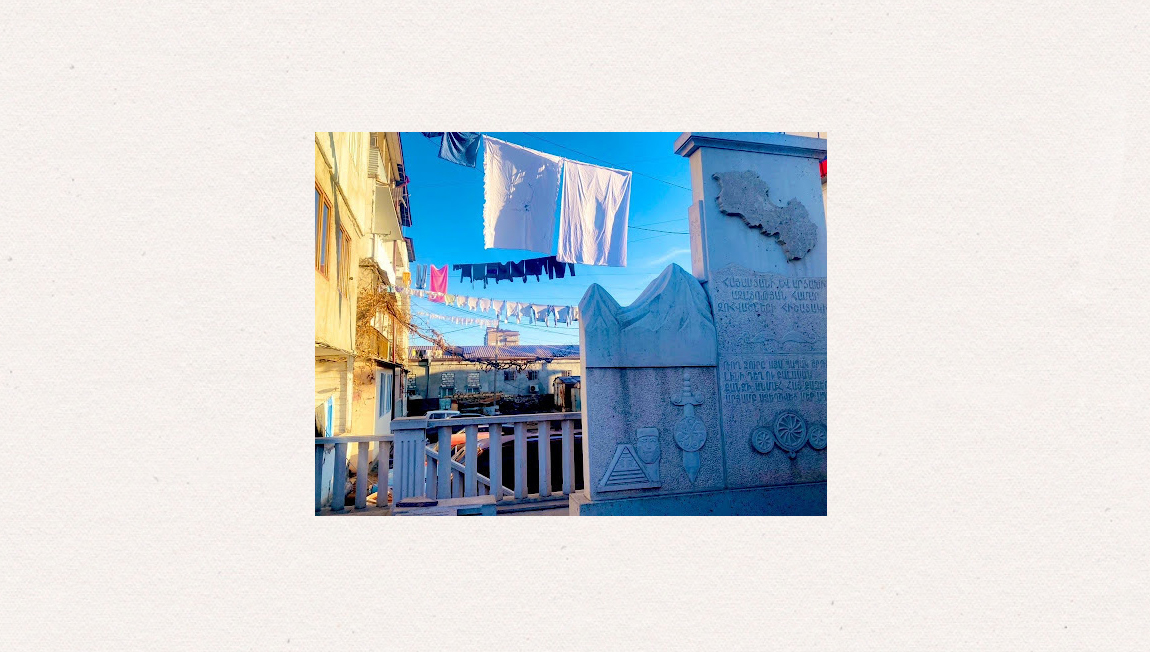
During the forced displacement, Satenik called her soldier sons from Yerevan. One was searching for gasoline in Stepanakert. The other told her that although they’d been ordered to burn their uniforms, they washed them instead, determined to bring them along, because those uniforms were their life, dedication, and identity. That was the last conversation between mother and sons. Both brothers disappeared in the fuel depot explosion, leaving no remains to be found. Two years later, Satenik still waits for her sons, waking every night to the smell of blood—the blood of her boys.
When I was forced to leave my home and city, I tried to walk and feel every moment of the city one last time. One of the most striking images was Stepanakert’s last laundry, hung out by women just before they left for good. I walked through this theater of laundry, the lines of clothes like curtains in the sky, or costumes on a stage. I wondered what the women were thinking as they hung that final load—maybe they used the last bit of precious detergent they had saved so carefully, knowing there was no need to save it anymore. Maybe no one would ever gather that laundry.
Perhaps it was a desperate act, a way to hold onto a vanishing life, to recreate the forgotten festive ritual of washing all the clothes before New Year’s or Christmas. Since the last holiday was missed due to the blockade, hanging this laundry was an attempt at creating a fading sense of normalcy before saying goodbye to their homes forever.
After the forced displacement, I visited a family who had found temporary refuge in a nonfunctioning kindergarten in the city of Artashat. In the backyard, a woman was hanging clothes on a line, her fingers careful and slow with each unfamiliar garment. They had left their village when the war began, fleeing with nothing. These were donated clothes, given as aid, borrowed from strangers; survival stitched together. She hung them deliberately, peg by peg, as women always do, repeating the ritual of home—now in exile. But those clothes had already lost their harmony. When she looked at me, she spoke with a quiet, bitter clarity: “You see, even the laundry reminds us that we are not at home, and these clothes are strangers.”
In exile, laundry speaks without words. My niece Ani used to study in Shushi. When Shushi fell under occupation after the 2020 war, her father was killed on the very last day of fighting while defending the city. Forced to relocate, Ani moved to Yerevan to continue her studies at the State Academy of Fine Arts. She graduated this year—in exile. One of her graduation projects depicts her mother hanging laundry in their courtyard, with her younger brother helping her.
“This seemingly ordinary domestic ritual reflects who we are at our core,” Ani explained. “The cloth swaying in the wind conveys the passage of time—fragile and fleeting, like memories themselves. In this painting, the laundry embodies memory, care, and the bonds that hold our shattered family together after all we’ve lost.”
* Photos are from the author’s personal archive.
Spotlight Artsakh
The Guest Who Stayed: Rasmus Canbäck’s Last Dispatch From Artsakh
In “I Die Slowly Every Day”, Swedish journalist Rasmus Canbäck offers a rare, intimate account from Artsakh before its ethnic cleansing—a powerful testament to memory, resistance, and the journalist’s role amid silence and political erasure. Review by Ani Poghosyan.
Read more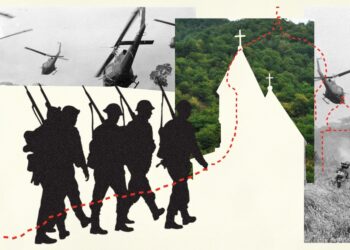
Appropriation of Armenian Cultural Heritage of Artsakh
The 2020 war and 2023 military operations in Artsakh have left Armenian cultural heritage vulnerable to destruction and appropriation. Azerbaijan's reclassification of Armenian sites aims to erase Armenian identity, falsify history, and legitimize territorial claims through cultural expropriation.
Read more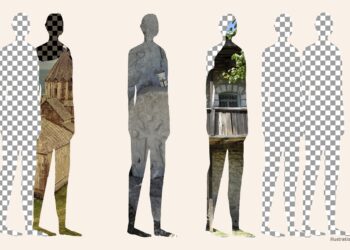
Memories From the Museums of Artsakh
What museum artifacts and historical-cultural treasures remain in Artsakh? Have they been preserved, or have they been vandalized? Are there efforts to transfer them to Armenia? Lilit Avagyan provides insight.
Read more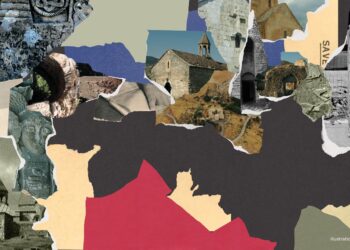
Destruction of Armenian Cultural Heritage of Artsakh
Azerbaijan’s systematic destruction of Artsakh's cultural heritage not only erases the unique collective identity of its people but also deals a significant blow to the entire world, destabilizing present and future prospects for peace and security in the South Caucasus.
Read more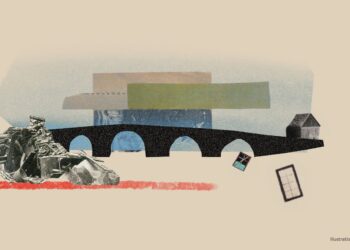
Of Mines and Hope
“Crossing the bridge with no return, is indeed final. Artsakh is behind you, and you are here, in safety but with a thousand internal mines that will explode sooner or later,” writes Tamara Grigoryan, reflecting on her experiences a year after the ethnic cleansing of the Armenians of Artsakh.
Read more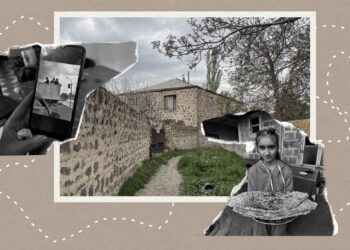
We’re Home, And Yet We’re Not
In September, two families-in-law from Artsakh found refuge in the village of Yeghvard, Armenia, joining over 100,000 displaced Armenians facing similar challenges. Marut Vanyan, a journalist from Artsakh, provides insight into their experiences.
Read morePhoto stories
So That They Don’t Forget
For the people of Artsakh, the year since their displacement has been marked by the emotional turmoil and darkness of loss. Photojournalist Ani Gevorgyan documents their ongoing struggle to cope with the grief while trying to provide for their families and rebuild their lives.
Read more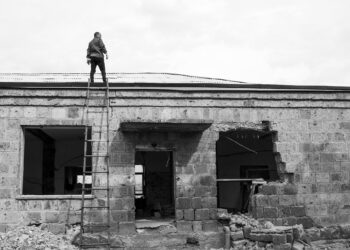
The New Home the Men of Artsakh Built
After being forcibly displaced by Azerbaijan, a group of men from Artsakh transformed the interior of a dilapidated hospital in the Ararat region of Armenia and built eight separate apartments for their families. A photo story by Ani Gevorgyan.
Read more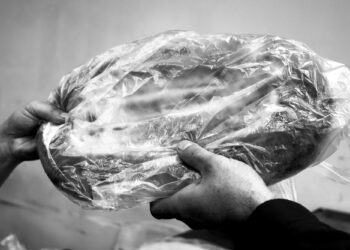
The Bread of the Blockade
The families forcibly displaced from Artsakh will long remember the lack of bread during the months of blockade. That bread, often moist and bitter, has become a symbol of their struggles, deprivation, courage and strength. Photojournalist Ani Gevorgyan captures the images and feelings.
Read more
Giving Birth in the Clutches of Blockade and Displacement
During the ten-month blockade of Artsakh, hundreds of pregnant women endured fear and deprivation instead of experiencing the joy of approaching motherhood. Photojournalist Ani Gevorgyan chronicles their challenges.
Read more