

Listen to the AI generated audio article.
U.S. Vice President J.D. Vance’s February 9–11, 2026 visit to Armenia and Azerbaijan marked the highest-level trip by a U.S. executive branch official to Armenia since independence and one of the most senior engagements with Azerbaijan. While Vice President Dick Cheney traveled to Azerbaijan in 2008, no U.S. Vice President had previously visited Armenia, and no sitting U.S. President has traveled to either country, although President George W. Bush did visit Georgia in 2005. Secretary of State Hillary Clinton toured all three South Caucasus states during her tenure, and House Speaker Nancy Pelosi visited Armenia in 2022. Against that backdrop, Vance’s trip signaled a clear elevation of U.S. executive attention to the Armenia–Azerbaijan track.
The visit followed the August 2025 Washington Summit, where the United States brokered a framework for normalization and connectivity between Armenia and Azerbaijan, positioning itself as a central external actor in shaping the post-war regional order. Since then, President Trump has repeatedly referred to the Armenia–Azerbaijan track as one of the conflicts resolved through his mediation, a narrative also reflected in the U.S. National Security Strategy published in December 2025.
Five months after the Washington Summit, the diplomatic framework it produced is entering a critical phase. While the peace agreement between Armenia and Azerbaijan has yet to be signed, connectivity arrangements launched under U.S. auspices are moving from political declaration to practical implementation. In this context, Vance’s visit sought to consolidate Washington’s mediation role and its regional influence, reinforce bilateral strategic frameworks with both countries, and ensure that summit-level commitments translate into operational reality rather than renewed uncertainty.
The Sequencing of Strategic Partnerships with Both Countries
U.S. strategic engagement with Armenia and Azerbaijan was put into motion before Vice President Vance’s visit.
The U.S.–Armenia Strategic Partnership was finalized during Secretary of State Antony Blinken’s final week in office. It established an upgraded framework for political, economic, energy, and security cooperation. The timing was significant: Armenia was recalibrating its foreign and security policy after the 2022–2023 crises, while Washington sought to institutionalize cooperation before the transition of administrations. Despite doubts among parts of the Armenian public, the incoming Trump administration embraced the framework and put it into action. Rather than treating it as a legacy initiative, the new administration made it part of its own foreign policy agenda.
The August 2025 Washington Summit marked the next phase. In addition to brokering the normalization and connectivity framework between Armenia and Azerbaijan, the United States signed bilateral sectoral memoranda of understanding with both countries. With Armenia, these MoUs built directly upon the already established strategic partnership and aligned with Armenia’s broader structural reorientation and diversification strategy.
With Azerbaijan, however, the August MoUs preceded formal strategic institutionalization. While sectoral cooperation memoranda were signed in 2025, a formal U.S.–Azerbaijan Strategic Partnership agreement was signed only on February 10, 2026 during Vance’s visit to Baku. The U.S.–Azerbaijan strategic partnership thus emerged in parallel with U.S. mediation efforts in the peace process and reflected Washington’s interest in maintaining leverage and stability in energy and transit corridors.
As a result, both Armenia and Azerbaijan now formally have strategic partnership arrangements with the United States. In Armenia’s case, the partnership consolidates an already evolving process of security diversification, institutional reform, and closer integration with Western political and economic frameworks. In Azerbaijan’s case, the partnership serves primarily as a stabilizing instrument within a mediated regional process, anchoring cooperation in selected sectors while preserving U.S. leverage. The formal symmetry of “strategic partnership” therefore masks differing expectations, depth, and strategic intent.
Comparing the Strategic Partnership Charters
The strategic partnership documents of the two countries with the U.S. differ in content, emphasis, structure and scope.
The U.S.–Armenia Strategic Partnership Charter is organized around a broad institutional framework. It integrates political dialogue, economic cooperation, energy diversification, security and defense cooperation, democratic governance, rule of law, and people-to-people engagement. Security and defense constitute a core pillar, and include commitments to defense reform support, border security assistance, counter-proliferation, cybersecurity, and law enforcement capacity building. The provisions on anti-corruption measures, judicial independence, democratic institutions, and media freedom reflect the Biden administration’s policy orientation. While the Trump administration has retained the framework, these governance-focused elements are less central to its broader foreign policy prioritization.
The U.S.–Azerbaijan Strategic Partnership Charter emphasizes regional connectivity, energy security, economic cooperation, and digital and AI development. It includes security cooperation covering defense dialogue, counterterrorism, de-mining, cybersecurity, and critical infrastructure protection. Unlike other frameworks, the Azerbaijan document does not link security cooperation to governance reform or institutional transformation. Its references to political values are limited, focusing instead on sectoral cooperation rather than systemic reform.
Beyond the general language of the strategic partnership charters, the practical implications of U.S. engagement become clearer when examining sectoral cooperation in priority areas. Energy, advanced technologies and AI, defense and security, and connectivity and infrastructure represent the most consequential domains where both partnerships are being operationalized. Comparing these sectors offers a clearer view of how the United States structures its engagement with Armenia and Azerbaijan in practice.
Energy Cooperation
Armenia: Nuclear Energy Diversification and Domestic Debate
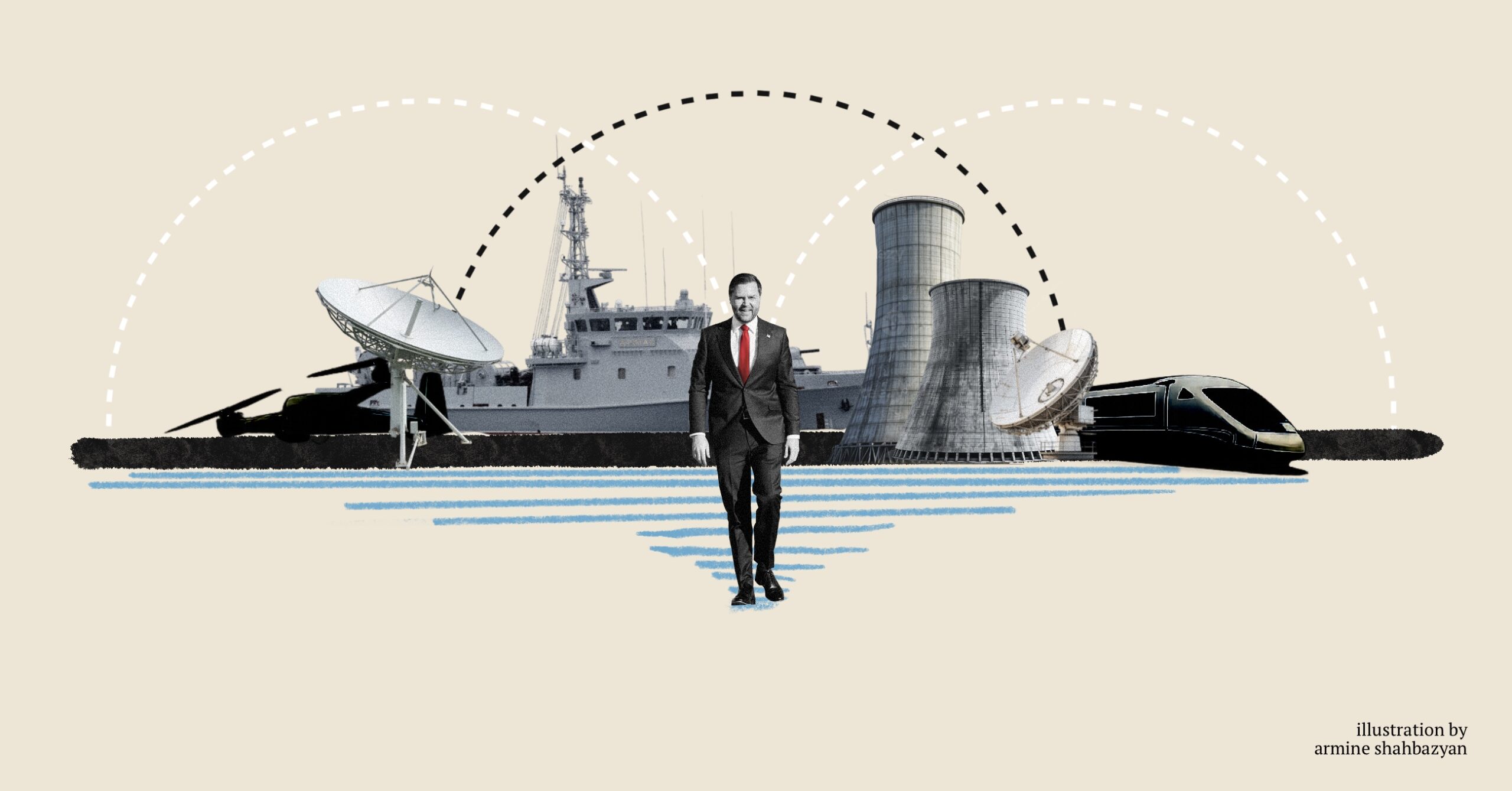
During Vance’s February 2026 visit, the two governments announced the Completion of Negotiations on an Agreement for Peaceful Nuclear Cooperation Between the United States of America and the Republic of Armenia. Concluded under Section 123 of the U.S. Atomic Energy Act, the agreement governs civilian nuclear cooperation between the United States and foreign states. Before U.S. companies can export nuclear materials, reactors, fuel, or related technology to other countries, a “123 agreement” is required. It establishes non-proliferation safeguards, peaceful-use commitments, International Atomic Energy Agency oversight requirements, and regulatory conditions for nuclear cooperation. Without one, U.S. entities cannot legally engage in nuclear exports or long-term fuel supply arrangements. In practical terms, signing a 123 agreement signals that the U.S. considers Armenia eligible for long-term nuclear cooperation under its export control regime.
The announcement included a cooperation package with two main components: approximately $5 billion in initial U.S. technology and equipment exports, and an additional $4 billion in long-term fuel supply and servicing contracts. Together, these outline a multi-year framework for technical deployment, fuel provision, and operational support—not a single construction contract. The implicit objective is to help Armenia gradually reduce its dependence on Russian-origin nuclear infrastructure and strengthen its energy security through diversification.
The proposed cooperation centers on potentially deploying U.S.-supported small modular reactors (SMRs). Unlike traditional large-scale nuclear reactors, SMRs are smaller, factory-built units that can be deployed incrementally. Their modular design enables phased construction, reduces upfront capital costs, and incorporates enhanced passive safety systems. This approach enables Armenia to expand capacity step by step, aligning development with financing and demand rather than committing immediately to a single large replacement facility.
In Armenia, reactions have been mixed, reflecting both geopolitical calculations and technical and financial concerns.
The debate has a clear geopolitical dimension. Prime Minister Nikol Pashinyan stated that the agreement would ensure “the diversification of Armenia’s energy resources through the introduction of safe and innovative technologies.” In Armenia’s political discourse, diversification is widely understood as reducing structural dependence on Russian energy infrastructure. Pro-Western analysts and policy actors, including the author of this article, have long argued for a U.S.- or France-sponsored nuclear power plant as a way to reduce its broader political dependence.
Russia, through Rosatom, plays a direct role in operating and managing the lifecycle of the Metsamor nuclear power plant; it has expressed interest in constructing a future replacement unit, including in the days before Vance’s visit. Armenian National Assembly Speaker Alen Simonyan held discussions in Moscow with Rosatom representatives regarding continued cooperation around Metsamor and possible new reactor projects.
Russia responded swiftly to the U.S. agreement. Foreign Ministry Spokesperson Maria Zakharova criticized the deal, suggesting the United States was trying to push Russia out of Armenia’s nuclear sector. She warned that such moves could harm established bilateral energy cooperation. Pro-Russian political circles in Armenia echoed these concerns, arguing that the U.S. nuclear framework carries geopolitical implications beyond energy, a development that, in their view, disrupts the long-standing balance of strategic influence.
Beyond geopolitics, a second layer of debate focuses on technical and economic questions.
First, there are questions about capacity. Metsamor currently provides a substantial share of Armenia’s baseload electricity. Critics argue that an initial SMR unit has limited capacity and may not match the output of the existing facility. This could create a temporary gap in generation unless multiple modules are deployed.
Second, there are concerns regarding technological maturity. While SMR technology has been under development in several countries, large-scale commercial deployment remains limited. Some experts have called the project potentially “pilot” in nature, questioning whether Armenia could become an early adopter of a model not yet widely implemented elsewhere.
Third, the financial structure of the announced $9 billion package has prompted debate. Official statements indicated that approximately $5 billion relates to initial U.S. technology and equipment exports, while an additional $4 billion covers long-term fuel supply and servicing arrangements. However, it remains unclear how these components will be financed. There are questions about whether the package represents externally financed investment, Armenian sovereign commitments, export credit arrangements, or some combination of commercial and state-backed mechanisms. The eventual financing model will be central to the project’s political sustainability.
These concerns do not question the strategic significance of the agreement. Rather, they underscore that Armenia’s nuclear transition is not merely a geopolitical decision; it is a technically complex, financially demanding, and politically sensitive undertaking that will require careful sequencing, transparency, and long-term planning.
Azerbaijan: Consolidating Its Role As an Established Energy Supplier
U.S.-Azerbaijan energy cooperation operates within an established hydrocarbon framework. Unlike Armenia’s transition-oriented approach, engagement with Azerbaijan reinforces an export-focused system centered on oil, gas and transit infrastructure.
During Vance’s visit to Baku, discussions emphasized stable energy flows and the security of critical infrastructure. Azerbaijan’s position as a supplier to European and regional markets remains the core of this partnership.
No structural transition package comparable to the Armenian nuclear initiative was announced. Instead, U.S. engagement supports continuity within existing hydrocarbon supply chains, consolidating Azerbaijan’s role in regional energy markets rather than reshaping its energy model.
Defense and Security Cooperation
Armenia: Military Technology Transfer as a New Level of Security Cooperation
A tangible outcome of Vance’s visit to Armenia was the confirmation that the U.S. would supply unmanned aerial systems to the Armenian Armed Forces—the first provision of U.S. military technology to Armenia, costing $11 million. The systems are V-BAT drones manufactured by U.S.-based Shield AI. Designed for reconnaissance, the platform can operate without conventional runway infrastructure, allowing deployment in mountainous and hard-to-access areas. Defense reporting characterizes the system as focused on surveillance and intelligence collection rather than strike functions. The V-BAT has also been publicly cited in reporting on its operational use in Ukraine, contributing to its reputation as a field-tested reconnaissance platform. The V-BAT has flown more than 130 missions in Ukraine, where its operational use has been documented in press reporting and industry releases, establishing its reputation as a battle-tested reconnaissance system. The transfer strengthens Armenia’s monitoring capacity along sensitive border areas but does not materially shift the regional military balance.
The drone transfer also intersects with U.S. export control regulations. Both Armenia and Azerbaijan are classified under Category D in the U.S. International Traffic in Arms Regulations (ITAR), which subjects them to heightened scrutiny due to regional security concerns. This classification does not prohibit defense exports, but it requires case-by-case licensing review and interagency assessment before approval. In practice, providing military technology to Armenia reflects a deliberate policy decision rather than routine defense commerce. The approval of the drone transfer signals Washington’s willingness to navigate export-control sensitivities to expand practical defense cooperation.
In his remarks in Yerevan, Vance framed the transfer within a deterrence lens, stating that “deterrence is the best defense.” While he did not name specific actors, his emphasis on strengthening Armenia’s deterrence capacity clearly addressed the security threats from Azerbaijan. In this framing, enhancing situational awareness was presented as a stabilizing measure, not escalation, consistent with broader discussions of Armenia’s evolving deterrence posture.
U.S.–Armenia defense cooperation dates back several years. It has included regular joint military exercises such as Eagle Partner, first held in 2023 and continuing into 2025, designed to prepare Armenian units for peacekeeping missions and improve tactical interoperability with U.S. forces. Washington has also supported Armenia’s border security through targeted assistance programs that build enforcement capabilities. In addition, U.S. assistance has supported police reform and law enforcement modernization, reflecting a broader approach to institutional security assistance.
These forms of cooperation focused largely on training, exercises and institutional development. The confirmation of U.S. drone systems for the Armenian Armed Forces marked a new level in bilateral defense engagement, extending cooperation from soft security assistance into direct provision of military technology.
Azerbaijan: Security Assistance and Military Cooperation
During Vance’s visit to Baku, Washington and Azerbaijan signed a strategic partnership charter that expanded cooperation on defense sales and security issues. Azerbaijani President Ilham Aliyev described the relationship as entering “an entirely new phase” with closer defense interaction. Vance announced that the U.S. would send new patrol boats to help Azerbaijan protect its territorial waters, marking one of the first instances of U.S. military equipment being provided to Azerbaijan.
This assistance is largely perceived to help Azerbaijan protect its territorial waters within the broader context of regional strategic dynamics, where Baku and Washington face overlapping concerns about the influence of both Iran and Russia.
American defense equipment sales to Azerbaijan will also include body armor and other protective gear to enhance Azerbaijan’s defensive capabilities.
These developments expand bilateral defense engagement beyond traditional cooperation such as training, counterterrorism dialogue, and institutional support. The planned provision of patrol boats and the defense equipment sales illustrate Washington’s willingness to provide Azerbaijan with practical security assistance.
The defense equipment announced for Armenia and Azerbaijan is not directly comparable. Each responds to distinct security contexts. For Armenia, the transfer of U.S. reconnaissance drones addresses threats from Baku and Armenia’s need to strengthen deterrence and early-warning capacity along unresolved frontiers, where Azerbaijan’s coercive posture remains a central security concern.
The very fact that the equipment provided to Armenia enhances its ability to deter potential aggression from Azerbaijan constitutes a decisive strategic element of the transfer. Moreover, the political message accompanying it, that Washington is prepared to provide tangible defensive capabilities, functions as a deterrent signal in its own right, directed toward Baku.
In Azerbaijan’s case, analysts have interpreted the planned provision of U.S. patrol boats within the broader regional context where Tehran’s and Moscow’s influence shape Baku’s maritime security calculations. Enhancing coastal protection aligns with Azerbaijan’s efforts to manage pressures from its larger neighbors. The maritime nature of the equipment limits its relevance to Armenia, as patrol boats designed for territorial waters do not alter the military balance between two countries. One focuses on land-based situational awareness in a contested border environment; the other on maritime security in a complex Caspian setting. Although both represent tangible U.S. security assistance under the new strategic partnership frameworks, they reflect different operational priorities and threat environments for each country.
AI and Advanced Technologies
Armenia’s Strategic High-Performance Computing Partnership
Artificial intelligence cooperation between Armenia and the U.S. has moved beyond rhetoric into substantial, material engagement anchored in high-performance computing infrastructure.
A centerpiece is the multi-phase AI computing cluster developed with Firebird AI and Nvidia technologies. During Vance’s visit, officials announced the acceleration of Phase 2—a projected $4 billion investment deploying approximately 50,000 Nvidia GPUs by 2026. This scale places Armenia among regions with serious AI processing capacity.
Phase 1 laid the groundwork with a major computing hub built on Nvidia’s Blackwell architecture and supporting infrastructure. This enabled advanced machine learning, large-scale data analytics, and research computing in sectors such as life sciences and robotics. The export licensing process for these high-end chips, controlled items under U.S. technology export regulations, was negotiated as part of this cooperation, underscoring the strategic dimension of Armenia’s integration into trusted AI supply chains. Earlier project stages were estimated at $500 million and included foundational hardware and cloud architecture.
Vance emphasized that “chips unavailable in most countries will be created in Armenia,” noting that only around fifty countries globally have received U.S. export clearance for such advanced semiconductor technologies. He also highlighted that the project would generate high-skilled manufacturing and technology jobs in the United States, framing the initiative as mutually beneficial rather than one-sided.
Azerbaijan’s Strategic Catch-up in AI Cooperation
Azerbaijan’s AI engagement with external partners took on a new dimension in early 2026, reflecting efforts to accelerate capacity-building amid regional technological shifts. During Vance’s visit, artificial intelligence and digital technologies were incorporated into the U.S.–Azerbaijan strategic partnership framework, indicating Washington’s interest in supporting cooperation in AI, cybersecurity and digital infrastructure.
Unlike Armenia’s AI track, anchored in high-performance computing infrastructure and large-scale GPU deployment, Azerbaijan’s engagement with advanced AI has been articulated through partnerships with other technology producers, most visibly with Israel. On February 3, 2026, Azerbaijan and Israel signed a Memorandum of Understanding on Cooperation in AI, covering collaboration on high-performance computing infrastructure, AI applications in civilian sectors, human capital development, and joint research initiatives. Azerbaijani officials characterized the agreement as a step toward deepening strategic tech cooperation and leveraging external expertise to enhance the country’s AI ecosystem.
Rather than serving merely as diversification, Azerbaijan’s pursuit of AI cooperation with Israel and inclusion of AI in its U.S. strategic partnership appears aimed to catch up with the scale and ambition of Armenia’s AI initiatives. Although the scope of U.S.–Azerbaijan AI cooperation has not reached the magnitude of Armenia’s high-performance computing projects, its inclusion in the strategic partnership framework and parallel agreements with external partners indicate that advanced technologies are now part of Azerbaijan’s long-term bilateral alignment and competitive positioning in the regional technology landscape.
TRIPP: Connectivity As an Instrument for Peace
A central element that Vance promoted during his visits to Armenia and Azerbaijan was the Trump Route for International Peace and Prosperity (TRIPP). He framed his visit as focused on moving from political agreement to practical execution. Ahead of Vance’s visit, the Armenian and U.S. governments published a TRIPP Implementation Framework outlining how the initiative would advance the goals of the Joint Declaration. The framework emphasizes respect for sovereignty and territorial integrity while aiming to strengthen regional connectivity and economic ties. Nevertheless, the initiative remains politically sensitive in Armenia, where interpretations differ regarding its implications for Armenia’s sovereignty and security.
Following the visit, Prime Minister Pashinyan announced that Armenia would submit its proposals on the TRIPP agreement to U.S. partners and begin feasibility work. This signals Yerevan’s commitment to the next phase of implementation. He framed the initiative as aligned with the peace agenda and emphasized Armenia’s interest in moving forward.
Speaking during the visit, President Aliyev stressed that the project would strengthen regional communications and connect Europe and Asia through Azerbaijan and Armenia. He framed TRIPP as part of a larger transcontinental logistics network. Notably, Aliyev avoided the controversial term “Zangezur corridor” during the joint appearance, instead employing broader language about transport and regional and regional connectivity, including Armenia’s involvement.
Vance’s messaging in both capitals emphasized economic integration while carefully navigating politically sensitive terminology. In his public remarks, he argued that peace is reinforced through trade, infrastructure, and shared commercial interests—suggesting that economic cooperation itself becomes a stabilizing force. He stated that “[W]e are not just making peace for Armenia. We are also creating real prosperity for Armenia and the United States together.” In this framing, TRIPP is not merely a transport initiative but a tool designed to bind peace to material incentives.
Peace: Political Signaling and Leadership Praise
During his meetings in Yerevan, Vance commended Prime Minister Nikol Pashinyan for what he called “courageous leadership in pursuing peace despite domestic and regional pressures.” He noted that progress since the Washington Summit “would not have been possible without sustained political will,” explicitly crediting the Armenian leadership for maintaining engagement in negotiations even after setbacks. In Baku, Vance used similarly positive language toward President Ilham Aliyev, stating that “President Aliyev has shown readiness to turn a historic opportunity into lasting stability,” and praising Azerbaijan’s role in keeping the diplomatic track open. He added that “both leaders deserve recognition for choosing negotiation over escalation,” framing the peace process as a shared achievement rather than a unilateral concession.
Vance did not publicly criticize President Aliyev, nor did he call for the release of Armenian detainees or Azerbaijani peace activists during his public remarks. This is understandable, given that Azerbaijan has consistently rejected external criticism, including from the European Union, France, and the Biden administration, framing such positions as interference in its internal affairs. In this context, Washington’s approach during the visit appeared deliberately calibrated to avoid public confrontation and preserve diplomatic leverage.
Vance did, however, publicly underline the importance of finalizing and signing the peace agreement, signaling that implementation, not merely declarations, is now expected. In both capitals, he emphasized that the U.S. “remains committed to seeing this peace agreement finalized,” while carefully avoiding language that would suggest the process was complete. His praise for Aliyev can be read as both encouragement and subtle pressure—reinforcing the expectation that political commitment must now translate into signature and implementation. This message may have been conveyed more directly in private discussions.
Symbolic Messaging Intersecting With Geopolitical Sensitivities
Armenia: Christian Heritage and the Politics of Genocide Commemoration
In Yerevan, Vance referred to Armenia as one of the world’s oldest Christian nations. He and his wife visited the Armenian Genocide Memorial at Tsitsernakaberd. During the visit, Vance’s official social media account briefly posted a tribute to “the victims of the Armenian genocide.” That post was deleted within hours, a move that sparked criticism from Armenian diaspora groups and some U.S. lawmakers.
The episode reflected the sensitivity of the issue in light of U.S. relations with Turkey and Azerbaijan. Congress and the Senate formally recognized the Armenian Genocide in 2019, and President Joe Biden used the term “genocide” in 2021. President Donald Trump, however, has not used the term in official statements. In an interview in Yerevan, Vance noted that the Armenian government had suggested the memorial visit, further underscoring the careful calibration of messaging.
Azerbaijan: “Brave Military” and Sovereign Narrative
In Baku, Vance’s messaging took on a different symbolic tone. In his public remarks, he praised Azerbaijan as a nation that has made sacrifices and called Azerbaijani soldiers “brave”. He acknowledged their contribution in Afghanistan and noted that “[O]ther than President Trump, the only leader in the world who has really good relations with both the Turks and the Israelis is President Aliyev,”—highlighting Aliyev’s diplomatic positioning with key regional partners.
Vance visited the Alley of Martyrs in Baku, the national memorial honoring those killed in conflicts associated with Azerbaijan’s independence and territorial integrity. The site includes victims of the Armenia–Azerbaijan conflict, making it politically sensitive in the regional context.
Unlike in Yerevan, Vance’s social media post about his visit to the Shahids’ monument remained online and was not removed. The tweet emphasized respect for Azerbaijan’s sacrifices and sovereignty. The contrast did not go unnoticed in Armenia and caused dissatisfaction.
In Baku, he joked that “the Vice President of Azerbaijan is also the president’s wife, and hopefully that doesn’t give the Second Lady any ideas”—a comment some observers interpreted as a subtle reference at Azerbaijan’s centralized and personalized governance and which was later deleted in state television coverage.
Conclusions
Vice President J.D. Vance’s visit marked the transition from political declarations to action across energy, military technology, artificial intelligence and connectivity.
Both Armenia and Azerbaijan now maintain strategic partnerships with Washington in largely the same areas. But their substance differs. Armenia’s partnership includes nuclear cooperation, high-performance AI infrastructure, reconnaissance drones, and TRIPP—all of which strengthen economic resilience and deterrence. Azerbaijan’s partnership focuses on hydrocarbon continuity, maritime security, and emerging AI engagement without altering the military balance along its border with Armenia.
The defense cooperation reflects different threat environments. U.S.-supplied drones enhance Armenia’s situational awareness along its border with Azerbaijan. Patrol boats reinforce Azerbaijan’s Caspian security posture in relation to Russia and Iran.
Together, the initiatives with Armenia support both deterrence and long-term development, linking security with economic and technological transformation. For Azerbaijan, the partnership offers sector-specific consolidation.
It remains to be seen whether Baku will sign the peace agreement and address the detainee issue in the coming weeks.
State of Play
“State of Play” is EVN Report’s new monthly video series where editor Maria Titizian and political scientist Nerses Kopalyan break down the latest developments in Armenian politics, foreign policy, regional security and regional dynamics, offering depth, analysis and unique insights beyond the headlines.
Politics

Iran’s Domestic Crisis and Implications for Armenia
Nationwide unrest and escalating repression in Iran are reshaping regional security dynamics, with growing risks of external escalation. For Armenia, the crisis heightens exposure to border instability, trade disruption, and diplomatic strain, testing Yerevan’s ability to balance relations amid a shifting deterrence landscape.
Read more
The New U.S. National Security Strategy: Implications for Armenia
The 2025 U.S. National Security Strategy signals a shift toward sovereignty-centered, transactional realism. Sossi Tatikyan explores how this new doctrine reshapes U.S. engagement in the South Caucasus and its implications for Armenia’s security, diplomacy, peace process with Azerbaijan, and partnership with Washington.
Read more
Security Dimensions of the EU-Armenia Strategic Agenda
The security component of the Strategic Agenda incorporates Europe as an important part of Armenia’s developing security architecture, writes Nerses Kopalyan, where the confluence of hard power capacity and small-state resilience become integrated, at the institutional level, with European and Transatlantic standards.
Read more
Armenia’s Murky Surveillance Landscape: When Privacy Becomes Politics
Armenia’s political landscape has been shaken by leaked recordings, questionable surveillance, and criminal cases built on audio, sometimes of unknown origin. Hranoush Dermoyan examines the murky intersection of privacy, power and politics, revealing how wiretapping has become a tool of influence and pressure.
Read more
Building the Architecture of Cybersecurity: Armenia’s Institutional Turn
Armenia has lagged in global cybersecurity rankings, but new institutions, a comprehensive Cybersecurity Law, and alignment with EU standards signal a turning point. Albert Nerzetyan examines the country’s emerging governance framework, its structural advantages, and the challenges ahead in implementation.
Read more
A Viral Scandal and the Line Between Privacy and Public Interest
What are the legal and ethical boundaries between privacy and public interest in democratic societies? Using the recent leaked video involving a senior Armenian cleric as context, Anoush Begoyan outlines established principles that distinguish legitimate scrutiny from voyeurism and scandal.
Read more
France–Armenia Defense Partnership: From Symbolic Solidarity to Support for Sovereignty
France’s defense cooperation with Armenia marks a decisive shift in its policy toward the EU’s eastern periphery. Moving from symbolism to substance, Paris now helps Yerevan build deterrence and resilience, reshaping how sovereignty and stability interact in the South Caucasus. Sossi Tatikyan explains.
Read more
Armenia, China, and the Shanghai Cooperation Organization: Navigating Between Poles
Armenia’s pursuit of a strategic partnership with China and its bid to join the Shanghai Cooperation Organization (SCO) reflect a broader effort to recalibrate foreign policy amid shifting global alignments, balancing ambition with constraint in an increasingly multipolar world.
Read moreOpinion

From Smyrna to Stepanakert: How National Defeats Reshape States
Focusing on legitimacy, refugees, national memory and whether trauma becomes paralysis or a catalyst for reinvention, Tigran Yegavian presents a comparative analysis of how catastrophic defeat reshapes states, examining Greece after the 1922 Asia Minor Catastrophe and Armenia after the loss of Artsakh.
Read more
Honor Thy Dead
A new national day of remembrance raises difficult questions about memory, truth and accountability, especially after the 2020 Artsakh War. Honoring the dead requires more than ritual, or a date on a calendar, it demands names, transparency and a truthful reckoning with how and why the war was lost.
Read more
The False Politics of Revisionism
In this sharp critique of political revisionism in Armenia, Nerses Kopalyan examines how distorted narratives seek to undermine the Velvet Revolution, erase popular sovereignty, and normalize cynicism, victimhood and authoritarian nostalgia as tools to weaken democracy and collective agency.
Read more
Armenia’s Hate Speech Blind Spot
The arrest of two Armenian podcasters has reignited debate over where free expression ends and criminal liability begins. Beyond one case, the episode exposes Armenia’s unresolved legal blind spot in addressing sexualized, gendered abuse without undermining democratic speech.
Read more
Missing in Action? On Russian Deployments From Armenia and Artsakh to Ukraine
As Russia’s war in Ukraine drags on, there are allegations—some founded, some unfounded—that troops and resources have quietly been redeployed from Armenia’s Gyumri base and the former peacekeeping mission in Nagorno-Karabakh. Justin Tomczyk examines online activity that reveals this movement of forces and what a planned surge of troops to Gyumri means for the region.
Read more
Notes From Armenian Street: Lessons on How Moldova Defeated Russia’s Hybrid War
Moldova’s quiet resilience tells a story of survival. Political analyst Mikayel Zolyan traces how this small nation confronted Russian hybrid warfare, reclaimed its democratic voice, and reflects on what its hard-won lessons might mean for Armenia’s struggle against disinformation and dependence.
Read more