

Listen to the AI generated audio article.
On July 7, Ukrainian military intelligence announced that the Russian Ministry of Defense had directed the Southern Military District to deploy additional personnel to the 102nd military base in Gyumri, Armenia. After initial speculation over the legitimacy and source for this claim, a copy of the intercepted orders was posted on a Telegram channel operated by Ukraine’s Main Directorate of Intelligence. Observers have described the expansion of headcount to the 102nd military base as a “surge” due to the larger than normal amount of personnel involved and the compressed timeline for the transfer. The planned expansion in headcount at the 102nd military base comes amid the continuing decline in the security partnership between Armenia and Russia. This decline is partially due to the perception that Russia is “distracted” by the ongoing war in Ukraine and uninterested in fulfilling its obligations as a security partner of Armenia. With this in mind, it’s crucial that observers look beyond just a lack of political interest by Russian leadership and instead consider the possibility that the demand for manpower generated by the war in Ukraine has had a direct impact on Russia’s ability to maintain its current strategic posturing in Armenia.
During the early phases of the war in Ukraine, the Russian military quietly pulled assets and personnel from its bases abroad for redeployment to the so-called “Special Military Operation”. These transfers were not publicly acknowledged by the Russian military or government, but were nonetheless observed by communities located near bases, many of which either reported a decrease in traffic to local businesses or observed fewer sorties of military aircraft than usual. Officially, neither the Armenian government nor the Russian government have commented on any changes in the composition of forces located at the 102nd military base or the former peacekeeping operation in Nagorno-Karabakh following the 2022 invasion of Ukraine. However, evidence suggests that not only have a small amount of military personnel been deployed from the 102nd military base and peacekeeping operation in Nagorno-Karabakh to Ukraine, but also that the Russian military presence in Gyumri has been used as an intermediary holding location for soldiers injured in the so-called “Special Military Operation”. After nearly four years of fighting, the 102nd military base currently falls within a wider political gray zone with regards to the recruitment of Russian citizens in Armenia for military service, as seen in the forced seizure of draft dodgers and inclusion of Gyumri in select recruitment efforts. The Armenian government’s recent decision to not facilitate the extradition of a Russian citizen wanted for avoiding military service back in July suggests that this remains a contentious issue between both governments.
This piece will examine the deployment of Russian forces from the 102nd military base and peacekeeping mission in Karabakh to Ukraine following the start of the 2022 invasion. Additionally, it will explore the usage of the 102nd military base as a holding area for personnel injured during service in Ukraine and the potential implications of the surge in personnel deployments to the base.
The 102nd military base in Gyumri has been the focal point of Armenian-Russian relations in the area of security and defense cooperation. In addition to housing Russian military personnel, the installation has served as the home of the Russian border guards tasked with patrolling Armenia’s western frontier with Turkey. The 102nd military base also served as a logistics hub for the former Russian peacekeeping deployment to Nagorno-Karabakh based in Stepanakert. According to the 2025 edition of The Military Balance, there are an estimated 3,000 Russian troops deployed to Armenia. A bilateral agreement signed in 2010 ensures that the 102nd military base will remain operational until at least 2044 with the Armenian government covering the cost of upkeep and utilities. Yerevan has limited visibility into the administration of the base.
This relationship has been strained in recent years due to incidents such as 2018 Panik exercise (where a live-fire drill was conducted in the nearby village of Panik without notifying residents beforehand), suspicious deaths of Russian service members, and episodes of violence and homicides by garrison members toward residents of Gyumri. Following the invasion of Ukraine and Armenia’s ongoing strategic realignment with the United States and Europe, the base has occupied an increasingly precarious position in the Russian geopolitical imagination: by 2023 Russian Ministry of Affairs spokeswoman Maria Zakharova would repeatedly emphasize the legally binding foundation of the Russian military presence in Armenia while popular milbloggers speculated that the garrison of the base would be replaced by observers from the European Union.
Deployment to Ukraine?
In the first weeks of the Russo-Ukrainian war, the Ukrainian government claimed that Russian military personnel had been transferred from Gyumri to Eastern Ukraine alongside other forces that had been previously stationed abroad. A post from the General Staff of the Ukrainian military on March 13, 2022 claimed that between March 9-10, 800 troops from the 102nd military base were transferred to Russia for deployment to Eastern Ukraine. This announcement was made coupled with a similar claim regarding the movement of “mercenaries” from Libya and Syria to Ukraine. A video pulled from a now-closed Telegram channel and re-uploaded to YouTube on March 9, 2022 shows a convoy of vehicles from the Russian peacekeeping mission allegedly departing Nagorno-Karabakh for transfer to Ukraine. Later on March 22, 2022, Azerbaijani government-affiliated outlet Caliber.az shared footage on Telegram depicting a different convoy of Russian vehicles also allegedly departing Nagorno-Karabakh via the Lachin Corridor and traveling toward Gyumri for redeployment to Ukraine. This footage was soon shared by a Ukrainian milblogger channel. The Russian ambassador to Baku denied reports of the peacekeeping mission being deployed to Ukraine. In an article published by Jam-News on March 30, 2022, one Azerbaijani commentator suggested the final destination for these convoys was not Ukraine but instead Gyumri for the purpose of replacing personnel that had already been transferred to the “Special Military Operation”.
Although there is no formal confirmation of the mass redeployment of personnel from the peacekeeping operation in Nagorno-Karabakh or Gyumri, this alleged transfer of troops would be consistent with other military movements in the Caucasus, such as the deployment of the South Ossetian military to Eastern Ukraine. According to a recent report from political analyst Olesya Vartanyan, farmers in Artsakh noticed a continuous decrease in the frequency of escorts by members of the Russian peacekeeping operation following the start of the invasion of Ukraine.
In July 2022, a user on the public discussion board of a VK page for family members and friends of soldiers stationed at the 102nd military base asked whether or not soldiers from the base would be redeployed to the so-called “Special Military Operation” in Ukraine. This is denied by another user, who claims that anyone deployed to Ukraine would first pass through Novochekarsk. In November 2022, a now deleted user claimed that their boyfriend had been deployed to Ukraine in July of that year and that they had lost contact. In May 2025, a user reported that they had lost contact with their conscripted son who was being deployed from Volgograd to Armenia. These posts alone are not definitive proof of redeployment of Russian soldiers from Gyumri to Ukraine and may be reflections of a normal sense of anxiety that family and friends of conscripted soldiers experience. However, a 2024 investigative report from istories media claims that a group of Russian conscripts were relocated from Vladikavkaz to Gyumri and forced to sign contracts for extended military service and deployment to Ukraine. This incident recontextualizes the aforementioned public commentary on the base’s VK page and suggests that a similar series of incidents may have unfolded since 2022.
Although there has been no definitive confirmation of the redeployment of Russian soldiers from either the 102nd military base or former peacekeeping operation in Nagorno-Karabakh by the Armenian, Azerbaijani, or Russian governments, there are clues that suggest that individual servicemembers from these missions were in fact deployed to Eastern Ukraine. The peacekeeping contingent in Nagorno-Karabakh was formed out of elements of the 15th Separate Guards Motor Rifle Alexandria (Peacekeeping) Brigade [“15-я отдельная гвардейская мотострелковая Александрийская бригада (миротворческая)”] based in Samara, Russia. The honorific “Alexandria” included in the formation’s name was bestowed by a decree from the Office of the President of Russia in 2018 and refers to the 5th Alexandria Hussar Regiment of the Russian Empire. This unit is also the only formation in the Russian military to specifically include the word “peacekeeping” in its name and was previously deployed to Abkhazia, Syria, and Nagorno-Karabakh prior to the 2022 invasion of Ukraine. The 15th Separate Guards Motor Rifle Brigade is considered to be part of Russia’s Central Military District, whereas the 102nd military base and its formations are part of the Southern Military District.
In May 2022, the unit received “Guards” distinction by the office of the Russian president in recognition for extraordinary service during the opening weeks of the invasion of Ukraine. By the summer of 2022, the 15th Separate Guards Motor Rifle Brigade was commonly referred to as the “Black Hussars” in Russian media, a reflection to the unit’s aforementioned honorific title referencing the Alexandria Hussar Regiment. Members of the formation with the call-signs “Sokol” and “Buffer” released a promotional video for the Russian military in late 2022 and videos from early 2023 reportedly showing members of the unit engaging in training exercises in preparation for further deployment to Ukraine. By Spring 2023, UAVs and tanks belonging to the unit were engaged in active combat against the Ukrainian military. A commander from the group with the call-sign “Kolovrat” (a reference to a Slavic pagan symbol visible on his chest that is associated with white supremacy in Russia) claims to have been present during the first confirmed destruction of an M1 Abrams tank in Ukraine. The Black Hussars were reportedly present during the Battle of Avdiivka in 2024 and continue to operate along the line of contact in Eastern Ukraine. The formation has reportedly sustained one of the highest rates of attrition among units of the Russian military and have been reconstituted at least three times with a combined total of 12,000 casualties (it should be noted that a brigade-sized formation in the Russian military is typically between 2,000 and 8,000 members).
According to the Black Hussars Telegram channel, several members of the unit were redeployed from Armenia and the peacekeeping mission in Nagorno-Karabakh to Ukraine. Individuals with the call-signs “Bayok”, “Usach”, and “Vishnya” describe participating in the peacekeeping operations in Karabakh before serving in Eastern Ukraine. All three of these individuals identify as contract soldiers, with Bayok and Vishnya describing themselves as being in Ukraine since “day one”. Usach’s interview was posted several months before the full withdrawal of the peacekeeping operation from Nagorno-Karabakh, ruling out the possibility of deployment to Ukraine following the collapse of Artsakh. One individual with the call sign “Bakh” from Chelyabinsk claims to have been conscripted and served “in the peacekeeping mission in Armenia” before being deployed to Ukraine in 2022.
As mentioned previously in this article, there is no official confirmation by the governments of Armenia, Azerbaijan, or Russia of the redeployment of servicemembers from the peacekeeping operation in Nagorno-Karabakh to Ukraine. However, the testimony from members of Black Hussars of their previous service in the Nagorno-Karabakh suggests that elements of the peacekeeping operation had in fact been deployed to the line of contact during the opening phases of the invasion. Given the high rate of attrition within the brigade, it is possible that the Russian military would continue to draw personnel from the peacekeeping mission to offset the high casualties sustained by the unit. This movement of personnel could involve the direct transfer of forces from Artsakh to Ukraine, or could include the extension of new military contracts to outbound members of the peacekeeping operation at the conclusion of their service. While the mass redeployment of troops would have been immediately conspicuous, a slow trickle of contract soldiers would have been much harder for observers to notice and could even be facilitated by using regular means of passenger travel from Armenia to Russia.
Veterans to Gyumri
Similar to the potential movement of soldiers from Armenia and Artsakh to Ukraine, evidence suggests that the Russian military is using the 102nd military base in Gyumri as an intermediary location for holding servicemembers injured in Ukraine. One user on the 102nd military base VK page claims to have lost contact with their son after he had been transferred to Gyumri following service in Donetsk. An article from Vot Tak by Viktor Volkov claims that veterans from the war in Ukraine have been relocated to Gyumri for the final sections of their military service. According to an anonymous restaurant owner cited in Volkov’s article, veterans of the war in Ukraine speak candidly of their service in the so-called “Special Military Operation” and are more aggressive and disruptive than normal contract soldiers in Gyumri. The article features a quote from the head of the Vanadzor office of the Helsinki Citizens Assembly Arthur Sakuts, who stresses caution and states that these claims may be the result of misinformation campaigns (the article was later reposted by the Helsinki Citizens Assembly in Vanadzor).
On April 7, 2023, a user born in 2002 with the initials D.S.A. posted on a Russian legal advice portal. The user describes himself as a Russian soldier at the 102nd military base in Gyumri who was entitled to injury compensation after being wounded while serving in combat in Ukraine. The user had not received his payments and inquired about who to contact.
As part of his request, the user shared a photo of his military medical documentation.
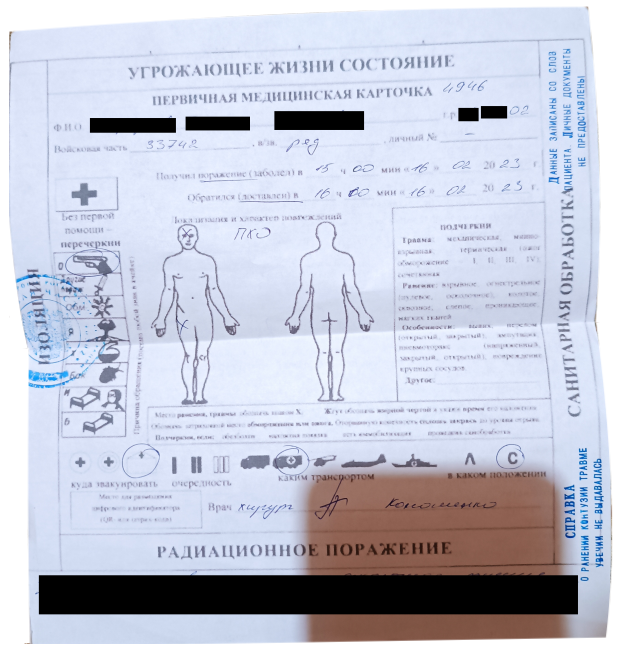
Copy of medical documentation included in the query from D.S.A.; redactions added by the
author via GNU Image Manipulation Program.
According to medical records, this individual received injuries to his head and right hip on February 16, 2023. The code of the military unit he was serving in, “33742”, corresponds to the 77th Anti-Air Missile Brigade and is part of the Southern Military District. The unit was awarded the “Guards” distinction via presidential decree on March 17, 2023 for its heroism “in defense of the fatherland,” suggesting that this unit participated in recent, intense fighting in Eastern Ukraine.
The image posted by the user does not return a match when put through reverse image search services. Metadata from the original image shows its date of creation as being March 17, 2023 at 22:04. The mobile camera used in the photo is listed as “Xiaomi 2201117SG”. This corresponds to the technical specifications of the Xiaomi Redmi Note 11S, a model of phone released in Russian markets on February 9, 2022. The presence of metadata regarding camera information and date of creation suggest that the individual’s image of his medical records is genuine and was not generated using artificial intelligence. The photo does not contain visual noise often seen in photoshopped media and the metadata contained within the photo aligns with the individual’s timeline (if the image was taken in 2021 or used a model of phone that was unavailable in Russian markets at the time, it would draw the credibility of the original poster into question).
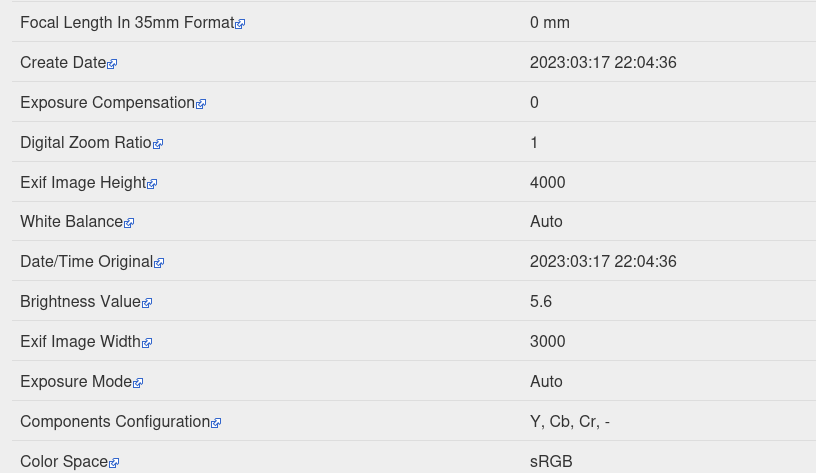
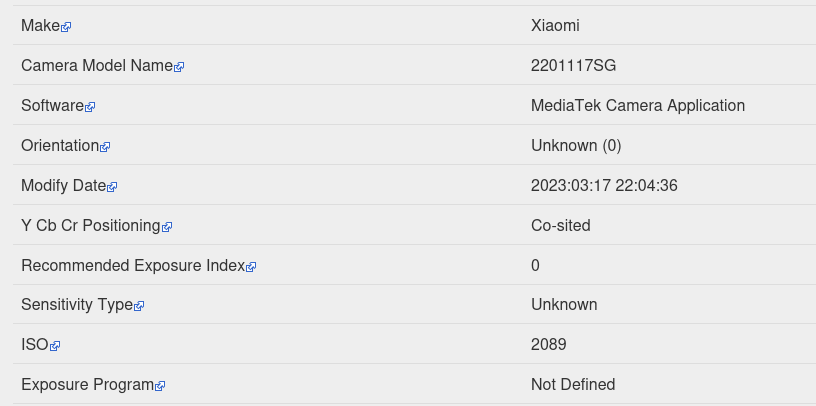
Screenshots of metadata regarding time of creation and camera model extracted from the original image via “exif[.]tools”.
Transferring veterans from the “Special Military Operation” to Gyumri could theoretically allow the Russian government to artificially suppress and manipulate casualty and injury figures. Instead of fully discharging a servicemember, the Russian military can instead quietly relocate the individual to a less-intensive post, such as the 102nd military base in Gyumri. This process would be especially applicable for units of the Southern Military District deployed in Ukraine as a redeployment to Gyumri would be seen as an in-district transfer. While it would be impossible to mask large-scale losses and casualties, this process may be enough to ease casualty rates for battalion-sized formations.
Gyumri As a Gray Zone
Beyond the deployment of contract soldiers to Ukraine and the relocation of injured servicemembers to Armenia, Gyumri has emerged as a “gray zone” for Russian citizens in Armenia attempting to avoid military service. In December 2023, a Russian man was reportedly abducted by Russian military police disguised as Armenian soldiers and transferred to Rostov via Gyumri. On April 9, 2024, a second Russian national avoiding military service was allegedly captured by Russian military police and held in Gyumri. Later on April 10, a Russian national was approached by two individuals claiming to be employees of the prosecutor’s office who then attempted to lure him towards the 102nd military base. After reporting the incident at a local police station, an Armenian police officer reportedly recognized one of the individuals as being a sniper from the garrison of the 102nd military base.
In an open thread on the 102nd military base VK page titled “When did you serve”, a user posts what appears to be an automated spam message regarding signing a military contract in Moscow. Included in the post is the email address “kontraktsvo@internet[.]ru”. A deeper search for military contracts and Gyumri leads to a page with the URL “kontrakt-svo2025” with an extension for “Armenya/Gyumri”. The website claims that an interested individual (specifically a Russian citizen or foreigner with fluency in Russian) may join the Russian military from Gyumri. The page for Gyumri includes a list of benefits and potential roles available. However, while Gyumri is listed as a specific location for signing a contract, the information and graphics displayed on the page appear to be identical to the main landing page and the pages for other cities inside Russia. The Telegram contact listed on the kontrakt-svo2025 website resolves to an account named “Motherland of the Heroes” (Родина Героев). A deeper examination of the phrase Motherland of the Heroes leads to a military recruitment agency launched in Russia in 2024. Recent inquiries from Russian internet users regarding signing a contract through the agency suggests that Motherland of the Heroes is still active. An earlier website from the agency, titled “kontrakt-na-svo[.]ru”, went online in summer 2024. The list of cities located on the bottom of the page excludes Gyumri. The initial absence in 2024 and later inclusion of Gyumri among cities covered by Motherland of the Heroes in 2025 suggests that the agency has expanded its recruitment efforts to include either Russian citizens in Armenia or Russophone individuals interested in military service.
On the Expanding Headcount
Given the movement of personnel from Armenia and Artsakh to Ukraine and the transfer of injured veterans to Gyumri, observers should carefully consider the motivations and implications of the planned surge in forces at the 102nd military base. This decision was made in the midst of a major realignment in the Armenian-Russian security partnership, an acute decline in relations between Azerbaijan and Russia, and ongoing fighting along the line of contact in Eastern Ukraine.
An Azerbaijani misinformation campaign has claimed that the Russian government intends to use Armenia as a staging ground for a future war against Azerbaijan. This narrative has been repeatedly pushed by the military mouthpiece Caliber[.]az and aligns with hyperbolic statements from Russian media figure Vladimir Solovyov regarding a “Special Military Operation” in Azerbaijan. It is highly unlikely that this deployment is intended to be a show of force by the Russian government directed at Baku. To begin, this theory assumes that the current decline in Azerbaijan-Russia relations is reflective of a deep, genuine political divide between both countries and not a temporary chill in relations. From all available sources neither the military alliance nor intelligence sharing agreement between Azerbaijan and Russia have been voided. The recent meeting of the Russian–Azerbaijani Intergovernmental Commission on Economic Cooperation in Astrakhan suggests that second-track diplomacy will continue between both states and channels of communication remain open between both governments. This false narrative also places an immense amount of importance on the 102nd military base in relation to Russian force composition and power projection in the South Caucasus. Observers should recognize that any substantial flow of munitions and supplies to the base would have to either travel through Georgia (a highly unlikely prospect under current conditions) or be done with military aircraft—drastically limiting the volume and type of equipment that could be delivered to the garrison in Gyumri. This narrative also ignores the presence of the 58th Guards Combined Arms Army in Vladikavkaz. This grouping is considerably larger than the collected forces at the 102nd military base and is much closer to the Azerbaijani-Russian border. Finally, we must consider that any movement of forces into Armenia would likely be tracked by the National Security Service and any efforts to maneuver toward the Armenian-Azerbaijani border would undoubtedly be observed by the Armenian military and the EUMA.
The second potential explanation is that the redeployment of forces to Gyumri is a show of force directed at the Armenian government. In this scenario, the increased military presence is either a reassurance of Russia’s supposed commitment to Armenian security, or the vanguard for Russian intervention following a future period of civil conflict. Neither of these scenarios should be seen as serious possibilities in the near future. The failure of the Russian government to respond to numerous invocations of the Armenian-Russia friendship treaty or CSTO charter and the inability of the peacekeeping mission to provide even basic intervention during the blockade of the Lachin Corridor and invasion of Artsakh has effectively shattered the notion of Russia as a source of stability in the region. While the recent failure of an alleged coup attempt and a surge in disinformation campaigns and cyber operations targeting Armenia indicate intensified offensive pressure on the government and civil society, it is highly unlikely that the Russian military would be capable of opening a “second front” in Armenia amid the ongoing war in Ukraine. Observers must also consider whether the Russian government would be capable of supporting a reactionary, counter-revolutionary state under current economic conditions and whether a post-intervention Armenian government would be able to avoid recreating the political conditions that led to the Velvet Revolution.
The third, and perhaps most likely possibility, is that the deployment of forces from the Southern Military District to Gyumri is a quiet attempt by Moscow to maintain a fading presence in an increasingly contested region. It should be noted that the initial command to transfer forces to Gyumri was a secret communication within the Russian military that was only made public after it was intercepted by an adversary. If this surge were the cornerstone of a new strategy and approach to the region, we would expect that the Russian government would broadcast this move publicly and include some accompanying form of diplomatic engagement. Given the patterns referenced earlier in this article this surge in personnel may not even be a full rejuvenation of the base’s diminished capabilities and may include injured servicemen, soldiers overdue for rotation away from combat postings, or conscripts that will eventually be shuffled away to combat postings in Eastern Ukraine.
Opinion

Notes From Armenian Street: Lessons on How Moldova Defeated Russia’s Hybrid War
Moldova’s quiet resilience tells a story of survival. Political analyst Mikayel Zolyan traces how this small nation confronted Russian hybrid warfare, reclaimed its democratic voice, and reflects on what its hard-won lessons might mean for Armenia’s struggle against disinformation and dependence.
Read more
How Small Powers Turn Vulnerability Into Strength
At a time when multilateralism is faltering and power politics dominate international relations, micro-states and small powers can still exist, assert themselves on the world stage, and turn vulnerability into strength—becoming indispensable to others.
Read more
The Ontology of Violence: Growing Up Hayastantsi in Los Angeles
In this raw exploration of excessive masculinity and violence within the Hayastantsi subculture of 1990s Los Angeles, Nerses Kopalyan examines the ontological roots of aggression that shaped a generation, and how that mentality has mutated into an incoherent, hybridized identity in the decades since.
Read more
Beyond Washington: Azerbaijan’s Performative Peace
More than two months after the Washington declaration, Tatev Hayrapetyan examines the widening gap between Baku’s diplomatic vows with on-the-ground reality: inflammatory rhetoric, sham trials, expansionist “Western Azerbaijan” narratives and divergent TRIPP talk signaling a performative peace narrative.
Read more
Nation, Faith and Diaspora at a Crossroads
Long seen as a pillar of Armenian identity, the Apostolic Church now finds its relationship with the state strained. Political change, postwar trauma, and institutional mistrust have blurred boundaries between spiritual and secular authority, raising urgent questions about legitimacy, governance, the need for reform and the Church’s role in public life.
Read more
Armenia: The Force of the Norm or the Norm of Force?
As Armenia stands at another historic crossroads, Gaïdz Minassian explores the country’s defining tension between the force of the norm—law, sovereignty and peace, and the norm of force—justice, identity and conflict, asking which path will shape Armenia’s future.
Read more
Law, Power and Perception: Broadening the Debate on Judicial Independence
Judicial independence in Armenia is more than legal rules; it is a matter of culture, perception and action. Gor Samvel broadens the debate, examining how law, ethics, and societal forces intersect, and calling for rigorous research to inform public understanding.
Read morePolitics
Security Dimensions of the EU-Armenia Strategic Agenda
The security component of the Strategic Agenda incorporates Europe as an important part of Armenia’s developing security architecture, writes Nerses Kopalyan, where the confluence of hard power capacity and small-state resilience become integrated, at the institutional level, with European and Transatlantic standards.
Read more
Armenia’s Murky Surveillance Landscape: When Privacy Becomes Politics
Armenia’s political landscape has been shaken by leaked recordings, questionable surveillance, and criminal cases built on audio, sometimes of unknown origin. Hranoush Dermoyan examines the murky intersection of privacy, power and politics, revealing how wiretapping has become a tool of influence and pressure.
Read more
Building the Architecture of Cybersecurity: Armenia’s Institutional Turn
Armenia has lagged in global cybersecurity rankings, but new institutions, a comprehensive Cybersecurity Law, and alignment with EU standards signal a turning point. Albert Nerzetyan examines the country’s emerging governance framework, its structural advantages, and the challenges ahead in implementation.
Read more
A Viral Scandal and the Line Between Privacy and Public Interest
What are the legal and ethical boundaries between privacy and public interest in democratic societies? Using the recent leaked video involving a senior Armenian cleric as context, Anoush Begoyan outlines established principles that distinguish legitimate scrutiny from voyeurism and scandal.
Read more
France–Armenia Defense Partnership: From Symbolic Solidarity to Support for Sovereignty
France’s defense cooperation with Armenia marks a decisive shift in its policy toward the EU’s eastern periphery. Moving from symbolism to substance, Paris now helps Yerevan build deterrence and resilience, reshaping how sovereignty and stability interact in the South Caucasus. Sossi Tatikyan explains.
Read more
Armenia, China, and the Shanghai Cooperation Organization: Navigating Between Poles
Armenia’s pursuit of a strategic partnership with China and its bid to join the Shanghai Cooperation Organization (SCO) reflect a broader effort to recalibrate foreign policy amid shifting global alignments, balancing ambition with constraint in an increasingly multipolar world.
Read more