
Listen to the AI generated audio article.
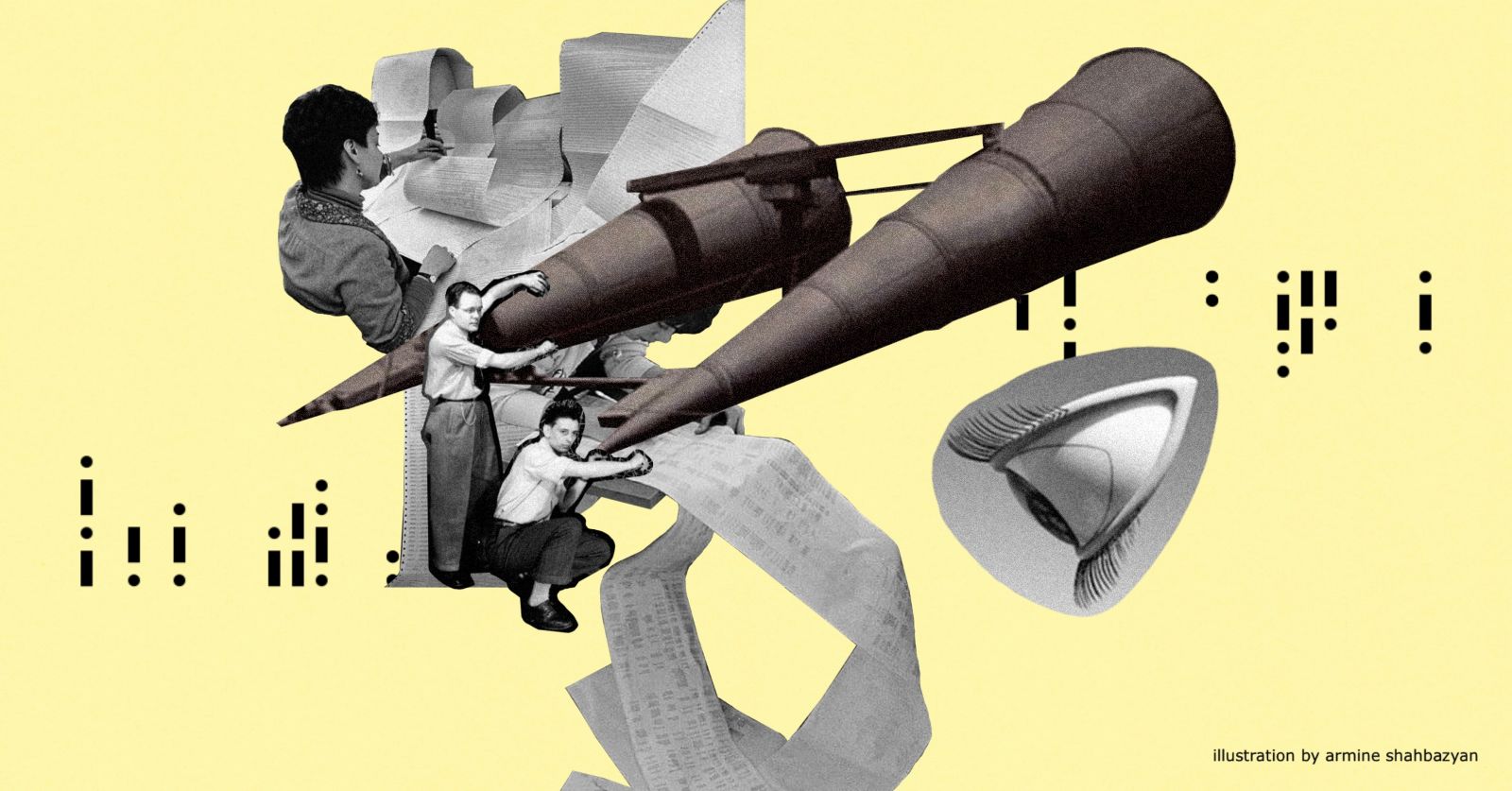
Leaked recordings, wiretapping scandals, and criminal cases based on audio files of unknown origin have marked Nikol Pashinyan’s administration since its earliest months. Many questions remain unanswered: Who makes these recordings? Who leaks them? And what role do Armenia’s National Security Service and Police play, given that many of the most controversial recordings are often disseminated through government-affiliated media outlets?
Under Armenian law, wiretapping, the secret monitoring of telephone conversations, including those through the Internet or other electronic communications, may be carried out only by bodies authorized by law.
Strict conditions regulate such covert surveillance:
Scope and justification: It may be applied only when someone is suspected of committing a grave or especially grave crime, and only if there is substantiated evidence that the information cannot be obtained by other means.
Judicial authorization: Most cases require a court decision, particularly when surveillance involves people who wouldn’t reasonably expect to be monitored or when technical means are used. The head of the relevant operational subdivision must file a motion for judicial approval following the procedure outlined in the law.
Exceptional circumstances: In urgent cases where delay could enable terrorism or threaten state, military, or environmental security, authorities may act on their own decision within 48 hours, provided they notify the court immediately afterward.
If surveillance captures information about individuals who were not the original targets—incidental third-party communications—that information cannot be used as evidence and must be destroyed, unless it was obtained in compliance with the law. The law classifies the interception of correspondence and wiretapping as broader operational intelligence measures.
Yet in recent years, a troubling pattern has emerged. Recordings of high-ranking officials have been leaked, but the sources have never been identified. This raises serious questions about national security and institutional accountability. Recordings of opposition figures have surfaced and in several cases, criminal proceedings were later launched based on those leaked recordings. Meanwhile, some recordings of investigative operations have been formally released by state authorities themselves.
A legitimate question arises: were these acts of surveillance conducted lawfully? Were they truly necessary? Or do they constitute forms of political pressure on opposition figures?
Artur Vanetsyan
Just a few months after the 2018 Velvet Revolution, an audio recording of a phone conversation between then–National Security Service (NSS) Chief Artur Vanetsyan and Special Investigation Service (SIS) head Sasun Khachatryan was released.
In the conversation, the two discuss the arrest of former President Robert Kocharyan and ongoing cases against CSTO Secretary-General Yuri Khachaturov and former Defense Minister Mikael Harutyunyan. Vanetsyan tells Khachatryan that a judge had been instructed to imprison Kocharyan “at all costs,” implying political pressure on the judiciary. He then warns that Khachaturov should not be detained, fearing it could damage Armenia’s relations with Russia.
At one point, Vanetsyan tells Khachatryan that a judge had called him asking what decision should be made regarding Kocharyan’s restraining measure; a striking admission of improper contact between the security services and the courts.
The leak was politically explosive. Vanetsyan, a longtime NSS officer, had been Prime Minister Nikol Pashinyan’s controversial choice to head the agency after the revolution. To this day, it remains unclear who recorded the call or how it was released.
At the time, Vanetsyan stated that law enforcement had identified the client who ordered the wiretapping of his phone conversation with Khachatryan. However, he refused to reveal the name, only saying the client was from Armenia. When journalists pressed him, Vanetsyan said the alleged person had no connection to the NSS but was “widely known” to the public. He never revealed the name, claiming that there was not enough evidence to document the person’s involvement
According to Vanetsyan, the motive for publishing the wiretapped conversation was to discredit him and force his resignation.
Vanetsyan insisted that the recording was tampered with and that he never spoke with a judge. He noted that wiretapping the NSS chief’s phone within Armenian territory is impossible. The perpetrators succeeded, he explained, because he was abroad and on roaming during the phone conversation with the SIS chief, and the connection was not protected. “In that case, any medium-quality specialist can conduct that wiretapping,” Vanetsyan said at the time.
He resigned in 2019, citing disagreements with Pashinyan. Following Armenia’s defeat in the 44-day war, Vanetsyan became an outspoken critic of the Prime Minister and during the 2021 parliamentary election, joined forces with the Republican Party, entering parliament under the I Have Honor alliance. In May 2024, when Vanetsyan declared support for Bagrat Galstanyan’s movement, Pashinyan insinuated that the entire recording may not have been made public. He claimed there was clear information that a foreign intelligence service had made the recording, and that the unreleased part had been used to maintain influence over the Vanetsyan.
Pashinyan further alleged that the unreleased portions of the recording might contain a conversation in which Vanetsyan—acting beyond his authority as NSS chief—was negotiating with former president Serzh Sargsyan’s son-in-law Mikayel Minasyan about registering part of the Zangezur Copper-Molybdenum Combine in his cousin Karen Vanetsyan’s name.
A few days before the 2018 snap parliamentary elections, another recording was leaked—this time of a conversation between Vanetsyan and then–acting Prime Minister Pashinyan, followed by another conversation between Vanetsyan and Khacharyan. Pashinyan himself re-posted the recording. He did not deny that the conversation happened but stated that it had been tampered with. The subject was the same: choosing restraining measures for former President Robert Kocharyan and CSTO Secretary-General Yuri Khachaturov.
Addressing the recording, Pashinyan stated that the conversations between the heads of the National Security Service and the Special Investigation Service in the wiretappings “definitely fall within the scope of their authority.”
He argued that the recordings were leaked because the “corrupt system” felt increasing pressure as efforts to hold officials accountable intensified. He said the leaks reflected resistance from those fearing prosecution, emphasizing that all individuals involved in corruption would eventually face justice.
In 2021, the wiretapping case involving Vanetsyan and Khachatryan was closed on the grounds of lack of evidence.
The Investigative Committee also reported that the investigation in the criminal cases involving the illegal recording and dissemination of phone conversations between Vanetsyan and Khachatryan and Vanetsyan and Pashinyan is ongoing.
Bagrat Galstanyan
In June 2025, Armenian law enforcement detained Archbishop Bagrat Galstanyan on charges of attempting to overthrow the government. He was charged with terrorism and the unlawful usurpation of power. Fifteen members of Galstanyan’s Sacred Movement were also detained in connection with the case.
In April 2024, Galstanyan led a protest campaign against the demarcation of the Armenia-Azerbaijan border in Armenia’s Tavush region. The protests that began in Tavush escalated to demonstrations in Yerevan, with demands expanding from stopping the border demarcation to calling for Pashinyan’s resignation. Galstanyan, who called his campaign The Sacred Movement, even announced his readiness to become prime minister.
Although Galstanyan’s campaign had largely faded by early last fall, he remained an outspoken critic of the prime minister, continuing to demand his resignation.
On June 25, the Investigative Committee released audio recordings allegedly capturing Galstanyan and other movement members planning violent acts of disobedience. According to authorities, the group had been preparing to seize power since November 2024.
Law enforcement officials say the operation was planned in detail. The group decided to abandon peaceful protest in favor of coordinated violent actions. According to the recordings, they intended to form 200 to 250 “strike groups,” each with up to 25 members—mainly ex-military personnel and former police officers. These groups were to act independently, without knowledge of one another’s assignments, to destabilize the country’s infrastructure and security.
The plan reportedly included gathering the public in front of the Government Building under the pretense of a peaceful protest. Meanwhile, strike teams would be deployed across the capital and other regions to execute tasks designed to cause chaos—without joining the rally.
Authorities say the alleged goals included widespread disruption: using explosives, causing car crashes, sabotaging transport networks, disabling power and internet infrastructure, and carrying out arson attacks. The group also allegedly intended to restrict the movement of the military, stage cyberattacks on government systems, and paralyze security operations.
By January 2025, the group had reportedly recruited over 1,000 individuals. Investigators say they identified key infrastructure points in Yerevan, and procured thousands of explosive and projectile devices, along with metal tire spikes meant to immobilize vehicles.
During searches of more than 90 properties connected to the group, authorities say they uncovered firearms, ammunition, operational blueprints, recruit lists, military uniforms, communication devices, drones, plant material resembling narcotics, and documents outlining the sequence and timing of the planned attacks. Among the seized materials was a written action plan that included names of individuals allegedly intended for top government posts following the planned power grab.
A day before the arrests and official release of the recordings, Civic.am, the ruling party’s official news outlet, published what they described as a “plan” to overthrow the government. The story, later amplified by members of the ruling Civil Contract Party, alleged that Archbishop Bagrat Galstanyan and his Sacred Movement supporters were plotting terrorist acts.
The question remains: how did case details appear in the media before any official announcement? This is especially puzzling since the same document was later reported to have been discovered by law enforcement during searches of homes belonging to Sacred Movement members.
Vardan Ghukasyan
Another wiretapping recording for which authorities took accountability involves Gyumri mayor Vardan Ghukasyan.
On October 20, Armenia’s Anti-Corruption Committee detained Ghukasyan for two months on corruption charges, suspending him from office. Investigators say the mayor and the city’s chief architect allegedly demanded a 4 million AMD bribe (around $10,000 US) to “legalize” an illegally constructed building set for demolition.
Investigators released audio recordings that allegedly capture the two discussing the payoff details and how to cover it up. Authorities claim the mayor’s dealings extend far beyond one case—that he was at the center of a wider corruption network involving blackmail, falsified documents, and manipulation of city property transfers for personal gain.
Seven others were arrested, including the chief architect. The two are now in pre-trial detention, while the investigation concerning the other six suspects continues.
Ghukasyan rejected the charges. His defense team insists the case is politically motivated, pointing to his opposition ties and alleging the investigation is part of a broader campaign to silence critics.
The Gyumri mayor’s dealings did not come as a surprise—he has two active criminal cases against him and a notorious track record.
Avetik Chalabyan
While the criminal cases against Galstanyan and Ghukasyan were based on wiretapping operations conducted by law enforcement, in 2022 criminal proceedings were launched against government critic Avetik Chalabyan on the basis of recordings of unknown origin that appeared in the media.
In May 2022, audio recordings were leaked by news outlets affiliated with the ruling Civil Contract party. The recordings implicated opposition activist Avetik Chalabyan, who allegedly tried to bribe students to join anti-Pashinyan rallies.
The recordings appear to capture a conversation in which a speaker—reportedly Chalabyan—discusses paying student organizers from the Agrarian University to mobilize participants for opposition actions. The participants discuss money, numbers and possible activities the students could undertake, including strikes, rallies, blocking roads, and other acts of civil disobedience. They also discuss what the student council could realistically deliver. Financial incentives are presented as the main motivation throughout the discussion. The speaker mentions an offer of 1,000 AMD per student, totaling 2 million AMD (around $4,200), to secure the participation of roughly 2,000 students.
Chalabyan was detained on May 13, 2022 on charges of offering bribes to encourage participation in protests. The arrest took place amid ongoing sit-in demonstrations launched by the opposition in early May 2022. These protests followed remarks by Prime Minister Nikol Pashinyan in parliament suggesting that the status of Nagorno-Karabakh should be redefined to achieve an international consensus around Armenia. The opposition claimed Chalabyan’s arrest was politically motivated and aimed at discrediting their campaign to force Pashinyan’s resignation.
Chalabyan, who became a prominent critic of Pashinyan after Armenia’s defeat in the 2020 Artsakh War, denied wrongdoing. His defense argued that the recordings had been edited and manipulated to suppress political dissent.
He was released in July 2022 due to health concerns, rearrested in August, and released again later that month on 15 million AMD bail (approximately $37,000).
In December 2023, the Yerevan Criminal Court found Chalabyan guilty and barred him from organizing or participating in assemblies or public events for one year and 11 months and required to obtain permission from the supervising authority before changing his place of residence. This was the first time such a verdict was handed down in Armenia.
However, the verdict has not been enacted. Chalabyan and his defense team appealed the court decision and in September 2024, the case was sent for retrial after the Court of Appeals reportedly questioned the admissibility of the leaked recording, whose origin remains unknown.
Natan Hovhannisyan
A similar incident unfolded amid worsening relations between the Prime Minister and the Catholicos. This case took several months to develop.
On September 16, Hovhannavank priest Father Stepan Asatryan told Armenia’s Public TV that he was forced to take part in anti-government protests. These remarks led to the arrest of several clergymen, including the head of the Aragatsotn Diocese Archbishop Mkrtich Proshyan.
Following the arrests, media outlets affiliated with Prime Minister Pashinyan released an audio recording from an unknown source, allegedly from 2023. In the recording, Aghan Yerinjakyan, the former staff-bearer of the Catholicos, speaks to Archbishop Natan Hovhannisyan, Director of the Department of External Relations and Protocol of the Mother See, and accuses Garegin II of pressuring him and his mother to attend an anti-government rally. Yerinjakyan also complains that the Catholicos assigned him to serve in Vanadzor, far from his home and mother as punishment for refusing to comply. It remains unclear who recorded the conversation or how the media obtained it.
A few days later, the Investigative Committee launched a criminal investigation into the allegations in the recording. Archbishop Hovhannisyan was questioned in connection with the case.
It remains to be seen how the case will unfold. The recording contains a direct allegation that the Catholicos attempted to force another person to participate in a political rally.
***
A 2022 amendment to Armenia’s Criminal Code introduced provisions regulating coercion to participate in public assemblies. Under Parts 2 and 3 of Article 236, the law establishes criminal liability for forcing individuals—or their close relatives—to take part in lawful or unlawful gatherings.
The amendment makes it a crime to compel someone to join a rally through threats of violence, property damage, blackmail, or pressure. Penalties include fines, community service, loss of certain professional rights, restriction of freedom, or imprisonment for up to three years.
If someone uses their official position or authority to carry out the coercion, the penalty increases from two to five years in prison.
Archbishop Arshak Khachatryan
The most scandalous leak to date concerned Archbishop Arshak Khachatryan, Chief of Staff of the Catholicos. As with previous leaks, it remains unclear who recorded or released it.
When Aram Asatryan was defrocked by the Mother See for his comments regarding the forced participation in rallies, Pashinyan announced he would attend mass conducted by him. Two days before the controversial service took place, compromising footage allegedly featuring Archbishop Arshak Khachatryan surfaced online. The video appeared on a newly created Telegram channel and was quickly amplified by pro-government outlets.
The rift between Khachatryan and Pashinyan had begun earlier that summer. In late May, Pashinyan criticized the state of Armenian churches, likening them to storage rooms. Khachatryan publicly condemned the remarks—marking the beginning of the most strained relations between the country’s political and spiritual leadership to date.
Soon after, the prime minister took to social media to accuse the cleric of having an inappropriate relationship with his uncle’s wife. The footage that later surfaced appeared to confirm that allegation.
Following the publication of the footage, these same outlets claimed that Archbishop Khachatryan had demanded the Catholicos’ resignation. He allegedly urged the Catholicos to step down voluntarily before details about violations of the vow of celibacy within the Church hierarchy became public. Pro-government media further speculated that the video had originated from inside the Mother See.
The Investigative Committee has since launched criminal proceedings under articles covering violations of privacy and the illegal use of special technical means for secret information collection.
The case of Archbishop Arshak Khachatryan is troubling: intimate details of an individual’s private life can be exposed and weaponized whenever it becomes politically convenient. Here, his personal privacy, and the privacy of the woman in the footage, was compromised amid the deepening confrontation between the country’s political and spiritual leaders.
A Dangerous Precedent
Together, these cases reveal a new dimension of Armenia’s political culture.
The first case—involving Artur Vanetsyan, Sasun Khachatryan and Nikol Pashinyan—stands apart. It featured recordings of high-ranking government officials and seemed designed to undermine the independence of the judiciary rather than expose criminal activity.
The second category includes Archbishop Bagrat Galstanyan and Gyumri Mayor Vardan Ghukasyan. Law enforcement obtained these recordings during investigations into alleged serious crimes. Both men are political opponents of Prime Minister Pashinyan, but authorities insist the wiretapping was legal and necessary to prevent or document criminal acts.
The third group is perhaps the most troubling. The origin of these recordings remains unknown, and they target individuals in open conflict with the Prime Minister or his government. The cases of Avetik Chalabyan and Archbishop Natan Hovhannisyan contain elements that could qualify as criminal—such as obligating others to join opposition rallies. Archbishop Arshak Khachatryan’s case appears to be collateral damage in the growing confrontation between the government and the Catholicos.
Recordings in this third category follow a recognizable pattern. A person or group conflicts with the authorities, then, at the height of the standoff, a compromising recording or alleged evidence surfaces on newly created Telegram channels or anonymous social media accounts. Pro-government media outlets amplify the leak, lending it legitimacy. Within days, criminal proceedings are launched.
Politics

Building the Architecture of Cybersecurity: Armenia’s Institutional Turn
Armenia has lagged in global cybersecurity rankings, but new institutions, a comprehensive Cybersecurity Law, and alignment with EU standards signal a turning point. Albert Nerzetyan examines the country’s emerging governance framework, its structural advantages, and the challenges ahead in implementation.
Read more
A Viral Scandal and the Line Between Privacy and Public Interest
What are the legal and ethical boundaries between privacy and public interest in democratic societies? Using the recent leaked video involving a senior Armenian cleric as context, Anoush Begoyan outlines established principles that distinguish legitimate scrutiny from voyeurism and scandal.
Read more
France–Armenia Defense Partnership: From Symbolic Solidarity to Support for Sovereignty
France’s defense cooperation with Armenia marks a decisive shift in its policy toward the EU’s eastern periphery. Moving from symbolism to substance, Paris now helps Yerevan build deterrence and resilience, reshaping how sovereignty and stability interact in the South Caucasus. Sossi Tatikyan explains.
Read more
Armenia, China, and the Shanghai Cooperation Organization: Navigating Between Poles
Armenia’s pursuit of a strategic partnership with China and its bid to join the Shanghai Cooperation Organization (SCO) reflect a broader effort to recalibrate foreign policy amid shifting global alignments, balancing ambition with constraint in an increasingly multipolar world.
Read more
Armenia vs. Azerbaijan: Competing Narratives at the UN
Five years after the 2020 war, Aliyev and Pashinyan addressed the UNGA with sharply contrasting narratives. Aliyev employed cognitive warfare to assert dominance and legitimize past aggression, while Pashinyan exercised narrative constraint, emphasizing sovereignty, reciprocity and constructive peacebuilding. Sossi Tatikyan explains.
Read more
Armenia’s Balancing Act in a Multipolar World
As global power shifts toward multipolarity, Armenia faces profound uncertainty. With Russia’s retreat and ongoing regional pressures, Yerevan is pursuing a “balanced and balancing” foreign policy—deepening Western ties while engaging Iran, India, China and others—in a bold recalibration of its security and diplomacy.
Read moreOpinion

Notes From Armenian Street: Lessons on How Moldova Defeated Russia’s Hybrid War
Moldova’s quiet resilience tells a story of survival. Political analyst Mikayel Zolyan traces how this small nation confronted Russian hybrid warfare, reclaimed its democratic voice, and reflects on what its hard-won lessons might mean for Armenia’s struggle against disinformation and dependence.
Read more
How Small Powers Turn Vulnerability Into Strength
At a time when multilateralism is faltering and power politics dominate international relations, micro-states and small powers can still exist, assert themselves on the world stage, and turn vulnerability into strength—becoming indispensable to others.
Read more
The Ontology of Violence: Growing Up Hayastantsi in Los Angeles
In this raw exploration of excessive masculinity and violence within the Hayastantsi subculture of 1990s Los Angeles, Nerses Kopalyan examines the ontological roots of aggression that shaped a generation, and how that mentality has mutated into an incoherent, hybridized identity in the decades since.
Read more
Beyond Washington: Azerbaijan’s Performative Peace
More than two months after the Washington declaration, Tatev Hayrapetyan examines the widening gap between Baku’s diplomatic vows with on-the-ground reality: inflammatory rhetoric, sham trials, expansionist “Western Azerbaijan” narratives and divergent TRIPP talk signaling a performative peace narrative.
Read more
Nation, Faith and Diaspora at a Crossroads
Long seen as a pillar of Armenian identity, the Apostolic Church now finds its relationship with the state strained. Political change, postwar trauma, and institutional mistrust have blurred boundaries between spiritual and secular authority, raising urgent questions about legitimacy, governance, the need for reform and the Church’s role in public life.
Read more
Armenia: The Force of the Norm or the Norm of Force?
As Armenia stands at another historic crossroads, Gaïdz Minassian explores the country’s defining tension between the force of the norm—law, sovereignty and peace, and the norm of force—justice, identity and conflict, asking which path will shape Armenia’s future.
Read more