
Listen to the AI generated audio article.
Ա
Armenian-ness, հայութիւն (hayutyun) in Armenian, is an identity that is constantly evolving. It might include language, descent, religion, and culture, and has different connotations for different people.
– Curator’s words
Here you are at the British Library, this Noah’s ark of books, where every one of the ten million bricks used for the building is “individually handmade”. Your special date, Britanahay Բրիտանահայ: Armenian and British, the temporary exhibition in The Treasures Gallery. Time is suspended, entry is free. It’s semi-dark so the visitors can better forget the immediate world and quicker imagine those others. You cast your eye over the room. Someone is leaning over Shakespeare’s folio in a glass cabinet. Someone else is reading the lyrics to “Strawberry Fields” in John Lennon’s hand-writing. And an elderly man is ogling the Gutenberg Bible. He’s elegant. You spot a Remembrance poppy on his coat lapel.
You start reading the captions to this event: This display will explore the contributions of British-Armenians to culture and society at home and abroad. You figure that this implies that for the tens of thousands of British-Armenians like you, home is assumed to be Britain, while Armenia and elsewhere are abroad.
Բ
It’s rare for your hayutyun to be seen these days. Where you live in middle England, a woman you once met tried to make conversation. Where are you from? she asked. Armenia? Now, I met a Polish lady the other day, is that the same? You laughed, you aren’t petty. Kind of, you said. You understood that she meant, “the other Europe”. Similarly, when you are asked, Is that in the Middle East? you understand: in a way, it is. Or you may hear: It’s part of Russia, isn’t it? Because though 15 different states have emerged from that particular beast, the Soviet Union still equals Russia to many – including academics, judging by the contents (and indices) of their books that hardly make any mention of the peripheral republics. You’ve heard historian Sheila Fitzpatrick say that, for various reasons, until around 1980 there was no entry for “Soviet Union” in the card catalogue of The Library of Congress; it was catalogued as “Russia 1923 on.” As a constituent part of the Soviet Union, did that label apply to Armenia, the predecessor of today’s Republic?
A five-hour direct flight away, if they do recognize it, your British acquaintances associate it with “Mount Ararat”, “big earthquake”, “some sort of war with a neighbor”, “old and Christian”, and “the Genocide”. Which is how you see it sometimes. As in, for ideas and events, rather than a set space that is the present speck of land, saved despite much in-fighting, through bloodshed and sheer doggedness, and fixed over a century ago by the conquering and dividing remnants of empires themselves.
The Armenia you’re from, your “abroad”, is a reality post-1991. But you still sounded like an alien when you told your boss: There’s a war back home and I can’t concentrate. You didn’t want to elaborate. You’d just heard that your best friend’s kid was in the trenches where Covid was raging and the skies were raining phosphorus. It was before the blockade and the next assault and the displacement that came later. Shakespeare’s country was unfazed that September 27. But you knew she’d believe you if she saw it on the evening news.
Writing in the journal of Armenian studies Bazmavep (Բազմավէպ) about Shakespeare’s one mention of Armenia, in Anthony and Cleopatra, Lisa Hopkins (Sheffield Hallam University) writes: “Here Armenia is lumped together with some other places to give a vague impression that it is somewhere in the east. Shakespeare knew more than that, though. He could have seen Armenia represented on the maps by Ortelius and others, and some elements in Othello suggest that he might have heard of Caterina Cornaro, last queen of Cyprus, whose full title was Queen of Cyprus, Jerusalem and Armenia. Above all, he was certainly familiar with Marlowe’s two-part play Tamburlaine the Great. The Tamburlaine plays… are bookended by references to Armenia, which lay as a buffer zone between the two warring powers [Ottoman-Safavid empires] and whose modern capital Yerevan changed hands fourteen times between 1513 and 1757…”
In truth, your homeland’s geolocation is a great inconvenience. Armenia is in-between (in the way). It used to be there as well as here, by turns in that bloc and this. It’s at the crossroads of East and West, some say. AI says “South Caucasus”, which is the “geographical border between Western Asia and Eastern Europe.”
Here, then, is the context you’ve been moving in. Here you’ve been, attempting self-definition in a set space at a particular time, which is as urgent a task as it is convoluted. One thing is clear: to you, Armenia is everywhere, central and weblike. It’s your beginning, your A, B, C.
Գ
You count (collect) these special dates in major establishments on the fingers of one hand մի ձեռքիդ մատների վրա. In this building in 2001, Treasures From the Ark: 1700 Years of Armenian Christian Art was held. Because there’s always a background to these occasions, always a hook, more came in the 2010s, for the centenary of the Catastrophe Աղետ. Venice’s Correr Museum staged Armenia: Imprints of a Civilization in 2012; The Bodleian at Oxford organized Armenia: Masterpieces from an Enduring Culture (2015); the Louvre had Armenia Sacra (2015), and The Met ran Armenia! (2019). You saw most of them and have all the glorious catalogues here at home.
You detect a difficulty in naming, in choosing specific titles and themes, in seeing Armenia as a now-place rather than simply old and Christian (is sacred the same as dead?), and in covering the period after the 1700s. In seeing contemporary art or society in Armenia of “Russia 1991 on” period, as it were. You wonder if the cultural obscurity you feel personally is a reflection of a political projection. You wonder if the curators have become too fixated on ideas and events rather than the people. Or is it that the ideas and events have become an inventory of clichés?
In a 2022 interview, philosopher Ashot Voskanyan considered [ethnic] identity in two ways. Firstly, identity as the path of the Armenian people, “shaped along the way, with all the fat and lean days, with everything it has given us and has taken from us” – a reflective, critical and selective process. Secondly, identity as an undertaking. That is, “identity is something which I say, this is how I am. I declare this is me, …the way I want to be and so I request to view me as such. This doesn’t mean that right [now] I am already as I state to be, but that is my objective.” Voskanyan was talking to philanthropist and politician Ruben Vardanyan.
Դ
When you first came to Blair’s Britain, you were you, no hardcore Armenian. Your task, not how to be a British-Armenian but to live as yourself in England. Where it often began with a guessing game about how you got here. Are you Italian? French? Greek? Which? an Englishman says. When you answer, you’re corrected to “double-check”: Romanian? Albanian? Seldom is it a give-and-take, a chat, but an exercise in label-reading. They never ask about Armenia’s painters or musicians, film-makers, astrophysicists, or chess players. They’ve no time, nor should they, for your other worlds, beyond the immediate surroundings. The “placing” exercise is a reflex for making the world familiar, theirs. More a diagram than a dialogue, since the questioner is assumed to be of this soil, air and water հողից, օդից ու ջրից. What could you possibly question about their how-they-got-here?
At this aching distance from the actual things familiar, you began hunter-gathering their reflections—conjuring Armenia in English, studying its impressions. You became an identitist—if that’s a word. Quote upon a story upon study upon reference, collected like beach stones found on foreign shores. You sought out mentions of Armenia in the contents (and indices) of books under “orient”, “medieval”, “Cold War” and “Communism”. Photographed any words that provoked memory: Army/Armagnac/Aran/America. Read up on Yousuf Karsh, Van Leo, and others who dominated photography in Istanbul, Egypt and Palestine. Psychoanalysts would have a field day with the Armenians’ “proclivity towards the craft”. Following Armenian footprints, you, who is planets away from secret services, researched the teenage spy who saved Churchill’s life. You never shared this with your British friends, you’re not ridiculous. That pride is an aspect of hayutyun you dislike. And you speculate, standing here today, what would happen if exhibitions like this examined a quote by one of your favorite Englishmen of letters. In his 1933 memoir, “Down and Out in Paris and London”, presuming the origins of the doorman that he dislikes, George Orwell says: “He called himself a Greek, but in reality he was an Armenian. After knowing him I saw the force of the proverb ‘Trust a snake before a Jew and a Jew before a Greek, but don’t trust an Armenian.’”
You’ve found a most amusing story of Armeno-British relations, told through an ancient object. It dates back to the 9th century BC and is kept in Benjamin Britten and Peter Pears’ home. In the summer of 1956, the composer and his partner stayed at the Armenian Composers’ Union in Dilijan with their friends, soprano Galina Vishnevskaya and cellist Mstislav Rostropovich. He returned to Aldeburgh from that trip with a present: an Urartian amphora excavated from the area, gifted by Dilijan’s mayor at a lunch in their honor. From Peter Pears’ Travel Diaries: “[T]he mayor announced that he wished to give us a souvenir of … our visit… and forthwith from under the table, the Museum Curator produced what must have been their museum’s chief treasure… This, of course, left us quite speechless…” This kind of link is rare and vital. It restores continuity in views of Armenia. Because Dilijan is still there, and you can visit it.
As pleasing as it sounds, the advert on the event’s website link announcing that this exhibition explores “over 800 years of British-Armenian communities and interactions,” is not backed up by evidence. The Armenian Community Council of the UK mirrors what other sources say, which is that the British Armenian community dates back to the 18th century. As for interactions, if meant at the inter-state level, their history is necessarily choppy. Despite its support for the first independent Armenian republic, Britain only granted it de facto recognition, and only in 1920, mere months before it fell to the Bolsheviks. Then we had a seven-decade hiatus before a restart in 1992. Most recently, the UK announced an “upgrade” to its relationship with Armenia with the signing of an agreement about enhanced cooperation in various fields, such as trade, security and defense. Culture, in a supposed sacrifice to geopolitics, is the shortest paragraph. In the statement you read that your “home” has fully lifted its decades-old arms embargo on Armenia and the neighbor. The context? Minister for Europe [North America and Overseas Territories] states: “… the UK considers that the rationale underpinning the OSCE’s 1992 recommended arms embargo on ‘all deliveries of weapons and munitions to forces engaged in combat in the Nagorno-Karabakh area’ has fallen away.” This, in reference to the war, the blockade and the next assault and the ethnic cleansing.
Ե
“A diasporic people with an independent homeland (the Republic of Armenia), Armenians have had a profound impact on global culture and history. Some names are well known: Cher, the Kardashians, Aram Khachadurian, Charles Aznavour, Andy Serkis.
– Curator’s words
You knew that before setting foot here in Britain. In the “History of the Diaspora” lectures at Yerevan State University, you kept hearing about “our compatriots” who had made good outside Armenia, from Los Angeles, Paris and Moscow. Full or part-Armenians, they punched above their weight as pioneers in Hollywood, or in Europe’s café culture, or as French Resistance fighters. Did this counting of percentages of Armenianness, weighing up DNA like chemists make the world familiar, ours? They told you about Arshile Gorky, Michael Arlen, and William Saroyan who refused a Pulitzer and used his Oscar as a doorstop. About Hovsep Emin who lobbied London’s elite circles for Armenian liberation, or his ground-breaking book, published here in England, archived in this library. Often, they were referred to as “our greats” մեր մեծերը. Years later, scarcely any of the names were familiar to your British circle. Those who knew Aznavour didn’t like his music.
These days you hate claiming their gifts and achievements. As though they lived for a collective. All of that superficial info massaging our egos, now used as a hook for foreigners, a cognitive aid that makes us culturally significant. Equal? As though they owed anything to us strangers, yes, other Armenians. As though they were citizens of Armenia.
Զ
When Cher visited Armenia in 1993, you were hardly aware, deep in reviewing for university. It being the post-earthquake, “dark and cold years” մութուցուրտ տարիներ, there were water and energy outages (was there still rationing?) and war. She was taking aid to a freezing and faceless place. As she said, “I want to bring a face to the name Armenian,” and expressed a desire to meet an underprivileged family. Her one condition: the children had to be excellent pupils. You want to say that’s very Armenian.
The country she saw was a kind of surrogate. Her father, just like Mr. Kardashian, would have been from the lost Armenia, the one now in Turkey, the Catastrophe’s epicenter. Would have been, had her ancestors stayed, had they been allowed to stay. Most diaspora is related to today’s Armenia by proxy. Armenia is my step-motherland, once a born and raised British-Armenian said. Having stayed two or three days, Cher likely hasn’t returned.
Suddenly it strikes you that with minor exceptions the surnames of the “well-known” Armenians listed here have lost the original signifier “ian”—they’ve been “integrated”. A non-Armenian friend says about the Kardashians: It’s interesting thinking of them as Armenians – if you’re sexualized, you’re permitted entry. That makes sense, since except for Aram Khachaturian, they are from the diaspora. Of the 15 exhibited items, none are directly connected to today’s republic, the 35 year-old reality. Something else: Aznavour was born and bred French, and Khachaturian moved between Tbilisi, Moscow and Yerevan, all within “Russia” borders. Though descending from survivors, these celebrities never moved away from their countries of birth. Lucky Armenians.
Է
You start from a magnificent medieval manuscript. Being an Armenian wedded to an old tradition, you find this item the most arresting. It has a pride of place in the cabinet. It harks back to the state-to-state contact between your “back home” and your current one. You read: Anciennes et Nouvelles chroniques d’Angleterre. Lille, 1470-80. It is huge.
“In 1385, Levon V of Cilicia became the first Armenian head of state to visit England. At Westminster, he pleaded for the Kings of England and France to embark on a new Crusade and liberate Armenia from the Mamluks. His mission failed, but his meeting with King Richard II was immortalized in this illustration showing the two kings, possibly in advance of a meal or a game of chess.
– Curator’s words
When you lived in Armenia, during the war with a neighbor, Baroness Caroline Cox was a household name, a best-loved friend in Britain, an advocate for the right to self-determination of Nagorno-Karabakh Armenians. Britain’s emblems of greatness included Thatcher, Churchill, Chaplin, the Beatles and Agatha Christie. But a layman’s view of official London was ambiguous: it was widely admired for its “cunning” and “diplomacy”. Said with a twisted tongue in a bitter cheek, English ships cannot climb Armenian mountains was shorthand for Britain’s inaction during the Catastrophe. The words were apparently uttered by a British official.
In his Call of the Ploughmen,Ռանչպարների կանչը, Khachik Dashtents describes an episode, where a certain Mose Imo is charged with delivering a petition to Queen Victoria on behalf of the local community. They, Western Armenians, needed help with their struggle for freedom. He reaches the Palace with his wife (who gives birth here and is gifted a baby crib by the royal couple). The man and his wife are awe-struck, travelling back to the village with the Queen’s reply that they cannot read. Once in Anatolia, breaths are bated and heads congregate for a ceremonial unsealing of the envelope. In it, a one-paragraph letter, which tells them the whereabouts of the nearest British consulate.
Historian Michelle Tusan described Britain’s policy in the lead up to, and during, 1915 as “watch-and-wait”. But you know: great power politics isn’t fixed. Besides, these days you react against that futile Armenian faith in external help.
By 1385, Levon V was no longer king. Overthrown by invaders a decade earlier, he’d been kept in captivity in Egypt. Upon being released, thanks to the ransom paid by King John I of Castile, he embarked on a tour of Christian kingdoms. Was he hopeful, given the previous trade links and military ties (strategic partnership, in today’s language) during the Crusades? Realpolitik had yet to be invented. You remember reading about his arrival in Spain, John I gifting him the lordship of Madrid, Villa Real and Andújar. His mission failed. What “lessons of history” does that teach? The Cilician Kingdom and its capital Sis are today outside Armenia’s borders. His, the last Armenian king’s, remains are interred in the Basilica Cathedral Saint-Denis in Paris. Over half a millennium had to roll until statehood was briefly restored. But what’s bugging you now is that word—plead աղերսել.
Ը
Here today you learn that the first Armenian periodical, Azdarar (Ազդարար), published in 1794 in Madras (Chennai), “was the first non-English newspaper to be published in India, marking both the start of non-English journalism in the country and more than 230 years of Armenian periodical production on six continents.” Seeing these precious objects, thinking of a handful Armenia left մի բուռ հայրենիք, a pocket-size corner of the Armenian Highlands (the physical geographic term), you’re struck by how many firsts in your culture’s life happened in other places, how many royal capitals or remains buried elsewhere, how much has been snatched, or ditched to decay.
Look at the scatteredness of those “greats”, their convoluted histories. The zigzagging, country-to-country trails of “our compatriots” and their fragmented narratives. Their grandchildren speaking a million other tongues, paying taxes elsewhere, bearing scars of remembrance. And the war and blockade, Artsakh’s ethnic cleansing and the snaking line of a hundred thousand dispossessed and displaced souls crossing into Armenia shown on television even here. And the war prisoners held in the neighbor’s capital (including philosopher Voskanyan’s interviewer, the philanthropist and politician) and subjected to a so-called trial. Look at this (saved) Armenia, the now-place, the current diplomatic traffic to a reconfiguring region—previously too far away, somewhere in the east, out of the way. Could it be that all of those are the price we’re paying for a state that cannot “play chess”, for a state that is deeply inept and independent only in name.
Թ
And thanks to recordings supplied by the Armenian Institute, visitors can hear stories of being British and Armenian today from British-Armenians themselves.
– Curator’s words
Someone finally says it on the recording. Someone speaks what you think. That the 1915 Catastrophe, if looking from Britain, is not seen in the context of the First World War tragedies. For the average Brit (even lovers of history) it happened in isolation, in a far-away unfamiliar country. You recall that your daughter’s school history lessons on the Great War hardly made any mention of the “peripheral” nations (say, Serbs), who fought in it. This perception in culture only follows politics: the UK as a whole has not recognized the Armenian Catastrophe, though the governments of Wales, Scotland and Northern Ireland have done so. Incidentally, you have long been convinced that all known genocides should be a required topic. Now ever more relevant, as we seem to, again, watch-and-wait.
What else is it like being British Armenian? Suppose you live in one former Roman province, seized by Claudius, while the other one, seized by Nero, is accessible. It means, thankfully, not being stateless. You no doubt feel unthreatened here. But a private resistance is your life’s constant feature. Every year you say: We must go back home this summer, pushing back the day when it turns into We must go to Armenia in the summer. And so far you have not heeded “advice”, however well-meaning, on a strategy for career success (read access): Have you thought about changing your surname? Meanwhile, you reach for expansiveness. Fight off becoming self-obsessed, shrinking into a “minority”. You’ve been grappling both with Path and with Undertaking. And that quote? What to do about those words that jazz singer Lucy Yeghiazaryan attributed to Gagik Ginosyan in a recent interview. He supposedly said: Leaving Armenia now is like leaving your friend in the trenches (Հայաստանից հիմա գնալը ընկերոջդ խրամատում թողելու նման բան ա). So, it also means living guilt-ridden, with the fantasy of contributing to both homes.
You know what’s British-Armenian? The Nightingale and the Rose from The Poet’s Echo, the cycle of songs by Benjamin Britten. Composed during that Dilijan trip, it is infused with Armenian harmonies that he would have been exposed to.
There, pride again. It betrays insecurity. Don’t be self-obsessed and nationalistic. Who cares what happened in antiquity? Say the people who are furnished with all the might of their state, with all manner of myths and insignia, with aggression abroad and former colonies, and Remembrance brooches on their breasts at home. Shakespeare folios and hand-written lyrics to pop songs, free to see in a building where each brick is accounted for. With ongoing research into the Tudor kings and queens, books published non-stop on D-Day (one day in history), yet no mention in the school curriculum of an Eastern Front in the First World War, where their army also was, and where genocides (in the plural) took place.
Ժ
On the map of Armenian diasporas, Britain is marginal. The numbers just haven’t been big enough. No masses of survivors arriving at British ports, no Kindertransport equivalent operating post-Catastrophe. Instead, many survivors settled in British colonies – Cyprus or Egypt. There, in cultural and geographical proximity to their lost homelands, they enjoyed both protection (which this exhibition notes) and high standards of education. Many of their descendants have become British-Armenian. There have been waves from Iran, independent Armenia, and there did exist notable Armenian-language periodicals and publishers. These have been discontinued. The historical pattern is clear: over time, ties of minorities with their native place will fray, their links to the culture diminishing, their identities morphing to embrace their new home. This, though, could be hundreds of years or eternity.
Armenity – another word for հայություն (hayutyun)[11] – was the title of Armenia’s Golden Lion-winning programme at the 56th Venice Biennale in 2015. Its curator, Adelina Cüberyan v. Fürstenberg explains: “The richness of the exhibition… is a direct reflection of a continuous process of preservation and enrichment that has allowed the Armenian culture to be integrated but not assimilated in even the most adverse conditions.” That word, “enrichment”, follows “preservation”. It lingers, weightier. Meaning that if Armenia is fixed, it is only through the assumptions of a set space at a given time. You figure this implies that it cannot stay pleading.
####
Et Cetera
Not All Films Are About Love
Reflecting on the 2025 film year, Sona Karapoghosyan traces how global cinema engages with gender, grief, revenge, and political catastrophe, from Gaza to migration, while questioning trends, festival politics and what films reveal about the world we live in.
Read more
Venice 2015 Ten Years On: Creative Resistance and Contemporary Crises
A decade on, Andre Torossian revisits Armenia’s landmark diaspora exhibition “Armenity” at the Venice Biennale, reading it through today’s post-2020 realities—war, displacement and the loss of Artsakh—to ask who speaks for Armenians, how identity relates to territory, and what forms of Armenity can endure.
Read more
“Caucasian Blues”, a Collaboration That Couldn’t Find Its Voice
A long-awaited South Caucasian co-production promises hope through collaboration, but “Caucasian Blues” struggles with stereotypes, weak writing and shallow politics, revealing how much harder genuine, transformative regional storytelling still is. Taline Oundjian’s review.
Read more
A Portrait of Trump Lost in Translation
In this essay, Karén Karslyan traces Donald Trump’s muddled rhetoric on Armenia and Azerbaijan, exploring how language, translation and spectacle mask authoritarian impulses. From Woolf’s Clarissa to Trump’s Nobel ambitions, words become warning signs of looming deeds.
Read more
I Have a Vision: Let the River Unite
In this poetic manifesto, art historian and curator, Nairi Khatchadourian, envisions the Araks River not as a border but as a bridge, home to the world’s first Armenia-Iran binational art institution, where culture, ecology and collaboration flow together to heal histories and imagine shared futures.
Read more
Framing Armenia: Festival Politics and the Stories That Make the Cut
Two Armenian films were featured at this year’s Berlinale, marking a rare milestone. Sona Karapoghosyan explores their significance, the shifting politics of international film festivals, and how Armenian cinema navigates recognition, identity and the quiet constraints of global cultural power.
Read moreArts & Culture
110 Years Later, the Perpetrator Becomes the Host
Berlin marked the 110th anniversary of the Armenian Genocide last year with an unprecedented cultural program. Yet the commemorations also exposed a deeper paradox: Germany, once complicit in the genocide, now hosts the memory work, as artists and curators confront history, responsibility and contemporary politics.
Read more
The Geometry of Power: From the Louvre to Yerevan
Tracing how power reshapes cities, Heghine Pilosyan’s essay moves from Paris to Yerevan to show how architecture, land and urban form have served as instruments of authority, across monarchy, socialism and post-Soviet capitalism, revealing striking continuities beneath shifting ideologies.
Read more
Who Am I to Tell Your Story?
Filmmaker Eric Nazarian challenges the cultural gatekeeping that dictates who is “allowed” to tell certain stories. Drawing on a life shaped by multiethnic Los Angeles, he makes a powerful case for cross-cultural storytelling as resistance, empathy and a reminder that art transcends borders.
Read more
Of Roland Barthes, Ludwig Mies van der Rohe and Photographs of Women Architects
Through forgotten photographs and Barthes’ language of studium and punctum, Talinn Grigor uncovers the overlooked histories of Armenian women architects in modern Iran, tracing their encounters with Mies van der Rohe and revealing silent, resilient cosmopolitanism in a male-dominated world.
Read more
The Armenian Refugee Who Photographed a Defining Era of European Migration
The archives of Studio Rex, a photo studio founded by Armenian Genocide survivor Assadour Keussayan in Marseille, document decades of European migration. These once-practical photographs have become powerful historical artifacts chronicling diverse immigrant experiences from the 20th century.
Read more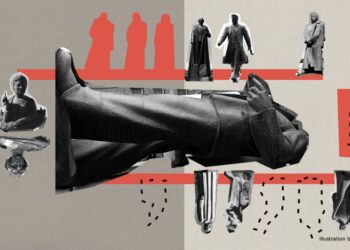
The Power and Politics of Yerevan’s Statues
Yerevan’s statues reveal shifting political ideologies and national identity, from Soviet heroes to national figures, international allies and “symbolic” women. Hovhannes Nazaretyan explores how public monuments reflect power, memory and Armenia’s evolving historical and geopolitical narratives.
Read more