Listen to the AI generated audio article.
Where It All Began
Who was the most successful terrorist in history? If there ever was such a horrendous competition, I assume the winner would be Gavrilo Princip. On June 28, 1914, Princip, a Bosnian Serb and a member of a secret nationalist organization, killed the heir to the Austrian throne, Archduke Franz Ferdinand and his wife, Princess Sophie. This murder helped set off World War I, which claimed about 20 million lives.
Of course, Princip couldn’t have known the consequences of his actions. Only 19 at the time, he was spared the death penalty, but he died in an Austrian prison in April 1918, regarded as a hero by some, and a villain by others. Would he have done it if he had known what would follow? And was he really the cause of all this, or would the colossal massacre of human beings known as the Word War I have started anyway?
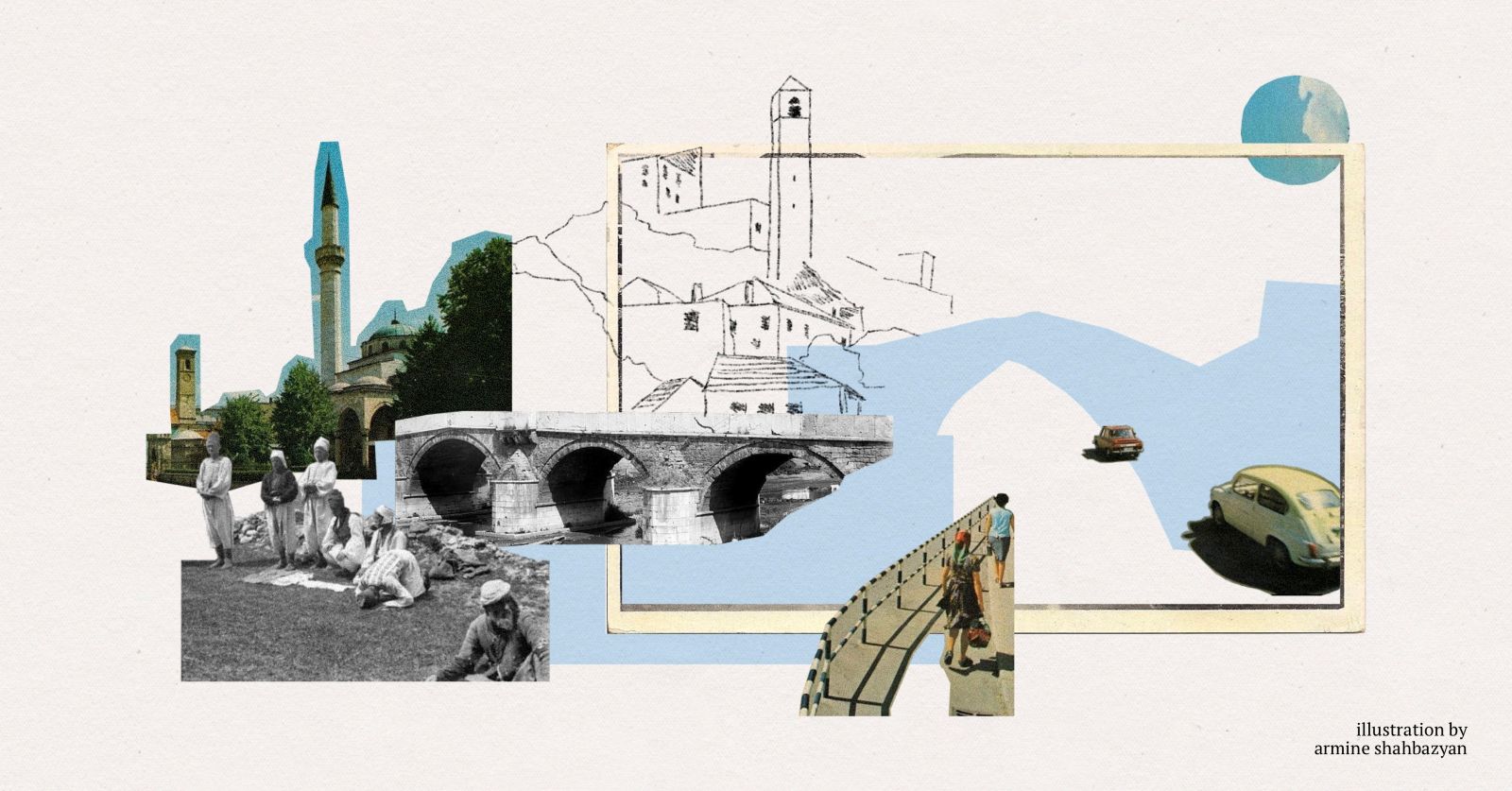
These were the thoughts that came to my mind as I stood on the Latin Bridge in Sarajevo, listening to our tour guide tell the story of the assassination. I’ve probably read and heard that story a dozen times. Yet the guide was so passionate (a rakia shot might have helped) that I was completely absorbed, as if I were secretly hoping the Archduke would survive and the war would not happen.
The story is dramatic, indeed. The first assassination attempt, carried out by Princip’s friends, failed. But as Princip was drinking coffee in a coffee house next to the bridge, Franz Ferdinand’s car appeared right before the windows of the cafe. Princip fired at close range. The Archduke and his wife didn’t have a chance.
What happened next is described in every history textbook. Austria blamed Serbia for the murder because the Serbian nationalist organization Black Hand had supported the conspirators. Soon Austria was at war with Serbia, Russia’s ally. Russia declared war on Austria. Austria’s ally Germany declared war on Russia, Russia’s ally France declared war on Germany, and so on. A few days later, much of the world was at war.
Few places invite reflection on war and peace like Sarajevo, the capital of Bosnia and Herzegovina. Bosnia is not only where World War I began; it also endured genocide and heavy fighting during World War II, and again in the 1990s. Yet it remains a country that continues to hold together, despite its many problems.
A few weeks ago, I traveled to Bosnia with a group of Armenian and Azerbaijani scholars brought together by Caucasus Edition, an independent online publication focused on peacebuilding. It is hard to shock Armenians and Azerbaijanis with stories of conflict, war, and massacres: it often feels as though we have heard it all. Yet that is exactly what happened to us on this trip.
Yugoslavia: First Attempt
In 1914, Bosnia and Herzegovina was part of the Austro-Hungarian Empire. The region had been under Ottoman rule for more than 400 years before Austria-Hungary occupied it in 1878, following the Russo-Turkish War and the Congress of Berlin—the same congress we know so well because of Khrimyan Hayrik’s words about the “iron ladle”.
Bosnia, then an independent kingdom, was conquered by the Ottomans in 1463, followed by neighboring Herzegovina in 1482. At that time, most people were Christian. Under Ottoman rule, many Bosnians converted to Islam, especially followers of the local Bosnian Church, which had been attacked as “heretical” by both Catholics and Orthodox Christians.
This complicated history led to the mix of cultures and religions that has defined Bosnia and Herzegovina through the centuries: Bosnian Muslims (Bosniaks), Orthodox Serbs, Catholic Croats, and smaller ethnic and religious groups, including Jews and Roma.
In the early 20th century, the idea of uniting the South Slavs inspired many people in Bosnia, including Princip and his fellow conspirators. After the war, their dream came true: Austria-Hungary collapsed, and Bosnia and Herzegovina became part of the newly established Kingdom of Serbs, Croats, and Slovenes, soon known as Yugoslavia. But the new kingdom was divided from the beginning. Serbian nationalists sought a dominant role for Serbia, while Croats and Slovenes pushed for greater autonomy. These tensions might have been resolved through negotiation, but the political culture of the time increasingly gravitated toward violence and terror.
Victims included leading Croatian politicians, shot by Serbian colleagues in parliament in 1928, and King Alexander, assassinated in 1934 by a Macedonian terrorist who had collaborated with Croat nationalists. By the time the Nazis and their allies invaded in 1941, the country was already seething with internal contradictions. World War II in Yugoslavia was thus not only a struggle against invaders but also a civil war, and a genocide.
Sarajevo experienced all of this. On the slopes of the mountains surrounding the city is a Jewish cemetery. Among the graves is a stone stela bearing the names of civilians executed during World War II, mostly Jews, but also some Serbs. During the war, Yugoslavia, including Bosnia, was occupied by Nazi Germany and its allies, including the Ustaše, Croatian fascists. The Nazis and the Ustaše unleashed a campaign of terror against Serbs. The Jews of Yugoslavia were targeted for extermination as part of the Holocaust. About half a million Serbs and about 60,000 Jews perished in the genocide perpetrated by the Nazis and their local allies; more than 200,000 Serbs and 14,000 Jews were from Bosnia. Serb nationalist troops, called Chetniks, committed their share of massacres, mostly against Croats and Muslims. Communist partisans did not discriminate on the basis of ethnicity and religion; they executed “class enemies”. More than a million people perished in Yugoslavia during World War II, with more than a third of those deaths in Bosnia, the highest casualty rate of all Yugoslav republics.
Comrade Tito, Market Socialism and Rock’n’roll: Why Are Bosnians Nostalgic for Yugoslavia
In 1945, Communist partisans defeated the Nazis and their Croatian allies, as well as Serb nationalists. Their leader, Josip Broz Tito, re-established Yugoslavia as a socialist republic. Tito was not a democrat; he was responsible for war crimes and political persecution. Still, compared with Stalin’s USSR and the countries of the Warsaw Pact, Tito’s Yugoslavia seemed almost like a paradise. No wonder Druže Tito (Comrade Tito) remains popular in parts of the former Yugoslavia.
Because Soviet forces never entered Yugoslavia, the country managed to stay free from Moscow’s influence. Tito not only resisted Soviet pressure but also avoided being absorbed into the Western camp. As a result, Yugoslavia stayed outside the Cold War and benefited politically, economically and culturally from its neutral position. It even became a co-founder of the Non-Allied Movement, together with India. Tito’s ability to resist the USSR and carve out a distinct place for Yugoslavia in the postwar order is worth examining in light of Armenia’s “foreign policy diversification.” His achievement is all the more remarkable because his adversary was not Putin’s Russia, a weakened power struggling to remain relevant, but Stalin’s USSR, a global superpower at the peak of its strength.
There was, of course, a dark side to Tito’s resistance to Stalinism: many Yugoslavs suspected of sympathizing with Moscow were persecuted and sent to the “political re-education camp” on the island of Goli Otok. There is a dark irony in the fact that Yugoslavs accused of being Stalinists ended up in a prison camp modeled on the Soviet GULAG. After Stalin’s death, relations with Moscow warmed, but Yugoslavia maintained its independent stance.
Tito remains a divisive figure. Some see him as a hero; others, as a dictator. Nationalists of all stripes dislike him. Serb nationalists object because Tito, the son of a Croat father and a Slovene mother, promoted a common Yugoslav identity. Nationalists in other Yugoslav republics also dislike him because of his repression of separatism. Liberals remember his political repression. And nearly everyone agrees that the system he created was not sustainable: it fell apart a few years after his death.
Still, many people across the former Yugoslavia remember Tito’s era warmly. Is this the kind of nostalgia that some people in post-Soviet countries feel for Stalin? Not exactly. Tito’s Yugoslavia was very different from Stalin’s, and even from Brezhnev’s Soviet Union. The Communist Party was firmly in control, but there was more room for free thought and creativity. Economically, Yugoslavia was doing better than most of the socialist bloc. Its system of “market socialism” or “worker self-management,” combining elements of the free market with a greater role for workers was far less rigid than the Soviet model of centralized, top-down planning. It also helped that, thanks to good relations with the West, Yugoslav citizens could travel and work in Western Europe.
One sign of how different Yugoslavia was from the USSR, was its rock music. Yugoslav workers and travelers brought home LPs by Western rock bands and young people listened to them and started their own bands. Of course, the same was happening elsewhere in the socialist world, including the Soviet Union, but the response was different. In the USSR, people who played or listened to Western music, or even dressed a little differently, were constantly harassed by the state. Yugoslav party bosses were also suspicious of this new cultural phenomenon, but their attitude was more nuanced. There were certain taboos, such as directly attacking the leader, but overall the elite preferred to manage and co-opt the movement. Many Yugoslav bands could sell official records and hold huge concerts, something almost impossible in the USSR before the late 1980s. In Yugoslavia, you could be a punk rocker and release music on a state-owned label. So, while there still was little political freedom, rock music brought a spirit of freedom unknown to most people in the Soviet Union.
On a relaxed summer evening in Sarajevo I stumbled upon a concert in a park. The band was playing a kind of folk rock that reminded me of Russian rock from the 1980s and 1990s. I learned that they were a cover band performing songs by a famous Yugoslav rock-group. Most of the crowd was between 40 and 60 (for once, I wasn’t the oldest person at a music event, a refreshing feeling). It seemed everyone knew the lyrics. Of course, I didn’t understand the words, and I can’t say the music itself especially moved me. Still, there was something in the air that felt deeply familiar: a nostalgia for a time when everyone was young and beautiful and a wonderful future seemed to lie ahead—and the pain of realizing that this future never arrived. Instead, there was war.
Then it Fell Apart
It is not easy to understand why Yugoslavia broke up so quickly and with such terrible violence. Whatever one thinks of Tito’s Yugoslavia, it was peaceful: ethnic and religious groups lived together without conflict. Yugoslav society was modern and secular, and ethnic and religious divisions seemed outdated. This was especially true in Bosnia and Herzegovina. There was a joke about the republic’s main ethno-religious groups: Croats are the ones who don’t go to Catholic church, Serbs are the ones who don’t go to an Orthodox church, and Bosniaks are the ones who don’t go to a mosque.
Admirers of Tito argue that his authoritarian style of governance was necessary to contain nationalism. Critics counter that it was precisely this authoritarianism that led to an explosion of nationalism and conflict after his death. In any case, less than a decade after Tito’s death, Yugoslavia was on the verge of collapse, squeezed between two opposing forces: Serbian nationalism on the one hand and Croatian and Slovene nationalism on the other. In Serbia, Communist politician Slobodan Milosevic rode the nationalist wave, effectively deposing the older leadership. The rise of Serbian nationalism also fueled separatist nationalism in Croatia and Slovenia, Yugoslavia’s most economically developed republics. These currents reinforced each other, eventually leading to the demise of Yugoslavia. By the fall of 1991, Slovenia, Croatia, and Macedonia had declared independence, and war was raging in Serb-populated areas of Croatia.
Bosnia, with its mix of ethnicities and religions, was the most vulnerable to ethnic conflict. Bosnian Muslims (Bosniaks) were a plurality, making up 43.47% of the population (1.9 million), Serbs 31.21% (1.36 million), and Croats 17.38% (760,000). Interestingly about 5.54% (242,000) identified as Yugoslavs, refusing to pick a specific ethnicity. Bosnians understood that the breakup of Yugoslavia would bring trouble. Bosnian Muslim leaders did not want to remain in a Serbian-dominated Yugoslavia. Leaders of Bosnian Serbs did not want Serbs to become a minority within a newly independent Bosnia. Leaders of Bosnian Croats wanted a union with Croatia. Governments in Belgrade and Zagreb supported ethnic Serbs and Croats in Bosnia respectively. Bosnian Muslims did not have allies within Yugoslavia, but their position, that Bosnia should remain a unified state within the borders of the former Yugoslav republic, was supported by the international community.
On March 1 1992, Bosnia and Herzegovina declared independence following a referendum that Bosnian Serbs boycotted. Bosnian Serb leaders refused to recognize the sovereignty of Bosnia and Herzegovina and declared their own state, “Republika Srpska” (Serbian Republic). After several shooting incidents, fighting began between forces supporting the two governments. Bosnian Serb forces received support from paramilitaries from Serbia and from the Yugoslav National Army, which was largely dominated by Serbs. Croats in Bosnia had shifting objectives: most of the time they were united with Bosniaks against Serbs, but at other times they attacked Bosniaks. There were also local warlords with their own agendas, such as Fikret Abdić, a Bosniak businessman and politician, who created a de facto mini-state and allied with Serbs against the Sarajevo government. Many people did not want to follow nationalist leaders or fight their neighbors, but they had little choice. Some eventually joined one side or the other, and many emigrated.
In Sarajevo, traces of war are visible on almost every corner. Many buildings still bear bullet marks. The city was under siege for about four years, and electricity, heating and water were cut. Snipers fired from the surrounding hills. Artillery shells exploded in streets and squares, killing many civilians. On average, more than 300 shells a day fell on Sarajevo. Conditions were even worse in other parts of Bosnia. When Bosniaks speak of genocide, they usually refer to the mass murder of civilian Bosnian Muslims by Serbian forces. We visited Srebrenica, where 8,000 unarmed men and boys were killed. We visited the old factory where refugees stayed before some were taken away to be killed. We spoke with a woman who had lost her son and husband in the massacre. The emotions and thoughts this experience brought were overwhelming, especially for someone from our part of the world.
More than 100,000 people lost their lives during the war in Bosnia, the heaviest casualties among the former Yugoslav republics. Bosniaks suffered the highest number of casualties, about 64,000 people, more than half of them civilians. As the weakest group militarily, Bosniaks suffered most from massacres and the murder of civilians, largely at the hands of Serbian paramilitaries. Bosnian and Croat forces also committed war crimes against each other and against Serbs. After the war, the International Criminal Tribunal for the former Yugoslavia (ICTY) was established in the Hague and sentenced some notorious war criminals, including Bosnian Serb political and military leaders Radovan Karadžić and Ratko Mladić. Other war criminals were tried and sentenced in Bosnia itself, by a special court called the War Crimes Chamber and by other local courts. However, the trauma of these massacres remains an open wound, poisoning relations between communities in Bosnia.
A couple of weeks after I returned from Bosnia, I read that Ratko Mladić, the Serb military commander responsible for massacres of Bosnian civilians had died in prison in the Hague, where he was serving a life sentence. His death once again showed how the divisions created by the war still shape daily life. He was given a hero’s funeral in Serbia, which sparked a scandal between Serbia and the EU.
Picking Up the Pieces: Living With Former Enemies
And yet Bosnia exists today as one country, where Bosniaks, Serbs, and Croats live peacefully. Many civilians who fled their cities during war have returned to their homes. There is also a part of Sarajevo called “East Sarajevo,” inhabited by Serbs. Many Bosniaks shop there on Sundays because shops in Republika Srpska are open then, unlike in the rest of the country. Of course, not all refugees have returned, and those who have do not always feel comfortable. Still, compared to what Armenians and Azerbaijanis have gone through, it is remarkable. So why are Bosniaks, Croats and Serbs still able to live together, while Armenians and Azerbaijanis are not?
Part of the answer lies in how the war in Bosnia ended—with an intervention by NATO. The massacres of Bosniak civilians and the shelling of Sarajevo shifted international opinion against the Serbian side and in favor of military intervention. A combination of diplomatic pressure, NATO’s aerial bombing, and a joint offensive by Croats and Muslims convinced Serb leaders to accept an international peace plan. For three weeks in November 1995, negotiations took place in Dayton, Ohio, with American mediation. On November 21, 1995, the Dayton Accords were initialed.
The Dayton agreement is a very specific document. Apart from the peace agreement per se, it contains several attachments; one of them is the Constitution of Bosnia and Herzegovina. Thus, Bosnian constitution is not the result of a popular vote or of peace negotiations. Bosnia was divided into two entities: the Muslim-Croat Federation and the Serbian Republic (Republika Srpska). The Muslim-Croat Federation controls 51% of the land, Republika Srpska 49%. There is also the district of Brčko, a geopolitically important region, governed by both entities together.
No wonder Bosnia is governed in such a peculiar way today. The central government is weak, responsible only for foreign policy, foreign trade, and monetary policy. It has a three-member Presidency consisting of one Bosniak, one Croat, and one Serb. Everything else falls under the authority of the governments of the Bosniak-Croat Federation and Republika Srpska. The Bosnian-Croat federation itself is divided into 10 cantons, each with its own elected government. Then there is the Office of High Representative (OHR), a representative of the international community, which oversees what is happening in Bosnia. Bosnia has one of the highest numbers of government officials per capita in the world. With a population almost identical to Armenia’s—3.1 million—Bosnia has three presidents, 14 governments, and 136 ministers. According to the International Labor Organization, public sector employment is 24.5% of total employment; in other words, one in four employed Bosnians works for the state. Remember this the next time you hear about the bonuses received by Armenian MPs.
Comparable numbers exist in the Nordic states with their welfare systems, but Bosnia’s GDP per capita is much lower. In fact, it is close to Armenia’s ($10,410 in Armenia vs. $10,700 in Bosnia). However, unlike Armenia, it is growing only about 2-2.5 % per year. If Armenia maintains its growth rate, it will soon surpass Bosnia. The sheer number of government bodies contributes to stagnation: it is almost impossible to pass reforms in a country with so many governments and officials. Corruption is also a major problem. Here as well, Armenia is significantly ahead, with a score of 46/100 and 65th place globally, while Bosnia has a score of 34/100 and 109th place, well below the global average of 42. There is no realistic perspective for addressing these issues: it would require major government reform, which is impossible because it could break the fragile balance in the country and reignite conflict. Many Bosnians grow fed up and emigrate.
And yet, this system, with all its drawbacks, has helped keep peace in Bosnia. Maybe it is not such a high price for peace, after all. Institutional arrangements are not the only thing that has helped keep Bosnia together. Bosnians of all ethnicities and religions are quite close to one other linguistically and culturally.
But the divisions are deepening. Today, most Bosniaks, Croats and Serbs would be reluctant to say they speak the same language, even though people understand each other perfectly. Religion has also become much more important in the lives of Bosnians, a factor that strengthens these divisions. During and after the war, many Bosniaks became practicing Muslims, while for many Serbs the importance of Orthodox Christianity increased. In some cases, there is reason to worry about growing radicalism. About 300 Bosnians even joined ISIS and other radical groups in Syria, quite a high number for a central European country. Anti-modern and anti-liberal Russian propaganda narratives are widespread among Orthodox Serbs.
However, the majority of Bosnians of all ethnicities and religions remain secular and moderate. The mix of religion and modernity on the streets of Sarajevo can be quite astonishing sometimes.
Riding the tram on my final evening in Sarajevo, I saw three young women with piercings and tattoos, in black punk outfits. Two of them had green hair; the third wore a headscarf—a really nice black punk headscarf. It seemed to say, “Yugoslav punk’s not dead, Alhamdulillah!”

Opinion
Regional Peace Cannot Be Built by Ignoring Azerbaijan’s Rhetoric
Baku’s “Western Azerbaijan” narrative continues to be prominent in state media, education and official discourse. Tatev Hayrapetyan examines how the concept has evolved, how it is being institutionalized, and what its continued promotion means for Armenia and the prospects for lasting regional peace.
Read more
Between Scylla and Charybdis: The Geopolitical Labyrinth of the South Caucasus
As Armenia redefines its foreign policy after the collapse of the post-Soviet security order, Ferdinant Grigoryan explores how strategic diversification and regional connectivity are reshaping the country's role in an increasingly fragmented geopolitical landscape.
Read more
A Beach House, a Khachkar, an Orchard
A beach house in Lebanon, Armenian khachkars and Kurdish orchards in Iraq seem to have little in common and while the legal and geopolitical contexts may differ, Karena Avedissian traces the logic that connects them, revealing how security narratives can transform people, places and memory into perceived threats.
Read more
Syria and the Levant’s New Fault Lines
Syria has returned to the center of regional diplomacy, emerging as a testing ground for a new balance of power. As Turkey, Israel and other actors compete to shape the post-Assad order, the consequences of this shifting regional architecture extend beyond the Levant to the South Caucasus.
Read more
Power to the Public
Armenia's takeover of Electric Networks of Armenia is about more than ownership. Drawing on international examples, André Vartan-Boghossian examines what makes an electricity system resilient, competitive and accountable, and why public control of critical infrastructure may strengthen both sovereignty and democracy.
Read more
One Battle After Another: What I Think About the Armenian Election
Against the backdrop of Yerevan’s wine festival, Mikayel Zolyan explores the anxieties and hopes of post-election Armenia, the challenge of Russian interference, the responsibilities of citizenship, and what it means to shape the country’s future rather than simply watch it unfold.
Read moreRecently published

Armenia’s Tech Summer: From Ambition to Infrastructure
From AI infrastructure and quantum computing to major venture investments, summer 2026 brought a series of significant developments for Armenia’s tech ecosystem. Ani Toroyan looks at the projects, companies and capital reshaping the country’s ambitions in AI and deep tech.
Read more
Please Don’t Make Me Defend an Oligarch
In this special edition of “Unleashed”, Sheila Paylan examines the arrests and prosecutions of Armenia’s political opponents, asking whether the fight against oligarchy is being pursued with consistent standards and respect for judicial independence. She argues that defending democracy requires holding power accountable, even when those targeted are difficult to defend.
Read more
One Year After the Washington Accords
One year after the Washington Accords, Armenia and Azerbaijan have largely moved beyond military confrontation, but the foundations of peace remain fragile. Sossi Tatikyan examines the unresolved agreement, territorial and humanitarian issues, TRIPP, emerging economic asymmetries and the challenges of making peace durable.
Read more
Reclaiming Yerevan’s Green Spaces
Yerevan was once a much greener city, but decades of neglect, privatization and construction have taken a toll on its parks. Hovhannes Nazaretyan examines the city’s efforts to reclaim and restore public green spaces, from the Opera and Ring Park to smaller neighborhood parks, and the legal battles along the way.
Read more