

Listen to the AI generated audio article.
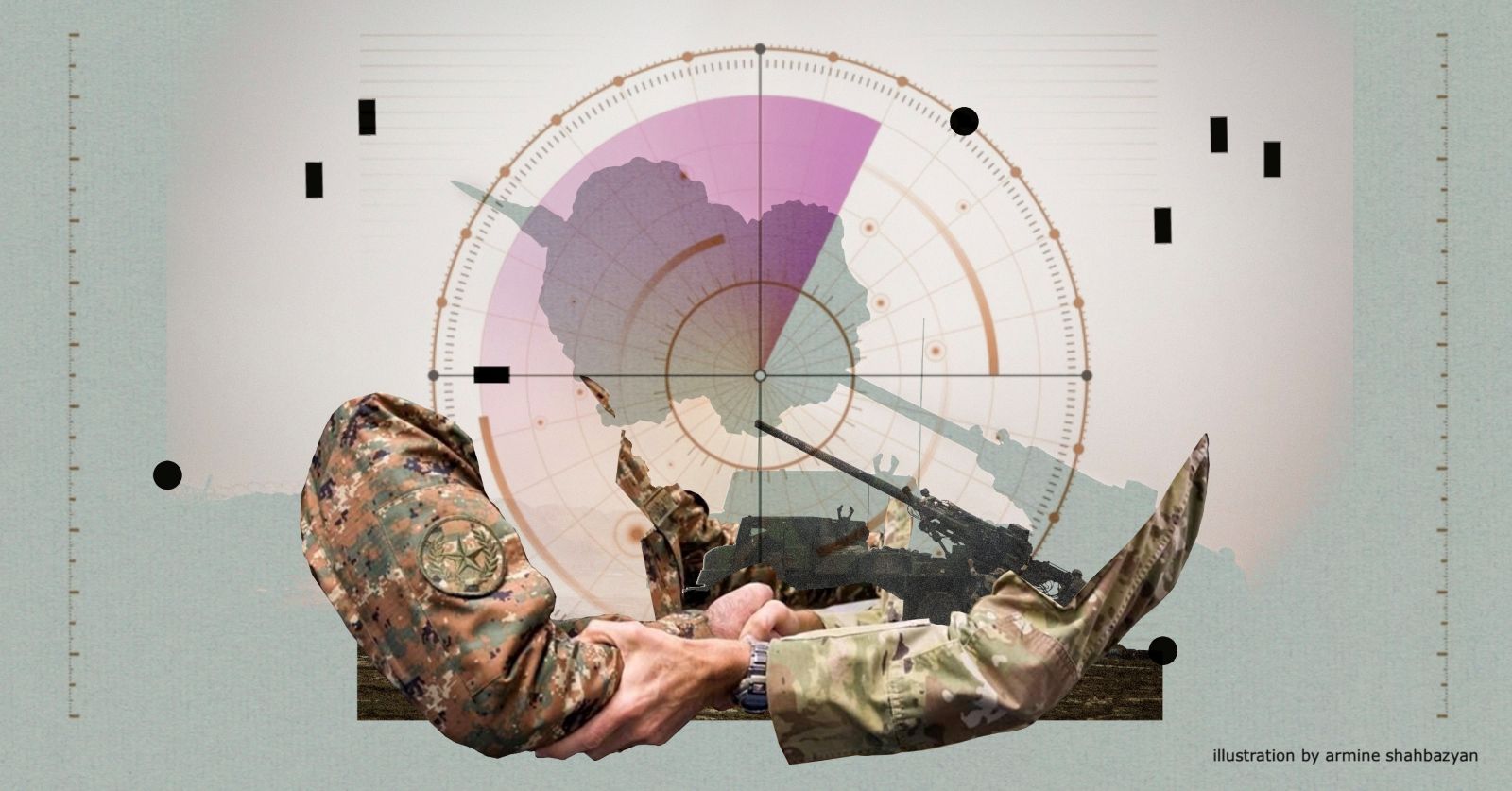
France’s partnership with Armenia began as a gesture of solidarity, a moral stand amid the collapse of old security guarantees. Today, it has evolved with France becoming Armenia’s most important European defense partner. The newly released 2025 Report to Parliament on France’s Arms Exports provides the first official account of this transformation, documenting the scope and depth of France-Armenia defense cooperation. What began as emergency support after Azerbaijan’s offensives has matured into a structured alliance: armaments, officer training, joint planning, and even the foundations of a defense-industrial partnership.
France’s Rationale for Defense Cooperation with Armenia
France’s decision to supply arms to Armenia breaks a longstanding taboo among EU and NATO members against providing such assistance to a non-EU, non-NATO country in conflict within Russia’s traditional sphere of influence. As both countries’ leadership have emphasized, France’s military cooperation with Armenia is explicitly defensive in nature. It is aimed at strengthening Armenia’s sovereignty and protecting its population in accordance with international law and the principle of territorial integrity.
France’s earlier reluctance to provide armaments to Armenia stemmed from two key factors.
The first was France’s role as co-chair of the OSCE Minsk Group, created to mediate the Nagorno-Karabakh conflict. There was ambiguity over whether Armenia might use Western-supplied weapons exclusively to defend its internationally recognized territory or also to protect the Armenian population of Nagorno-Karabakh. France refrained from supplying weapons to Armenia during the Nagorno-Karabakh conflict because such support could have been interpreted as endorsing the defense of a territory not internationally recognized as part of Armenia. Consistent with its commitment to the principles of sovereignty and territorial integrity, particularly in the post-Soviet space, Paris maintained a cautious stance, especially as, in the context of the Russia–Ukraine conflict, the EU and the United States had effectively absolutized the principle of territorial integrity as the cornerstone of their regional policy and international legal discourse. Reflecting this position, the French executive branch deliberately distanced itself from the French National Assembly and Senate resolutions recognizing Nagorno-Karabakh in 2020, emphasizing that these were political statements without legal or diplomatic effect.
The turning point came after Azerbaijan’s large-scale offensive against Armenia’s sovereign territory in September 2022. At the European Political Community meeting in Prague in October that year, Prime Minister Nikol Pashinyan unequivocally reaffirmed Armenia’s recognition of Azerbaijan’s territorial integrity. This declaration aligned Yerevan with France’s normative framework of sovereignty, territorial integrity and international legality.
France decided to provide armaments to Armenia following Azerbaijan’s military takeover of Nagorno-Karabakh in September 2023. During her visit to Yerevan on October 3, 2023, French Foreign Minister Catherine Colonna publicly committed France to deliver military equipment to Armenia, emphasizing the need to reinforce the country’s defenses after repeated Azerbaijani offensives. The first-ever visit of a French defense minister, Sébastien Lecornu, to Armenia in February 2024 came next, marking the start of structured defense consultations. Paris supports Armenia’s right to self-defense and deterrence, especially given the significant asymmetry in military capabilities between Armenia and Azerbaijan and the erosion of traditional regional security mechanisms.
The second obstacle was Armenia’s membership in the Collective Security Treaty Organization (CSTO) and the resulting concern that NATO-origin defense technologies provided to Armenia could become accessible to Russia. Armenia’s de facto suspension of its CSTO membership in November 2022, now confirmed as consistent and effectively irreversible, eliminated that concern. In turn, it heightened the imperative to reduce Armenia’s dependence on Russian defense systems.
Quantitative and Institutional Evolution
In 2022, France made no defense exports, licenses, or transfers to Armenia. According to the report to the parliament, the partnership became operational in 2023, with 74.2 million euros in defense orders focused on land-based systems and related support equipment. In 2024, these orders surged to 204.3 million euros, bringing the total for 2023–2024 to 278.5 million euros. France granted three export licenses in 2024 under Military List categories ML2 (artillery) and ML5 (fire-control and targeting systems), and confirmed free transfers of heavy equipment and small arms. Deliveries are expected to continue through 2025, reflecting a sustainable partnership rather than one-off transfers.
An institutional anchor for this cooperation was established in January 2023 with the creation of the French Defense Mission in Yerevan. This is France’s first permanent military mission in the South Caucasus. The mission provides direct liaising between the French Ministry for the Armed Forces and Armenia’s Ministry of Defense, facilitating operational coordination, training, and procurement planning. Regular meetings between ministers Sébastien Lecornu and Suren Papikyan ensured policy continuity and reaffirmed France’s commitment to Armenia’s defense modernization.
Nature of Military Assistance, Training and Technology
France’s assistance to Armenia now spans a wide spectrum of defensive capabilities, including armament deliveries, operational training, and capacity building. Confirmed acquisitions include 50 Bastion armored personnel carriers produced by Arquus Defense, with deliveries beginning in mid-2024. Armenia also acquired three Thales GM200 air-surveillance radars, announced by Minister Lecornu in October 2023 and delivered in 2024, as well as 36 CAESAR 155 mm self-propelled howitzers contracted between 2023 and 2024, with first deliveries expected in 2025.
Negotiations are underway for additional French air-defense systems. Talks in 2024 explored the possible delivery of Mistral and Crotale short-range air-defense systems, as well as the more advanced SAMP/T Mamba medium-range system, referenced in a French Senate report and media of both countries. If finalized, these systems would complete Armenia’s short-to-medium-range air-defense architecture and mark another milestone in its deterrence-building efforts.
The human dimension of cooperation is equally significant. A detachment of French Alpine Hunters was deployed to Armenia to train soldiers and instructors in mountain warfare, establishing a sustainable “training-of-trainers” model. This initiative is complemented by an agreement between the Special Military School of Saint-Cyr and the Vazgen Sargsyan Military Academy, allowing Armenian cadets to receive officer education in France and integrate European operational and ethical standards into Armenia’s military culture.
France has also expressed readiness to support Armenia’s defense-industrial and technological base. This includes assistance in maintenance, logistics, and the potential for local co-production of components, under the joint supervision of the Defense Mission in Yerevan and France’s Directorate General of Armaments. In this way, France contributes not only to Armenia’s short-term defense capability but also to its long-term self-reliance and technological resilience.
For Armenia, the partnership with France represents a transformative convergence of capability, professionalism, and diversification. The acquisition of Bastion armored carriers, GM200 radars, and CAESAR artillery systems significantly enhances mobility, surveillance, and firepower. If current negotiations on Mistral, Crotale, and SAMP/T systems come to fruition, Armenia will also establish the foundation for a multi-layered air-defense structure. Training programs and officer-education initiatives are already accelerating the professionalization of the Armed Forces, while industrial cooperation fosters self-reliance.
Comparative Perspective: India and France as Armenia’s Key Defense Partners
India remains Armenia’s largest defense supplier, while France ranks second quantitatively but plays a distinct and complementary role. Together, they provide a balanced deterrence architecture—Indian scale and range combined with French precision, training and institutional modernization.
Since 2022, India has supplied a diverse range of systems, including Pinaka multiple-rocket launchers, Akash surface-to-air missiles, anti-tank munitions, and advanced artillery platforms. France, Armenia’s most significant European military partner, focuses on precision systems, interoperability, and doctrinal reform, backed by officer capacity-building.
Together, these partnerships form the twin pillars of Armenia’s post-2020 defense diversification strategy: India provides strategic depth and firepower and France offers technological sophistication and institutional modernization. This dual-track approach enables Armenia to rebuild deterrence capacity, reduce dependency on any single supplier, and integrate both Eastern and Western defense systems within a pragmatic, multi-vector strategy.
Through this alignment, Armenia strengthens its sovereignty and deterrent posture, France consolidates its role as a European guarantor of defensive stability, and India expands its strategic presence in the South Caucasus. Together, they advance a model of security cooperation grounded in legality, resilience, and mutual trust, offering a democratic counterpoint to coercion and narrative warfare in the region.
Addressing Regional Military Asymmetry Through Partnerships
Armenia’s defense budget trajectory underscores the urgency and strategic logic behind its deepening partnerships with France and India. The country’s defense spending rose from approximately $600 million US in 2021 to an estimated $1.7 billion in 2025—around 6% of GDP—following substantial investments in modernization and deterrence capabilities. For 2026, Armenia has signaled a 15% decrease in defense allocation, balancing the sharp 25% rise in 2025. This reflects expectations of a peace agreement and a need to rebalance public finances.
Meanwhile, Azerbaijan’s defense expenditure increased from $2.6 billion in 2021 to $3.77 billion in 2024, with projections ranging between $4.7 billion and further increase up to $5.1 billion in 2026, preserving a persistent three-to-one imbalance in military budgets between the two neighbors.
Armenia’s military policy remains defensive and deterrence-oriented, aimed at safeguarding sovereignty and stability. Azerbaijan, by contrast, has pursued military coercion and seeks to maintain regional military superiority despite the advancing peace process. Within this asymmetry, both in doctrine and capabilities, French and Indian cooperation plays a crucial role in reducing Armenia’s vulnerability through diversification, training and qualitative upgrades.
Azerbaijan and Russia’s Reaction and Narrative Warfare
Azerbaijan has responded to France’s deepening defense relationship with Armenia through diplomatic protests and an orchestrated information warfare and disinformation campaign. Baku’s officials have accused Paris of “militarizing the South Caucasus” and “provoking instability.” Meanwhile, pro-government media have circulated fabricated claims that France intends to establish a military base in Armenia or secretly train offensive units.
The escalation peaked in January 2025, when Azerbaijan demanded that Armenia cancel its defense contracts with France and return French-supplied weapons. This unprecedented demand contradicted the principles of the United Nations Charter, which protect the sovereign equality of states and their inherent right to self-defense. The episode exemplified Azerbaijan’s cognitive-warfare strategy, which seeks to delegitimize Western security assistance to Armenia by portraying it as neo-colonial interference while legitimizing Azerbaijan’s own ambitions for regional military hegemony.
Russia’s information warfare has also sought to discredit France’s growing defense partnership with Armenia. Echoing Kremlin narratives, Armenia’s pro-Russian circles frequently claim that “French boats will not come to save Armenia” in the event of war—a line intended to delegitimize French and more widely, Western security support and reinforce perceptions of dependence on Moscow. Yet, France has never claimed it would deploy troops to defend Armenia; rather, its policy aims to strengthen Armenia’s autonomy, deterrence, and self-defense capacity, enabling it to preserve its sovereignty and enhance deterrence by raising the cost of any potential aggression, while maintaining strategic autonomy. This disinformation campaign mirrors Russia’s broader strategy of undermining European defense engagement in its former sphere of influence.
Strategic and Political Implications
By supporting a small democracy’s capacity to defend itself against coercion, France underscores its conviction that sovereignty and deterrence are indispensable to regional peace and stability. This cooperation is part of France’s broader strategy to strengthen European strategic autonomy and promote stability in the eastern neighborhood, particularly among states such as Armenia, Ukraine and Moldova that face coercive pressure from larger neighbors. Paris views its assistance to Armenia as part of a wider responsibility to uphold international law, the sovereignty of small states, and the integrity of the European security order. As one of the few Western countries willing to bridge the gap between moral solidarity and material support, France has broken precedent within the EU and NATO by providing defensive equipment to Armenia, advancing a vision of European strategic autonomy that promotes deterrence and stability through legitimacy rather than coercion.
The May 2025 declaration of intent to establish a Strategic Partnership between France and Armenia confirms that their cooperation is long-term, institutionalized, and evolving into a comprehensive framework. Announced during French Foreign Minister Jean-Noël Barrot’s visit to Yerevan and reaffirmed in subsequent meetings between Prime Minister Nikol Pashinyan and President Emmanuel Macron, the initiative marks a profound transformation in France–Armenia relations. The partnership has shifted from symbolic solidarity and cultural affinity to a structured partnership encompassing political, economic, educational, and—most notably—defense cooperation. Defense collaboration stands as a central pillar of this emerging strategic partnership, reflecting both countries’ shared commitment to sovereignty, stability, and durable peace in the South Caucasus.
EVN Security Report
The Quartet and Securitized Minilateralism: France, India, Poland and Armenia’s New Security Paradigm
What mutually beneficial foundations could bring France, India, Poland and Armenia together in a security alliance, and what might such a quartet mean for Armenia’s security architecture? To explore this, Nerses Kopalyan introduces the concept of securitized minilateralism.
Read morePodcast

Also see

How Small Powers Turn Vulnerability Into Strength
At a time when multilateralism is faltering and power politics dominate international relations, micro-states and small powers can still exist, assert themselves on the world stage, and turn vulnerability into strength—becoming indispensable to others.
Read more
Armenia, China, and the Shanghai Cooperation Organization: Navigating Between Poles
Armenia’s pursuit of a strategic partnership with China and its bid to join the Shanghai Cooperation Organization (SCO) reflect a broader effort to recalibrate foreign policy amid shifting global alignments, balancing ambition with constraint in an increasingly multipolar world.
Read more
Armenia’s Balancing Act in a Multipolar World
As global power shifts toward multipolarity, Armenia faces profound uncertainty. With Russia’s retreat and ongoing regional pressures, Yerevan is pursuing a “balanced and balancing” foreign policy—deepening Western ties while engaging Iran, India, China and others—in a bold recalibration of its security and diplomacy.
Read more
How Armenia Diversified Its Security Landscape in 2024
In 2024, Armenia made significant strides to diversify its security alliances, carefully distancing itself from Russia by freezing CSTO participation, joining the ICC, and reducing Russian border presence, while deepening ties with other partners. Hovhannes Nazaretyan wraps up the year.
Read more
Armenia and CSTO: A Strained Partnership Amid Regional Tensions
Armenia, once a staunch ally of Russia, has distanced itself from Moscow after the CSTO failed to respond to Azerbaijan’s 2022 attack. Hranoush Dermoyan examines Armenia’s relations with Russia and other CSTO member states amid regional tensions.
Read more
European Peace Facility’s First Assistance Measure for Armenia
Sossi Tatikyan explores the reasons behind the EU's decision to provide assistance to Armenia through the EPF, the significance of this measure, the diverse perspectives within Armenia and the ensuing hostile reactions from Azerbaijan and Russia.
Read more