

Listen to the AI generated audio article.
Since Russia’s 2022 invasion of Ukraine, the European Union’s security concerns have exponentially grown, prompting new policies that reflect the continent’s shifting political landscape. Now, the EU is once again at the Black Sea’s doorstep.
As Brussels seeks out new security and economic partners in an attempt to counter Moscow’s influence, the Black Sea and the neighboring South Caucasus region have emerged as crucial to Europe’s efforts to contain Russian threats.
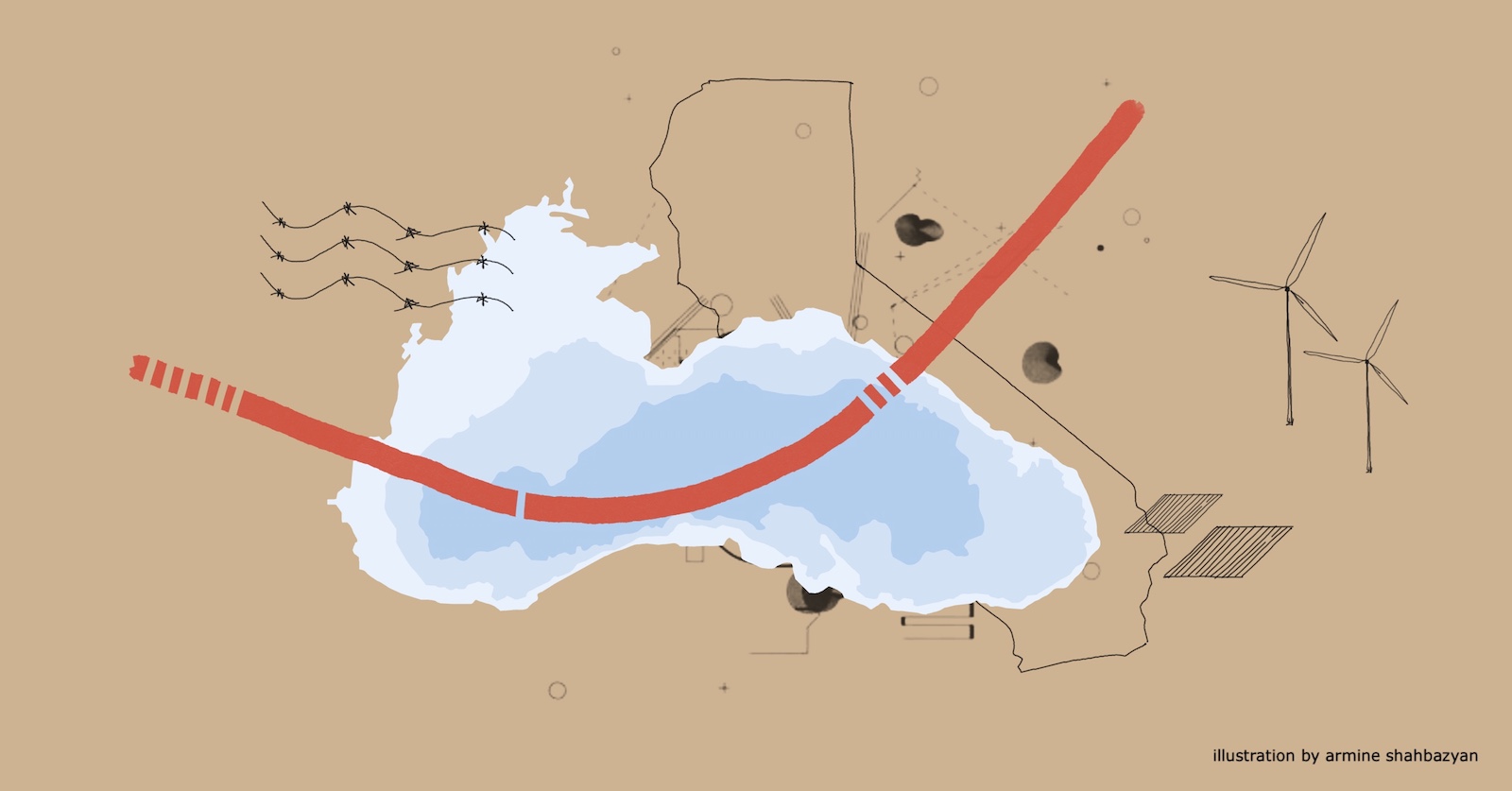
In late May, the European Union announced the Black Sea Strategy, aimed at linking Europe with the South Caucasus, Central Asia, and beyond through new security partnerships and greater connectivity. This includes a new maritime security hub, improved military mobility to ensure troops and equipment can move easily, and combating hybrid threats like cyberattacks, disinformation and other hostile actions.
But for a country like Armenia, landlocked and walking on a tightrope between Russia and the West, this new strategy is another promise amid a sea of other European-backed democratization and economic reform policies implemented in the region since the fall of the Soviet Union.
“It’s not just about the Black Sea itself, it is about how the Black Sea region connects other regions, with each other and connects the European Union with these regions, including the South Caucasus and including Armenia,” said Stefan Meister, head of the Center for Order and Governance in Eastern Europe, Russia, and Central Asia at the German Council on Foreign Relations.
Europe has been supporting reform efforts in the South Caucasus for many years, enacting the Eastern Partnership policy in 2009 to shore up political, social and economic reform efforts in post–Soviet states like Armenia, Azerbaijan, Belarus, Georgia, Moldova and Ukraine (Belarus’ membership in this partnership was suspended in 2021 following a deterioration of human rights).
Regional organizations also play a role in fostering political and economic cooperation in the Black Sea and its surrounding area, such as the Black Sea Economic Cooperation (BSEC). Established in the aftermath of the Cold War, when the region had long been neglected by Europe, BSEC was designed to promote multilateral collaboration among member states. Today, it works with the EU on a range of regional projects of shared interest.
However, this new approach to the Black Sea is the EU’s attempt to be more strategic in the region and build a more comprehensive, coherent framework to already-existing measures like the Black Sea Synergy and Global Gateway, which focused more on regional and economic development rather than security.
“There is an understanding that the Black Sea region, the South Caucasus and Central Asia need to be more integrated with each other, and there needs to be investment and policies to enforce this integration,” Meister noted. “The Black Sea Strategy could be a main driver.”
According to Maria Simeonova of the European Council on Foreign Relations, the new strategy comes online under markedly different geopolitical circumstances. Past initiatives like the Black Sea Synergy, Global Gateway and the Eastern Partnership were conceived before Russia’s illegal annexation of Crimea in 2014 and the subsequent war in Ukraine. As a result, she argues, they now need reframing to better reflect the region’s evolving security and political realities.
She describes BSEC’s effectiveness as “hindered by the presence of Russia.”
The new strategy, she explained, is “shaped by the reality of a long-term security threat posed by Russia and aims to respond accordingly. It is more strategically grounded, aiming to complement the Global Gateway while injecting a geopolitical dimension into regional cooperation.”
Many countries in the region, such as Ukraine, Moldova, Georgia and Armenia, are seeking or considering European Union membership. Ukraine and Moldova are considered EU candidates and until recently so was Georgia, but the EU’s official position is that “Georgia’s accession process came to a de facto halt in 2024.” Armenia’s parliament adopted a law in March 2025, voicing interest in initiating the EU membership process.
“Greater engagement of the EU in the region is positive news for the region and Armenia, especially in light of the worrying recent developments of the attempted coup in the country,” Simeonova said. “More investments in the Armenian economy will have a positive impact on its resilience.”
The new cooperation focuses on three pillars: enhancing security, stability and resilience; fostering sustainable growth and prosperity; and promoting environmental protection, climate change resilience and preparedness, and civil protection.
“Better regional connectivity will create new opportunities for trade and businesses. It will also help diversify energy supplies away from Russia,” said Marta Kos, European commissioner for enlargement, in a statement. “Both Europe and our partners in the region will be more secure and benefit economically.”
The European Commission did not respond to requests for an interview.
These pillars are expected to be achieved through three new initiatives, including a Black Sea Maritime Security Hub to protect critical maritime infrastructure and marine environment in the area. This includes real-time information exchanges and monitoring on security issues, as well as a mechanism to broaden coast-guard cooperation in the Black Sea basin.
At this time, a location for this new regional hub, as well as its operational model and cost, have yet to be determined.
“It sounds great, but if I’m looking into the details, what is written in the strategy, it sounds very limited,” Meister said. “It has nothing to do with hard security, it’s just collecting data and information and then maybe developing some kind of policy reaction.”
For landlocked Armenia, this new maritime security hub will not have any major impact, Meister said.
The strategy will also address connectivity with the extended Trans-European Networks to leverage the potential of the Black Sea region as a corridor linking Europe with Central Asia through the South Caucasus. This will take the shape of transport corridors that complement the newly established Baltic Sea-Black Sea-Aegean Sea and the Rhine-Danube European Transport Corridors. It will also include digital links and strategic investments in renewable energy sources.
During the press conference announcing the strategy, Kos said Europe is looking to enhance “the cooperation on the energy sector, especially with Armenia and Azerbaijan” as countries look to decouple from Russia’s energy grid.
But there is no guarantee that Armenia might directly benefit from this connectivity project meant to bridge Europe and Central Asia through the South Caucasus. After all, “the EU has never made big offers to Armenia,” Meister said.
He noted Europe does not need Armenia in particular to access Central Asia and could easily complete this goal by going through Georgia or Azerbaijan.
“The EU’s always very clear and sober in saying there are limits in the relationship,” Meister said, noting there might be an incentive to connect Europe to India via Armenia and Iran.
The third initiative will prepare the coastal communities and blue economy sectors to aid them in tackling war-related environmental damage and respond to climate change through sustainable growth.
Yerevan has been exploring stronger ties with Europe following Russia’s lack of response to Armenia’s request for support during the 2020 Artsakh War, Azerbaijan’s assault against the Republic of Armenia in 2022 and the subsequent military takeover and ethnic cleansing of Nagorno-Karabakh in 2023. This series of events has strained the long-standing strategic relationship between Yerevan and Moscow.
Since the 2020 ceasefire, Europe has played a larger role in Armenia, helping monitor the border with Azerbaijan through a civilian mission. Member states like France and Lithuania have also increased their diplomatic work in the country.
“Both sides have much to gain,” Simeonova said. “From the EU’s perspective, deepening engagement with Armenia supports its broader geopolitical goals — countering authoritarian influence, diversifying energy and trade routes, and supporting partners committed to reform. Armenia can seize this momentum by aligning more actively with EU initiatives, enhancing its domestic reforms, and positioning itself as a reliable partner in the changing regional order.”
However, Armenia remains “in a very fragile, difficult situation,” Meister said, and the European Union should not be Armenia’s only option for political and economic diversification since “the EU does not have so big ambitions [in Armenia].”
While it had made repeated efforts to mediate between Yerevan and Baku in the past, the EU was effectively sidelined from the process on August 8 when the Armenian and Azerbaijani leaders were invited by Donald Trump to the White House for the signing ceremony of a joint declaration for peace. American, not European companies, will be involved in the construction and management of the infrastructure connecting the two parts of Azerbaijan via Armenian sovereign territory.
“This is really more [European engagement] than we have ever seen in the past decades, but it will not provide what Armenia needs,” Meister said. “There will be no security guarantees. There will be no big shift in the economic relations or energy relations. It’s a slow move in this direction, slow diversification.”
While gaps remain, the new strategy represents an opportunity for the South Caucasus to finally gain a comprehensive EU framework tailored to the region. Yet even if Armenia and its neighbors fully embrace it, Europe will still face competition from other influential regional players, including China, Russia, Turkey, Iran, and the Arab world, Meister noted.
The European Commission and the High Representative will have a dedicated EU ministerial meeting with partner countries to further discuss this approach. A timeline has not yet been released, and the strategy “will require active involvement of the two EU member states – Bulgaria and Romania, and political will to expand economic and communication ties with the countries from the broader region,” Simeonova said.
EVN Talks
Podcast

The Genocide Education Project
How do you teach one of history’s darkest chapters to new generations? Roxanne Makasdjian, co-founder and Executive Director of The Genocide Education Project (GenEd), joins EVN Report’s Maria Titizian to explore the initiative’s origins and its influence on how American educators approach the Armenian Genocide and human rights in the classroom. She also shares insights about GenEd’s Teacher Fellowship Program, an immersive experience that brings educators to Armenia to engage directly with the history and memory of genocide.
Read morePolitics

Armenia, Azerbaijan and Constitutional Amendments: Lessons from the Prespa Agreement
Baku’s push for changes in Armenia’s Constitution has been likened to the Prespa Agreement, but the comparison falters: Prespa resolved symbolic disagreements, while Armenia confronts existential threats. Forced amendments risk undermining both legal norms and political stability.
Read more
Iran’s Strategic Uncertainty and Armenia’s Security Challenges
Amid Iran’s strained ties with Israel and the U.S., fragile diplomacy, and shifting regional alliances, Armenia faces heightened security risks. These dynamics could trigger a broader realignment of power in the South Caucasus, directly shaping Armenia’s future stability. Anna Gevorgyan explains.
Read more
U.S.-Brokered TRIPP in the Armenia-Azerbaijan Deal: Opportunities and Risks
The proposed “Trump Route for International Peace and Prosperity” (TRIPP) has sparked sharp debate in Armenia. Sossi Tatikyan explores its origins, legal and operational framework, geopolitical implications, and the controversies it has stirred both domestically and internationally.
Read more
Russia’s Election Interference Playbook
As Armenia prepares for parliamentary elections in 2026, early signs show intensified Russian interest and possible interference. What can Yerevan learn from the experiences of Moldova and Romania? Sandra Sadek explains.
Read more


This is a great article, but I noticed this:
“He [Stefan Meister] noted Europe does not need Armenia in particular to access Central Asia and could easily complete this goal by going through Georgia or Azerbaijan.”
I must respectfully disagree with Stefan Meister.
First, Georgia is under constant Russian pressure and could be shut down if Russia wanted to do that.
Second, one cannot go through Azerbaijan without first going thru Georgia (which, as I noted, is vulnerable to Russia) or thru Armenia.
But Armenia’s borders with Turkey and Azerbaijan are currently closed.
The entire geographical reason that the West has greatly valued Armenia ever since the fall of the USSR is as follows:
Armenia is necessary for full, unimpeded Western (and Turkish) penetration to the Caspian and Central Asia.
Unless the West wishes to go thru Russia or Iran — which the West obviously does not want to do.
This is THE geopolitical context in which Armenia has long operated.