
Listen to the AI generated audio article.
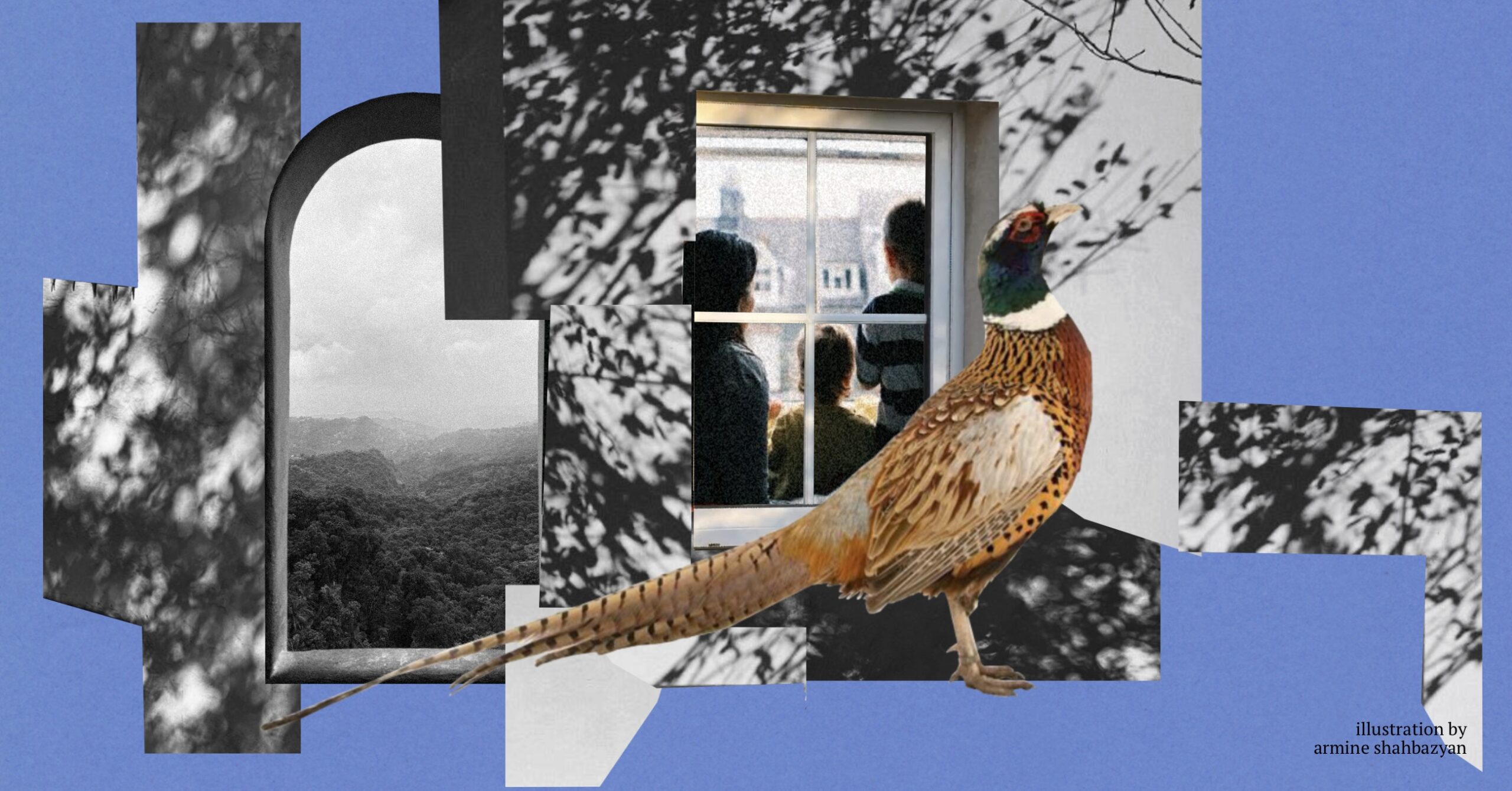
In the early 2000s, Goris stood at a crossroads. The last major town on the Yerevan-Stepanakert highway connecting Armenia with Artsakh, it was also a gateway to Iran and a transport hub linking the country’s south with its neighbor. Its dramatic cliffs, mountain landscapes, and proximity to Tatev Monastery and the world’s longest cable car suggested the town could become more than a place travelers simply passed through. This is why Shahen Zeytountchian, an Iranian-Armenian neurosurgeon based in Germany, decided to establish Mirhav, named after the Armenian word for pheasant (միրհավ). His vision was to create a boutique hotel that would promote tourism in Syunik, a region where the hospitality industry was still largely underdeveloped.
At the time, Goris faced water shortages, unreliable electricity, and poorly paved roads. An avid nature lover, Shahen regularly visited the town, where a friend of his lived. “Goris has a strategic location and is surrounded by nature,” he explains. It took him five years, until 2005, to complete the building, overcoming logistical and financial difficulties along the way. What began as an idea “to make a little hotel for him and his friends” eventually helped pave the way for the local hospitality industry, inspiring others to follow. Today, Mirhav comprises two buildings with more than 20 rooms, and Goris has dozens of hotels.
“Now we have tourists from all over Europe and Russia,” Shahen says. “A few weeks ago, we also had a visitor from New Zealand.” What most of these visitors do not know, however, is that over the past two decades, Mirhav has become far more than a hotel. Behind its beige walls, burgundy carpets, wooden staircases, and characteristic paintings lie hundreds of stories of displacement, loss, uncertainty and resilience. As successive conflicts reshaped the region, Mirhav went from welcoming tourists to being a refuge for people fleeing war.
Mirhav: A Refuge
For Shahen, it all began on September 27, 2020, when he received an unexpected phone call from his niece, who lived in Artsakh. “She told me that they were under attack and did not know where to go,” he recalls. That morning marked the beginning of the 2020 Artsakh War, when Azerbaijan launched a large-scale military offensive against the enclave. Around 90,000 people were temporarily displaced during the conflict, with an estimated 10,000 seeking refuge in Goris. Schools, kindergartens, and hotels became shelters—Mirhav among them. “It was mainly elderly people and children,” Shahen recalls. Gayane, the hotel’s manager, remembers the shock on people’s faces. “It was a catastrophic situation,” she says.
Between late September and December 2020, the hotel hosted around 70 people. Some eventually returned home, while others settled in Goris after their homes and their territories came under Azerbaijani control. Mirhav provided more than a roof over their heads: guests were given three meals a day, and staff organized donations of clothes and shoes for those in need. “People arrived half-barefoot, in terrible conditions,” Gayane remembers. “They were shocked and unprepared.”
Mirhav also sheltered injured people receiving emergency treatment before being transferred to hospitals in Yerevan. With local medical facilities saturated, trauma experts and surgeons traveled from Armenia’s capital to Goris. Mirhav reserved three of its rooms for them: “They would work all day, come back to rest for a little while, and then get back to work,” Shahen recalls.
As a gathering place for displaced families, medical professionals, and volunteers, Mirhav also became an informal meeting point for journalists. Local and international reporters, coming from Europe and North America, visited the hotel to get a real sense of what was happening on the other side of the Lachin corridor. “Although they stayed in other places because the hotel was full, the living room was full of journalists who came and went,” Shahen recalls. “They sat in that building with their laptops, writing down their stories,” Gayane adds, pointing toward the hotel’s adjacent building.
Shahen tries, but he struggles to remember names, numbers, and faces. “I was in a bad condition; my brain blocked or erased much of the information from that time,” he says. An added challenge was the pandemic: some guests fell ill with COVID-19, and news arrived of relatives who had died in Nagorno-Karabakh, with those displaced unable to visit them. “Those were heavy times,” Shahen explains. The pandemic added a constant, palpable sense of abandonment and uncertainty.
A fragile sense of calm settled over Mirhav after the ceasefire of November 10, 2020, as some displaced Armenians slowly began making their way back home. Others, who had lost their homes, remained in Goris and the surrounding region. The tourism industry in the area, however, did not fully recover, and Mirhav received fewer visitors because of concerns over border security. “The area was a red zone,” Gayane says.
The town found itself suspended between war and peace. “There was always the suspicion that an attack could be imminent,” Shahen explains. Goris and Mirhav were beginning to pay the price of what made them so special: their position as a gateway between Armenia, Nagorno-Karabakh, and Iran had long been an asset, but their proximity to the Nagorno-Karabakh conflict had now become a source of vulnerability. The town later came under Azerbaijani attack in September 2022.
Mirhav: A Waiting Room
This fragility became evident on December 12, 2022, when Azerbaijan began blocking the Lachin Corridor, the only lifeline between the enclave and the rest of the world. That same day, around 20 children aged eleven to seventeen, members of a choir from Artsakh, were heading home after attending the Junior Eurovision Song Contest in Yerevan. “On their way back, they discovered they could not return,” Gayane explains.
Mirhav became their temporary home. Accompanied by two teachers, the children remained at the hotel for over a month. Once again, its rooms became a refuge from uncertainty, family separation, and psychological distress. Yet there were moments of joy. “We enjoyed Christmas and New Year’s together,” Shahen recalls, smiling. With little to do while waiting for news, the children spent their time painting and drawing. “They gifted me some paintings that I still keep,” Shahen says.
Eventually, following negotiations involving Russian peacekeepers and Azerbaijan, arrangements were made for the children to return to Stepanakert, escorted by Russian peacekeepers, in late January 2023. It was not an easy decision: the prospect of crossing the Lachin corridor, under Azerbaijani control, was frightening for both the children and their families. “But the children needed their parents,” Gayane says. “Their decision was unanimous: they had to return home.”
Over the ten months of blockade, shortages of food, medicine, and other essential supplies affected the population of Nagorno-Karabakh. Those in need of medical treatment sometimes had to travel to Yerevan under arrangements facilitated by the International Committee of Red Cross. Since returning home was not straightforward and required coordination and authorization that could take days or weeks, Goris became a landing point for them. “On their way back, Goris was a temporary shelter,” Gayane explains. Mirhav accommodated those stranded between Yerevan and Stepanakert, waiting for the green light to continue their journey—which sometimes never came.
Among the many stories that passed through its doors during the blockade is that of a camera belonging to Hayk Harutunyan, a young photographer from Stepanakert. Hayk was twenty years old when the blockade began. With an ambitious career ahead of him, he had spent years capturing the landscapes and faces of his homeland, with his love towards it embedded in each of his photographs. As restrictions intensified, he decided to document what was happening around him. “I wanted to show the world,” he explains. With international press and photographers being banned from entering the region, local photographers were key to bridging the gap between Artsakh’s struggles and the world’s eyes. “It was the right time,” he adds.
Hoping to continue his work, Hayk set his sights on a better camera and asked a friend living in Moscow to buy it and send it to Yerevan. “It was collected by Armen, a good friend of my dad, and taken to Goris,” Hayk explains. Once there, Armen met up with Diana, a dancer with the Artsakh State Dance Ensemble, who was staying at Mirhav while waiting to return home. “The team was staying at Mirhav while they waited to cross to Artsakh with a Red Cross convoy,” he says. Although Diana was meant to take the camera with her to Stepanakert, the transfer was canceled, forcing her to remain in Goris and return it to Armen.
“I had no news from my camera, I thought it would be lost,” Hayk recalls. But Mirhav’s walls kept the camera safe for weeks. Amid the constant movement within the hotel, the dusty box remained untouched in a corner of Mirhav. Eventually, a friend of Hayk’s brother offered to transport it through an alternative route. “He was importing goods for his shop by an alternative road,” Hayk explains, referring to the Ghaybalu passage, a historical trade route bypassing Shushi through the village of Ghaybalu, which remained open during the early stages of the blockade.
“I did not hear from him for three or four days,” Hayk recalls. “I was afraid he had run into trouble with Azerbaijani forces, or that he had been in an accident.” A phone call from Artsakh put his fears to rest: “The camera had reached Stepanakert.” Today, Hayk continues his photography career from Yerevan, where he uses a more advanced camera. “I once thought about selling it, but I changed my mind,” he says. “It has been through too much for me to let it go.”
Mirhav: Where Familiar Faces Return
In September 2023, following Azerbaijan’s military offensive against Nagorno-Karabakh, more than 100,000 ethnic Armenians fled the region in a matter of days. Once again, Goris became the primary entry point for those arriving in Armenia—and, this time, also the primary registration point. It likewise became the main operating point for international and local NGOs supporting refugees by providing humanitarian aid and food. For some, the scenes brought back memories of the 2020 war. “I can’t find the words to describe it,” says Shahen.
Mirhav became a place of painful familiarity, where faces first seen during the 2020 war reappeared three years later, fleeing the second wave of violence that led to a mass exodus. Among them was a woman with three children with disabilities who had lost her husband and had previously stayed in the hotel. Amid the chaos of the exodus and the congested road, she lost sight of Samvel, one of her sons. “Since Mirhav was the most familiar place for her in Goris, she came here looking for him,” Gayane recalls. “Is Samvel here?” she came and asked. They eventually found each other at the hotel, which had become a familiar place for both of them. “Some of the Junior Eurovision Song Contest kids also returned with their families in 2022,” Shahen recalls.
After completing the approximately 95-kilometer journey from Artsakh to Goris—which for some took two days as the road became congested with vehicles carrying fleeing families—many continued on toward Yerevan. “Many moved forward in panic, without thinking where they were going,” Gayane explains. “The longer the road was for them, the more desirable.” When they stopped, they began to grasp the gravity of the situation.
Thousands were stranded in Goris, trying to figure out where to go and where to stay. The hospitality industry responded with an unspoken agreement to prioritize those arriving over profit. “Business was not a priority; refugees were,” says Gayane, who was also volunteering at the Hakari River checkpoint, registering arrivals from Artsakh and distributing food and first aid.
Across Goris, sports halls, kindergartens, and schools opened their doors to families. Mirhav was at full capacity: both of its buildings were occupied, and many had to sleep on the floor. “I don’t remember who went in, who left, how it happened at all,” Gayane says. As the world turned its eyes on the exodus, Goris became, once again, a center of media interest. “Journalists from all over the world came and slept on the floor,” says Gayane, pointing to a corner of Mirhav’s dining room.
With lessons learned from the 2020 War three years earlier, the hotels were better prepared and more organized. They had stronger food supplies and initiated a collection campaign with help from the Goris community. “Neighbors were bringing food to the hotel,” Shahen says. As winter approached, this allowed them to continue providing three hot meals a day for those seeking shelter.
The atmosphere inside the hotel was one of silence and uncertainty. “They were so sad and distressed that they could barely speak about what had happened,” Shahen remembers. He, too, struggled with the loss of the enclave. “I was very engaged in Karabakh,” he says, adding, “I used to visit two or three times a year.” His living room in Yerevan reflects his connection and love for the region: paintings depicting its landscapes decorate the walls.
As families arranged transport, found permanent accommodation, and accessed government housing programs, the hotel gradually emptied. Many were afraid to stay in Goris, where the proximity to Azerbaijan was a source of insecurity. Others, however, decided to make it their home, as its cliffs, landscapes, and mountains reminded them of the land they had left behind.
Mirhav: A New Normal
Today, after years of instability and tourism skepticism, Mirhav is finally recovering. “The hotel did not work normally until last year,” Shahen says. Border tensions and uncertainty kept visitors away from the region, but international tourism has begun returning to Goris. Still, the four Toyota Land Cruisers parked outside Mirhav, with European Union flags mounted on their roofs, are a reminder that the hotel remains connected to its geopolitical surroundings. Mirhav now accommodates a patrol of the European Union Mission in Armenia (EUMA), an unarmed civilian mission established in February 2023 to monitor and report on security developments along the Armenian side of the border with Azerbaijan. “Around fifteen of them stay in our hotel,” Shahen says. “They come from all over Europe. Their presence has also helped ease the insecurity of recent years. It brings a sense of calm,” he says.
With conflict comes transformation. Established buildings, businesses, and restaurants break with their established purposes and evolve to serve extreme necessities. Over its 21-year history, Shahen’s “small hotel for friends” has hosted tourists, displaced families, doctors, journalists, and children separated from their parents. It has witnessed loss, grief, good news and bad news—and it has also built a tourism industry around it.
An elderly woman stayed at Mirhav during the 2023 exodus. Three years later, while visiting Yerevan, she called Shahen. “We met and went for a coffee,” he explains. Current guests may know nothing of Mirhav’s past, but its history is not forgotten by those who found a home within its walls after leaving everything behind.
Raw & Unfiltered
After War and Displacement, Accessibility Knows No Limits
After losing its home and most of its patients during the 2023 displacement from Artsakh, the Lady Cox Rehabilitation Center is rebuilding in Armenia. Its work goes beyond rehabilitation, creating a community and support system for people with disabilities and their families scattered across the country.
Read more
And the Wind Smelled of Papa’s Tobacco
In this deeply personal reflection on the third anniversary of the loss of Nagorno-Karabakh, Yana Lalaian returns to the landscapes of Artsakh through memories of family, food, rivers and village life. As the possibility of losing that landscape becomes real, memory itself becomes a way of holding on to home.
Read more
The Future We Keep Postponing
Three years after the displacement of Artsakh’s Armenians, the routines of exile have become ordinary. Siranush Sargsyan explores how a displaced community navigates grief, memory, identity and belonging while rebuilding lives in Armenia and abroad, and struggling to imagine a future beyond loss.
Read more
Traveling With a Lost Homeland
What does travel mean when you can’t return to the one place you most long for? Journeying through Morocco, Siranush Sargsyan finds traces of her lost homeland, Artsakh, in unfamiliar landscapes, traditions and people, revealing how displacement transforms the experience of elsewhere.
Read more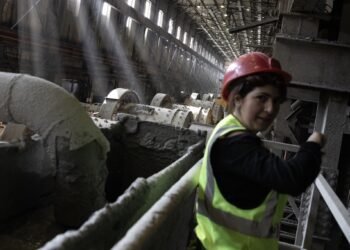
Women, Mining and the Unpaid Labor of Reproduction
Women are increasingly visible in Armenia’s mining industry, but employment does not necessarily mean equality. In Kajaran, Gayane Ghazaryan explores how women navigate hazardous work, limited economic alternatives and the unpaid domestic labor that begins when their shifts end.
Read more
Beyond the Promised Land
For generations, Armenians in the diaspora have been told that returning to the homeland is a duty. But what if the stronger case for Armenia is not sacrifice, obligation or identity alone, but the possibility of building a meaningful life in a place that offers connection, opportunity and belonging?
Read more