
Statecraft & Governance
The Iran War has produced two escalatory models: the U.S.-Israeli “escalate to de-escalate” approach and Iran’s “horizontal escalation” strategy. Armenia’s response is strategic ambiguity: avoiding entanglement while preserving ties with competing partners. To be successful in risk-mitigation, Yerevan must use “situational ambiguity” to navigate crises and de-risk the danger of entanglement.
State of Play
With Maria Titizian and Nerses Kopalyan
Armenia’s political mood is shifting, and the latest polling suggests the incumbent may be regaining ground.
In this episode of “State of Play”, Maria Titizian speaks with Dr. Nerses Kopalyan about the second wave of EVN Report’s voter behavior poll, what’s driving changes in public opinion, and whether this shift reflects real support or short-term dynamics ahead of elections.
From rising approval tied to social spending and international visibility, to the movement of undecided voters, the data offers a more complex picture of Armenia’s evolving political landscape.
Politics
Cognitive Warfare: Toward a Resilience Framework for Armenia
As modern conflict increasingly targets how societies think rather than what they control, Armenia faces growing exposure to cognitive warfare. Sossi Tatikyan explains the concept, maps its risks in Armenia’s post-war context, and outlines a resilience framework to strengthen cognitive security, public trust and democratic stability ahead of the 2026 elections and beyond.
Read more
Prisoners of War and Peace: The Fight for Freedom From Baku
A harrowing account of Armenian prisoners of war held in Azerbaijan, Gibran Caroline Boyce follows one family’s years-long fight for justice. As peace talks advance, it examines human rights abuses, legal battles and the unresolved fate of detainees left behind.
Read more
Armenia’s mining sector stands at a pivotal moment, as rising global demand for critical minerals draws U.S. and EU interest. Hovhannes Nazaretyan explores its economic weight, untapped potential, geopolitical significance and the environmental and governance challenges shaping its future.
Opinion
Armenia’s Transit Moment Is Bigger Than 43 Kilometers
TRIPP is more than a transit route, it’s a strategic opportunity within shifting Eurasian trade networks. As global supply chains realign, Armenia’s ability to integrate, diversify and position itself will determine whether it gains relevance or remains sidelined, writes Zohrab Mnatsakanyan.
Read more
“No Armenian Casualties”
In this provocative critique of Armenian “neutrality” in the Middle East, Garren Jansezian argues that the refrain “no Armenian casualties” obscures moral responsibility, reinforces selective empathy, and risks aligning Armenian identity with dangerous geopolitical narratives at the expense of broader human solidarity.
Read more
The dismissal of Armenia’s Genocide Museum-Institute director sparked widespread outrage, but fragmented media responses failed to translate public anger into meaningful reform, underscoring the need to channel attention into informed debate, coordinated advocacy, and concrete policy-driven change.
When Iran Falters: Shockwaves Across the South Caucasus
The outbreak of a U.S.-Israeli war against Iran carries consequences far beyond the Middle East. Given Iran’s pivotal role in regional balances, any weakening reverberates from the Caspian to the Persian Gulf. The South Caucasus, especially Armenia, already fragile after 2020, faces immediate and longer-term fallout.
Read more
“Orbán, Go Home!” Why Hungarians Were Fed Up
In this sweeping look at Viktor Orbán’s rise and fall, Mikayel Zolyan explores how Hungary’s “illiberal democracy” unraveled, driven by economic decline, political fatigue and how an unlikely challenger, Peter Magyar, capitalized on the moment, with broader implications for Europe, Armenia and beyond.
Read moreIt Has to Be Said
Armenia’s election campaign hasn’t officially started, but in practice, it already has.
In this episode, Maria Titizian examines the legal gray zone before the formal campaign period, where political forces are already spending, organizing and shaping public perception, without clear limits or full transparency.
In this episode of It Has to Be Said, Maria Titizian looks at how misinformation spreads in Armenia through fake screenshots, manipulated images and fear-driven rumors. As elections approach and security risks remain high, fact-checking has never mattered more. Why do false stories travel so fast, who benefits from them, and what responsibility do we all carry before hitting share?
Elections
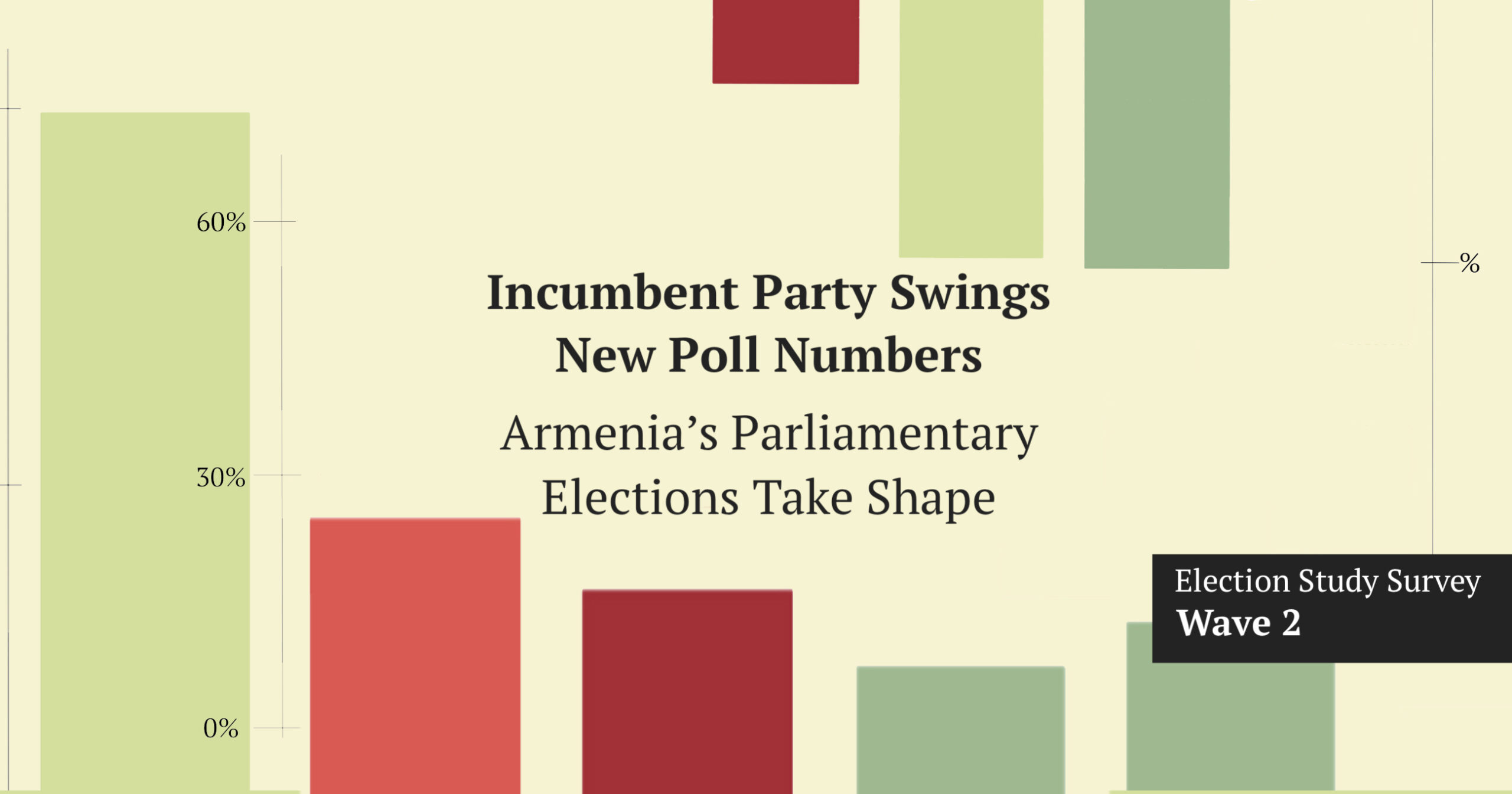
EVN Report’s second wave of polling reveals growing public confidence in the country’s direction and a strengthening position for the incumbent Civil Contract. While the opposition remains fragmented, undecided voters continue to hold the key to the outcome of Armenia’s upcoming parliamentary elections.
Raw & Unfiltered

Armenians in Lebanon: A “State” Within a State
From refuge to power, and now to uncertainty, Lebanon’s Armenians built a remarkable “state within a state.” Arno Khlgatian explores how it emerged, endured war and upheaval, and what its gradual decline reveals about the future of diaspora identity and influence.
Read more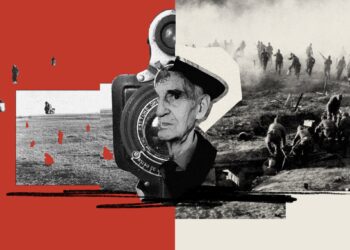
Armin Wegner and the Burden of Witness
Marking April 24, Narine Vlasyan speaks with Michele Wegner, son of Armin Wegner, one of the key eyewitnesses of the Armenian Genocide, about memory, moral courage, and the burden of bearing witness, then and now, and the haunting question of why so few chose to truly see.
Read moreArts & Culture

Between Knowledge and Ideology: The Soviet Armenian Encyclopedia
A landmark of Soviet-era scholarship, the Soviet Armenian Encyclopedia remains the most comprehensive reference work in Armenian. Shaped by ideology yet vast in scope, it reflects both the intellectual ambition and the political constraints of its time.
Read more
Lost Twice: How 1920s Western Armenian Literature Predicted the Diaspora’s Extinction
In this compelling exploration of how early Western Armenian writers foresaw the cultural erosion of diaspora life, Andronik Papyan draws a stark parallel to today’s Armenian community in Russia, arguing that without language, institutions and literary production, identity risks fading into symbolism.
Read moreARTINERARY
Armenia exists against the odds. It sits on the geological and civilizational faultlines that bind it to a state of perpetual unrest and becoming. In a world where globalizing homogeneity and extreme polarization generate total alienation and indifference, any place that still produces the necessary tensions for defiance is one to be treasured. And nowhere are those tensions more evident than the contradictorily divergent, mysteriously flourishing and unexpectedly multipolar arena of the local arts.
Creative Tech
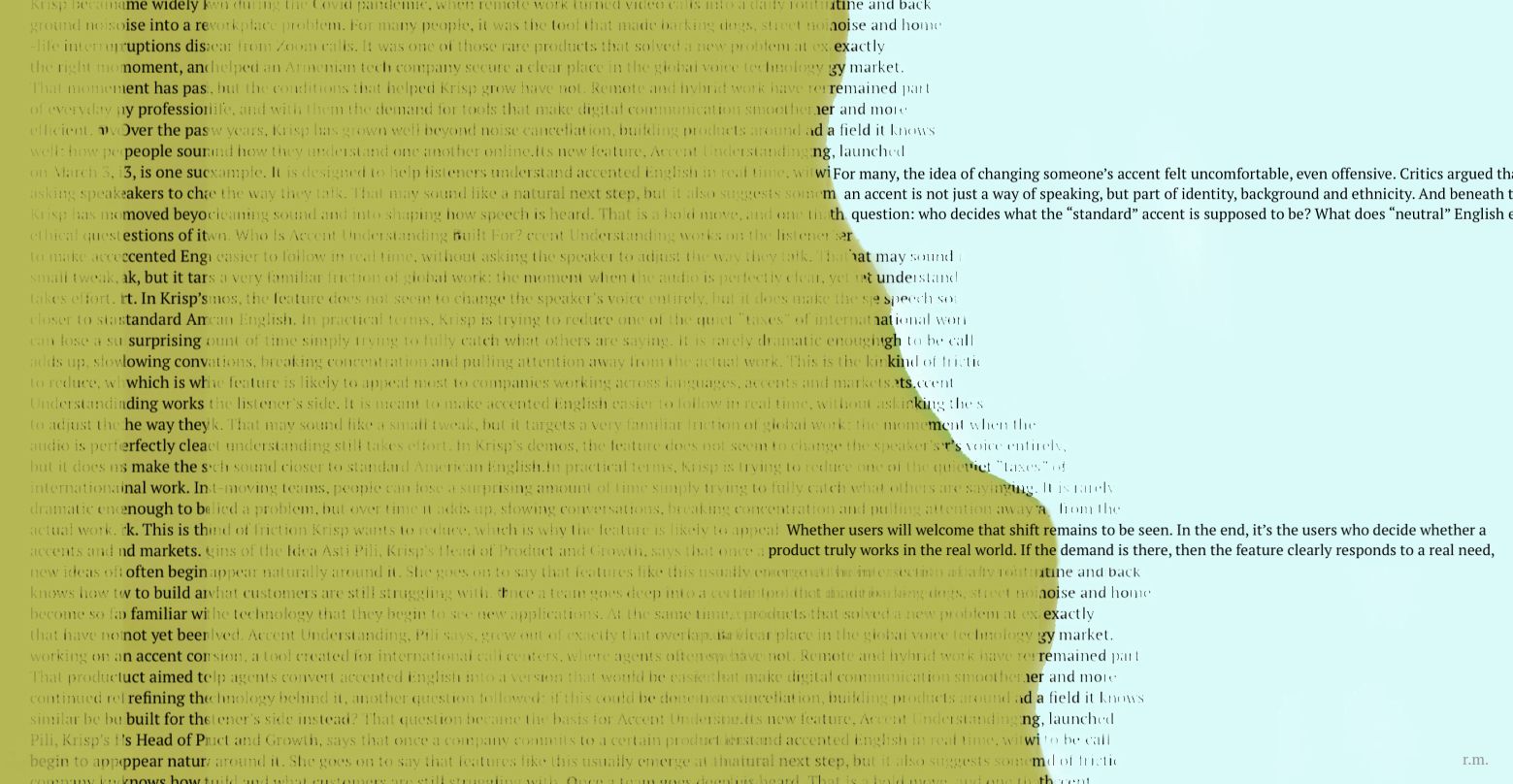
Krisp, known for eliminating background noise, is moving into a new phase of voice AI. Its Accent Understanding feature aims to make speech easier to follow across accents, raising both practical benefits for global work and deeper questions about identity and communication.
Law & Society
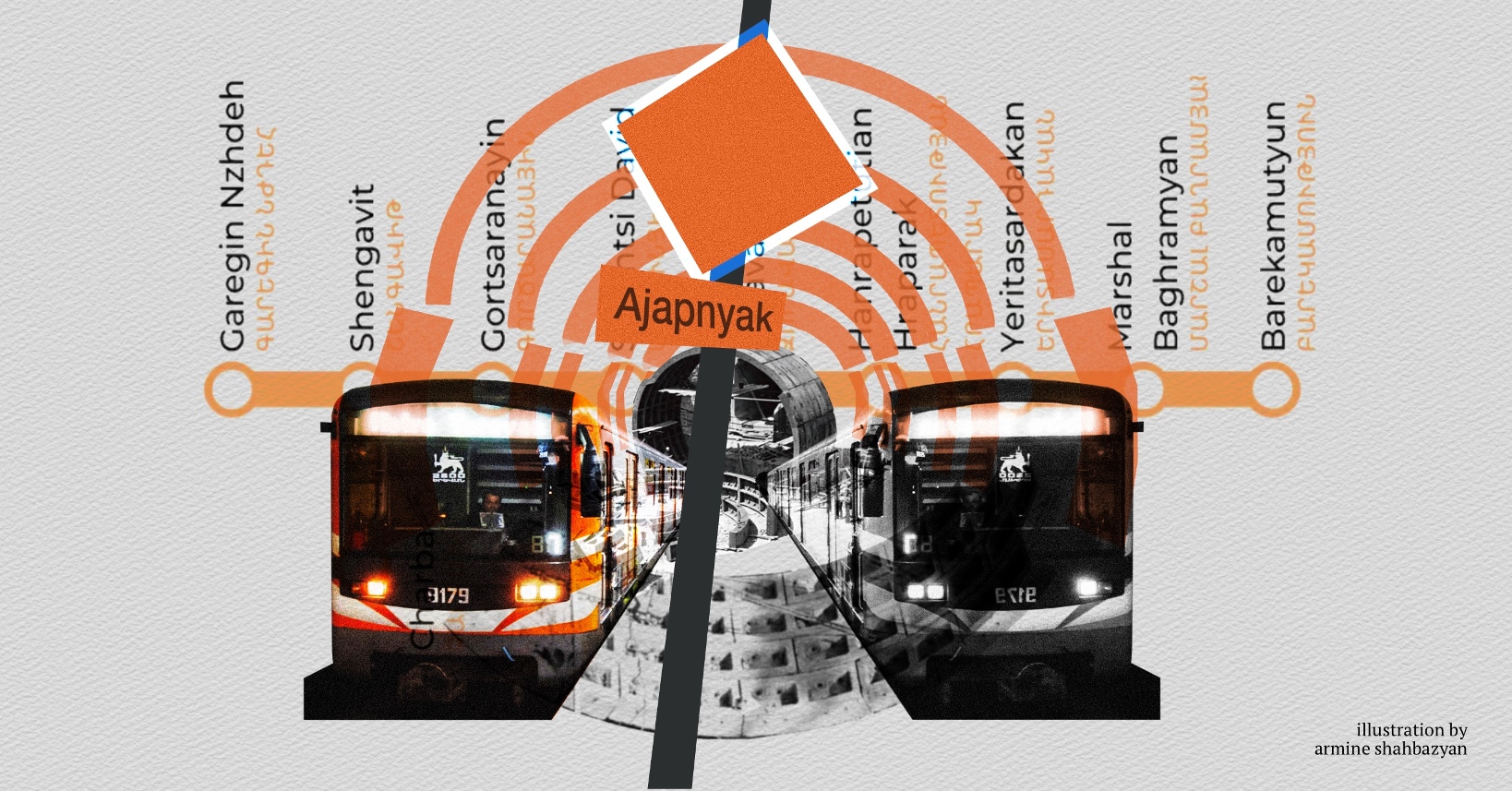
A decades-long effort to expand Yerevan’s metro reveals a familiar cycle of ambitious promises, shifting timelines, and stalled execution. The long-delayed Ajapnyak station underscores deeper structural challenges in governance, planning and accountability behind Armenia’s unfinished infrastructure.
Columns
Let Them Lose You
A reflective Easter meditation on boundaries, self-worth and the power of walking away. Drawing from personal and professional experience, Sheila Paylan argues that refusing to tolerate disrespect is not loss, but a necessary act that creates space for growth and better possibilities.
Read more
Fear, Patriarchy and the Politics of Scapegoating
In this sharp, provocative review of “Survival of a Perverse Nation: Morality and Queer Possibility in Armenia”, Christopher Atamian examines how fear, patriarchy and scapegoating shape modern Armenia, while also opening space for new, more inclusive futures beyond the politics of “survival.”
Read morePodcast
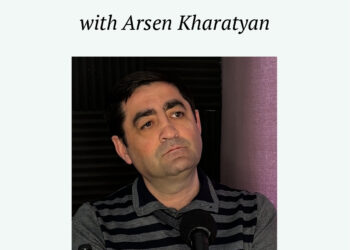
Bending the Ear of the Nation
A conversation with Arsen Kharatyan, founder of Aliq Media, on the narratives of peace and war dominating the campaign messaging of both the ruling party and the opposition, and the specific domestic brand of political nihilism where the choice of leadership has, for several elections, been guided by the voter's interpretation of a lesser evil.
Read more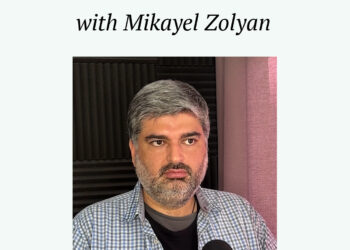
Conceptualizing the Republic
A conversation with Dr. Mikayel Zolyan whose expertise includes the politics of memory, nationalism and democratization in post-Soviet societies about moving beyond the constructs put in place by the first administrations of independent Armenia: Kocharyan’s “outsourcing” of security, Sargsyan's pantheon of nationalist idols and now, the beginnings of a civic nation where citizenship with all its attributes is becoming one of the cornerstones of statehood.
Read moreLIFESTYLE
Of Sound & Mind
From discovering love in inherited trauma to the quiet art of navigating Yerevan’s sidewalks, from a sound keeper at public radio to a boba tea shop opened by a newcomer from China, and reflections on how Armenians listen to radio today, this month’s SALT traces an evolving society in the spaces between image and reality, past and present.