

Listen to the AI generated audio article.
Forced displacement is not just a byproduct of war, it is a weapon of war. Today, it ranks among the world’s greatest humanitarian challenges, often inflicting wounds deeper and more enduring than the calamities of war itself. Under international law, displacement is recognized as violence and a crime.
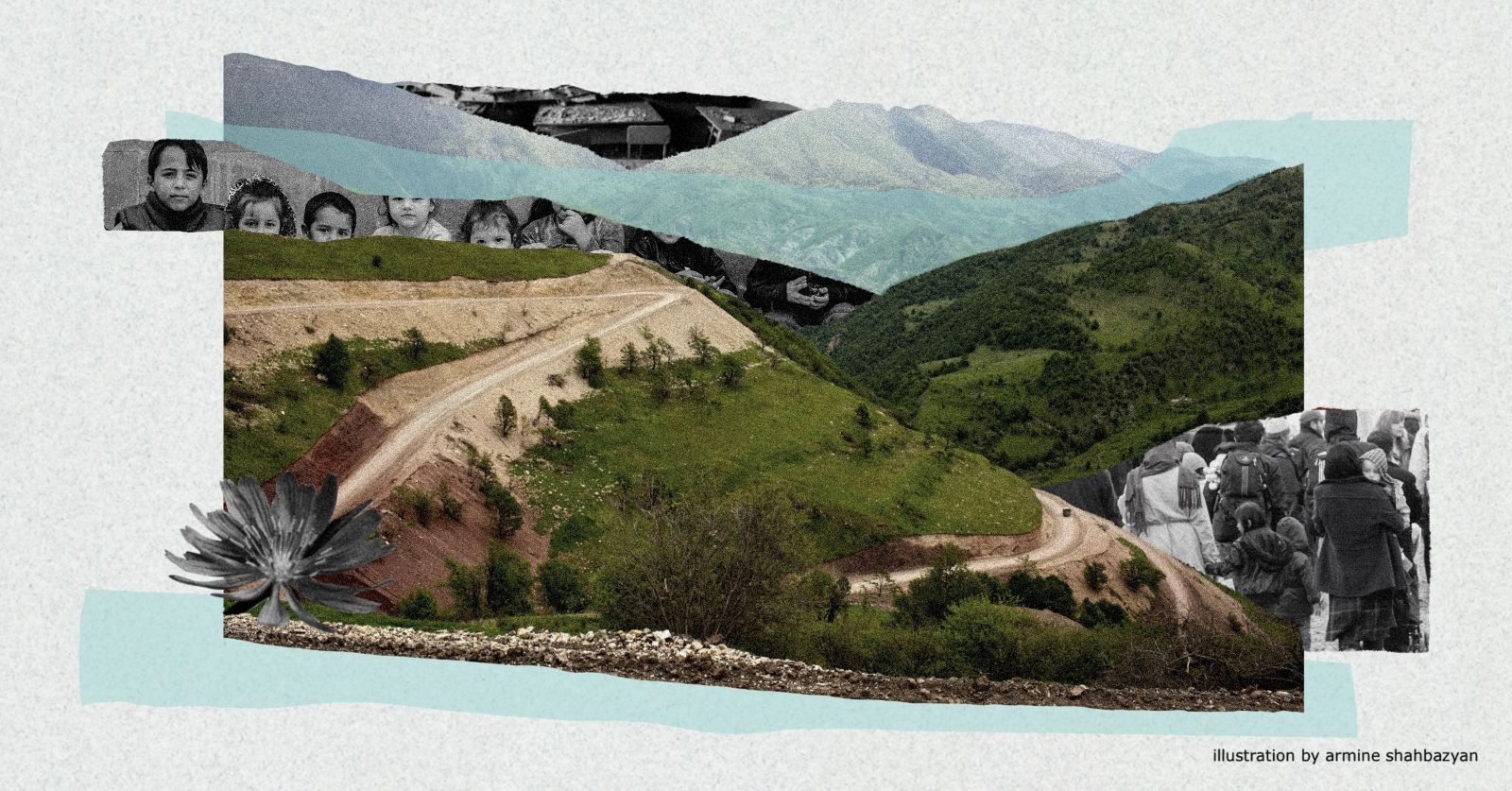
On September 19, 2023, Azerbaijan launched another military aggression—accompanied by war crimes, ethnic cleansing, and acts of genocide—that resulted in the forced displacement of tens of thousands of Artsakh Armenians from their historical homeland. The causes of this displacement are deep and multifaceted. They stem from the 44-day war of 2020, including the targeting of civilian settlements and the killings, abductions and executions of civilians. They are also rooted in the ten-month blockade of the Lachin Corridor, which led to starvation and lack of livable conditions, as well as fear, despair, and mass human rights violations. Additionally, Azerbaijan has implemented a state-led policy of deliberate discrimination, eradication of identity, and destruction of cultural monuments.
Displaced Armenians from Artsakh continue to bear the heavy consequences of conflict and exile. Even after the complete forced exodus, Azerbaijan sustains an atmosphere of fear, erasing history, destroying churches and monuments, and obstructing both their right to return and the restoration of their rights.
The First Wave of Displacement from Artsakh: The 2020 Artsakh War
Multiple accounts circulate about the circumstances of Artsakh’s forced displacement and the number of those affected. Yet the consolidated facts show that between 2020 and 2023, more than 150,000 people were driven from their homes as a result of Azerbaijan’s wars, systematic discrimination, and widespread human rights violations.
As of January 1, 2019—about a year and a half before the 44-day war—the total population of the administrative regions of the Republic of Artsakh stood at 154,691 (Information on the Administrative Regions of the Republic of Artsakh, 01.01.2019).
The first major wave of forced displacement of Artsakh Armenians occurred during the 44-day war in 2020 and its aftermath. Stripped of their homes and security, people could no longer envision their community’s survival in an atmosphere of fear and danger. More than 35,000 were displaced: from Shushi (5,800), Hadrut (13,535), Shahumyan (3,814), Kashatagh (12,157), and villages in the Martakert and Askeran regions, as a result of Azerbaijan’s war crimes and the ensuing socio-economic and humanitarian crisis. This uprooted the entire population of roughly 113 of Artsakh’s 228 communities. Many fled to Armenia, while others remained in Armenian-controlled territories of Artsakh as internally displaced persons. Additional displacement came from war-affected settlements including Stepanakert, Askeran, and Martuni. According to Armenia’s Ministry of Foreign Affairs, about 40,000 people in total lost their homes as a result of the war.
The Second Wave of Displacement: The Blockade of the Lachin Corridor
The Berdzor (Lachin) Corridor was blockaded for ten months beginning in December 2022. This left Artsakh Armenians suffering starvation, lack of medicine, and no access to essential goods like food, fuel, and hygiene products. The blockade included deliberate cuts to gas, electricity, and water supplies, severely compromising the population’s basic living conditions. During this period, Artsakh Armenians were forced to temporarily leave Artsakh to exercise their fundamental rights—seeking medical treatment, pursuing education, participating in sports competitions, and reuniting with family. This evacuation occurred with assistance from the International Committee of the Red Cross and Russian peacekeepers. Many residents were also trapped outside Artsakh when the Lachin Corridor was closed. When considering these displacements alongside those who died defending their homeland and those taken captive during the war, a pattern emerges. This represents the second phase of displacement, revealing Azerbaijan’s strategy to depopulate Artsakh—a plan implemented through various phases and methods.
The Third Wave of Forced Displacement: The Final Assault
The third major wave of displacement occurred on September 19, 2023, when Azerbaijan launched military operations along the entire line of contact of Artsakh. Although the military operations lasted only one day, they surpassed many longer wars in terms of war crimes, killings of civilians, and destruction of civilian infrastructure. From September 20 onward, the population endured casualties, starvation, uncertainty, fear, and despair while the Lachin Corridor was still closed. Azerbaijan’s policy concluded on September 24 when the Lachin Corridor was opened, allowing the population to flee. Within ten days, residents—seeking safety—abandoned their ancestral lands. The blockade of the Lachin Corridor, the devastating day of military operations, civilian casualties, fear of physical annihilation, threats of captivity, and racially discriminatory treatment effectively forced this displacement, creating conditions that made leaving unavoidable.
The forced exodus occurred between September 24 and October 4. During this period, 100,600 Armenians—the entire remaining population of Artsakh at that time—were forcibly displaced from the regions of Askeran (18,639) and Martuni (24,504), the city of Stepanakert (56,600), and the villages of Martakert (19,841). It’s important to note that this figure represents only those who remained in Artsakh after the first and second waves of displacement, not the region’s total population.
On October 12, 2023, the Parliamentary Assembly of the Council of Europe adopted Resolution No. 2517, “The humanitarian situation in Nagorno-Karabakh,” strongly condemning Azerbaijan’s actions of September 19, 2023, and the crisis caused by the preceding blockade of the Lachin Corridor. In Article 11, the Assembly explicitly acknowledged that nearly the entire Armenian population of the region (100,600) had fled to Armenia from their ancestral homeland due to threats of physical annihilation, Azerbaijan’s longstanding policy of Armenophobia, and lack of trust in Azerbaijani authorities.
After this mass exodus, the Armenians of Artsakh temporarily settled throughout Armenia, primarily in cities and communities within the Kotayk, Ararat and Armavir regions.
What Caused Artsakh Armenians to Leave Their Homeland? Was it Voluntary or Forced?
The Rome Statute classifies forced displacement as a grave crime against humanity. According to Article 7(1)(d) of the Statute, deportation or forcible transfer of population means “forced displacement of the persons concerned by expulsion or other coercive acts from the area in which they are lawfully present, without grounds permitted under international law.” The elements of this crime include both physical force and the threat of violence. The Elements of Crimes clarifies that the term “forcibly” is not limited to physical force.
It may include threats of force or coercion, such as those caused by fear of violence, duress, detention, psychological oppression or abuse of power, creating situations where individuals have no genuine choice to remain in their place of residence (art. 7(1)(d), element 1, fn. 12).
Moreover, even if the displaced persons wished to be, and in fact requested to be, evacuated from the territory, this does not mean that they had a genuine choice (pp. 564-565).
Fear profoundly shapes human decision-making. Even if civilians in Artsakh left their homes for reasons of security or military necessity, such displacement cannot be considered “voluntary” or “lawful.” Likewise, even if displaced persons request or appear to accept evacuation, this does not mean they have a genuine choice.
International jurisprudence underscores this principle. In the Milan Simic trial, the International Criminal Tribunal for the Former Yugoslavia (ICTY) Trial Chamber stressed that determining whether displacement is forcible requires examining the individual’s “genuine intention.” The Court held that the absence of genuine choice—where a person’s departure results from fear, coercion, or the impossibility of safe residence—renders displacement involuntary. Applying this precedent, an Artsakh civilian is considered forcibly displaced if they lacked a real alternative to leaving. The Court’s reasoning in the Yugoslavia case further clarifies that displacement is deemed forcible if a person would have remained in their home “in the absence of discrimination or persecution.”
Therefore, even the seemingly “voluntary” departure of the Artsakh Armenians following Azerbaijan’s war crimes and acts of violence is classified as “forced displacement” under international law because coercion in this context means absence of choice.
In the Popović et al. case, ICTY ruled that if civilians are given the “choice” to either flee or take up arms under threat of death in order to defend themselves, this does not constitute a “genuine” choice but rather amounts to forcible displacement.
The ICTY trial of Milorad Krnojelac established that forcible displacement occurs when individuals are removed against their will or without a real choice. Similarly, in Prosecutor v. Naletilić and Martinović, the Tribunal affirmed that consent obtained through threats is not genuine: “Fear of violence or psychological pressure may compel individuals to leave their habitual residence, creating an environment in which there is no other alternative but to depart, and the decision to leave in such circumstances amounts to forcible displacement.”
The Tribunal further clarified that “an agreement between representatives of parties to a conflict does not, in any way, render displacement lawful. Military commanders or political leaders cannot consent on behalf of an individual”.
In its judgment in the Prlić et al. case, the ICTY ruled that “the mere threat of force, physical, mental, or moral coercion may be sufficient to characterize displacement as forcible. It is the absence of a genuine choice that renders the displacement unlawful.”
These findings confirm that the displacement of Artsakh’s population must be characterized as “forcible,” as people were deprived of free choice while living under an atmosphere of fear. The targeting of cultural heritage served as a significant aggravating factor that further compelled people’ to leave.
What Order Displaced Artsakh Armenians?
International instruments that prohibit displacement—including Article 17(1) of the 1977 Second Additional Protocol to the Geneva Conventions, Article 8(2)(e)(viii) of the Rome Statute of the International Criminal Court, and Rule 129(b) of Customary International Humanitarian Law—all require the existence of an “order” to establish illegality. These provisions specifically prohibit issuing an “order” to forcibly displace civilians.
An analysis of various international instruments suggests that while the element of an order appears in some legal frameworks, it is not always required for displacement to be classified as forcible. Rather, in many instances, it serves as a flexible, contextual requirement.
Specifically, Article 8(2)(e)(viii) of the Rome Statute also states that “ordering the displacement of the civilian population for reasons related to the armed conflict, unless the security of the civilians involved or imperative military reasons so demand, constitutes a war crime.”
The term “order” in the aforementioned article should be interpreted broadly, not merely as a strict directive to displace civilian populations. This broader interpretation includes measures that compel displacement of civilians—including the spread of terror, fear, and threats. It’s important to distinguish between displacement driven by these coercive conditions and voluntary population movement.
Article 31(3)(b) of the Vienna Convention on the Law of Treaties supports interpreting treaties “together with the context.”
International law scholar Matt Brown, in his work “The Evacuation of Eastern Aleppo: Forced Displacement Under International Law?” argues that the term “order” in Article 8(2) of the Rome Statute should not be interpreted rigidly. He suggests focusing on the coercive aspect of the crime rather than strictly interpreting how such coercion occurred.
Brown further clarifies that an “order” in this context does not require a formal written or oral instruction. Even when international humanitarian organizations coordinate an evacuation rather than government officials directly ordering it, this distinction is not decisive. What is decisive is creating conditions that compel individuals to evacuate.
Thomas Pellathy, an analyst specializing in forced displacement and armed conflict, adds that displacement isn’t always directly ordered. The “order” may instead take the form of deliberately provoking displacement, attacking civilians, threatening life and security, targeting civilian objects, or destroying religious and cultural property.
Bombardment of populated areas and targeting of infrastructure essential to civilian populations, including cultural heritage, may constitute coercive measures equivalent to an “order” of displacement. The Pre-Trial Chamber of the International Criminal Court, in the Ntaganda case, concluded: “The conduct by which the perpetrator forces civilians to leave a particular area is not limited to an order. Otherwise, the factual circumstances of the evacuation of civilians during armed conflict would be unduly restricted.” Despite the explicit wording of the Rome Statute, the Court in Ntaganda therefore upheld that forced displacement constitutes a war crime even in the absence of a direct order.
The characterization of displacement as “forcible” refers to situations in which individuals lack a free or “genuine” choice to remain in the area in which they were located.
The ICTY in Prosecutor v. Krnojelac, established that “forcible” or “compulsory” displacement includes threats or use of force, fear of violence, and unlawful detention. In Prosecutor v. Radoslav Brđanin the Tribunal further clarified that the act must occur under coercive circumstances to constitute a crime. Importantly, the ICTY in Krnojelac emphasized that even when displaced persons request relocation, this does not necessarily indicate they had a genuine choice.
The United Nations General Assembly, in Resolution 61/232 on “The Situation of Human Rights in Myanmar,” expressed grave concern about attacks by armed forces on ethnic groups without mentioning any requirement for an explicit “order” within the customary norm prohibiting displacement.
In the context of the Armenians of Artsakh, their displacement resulting from Azerbaijan’s war crimes compelled them to flee their homeland under conditions of fear and uncertainty. This constitutes forced displacement even without a clear written or oral order. The destruction of civilian infrastructure (residential areas and health facilities), deliberate targeting of cultural heritage, and creation of an atmosphere of fear––all used as methods of warfare––effectively serve as a de facto order for forcible displacement.
Forced Displacement Prohibitions in International Law
Jurist and former Legal Adviser to the International Committee of the Red Cross, Jan Williams, notes that “forced displacement and the forcible transfer of the inhabitants of a territory” constitute crimes subject to criminal liability.
The prohibition of forced displacement is a fundamental component of both international humanitarian law and the human rights protection system. It has acquired the status of binding customary international law. Some scholars have proposed further that “mass forced displacement” should be defined as a distinct international crime.
Customary international law norms 20, 24, and 129–133 address displacement with a recognized sense of legal obligation (opinio juris). Rule 129 of Customary International Humanitarian Law permits forced displacement of civilians only when required for civilian security or imperative military reasons. Without these justifications, such acts may constitute war crimes, especially when systematic or large-scale. Rule 129 specifically states: “Parties to an armed conflict must not deport or forcibly transfer the civilian population of a territory under their control, unless the security of the civilians involved or imperative military reasons so demand. Deportations or forced displacements carried out in the context of an armed conflict without any of the aforementioned justifications are considered violations of international humanitarian law and may amount to war crimes.”
Article 4(3)(1) of the 1963 Protocol to the European Convention on Human Rights provides: “No one shall be expelled, by means of either an individual or a collective measure, from the territory of the State of which he is a national.” Similarly, Article 22(5) of the 1969 American Convention on Human Rights stipulates: “No one can be expelled from the territory of the State of which he is a national or be deprived of the right to enter it.”
Article 16(1) of the 1989 Indigenous and Tribal Peoples Convention states: “Indigenous peoples shall not be removed from the lands which they occupy.”
According to Principle VI of the 1950 Principles of International Law Recognized in the Charter of the Nürnberg Tribunal and in the Judgment of the Tribunal, “Deportation, expulsion, and other inhumane acts committed against any civilian population” constitute crimes against humanity.
Article 5(c) of the 1946 Charter of the International Military Tribunal for the Far East establishes individual criminal responsibility for crimes against humanity, including the displacement of civilian populations and other inhumane acts committed before or during war.
Article 5(d) of the 1993 Statute of the International Criminal Tribunal for the former Yugoslavia establishes that civilian displacement constitutes a crime against humanity when committed during armed conflict and targeted against civilian populations. Article 2(g) of the same statute grants the Tribunal jurisdiction over unlawful deportation or transfer of civilians, which is classified as a grave breach of the 1949 Geneva Convention IV.
Similarly, Article 3(d) of the 1994 International Criminal Tribunal for Rwanda Statute, says that “deportation, when committed against a civilian population on national, political, ethnic, racial or religious grounds as part of a widespread or systematic attack, is a serious crime against humanity.”
Several international organizations focused on displacement issues—including the UN High Commissioner for Human Rights, the Internal Displacement Monitoring Centre, the International Organization for Migration, the UN High Commissioner for Refugees (UNHCR), and various humanitarian agencies—believe that adherence to international humanitarian law could reduce the number of displaced persons worldwide. Despite this consensus, Azerbaijan continues to disregard its gross violations of these rights.
Azerbaijan, a United Nations member since March 2, 1992, consistently fails to meet its human rights obligations. The international community has established that protecting human rights is essential for maintaining security, development, and peace. Therefore, any genuine peace process must include the right of return as a fundamental component.
Artsakh Armenians’ Right of Return
The right of return is a fundamental human right that extends to future generations and remains valid until fully realized. This right is enshrined in the Universal Declaration of Human Rights (1948), which states: “Everyone has the right to leave any country, including his own, and to return to his country.” Article 12(4) of the International Covenant on Civil and Political Rights (1966) further affirms this universal recognition by stipulating: “No one shall be arbitrarily deprived of the right to enter his own country.”
As this provision constitutes a norm of customary international law, it is binding on all states. Consequently, the Armenians of Artsakh possess the fundamental right to a voluntary, safe and dignified return to their historical homeland—a right that must be upheld in accordance with international law and protected by effective international guarantees.
Spotlight Artsakh
Hung On a Line
Laundry, suspended on lines, throughout Artsakh once told stories of home, pride and domestic ritual. Amid war, blockade and exile, it became a fragile thread of memory and survival, a line of cloth carrying the weight of loss, resilience and love for a vanished home.
Read more
The Guest Who Stayed: Rasmus Canbäck’s Last Dispatch From Artsakh
In “I Die Slowly Every Day”, Swedish journalist Rasmus Canbäck offers a rare, intimate account from Artsakh before its ethnic cleansing—a powerful testament to memory, resistance, and the journalist’s role amid silence and political erasure. Review by Ani Poghosyan.
Read more
Humanitarian Aid to Artsakh Armenians: Who Stepped Up?
Following the 2023 ethnic cleansing of Nagorno-Karabakh Armenians, USAID pledged millions of dollars in humanitarian assistance. As the U.S. significantly cuts aid, Hranoush Dermoyan examines international contributions and the Armenian government’s relief efforts to address the crisis.
Read more
Appropriation of Armenian Cultural Heritage of Artsakh
The 2020 war and 2023 military operations in Artsakh have left Armenian cultural heritage vulnerable to destruction and appropriation. Azerbaijan's reclassification of Armenian sites aims to erase Armenian identity, falsify history, and legitimize territorial claims through cultural expropriation.
Read more
Memories From the Museums of Artsakh
What museum artifacts and historical-cultural treasures remain in Artsakh? Have they been preserved, or have they been vandalized? Are there efforts to transfer them to Armenia? Lilit Avagyan provides insight.
Read more
Destruction of Armenian Cultural Heritage of Artsakh
Azerbaijan’s systematic destruction of Artsakh's cultural heritage not only erases the unique collective identity of its people but also deals a significant blow to the entire world, destabilizing present and future prospects for peace and security in the South Caucasus.
Read morePolitics
Church–State Relations in Independent Armenia
Church–state relations in Armenia have resurfaced as a pressing issue amid unprecedented tensions between the prime minister and the Catholicos. This primer traces three decades of relations under four administrations, exploring how legal frameworks and leadership dynamics shaped patterns of cooperation and tension.
Read more
The Unfinished Peace Deal: Armenia–Azerbaijan Agreement Initialed Yet Unsigned
Armenia and Azerbaijan have initialed, but not signed, a peace agreement. While the deal advances hopes for normalization, the ambiguities and omissions leave a potential settlement fragile, contested and vulnerable to instability. Sossi Tatikyan explains.
Read more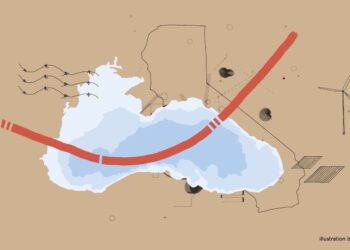
Europe’s New Black Sea Strategy: What’s in it for Armenia?
The EU’s new Black Sea Strategy promises deeper security and connectivity in the region. But what does it mean for landlocked Armenia, caught between Russia and the West, seeking stability, resilience and a stronger place in Europe’s shifting geopolitical order?
Read more
Armenia, Azerbaijan and Constitutional Amendments: Lessons from the Prespa Agreement
Baku’s push for changes in Armenia’s Constitution has been likened to the Prespa Agreement, but the comparison falters: Prespa resolved symbolic disagreements, while Armenia confronts existential threats. Forced amendments risk undermining both legal norms and political stability.
Read more
Iran’s Strategic Uncertainty and Armenia’s Security Challenges
Amid Iran’s strained ties with Israel and the U.S., fragile diplomacy, and shifting regional alliances, Armenia faces heightened security risks. These dynamics could trigger a broader realignment of power in the South Caucasus, directly shaping Armenia’s future stability. Anna Gevorgyan explains.
Read more