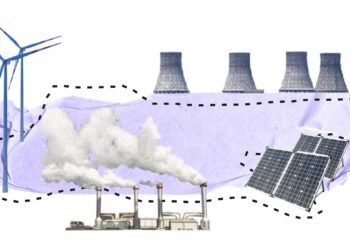
Armenia has achieved significant progress in utilizing renewable energy sources, primarily through hydropower. However, the majority of the country’s electricity still comes from non-renewable sources. Hovhannes Nazaretyan breaks it down.
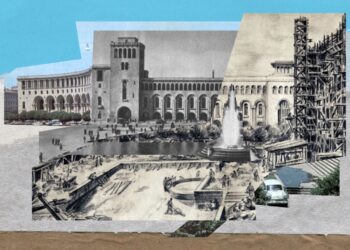
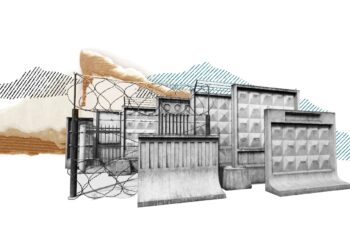
Fences made from radiators are a powerful symbolic and tangible point of inquiry into the entangled history of Armenia's (de)modernization, which is linked to the dynamics of colonialism and independence, as well as the different state practices in the making.
Can Russia’s invasion of Ukraine, its weaponization of the Orthodox faith and Putin's references to Peter the Great and his campaigns indicate historical precedents for Russia's re-emerging imperialism?
Sometimes, a seemingly trivial incident can reflect deep-rooted problems of an entire society. As “Women’s Month” in Armenia comes to an end, Hranoush Dermoyan is reminded of a story that is typical of persisting stereotypes.
Living in Yerevan usually means living with constant noise — noise from cars, cafes and pubs, entertainment venues, fireworks — impacting the health and welfare of residents. What can or should be done?
Following the 2020 Artsakh War, the diaspora’s engagement generated innovative solutions and more notably, a sense of urgency. The Armenian Society of Fellows, a network of experts and scholars from the Armenian Diaspora and Armenia, is one of those initiatives.
Improvements in low-carbon technologies, driven in part by foreign energy policy, have created new opportunities for Armenia, a country without fossil fuel reserves, aligning environmental concerns and the pursuit of higher energy security more than ever before.
Being at the crossroads between East and West, Armenia has thrived only when these two forces were at an equilibrium and neither was strong enough to exert disproportionate influence on its domestic affairs. But what about its connection to Mediterranean civilizations?
Since the 2020 Artsakh War, during which Turkey provided military and political support to Azerbaijan, Armenians in Turkey have felt increasingly isolated. How do young Armenians in Turkey feel about the use of genocidal language by ultra-nationalist groups in the country and not only?
Children who were separated from their families because of Azerbaijan’s blockade of the Lachin Corridor, were finally able to return home to Artsakh after 47 days. They shared their thoughts before their long-awaited reunion.
EVN Report’s mission is to empower Armenia, inspire the diaspora and inform the world through sound, credible and fact-based reporting and commentary. Our goal is to increase public trust in the media. EVN Report is the media arm of EVN News Foundation registered in the Republic of Armenia in 2017.
SUPPORT INDEPENDANT JOURNALISM