
Politics
The Enclave Issue Between Armenia and Azerbaijan
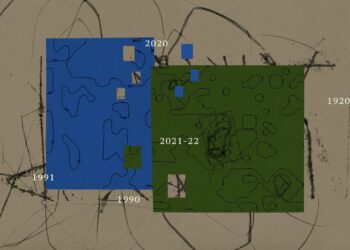
As Armenia’s parliamentary election campaign intensifies, the issue of Soviet-era enclaves between Armenia and Azerbaijan has re-emerged as a sensitive political and security question. Sossi Tatikyan explores their historical origins, legal status, international parallels and the possible scenarios being discussed within the peace process.
Read more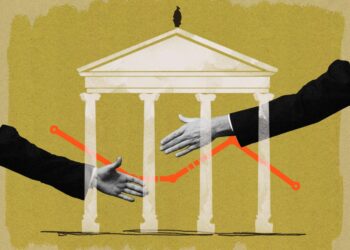
How Armenia and Azerbaijan Are Lobbying for Influence in D.C.
As Armenia and Azerbaijan compete for influence in Washington, a new lobbying battle is reshaping U.S. engagement in the South Caucasus. From diaspora advocacy to multimillion-dollar lobbying campaigns, both sides are working to influence American policy, peace efforts and regional power dynamics.
Read moreStatecraft & Governance
Armenia is seeking to redefine its global role through “smart power”. By hosting the European Political Community Summit and a series of major international forums, Yerevan is leveraging diplomacy, connectivity and strategic partnerships to expand its international relevance, resilience and foreign policy autonomy.
State of Play
With Nerses Kopalyan and Maria Titizian
In this episode of “State of Play”, Maria Titizian speaks with Nerses Kopalyan about the strategic implications of the election result and the road ahead; Russia’s muted response to the elections; what Pashinyan’s renewed mandate means for the peace process with Azerbaijan; growing U.S.-Armenia partnership, and the strategic choices Yerevan will face over the next four years as it seeks to balance relations with the West while maintaining working ties with Russia and the Eurasian Economic Union.
Elections
Incumbent Improves, Opposition Fragments: Armenia’s Parliamentary Elections Take Shape
The third wave of EVN Report’s voter behavior poll shows rising approval for Prime Minister Nikol Pashinyan and improving perceptions of the country’s direction, while opposition fragmentation persists. With nearly 40% of voters still undecided, and a significant share leaning toward the incumbent party, their eventual alignment remains decisive in shaping Armenia’s 2026 parliamentary elections.
Read more
Election Primer: Who’s Who
Armenia’s June 7 parliamentary election features 19 competing political forces, ranging from ruling and opposition parties to newly formed movements and fringe contenders. Hovhannes Nazaretyan presents a concise guide to the country’s crowded political landscape, key alliances, ideologies and leading personalities shaping the campaign.
Read more
Party Positions: Foreign Policy and Security
Foreign policy and security have emerged as defining issues in Armenia’s upcoming parliamentary election, with parties sharply divided over relations with Russia, deeper integration with the West, regional normalization, TRIPP and the country’s broader geopolitical direction amid growing uncertainty in the South Caucasus.
Read more
Party Positions: Domestic Issues
Ahead of Armenia’s parliamentary elections, political forces are placing domestic concerns at the center of their campaigns. In this primer, Hranoush Dermoyan examines competing visions on the economy, education, healthcare, governance, agriculture and social policy, revealing how different forces seek to address Armenia’s socioeconomic challenges.
Read moreOpinion

Politics of Silence: Artsakh, Memory and Armenian Democracy
As Armenia heads into parliamentary elections, debates over peace, memory and democracy are colliding amid rising polarization and the latest assassination threat. In this op-ed, Sheila Paylan argues that suppressing public grief and demands for justice over Artsakh risks eroding civic trust and weakening the democratic resilience Armenia seeks to preserve.
Read moreIt Has to Be Said
In this episode of It Has to Be Said, Maria Titizian examines how fear has become one of the dominant tools of Armenia’s parliamentary election campaign. From warnings of war and economic collapse to narratives about “Turkification” and a so-called “Ukraine scenario,” domestic and external actors are increasingly weaponizing public anxiety and collective trauma instead of debating policy and governance.
As Armenia heads toward elections amid deep regional uncertainty, how do voters separate legitimate security concerns from political manipulation? And what happens to democracy when fear replaces informed debate?
Podcast

The Limits of Misinformation
A conversation with Laurence Vardaxoghlou, a researcher at Panthéon-Sorbonne University and Camille Lafrance, Director of Fake Off, a French organization dedicated to media literacy, exploring how misinformation shapes public opinion and behavior, particularly during elections and why emotion, fear and polarization makes societies susceptible to manipulated information.
Read moreNews Watch
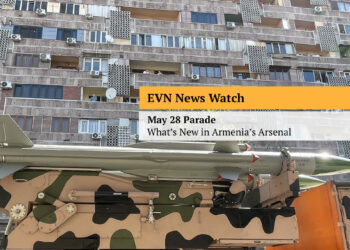
May 28 Parade: What’s New in Armenia’s Arsenal
Armenia’s first military parade in a decade offered the clearest public glimpse yet into the country’s rapidly developing defense capabilities. From French CAESAR howitzers and Indian missile systems to Chinese drones and locally produced weapons, the parade showcased Armenia’s drive to diversify its military partnerships and rebuild its armed forces after the 2020 war.
Read more
EU Progress Report Maps Armenia’s Path Toward Visa Liberalization
The European Commission’s first progress report on Armenia’s visa liberalization reforms highlights advances in border management, biometrics, anticorruption and digital governance, while identifying major gaps that still need to be addressed before Armenians can eventually secure visa-free travel to the European Union.
Read more
Key Outcomes of EU–Armenia Summit
The first-ever EU–Armenia Summit in Yerevan marked a major milestone in bilateral relations, advancing cooperation on connectivity, energy, digital infrastructure and reforms. The sides reaffirmed commitment to closer strategic partnership, resilience, regional integration and long-term political and economic alignment.
Read more
European Political Community Summit Kicks Off in Yerevan
European leaders convene in Yerevan for the 8th European Political Community summit, spotlighting Armenia’s growing geopolitical role and turning Yerevan into a hub of diplomacy. Amid discussions on security, energy, and cooperation, the gathering reveals both opportunities for partnership and challenges.
Read moreRaw & Unfiltered

Tracing Memory: Unfinished Conversations of War
Through a series of unfinished questions, photographer Vaghinak Ghazaryan’s photo essay explores the lasting emotional imprint of the 44-day war on the soldiers who lived through it, tracing memory, loss and the difficult process of carrying war into everyday life.
Read more
Cry Me a Hrazdan River
Yerevan’s Hrazdan River embodies the city’s contradictions: beauty and neglect, belonging and exclusion, ecological loss and fragile possibilities for coexistence, public life and environmental consciousness. In this personal observation, Taline Oundjian looks at what the river reveals about the city itself.
Read more
A soulful and moving essay on inheritance, memory and survival, Ani Poghosyan traces her family’s story from the Armenian Genocide to the present, exploring how trauma endures across generations, not as memory alone, but as ritual, silence, and the quiet work of tending what remains.
Arts & Culture

An Armenian exile’s daughter who became one of the Soviet Union’s most celebrated performers, Tamara Khanum used dance to challenge patriarchy, embody cultural resistance, and redefine womanhood in Central Asia, even as her art was folded into the Soviet project.
Law & Society
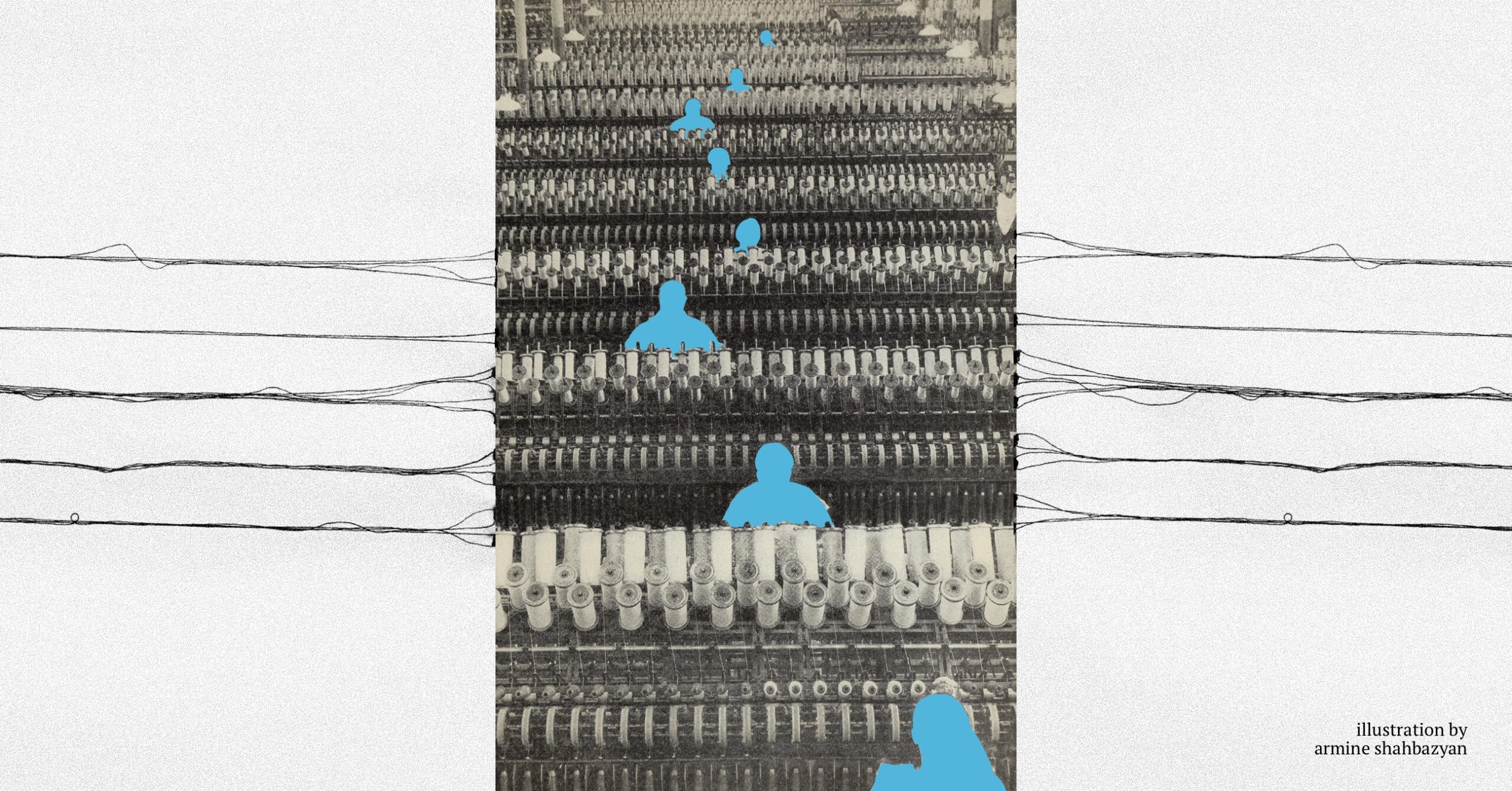
Indian migrant workers at a textile factory in Ijevan went on strike over abusive working conditions, unpaid wages and rising production quotas. Their protest exposes deeper problems in Armenia’s labor system, where weak protections leave migrant workers vulnerable to exploitation, surveillance and coercion. Garren Jansezian’s report from Ijevan.
Creative Tech

What Does Technological Sovereignty Mean for a Small State Like Armenia?
As artificial intelligence reshapes global power, Armenia is beginning to grapple with a new question: what does technological sovereignty mean for a small state? Elen Tovmasyan explores an emerging doctrine that rejects AI grandeur in favor of strategic dependence, local adaptation and institutional resilience.
Read more
Armenia’s Tech Labor Market Faces a Triple Shock
Armenia’s tech labor market is being reshaped by three converging shocks: a global venture capital slowdown, geopolitical fallout from the Russia-Ukraine war, and the rapid rise of AI. Together, they are transforming hiring, redefining skills, and exposing vulnerabilities in the country’s tech growth model.
Read moreColumns
Ani, Where Khachkars Lie Face Down in the Dust
A journey to the medieval Armenian capital of Ani becomes an exploration of memory, erasure and cultural survival. Traveling through Turkey to reach the ruins visible from Armenia’s closed border, Maria Gunko reflects on heritage, identity, historical loss and the politics of preserving, and silencing, the past.
Read more
Rise and Outshine
This month for Unleashed, Sheila Paylan draws a line from childhood bullying to Armenia’s unexpected rise into the global spotlight, reflecting on how people and countries can use pain and rejection to rise above and beyond what tried to break them.
Read moreLIFESTYLE
Afterglow
May’s issue of SALT is a mix of nostalgia and gumption. From the evolution of Armenia’s post-Soviet music scene to the history of Armenian bridal fashion, from a photo story capturing the outdoor games children still play to reflections on the life of Armenian radio, and the story of one man helping revive forgotten vines, these pieces explore memory, identity, creativity and resilience in all their different forms.